




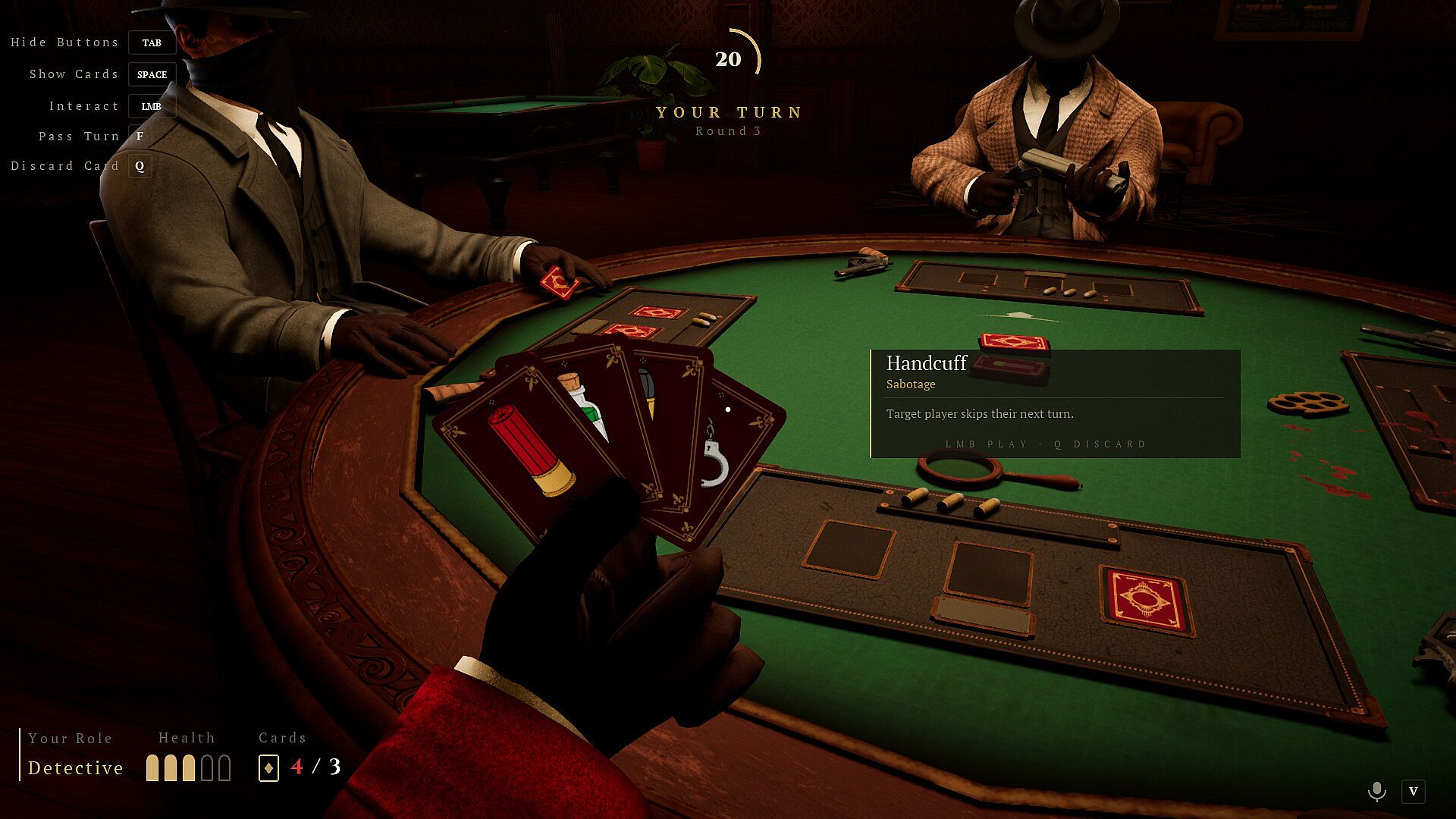
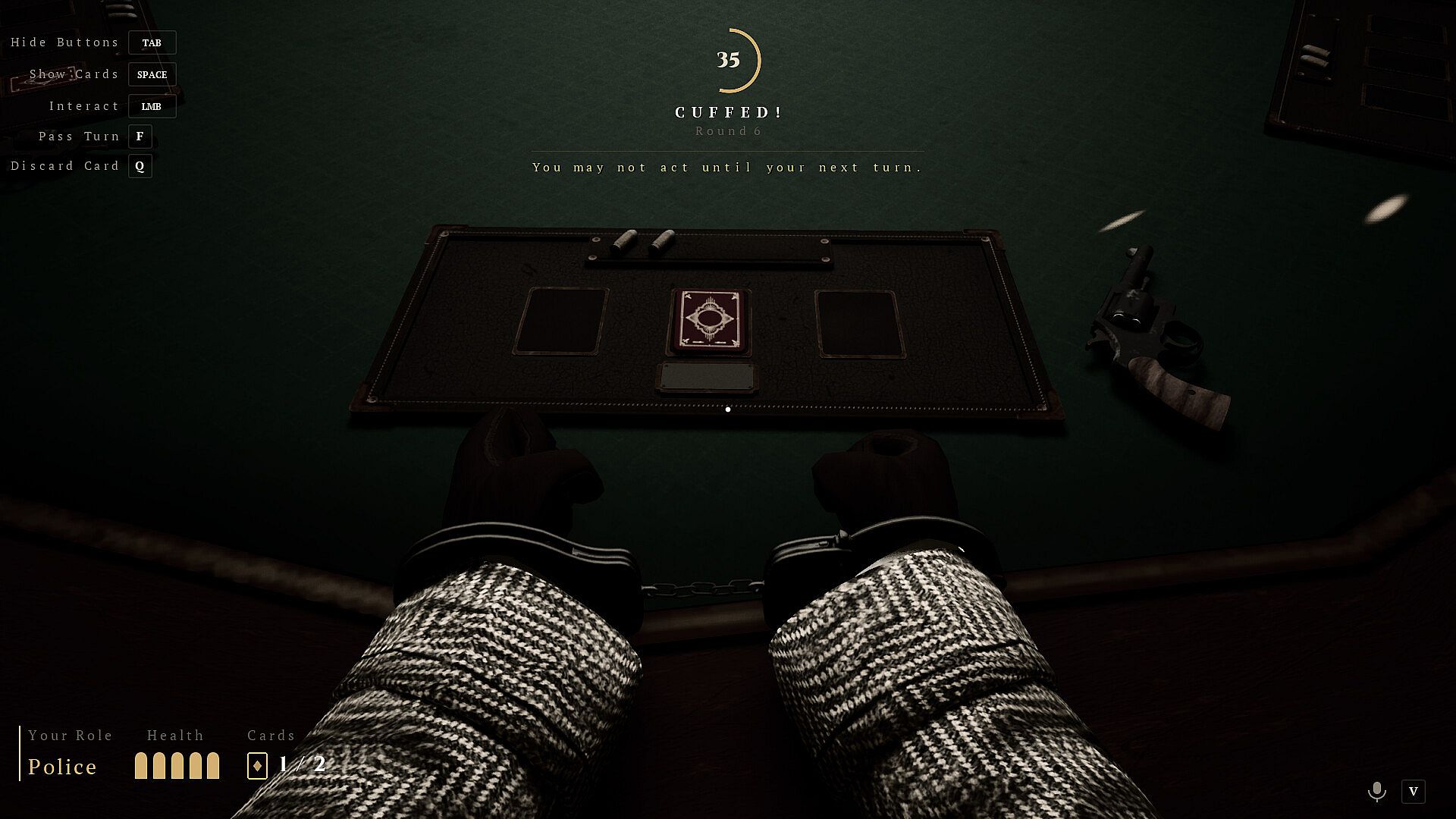








Table of Suspects is a noir themed social deduction strategy game developed for PC. It blends card based mechanics with deception and deduction, placing three to seven players in a tense gathering where every decision influences the outcome. The experience suits both casual sessions and groups seeking deeper strategic interplay, as participants balance truth telling against calculated bluffs to control the table.
Gameplay
Players draw from different card categories that allow attacks, defenses, hindrances, or survival tactics. Each card opens a distinct option, yet the key lies in timing and selection of the target. Participants play cards openly or through misdirection, attempting to persuade others of their honesty while identifying threats. The loop revolves around suspicion and response, with weapons and ammunition used to eliminate perceived enemies. Caution remains essential, since an apparent foe might prove an ally whose elimination weakens the group position.
Decisions accumulate across rounds as roles emerge and accusations fly. Wrong targets or premature reveals shift momentum, often leading to unexpected reversals. The noir atmosphere reinforces the paranoia, turning every interaction into a test of reading intentions and managing limited resources.
Game Modes
Sessions adapt based on the number of participants and the mix of hidden roles. The core structure supports flexible group sizes from three to seven, allowing the same ruleset to produce varied tension levels. Player choices around when to reveal identities or level accusations directly shape each match, creating fresh patterns of alliances and betrayals without fixed scenarios.
Matches emphasize repeated play through changing outcomes rather than preset variants. Groups can adjust pacing by focusing on aggressive targeting or defensive positioning, fitting both quick rounds and longer strategic engagements.
Roles and Key Decisions
Four primary roles define the conflict. The Detective pursues the truth, supported by the Police Officer who provides backup. Opposing them are the Mafia and the Traitor, both intent on removing the Detective to seize control. These alignments drive the central tension, as players weigh when to disclose their role and whom to trust amid conflicting signals.
Accusations and targeting choices carry lasting consequences. A single misstep can eliminate an ally or allow opponents to consolidate power. The interplay encourages careful observation of card plays and verbal cues, rewarding players who adapt their strategy as information surfaces.
Is It Worth Playing?
Table of Suspects delivers a focused social deduction experience built around card categories and role driven conflict. Groups that enjoy bluffing, deduction, and shifting alliances will find the mechanics rewarding, especially in repeated sessions where outcomes vary with every set of decisions. The three to seven player range makes it accessible for smaller gatherings while scaling the pressure effectively for larger tables.
The game rewards thoughtful timing over raw aggression, appealing to players who prefer measured strategy within an indie casual framework. Its noir presentation and emphasis on persuasion create consistent engagement without requiring extensive setup or additional content. For those drawn to PC titles centered on interpersonal tension and deduction, the title offers solid replay value through its core systems.