










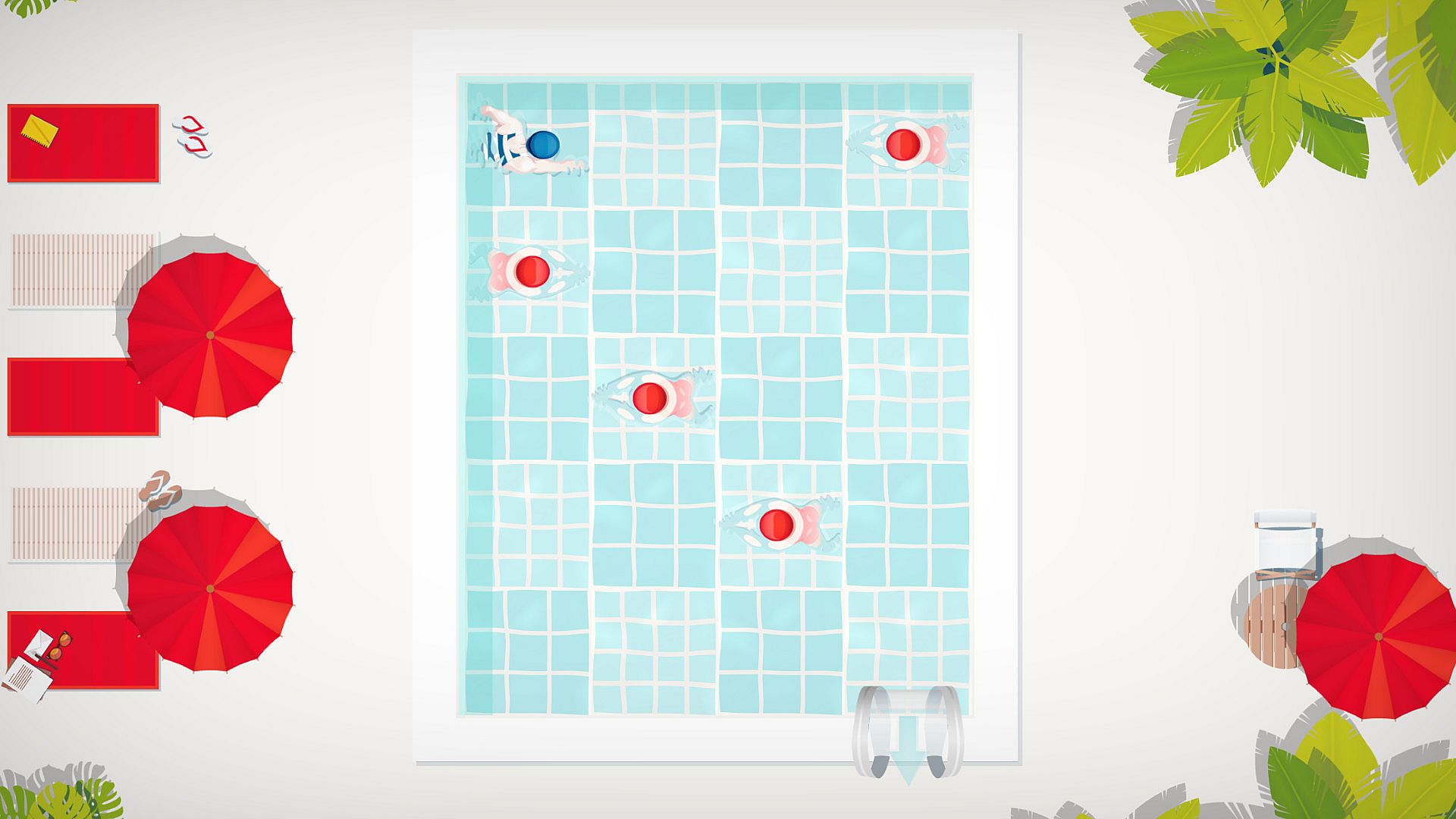
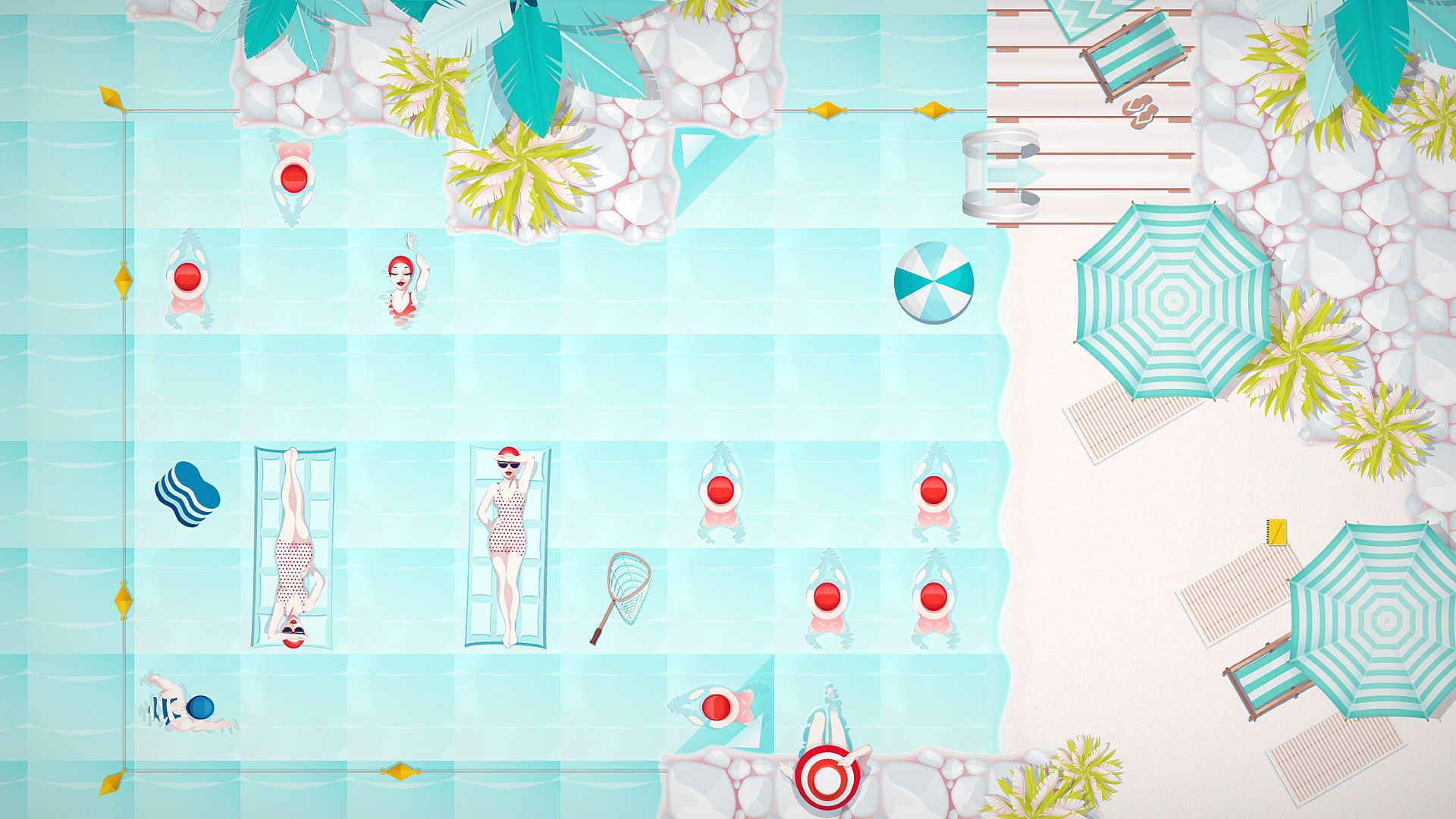
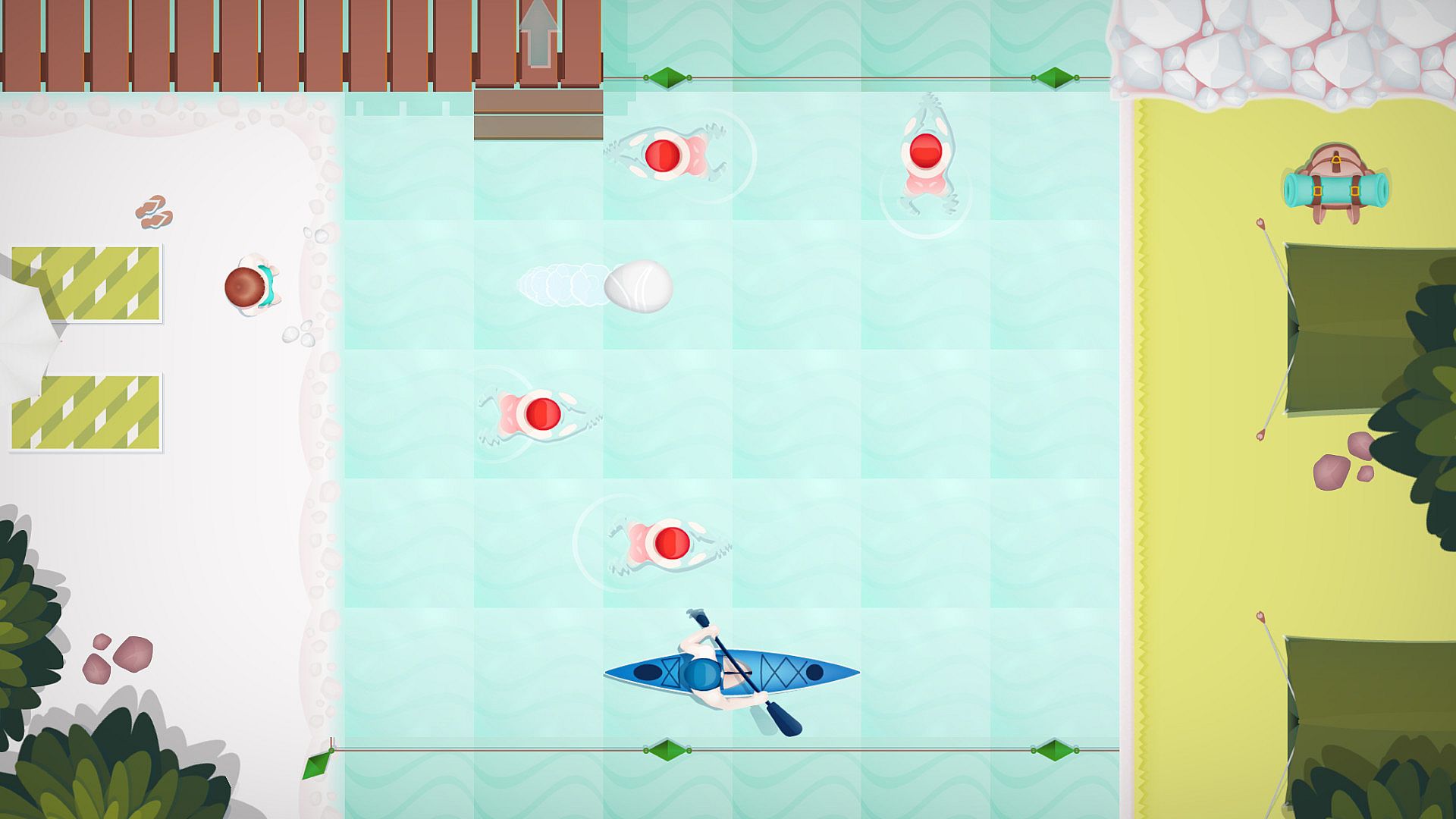

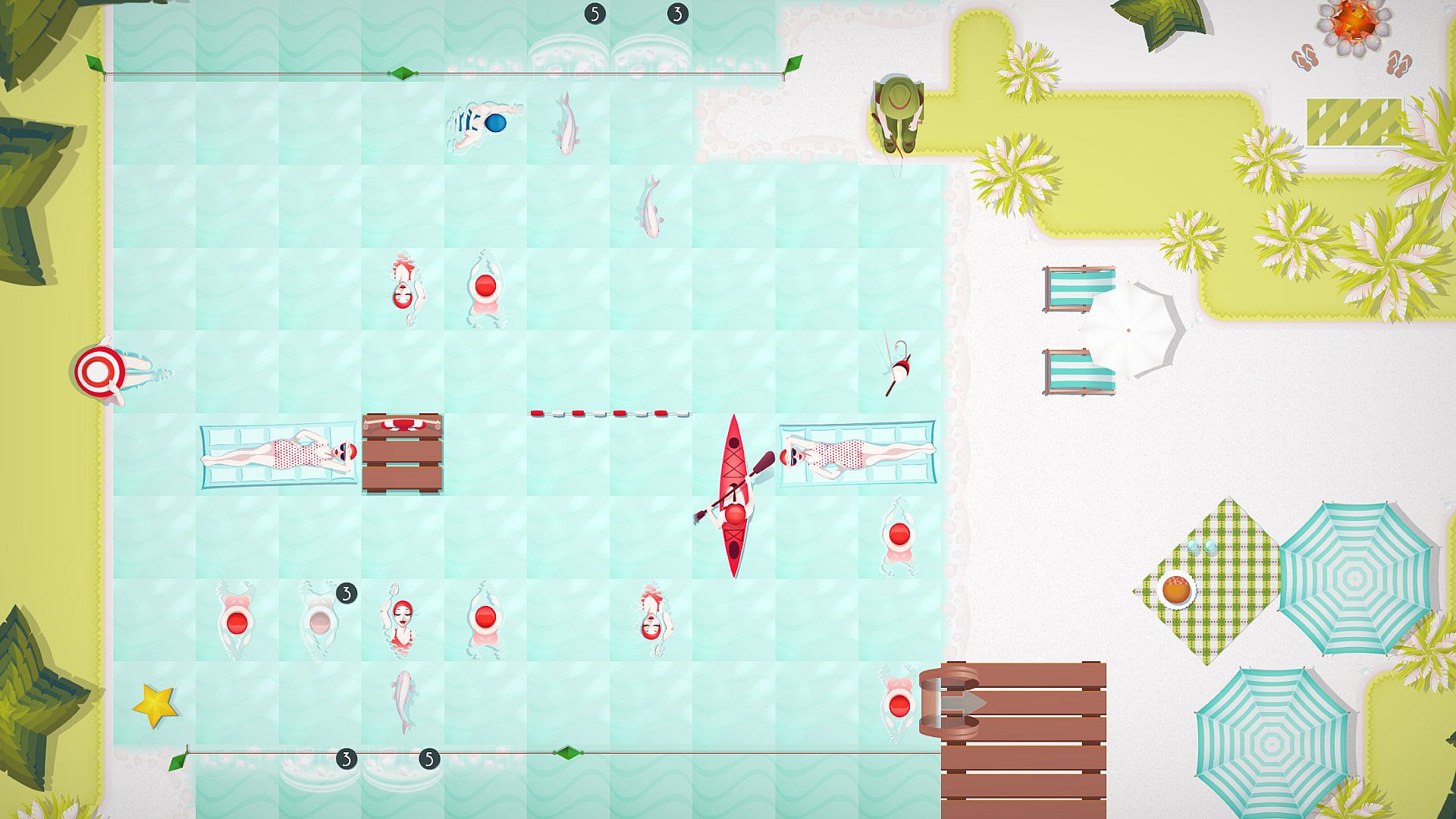
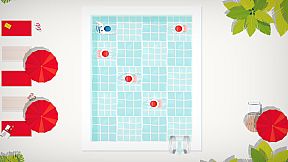
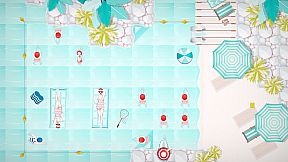
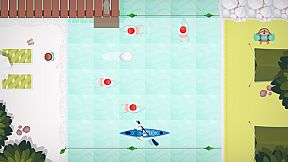
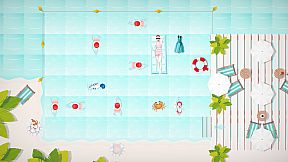
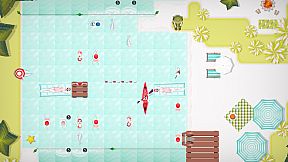
Swim Out stands as a turn-based puzzle game blending strategy and casual elements on PC. Players navigate a swimmer across gridded bodies of water in serene pool, river, or sea settings. The core challenge involves planning each move carefully to reach the exit while steering clear of other swimmers and obstacles that follow their own patterns.
Gameplay
The experience centers on deliberate, one-square-at-a-time movement in a top-down view. Each turn allows the player to advance in one of four directions, but success depends on anticipating where every other figure will end up after their simultaneous actions. Crossing paths with any swimmer results in failure, forcing a rethink of the entire sequence.
Levels incorporate varied swimmer behaviors that alter the planning required. Simple breaststroke swimmers move steadily forward, while divers execute longer or different trajectories. Cheeky children might perform sudden water-bomb moves that disrupt nearby spaces. These differences create layered problems where one miscalculation cascades through the grid.
Interaction with objects adds further variety. Buoys, fins, water guns, and kayaks each impose unique movement rules or temporary advantages. A kayak, for instance, might allow faster or multi-square travel, while a water gun could clear a path or alter an obstacle's position. Environmental factors such as waves, crabs, and jellyfish introduce dynamic hazards that shift positions or block routes on specific turns.
Over one hundred levels unfold across seven chapters set in distinct landscapes. Gentle audio cues like seagulls, frogs, and water splashes accompany the action without distracting from the puzzle focus. The design encourages repeated attempts as players test routes and refine their understanding of how all elements interact on the grid.
Game Modes
Swim Out operates entirely as a single-player puzzle experience. Progression follows a linear chapter structure, with each chapter presenting roughly fifteen levels that build on previously introduced mechanics. No separate competitive or cooperative modes exist.
Within the levels, players pursue the primary objective of reaching the exit. Many stages also feature optional bonus goals that demand extra precision, such as collecting specific items or completing the puzzle in fewer moves. These bonuses provide additional replay value for those seeking deeper mastery without altering the fundamental turn-based rules.
The absence of timers or real-time pressure keeps the focus on thoughtful sequencing. Every level resets cleanly for experimentation, allowing players to map out full movement cycles before committing to a solution. This structure suits extended sessions where the goal is steady advancement through increasingly intricate arrangements.
Level Design and Progression
Early chapters introduce core concepts gradually, starting with basic avoidance and simple object use before layering in multiple swimmer types and environmental shifts. Later stages combine all twelve swimmer varieties and twelve object types into dense configurations that test long-term planning.
Landscapes change across chapters to maintain visual interest while preserving the consistent grid-based rules. The steady increase in complexity rewards observation and pattern recognition rather than speed. Players who enjoy mapping out twenty or more moves in advance find the later content particularly engaging.
Completion of all main objectives unlocks further recognition for thorough play, including collection of every bonus across the full set of levels. The campaign delivers a self-contained journey without requiring external content or ongoing updates.
Is It Worth Playing?
Swim Out appeals to those who enjoy methodical puzzle games with a calm presentation. Its turn-based system and water-themed obstacles create a distinct feel compared to similar titles, emphasizing path prediction over combat or resource management.
Player feedback on Steam reflects a mixed reception, with 65 percent positive ratings from forty reviews. Many appreciate the relaxing atmosphere and clever level construction, while others note frustration when solutions require extensive trial and error. The game suits individuals comfortable with high-difficulty logic challenges and one-handed play sessions.
As a completed title with no active seasons or expansions, it offers a fixed collection of puzzles ready for immediate play. Those seeking a budget-friendly strategy experience on PC may find its focused design rewarding, particularly if they have prior interest in grid-based movement puzzles. The serene visuals and sound design further support relaxed, repeated attempts at mastery.