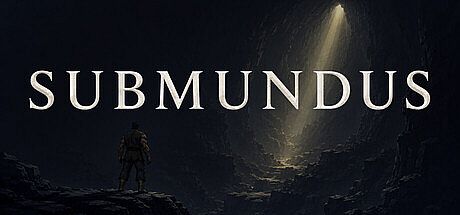


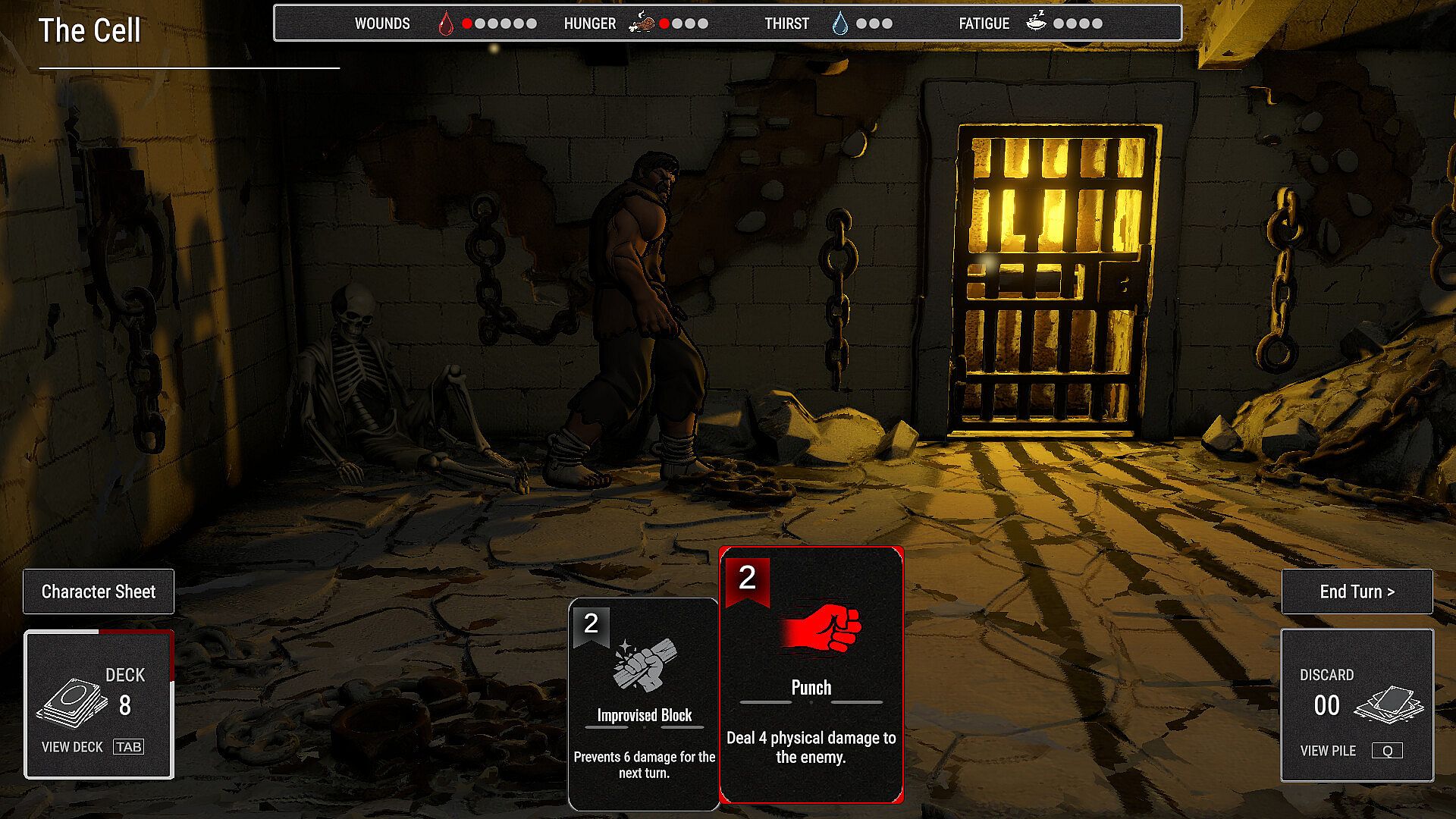
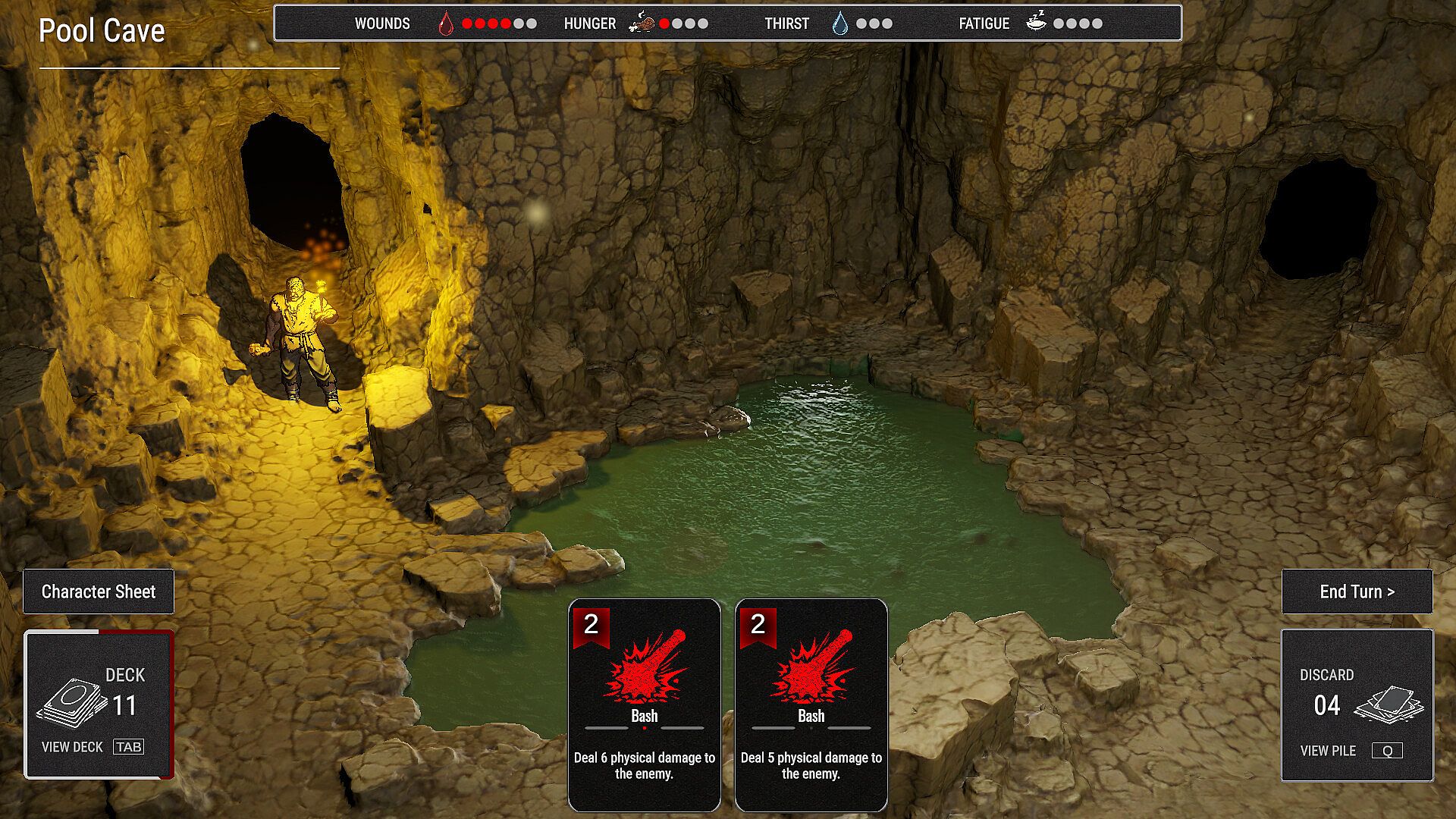
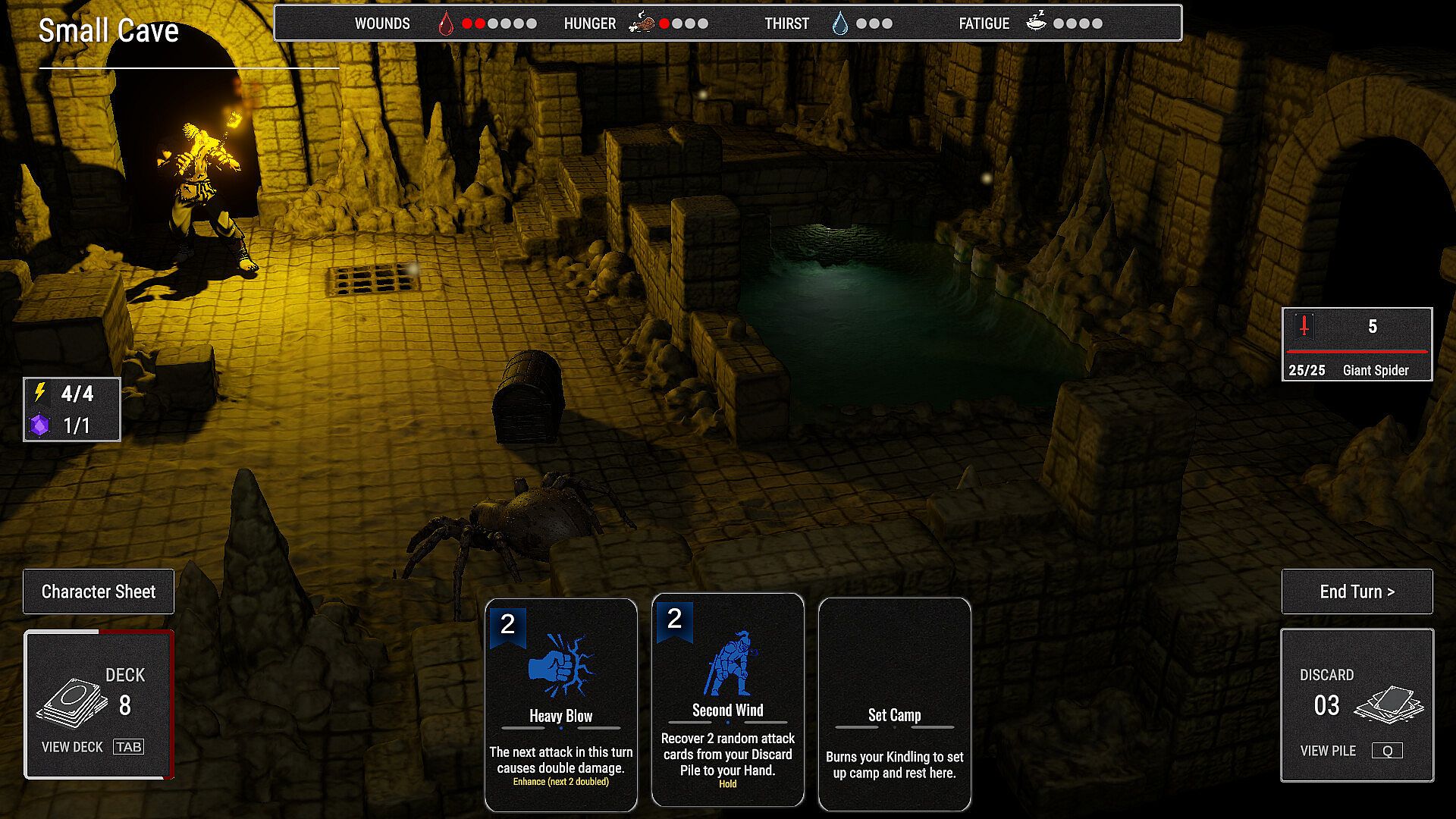
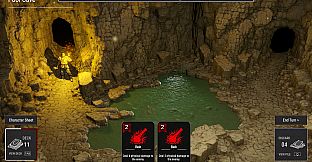
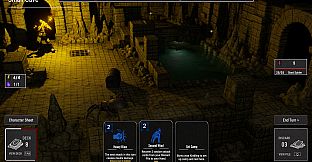
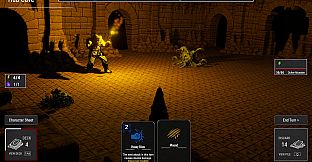
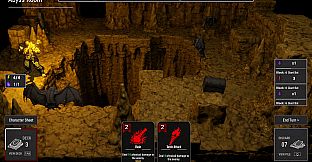
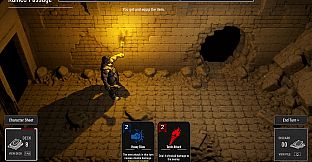
Submundus is a single-player survival roguelike deckbuilder that blends strategy and RPG elements on PC. Players awaken in an underground prison with no memory of their past and must navigate caves, ruins, and the societies of the deep to reach the surface. The core loop revolves around managing a deck that represents not only combat options but also physical condition and the passage of time itself.
Gameplay
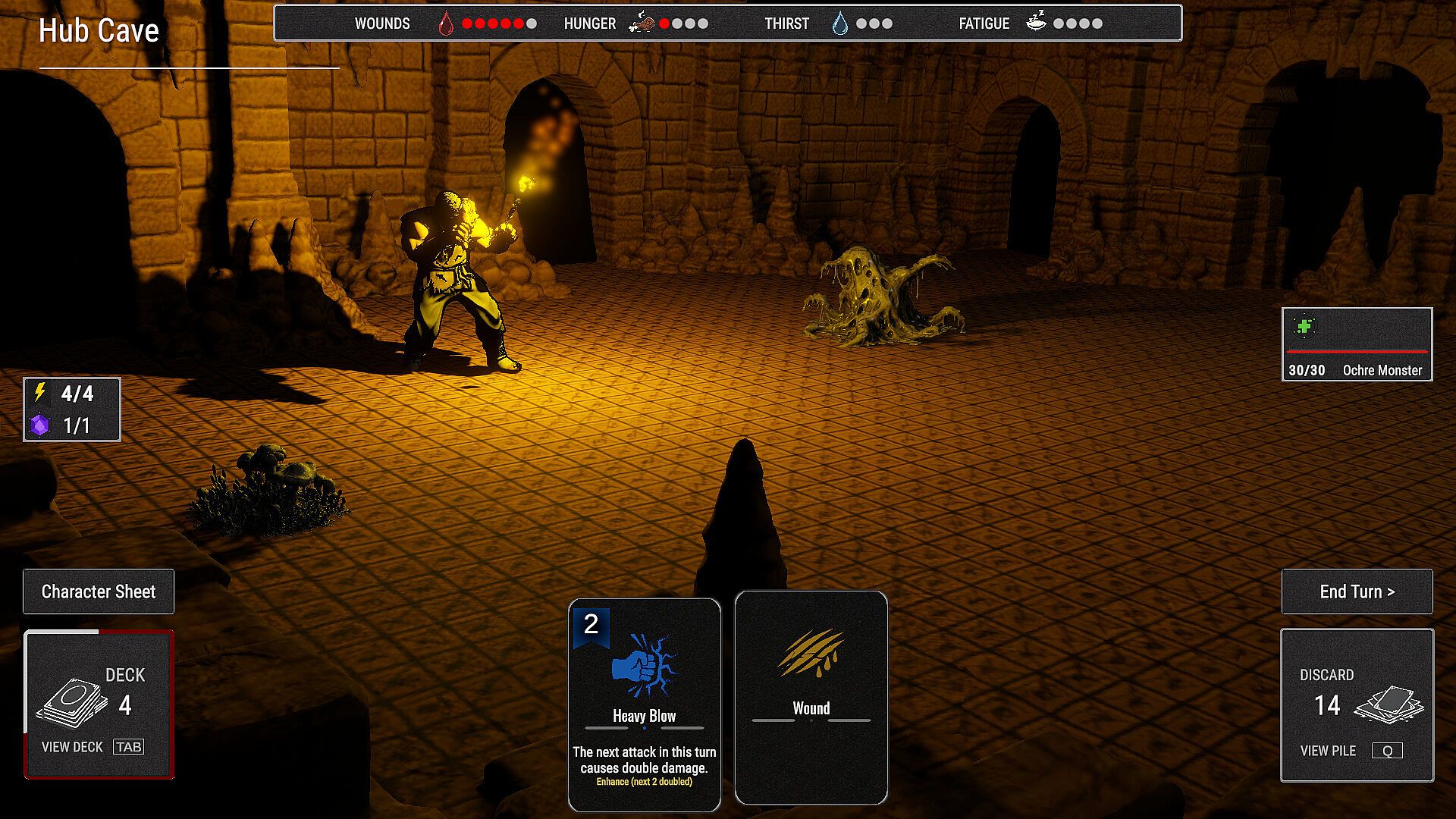
The deck serves as the central system for survival. Wounds, skipped meals, and periods without rest add cards that occupy space in the hand and slow progress. Players must decide whether to retain these cards, purge them through specific actions, or push forward despite the burden. Time advances through deck cycles, so a compact deck allows faster movement while a cluttered one delays critical decisions like eating or resting.
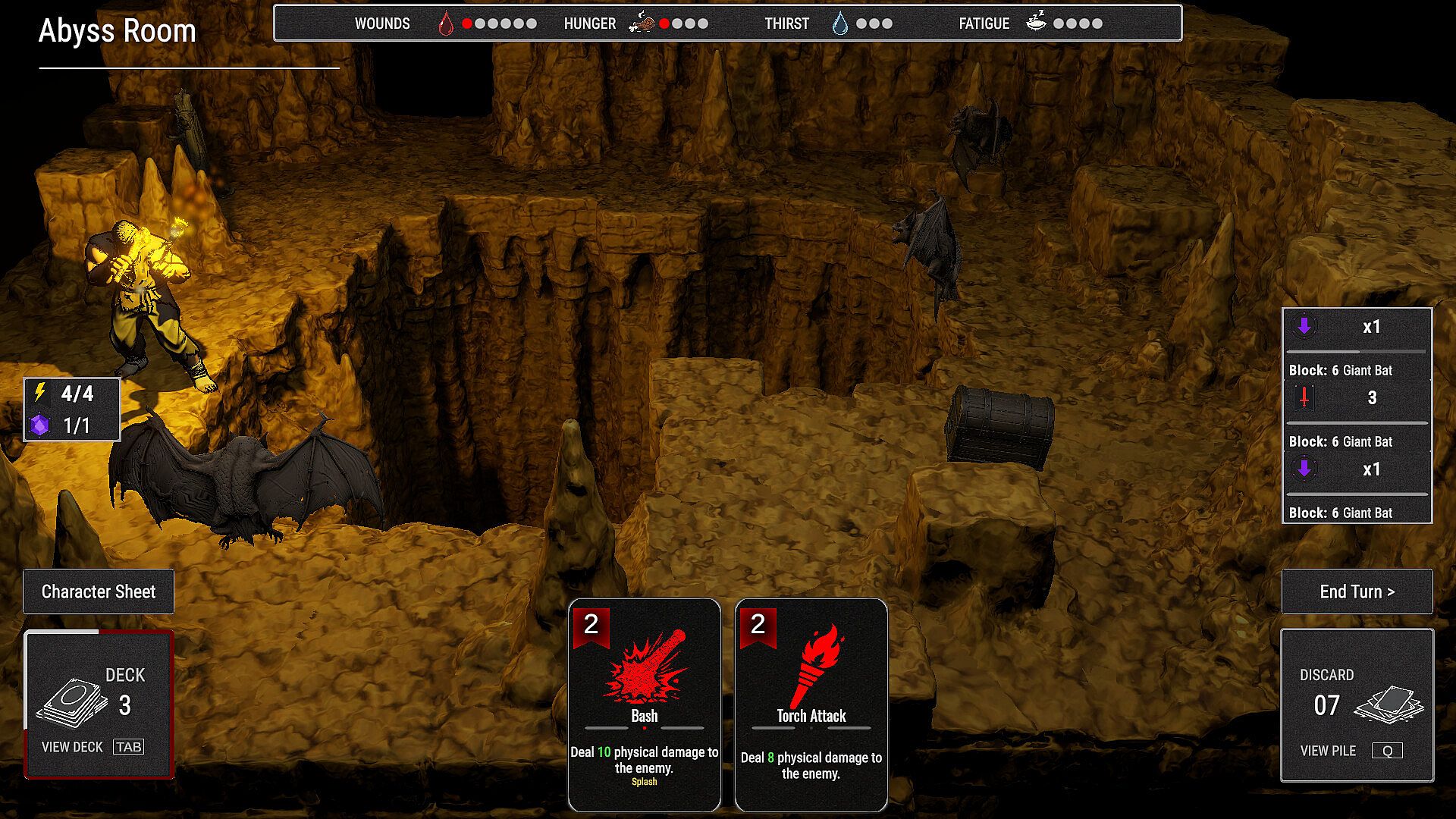
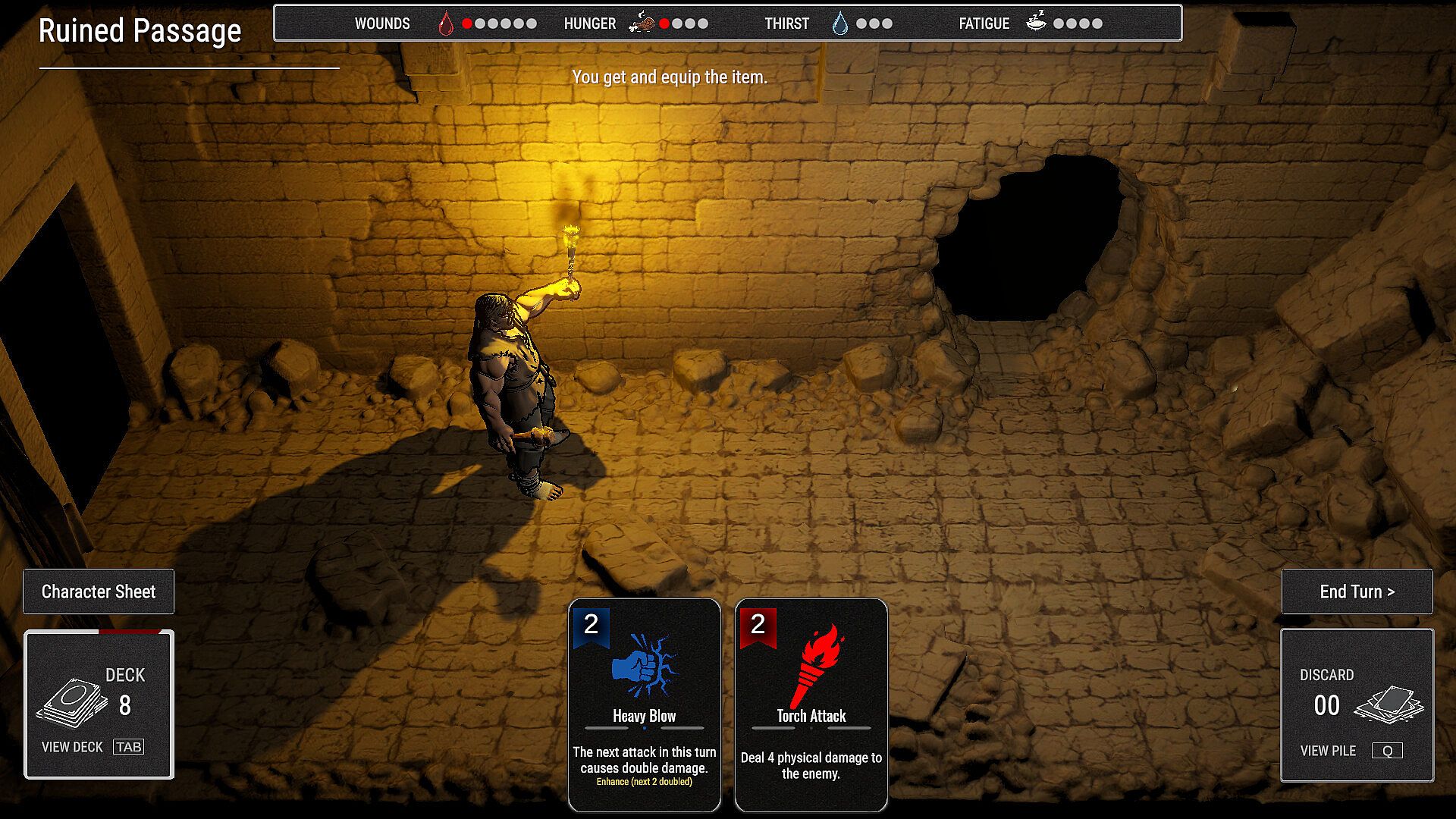
Weapons and spells contribute cards to the deck, while enemy effects such as poison or disease insert negative cards that must be handled. Memories surface as cards that reveal fragments of backstory. Torch light operates on the same cycle system, forcing choices about resource use in dark areas. Procedural generation creates unique layouts for each run, with rooms and encounters that persist within that descent. Backtracking and mapping become viable strategies because the environment tracks player actions across the current attempt.
Character creation begins with one of four starting points: Brute, Contrabandist, Elven Apprentice, or Dwarf Acolyte. These provide initial memory fragments and playstyles but do not restrict later development. Any build path remains open as long as the player can sustain the required deck management and resource decisions.
Game Modes
Submundus operates entirely in single-player runs. Each descent generates a fresh underground world with its own rooms, encounters, and faction interactions. Players may align with local peoples, oppose them, or avoid contact while uncovering personal history and seeking an exit. The roguelike structure means failure ends the run, but successful navigation allows continued exploration of the same generated space until the surface is reached or the attempt collapses.
Key Mechanics
Everything in the game translates into cards. Equipment grants abilities or effects as playable cards. Environmental hazards and combat outcomes add status cards that affect future draws. Faction relations influence available encounters and resources, adding layers to route planning. The persistent nature of a single run encourages deliberate pacing and risk assessment rather than repeated short attempts.
Progression focuses on deck refinement and character growth within one descent. No separate campaign or persistent world exists outside individual runs. The system rewards careful management of hunger, thirst, fatigue, and injury alongside tactical card play.
Is It Worth Playing?
Submundus appeals to players who enjoy roguelike deckbuilders that integrate survival systems directly into the core loop. The emphasis on deck bloat as a tangible penalty and time pressure creates a distinct experience compared to traditional card combat games. Those interested in procedural underground exploration, faction choices, and uncovering a personal mystery through repeated runs will find the mechanics align closely with the described systems.
Because the game remains unreleased with no player reviews available, its long-term reception depends on final balance and content depth. Individuals who value single-player strategy titles with strong thematic integration of mechanics should monitor its development for a potential fit.