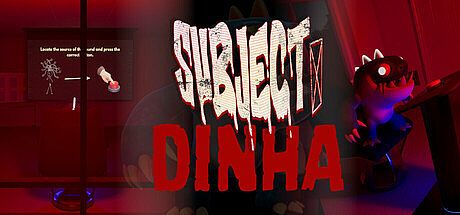


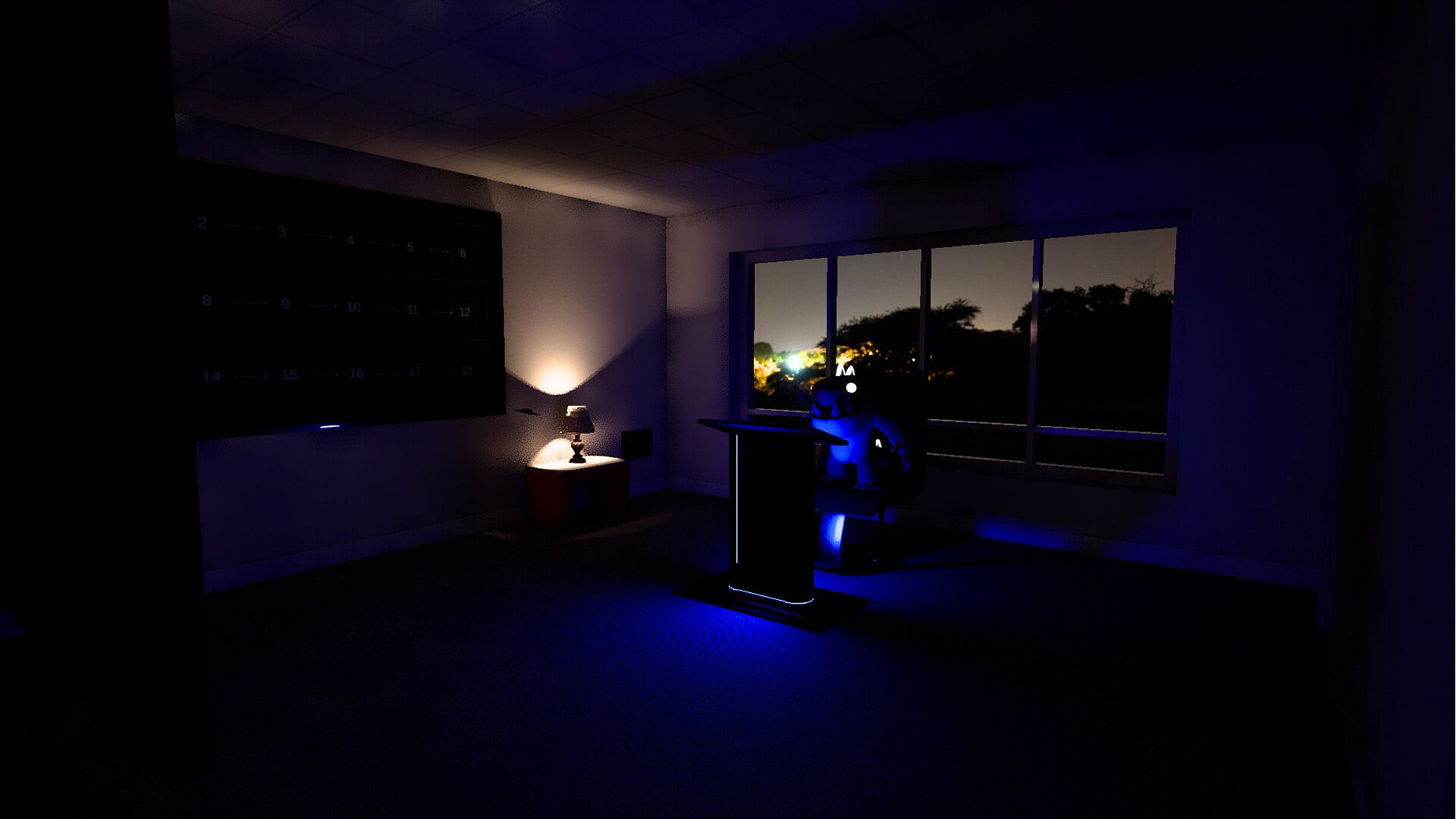
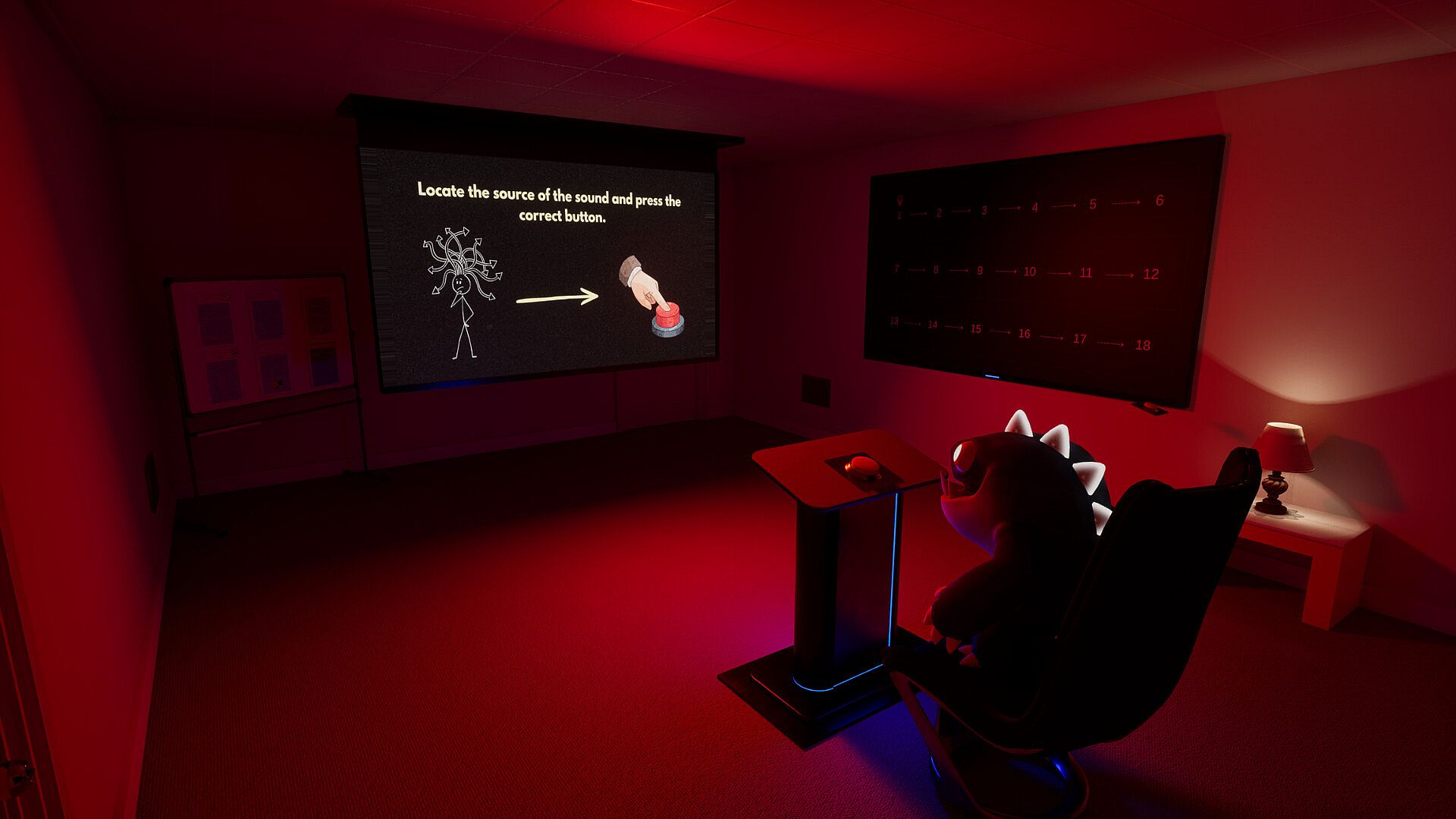
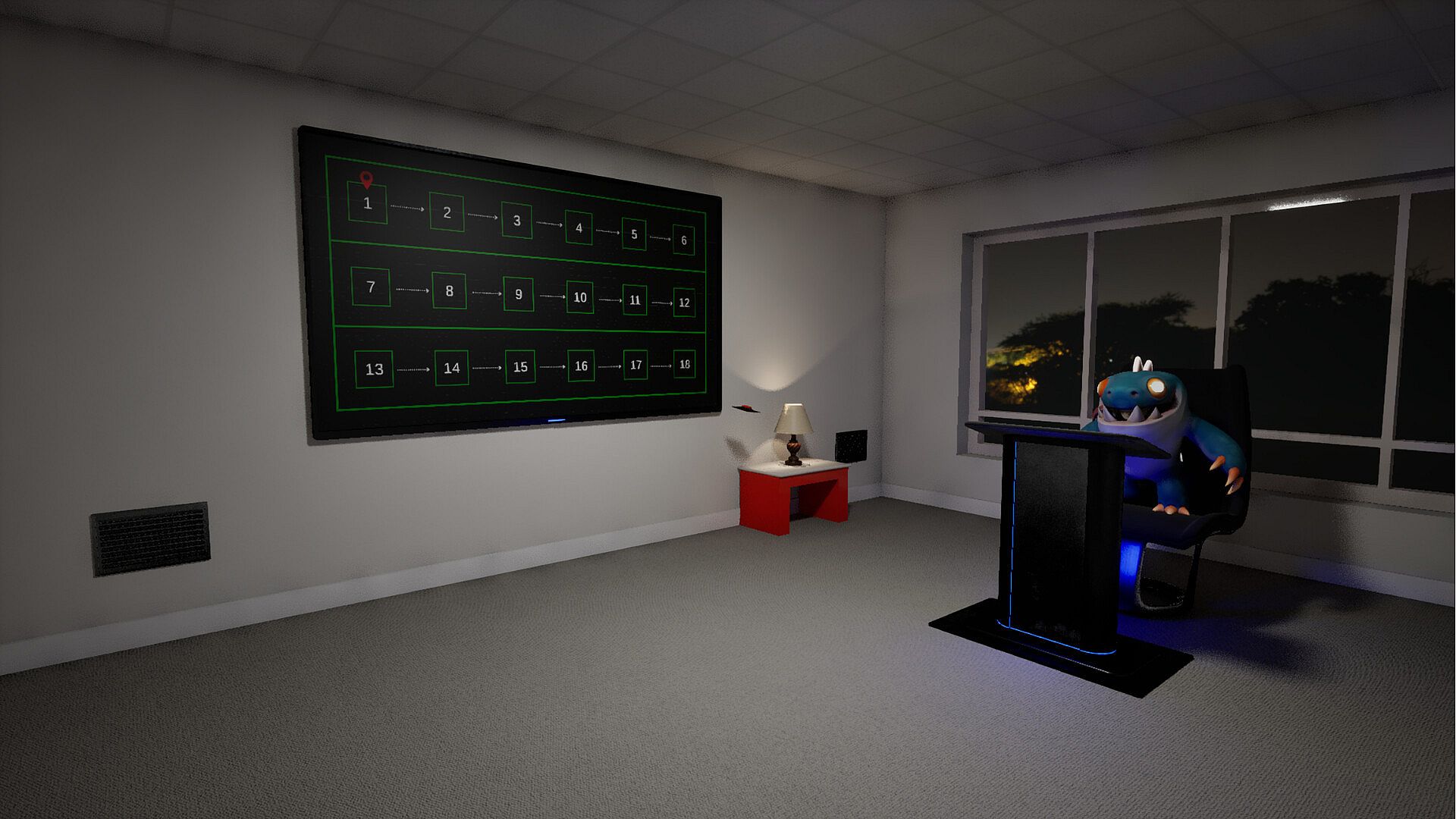
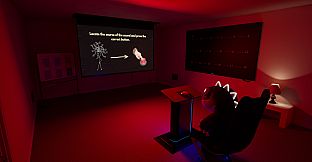
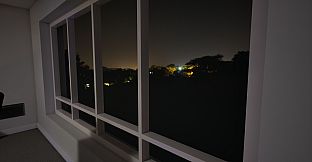
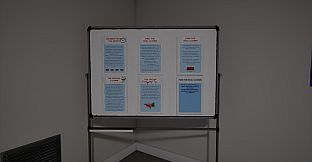
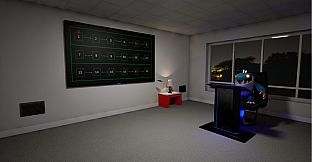
Subject: Dinha is a single-player indie puzzle game built around a strict sequence of logic and memory challenges. Players find themselves locked in an experimental chamber where the only interactive element is a red button. Progress requires completing every challenge across 18 tests without error, as any mistake resets all advancement back to the start.
Gameplay
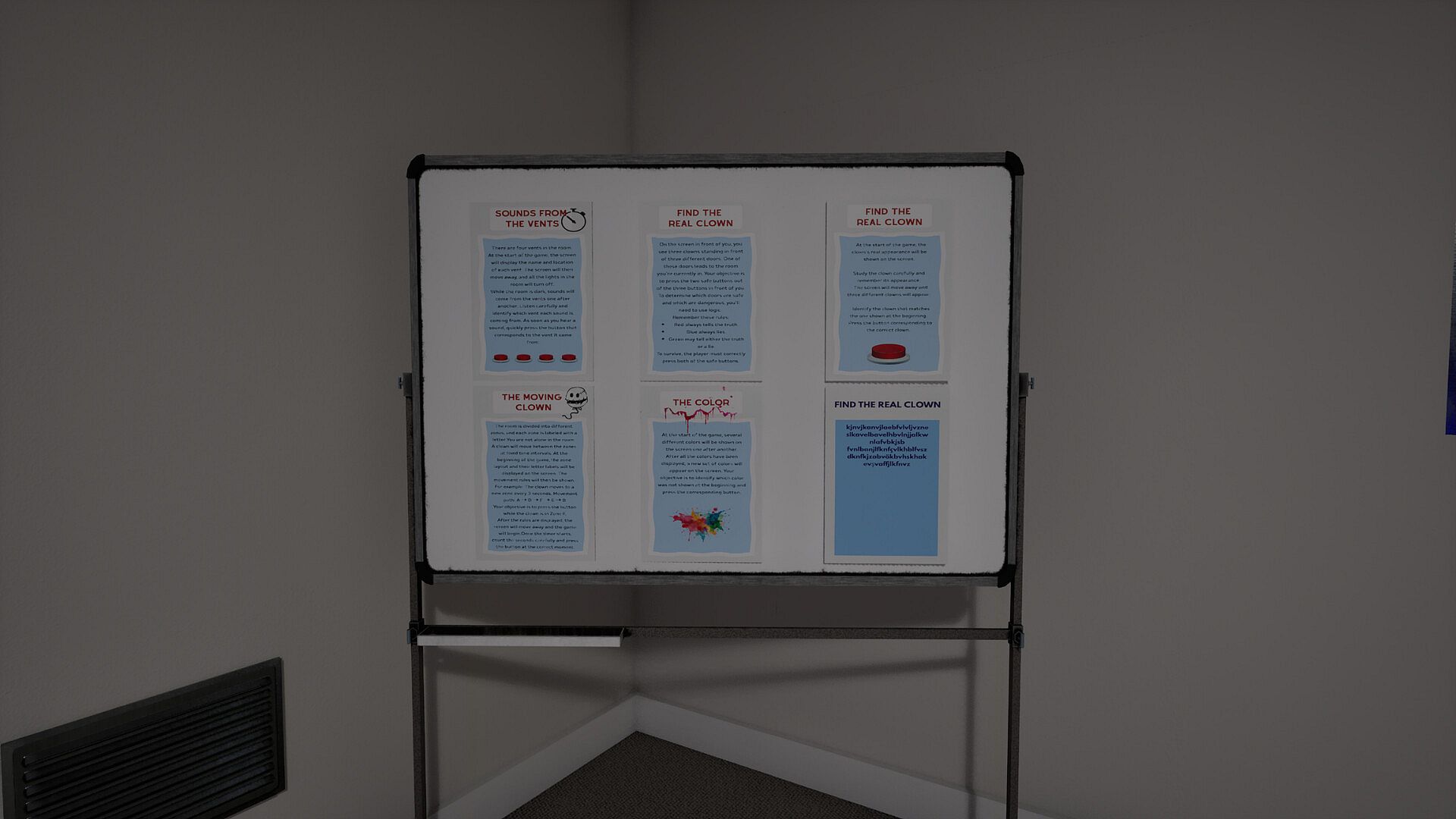
The core loop centers on observation, rule application, and precise timing. Each test presents a self-contained scenario that demands full attention to visual or auditory cues. Lights may cut out suddenly, forcing quick identification of sound sources from specific vents. Clowns shift positions at set intervals, and players must match their actions to pre-given rules about when to press the button. Screens display sequences of colors or images that must be recalled exactly for later questions. Other tests require distinguishing the genuine clown among decoys or selecting the single door that returns to the current room based on guard patterns. These mechanics emphasize concentration and pattern recognition over speed or reflexes.
Failure at any point erases accumulated progress, creating a high-stakes environment where consistency matters more than individual skill. The design keeps interactions minimal, directing focus entirely toward interpreting the rules and executing the correct button press at the right moment.
Game Modes
The game offers one primary experience: a linear campaign of 18 tests. Each test incorporates six distinct mini-games drawn from the same set of challenge types. These include vent sound identification during blackouts, position-based clown rules, image comparison under stated criteria, color sequence memorization, real clown detection, and correct door selection among guarded options. Variations appear across the tests to maintain challenge without introducing new systems. There are no separate modes, multiplayer options, or alternate paths. The structure remains single-player throughout, with the full sequence required for completion.
Core Mechanics and Challenge Structure
Every test builds on the same foundation of rule interpretation and error-free execution. Players receive instructions before each segment, then apply them to the presented stimuli. The red button serves as the sole control, turning every decision into a binary choice that either advances or resets the session. This setup rewards careful listening and visual analysis while punishing lapses in attention. The 18-test length ensures repeated exposure to the six mini-game formats, with increasing complexity likely arising from rule variations rather than entirely new concepts.
Is It Worth Playing?
Subject: Dinha targets players who enjoy precise, rule-driven puzzle games with immediate consequences for mistakes. Its single-player focus and reset-on-failure design suit those comfortable with trial-and-error sessions that demand sustained focus. The upcoming release on PC means interested players can evaluate the full experience once it launches. The mechanics described align with casual indie titles that prioritize mental engagement over action or exploration. Those seeking short, repeatable logic challenges may find the format appealing, while players preferring open-ended or forgiving progression might look elsewhere. No player reviews or update history exist yet due to the scheduled August 2026 launch.