


Space Planet Explorer is a roguelite strategy, indie, simulation, and adventure game set in deep space. Players take command of a survey ship to chart real celestial bodies using scientific data from published research and NASA missions. The experience centers on resource management and careful route planning across 76 actual planets, moons, and exoplanets, from the Moon and Mars to extreme worlds like WASP-12b and the planets of TRAPPIST-1.
Gameplay
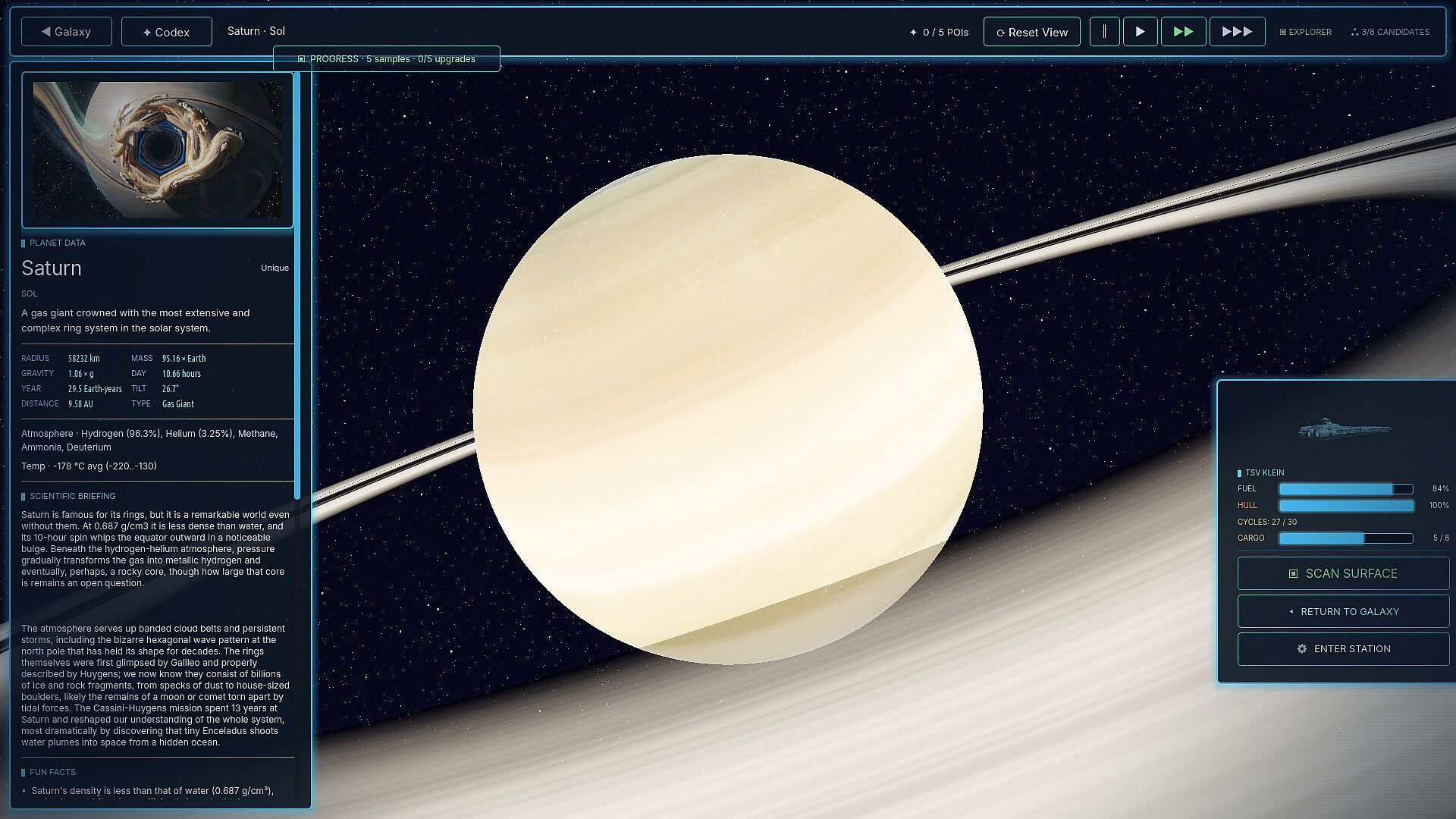
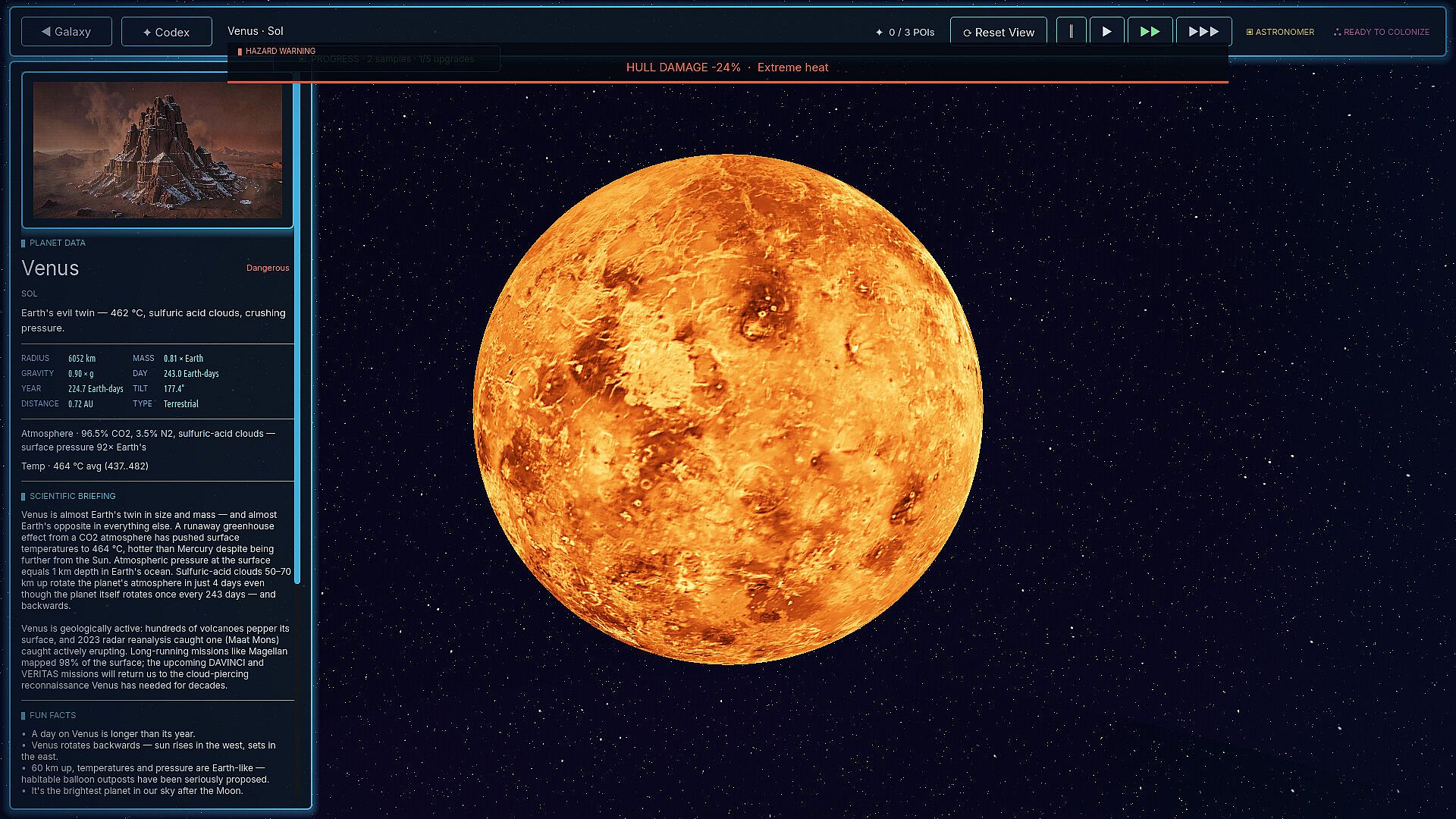
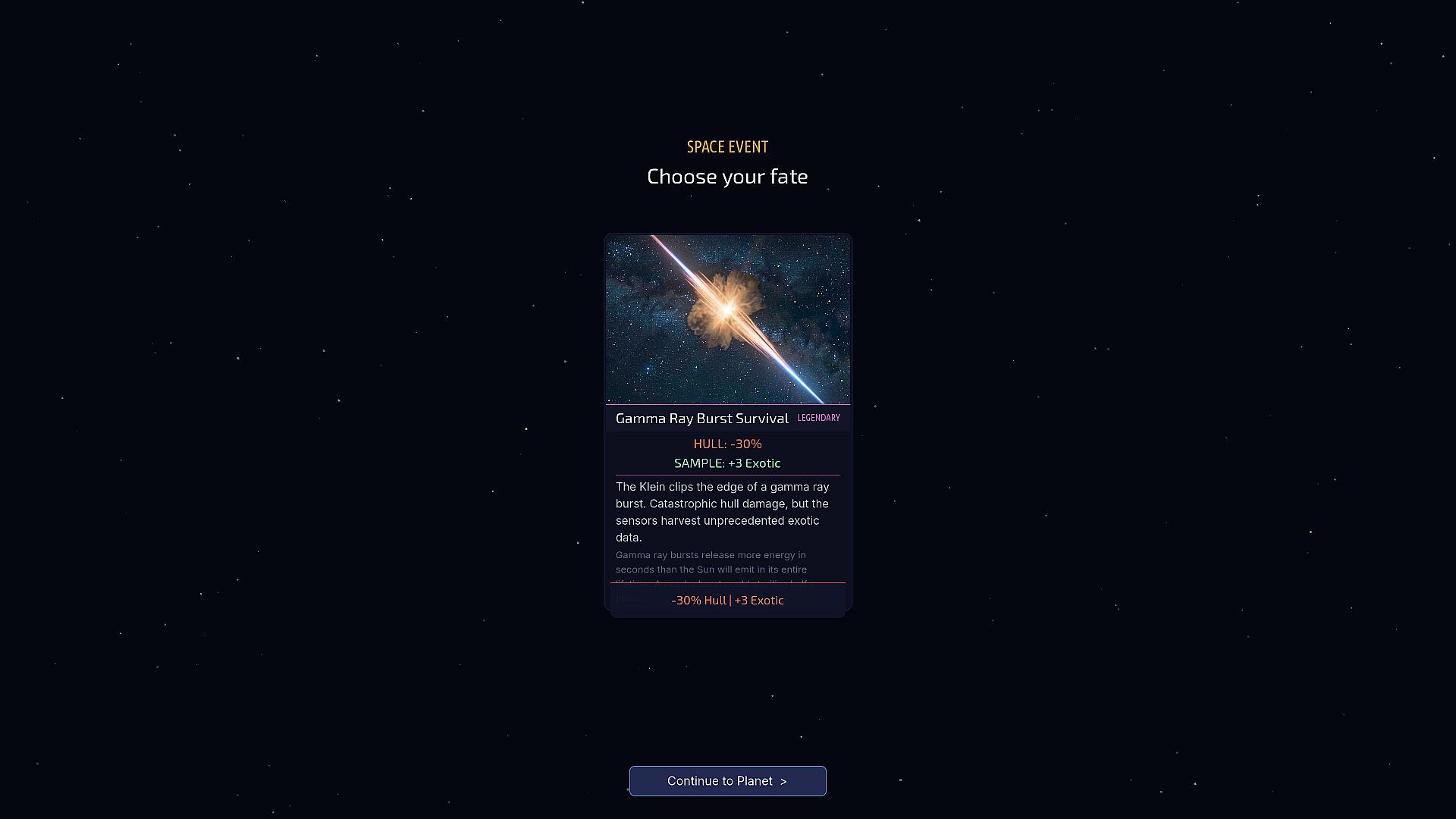
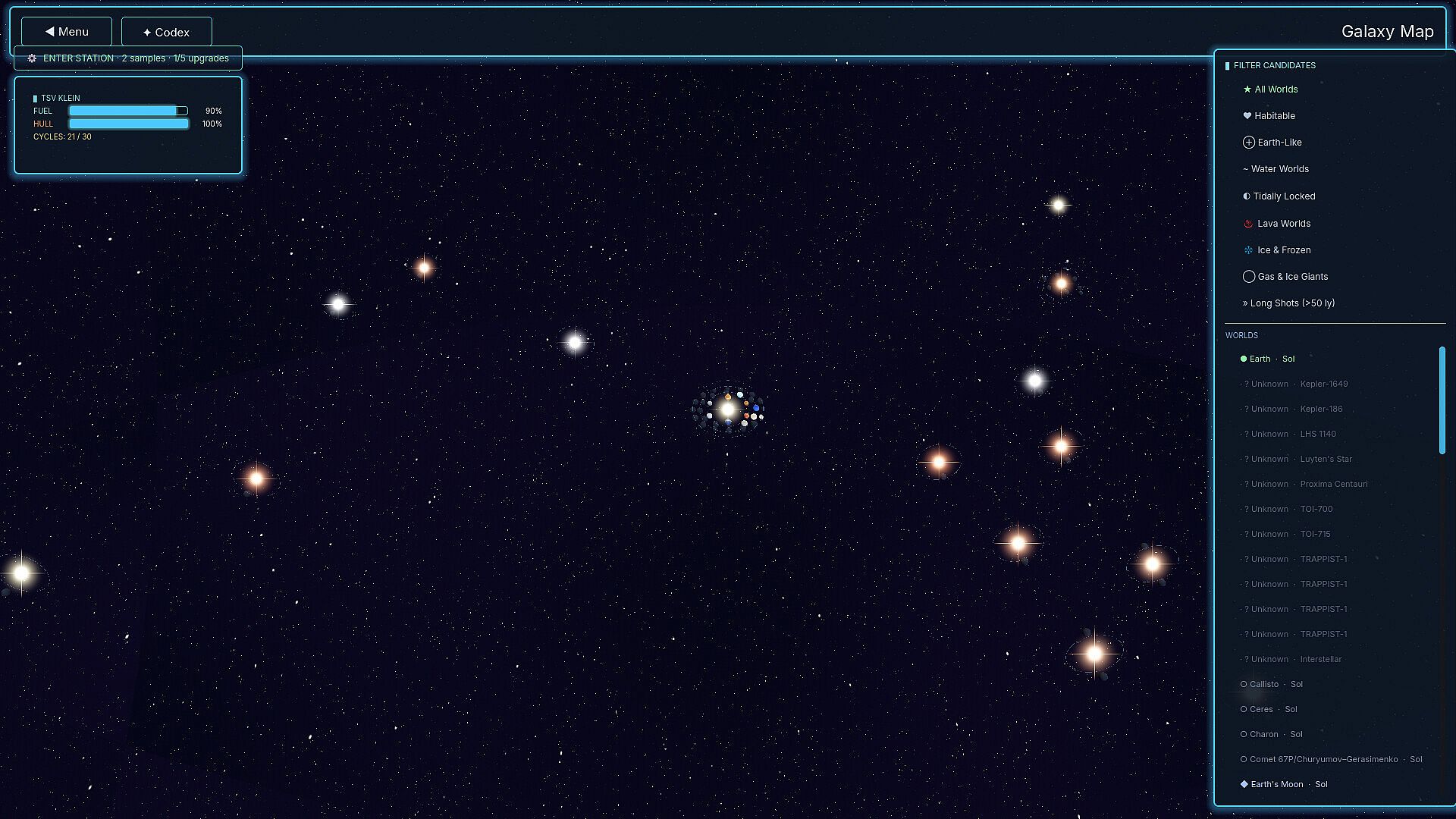
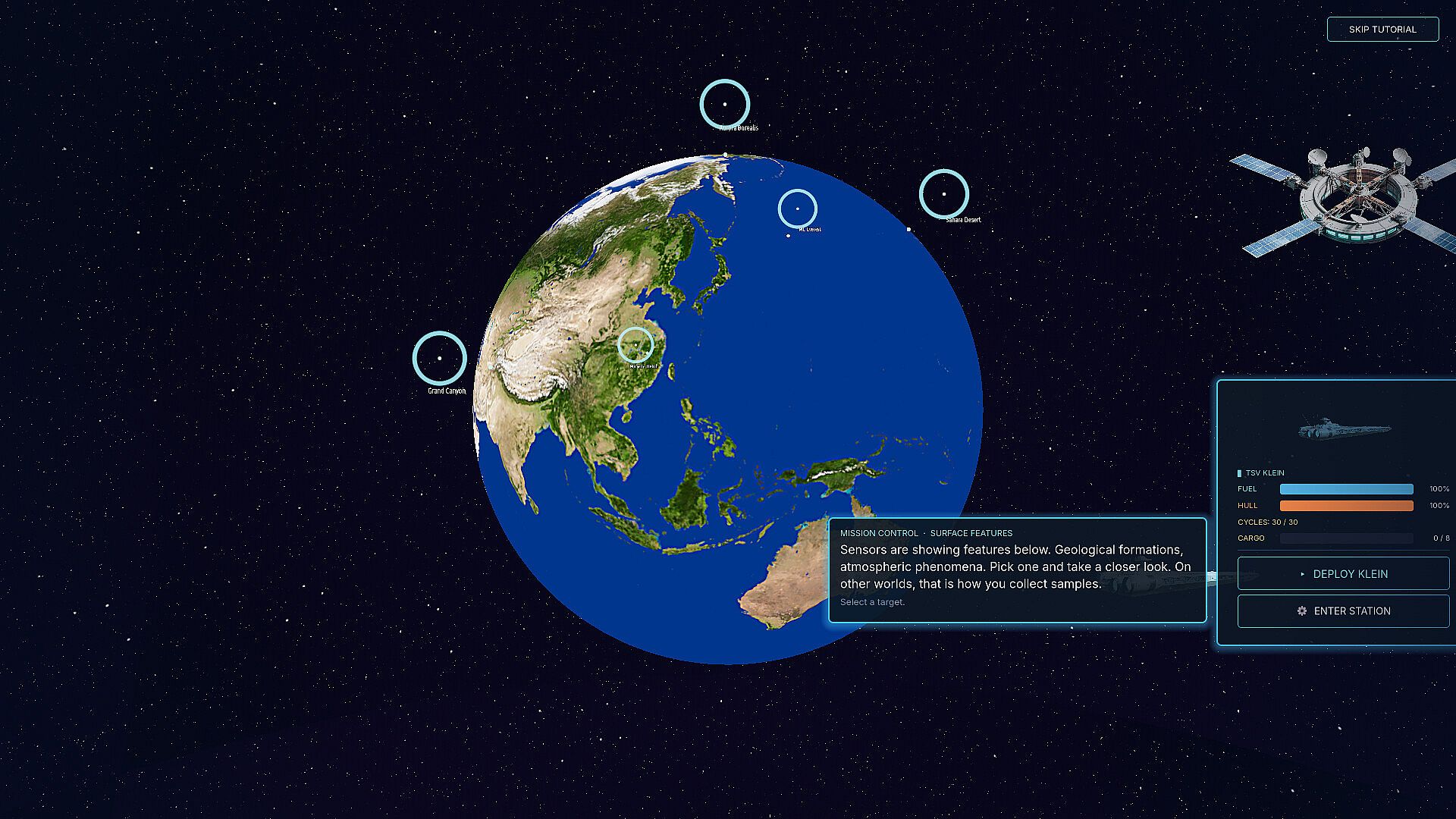
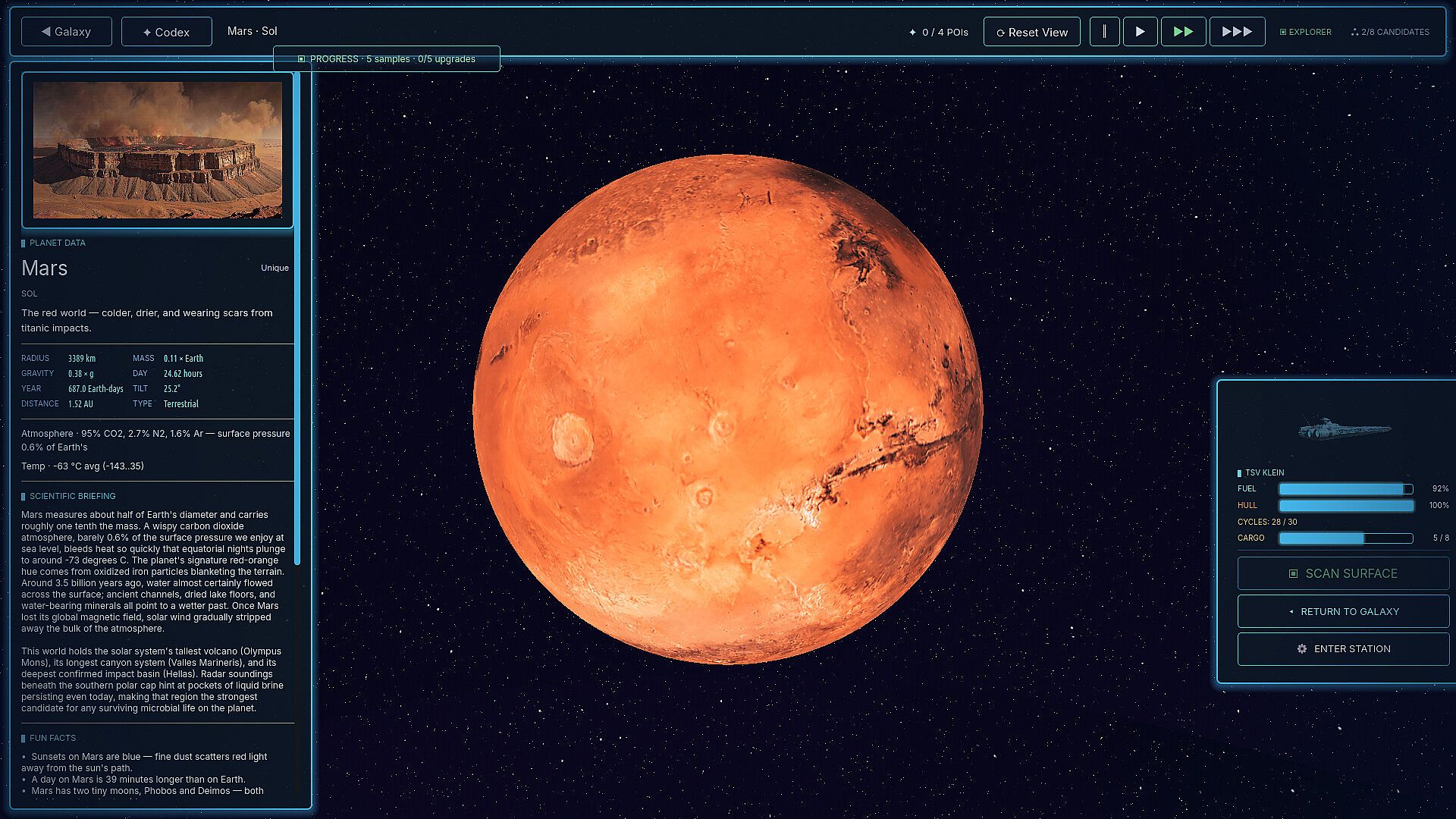
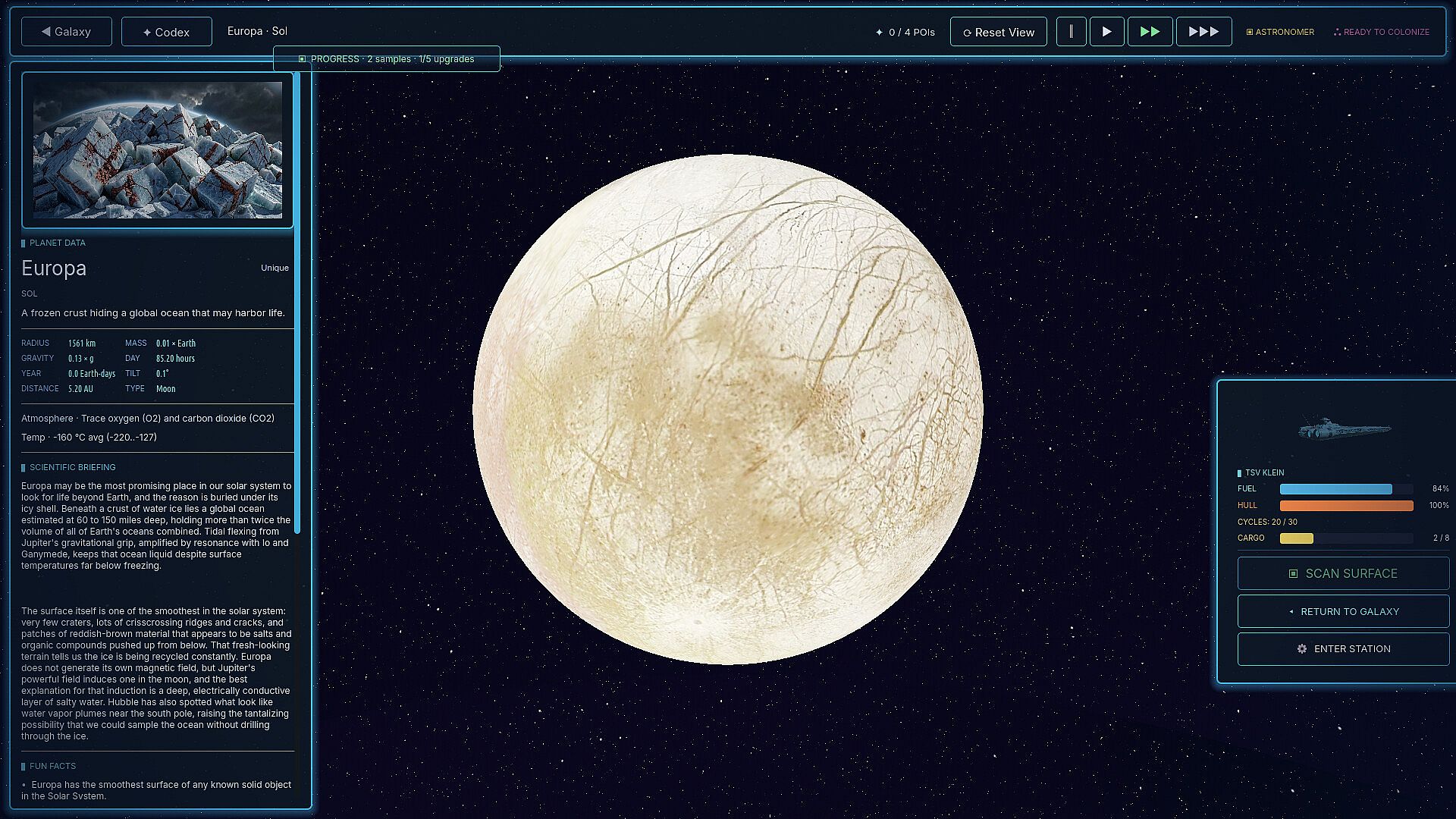
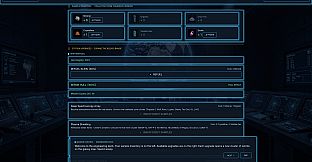
The core loop involves plotting jumps between celestial bodies while tracking limited fuel, hull integrity, and mission time. Distance between targets consumes resources, and no automatic refueling exists. Hull damage accumulates from radiation, acid, heat, or volcanic activity based on each world's real properties. Unvisited locations remain hidden until scanned, turning discovery into a gradual process earned one world at a time.
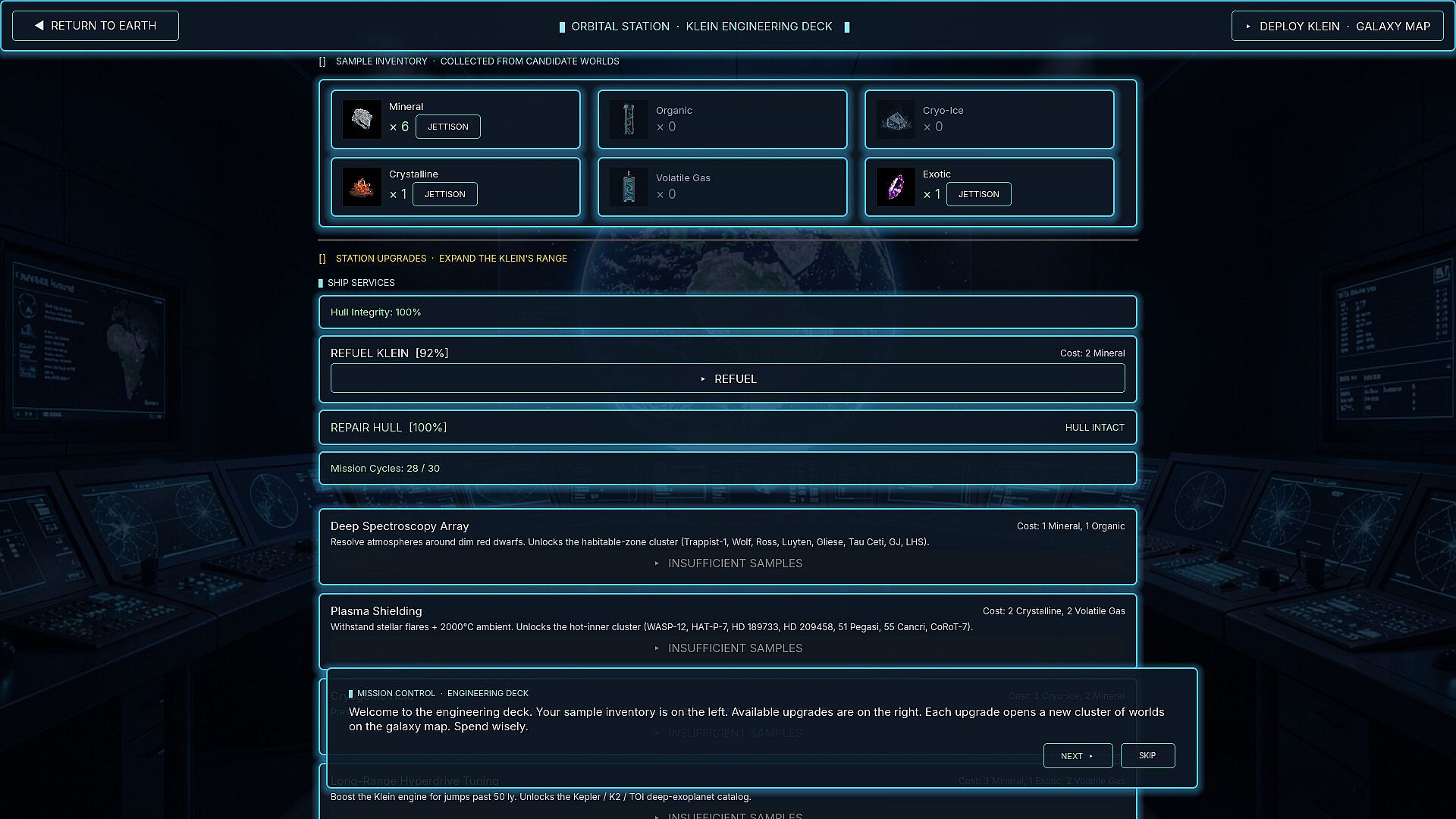
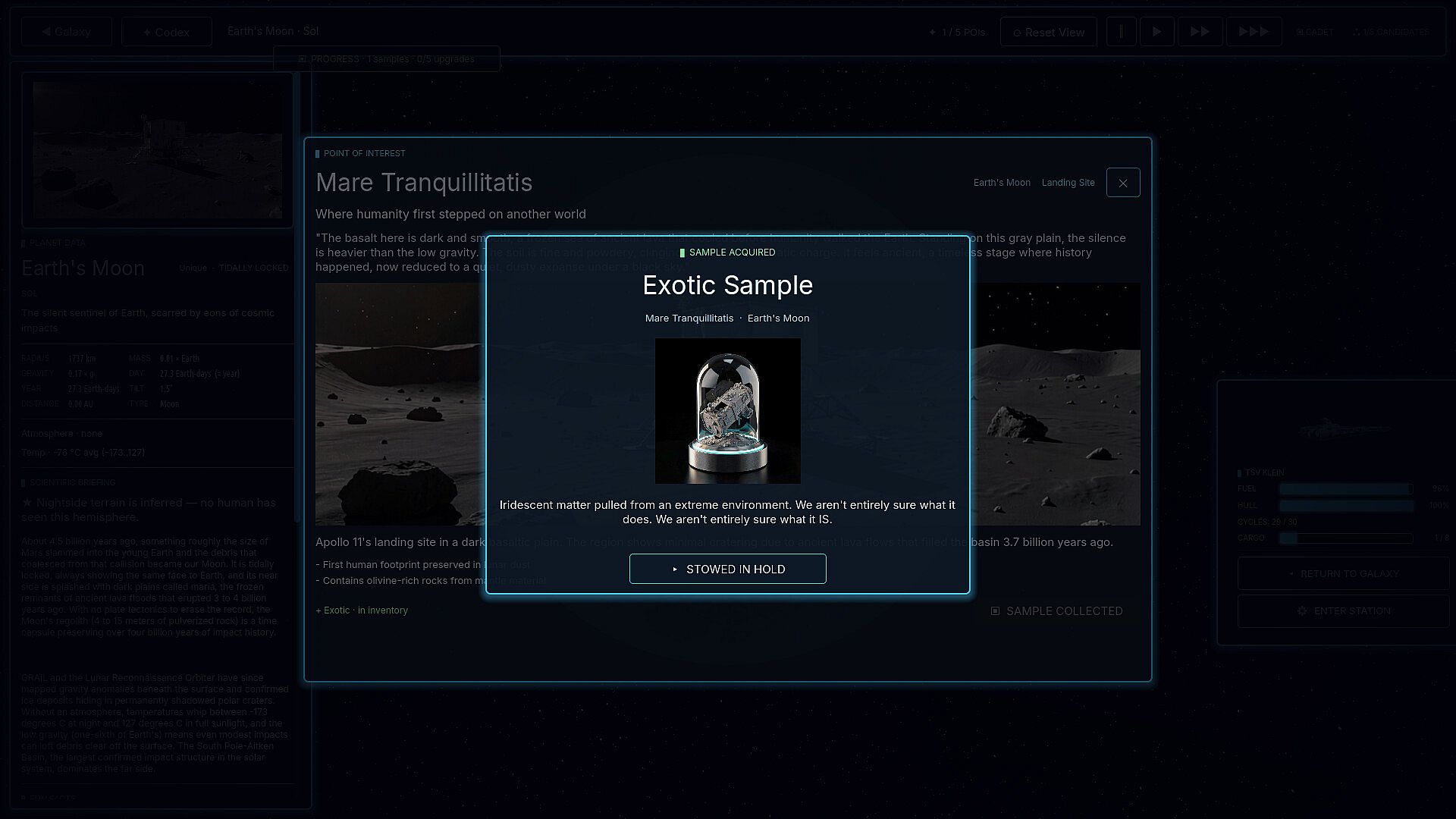
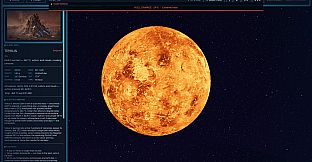
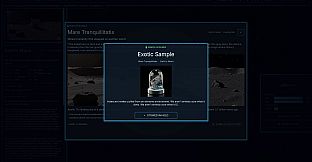
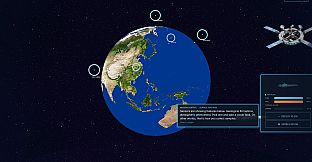
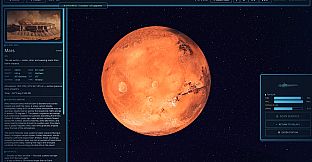
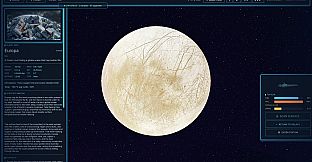
Orbiting each body reveals a true 3D globe. Surface scans uncover specific points of interest such as Olympus Mons, the Grand Canyon, Titan's Kraken Mare, and Jupiter's Great Red Spot, each paired with a detailed science briefing. Six types of samples can be collected and spent at Hesperus Station for upgrades that extend reach into further systems. Four voiced science officers provide commentary on discoveries and milestones, while players select from a fleet of vessels before each run.
Every temperature, atmosphere, gravity value, and additional fact draws directly from verified astronomical sources. The result is a simulation where scientific accuracy shapes both risk and reward, with dangerous planets offering higher sample yields for those who complete the scans successfully.
Game Modes
Space Planet Explorer operates through repeated short runs that emphasize permadeath. Exhausting fuel or hull ends the attempt immediately, requiring a fresh start with lessons carried forward from prior attempts. Route choices determine which worlds receive full surveys and which colony candidates get selected at the end.
Multiple endings emerge from these selections, reflecting the specific bodies marked for future settlement. The structure rewards efficient planning and measured risk-taking, as each run sharpens understanding of fuel costs, environmental hazards, and optimal scanning order across the Solar System, Proxima Centauri, TRAPPIST-1 planets, Kepler worlds, and dwarf planets from Ceres to Sedna.
Exploration and Scientific Detail
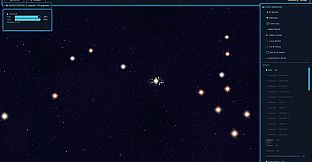
Navigation relies on a fog-of-war system where only visited locations become visible. Players weigh the cost of longer jumps against the potential data return from high-risk targets. Real properties of each body influence damage types, so a volcanic moon demands different preparation than a radiation-heavy exoplanet.
Progression centers on sample collection and station upgrades rather than combat or story branches. The four officers add personality through voiced lines that highlight key moments without altering core mechanics. Ship selection provides variety in handling and capacity before committing to a route.
Is It Worth Playing?
Space Planet Explorer suits players who enjoy roguelite runs combined with simulation elements and factual astronomy. The emphasis on resource scarcity and permadeath creates tension in every decision, while the real-world data behind each body adds educational value to successful scans. Those seeking relaxing exploration may find the limited resources and sudden mission failures too restrictive, but the format rewards repeated attempts and strategic improvement.
Availability on PC allows direct access to the full feature set without additional platforms. The game stands alone as a focused survey experience rather than a broad sandbox, appealing most to audiences interested in procedural risk management grounded in actual celestial mechanics.