

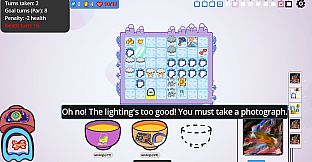
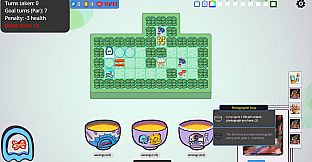

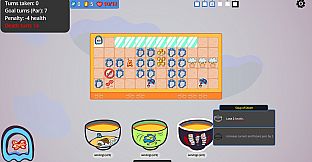
Soup Crawl is a single-player strategy game that blends grid-based puzzle solving with roguelike progression. Players control Sue, a spirit driven by an obsession with soup, as they navigate levels by consuming limited magic soups that enable special movement and environmental interactions. The experience centers on thoughtful resource management across repeated attempts, where each run builds on the last through collected abilities.
Gameplay
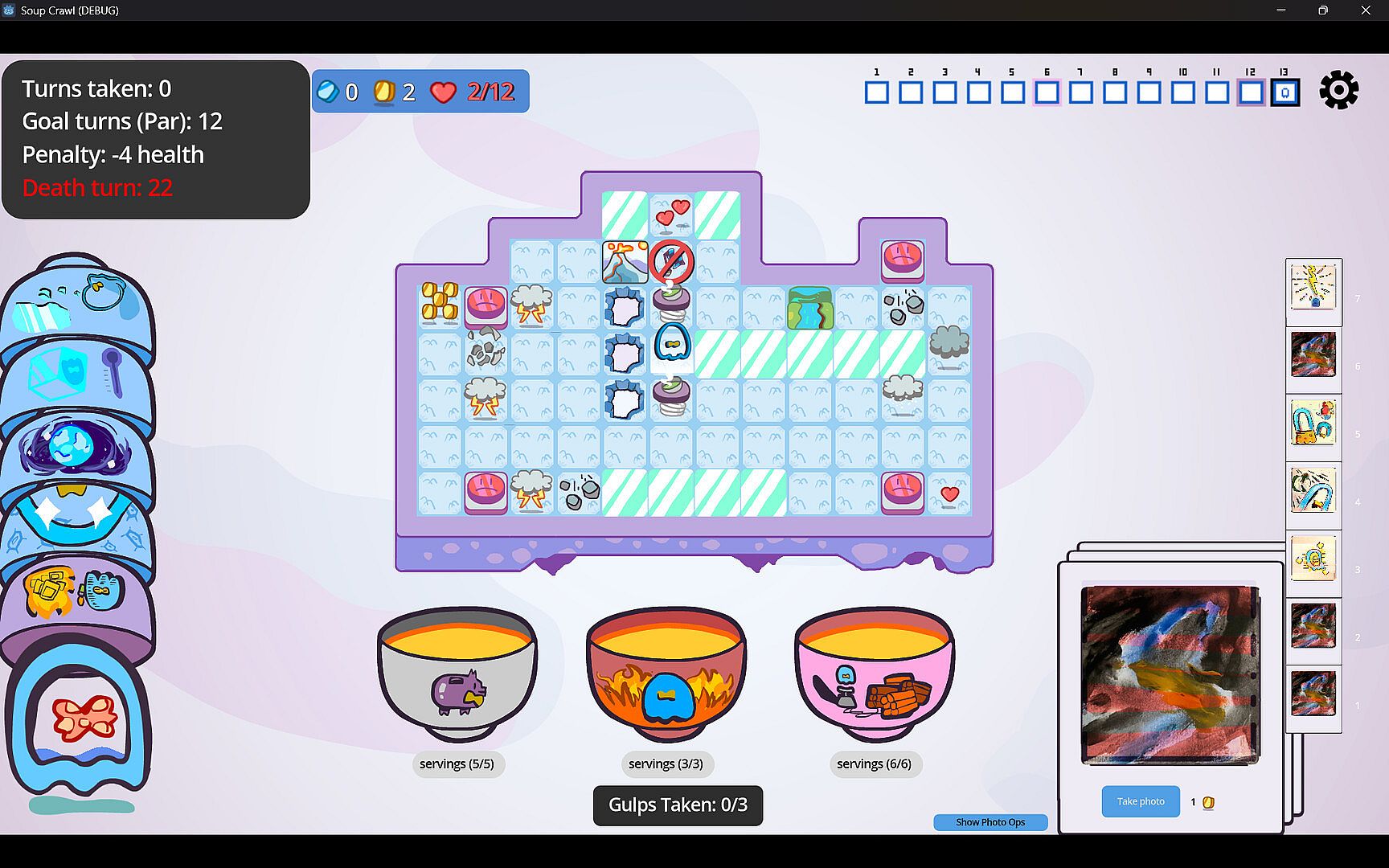
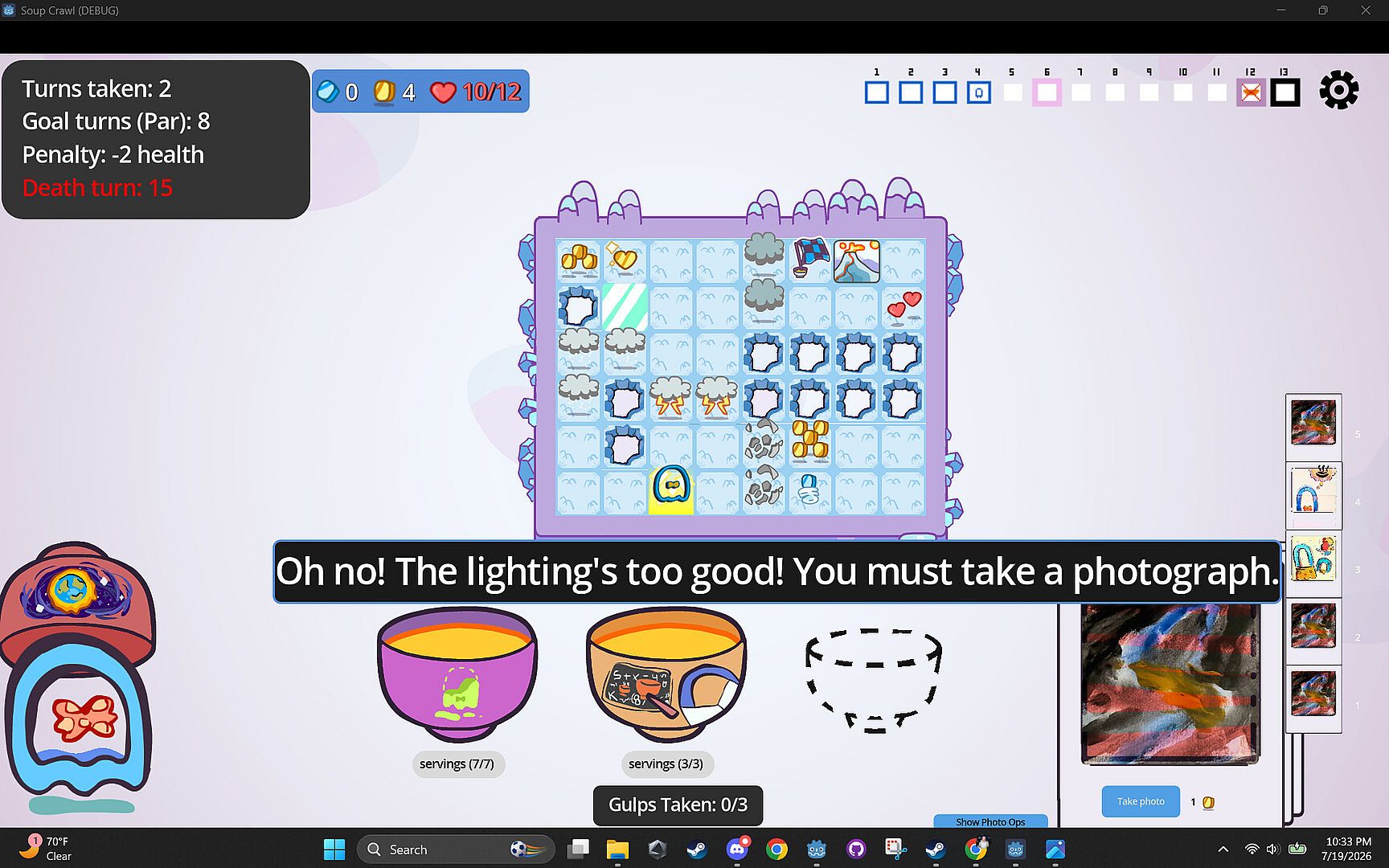
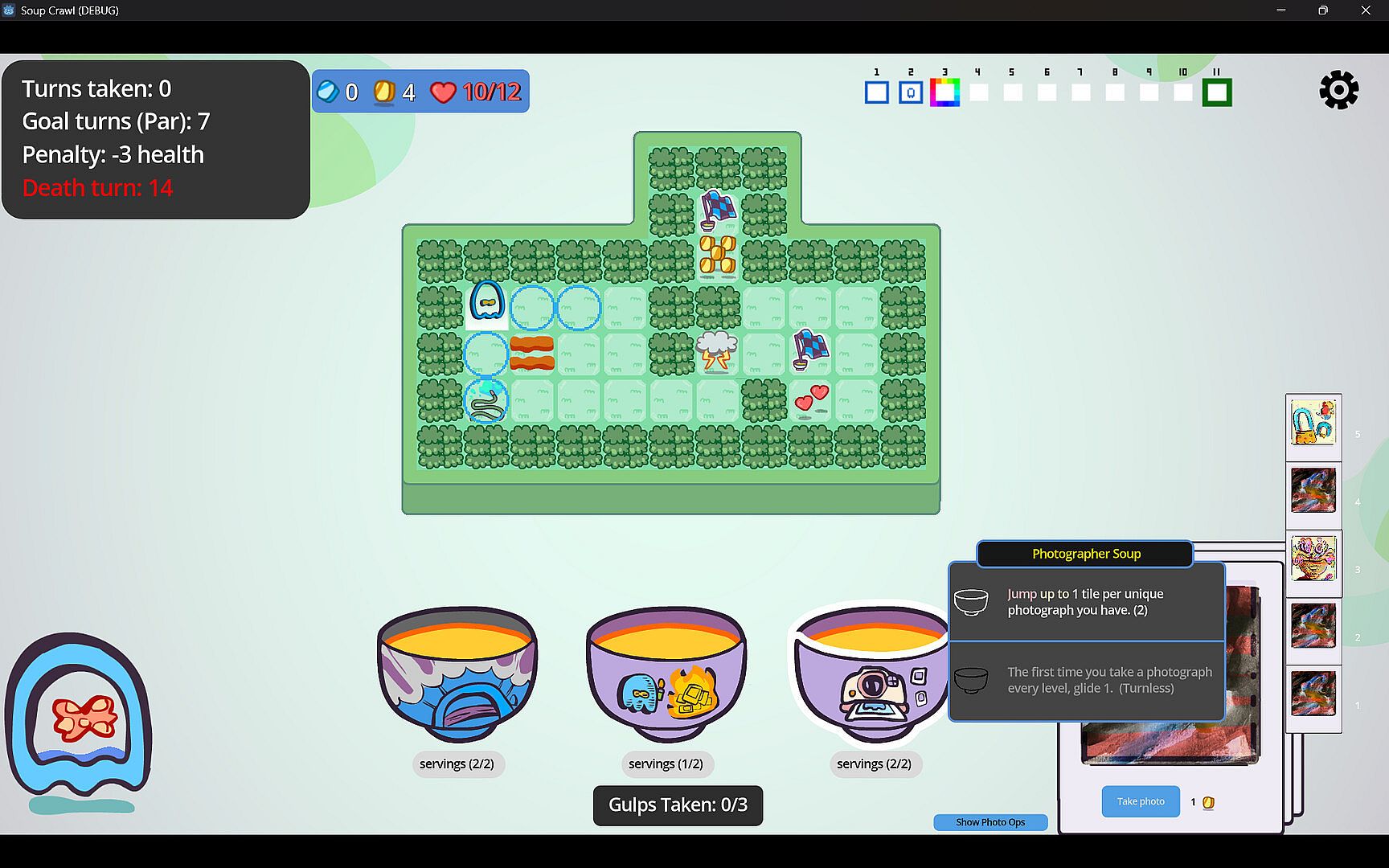
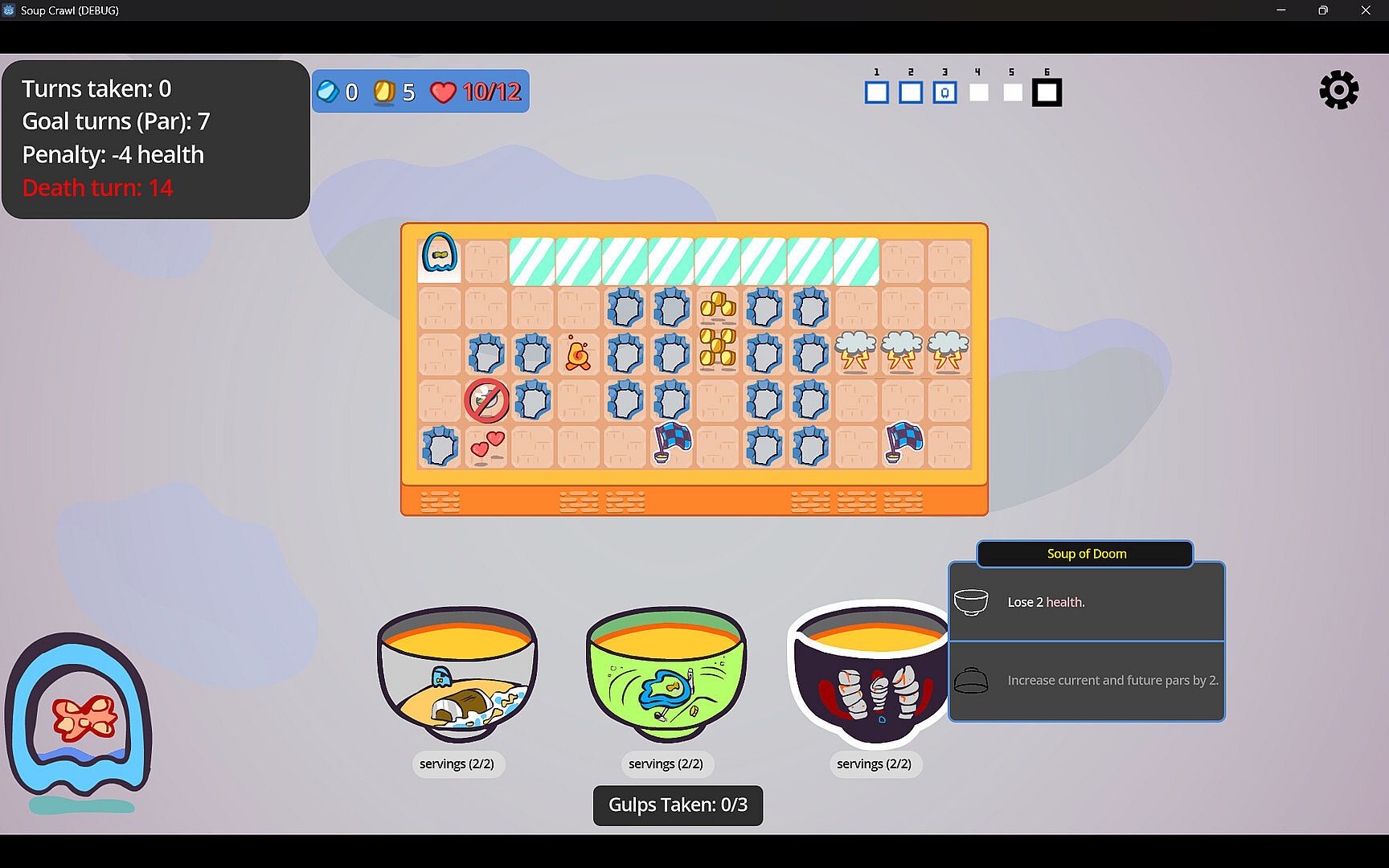
The core loop involves moving across grid layouts while using soups as tools. Each soup type provides a temporary effect such as jumping over obstacles, transforming elements on the map, destroying barriers, or sliding across distances. These effects help solve spatial challenges that require precise positioning and sequencing. Once a soup is depleted, its empty bowl stacks on Sue's head and converts into a lasting passive benefit for the remainder of that attempt. This system turns every consumable into a strategic choice, since the same soup might solve an immediate puzzle or save for a stronger permanent upgrade later.
Levels emphasize careful planning over speed. Players must consider how each action alters the grid state and what options remain for future steps. The limited nature of soups forces prioritization, encouraging multiple paths through the same puzzle to discover efficient solutions. Visual feedback highlights available moves and remaining resources, keeping focus on spatial reasoning and long-term planning.
Game Modes
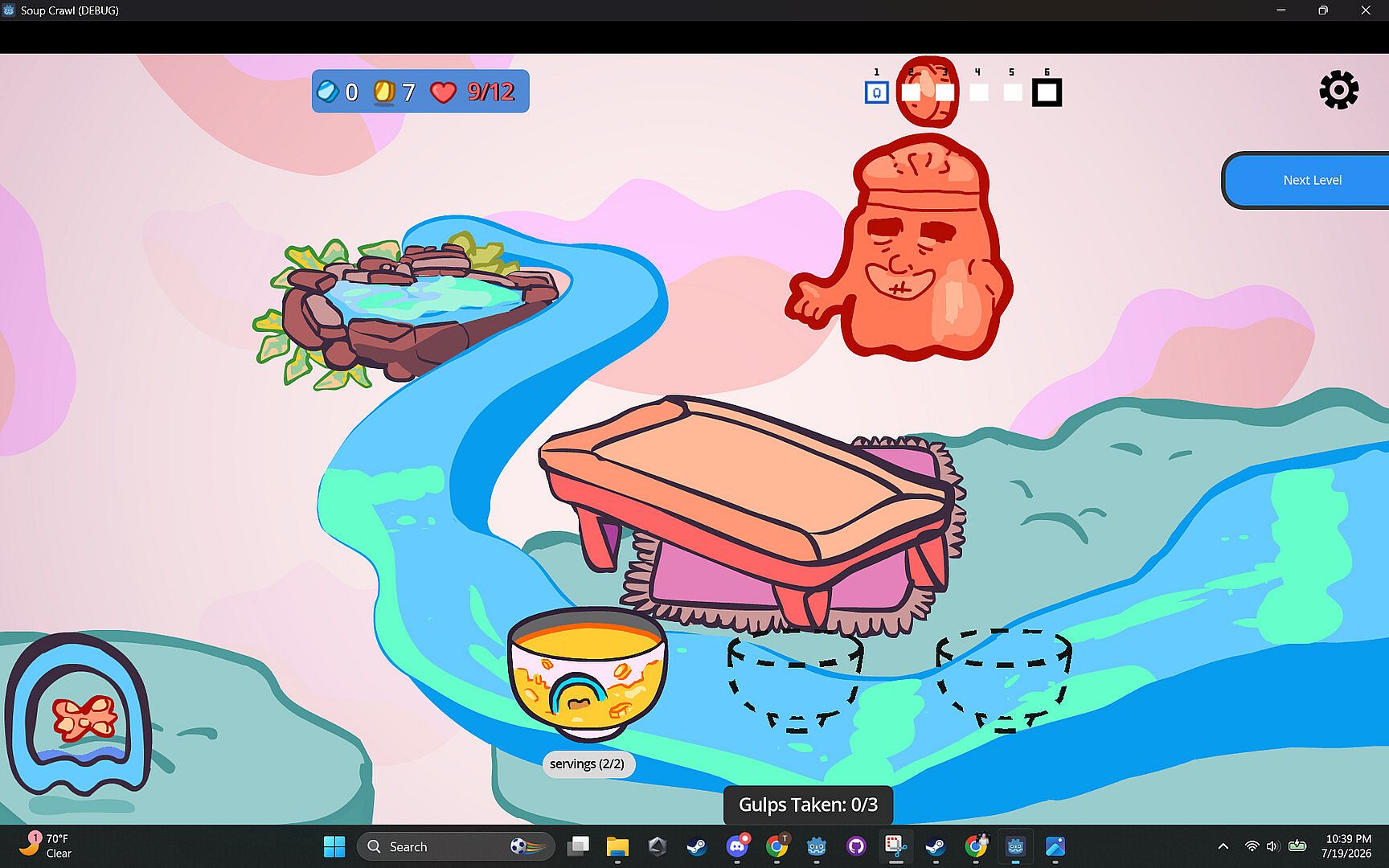
Soup Crawl operates as a single-player experience built around repeated runs. Each attempt presents a sequence of grid puzzles that grow in complexity, with the goal of reaching new soups and completing the full set of challenges. Progression comes from the accumulating passive abilities rather than permanent unlocks between runs, so every attempt starts fresh yet benefits from the knowledge gained about puzzle layouts and soup interactions.
The structure supports experimentation within a consistent ruleset. Players can approach the same level multiple times, testing different orders of soup use to optimize bowl stacking and ability combinations. This creates a loop of trial, adaptation, and refinement without external variables like multiplayer or branching campaigns.
Mechanics and Progression
Resource conversion forms the central innovation. Soups function as both immediate problem solvers and future power sources, creating tension between short-term survival and long-term strength. Stacking bowls produces varied passive effects that persist until the run ends, allowing builds to emerge organically from the soups encountered along the way. The grid movement remains turn-based in feel, rewarding foresight about how one move opens or closes possibilities for the next.
Because the game is still in development and listed as coming soon, these systems represent the intended foundation rather than a finished product with additional layers. The focus stays on the interplay between puzzle constraints and roguelike resource decisions.
Is It Worth Playing?
Soup Crawl targets players who enjoy deliberate puzzle design paired with roguelike elements of limited resources and incremental power. Those drawn to grid movement challenges and the satisfaction of turning temporary tools into lasting advantages will find the core concept aligned with their interests. The single-player format keeps attention on personal strategy without competitive or cooperative distractions.
At present the title has no released version or user reviews available, so any assessment rests on the described mechanics and the developer's stated goals of merging puzzle and roguelike genres. Individuals who appreciate compact, replayable experiences built around clever consumable systems may want to follow its progress toward release. The emphasis on thoughtful planning over action makes it suitable for sessions that reward careful consideration rather than quick reflexes.