

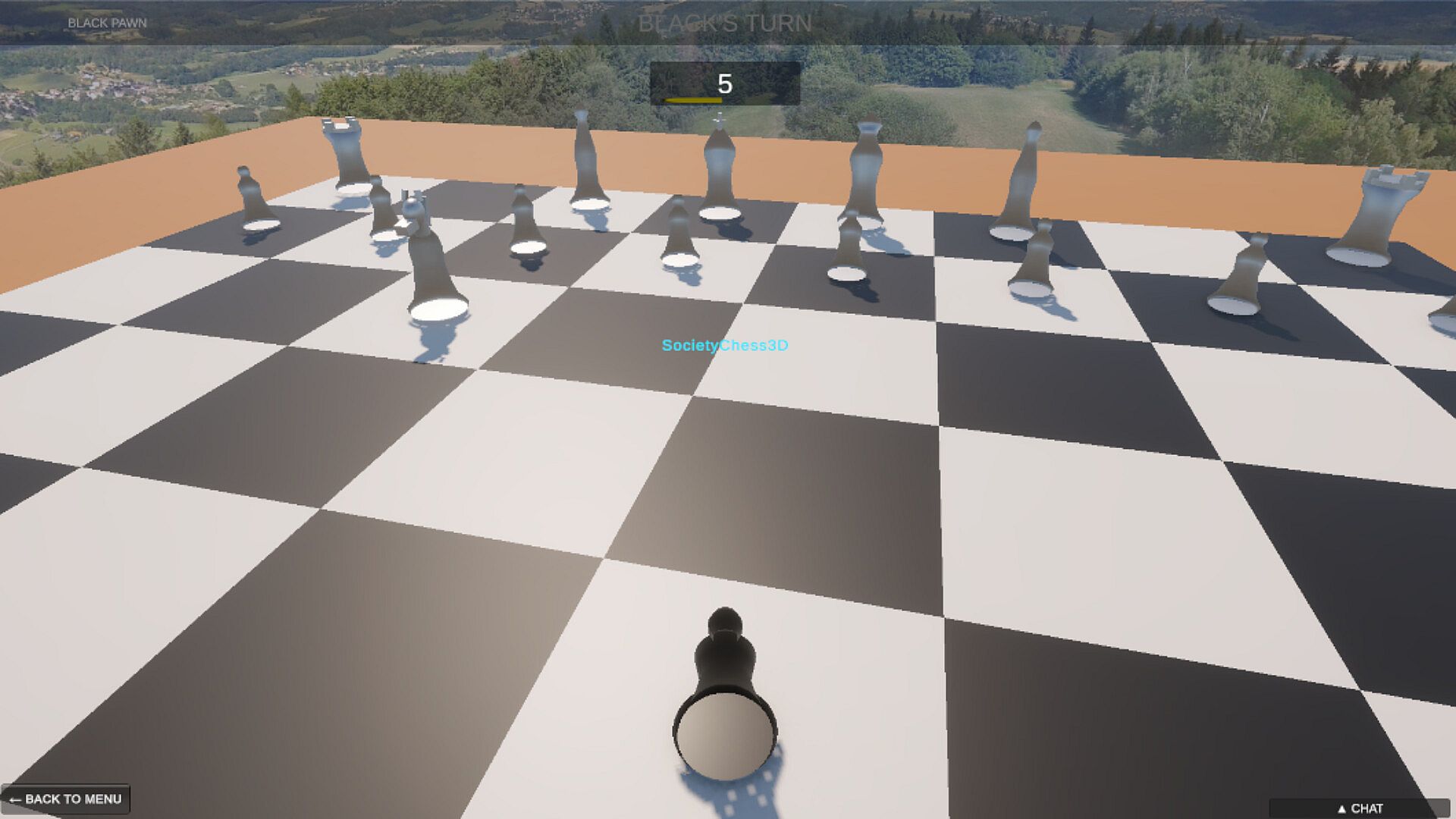
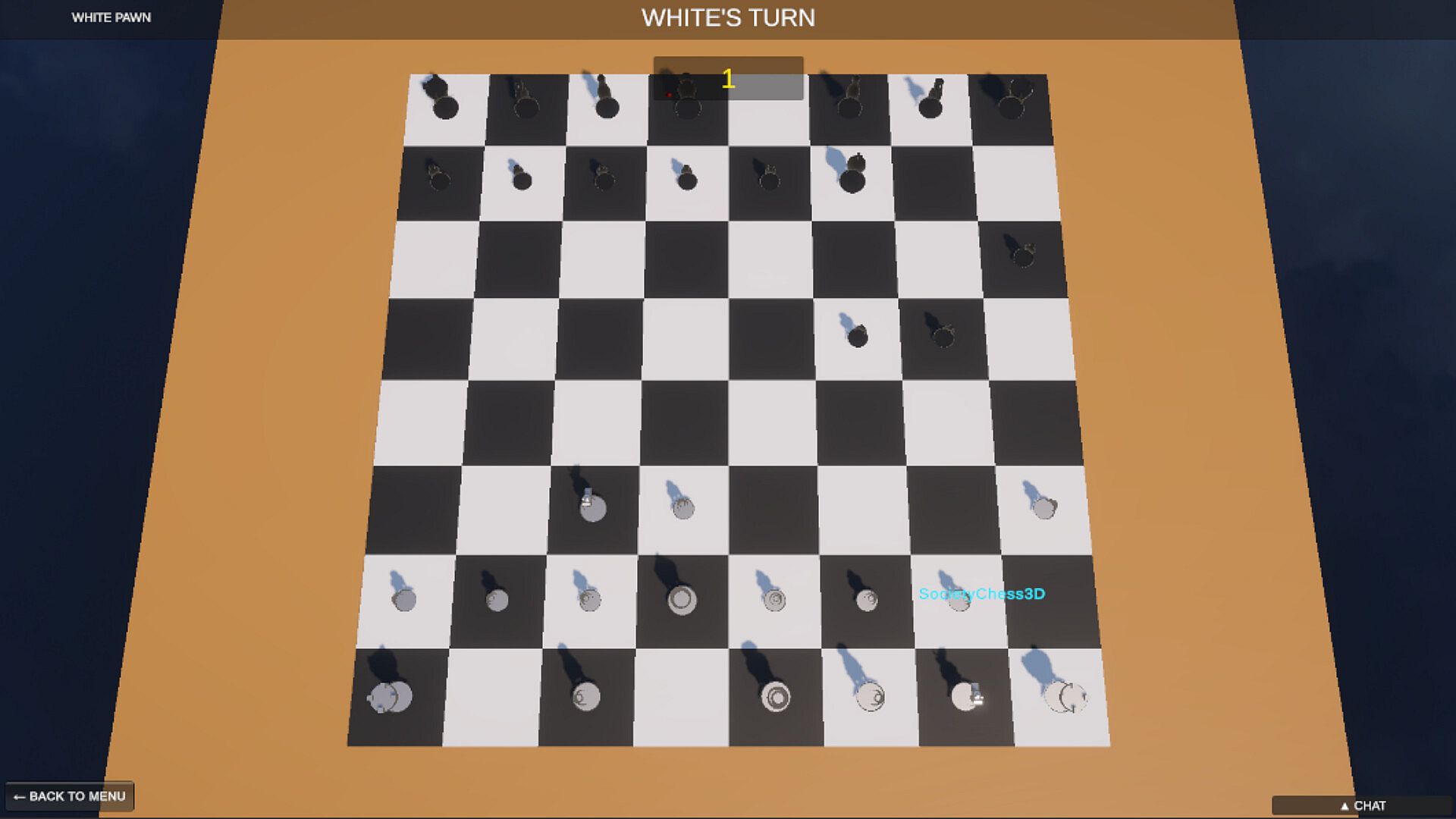
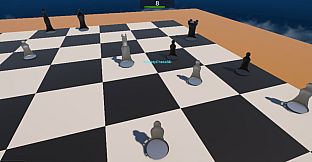
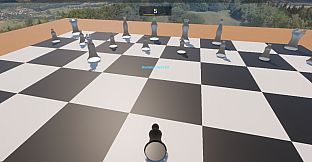
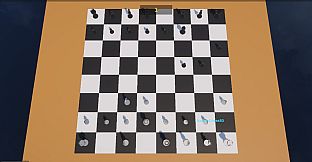
Society Chess 3D is a strategy game that blends classic chess rules with team-based decision making on the PC platform. It supports up to 32 players at once and emphasizes cooperation as the path to success rather than individual skill alone.
Gameplay
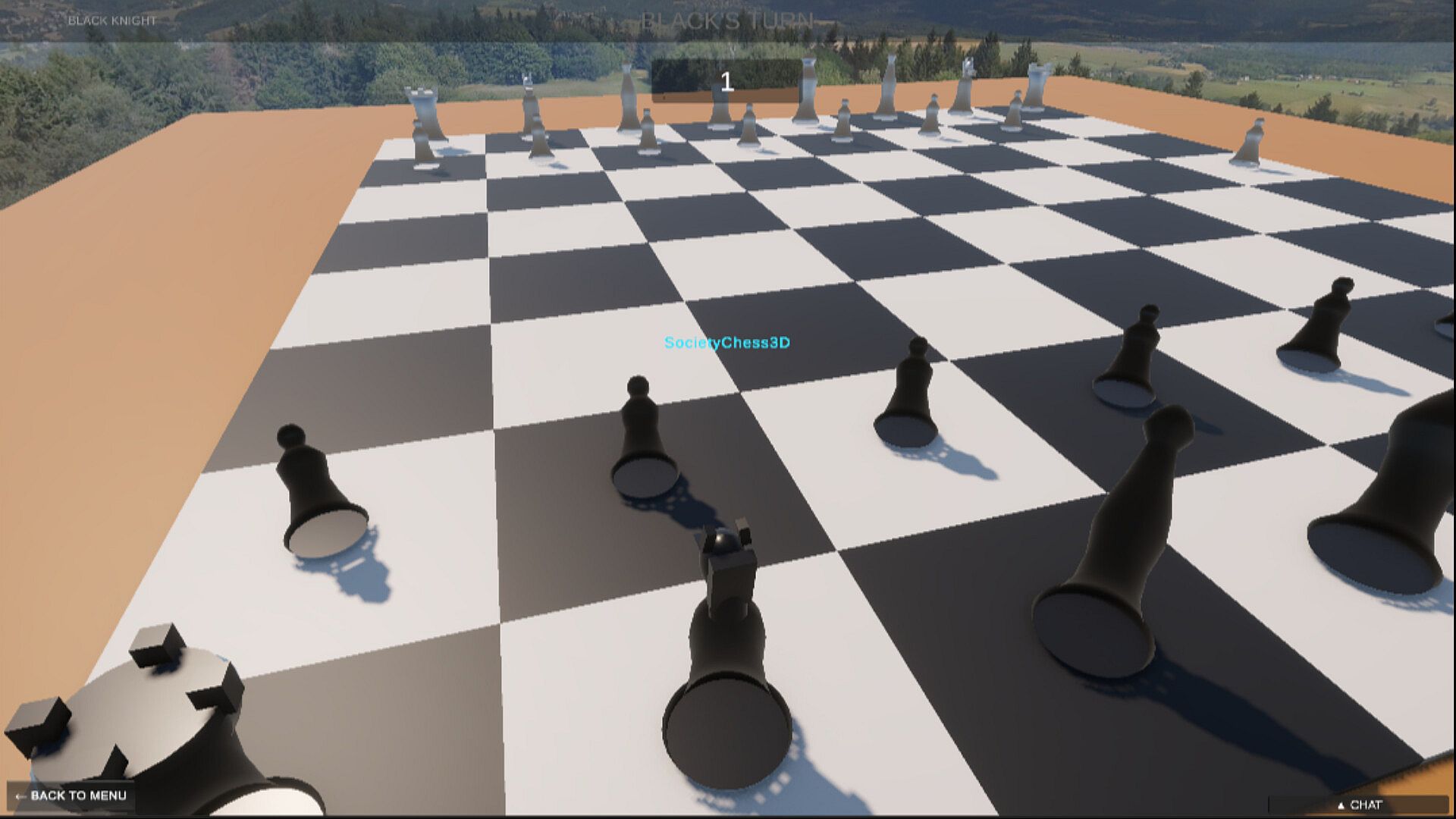
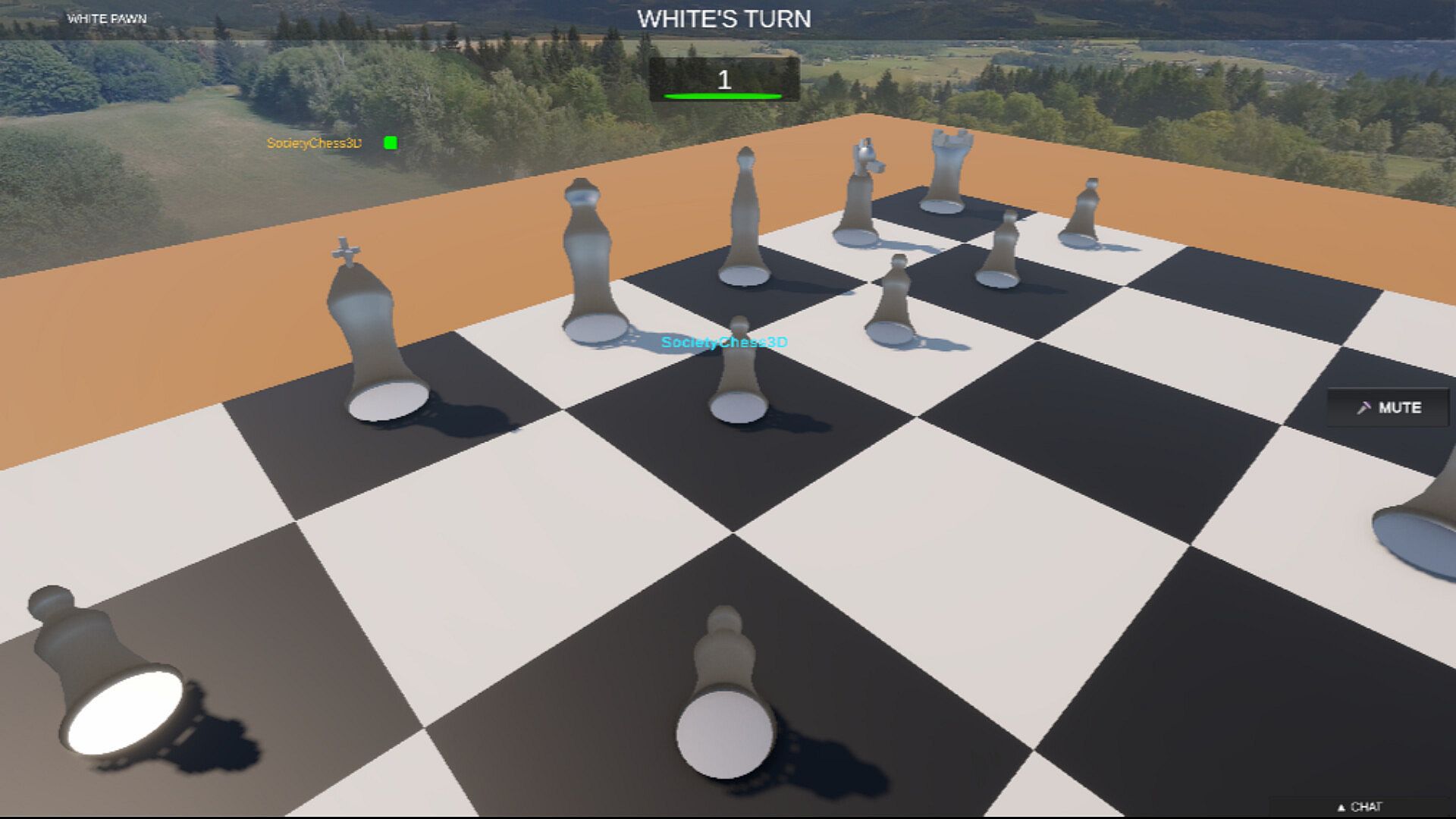
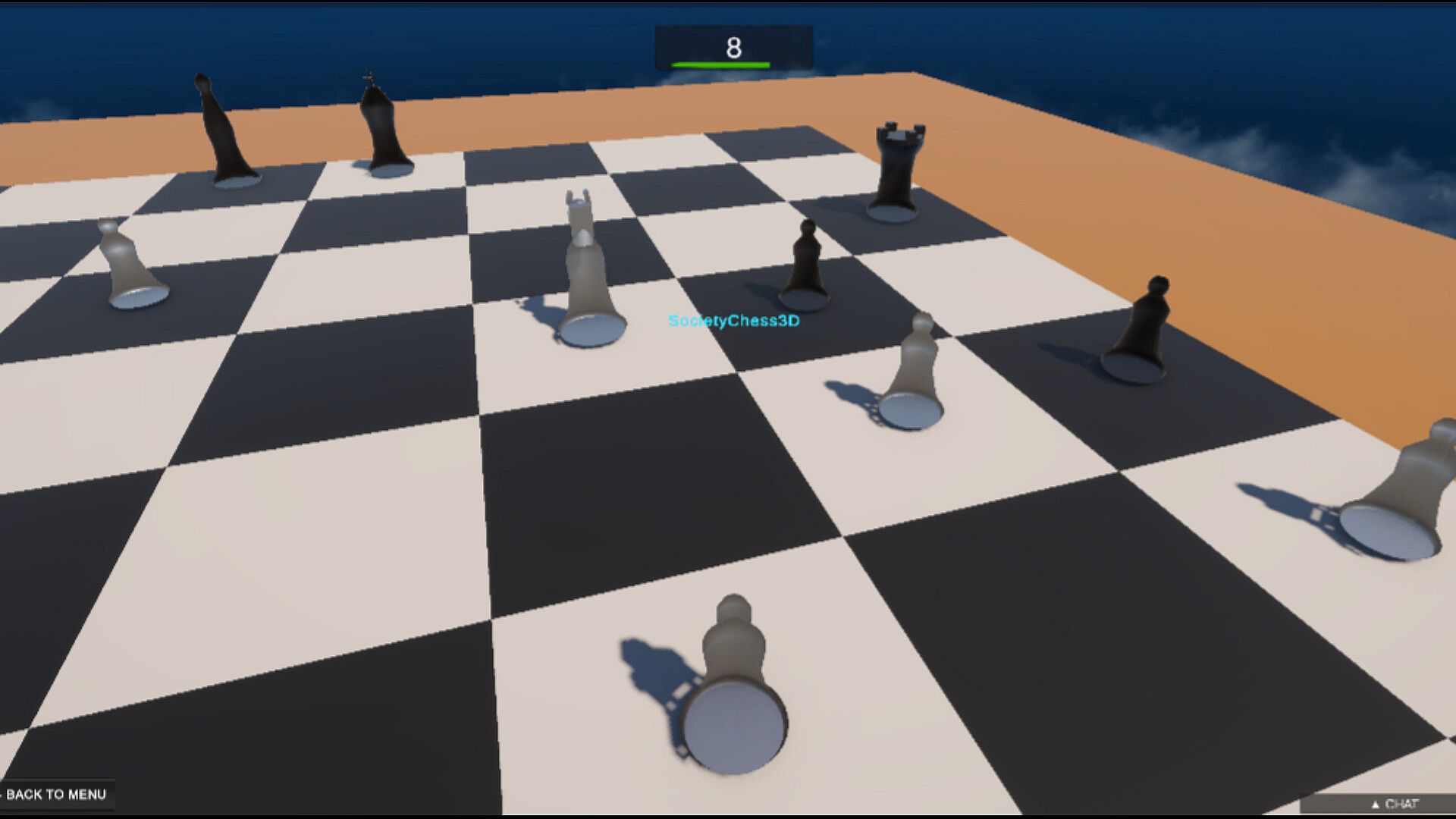
The core loop centers on selecting moves as a group. Each participant preselects from valid chess options during a turn, and the choice receiving the highest number of votes executes on the board. This system shifts focus from solo calculation to group consensus, where effective communication determines outcomes more than raw tactical knowledge.
Players earn points through several actions tied directly to their pieces. Victories contribute to the total, captures add immediate value, and pieces that remain on the board across multiple turns accumulate survival bonuses. These mechanics encourage teams to protect assets while pursuing aggressive plays that align with collective goals.
Chat serves as the primary tool for coordination. Participants discuss proposed moves in real time, debate risks, and build agreement before votes finalize. The social layer adds depth, turning each match into a negotiation exercise layered on top of standard chess strategy.
Both online and offline modes are available. Offline play allows solo practice or smaller group sessions without network requirements, while online sessions connect participants across public or hosted environments.
Game Modes
Public games let players join open lobbies and participate in larger matches that scale toward the 32-player limit. These sessions highlight the voting and persuasion elements at their fullest, with bigger groups requiring stronger consensus-building skills.
Private lobbies provide controlled settings for organized play. Hosts create dedicated rooms for friends or specific teams, maintaining the same move-voting rules while limiting access to invited participants only. This option supports consistent group dynamics without random matchmaking interference.
The voting system remains consistent across available formats. Teams preselect moves, tally results, and execute the majority choice, with chat influencing the final decision. No additional named variants appear beyond these core structures.
Is It Worth Playing?
Society Chess 3D targets players who enjoy chess but seek a collaborative twist. The emphasis on group voting and discussion suits those who prefer social strategy over solitary analysis, particularly in sessions that grow beyond standard two-player matches.
Reception centers on the unique social mechanics rather than traditional chess depth. Participants note the appeal for group settings where persuasion and teamwork matter, though the format demands active communication that may not suit every chess enthusiast.
Availability on PC with both online and offline support broadens access. The game fits casual groups looking for repeated sessions or larger organized events, provided participants value the cooperative voting process over conventional competitive play.
Overall, the title delivers a distinct experience for audiences drawn to multiplayer chess variants that prioritize team input. Those comfortable with chat-driven decisions and point accumulation across pieces will find the most engagement, while solo-focused players may prefer standard chess alternatives.