

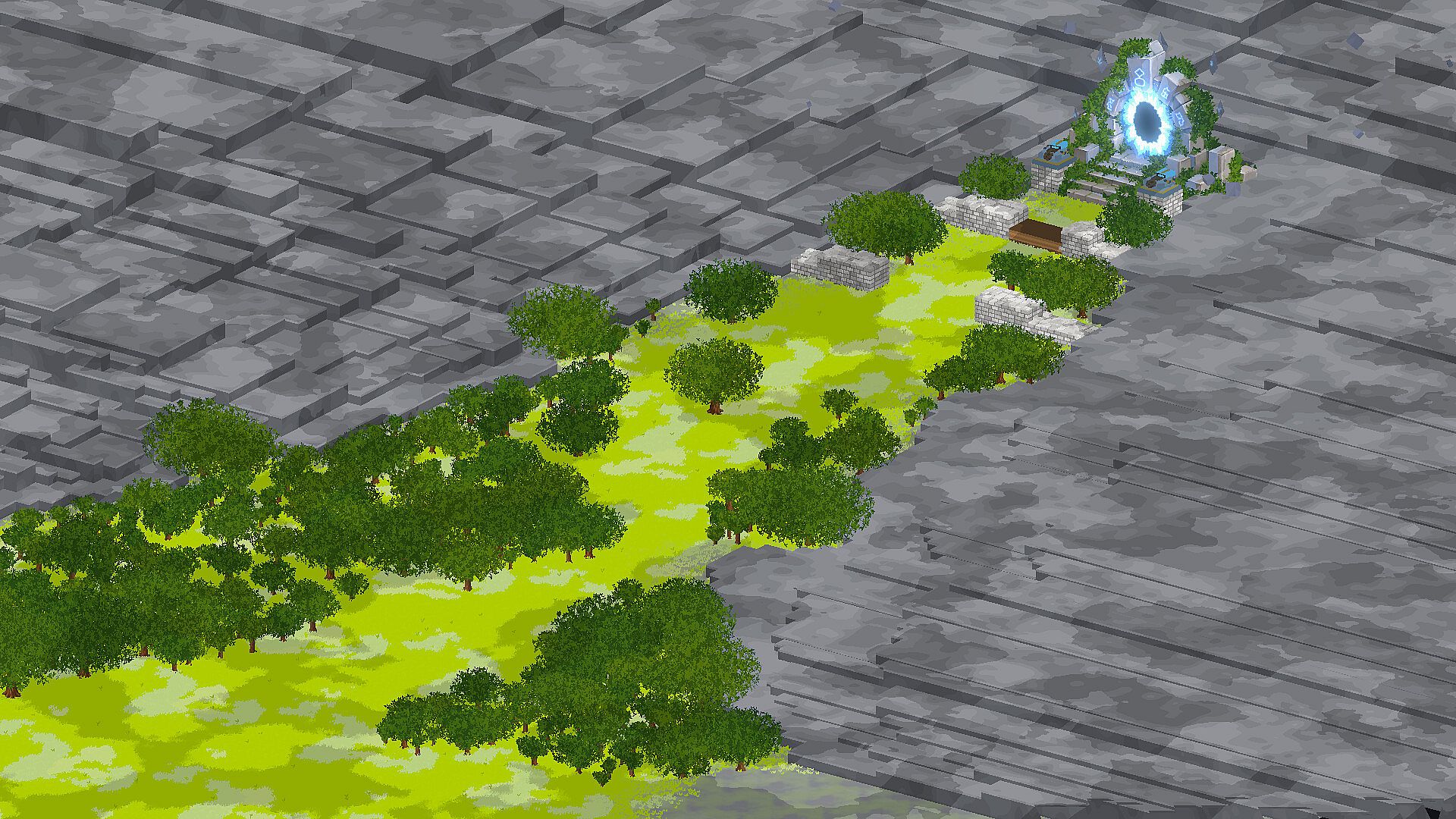
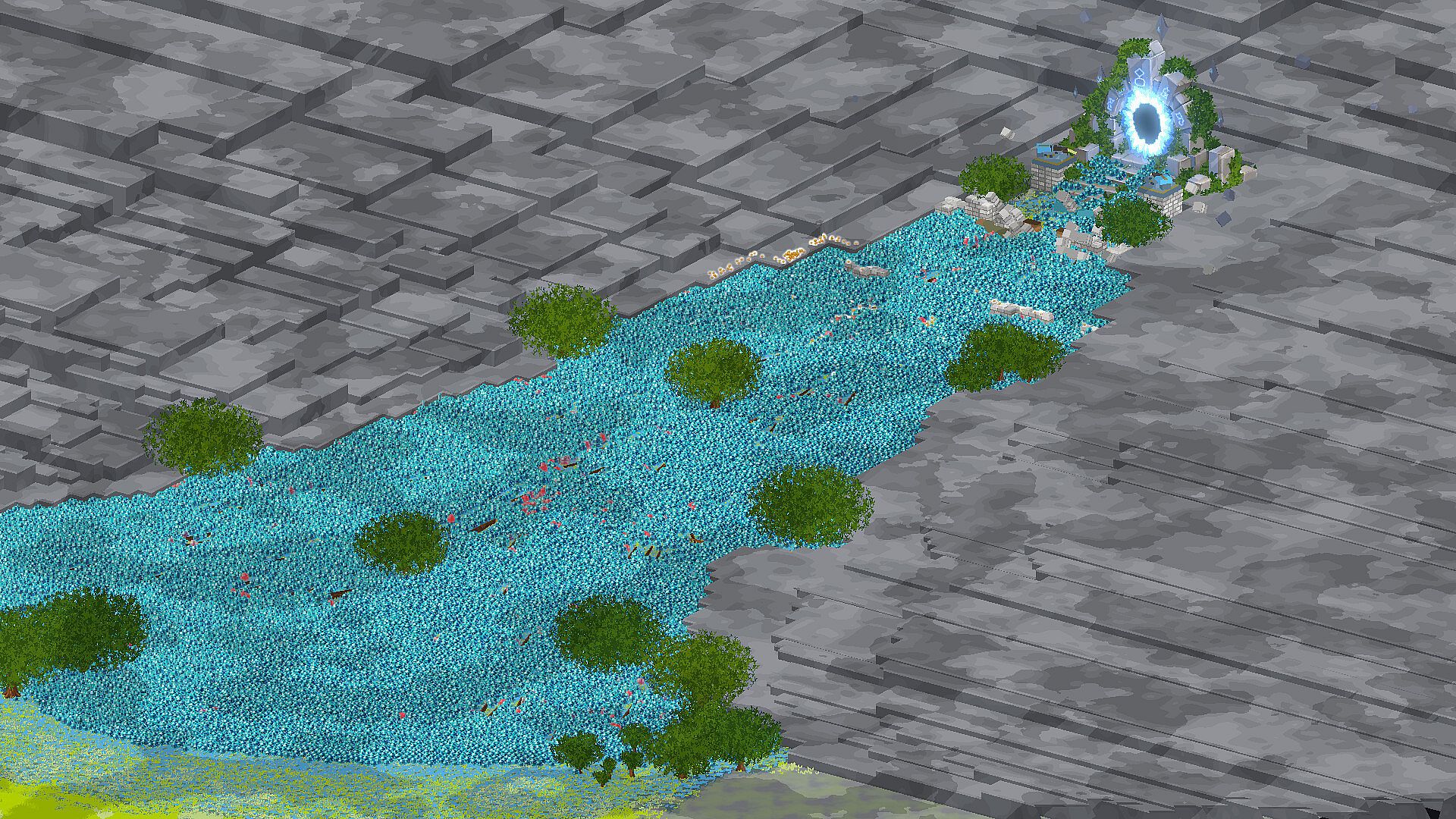
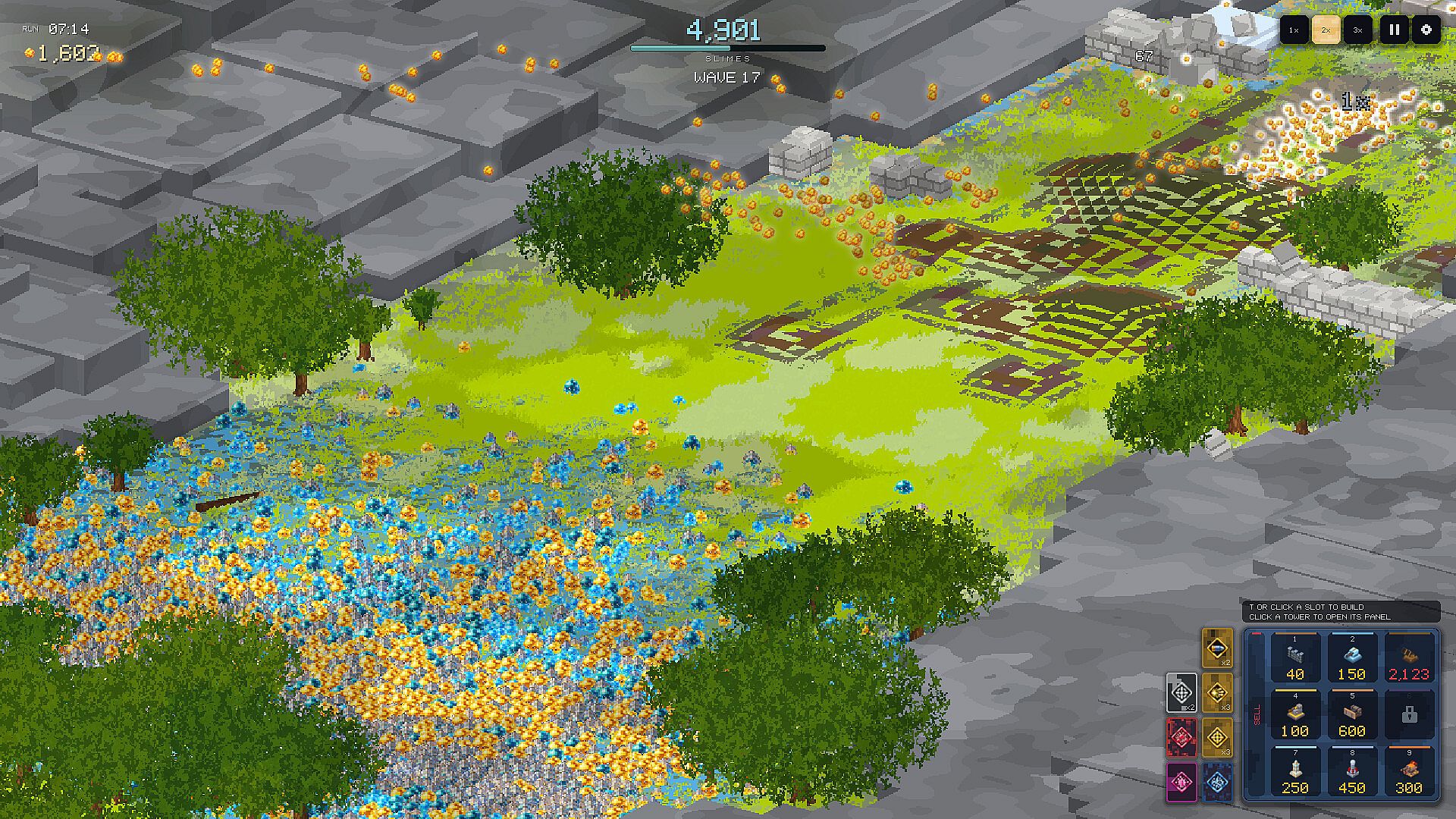
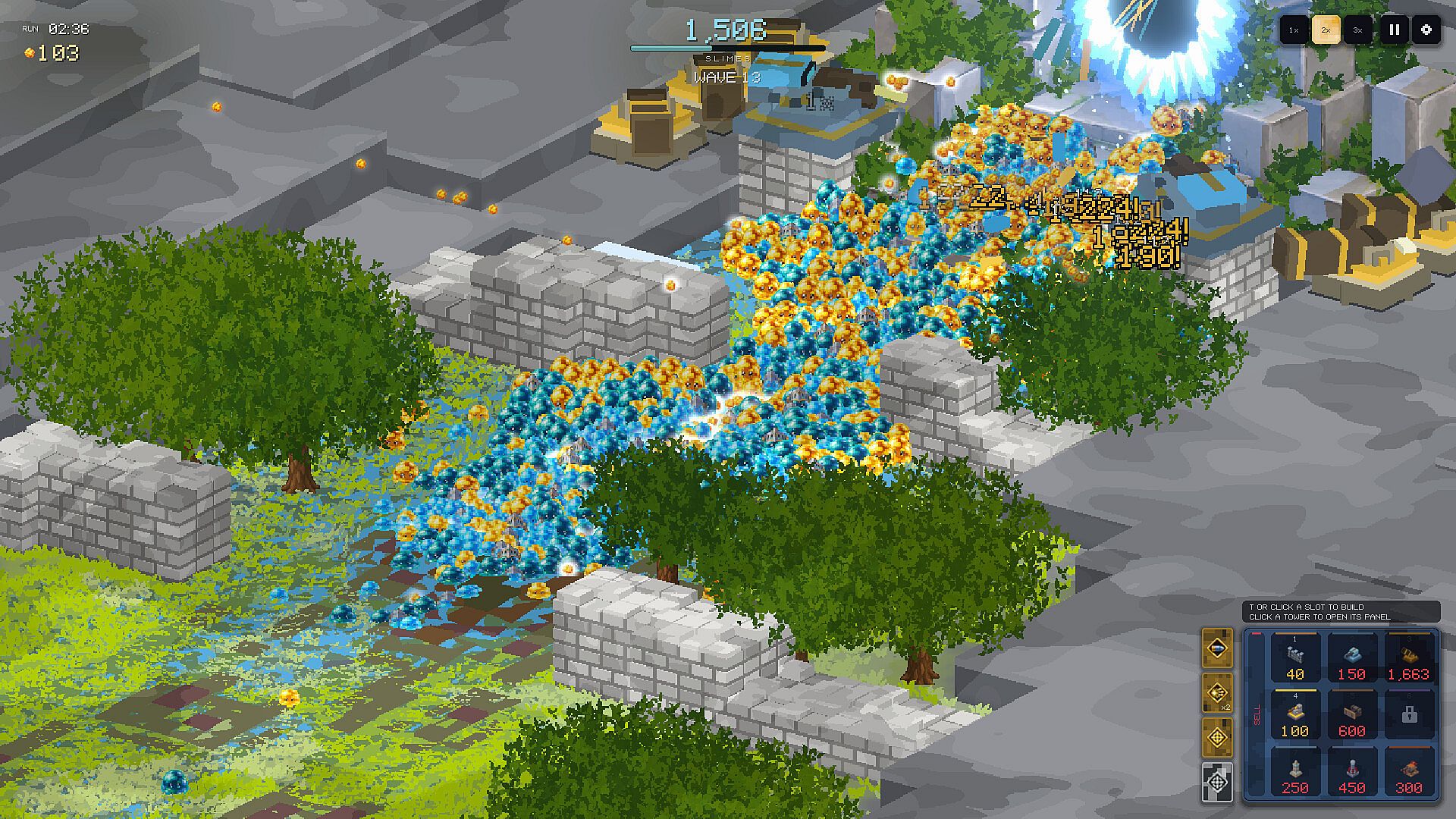
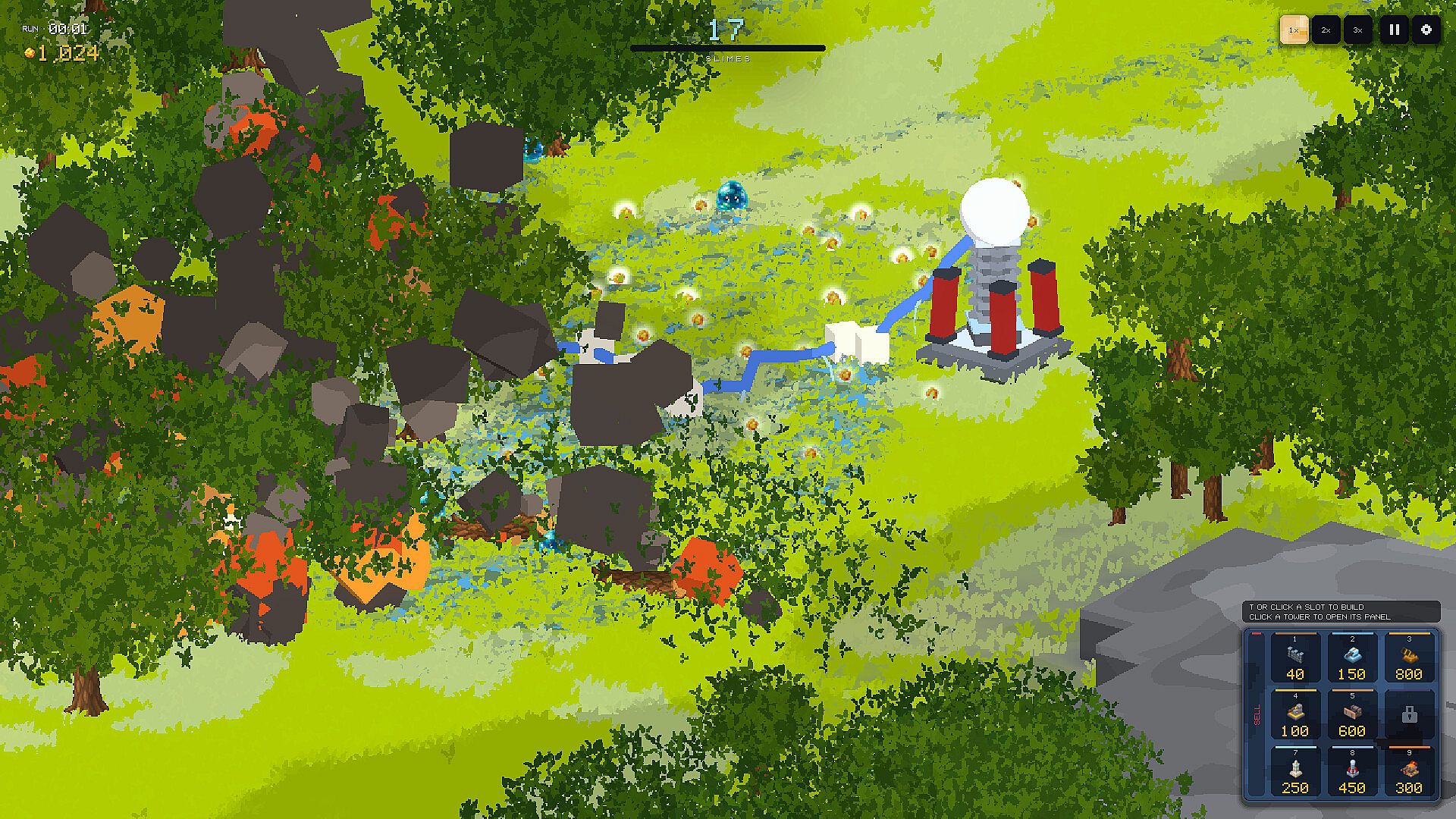
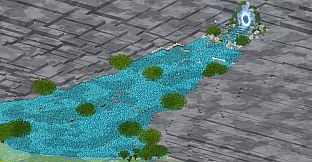
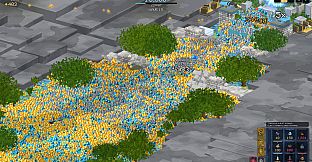
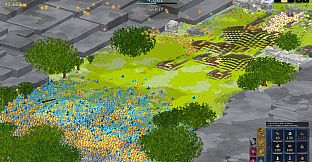
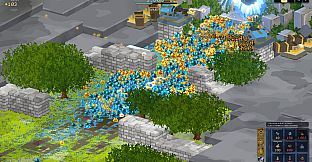
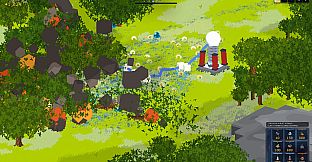
Slime Break is a strategy indie game for PC that puts players in charge of defending a base against hordes of individually simulated slimes. Each slime moves with realistic weight and collisions, seeking the shortest path through narrowing terrain and piling up against obstacles until they overflow or break through. The experience blends tower defense mechanics with physics simulation and roguelike progression, where every decision about placement and upgrades shapes how the next wave unfolds.
Gameplay
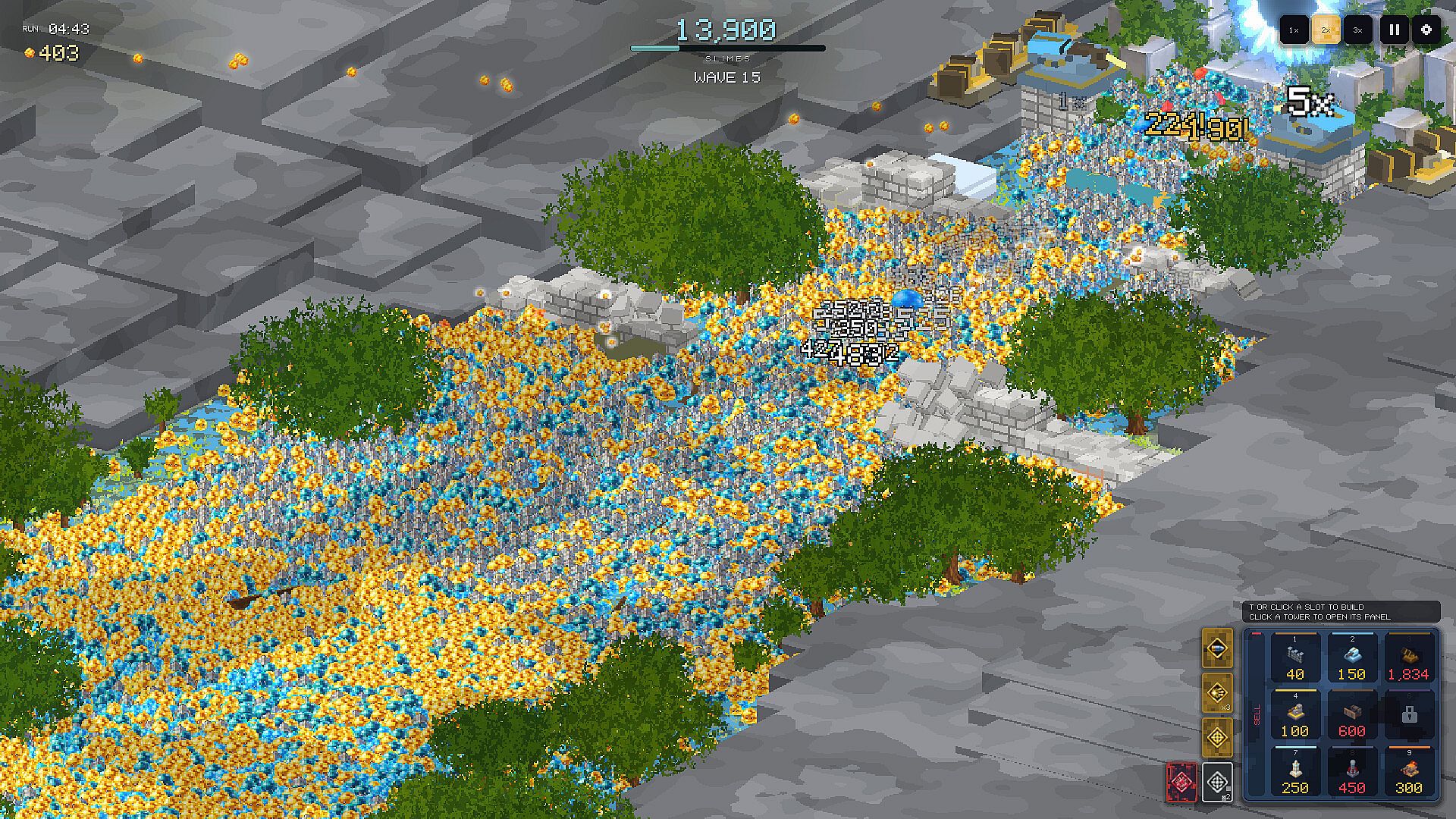
The core loop centers on building defenses directly on the map before and during waves. Players drag to create lines of walls that can be stacked into multiple floors, then position towers on top for better range or at the base for close protection. Materials upgrade from wood to stone and iron as pressure increases, and misplaced structures can be sold for partial refunds or undone. Slimes vary by type: small ones move quickly, larger ones split on death, and armored variants require their shells to be broken first. Gold dropped by defeated slimes funds new constructions, while the horde behaves like flowing water that reroutes around barriers or focuses on tearing down whatever blocks its path.
Eight distinct attack and control pieces handle the mass in different ways. Cannons launch arcing bombs or rolling boulders. Machine guns deliver rapid bursts or long-range piercing shots. Tesla coils send jumping lightning or electrify the ground. Ice effects pin targets or pulse freezes across areas. Flame pieces sweep with jets or create roasting furnaces. Glue and oil create sticky or corrosive puddles that can ignite. Pistons deliver heavy shoves to push the horde back. Each piece levels up to III, unlocking one of two advanced forms, and synergies emerge when combined with cards, such as frozen slimes catching fire to explode or lightning traveling through glue without weakening.
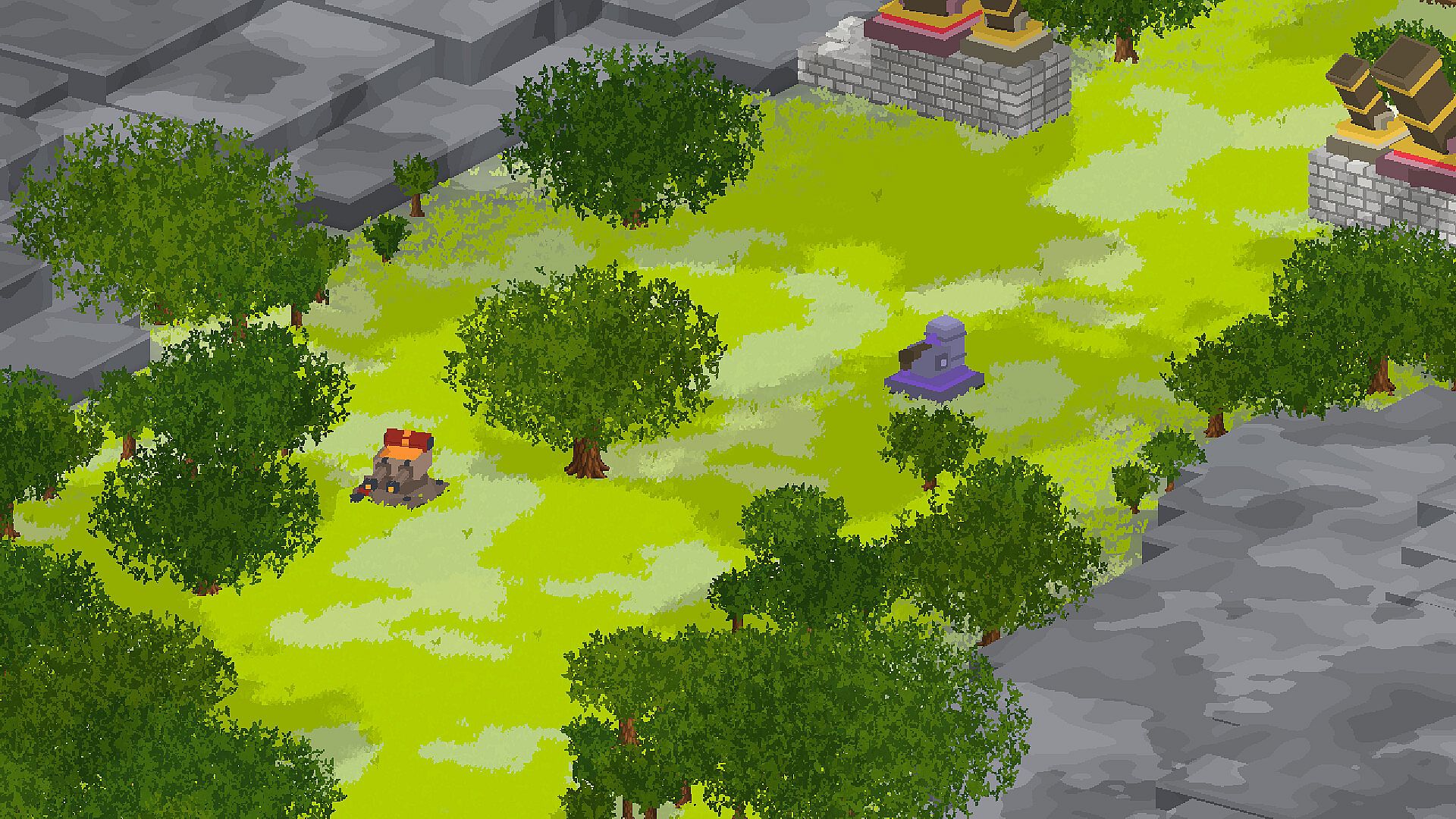
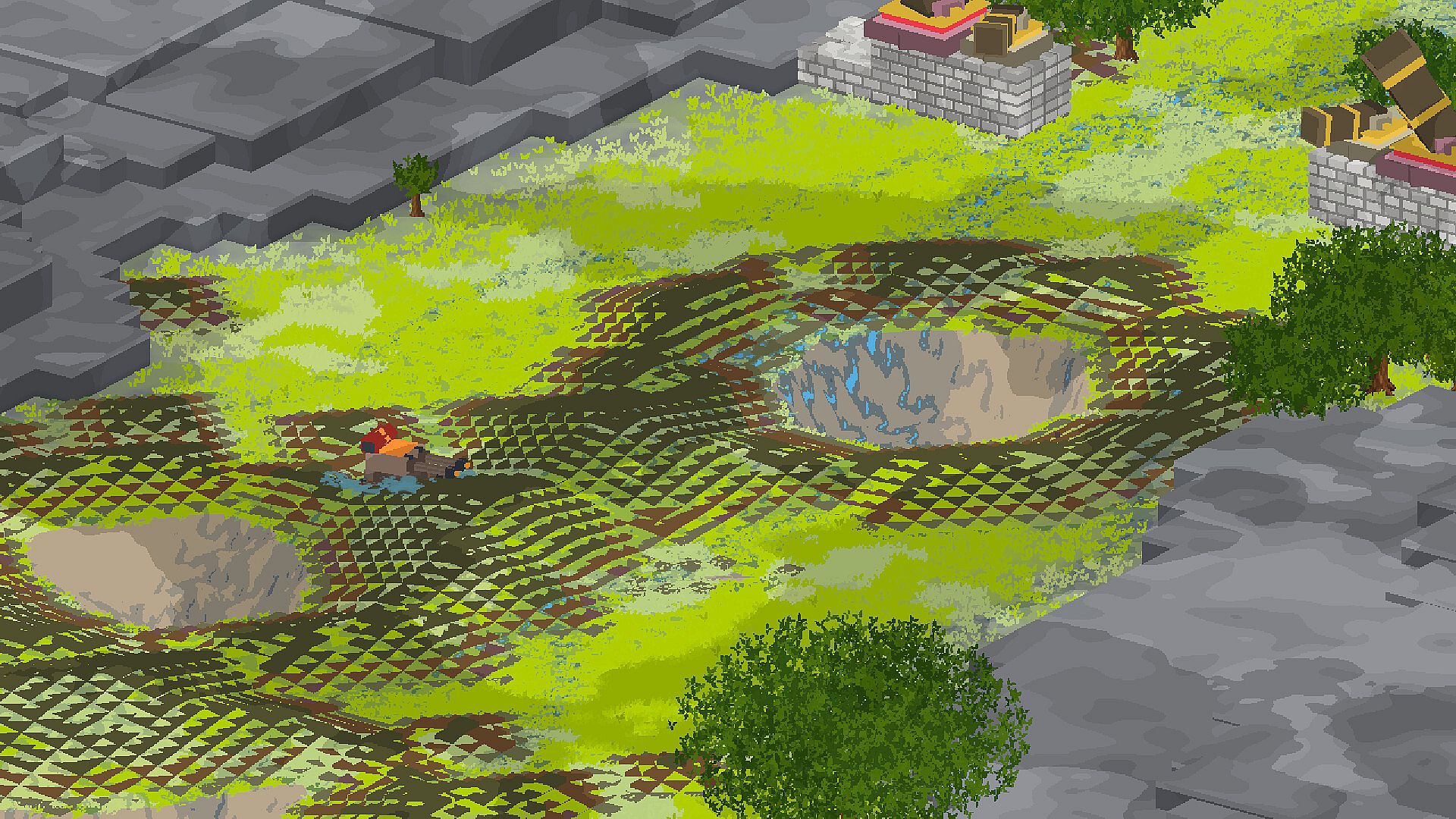
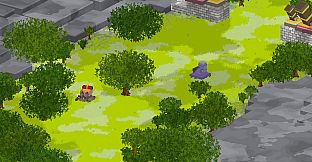
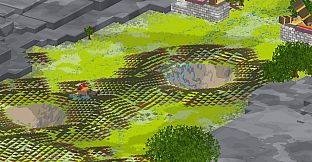
Physics extend to the environment itself. Walls crumble under sustained pressure and crush slimes below when they collapse. Towers fall onto the horde when their supports give way. Trees topple into the mass when pushed hard enough and can be incorporated into layouts temporarily. Fire spreads to treetops and ignites oil puddles. Explosions create craters that the horde slides into until enough slimes pile up to form a ramp, after which the terrain gradually fills back in. These interactions make every layout unique and force constant adaptation.
Game Modes
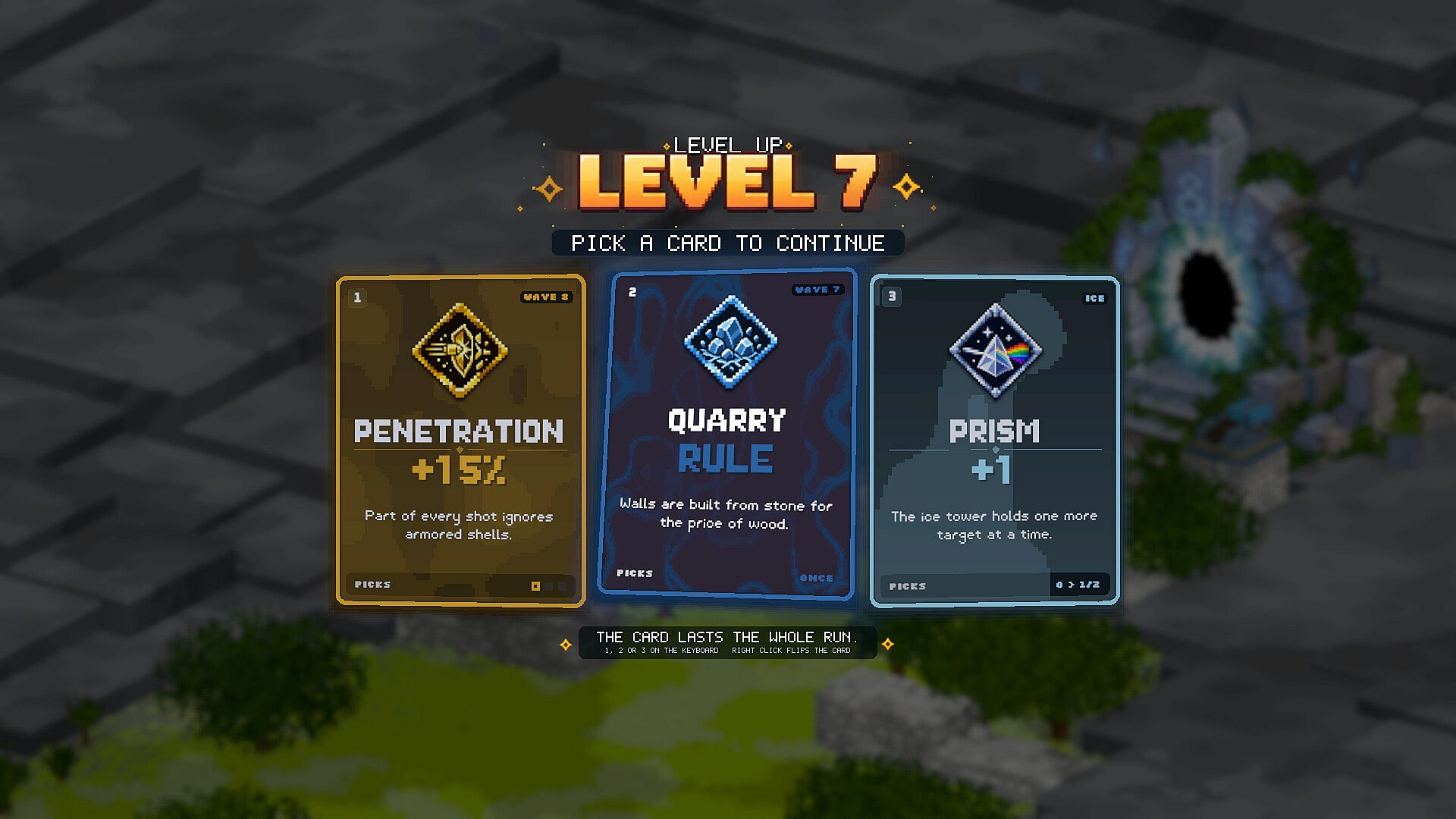
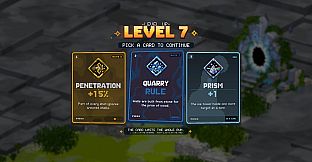
Slime Break focuses on a single-player run-based structure where players face successive waves of mixed slime types. Each run features procedural elements through card choices that alter rules, such as dead slimes damaging nearby units or thrown bodies inflicting impact damage. Levels during a run present selections from a deck of 40 cards that introduce new mechanics rather than simple stat boosts. The absence of a painted path means the horde dynamically finds routes, rewarding layouts that funnel enemies into tower sightlines for longer periods.
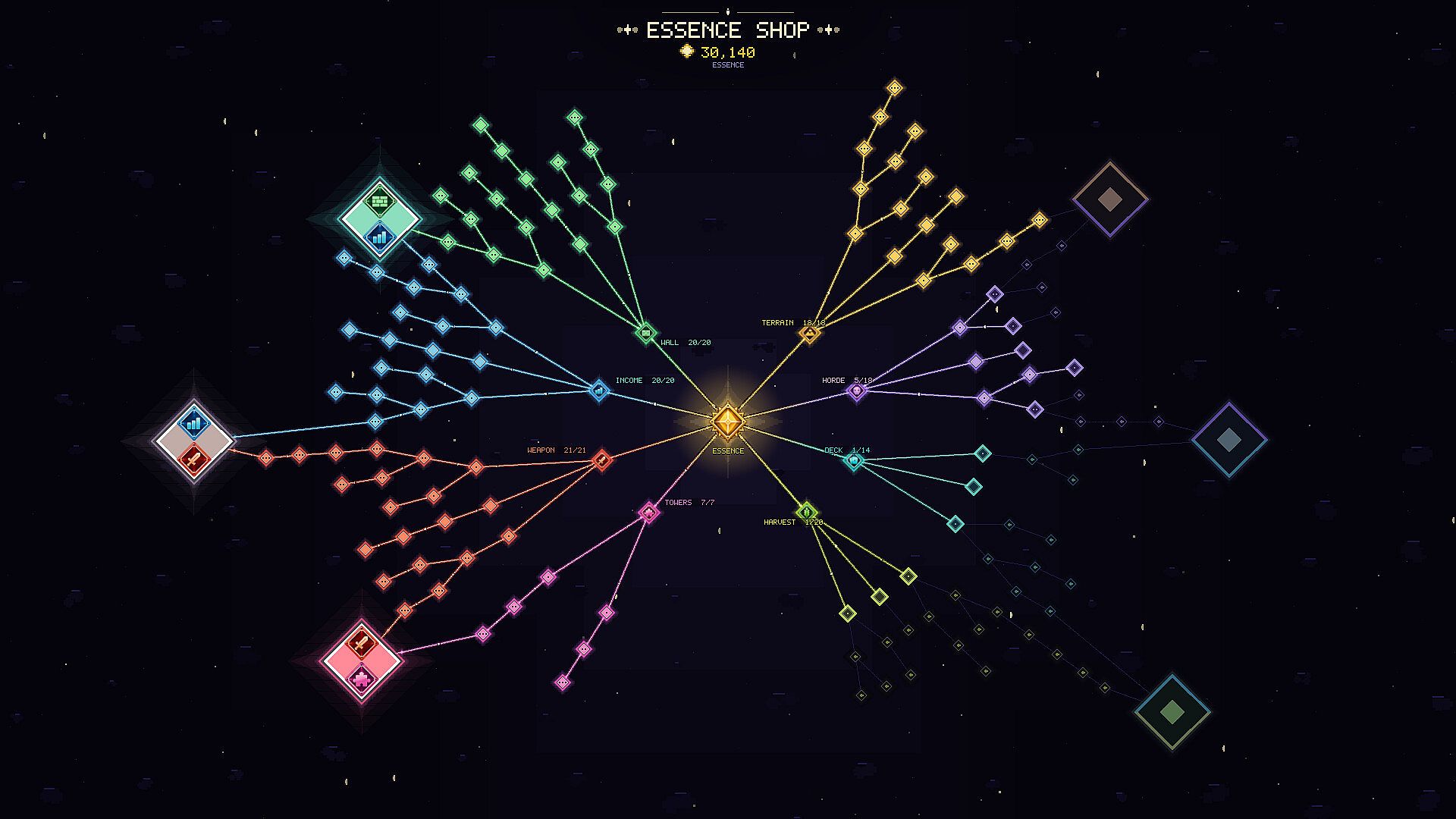
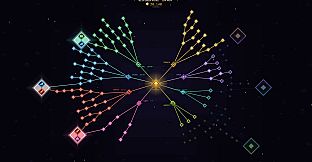
Meta-progression ties runs together through essence earned from completed attempts. This resource unlocks permanent upgrades in an eight-branch tree covering walls, the card deck, new pieces like glue and oil, plus increases to base health, starting money, and card selection options. Every new run therefore begins with slight advantages over previous ones, encouraging repeated attempts even after losses.
Building and Adaptation
Construction happens block by block with full freedom to reshape the map. Dragging creates wall segments that stack vertically, and towers can be repositioned or upgraded in place. When the horde builds pressure, switching to stronger materials or adding control pieces becomes essential. The system supports experimentation because selling returns partial value and the undo function allows quick corrections. Effective defenses keep the mass exposed to multiple towers while avoiding complete blockages that cause the horde to focus fire on a single point.
Environmental factors add layers of strategy. Trees integrate into defenses but eventually fall. Fire requires careful management to avoid uncontrolled spread. Terrain deformation from explosions creates temporary traps that fill over time. These elements ensure no two runs play identically even with similar card draws.
Is It Worth Playing?
Slime Break suits players who enjoy physics-driven strategy games with deep customization and roguelike elements. The individual simulation of each slime creates emergent behaviors that reward careful observation and iterative building. Permanent upgrades provide meaningful progression between attempts, while card variety ensures runs rarely feel repetitive. Those who appreciate tower defense with strong simulation and rule-changing mechanics will find consistent engagement in planning layouts and adapting to shifting wave compositions. The game rewards experimentation and learning from failures through its essence system and flexible building tools.