





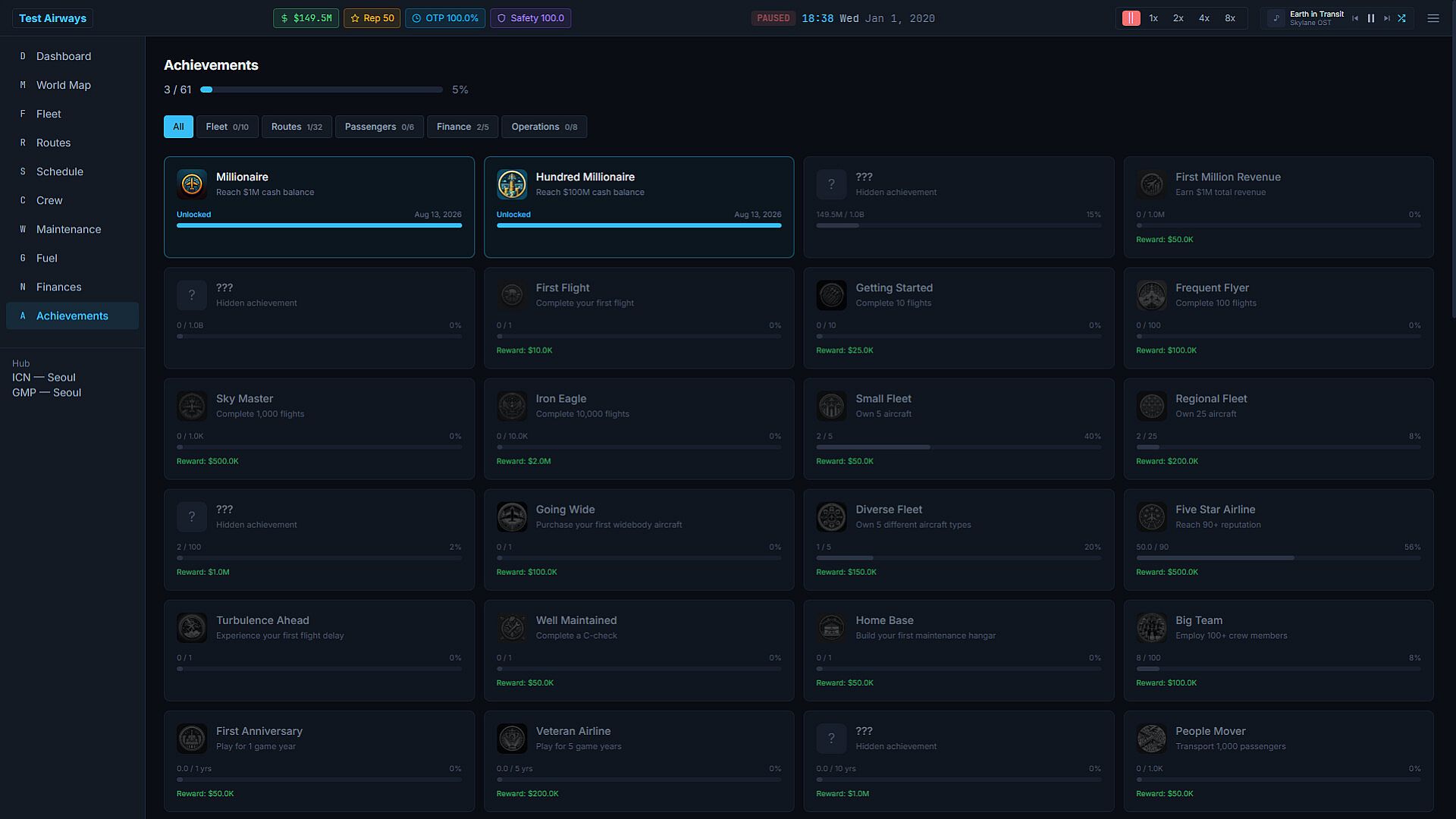
Skylane: Airline Tycoon Sim is a strategy and simulation game focused on building and managing an airline through route planning, fleet scheduling, crew hiring, and market competition. Players handle the business decisions that determine whether routes succeed or fail, without controlling aircraft directly.
Gameplay
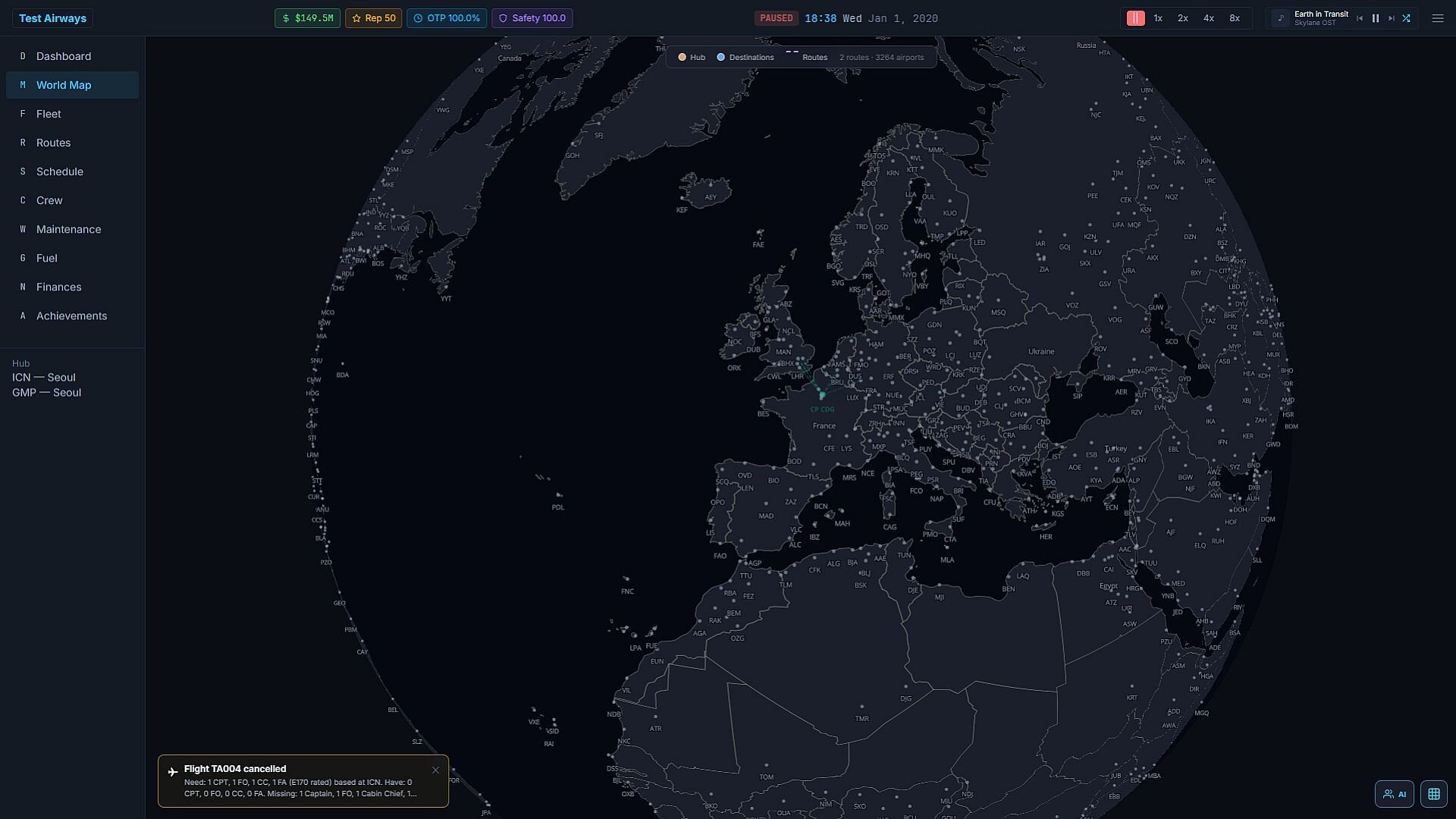
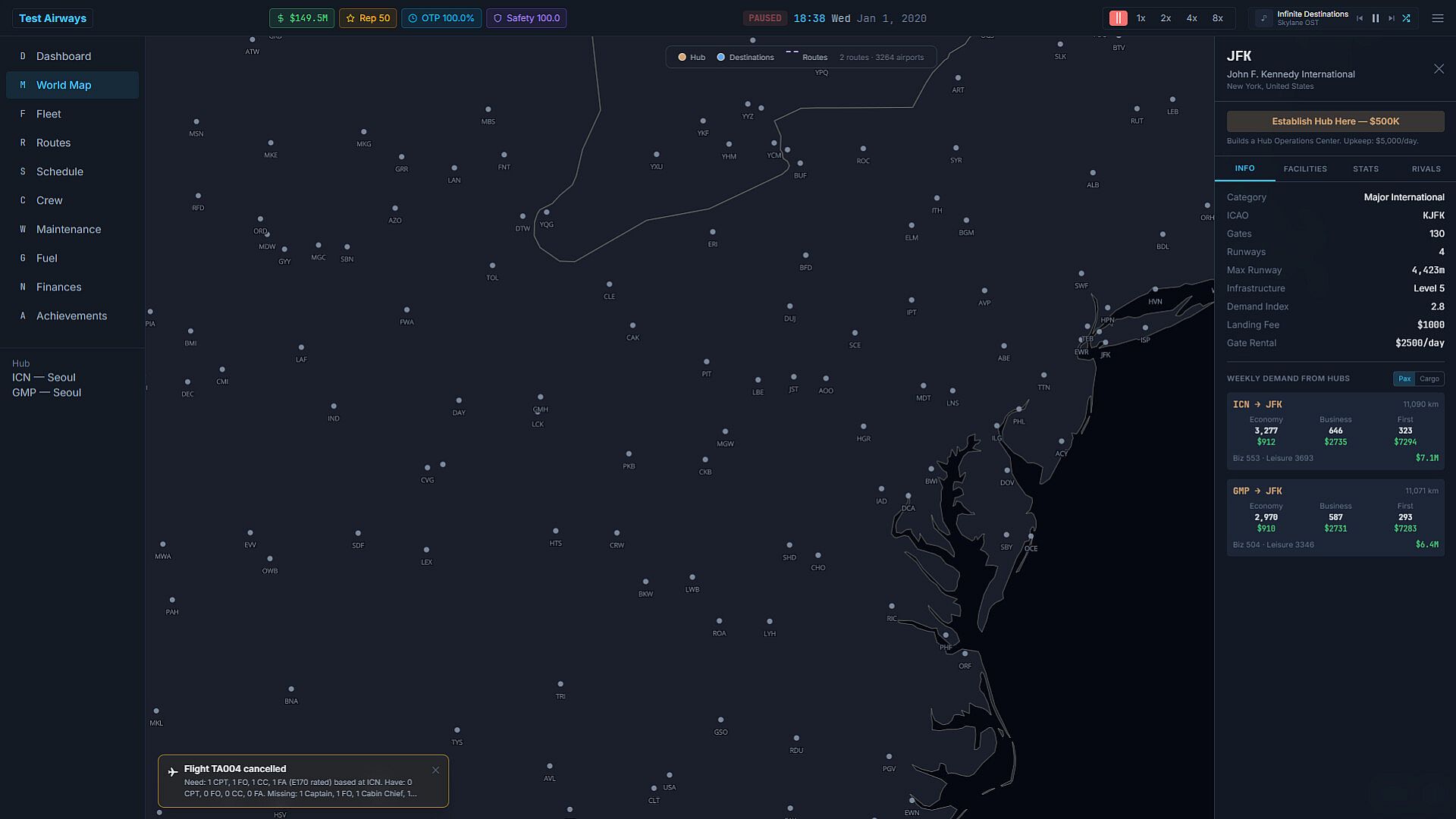
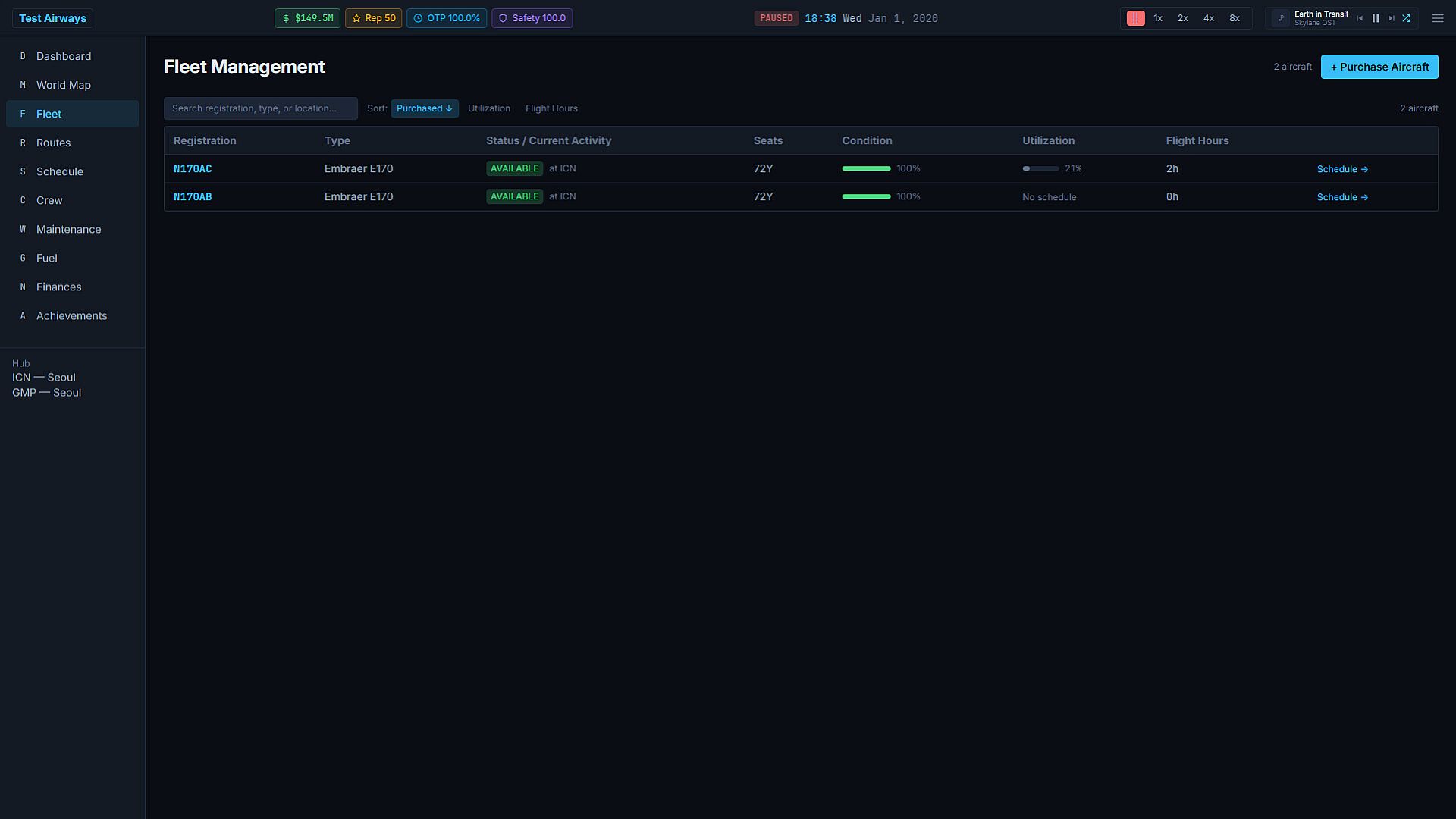
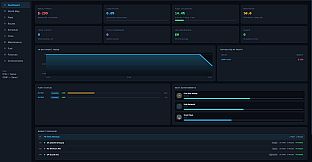
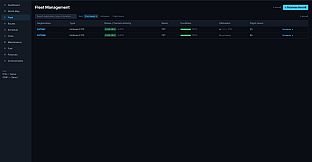
The core loop centers on expanding from a single hub and aircraft. Players select city pairs to serve, assign flight frequencies on a weekly calendar, and match aircraft types to those routes while accounting for range and payload limits. Demand on new routes builds gradually, so early load factors may stay low before stabilizing. Each aircraft tracks its own hours, cycles, condition, and utilization, requiring players to schedule maintenance checks or risk grounding planes during peak periods. Fuel prices fluctuate weekly, pushing decisions on when to stock depots at airports. Rival carriers expand into overlapping markets, forcing constant adjustments to protect profitable legs.
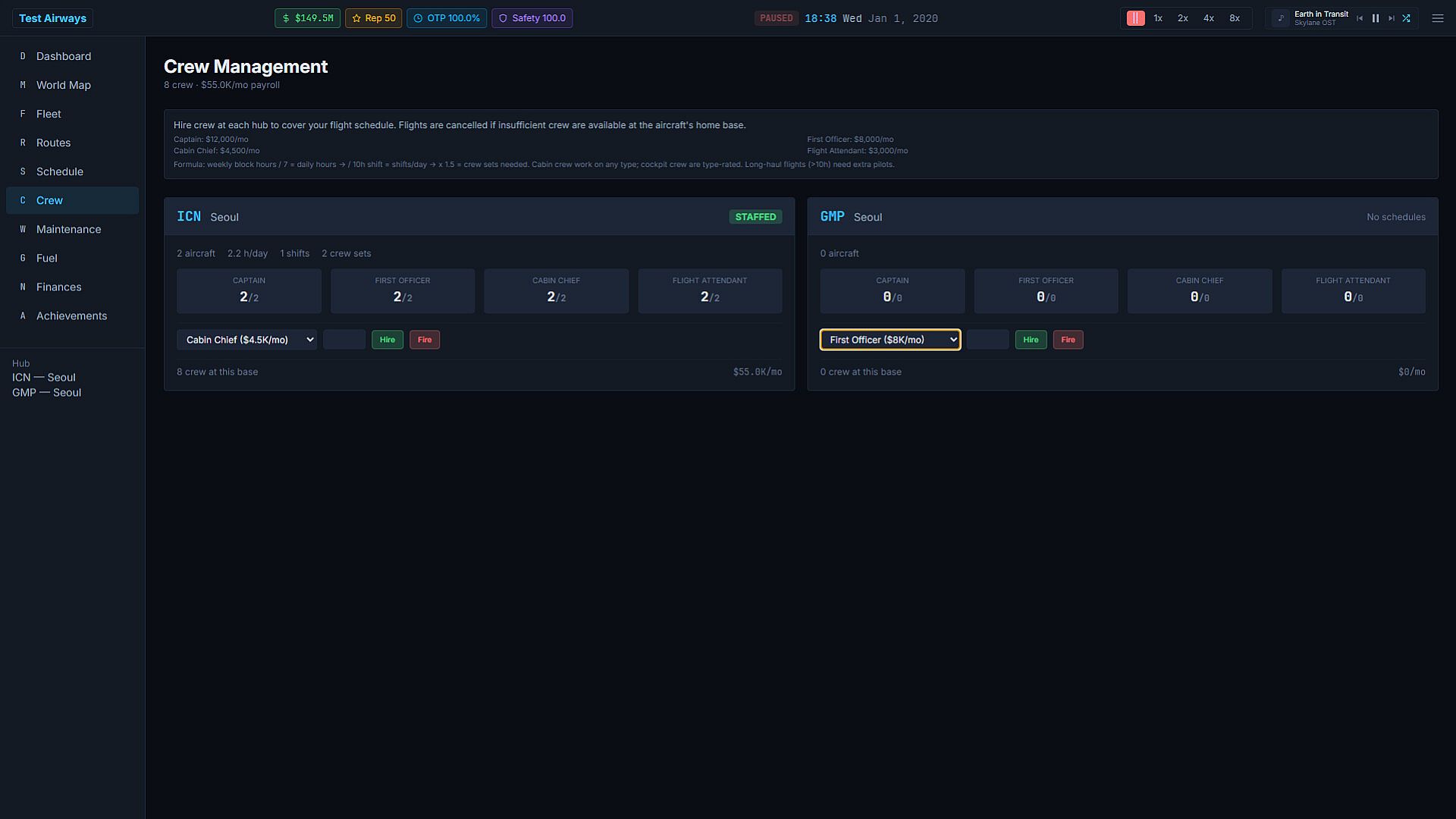
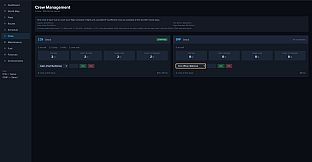
Crew management adds another layer. Captains and first officers must hold type ratings for the aircraft they fly, while cabin staff provide roster flexibility across types. Understaffing at a base leads to canceled flights and drops in on-time performance. Every screen stays accessible with single keystrokes, and the simulation pauses on demand or runs at adjustable speeds. A typical campaign week fits into roughly twenty minutes of focused play.
Game Modes
The game operates as a single-player experience centered on long-term airline growth. Players start with one hub and aircraft, then scale operations across multiple bases while competing against AI carriers that expand their own networks. The structure emphasizes persistent progression over ten simulated years, where every aircraft placement must remain justifiable through revenue and profit tracking per leg. No separate multiplayer or alternate modes appear in the available details.
Key Mechanics
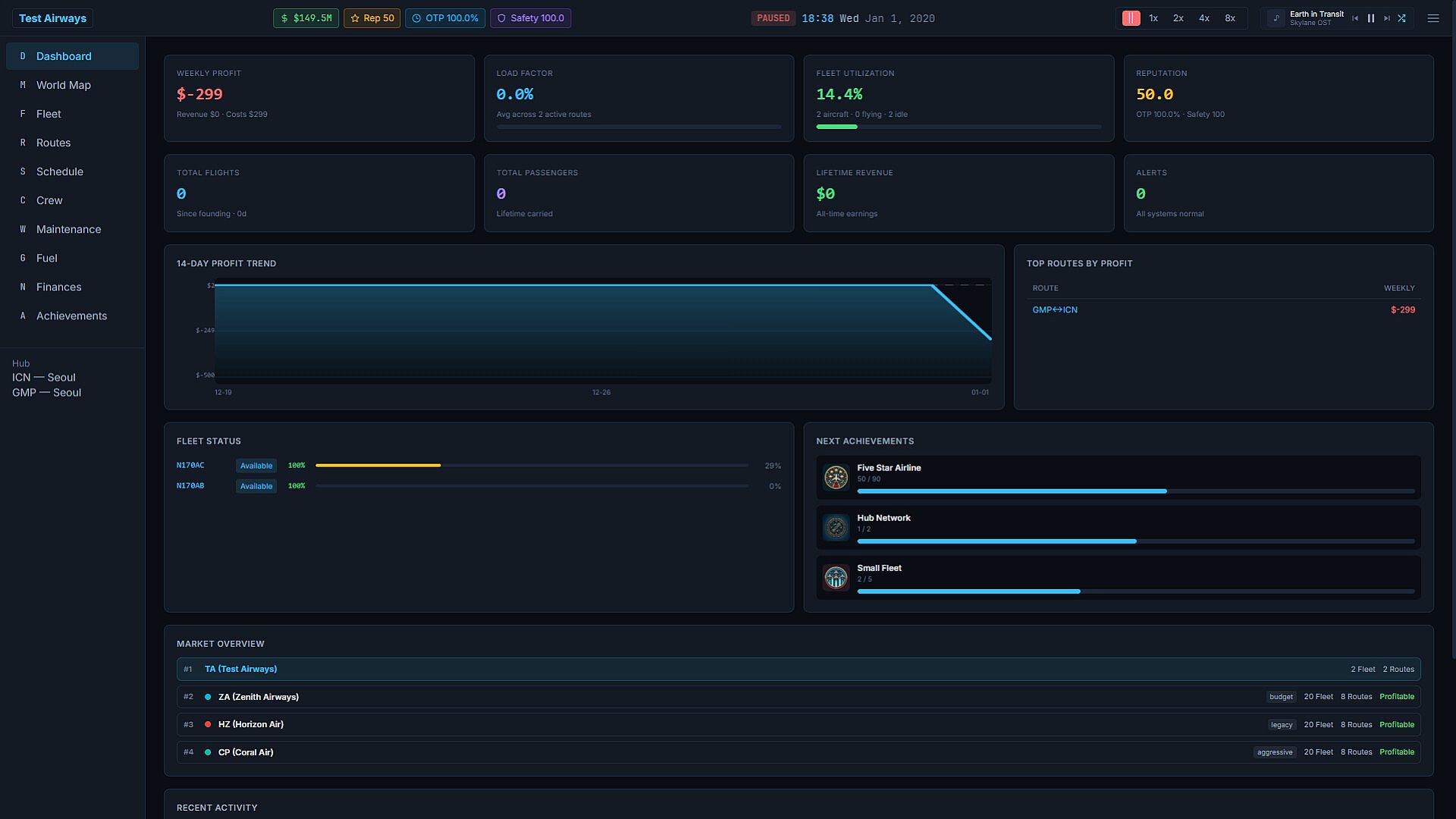
Route decisions carry lasting consequences. Thin initial months do not always signal failure if demand matures, but persistent low performers can be cut. The market board tracks every carrier by fleet size, network reach, and profitability. Financing, payroll, and maintenance costs continue regardless of flight activity. Players can ferry aircraft between bases as the network evolves. An original soundtrack supports the dense, monospace interface designed for quick glances at numbers rather than visual flair.
Is It Worth Playing?
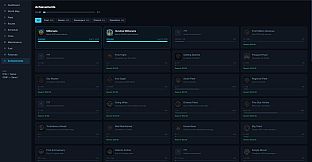
Skylane targets players who enjoy deep operational management in strategy simulations. The emphasis on scheduling grids, type-rated crew, aging airframes, and reactive rivals creates a focused experience for those who prefer spreadsheets and calendars over direct control or action elements. As an upcoming title with no released player data, its appeal rests on the detailed systems described, including Steam achievements and cloud saves for long campaigns. Those drawn to airline tycoon mechanics that prioritize network planning and cost control over other genres will find the approach distinctive.












