






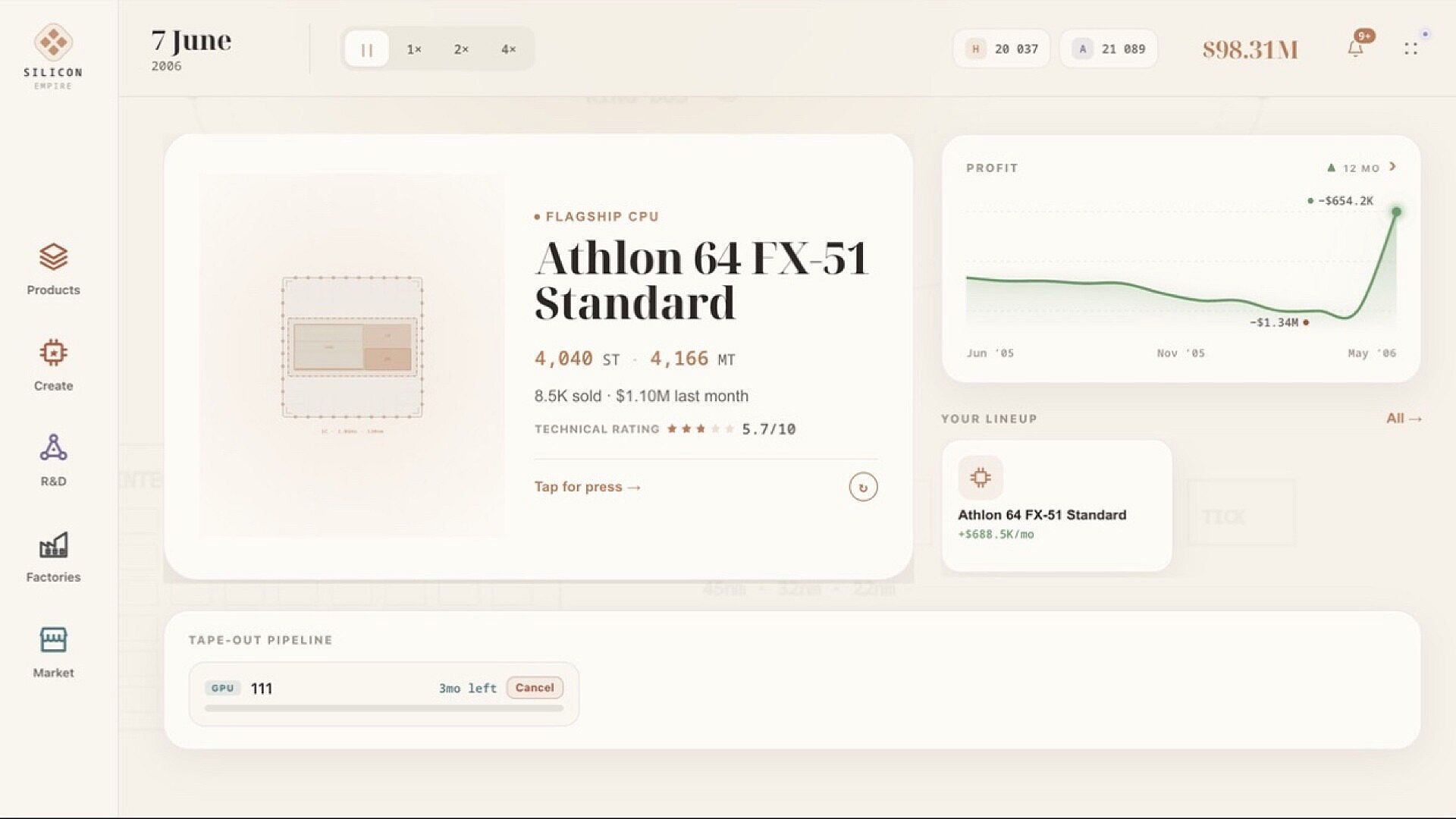
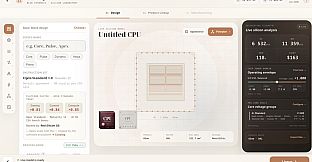
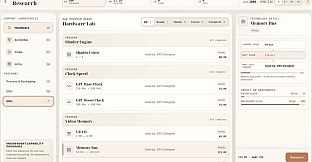
Silicon Empire: Chip Tycoon is a strategy and simulation game focused on building a semiconductor company from the ground up. Players begin in 1995 with limited capital and a small workspace, then research technologies, design processors and graphics cards, manage production, and navigate market competition across multiple decades of industry evolution.
Gameplay
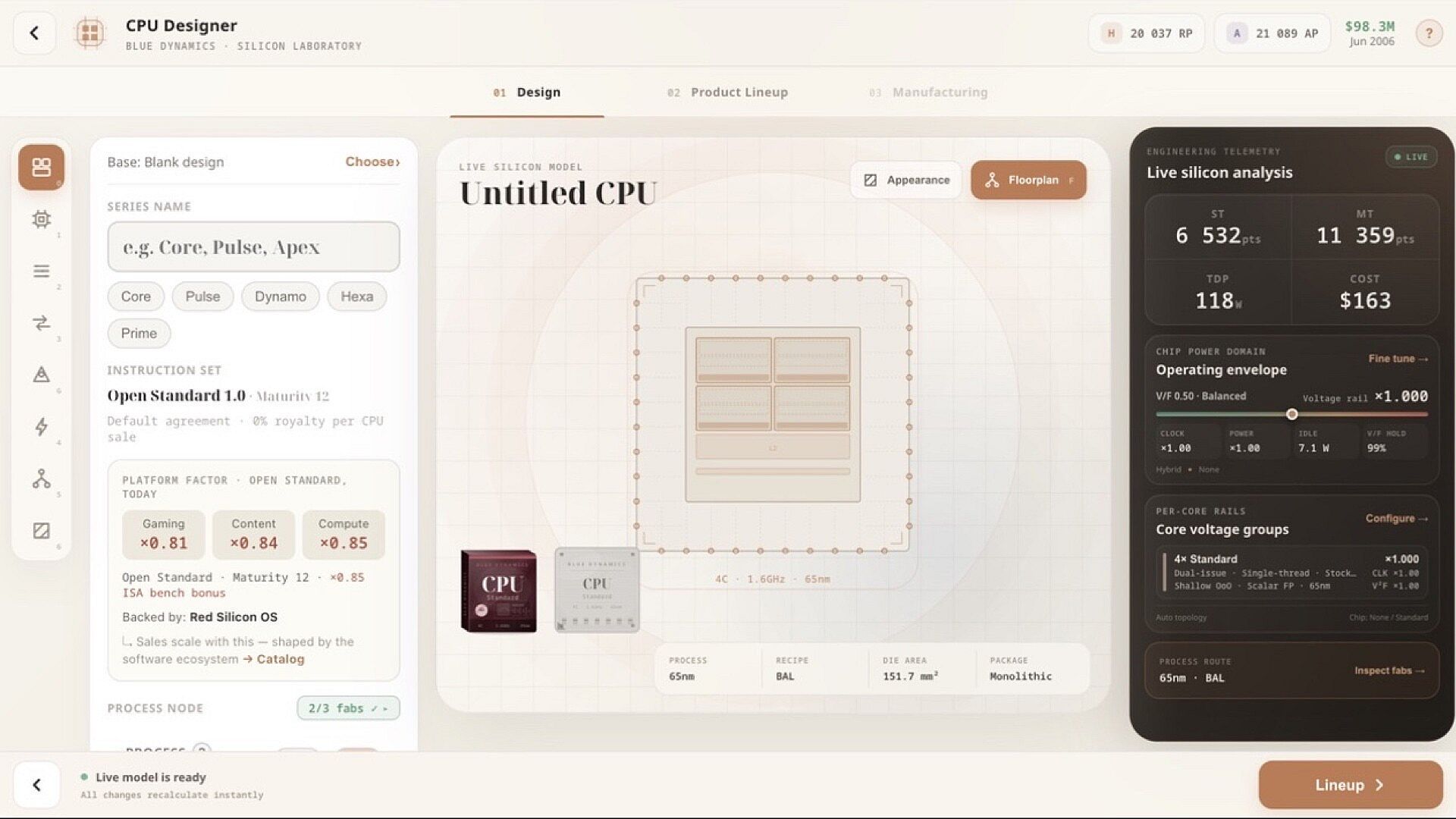
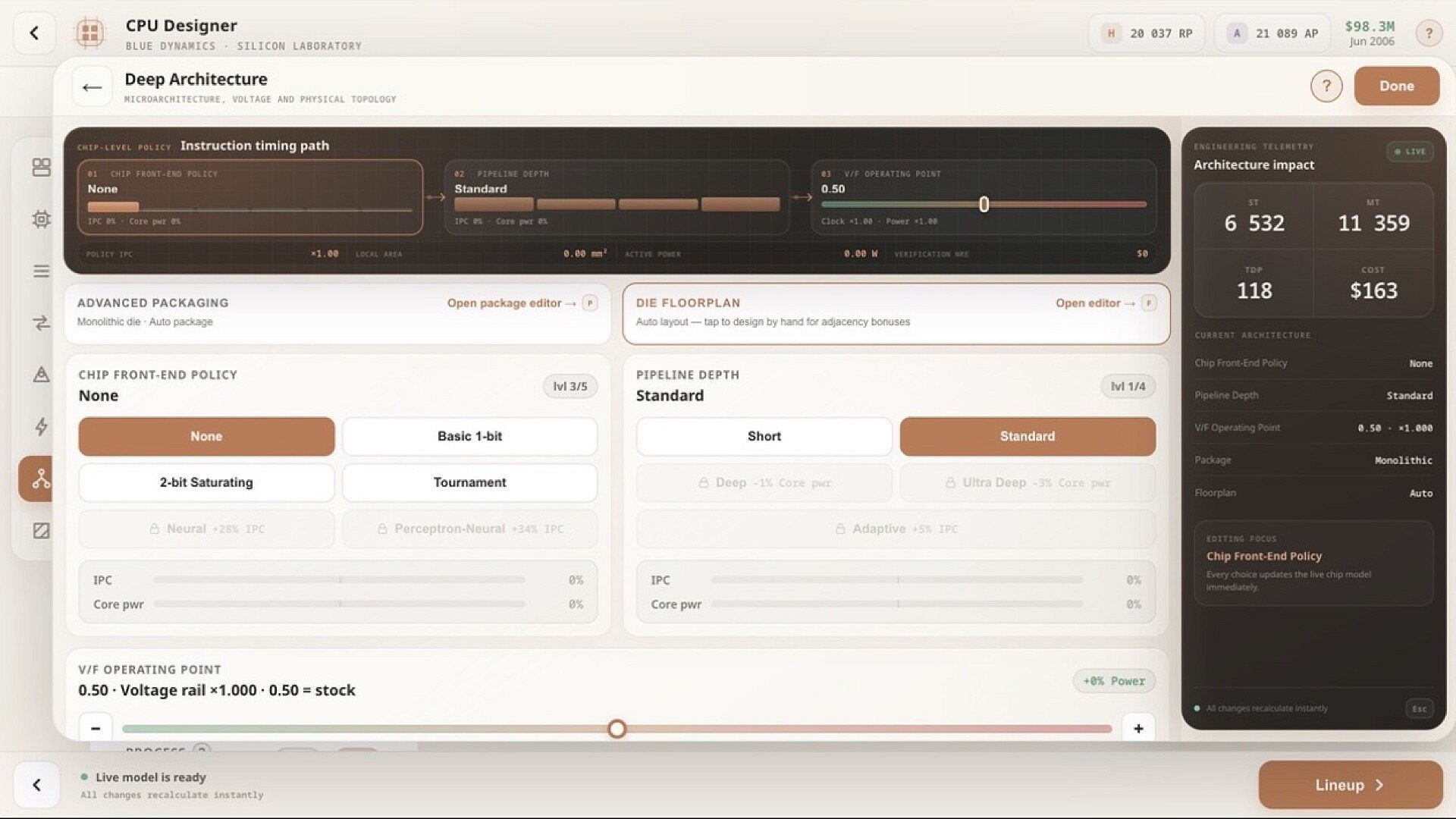
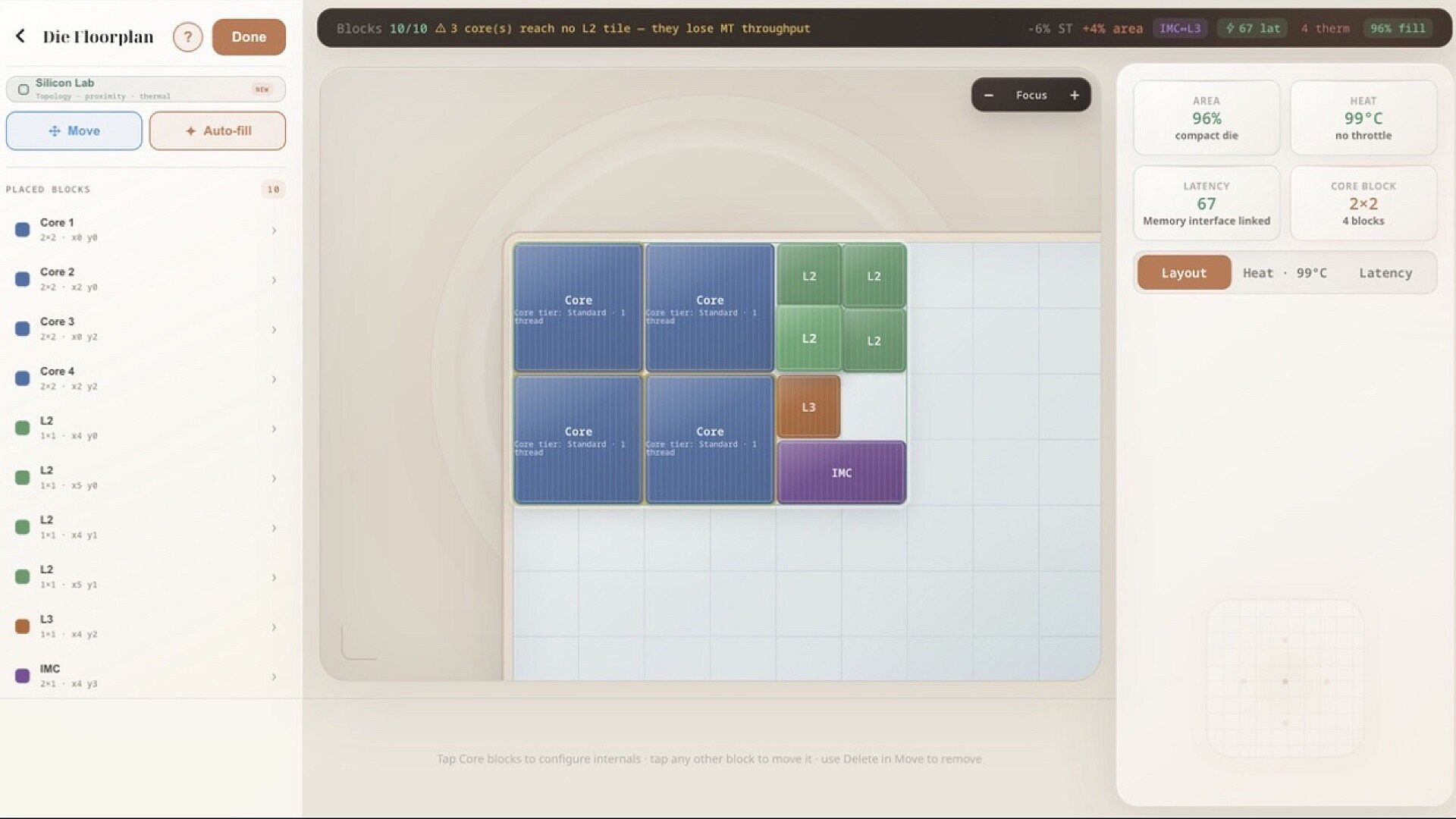
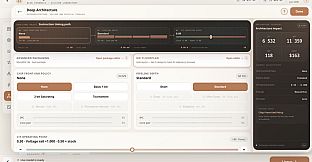
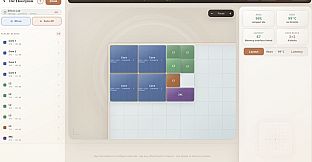
The core loop centers on hardware design and business decisions that directly influence commercial outcomes. CPU creation involves selecting cores, process nodes, clock speeds, cache sizes, memory support, and integrated graphics features. Deeper systems allow microarchitecture choices, die layout arrangements on a grid, thermal analysis, and hybrid configurations where performance, power draw, die area, yield, and manufacturing costs interconnect.
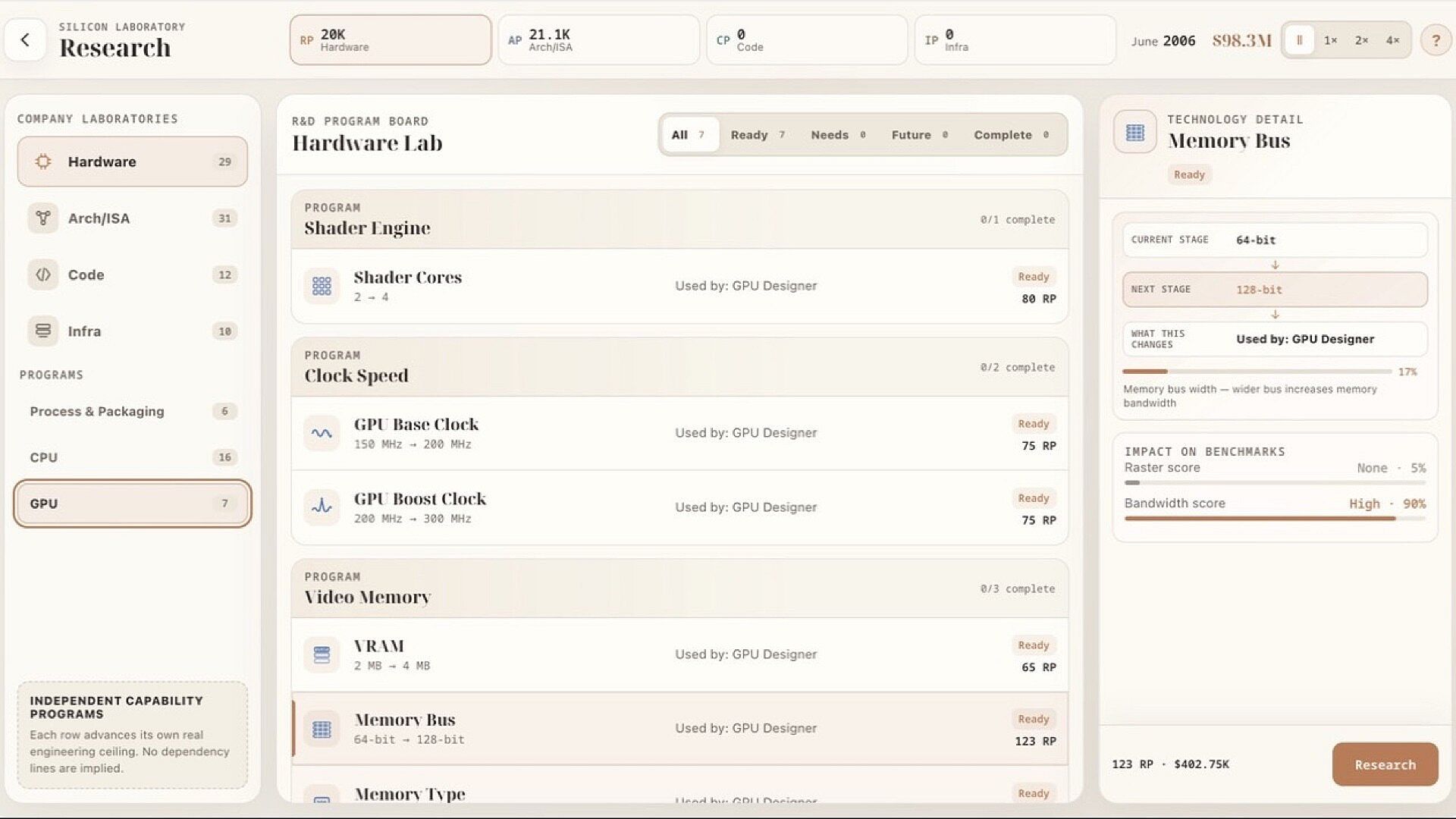
GPU design follows similar depth with shader arrays, frequencies, VRAM configurations, memory buses, and graphics API targets. Players shape dies while balancing heat, bandwidth, and intended markets such as gaming, professional workloads, data centers, or AI applications. Laptop assembly combines CPUs and GPUs with chassis, displays, memory, storage, batteries, cooling solutions, and operating systems, where thermals and sustained performance shape reviews and sales figures.
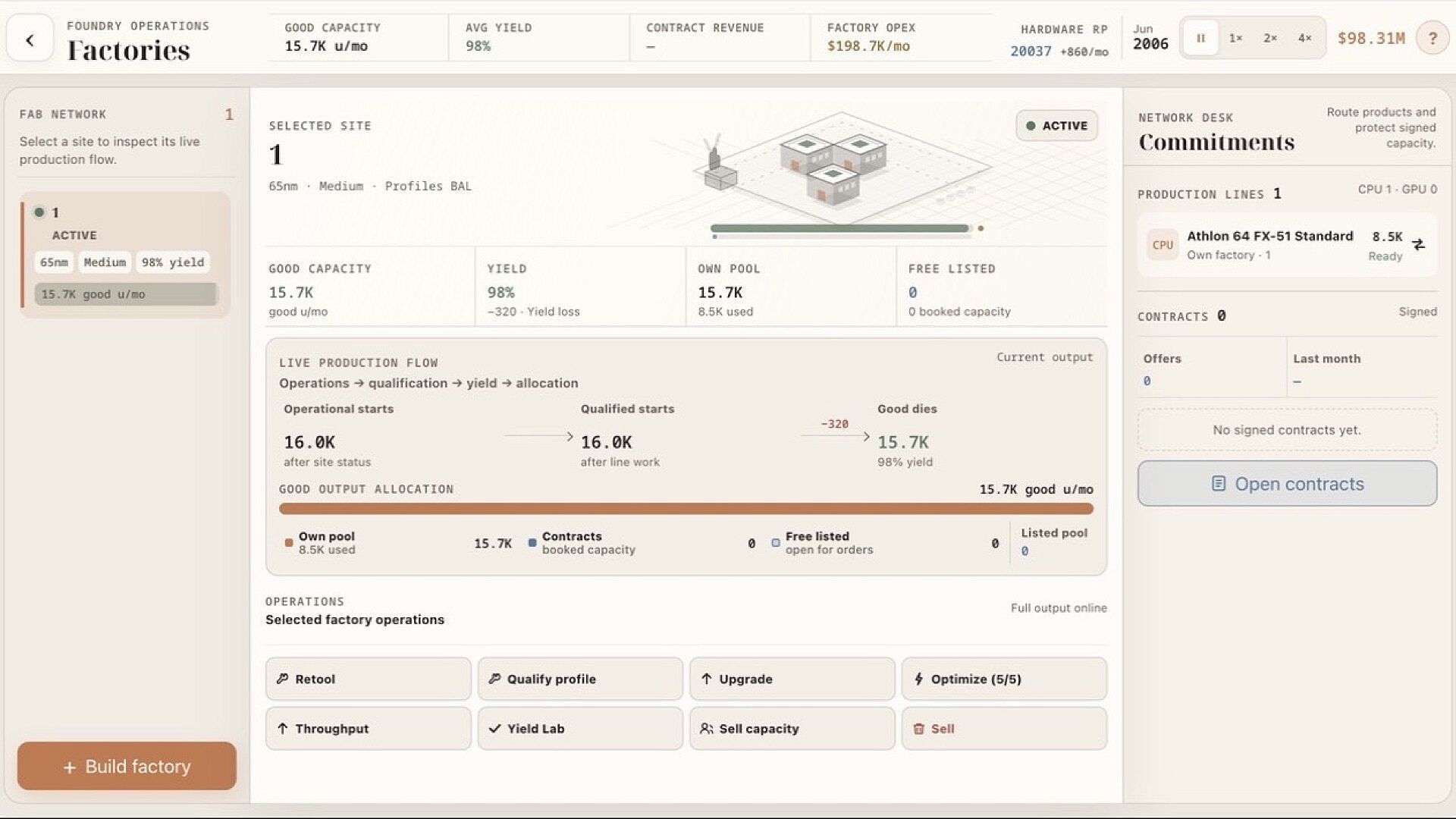
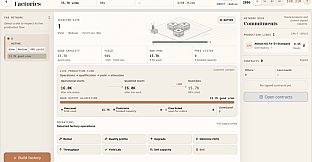
Manufacturing requires building fabrication plants or outsourcing to external foundries. Process node advancement, capacity planning, yield management, and unit cost control determine whether designs reach viable scale. Excess foundry capacity can be sold to competitors. Platform development includes creating instruction set architectures, extensions, developer tools, and full operating systems with custom kernels and schedulers. Software compatibility, optimization partnerships, and ecosystem strength determine whether technical advantages translate into market dominance.
Progress spans from the mid-1990s through eras of 3D graphics adoption, multicore processors, portable devices, cloud infrastructure, cryptocurrency surges, modern graphics APIs, and the current AI focus. AI-controlled rivals operate with independent finances, product lines, factories, and strategies, forcing adaptation to shifting demands. Engineer hiring, office expansion, and technology research support long-term growth. In-game tools such as benchmark results, journalist reviews, and market reports provide feedback on customer and press perceptions.
Game Modes
The experience is built as a single-player sandbox simulation. Players manage one company through an open-ended timeline while responding to technological shifts and rival actions. A company configuration option allows customization of the player's starting setup and the profiles of competing firms. No separate multiplayer or competitive modes exist beyond the persistent AI-driven market simulation.
Business and Market Systems
Success depends on aligning engineering choices with commercial realities. Products age quickly as competitors respond, so pricing, cooling solutions, software support longevity, release timing, and workload relevance all factor into ongoing viability. Market segments react differently to architectures, with mobile buyers favoring certain designs over desktop or server preferences. Software layers, including games, creative tools, servers, rendering applications, databases, and AI workloads, stress hardware in distinct ways and can amplify or undermine hardware advantages.
Players track finances, production yields, and competitor movements while deciding whether to remain fabless, expand into manufacturing, operate as a pure foundry, or integrate CPUs, GPUs, laptops, operating systems, and software standards under a single brand. Multiple viable paths exist toward building a dominant position in the industry.
Is It Worth Playing?
The game suits players who enjoy detailed management simulations and technical decision-making in a business context. It delivers interconnected systems for chip design, fabrication, and market competition without relying on simplified abstractions. Recent updates have added features such as 3D rendering support, refined core and graphics settings, chiplet and multi-die options, and expanded company customization tools, indicating ongoing development and refinement.
Reception on distribution platforms shows generally positive feedback from users who appreciate the depth, though the title remains in active beta stages with continued interface and balance improvements. It appeals most to those interested in semiconductor industry mechanics rather than fast-paced action or broad accessibility. The single-player focus and absence of multiplayer elements keep the emphasis on long-term strategy and iterative product development.











