




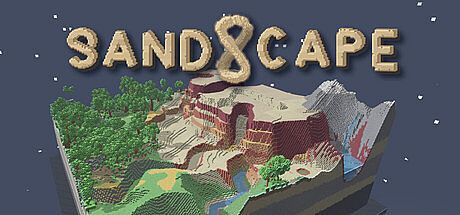


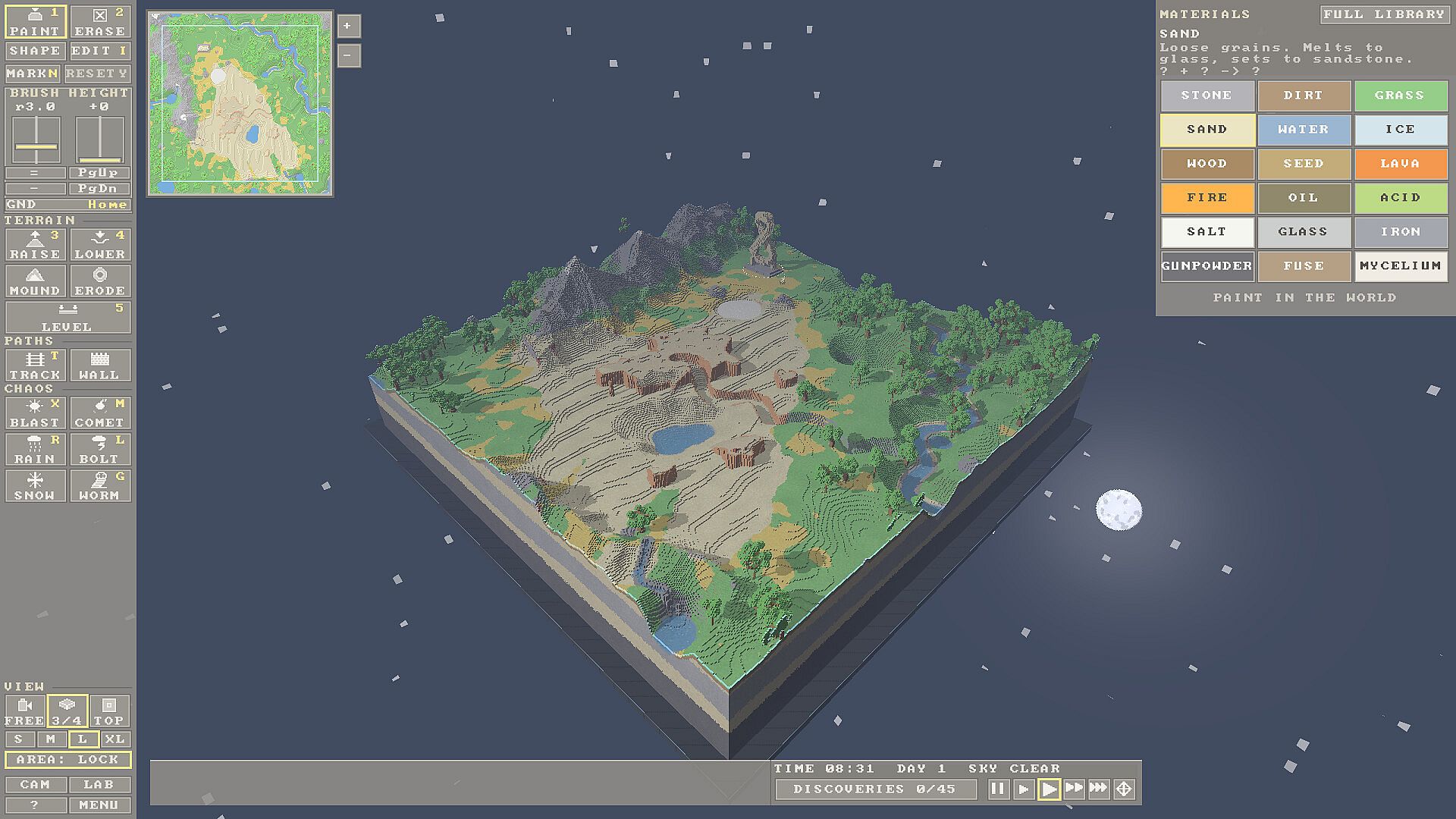
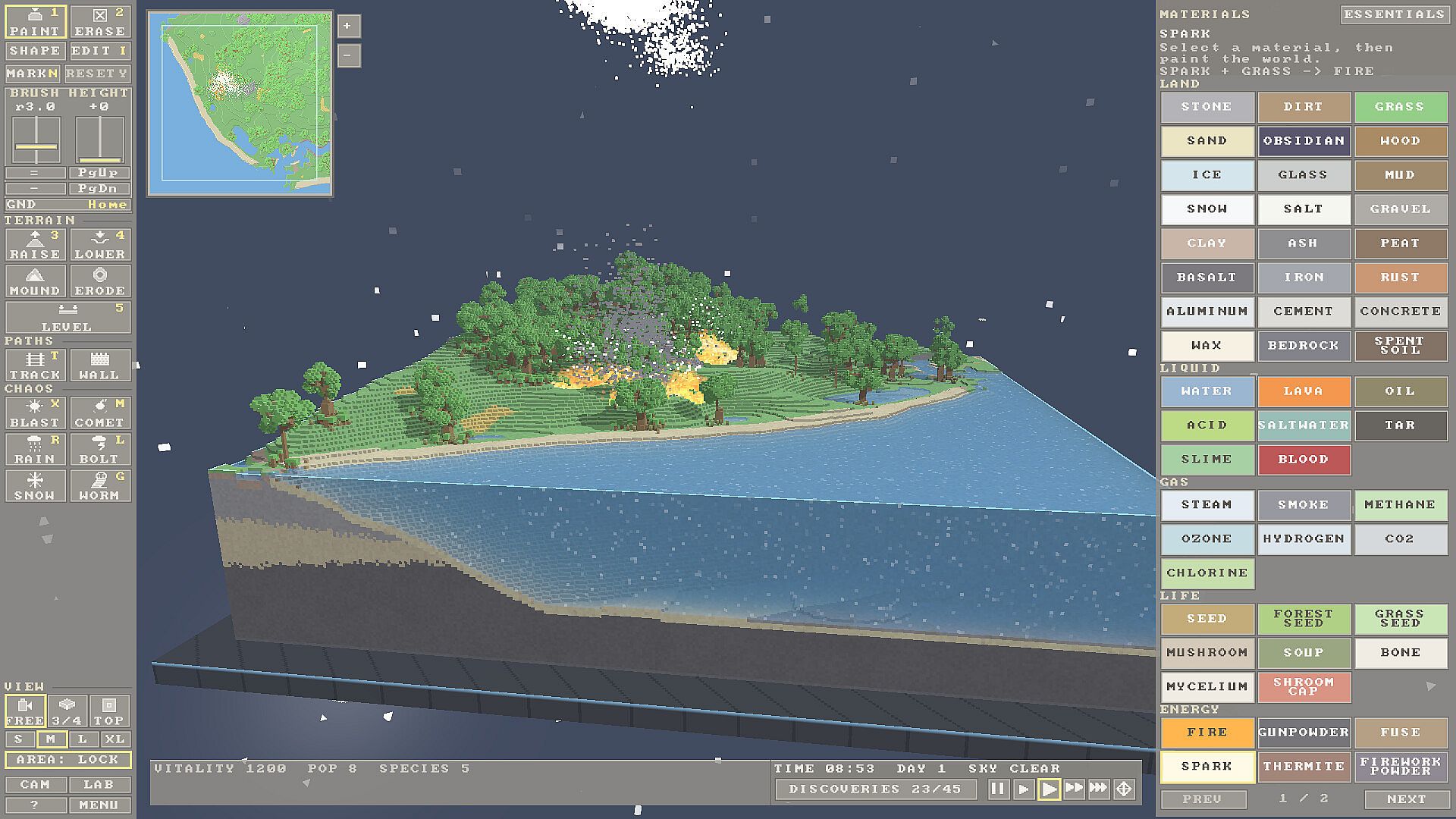
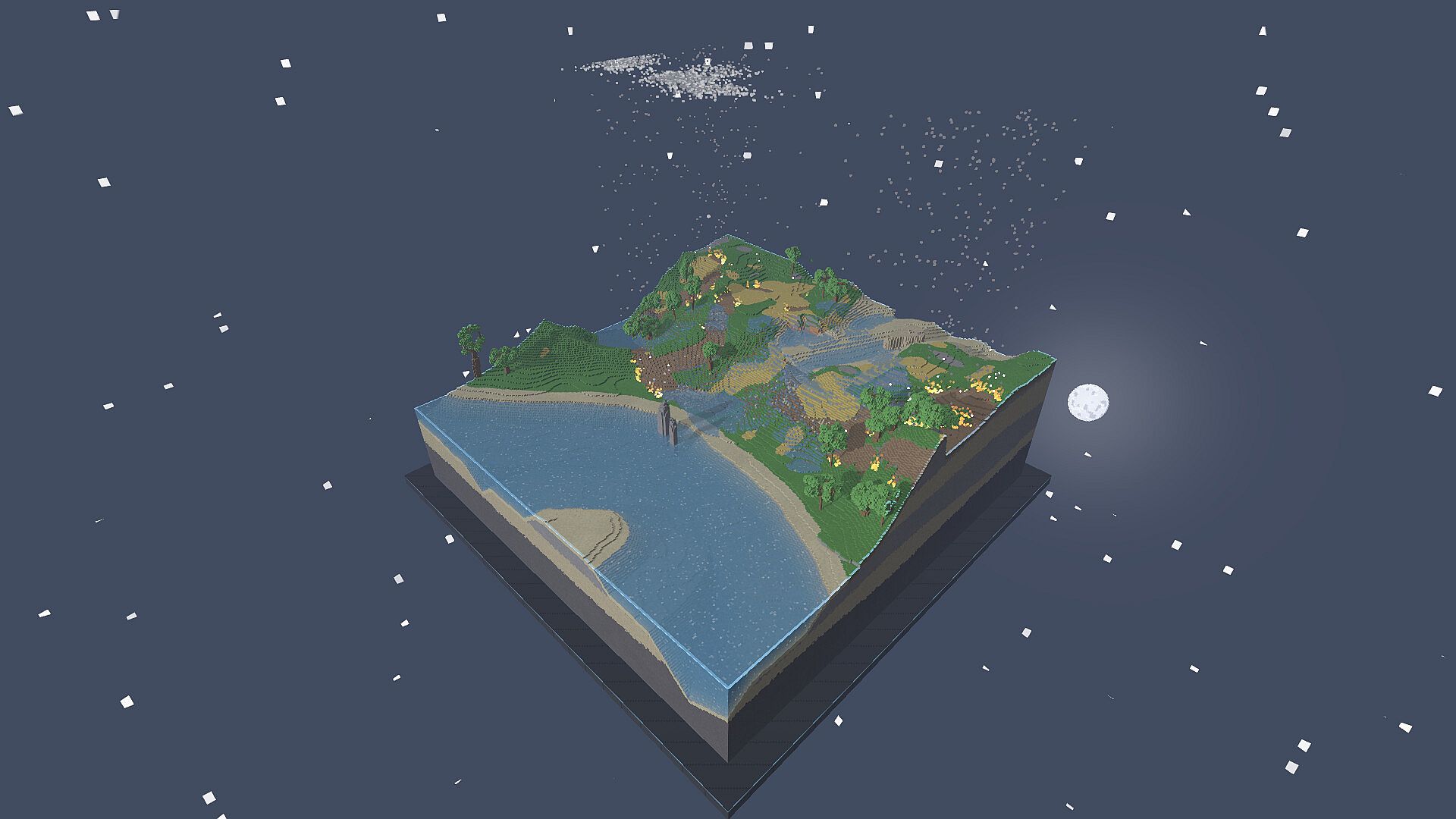
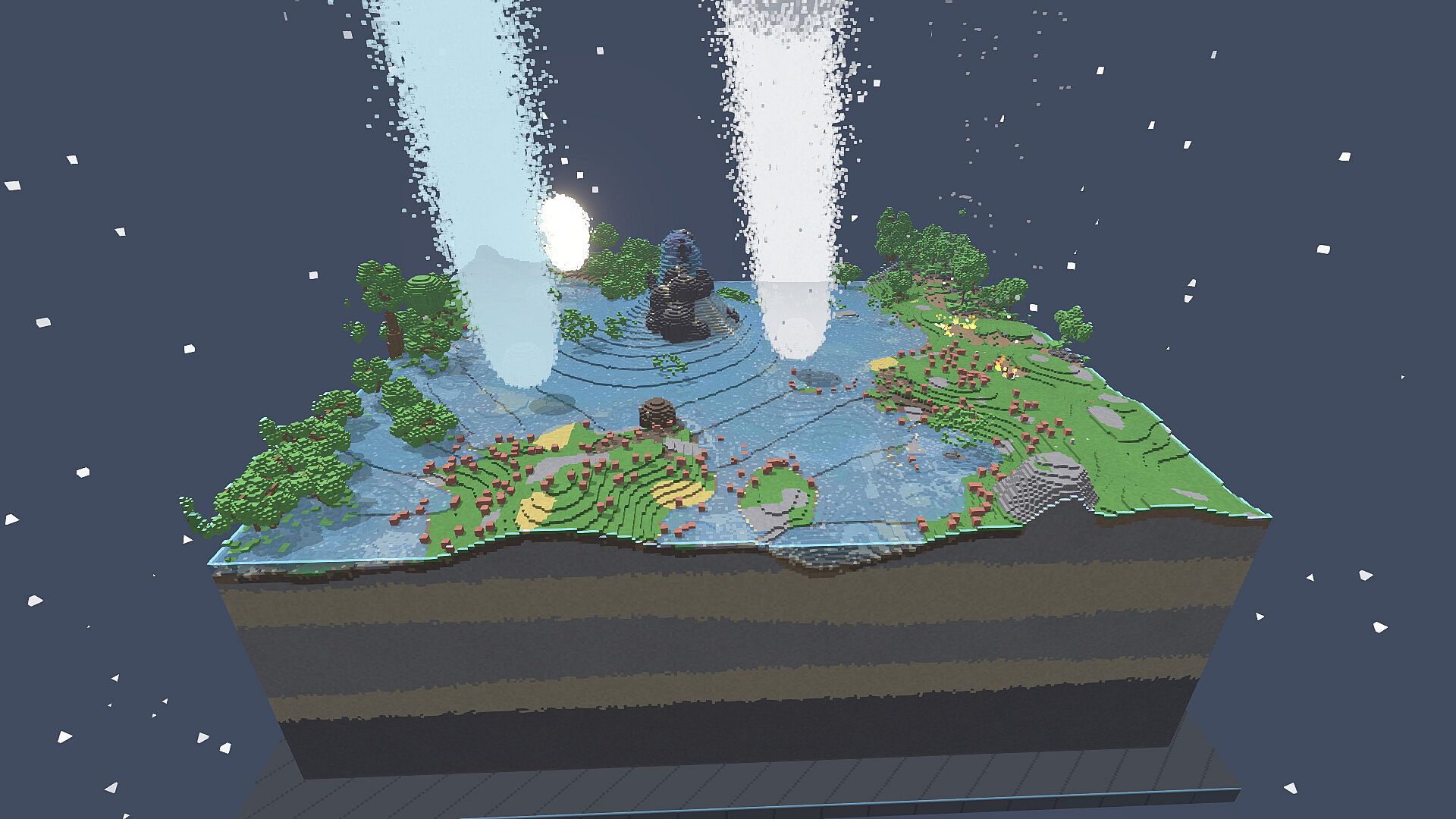
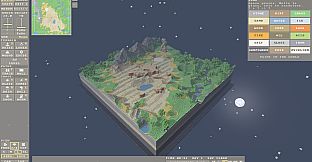
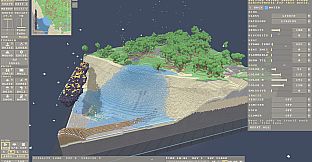
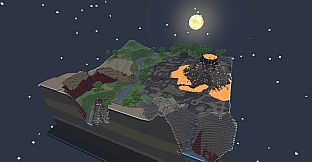
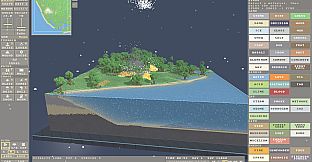
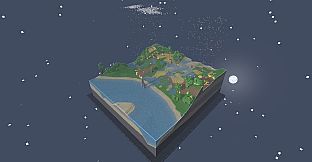
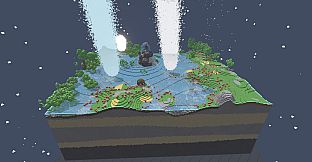
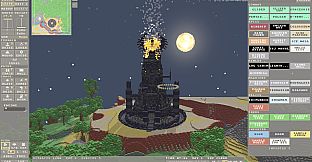
Sandscape is an indie simulation game in early access on PC that puts players in charge of a tiny floating world built from interacting particles. Inspired by classic falling-sand experiments, it lets users pour materials into a living 3D environment and observe how they flow, burn, grow, and transform over time. The core appeal lies in its detailed physics and chemistry simulation, where every grain, drop, and flame follows realistic rules that can reshape the entire landscape from one small change.
Gameplay
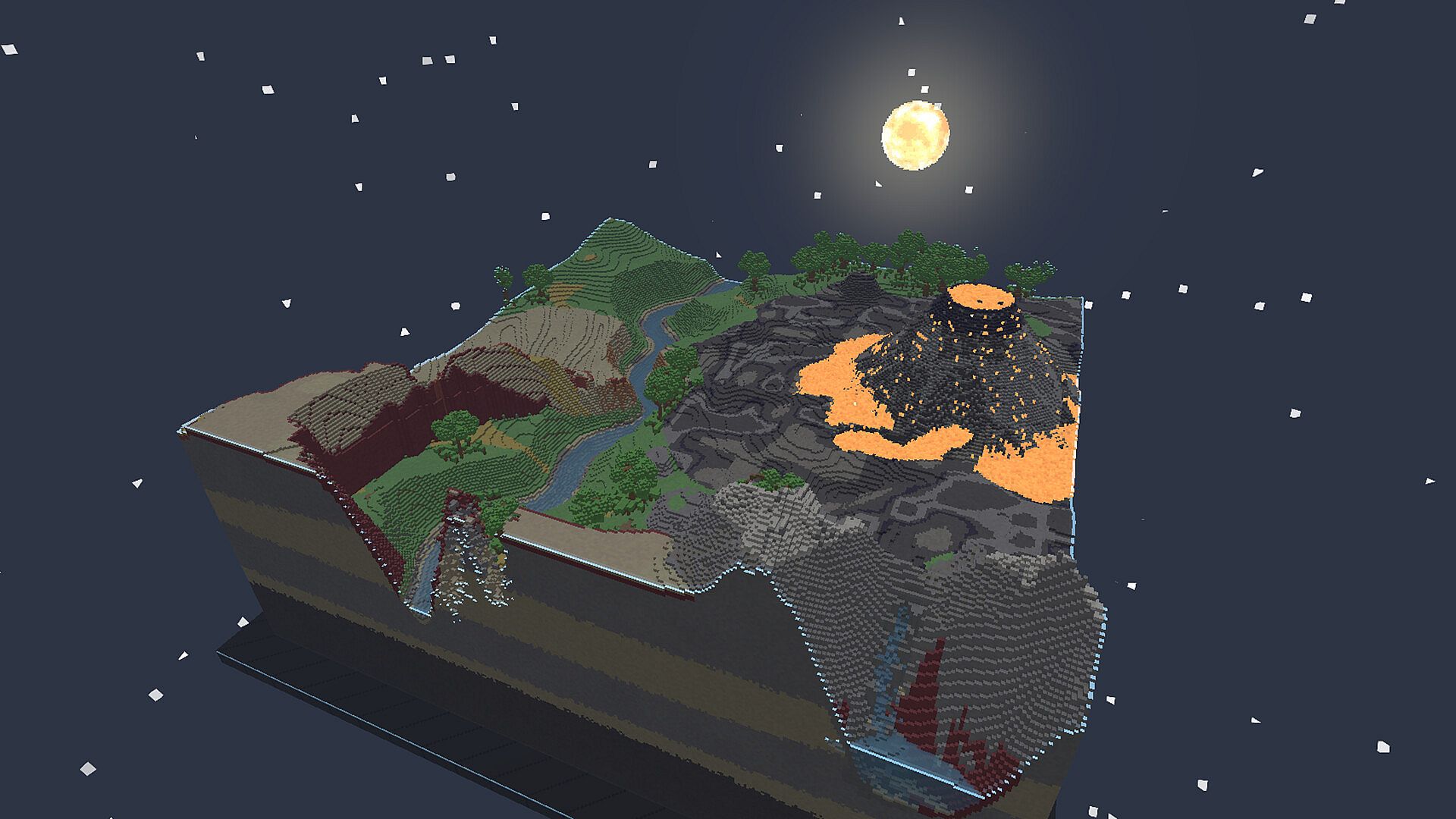
The central loop revolves around selecting from more than 150 materials and reaction states, then pouring or placing them to trigger interactions. Sand forms piles that block water, which pools behind custom banks. Fire spreads through dry vegetation and leaves embers that cool into ash, eventually creating fertile soil for new growth. Reactions include lava turning water into obsidian, iron rusting in moisture, thermite cutting through metal, and cement hardening under the right conditions. Players also manage temperature, pressure, and biology elements such as grass spreading or mushrooms colonizing damp areas.
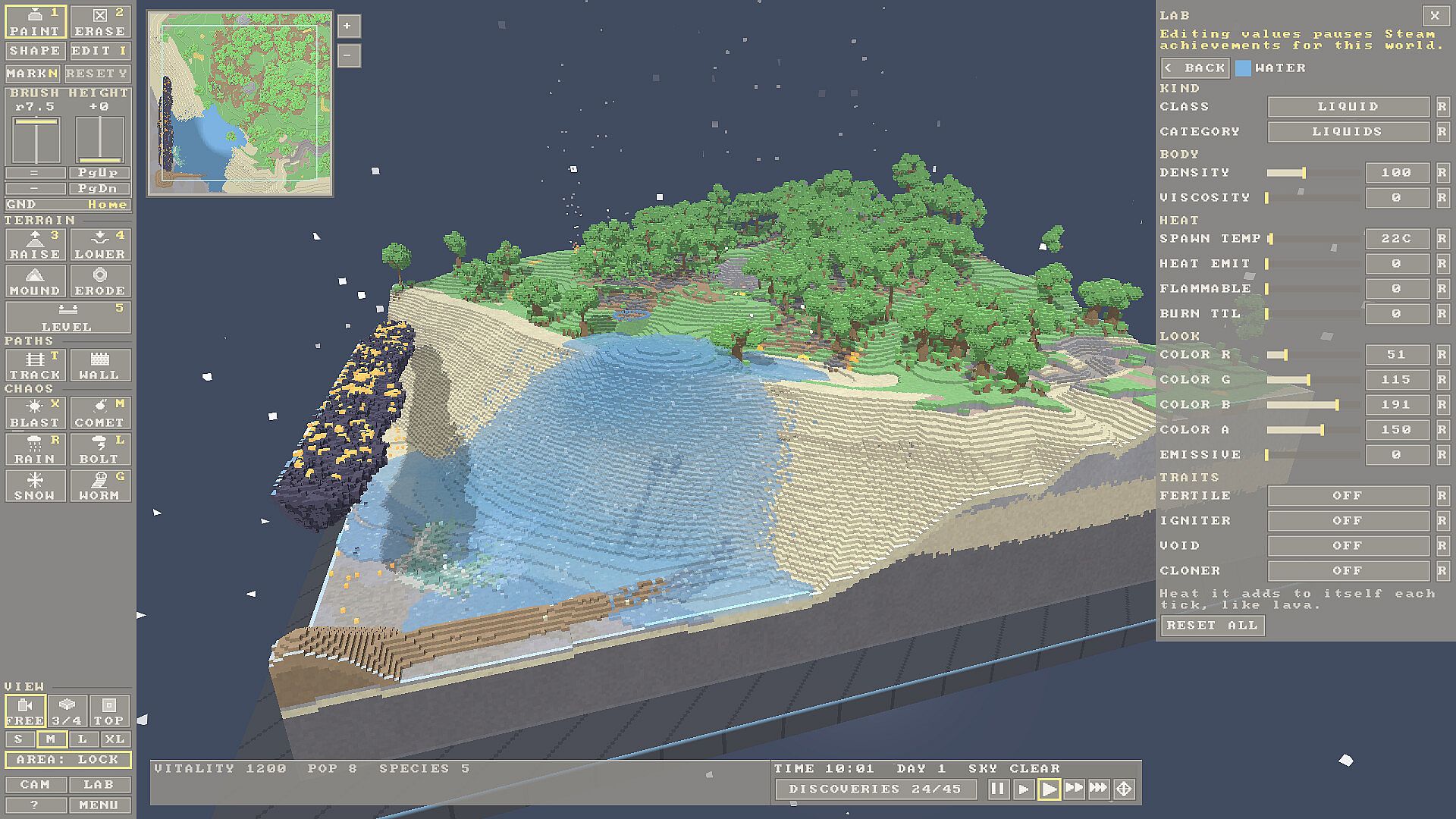
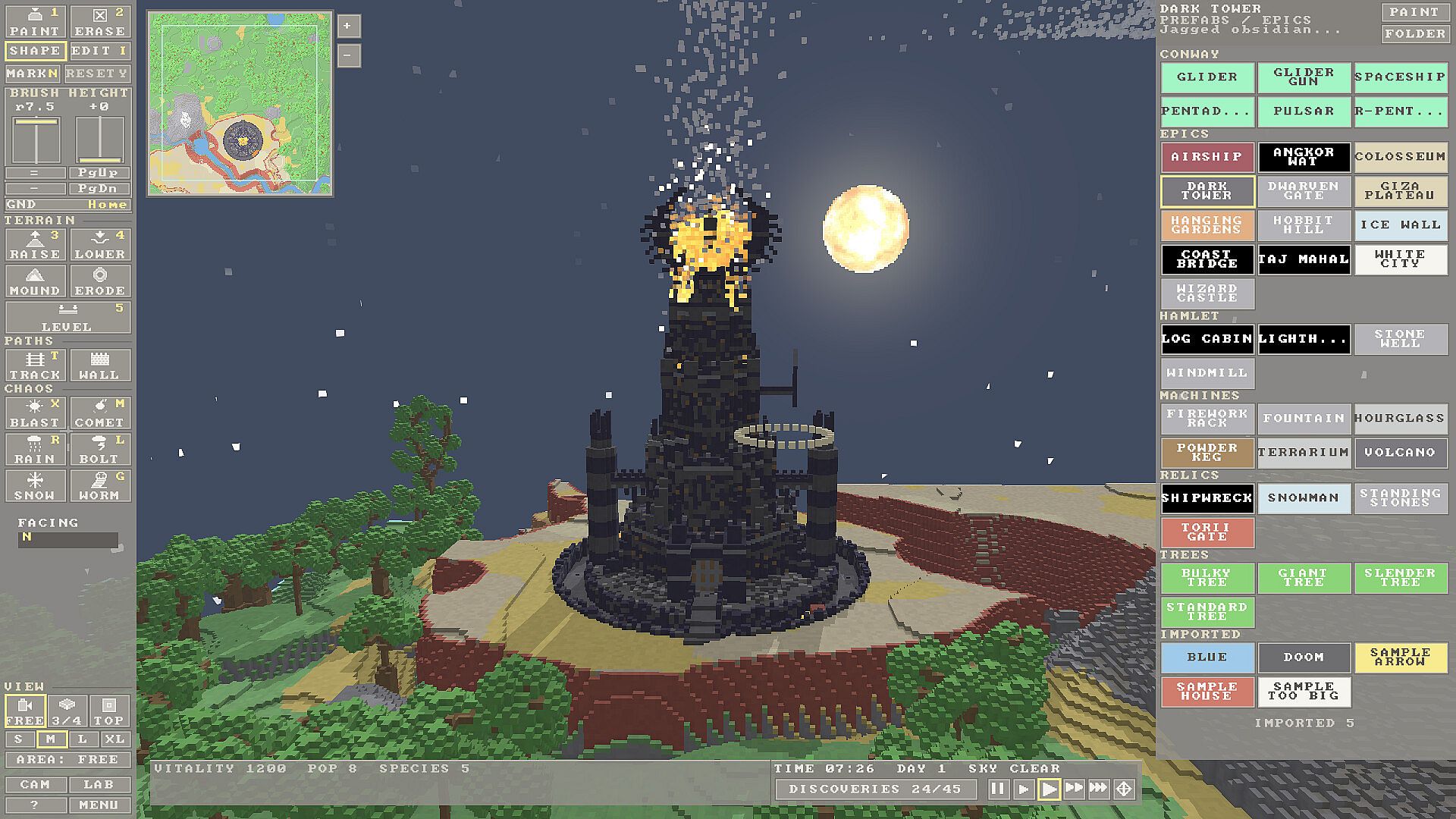
Terrain tools allow raising mountains, carving rivers, or flattening plains. Weather events like rain, snow, meteors, explosions, and lightning can be summoned to test the world further. A shape tool supports placing trees or patterns based on Conway's Game of Life. The Lab mode lets users tweak simulation rules on the fly, such as increasing water density or making air flammable. Storms erode terrain naturally, lightning starts wildfires, and herds of small creatures graze, drink, and adapt their behavior based on available food sources. Day and night cycles run under a moving sun, moon, and stars.
Game Modes
Three distinct starting worlds provide different entry points. The living Island offers an active ecosystem ready for experimentation. The blank Flat Sandbox gives a clean slate for free-form building. The calm Zen Garden emphasizes gentle sand-based creation with minimal external interference. Four world sizes range from intimate Cozy scales to expansive Grand ones, suiting both quick tests and long-running simulations.
Photo mode, GIF capture, and video recording tools support sharing creations, while automatic camera orbits and glides help frame results. Basic VR support is included in the current build, with more features planned in future updates. No timers or scoring systems apply, allowing players to run experiments, build structures, or simply observe changes after stepping away.
Discovery and Experimentation
Progression centers on 45 discoveries that unlock as players encounter new reactions, from initial fire creation to molten metal flows and long-term geological shifts. Findings are logged in the Discovery Codex. As the collection grows, the central Monolith activates, revealing additional layers of the simulation. Hidden reactions encourage repeated testing across different material combinations and environmental conditions.
Creatures and vegetation evolve independently once introduced, with grass reseeding forests and mushrooms spreading in wet zones. These autonomous systems turn the world into a self-sustaining experiment that continues even when the player is not actively directing events.
Is It Worth Playing?
Sandscape suits players who enjoy open-ended simulation and particle-based experimentation without competitive pressure or structured objectives. Its strength is the depth of material interactions and the freedom to rewrite rules or summon large-scale events. The early access status means the feature set is still expanding, particularly around VR and additional content. Those drawn to relaxing sandbox play, physics puzzles, or watching emergent ecosystems develop will find consistent value in returning to the same world over multiple sessions. The absence of timers or failure states makes it accessible for casual sessions or extended observation periods.











