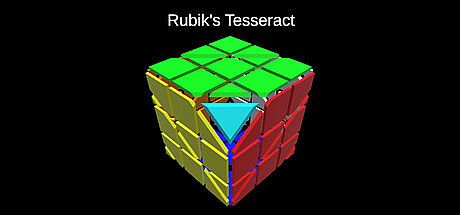



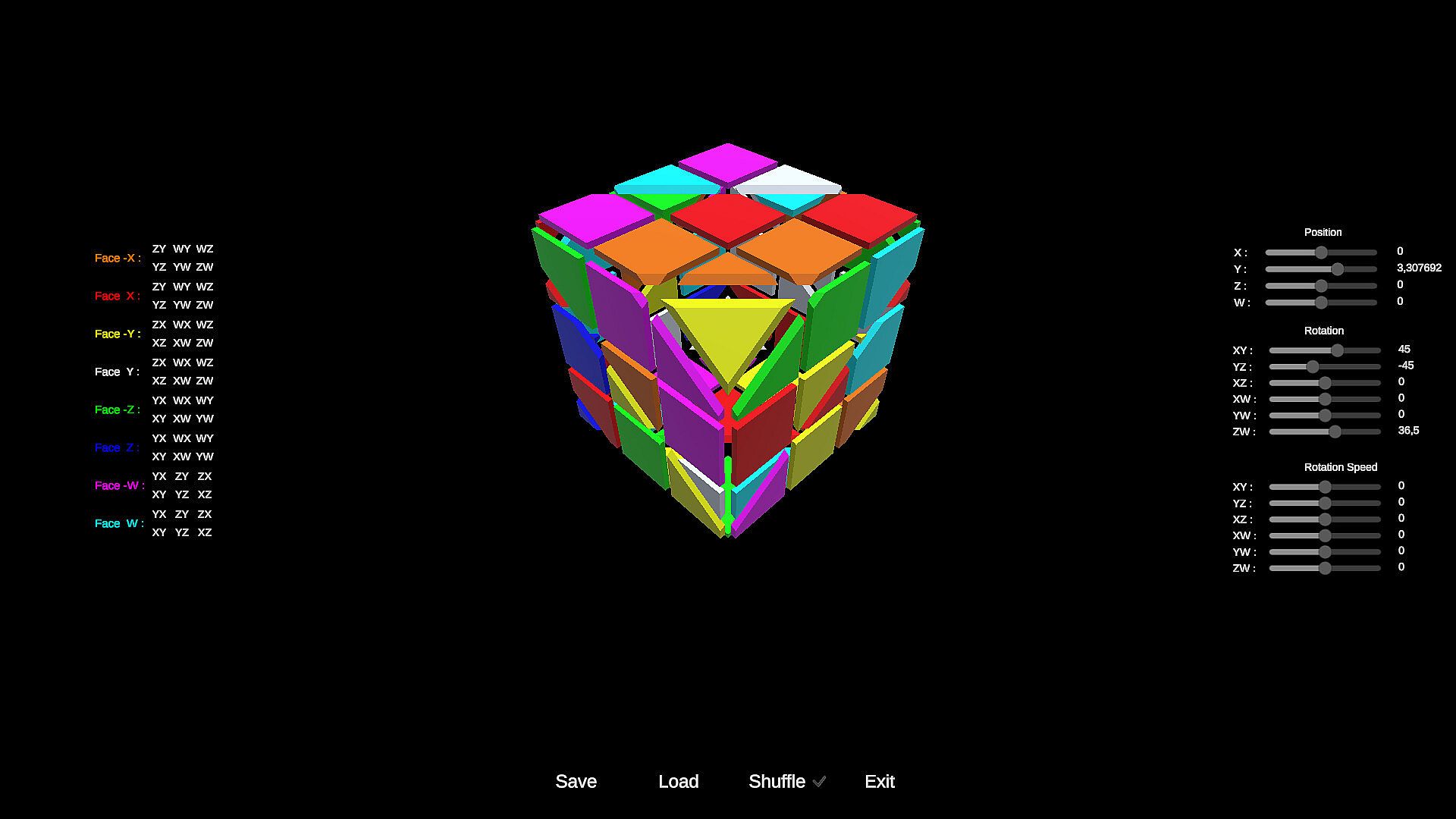
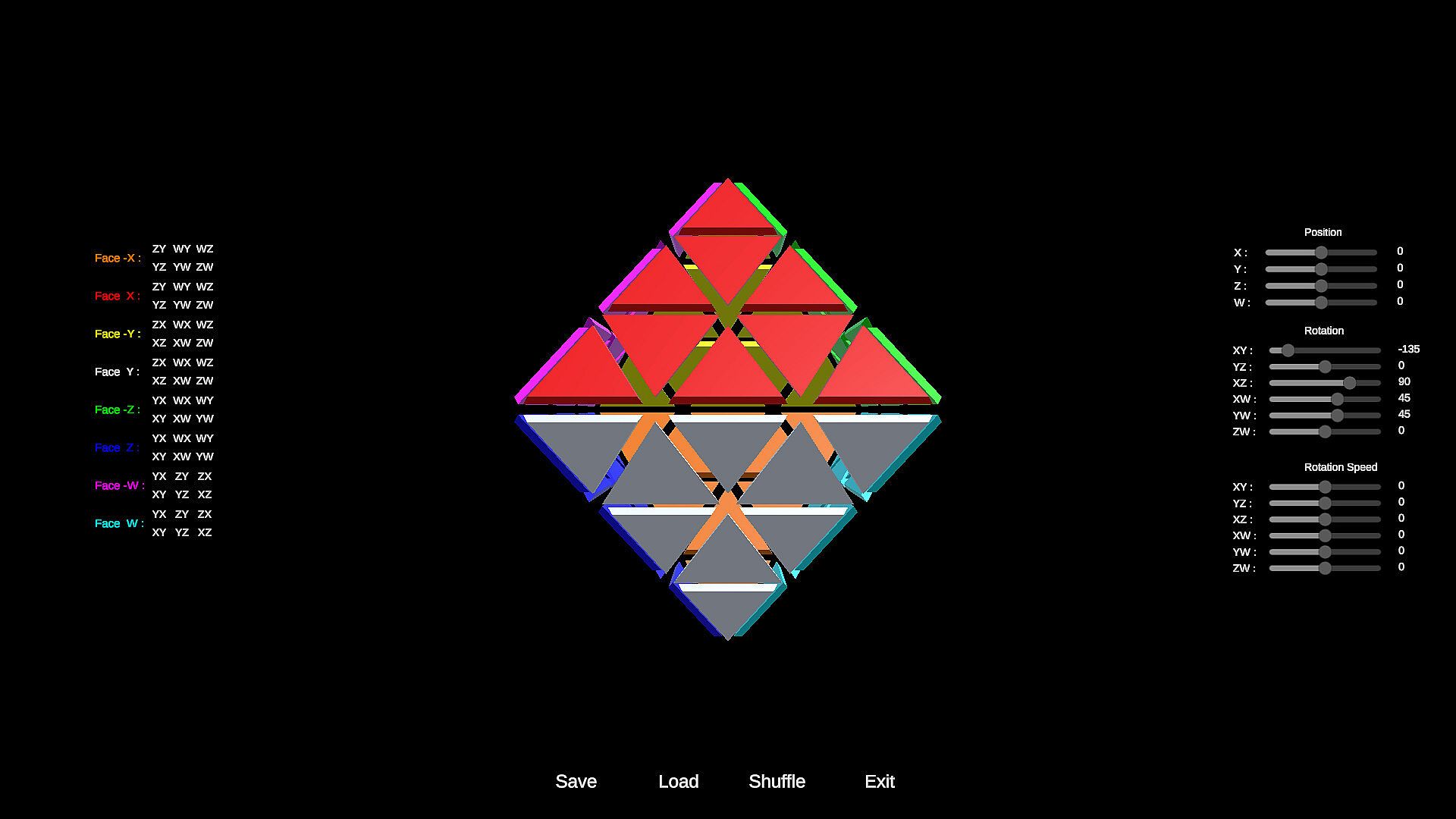
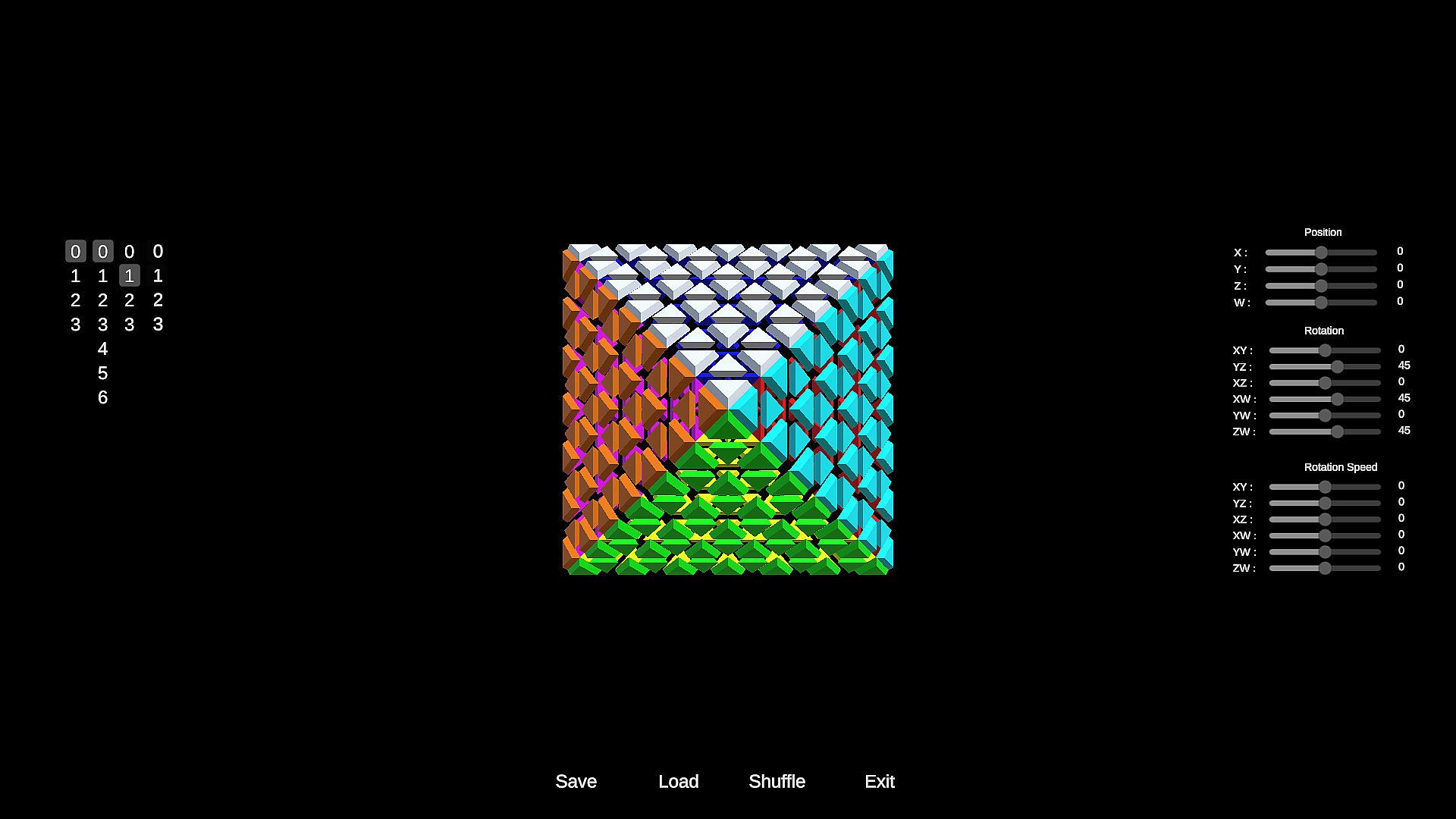
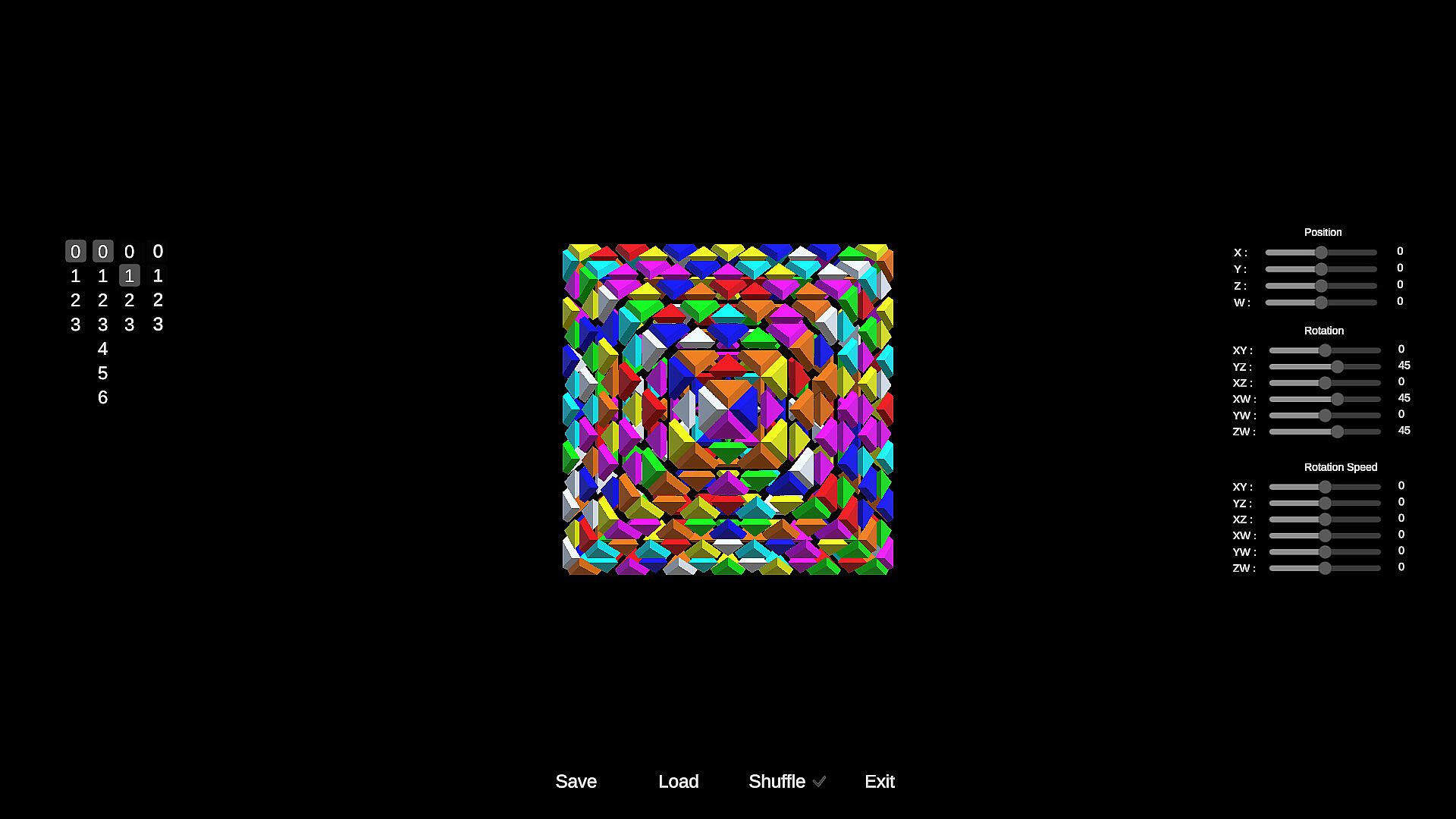
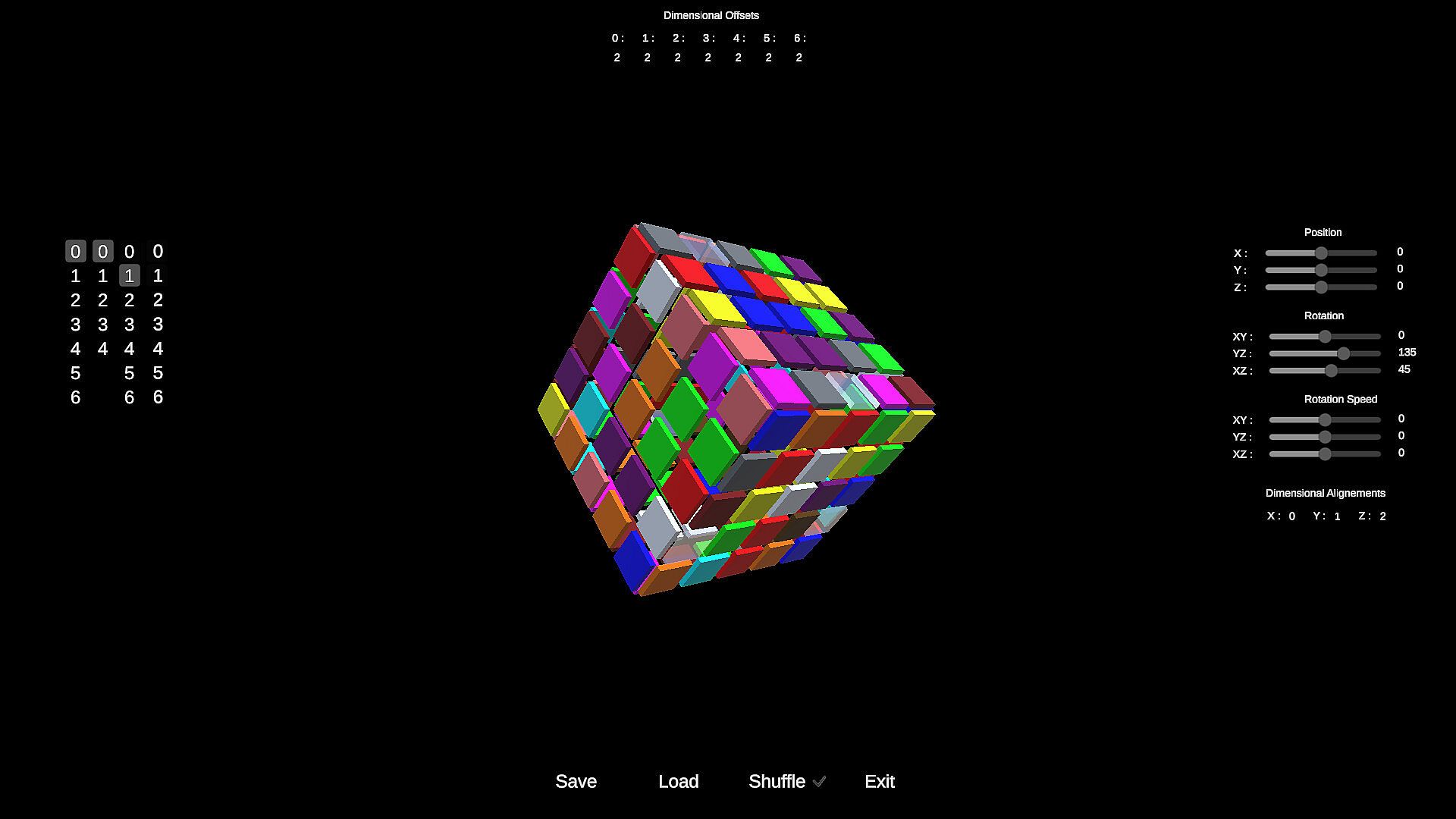
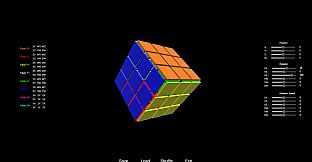
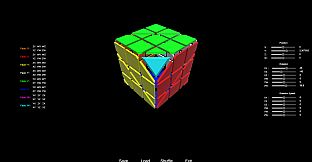
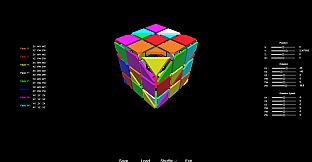
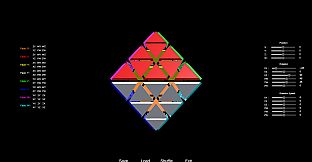
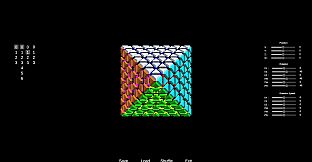
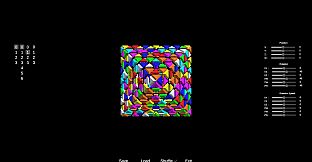
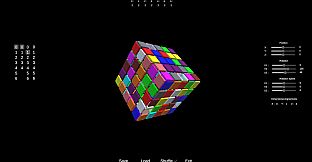
Rubik's Tesseract is an indie puzzle game for PC that extends the classic Rubik's cube into higher dimensions. Players solve increasingly complex versions of the puzzle, starting with familiar three-dimensional cubes and moving into four-dimensional tesseracts and beyond. The experience focuses on spatial manipulation and pattern recognition in simulated spaces that exceed ordinary perception.
Gameplay
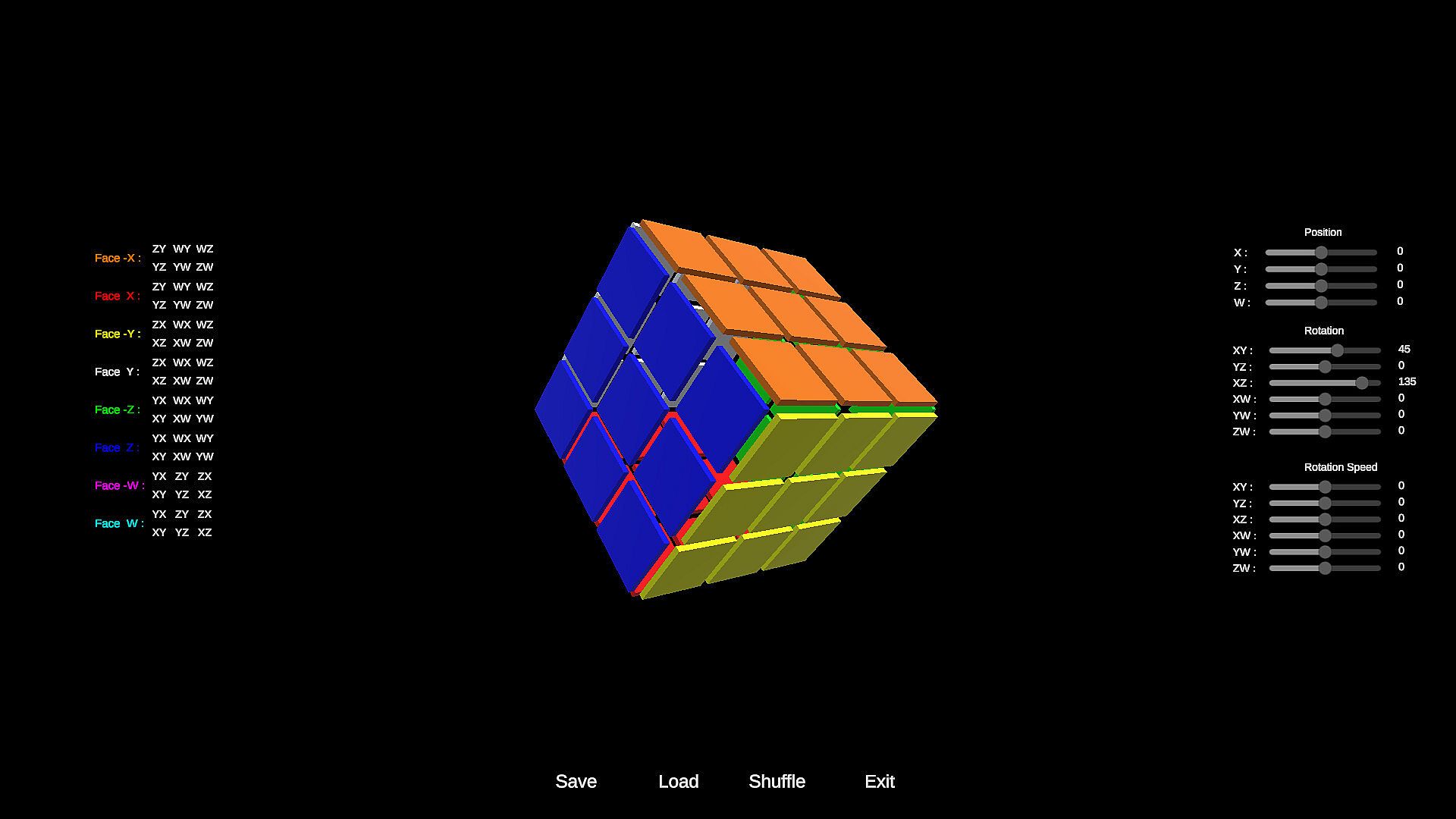
The core loop centers on rotating sections of multi-dimensional cubes to align colors or faces into solved states. Controls allow direct interaction with visible faces while the game handles the underlying geometry of extra dimensions. Users can adjust the size of the cube, increasing the number of faces per dimension, which adds layers of complexity without altering the fundamental rotation mechanics.
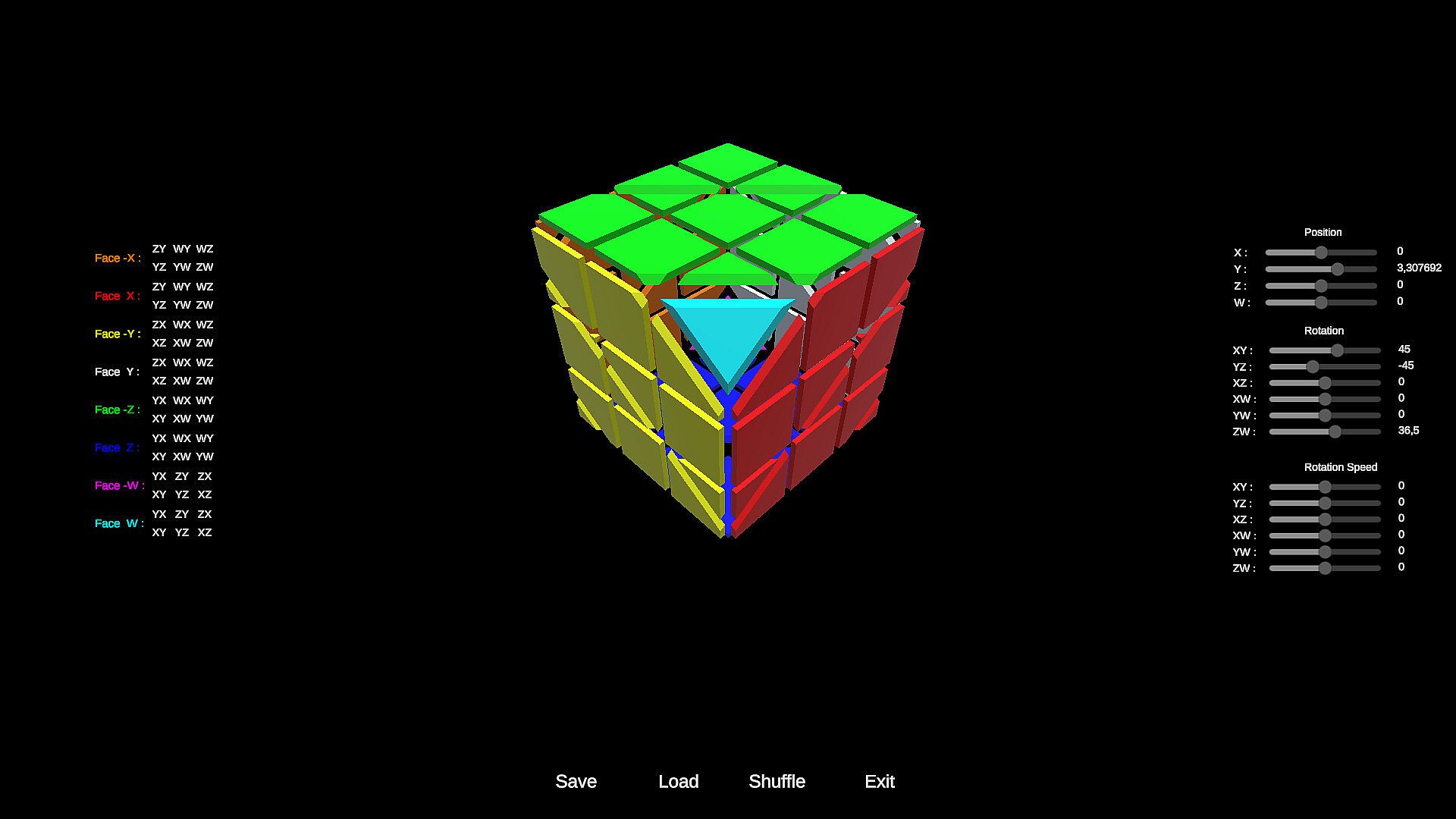
Higher-dimensional simulations require tracking relationships that are not visible in standard three-dimensional views. The interface presents projections that update in real time as rotations occur, helping players build an intuitive sense of the unseen axes. Performance remains stable on typical hardware up to around one hundred thousand faces per face, after which frame rates may drop depending on the system.
The game supports cubes with a maximum of over forty million faces per face, though reaching that scale demands significant computational resources. Progression comes from tackling larger or higher-dimensional instances rather than from narrative or competitive elements.
Game Modes
Rubik's Tesseract operates as a single-player experience centered on free-form puzzle solving. There are no separate named modes such as time trials or multiplayer sessions. Instead, variety arises from selecting different cube dimensions and sizes within the main interface.
Players can experiment with four-dimensional tesseracts as an entry point beyond the standard cube, then scale upward to five or more dimensions. Each choice changes the number of faces and the mental mapping required, creating a natural difficulty curve based on geometry rather than external rulesets.
Higher-Dimensional Mechanics
Manipulating objects in four or more dimensions involves rotating groups of faces along axes that extend beyond length, width, and height. The simulation renders these actions through successive projections, allowing users to observe how a single twist affects multiple unseen layers simultaneously.
Color alignment remains the primary objective across all dimensions. As the number of faces grows, the puzzle demands greater foresight because individual moves influence a larger portion of the overall structure. The developer notes that the project originated as an offshoot from an unfinished first-person four-dimensional puzzle concept, resulting in this focused cube solver.
Is It Worth Playing?
Rubik's Tesseract appeals to players who enjoy abstract spatial puzzles and are curious about higher-dimensional mathematics. Those already comfortable with standard Rubik's cubes will find the transition to four dimensions a logical next step, while the option to scale further provides ongoing challenge for dedicated solvers.
The game suits individuals interested in exploring geometry through interactive means rather than through competitive leaderboards or story-driven content. Its indie nature means it remains a niche tool for personal experimentation instead of a broad entertainment product.
Because the title is still in development with no confirmed release date or post-launch support details available, prospective players should evaluate it based on their tolerance for technical puzzles and willingness to engage with unconventional interfaces. The experience rewards persistence with a deeper appreciation of dimensional concepts, provided the user approaches it as a mathematical exercise rather than a conventional game.