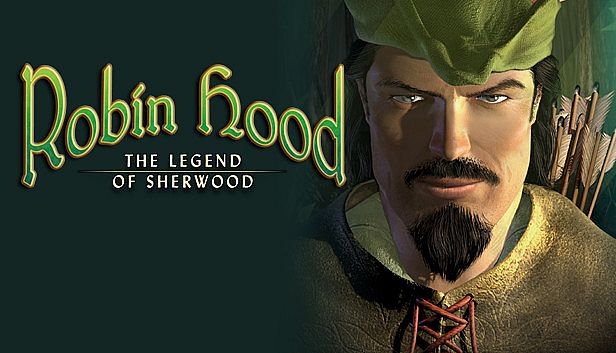
















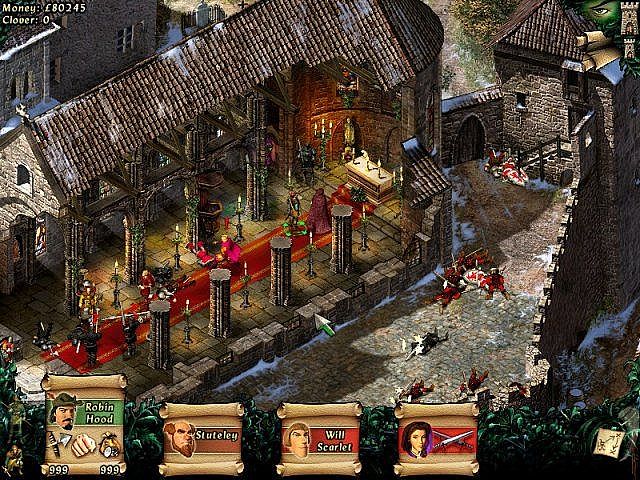
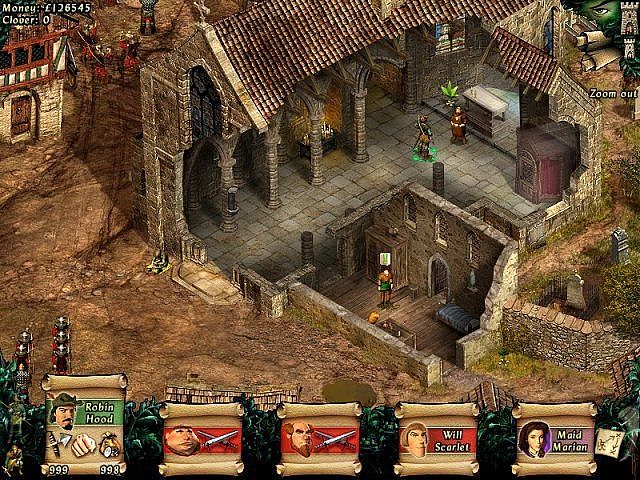
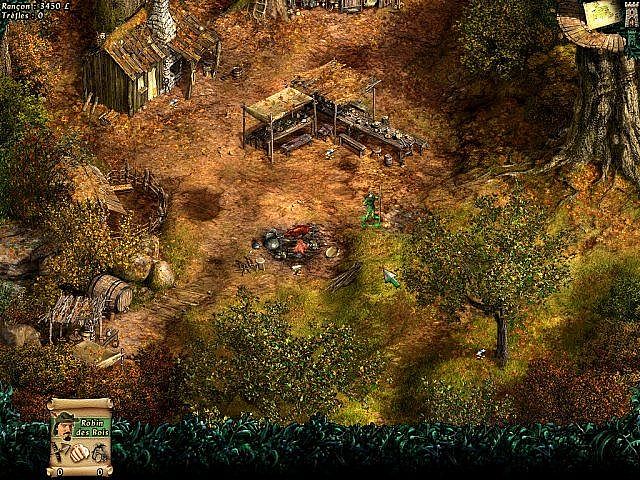
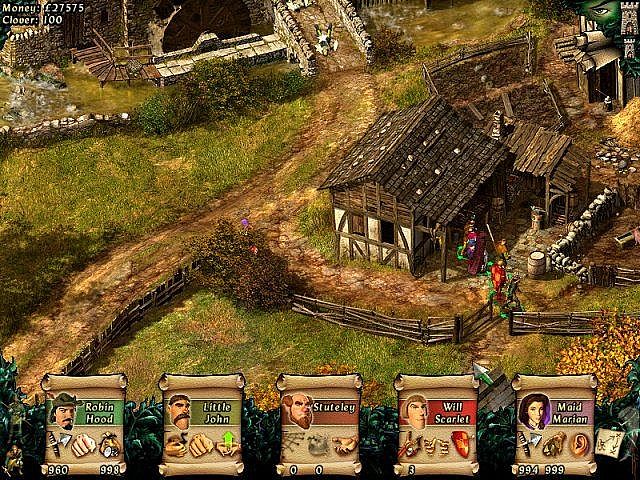
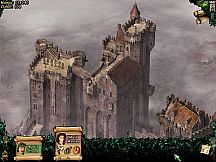
Robin Hood: The Legend of Sherwood is a single-player strategy game that blends real-time tactics with stealth elements. Set in England during the year 1190, it places players in control of Robin Hood and his band of followers as they oppose Prince John's rule while King Richard remains imprisoned. The title emphasizes careful planning, character management, and mission variety over direct confrontation.
Gameplay
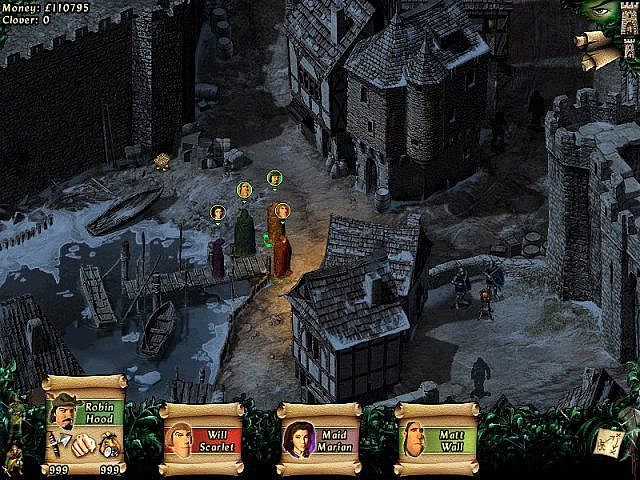
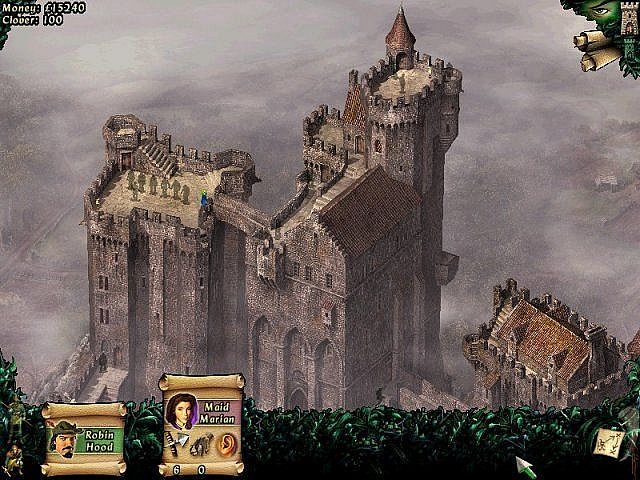
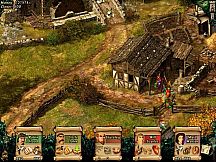
The core loop revolves around selecting and directing a small team of characters across detailed maps. Up to nine playable figures appear throughout the campaign, each bringing distinct skills and attributes that influence approach and success. Robin Hood serves as the central figure, while companions such as Little John, Friar Tuck, and Maid Marian contribute specialized capabilities during operations. Players switch between these individuals to solve objectives that reward patience and positioning.
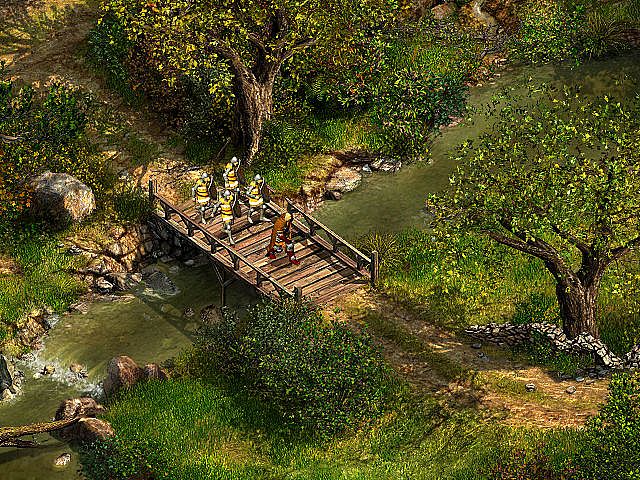
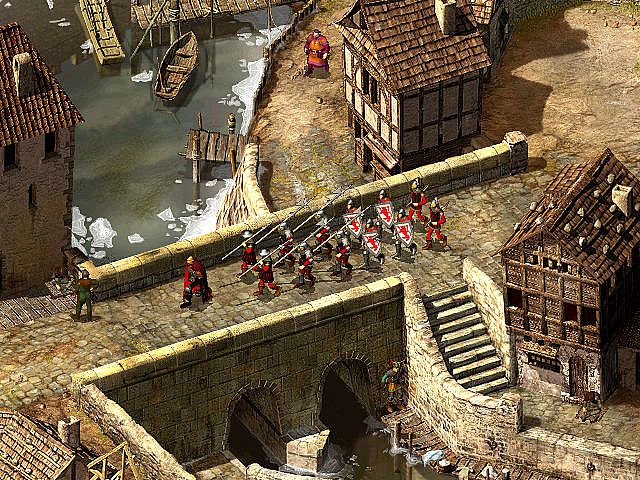
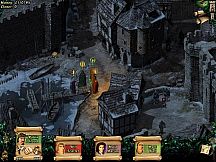
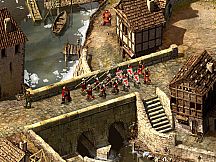
Combat incorporates an interactive mouse system that unlocks special maneuvers when characters engage enemies. Stealth remains central, as excessive violence limits opportunities to recruit additional Merry Men and alters mission outcomes. Maps feature changing conditions including day, night, and fog that affect visibility and tactics. Historic sites such as Sherwood Forest, Nottingham Castle, and York provide varied environments for navigation and planning.
Resource elements tie into recruitment and equipment choices, encouraging players to minimize casualties where possible. The campaign structure allows branching paths, so mission order and difficulty selection shape the overall experience without forcing a single sequence.
Game Modes
The game offers a single-player campaign built around more than thirty missions. These tasks span categories including robbery, infiltration, castle attack, and ambush. A non-linear system lets players choose among available operations of differing challenge levels rather than following a fixed order.
No separate skirmish, multiplayer, or mission editor modes exist. All content funnels through the campaign structure, where success depends on completing objectives with the available team while managing character-specific strengths and environmental factors.
Characters and Abilities
Nine distinct figures populate the roster, each with tailored attributes that encourage repeated playthroughs and different tactical choices. Little John brings raw strength for close encounters, Friar Tuck offers support roles, and Maid Marian adds unique options for certain scenarios. Players learn to combine these traits across missions to overcome guards, secure resources, and reach targets without alerting entire patrols.
Progression occurs through the campaign itself, unlocking new characters and refining how their abilities interact with the stealth and combat systems. The emphasis stays on team composition rather than individual leveling or persistent upgrades.
Visuals and Atmosphere
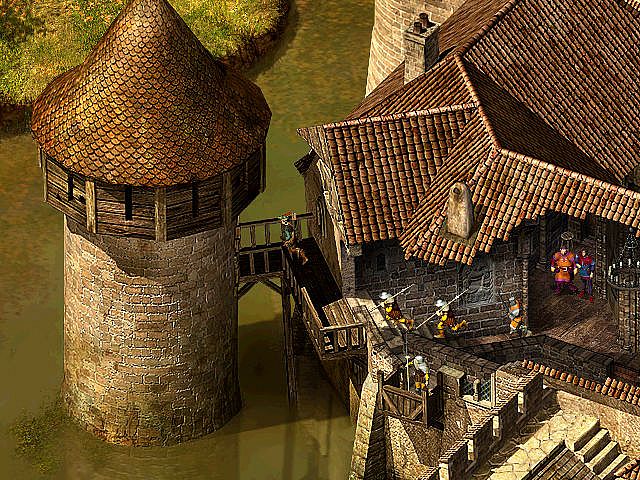
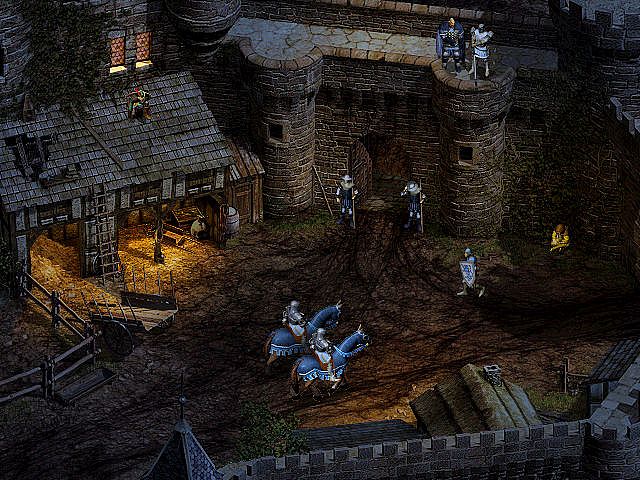
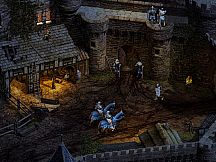
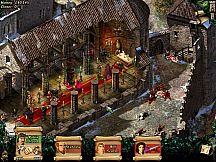
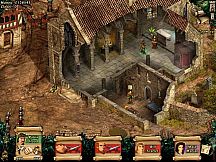
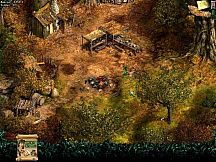
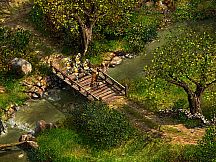
Graphics deliver realistic lighting and weather effects that influence gameplay directly. Daytime missions expose movement more readily, while nighttime and fog create opportunities for concealment. Detailed environments capture the feel of medieval England through forests, castles, and towns that reward exploration and careful route planning.
Animations highlight character interactions during combat and movement, adding clarity to the tactical decisions players make in real time.
Is It Worth Playing?
Robin Hood: The Legend of Sherwood appeals to players who enjoy classic real-time tactics titles that prioritize stealth and character management over fast action. The non-linear campaign and mission variety provide substantial single-player content for those drawn to the genre.
Current player feedback on digital platforms shows mixed reception, with roughly two-thirds of reviews positive. Strengths cited include solid tactical depth and engaging animation, while some note the dated presentation and lack of additional modes. The game suits fans of similar older entries in the stealth tactics style and remains available for those seeking a focused campaign experience without modern multiplayer elements.
Its strengths lie in the verified mechanics of team control, environmental interaction, and mission flexibility rather than ongoing updates or seasonal content. Players who value deliberate planning and historical setting will find the most consistent engagement here.