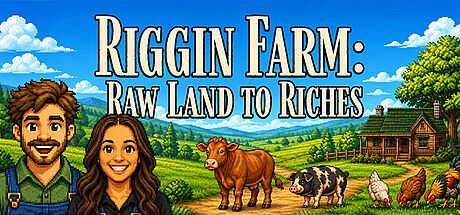


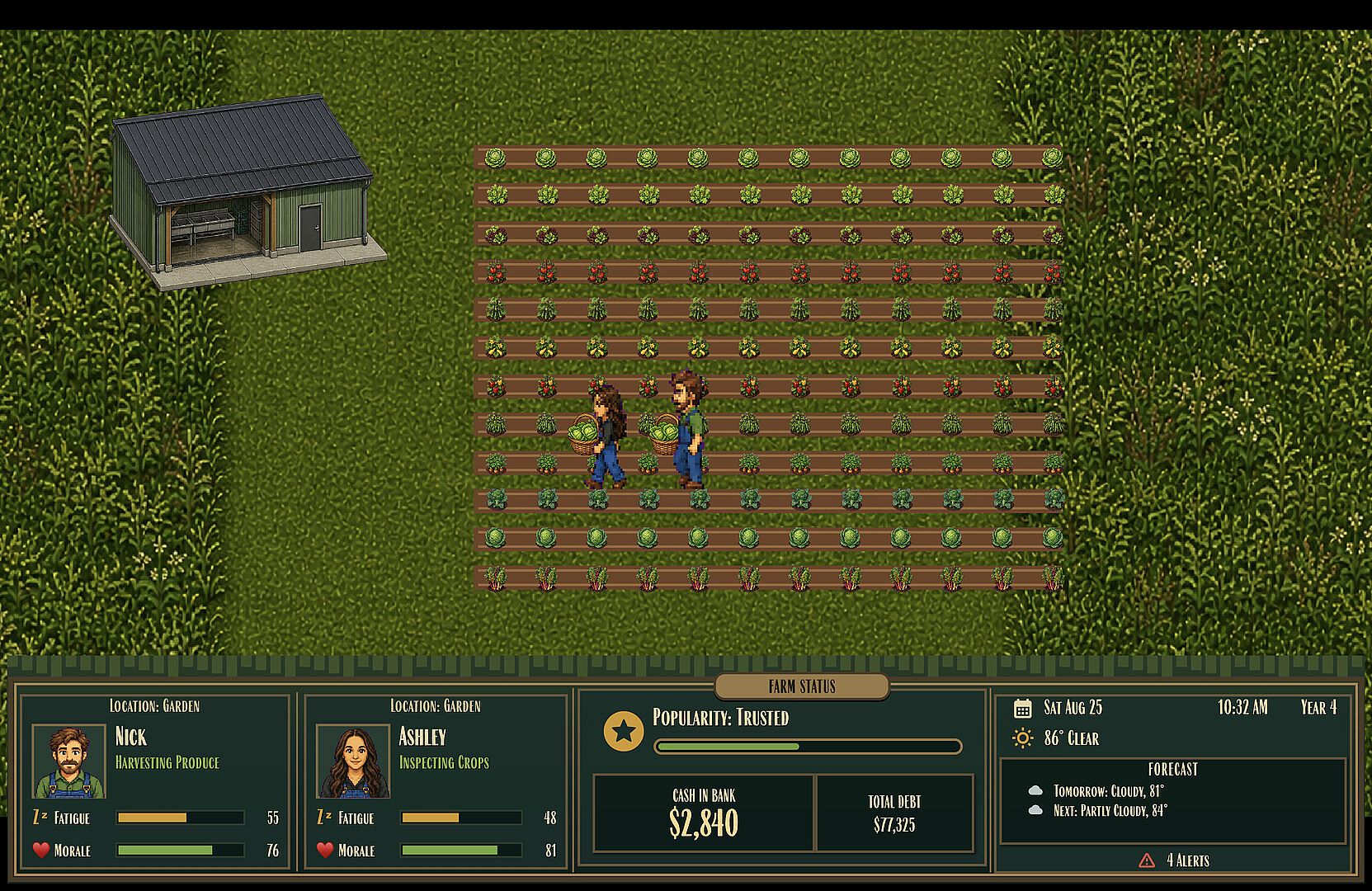
Riggin Farm: Raw Land to Riches is a strategy indie RPG simulation game set on PC where players take on the role of two new farmers starting with nothing but raw woodland. The core experience centers on transforming 25 acres of undeveloped land into a diversified agricultural operation through careful planning and long-term management.
Gameplay
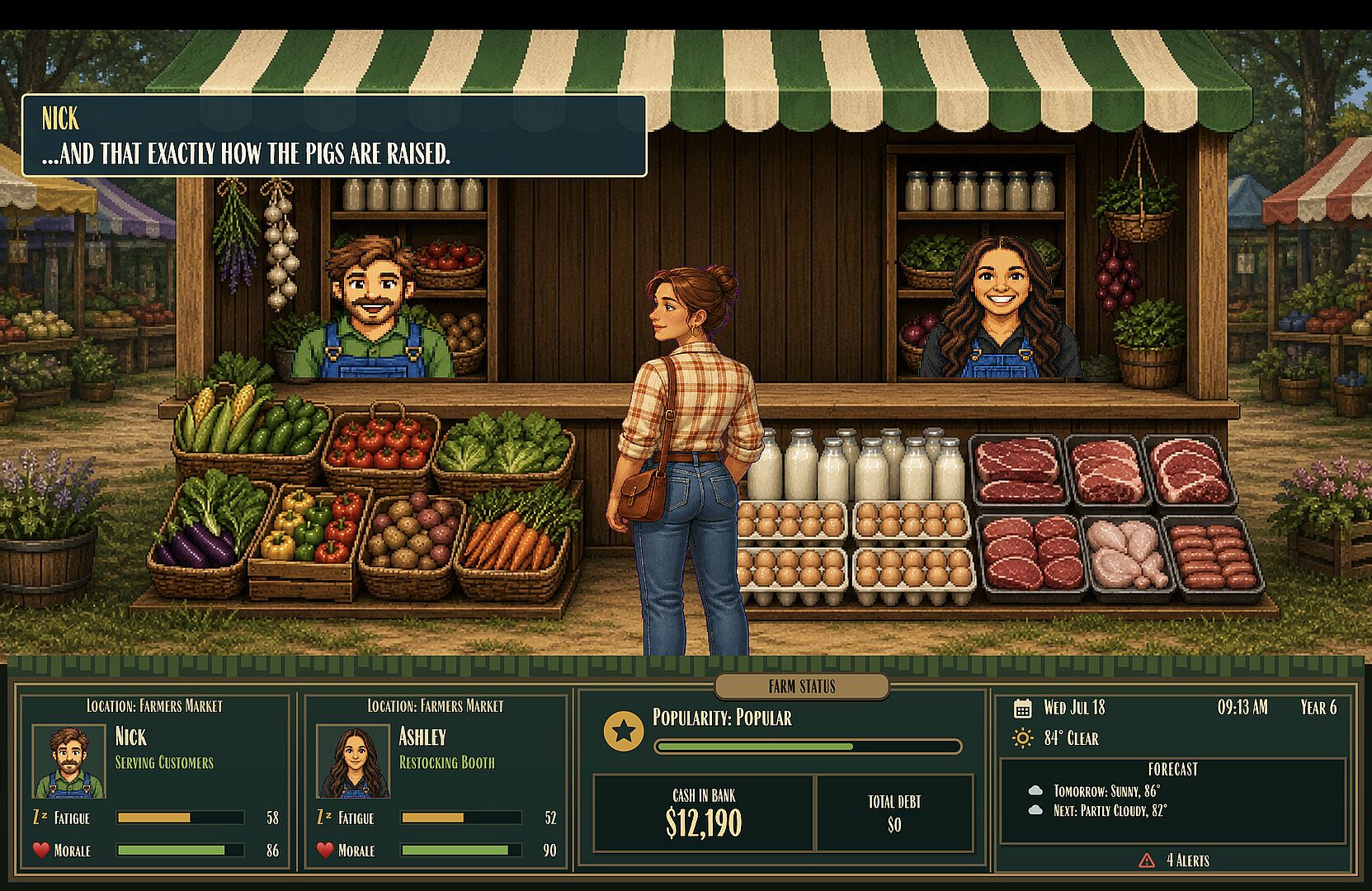
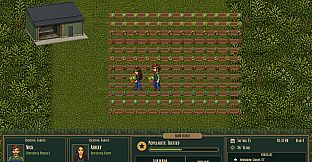
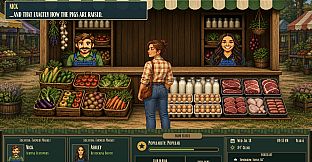
The gameplay loop revolves around realistic farming and business decisions that unfold over years rather than quick sessions. Players begin by clearing land, constructing a home, and establishing initial growing areas with limited starting funds. Crop management requires attention to varying production cycles, harvest windows, yields, and labor needs, with some plants offering repeated harvests and others demanding precise timing to avoid losses. Sales occur through direct channels like farmers markets, where booth setup involves organizing tables, arranging products, and maintaining back stock to influence customer purchases.
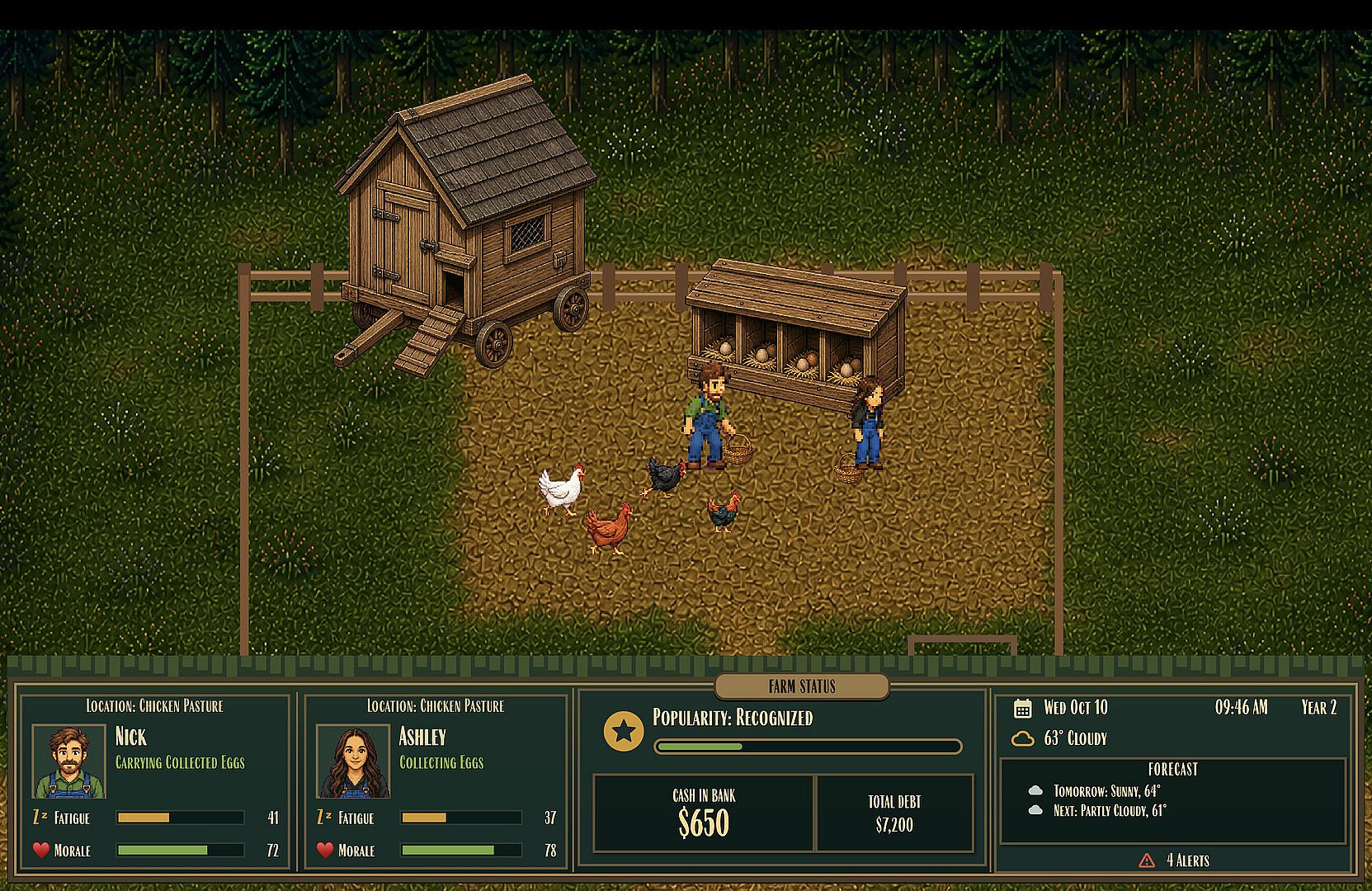
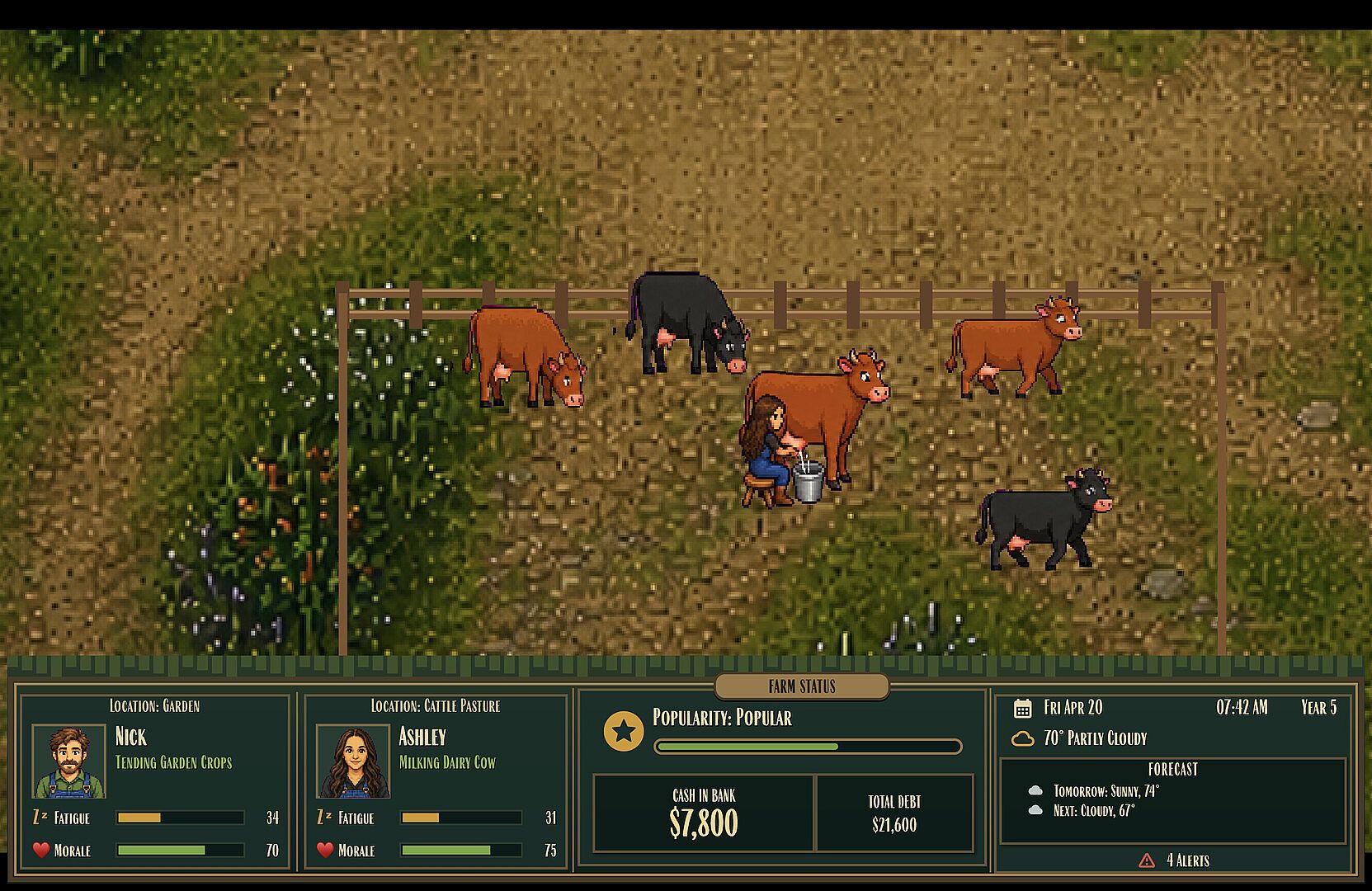
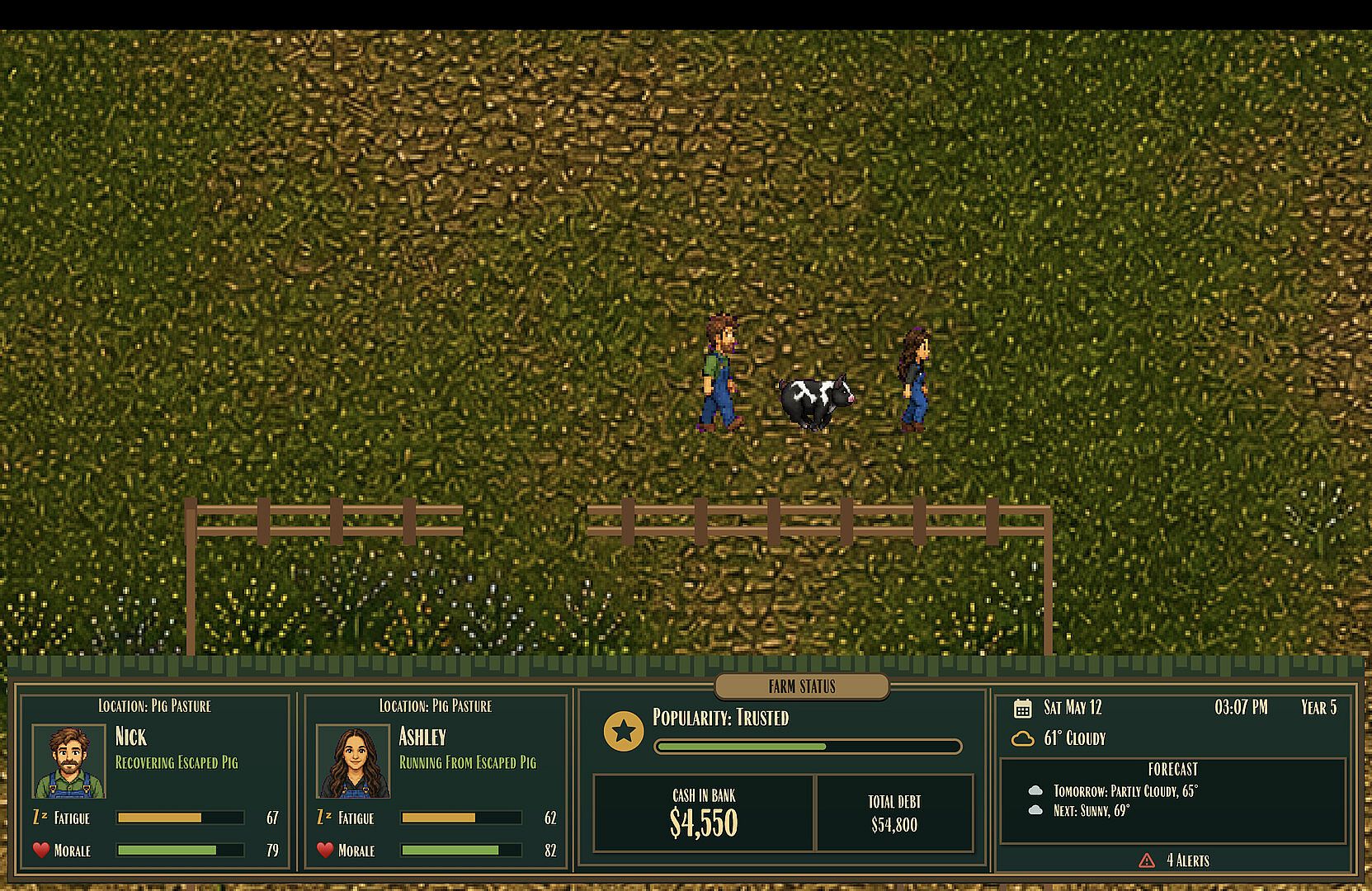
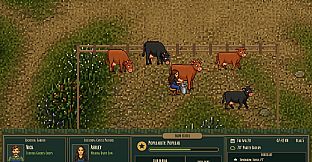
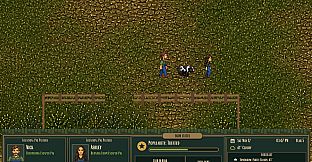
Livestock enterprises add another layer, involving the purchase of animals such as pigs, cattle, and chickens, along with breeding oversight, feeding routines, fencing maintenance, and handling daily care requirements. Business operations extend to running a farm store, pursuing wholesale deals, managing inventory, and making choices about pricing and resource allocation as the operation scales. Unexpected events like equipment breakdowns, weather impacts, animal escapes, and staffing issues force ongoing adjustments to plans.
Progression emphasizes strategic investment in infrastructure, employee hiring to handle growing workloads, and balancing multiple income streams against rising costs. Every expansion decision affects available money, labor, and time, creating trade-offs that accumulate across simulated decades.
Game Modes
The game operates as a single-player experience focused on one continuous campaign of farm development. There are no separate multiplayer modes or distinct named game modes such as competitive scenarios or time-limited challenges. Instead, the structure supports varied approaches within the core simulation, allowing players to pursue different emphases like vegetable production, livestock focus, or direct sales strategies without predefined branches.
Building and Managing the Operation
Expansion happens gradually through player choices on infrastructure and staffing. Early stages involve hands-on work with basic tools and small plots, while later phases introduce hired help and specialized facilities to support larger output. Market interactions remain hands-on, requiring weekly decisions on product selection and display to match actual customer demand rather than automated selling. Resource competition becomes central, as each new enterprise draws from the same finite pools of capital and personnel.
Realistic constraints shape daily and seasonal rhythms. Crops and animals demand consistent attention, and failures in one area can cascade into financial or operational setbacks. Players track multiple variables including feed supplies, market trends, and equipment condition while adapting to the unpredictable elements that arise during operations.
Strategic Depth and Long-Term Planning
Decision-making covers everything from initial land clearing priorities to long-range financing and diversification. Options include aggressive borrowing for rapid growth versus steady reinvestment of profits, or maintaining a small operation versus scaling with additional labor. The system rewards balanced approaches that align production with viable sales channels, highlighting that maximum output alone does not guarantee success.
The simulation draws from real-world farming challenges without simplifying them into abstract mechanics. Players experience the satisfaction of incremental progress alongside the complications of living systems, market fluctuations, and human factors that influence outcomes over extended play periods.
Is It Worth Playing?
Riggin Farm: Raw Land to Riches targets players interested in detailed single-player farming simulations that combine crop and livestock management with business strategy elements. Its focus on realistic cycles, market interactions, and operational setbacks suits those who enjoy methodical progression and consequence-driven choices in a strategy RPG simulation format. The game remains in development with a planned 2027 release and currently has no user reviews available, so potential players should monitor updates for confirmation of final mechanics and balance. Those drawn to long-form management experiences without quick rewards or multiplayer features will find the described systems align closely with that preference.