


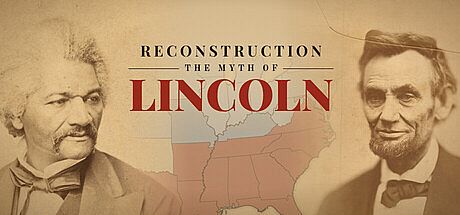


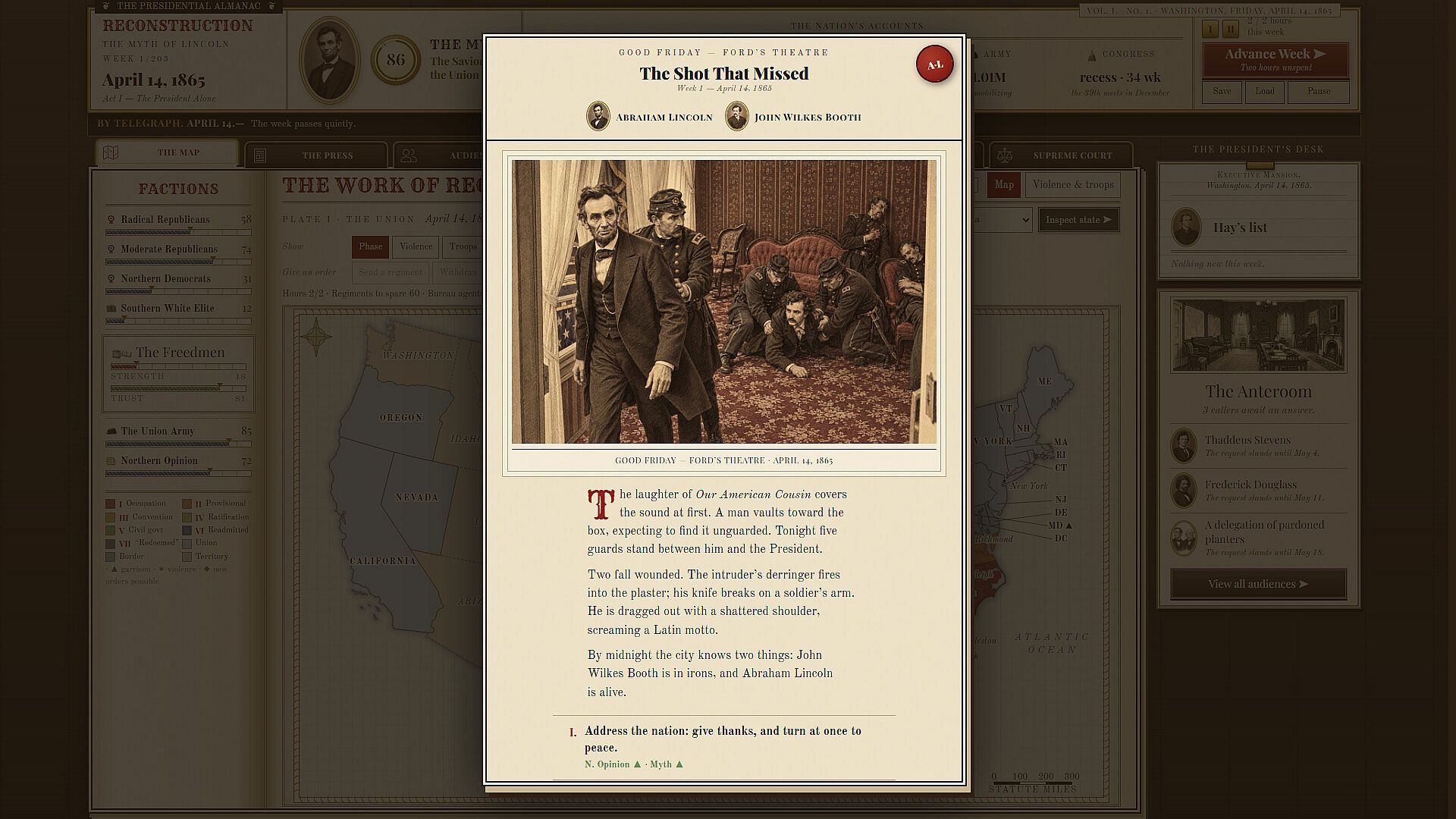







Reconstruction: The Myth of Lincoln places players in an alternate 1865 where Abraham Lincoln survives the attempt on his life at Ford's Theatre. This turn-based political strategy and simulation game on PC casts the player as the president who must now govern the peace following the Civil War. Over 203 weeks of decisions, the focus rests on managing Congress, the Supreme Court, military occupation in the South, and the actions of freedpeople, all while Lincoln maintains independent judgment shaped by advisors and the press.
Gameplay
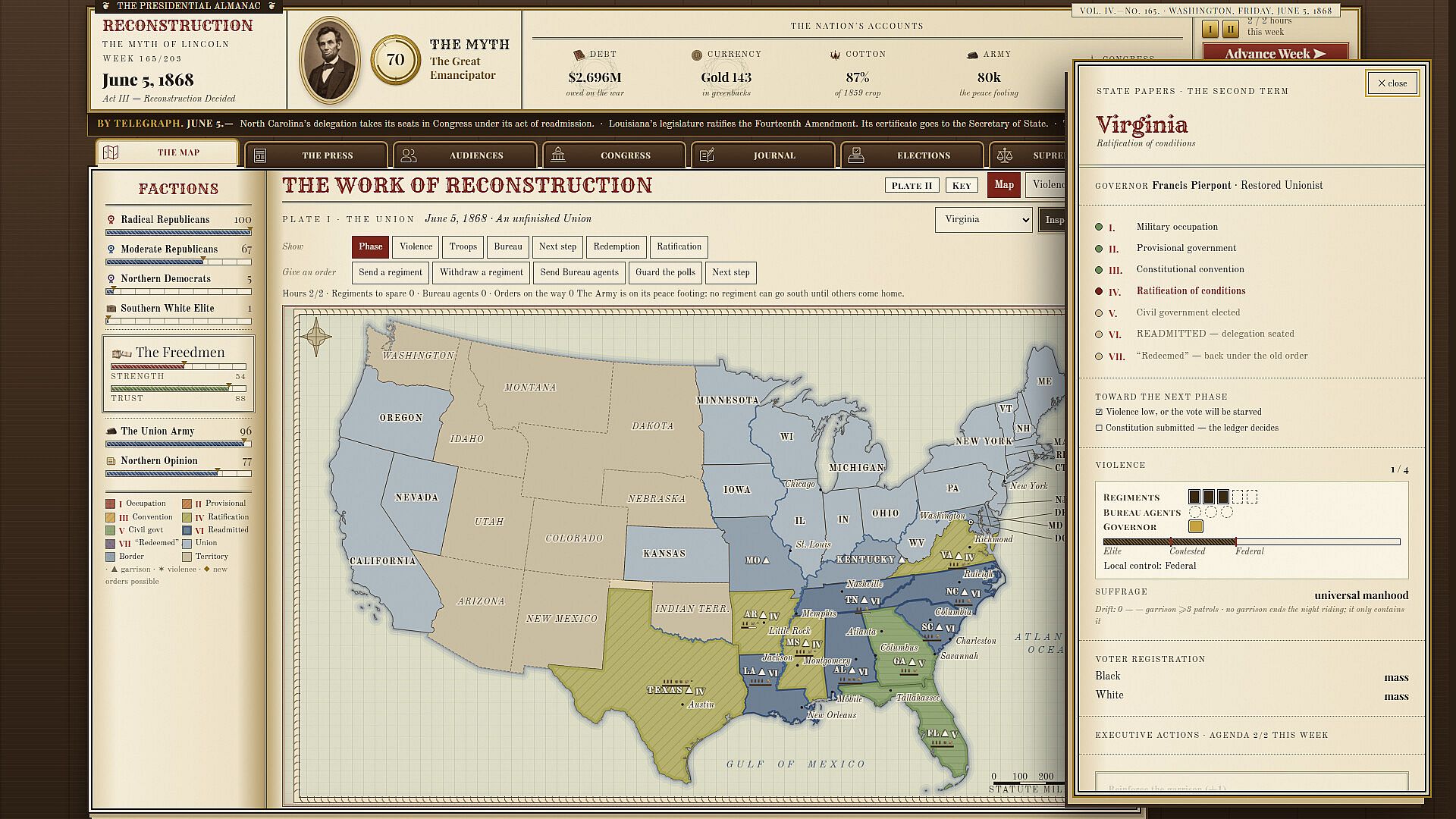
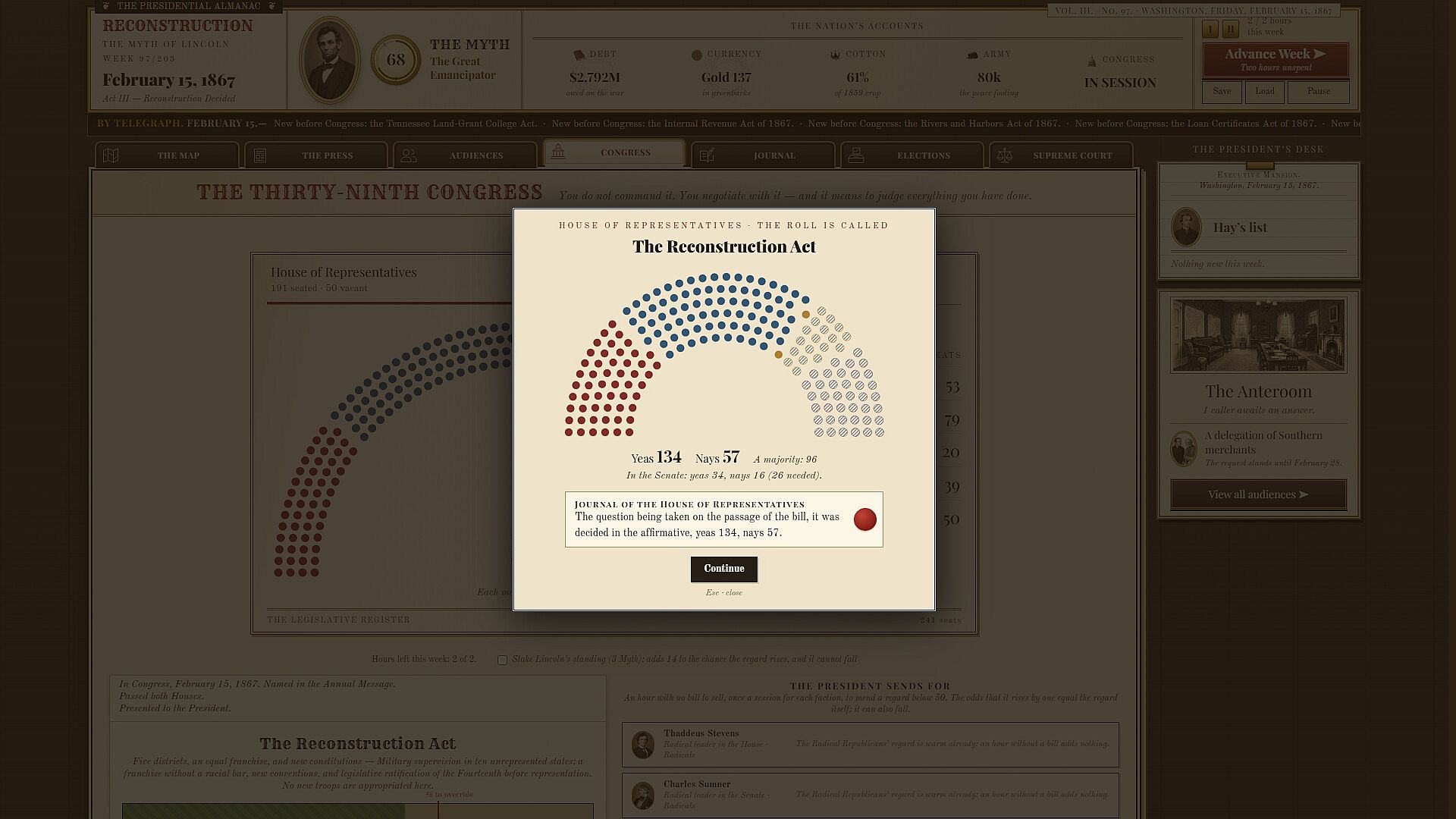
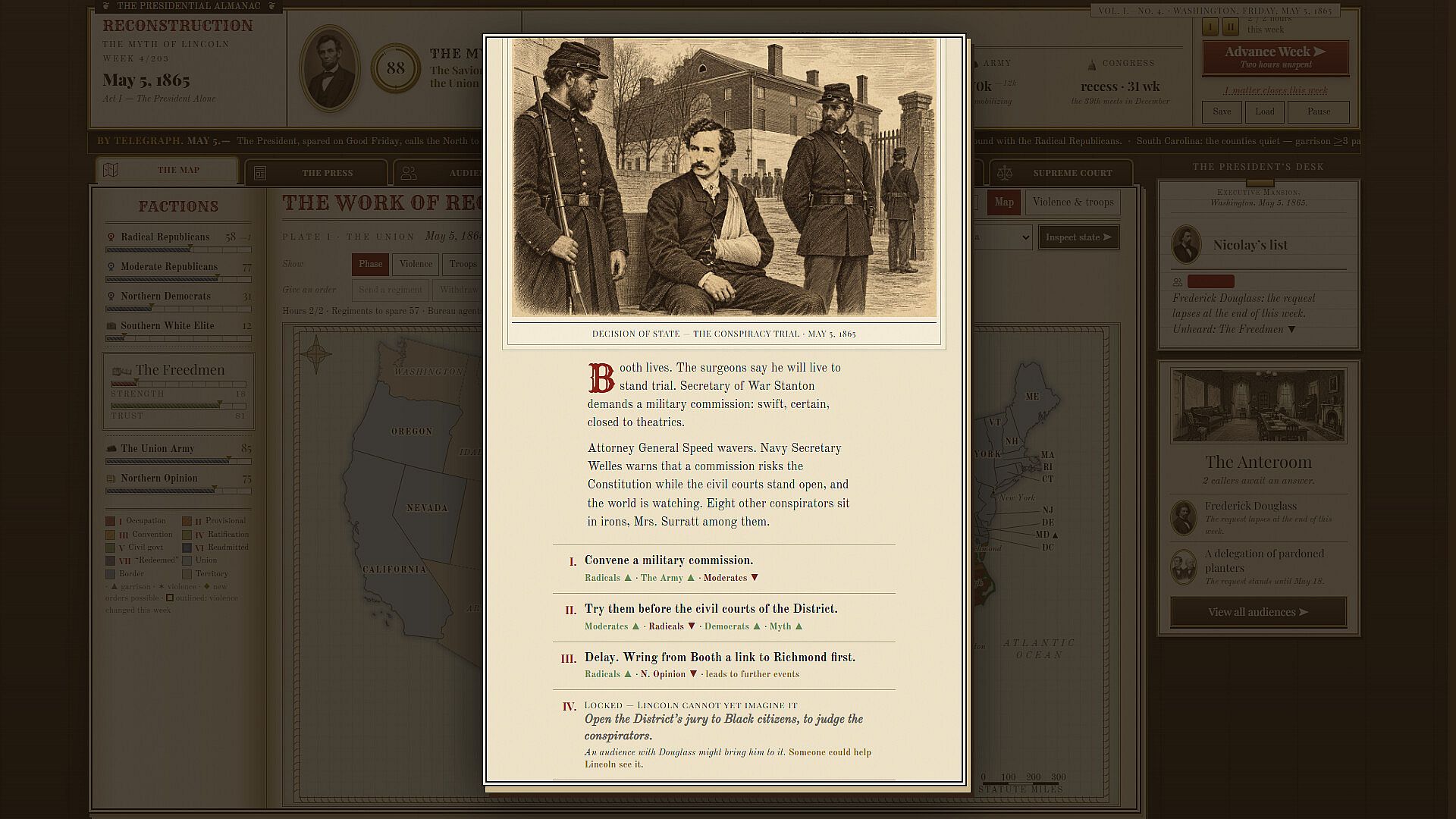
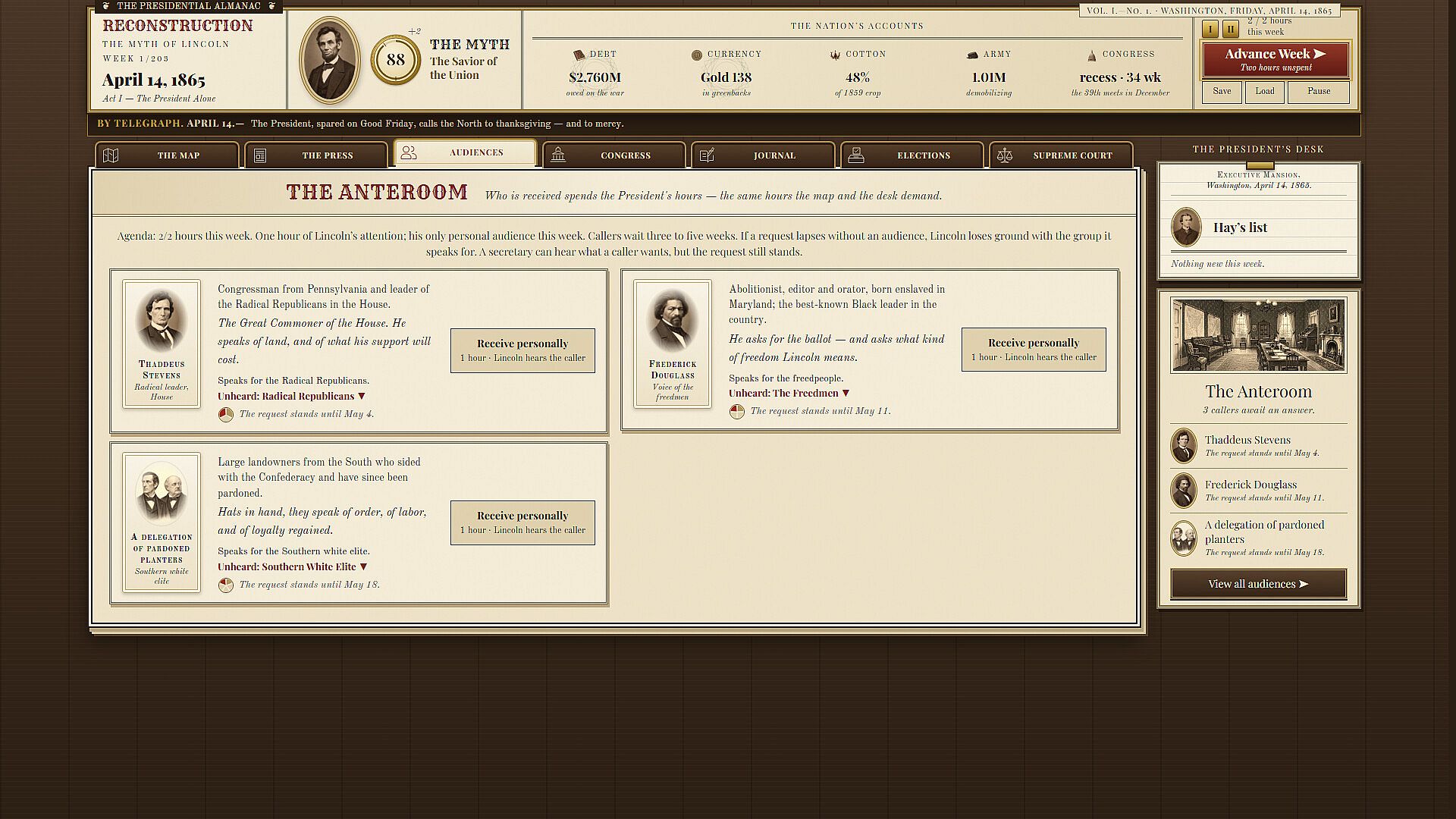
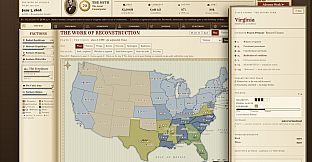
The core loop revolves around guiding Lincoln through the challenges of Reconstruction without a numerical score. Players allocate troops and the Freedmen's Bureau across eleven former Confederate states, monitor reports from the region, and respond to events as they arise. Congress requires bloc-by-bloc vote counting, with options to sign or veto legislation and the constant risk of impeachment proceedings. The Supreme Court offers opportunities to fill vacancies or seek private influence, though outcomes remain uncertain. Lincoln's prestige serves as a resource to sway close votes or enable rare independent actions, but bold policy options remain locked until he encounters suitable arguments from figures such as Frederick Douglass or William T. Sherman or reads relevant pieces in the partisan press.
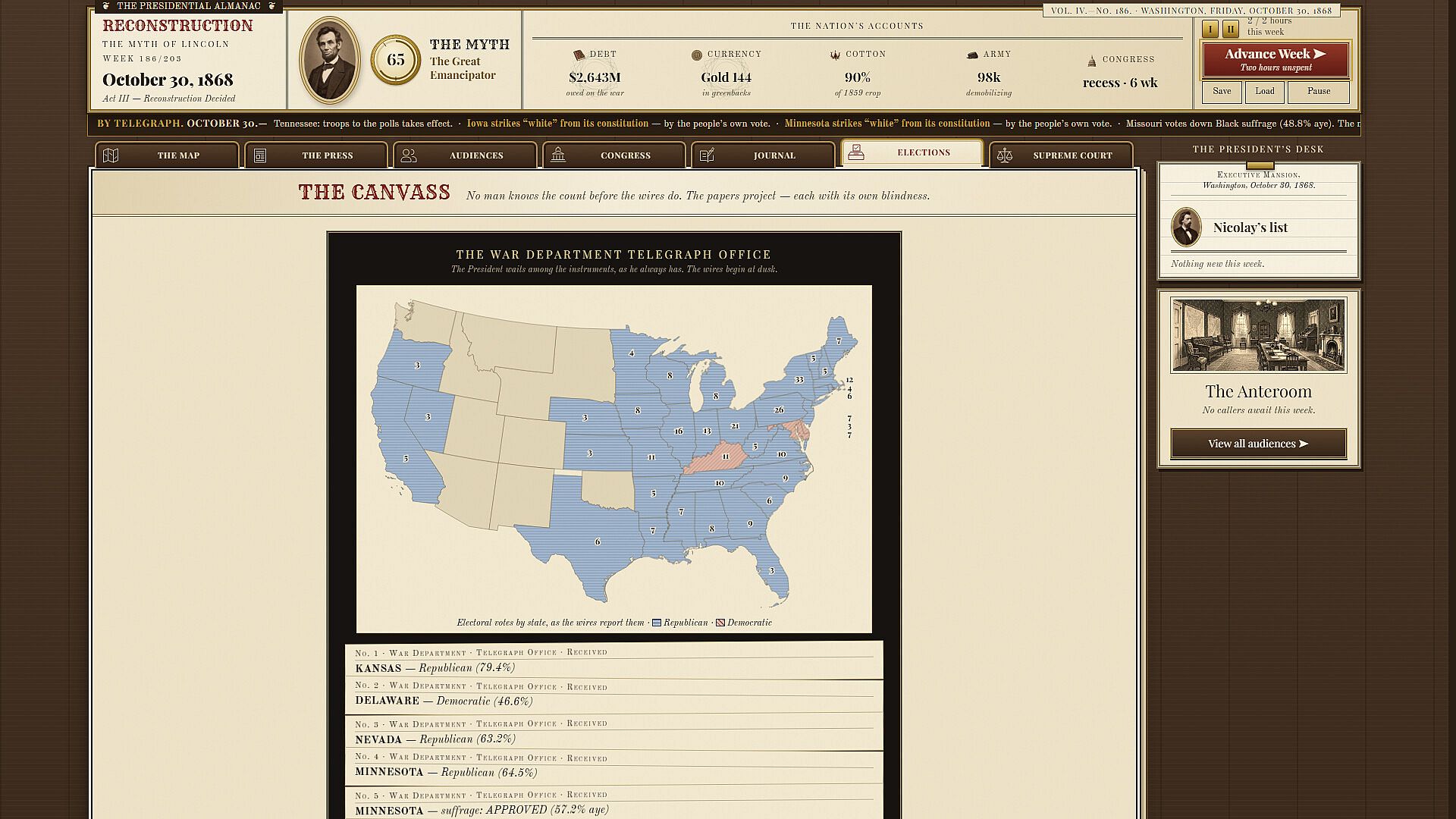
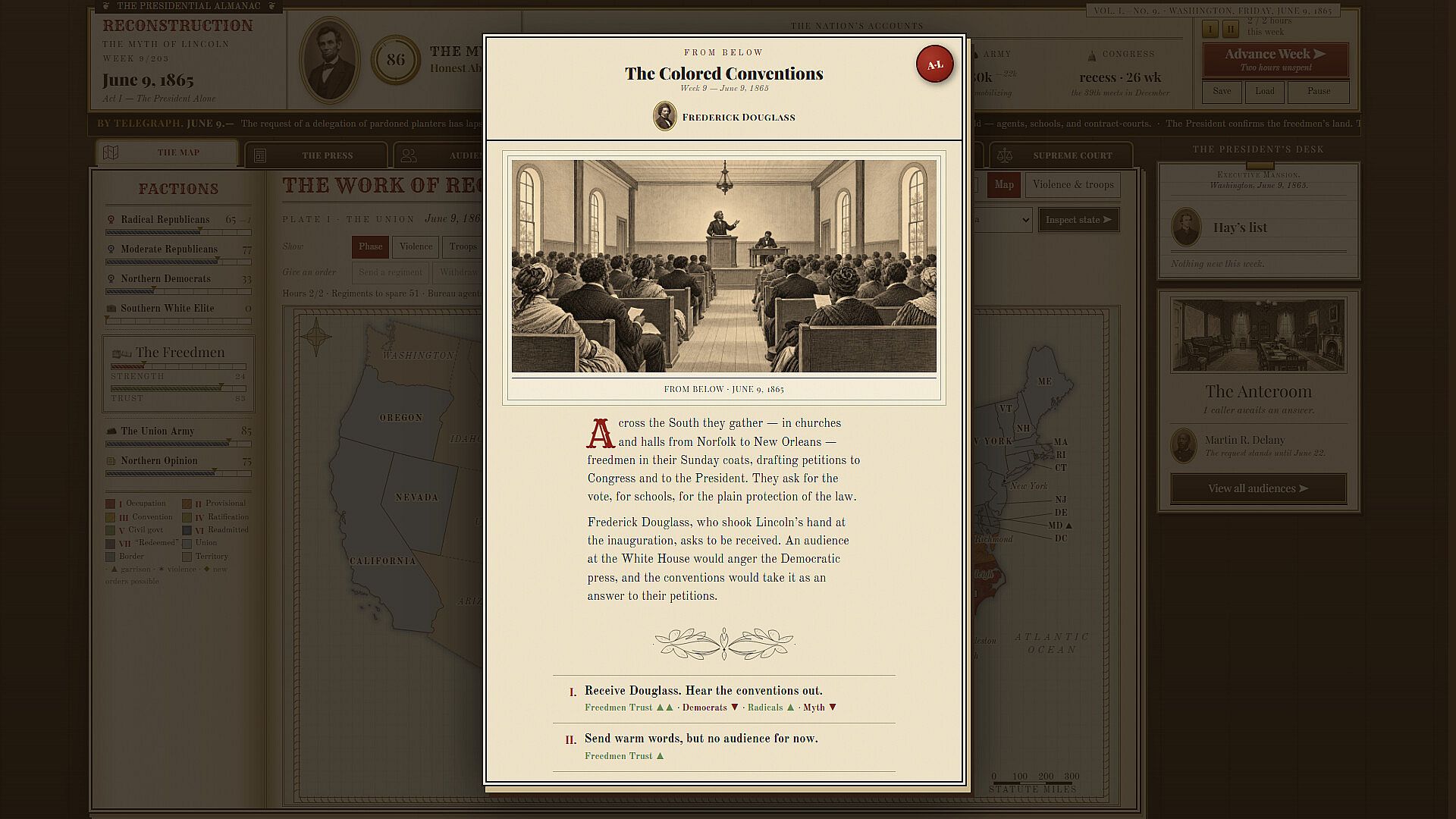
Freedpeople operate independently regardless of player choices. They organize conventions, strikes, petitions to Congress, and voting efforts. Players can expand or restrict the scope of these activities, yet the freedpeople pursue their own goals once enabled. Elections occur on their historical dates, and the underlying model aligns closely with the real 1868 results within a narrow margin. The game depicts the era's racism and racial violence, including specific events such as the 1866 massacres in Memphis and New Orleans, through text and reports without graphic content or slurs.
Game Modes
The experience consists of a single extended campaign spanning the full 203 weeks of Lincoln's post-assassination survival. No separate multiplayer or competitive modes exist. Players navigate a branching structure of political and social decisions that lead to varied conclusions. Some paths result in Lincoln's removal from office by the Senate, while one rare outcome involves a third-term campaign alongside Frederick Douglass. Every route avoids any return to slavery, though many leave the freedpeople in worsened conditions that the game explicitly identifies as failures.
Decision Consequences and Historical Framing
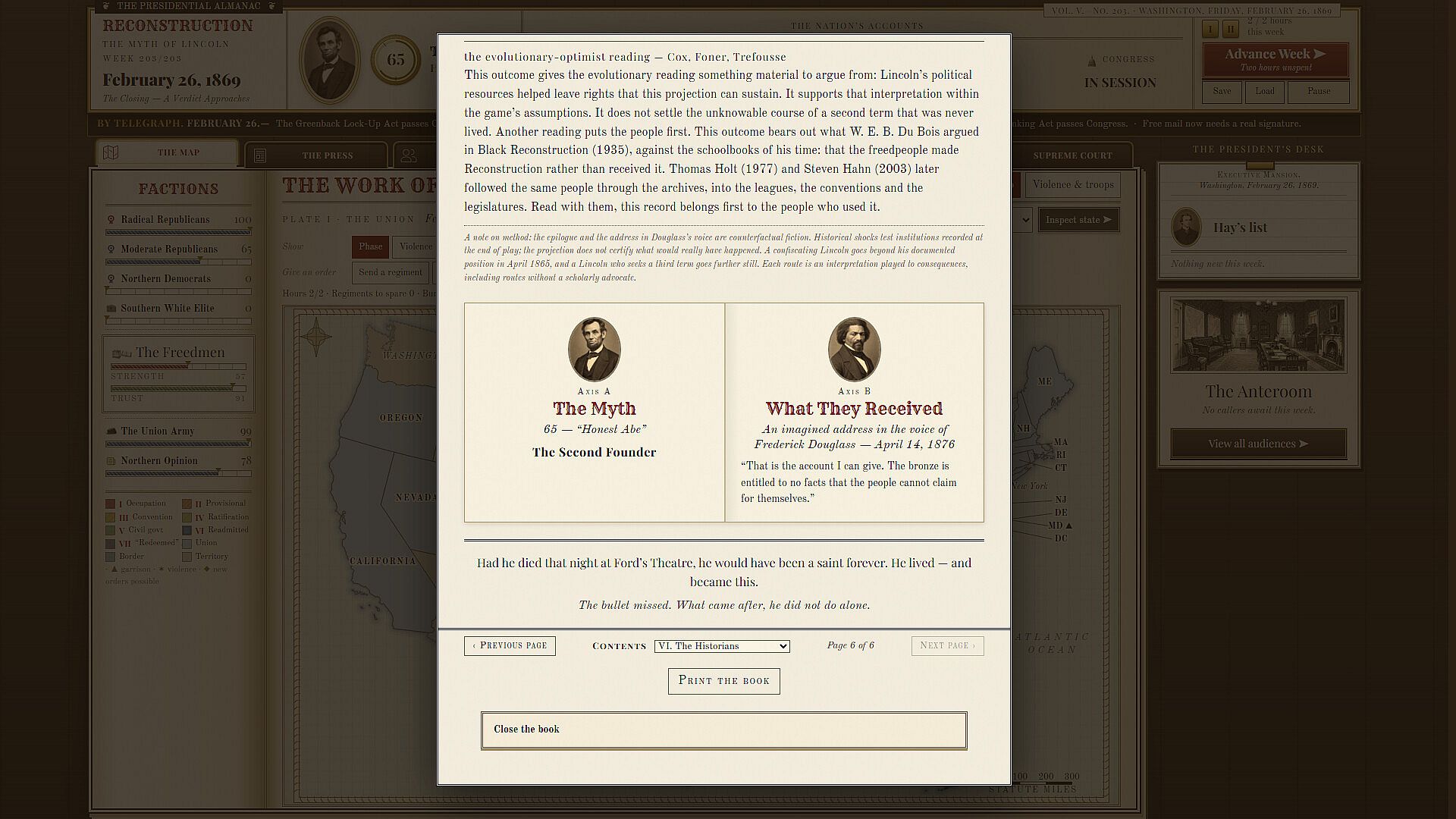
Two verdicts determine the outcome at the close of the campaign. One reflects how America ultimately remembers Lincoln, while the other appears as an imagined speech from Frederick Douglass evaluating the tangible results for the four million people freed by the war. A country may revere Lincoln for choices that simultaneously harm those same freedpeople. The simulation reproduces real historical constraints, such as the gradual readmission of Southern states and the withdrawal of federal presence, while allowing players to explore counterfactual paths that history did not take.
Is It Worth Playing?
This upcoming title suits players who seek a focused, text-driven strategy simulation centered on political maneuvering, institutional power, and the human costs of policy choices during a pivotal American era. Its mechanics emphasize careful management of limited resources and influence rather than combat or rapid expansion. With a planned release on December 1, 2026, and no player reviews available yet, those drawn to deep single-player historical strategy experiences will find the described systems of Congress, courts, elections, and autonomous freedpeople actions worth following once it launches. The absence of traditional scoring or victory conditions encourages repeated playthroughs to observe how different approaches shape the dual verdicts.












