



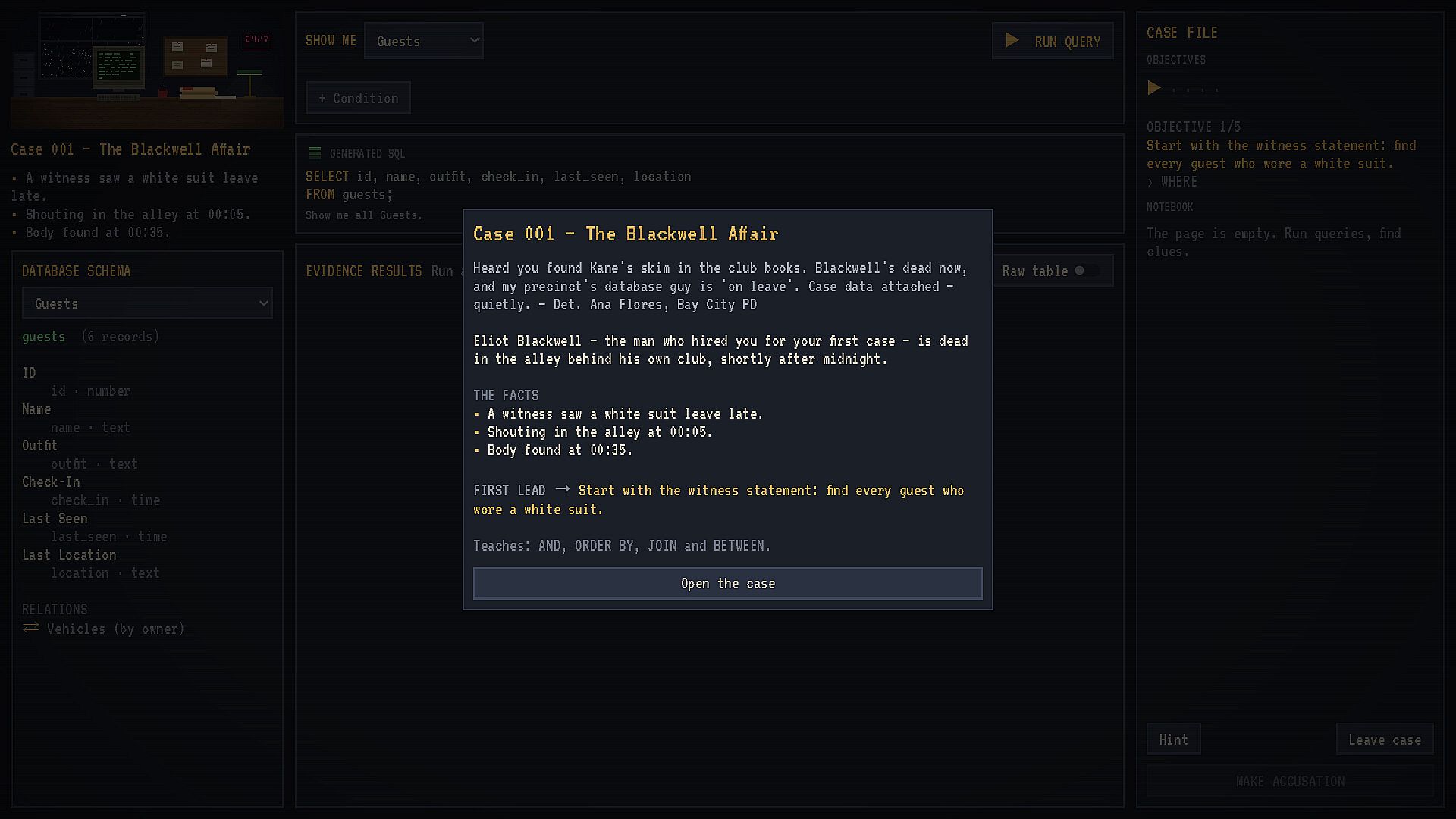
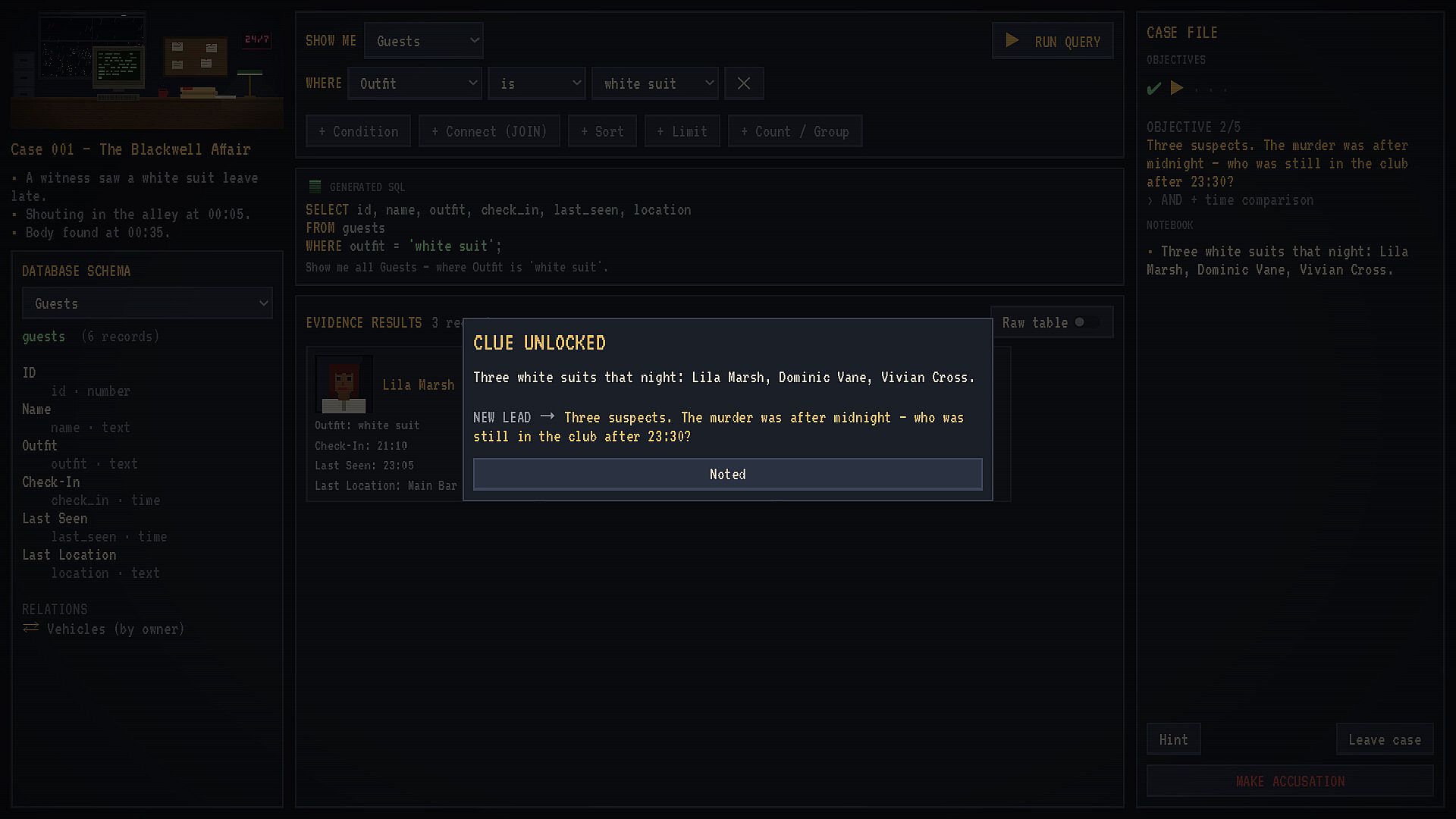
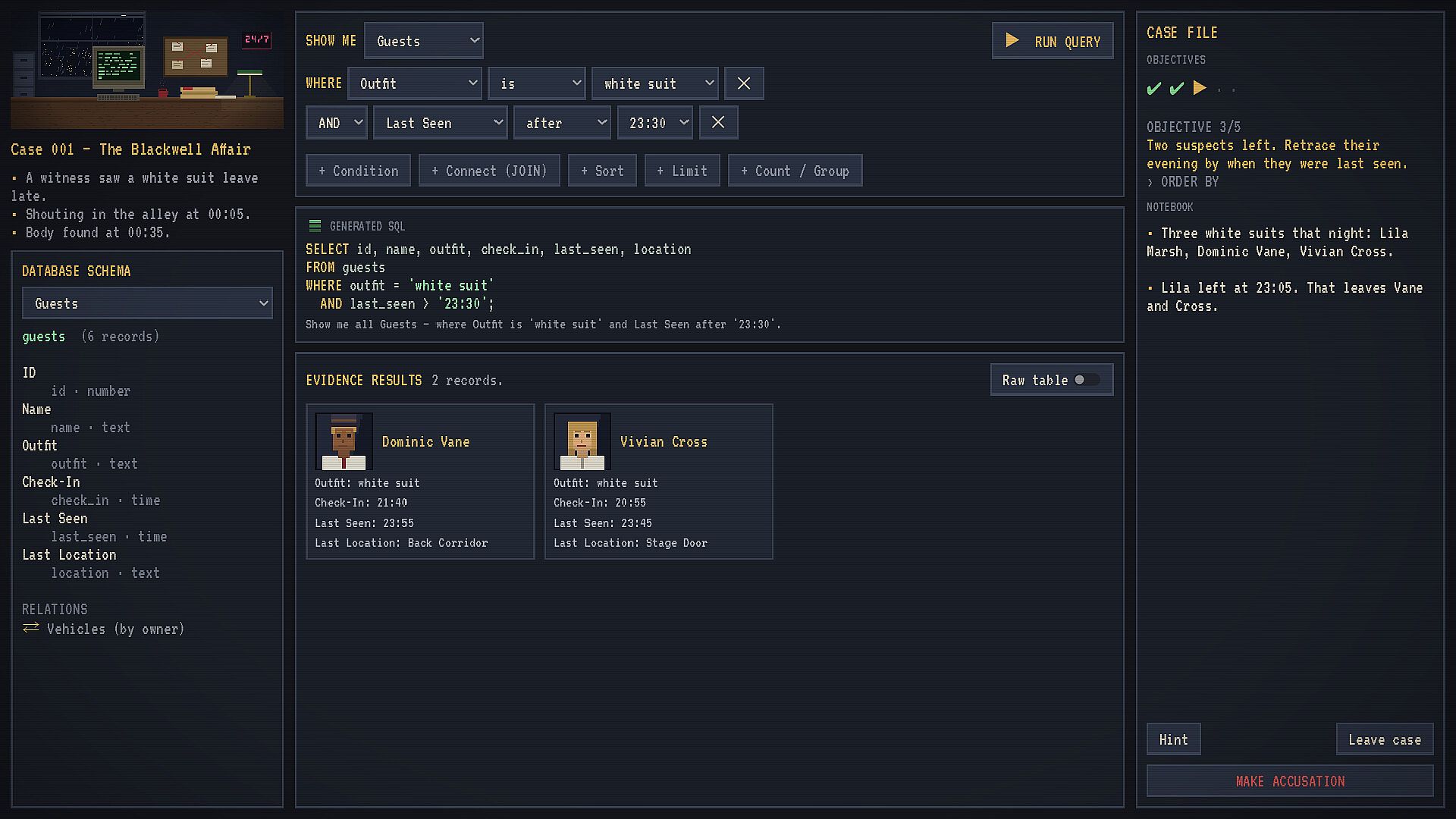
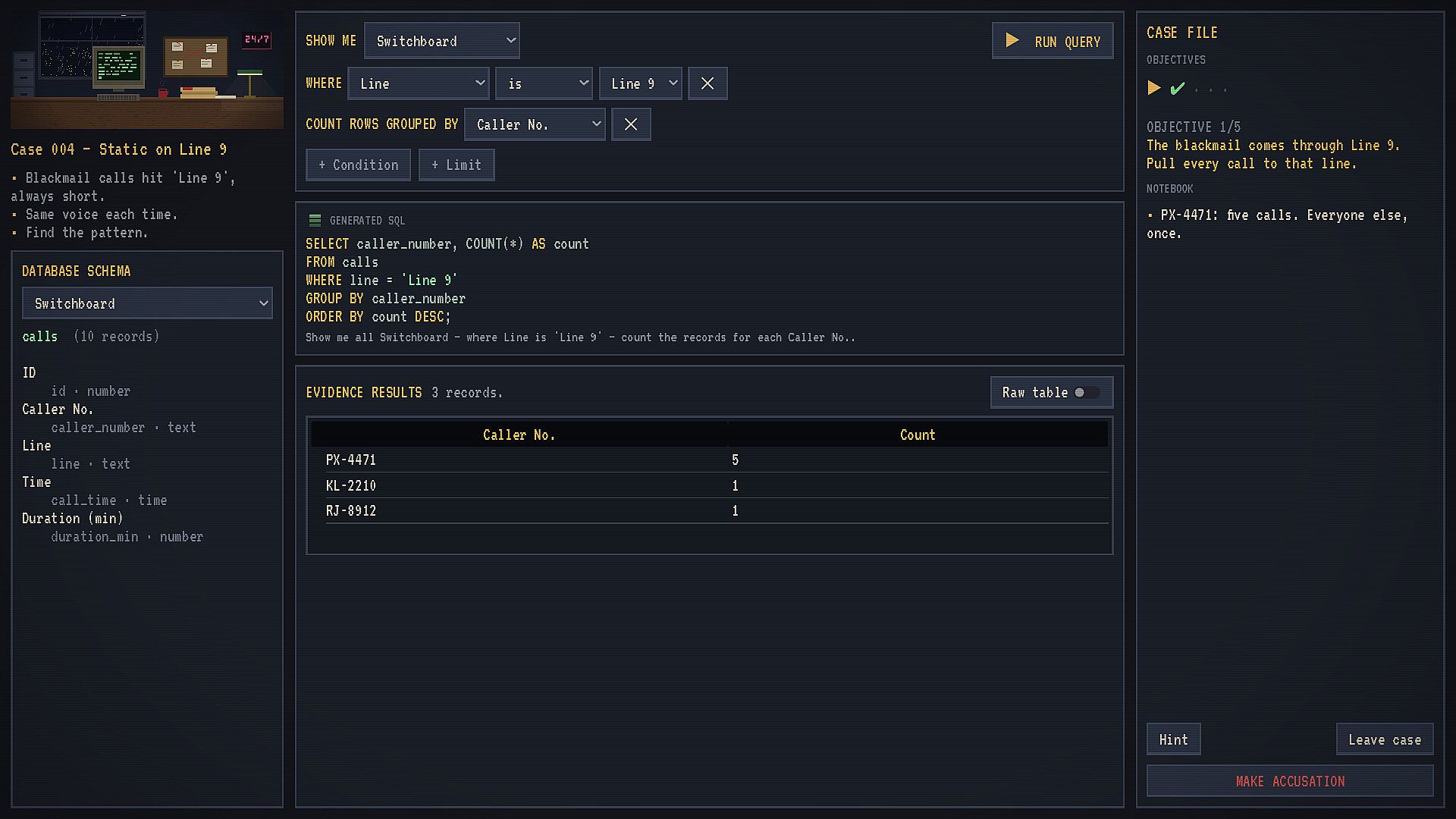
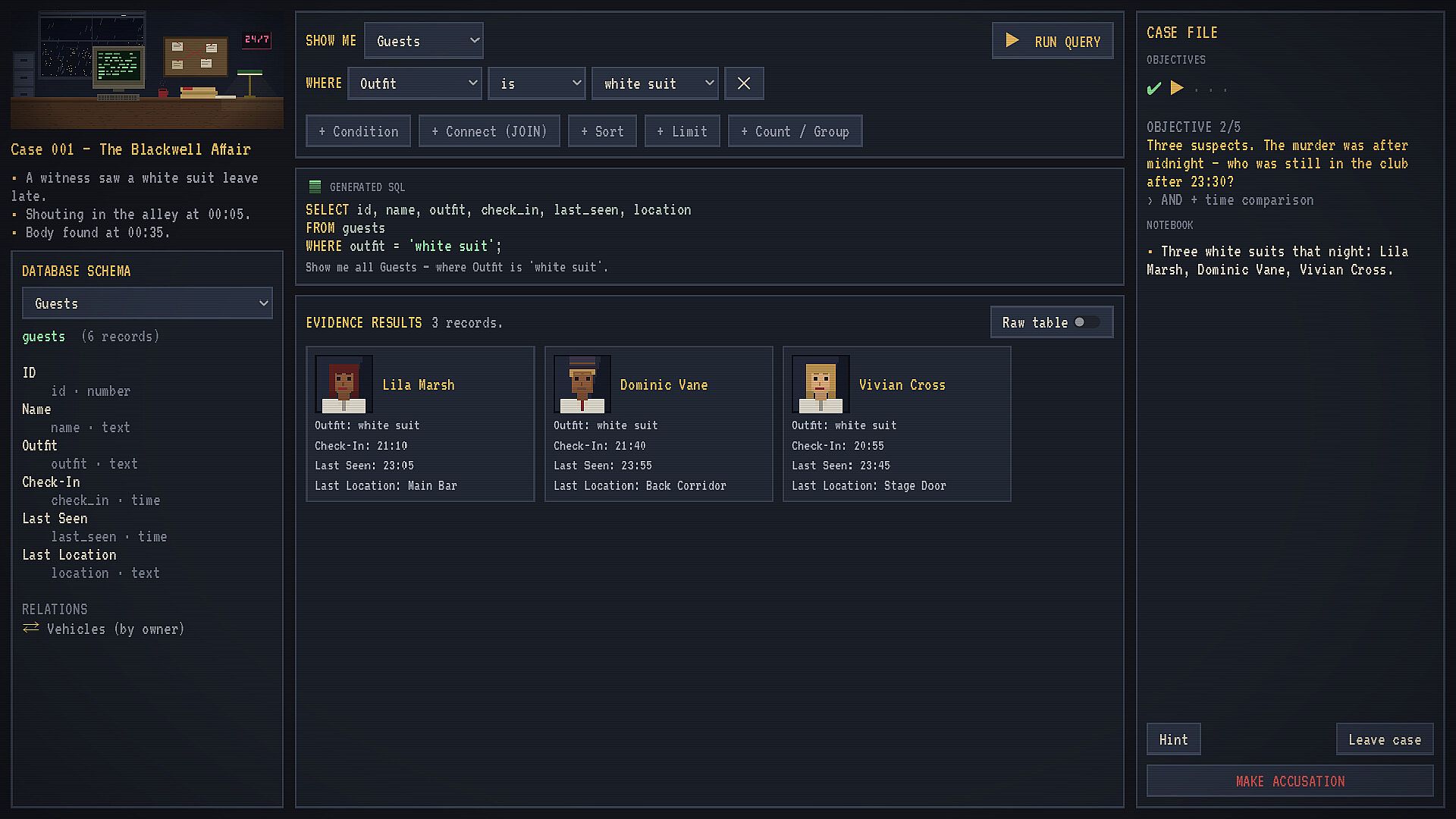
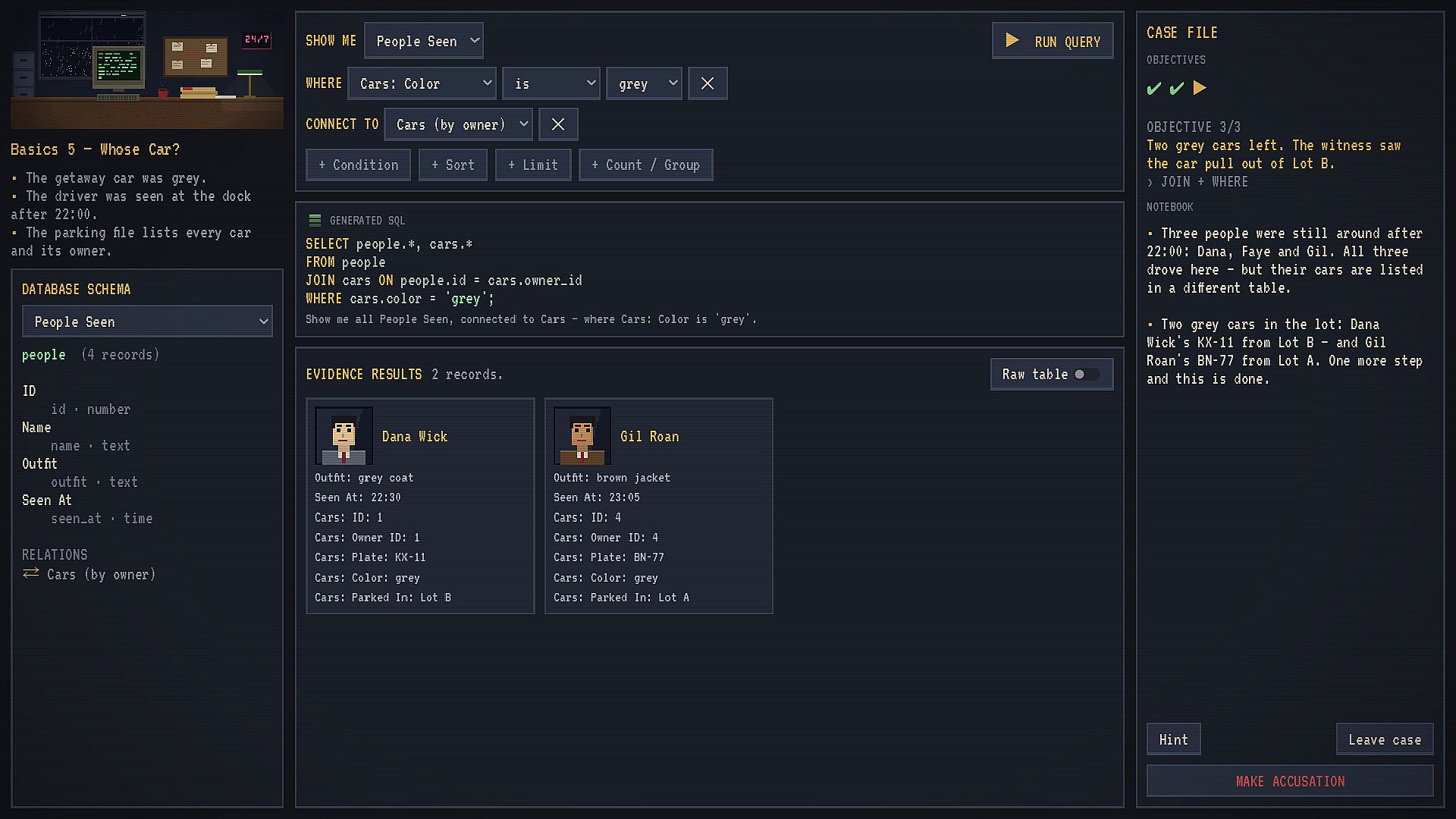

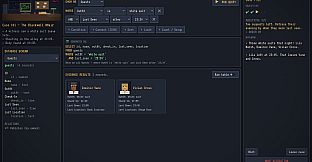
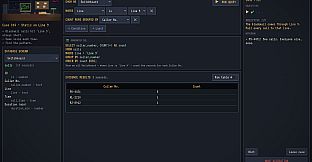



Query Noir is an indie casual adventure game for PC that puts players in the role of a night-shift data technician solving murder cases through database interrogation. The core premise centers on examining city records such as guest lists, parking logs, phone records and ledgers to identify inconsistencies that point to a culprit. Gameplay revolves around constructing questions from visual blocks and dropdown menus rather than free-form text entry, allowing the game to generate matching SQL statements automatically while displaying plain English explanations.
Gameplay
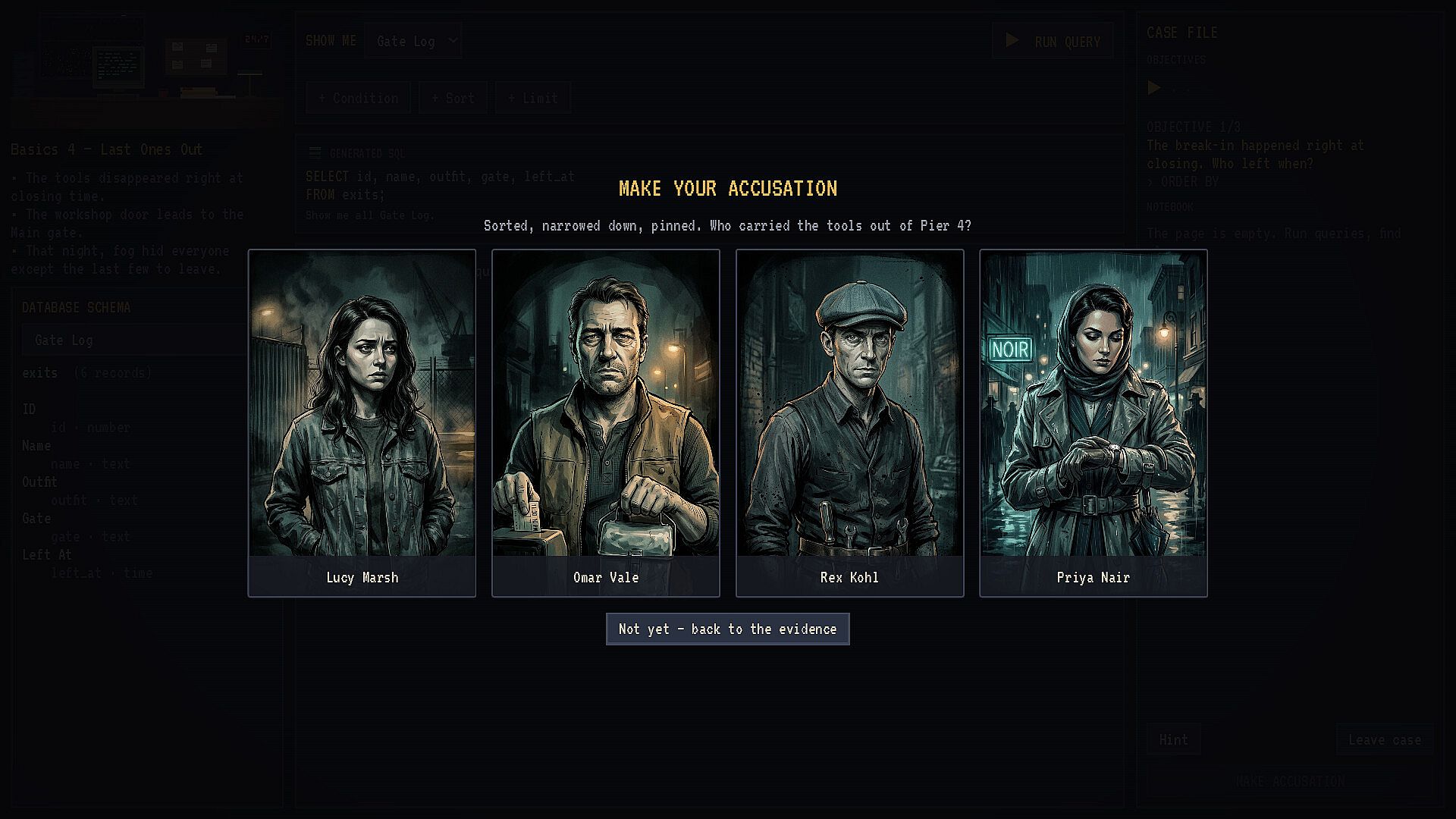
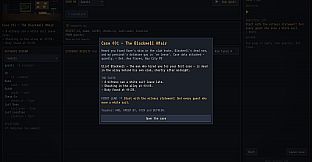
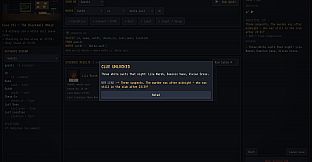
Players assume the identity of Sam Halloran and work through cases by assembling queries that filter, compare and connect data tables. Each investigation begins with a hand-illustrated noir comic, a client memo and an initial chain of leads. Progress involves selecting readable blocks to specify conditions such as time ranges, outfit descriptions or vehicle connections, with the interface revealing the underlying query structure alongside the results. The system introduces concepts like filters, joins, grouping and handling of empty values gradually, always tying the new mechanic to the moment it resolves a key lead. Real hand-authored datasets underpin every case, including rows that serve as dead ends to encourage careful exploration. A reputation system tracks performance across truth, efficiency and independence metrics, advancing the player from an entry-level temp to a recognized expert. Visual presentation features pixel-art office environments with CRT effects, rain details and ink-and-wash character portraits, accompanied by procedurally generated noir jazz and ambient sounds that avoid repetition across sessions.
Game Modes
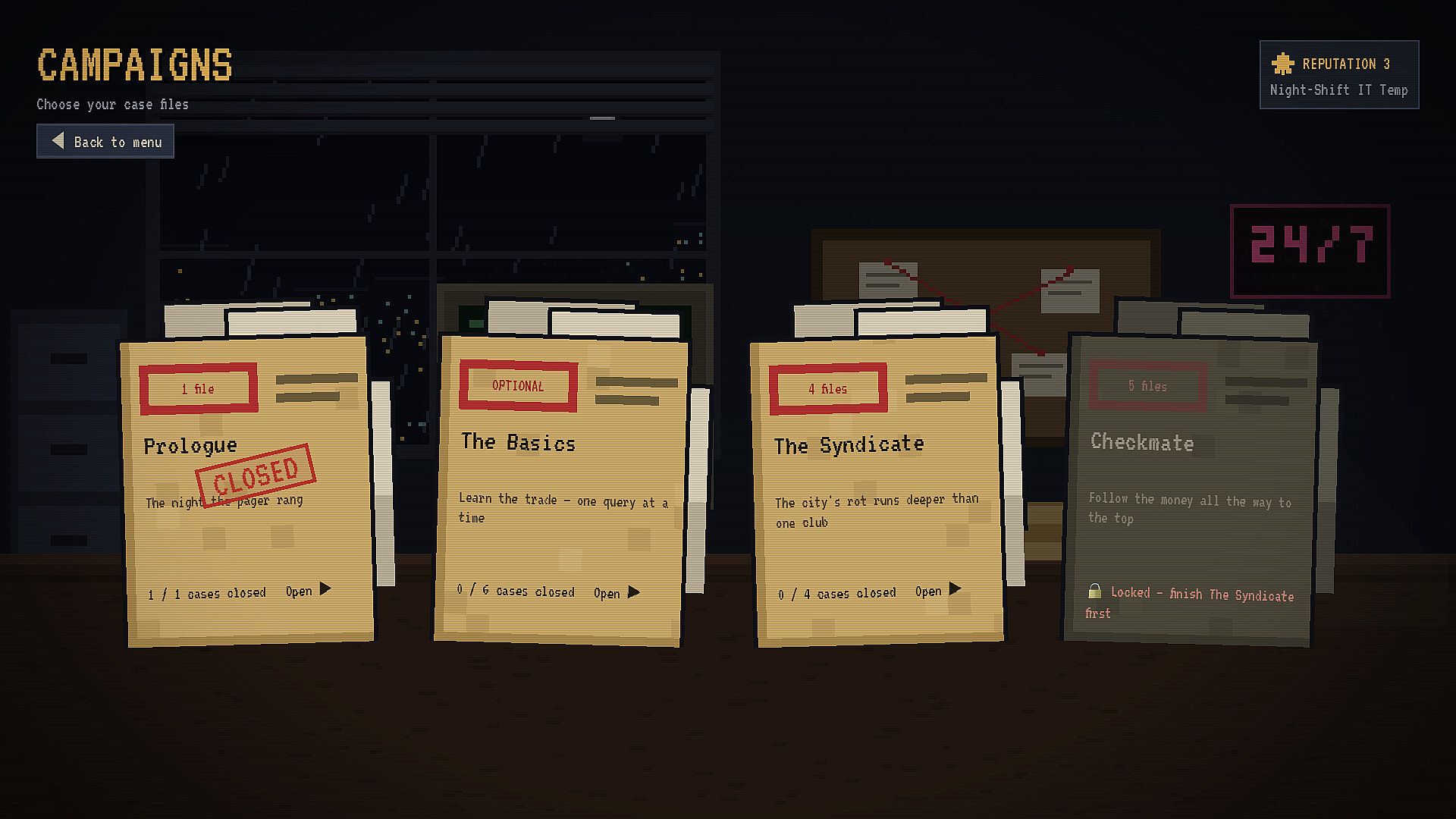
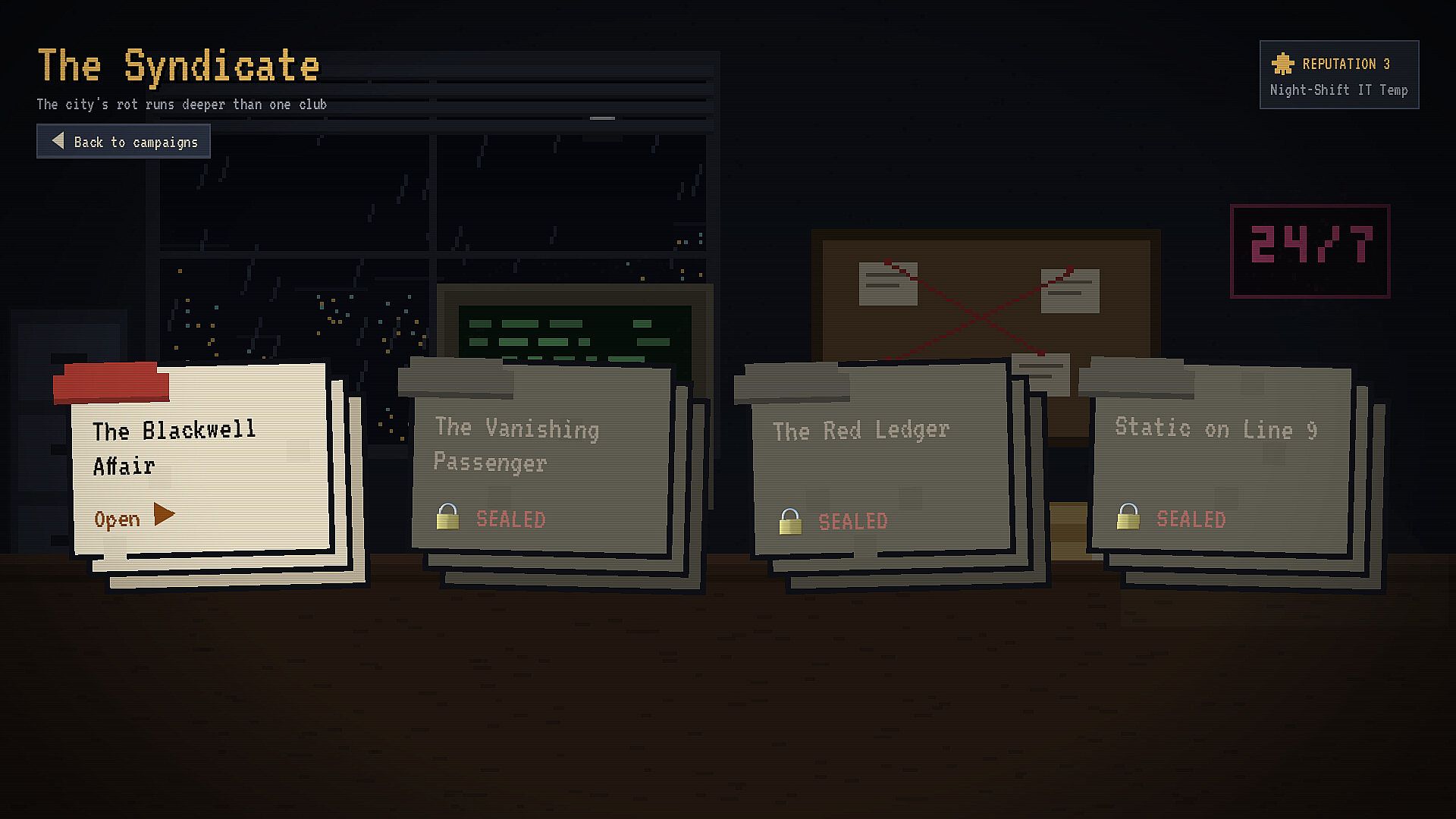
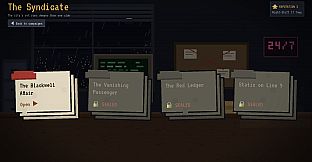
The experience unfolds across sixteen cases divided into distinct narrative arcs. A prologue introduces the mechanics through a missing receipt scenario with guided support. The Basics section offers six optional standalone cases, each designed around one core query concept that becomes the decisive step in closing the file. The Syndicate arc follows a club murder that expands into a broader city-wide investigation. Checkmate concludes the main thread by tracing financial records to expose the orchestrator. Every case concludes at an accusation board where players select one name from five possibilities, with incorrect choices leaving the file unresolved. The structure supports repeated playthroughs via three save slots and permits extended sessions without timers or failure conditions.
Story and Presentation
Each investigation opens with illustrated comic panels that establish the noir atmosphere and provide context for the data at hand. Character portraits and environmental details reinforce the night-shift office setting while the soundtrack blends synthesized jazz with interface clicks and weather effects. Language support covers full English, German and Turkish translations for all case text, captions and guidance elements. The absence of typing requirements keeps focus on logical assembly and deduction, with the game revealing SQL syntax progressively as players solve cases.
Is It Worth Playing?
Query Noir suits players who enjoy deduction games where solutions emerge directly from available information and who have an interest in understanding how database queries function. The dropdown-based system removes barriers associated with syntax memorization, making the cases accessible while still delivering authentic dataset exploration. Progression through the sixteen cases builds familiarity with increasingly complex operations in a story-driven format that rewards careful lead following. Availability on PC with no additional installation or configuration needs supports straightforward entry, and the lack of timers or fail states accommodates varied play paces. Those drawn to single-player adventure experiences centered on logical problem solving rather than action or combat will find the structure aligns closely with the described mechanics. The combination of visual storytelling, procedural audio and reputation tracking adds replay motivation for completing cases under different performance criteria.