



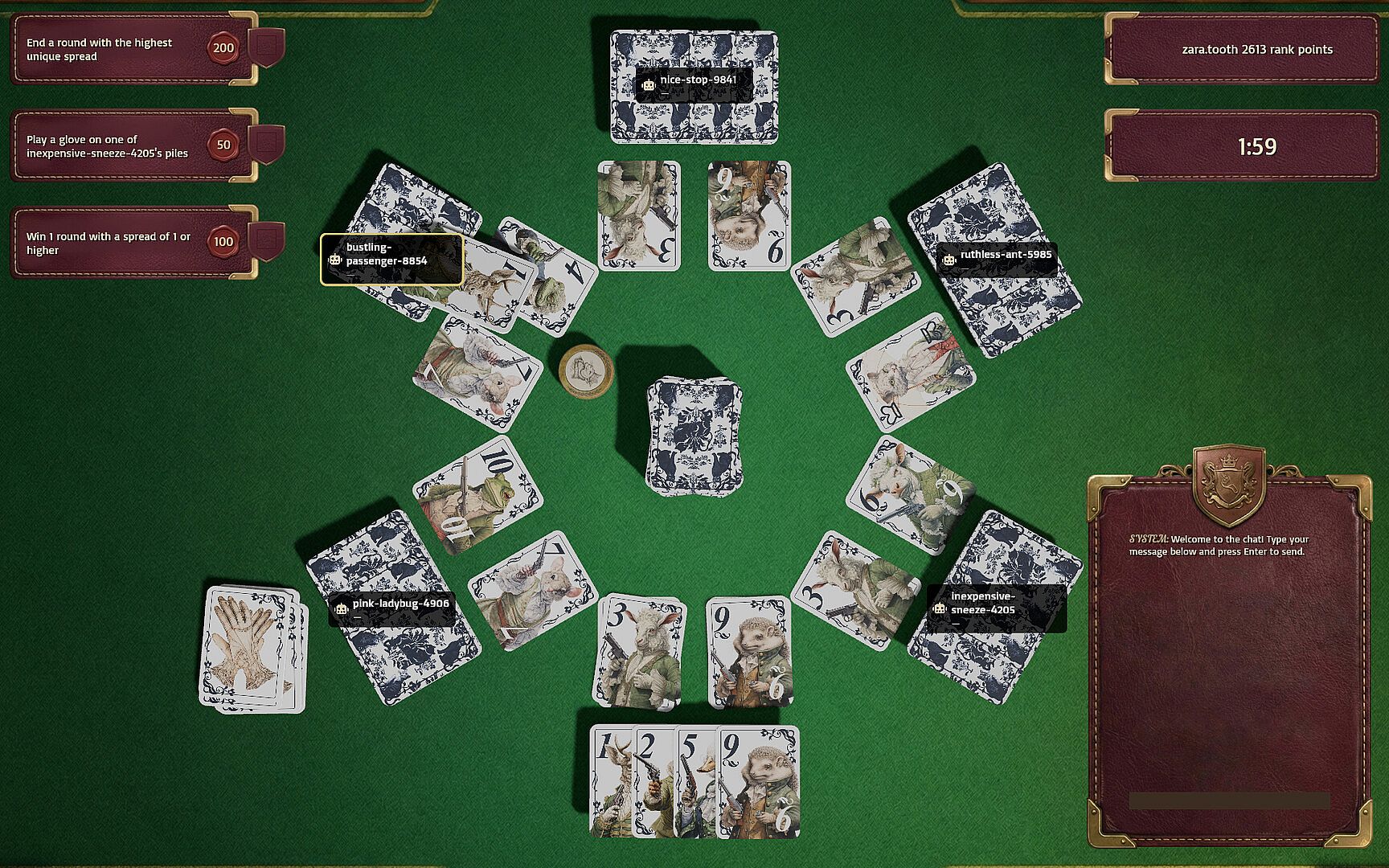



Queen's Court: A Duel of Dignitaries stands out as a strategy card game designed for competitive play on PC. It blends simple rules with layered decision making that suits both newcomers and experienced players. The core loop revolves around managing two piles of cards to achieve the lowest spread of numbers by the end of each round, with victory requiring two round wins overall.
Gameplay
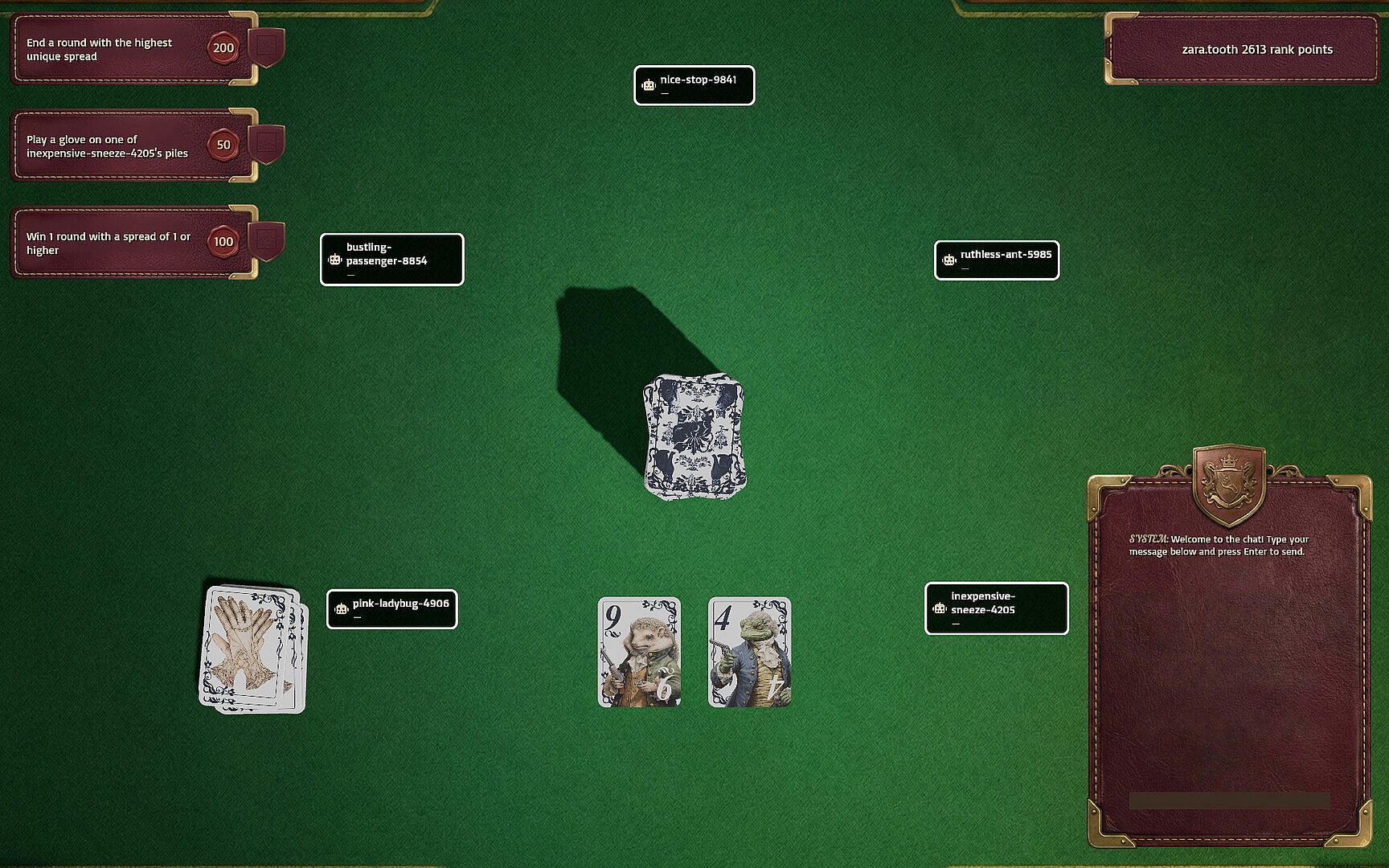
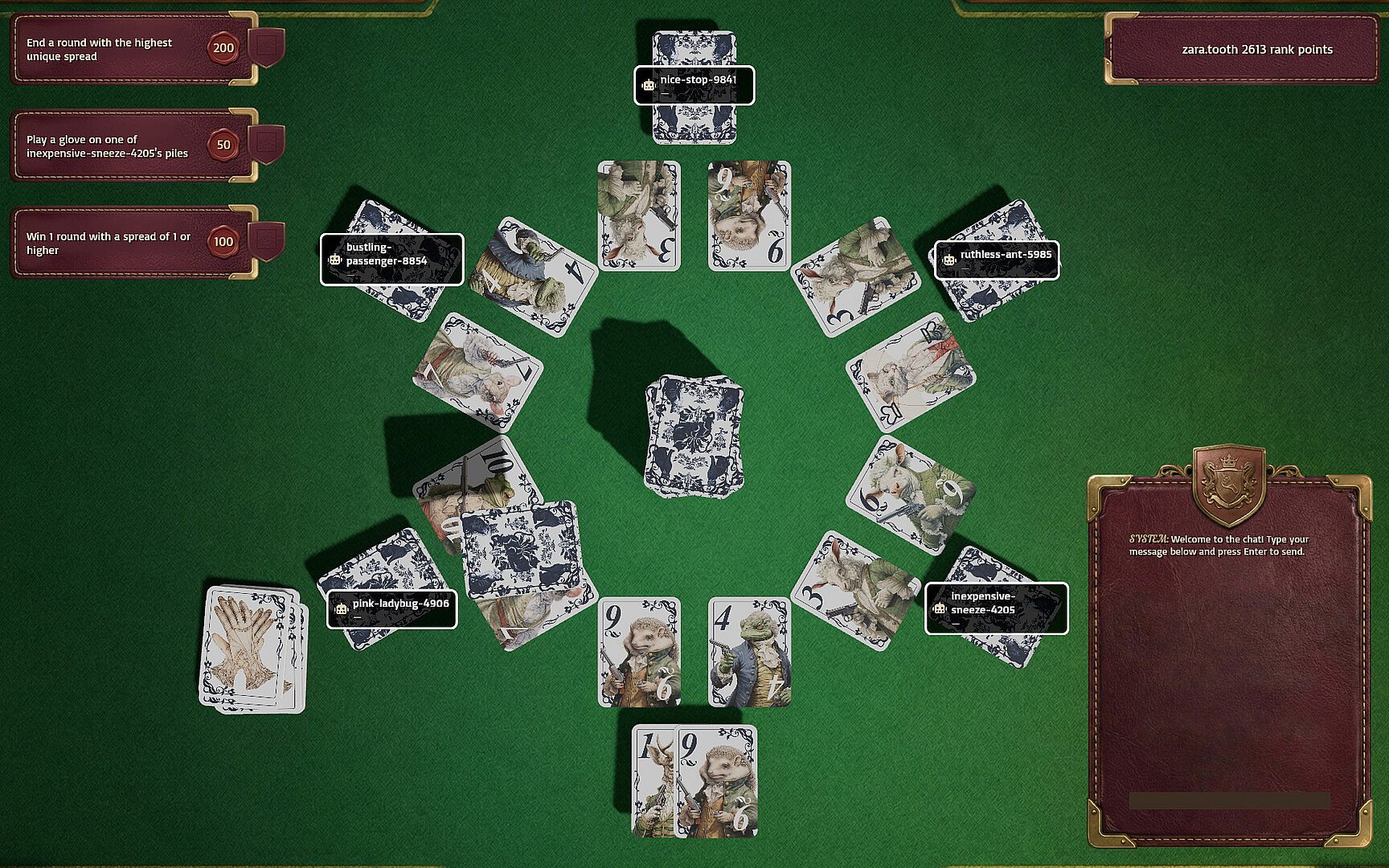
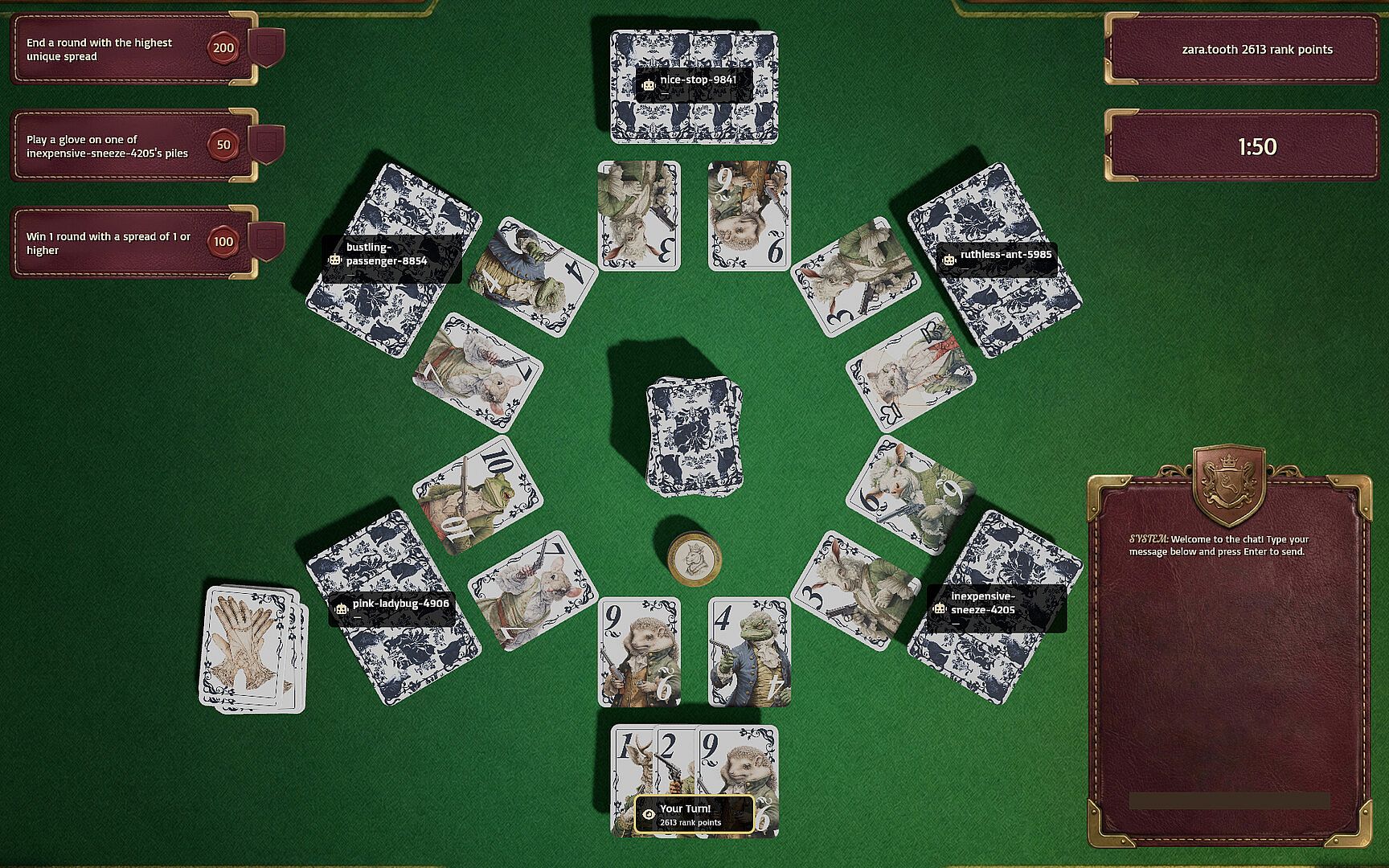
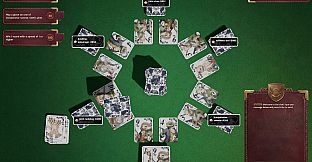
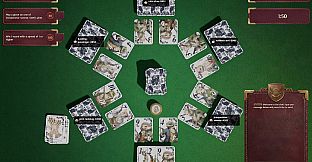
Setup begins with each participant receiving two face-up cards to start their piles and three cards in hand. A shared draw deck sits in the center, along with a unique glove card for every player. Play proceeds in clockwise order. On a turn, a player selects one card from their hand and places it onto any pile belonging to any participant. This action can alter spreads immediately. The player then draws one replacement card from the deck, or two if the placement creates a zero-sum spread where both piles show identical values.
Queen cards function as wilds. When added to a pile, a Queen matches the value of the adjacent pile, instantly forming a zero-sum spread. This represents the strongest position. However, placing Queens on both piles produces the highest possible spread, triggering an automatic loss for that player at round's end regardless of opponents' results. The first half of a round continues until the draw deck empties. At that point, each player gains their glove card in hand.
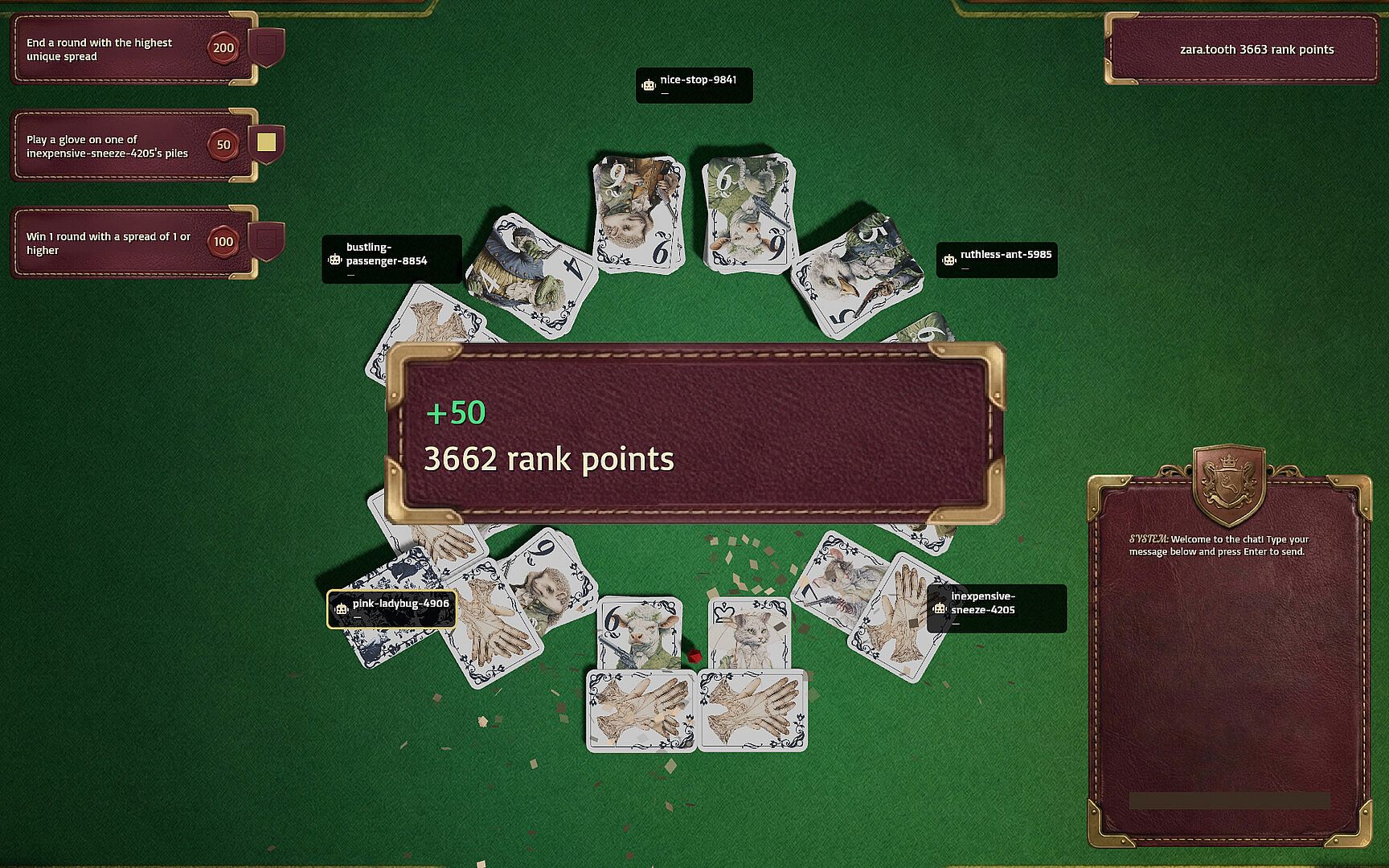
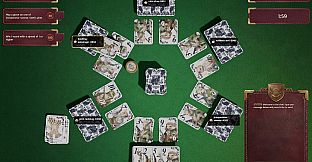
The second half introduces the glove mechanic. Playing a glove on any pile locks it against further cards for the rest of the round. The value beneath the glove still counts toward the final spread calculation. Once a player empties their hand, their piles lock at the current spread. Remaining participants continue, skipping locked players. The last player must play any leftover cards onto their own piles if possible. A round concludes when all hands are empty or every pile is locked. The lowest spread wins the round, with ties broken first by fewest total cards across piles and then by shared round wins under specific conditions.
Game Modes
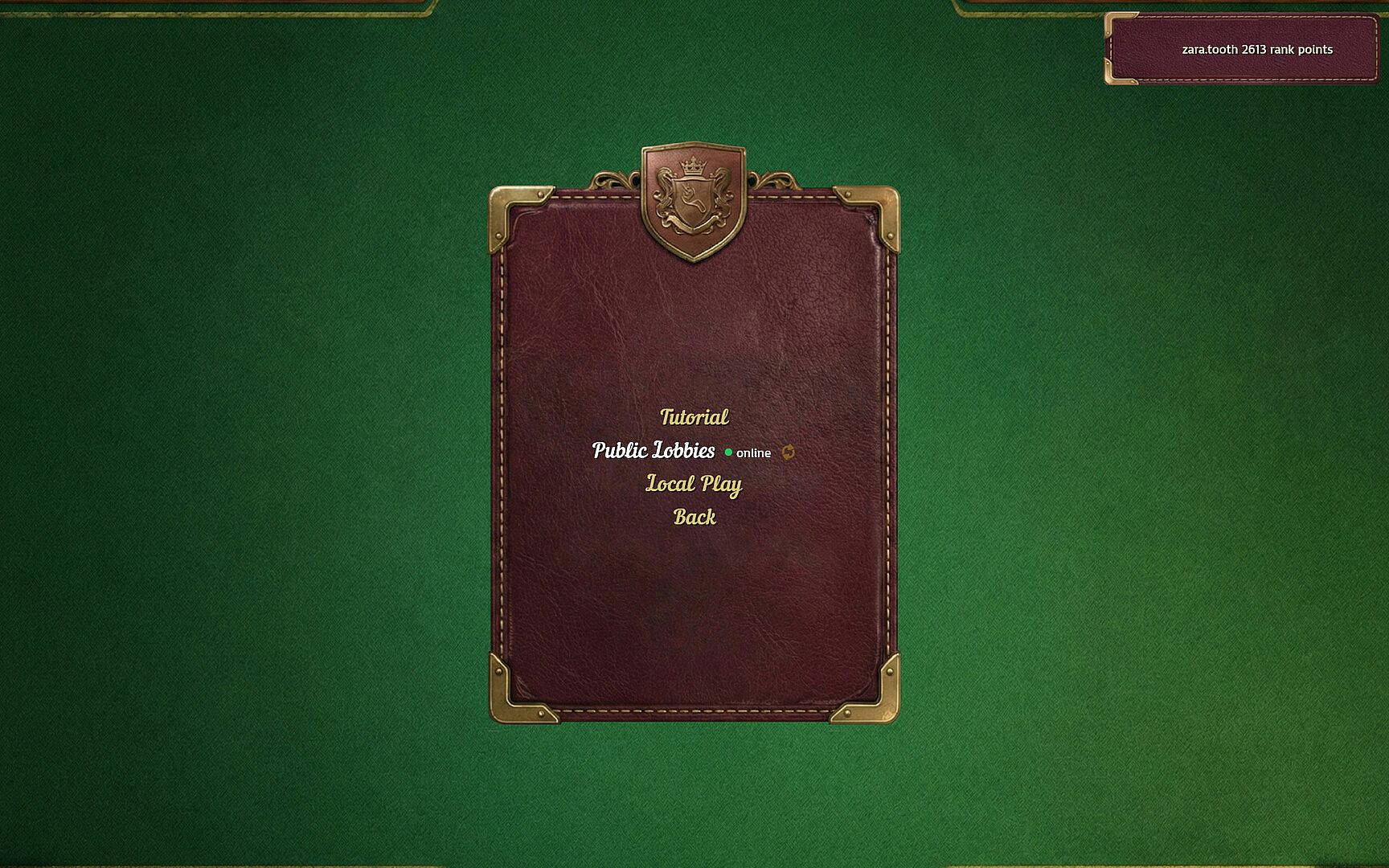
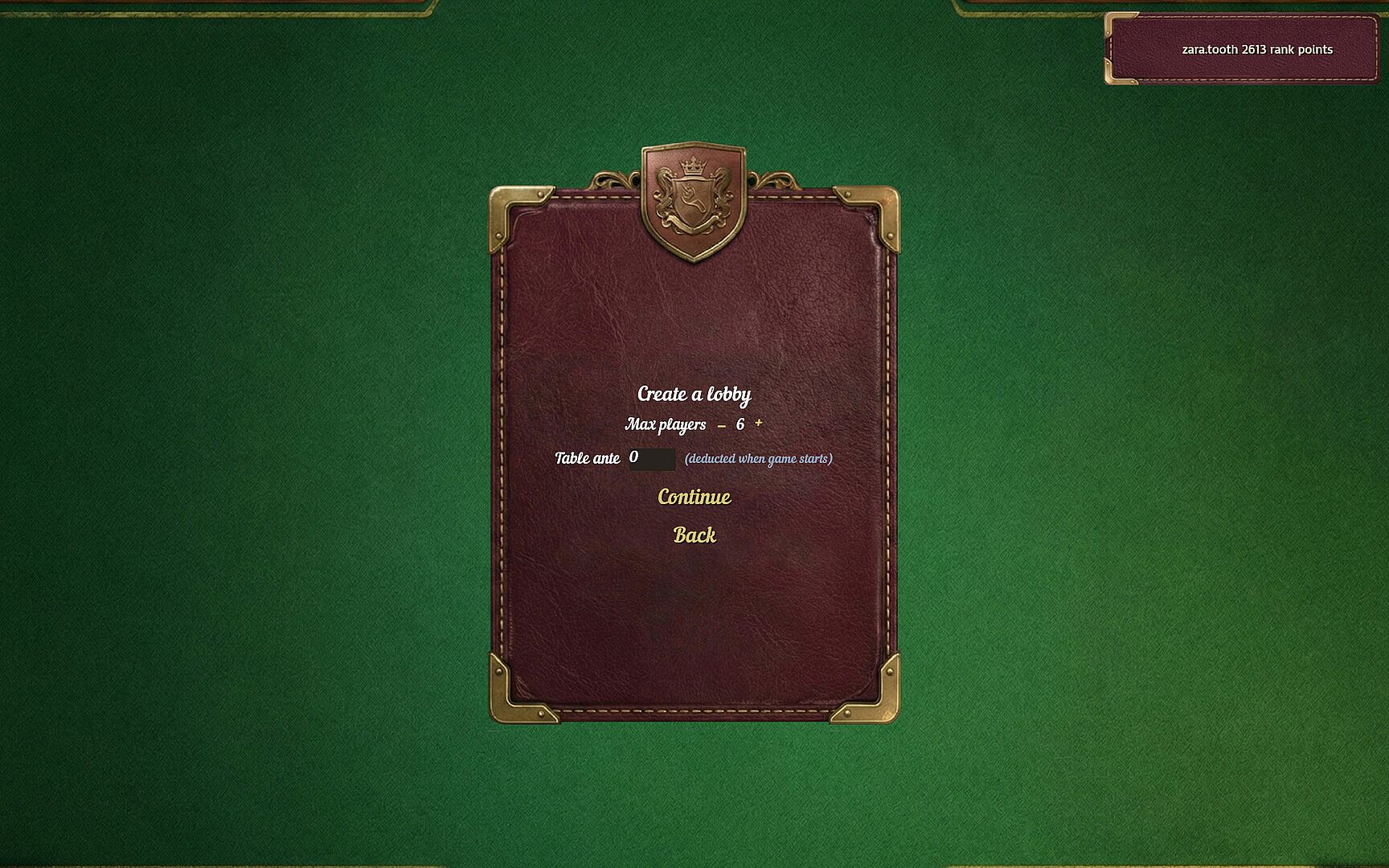
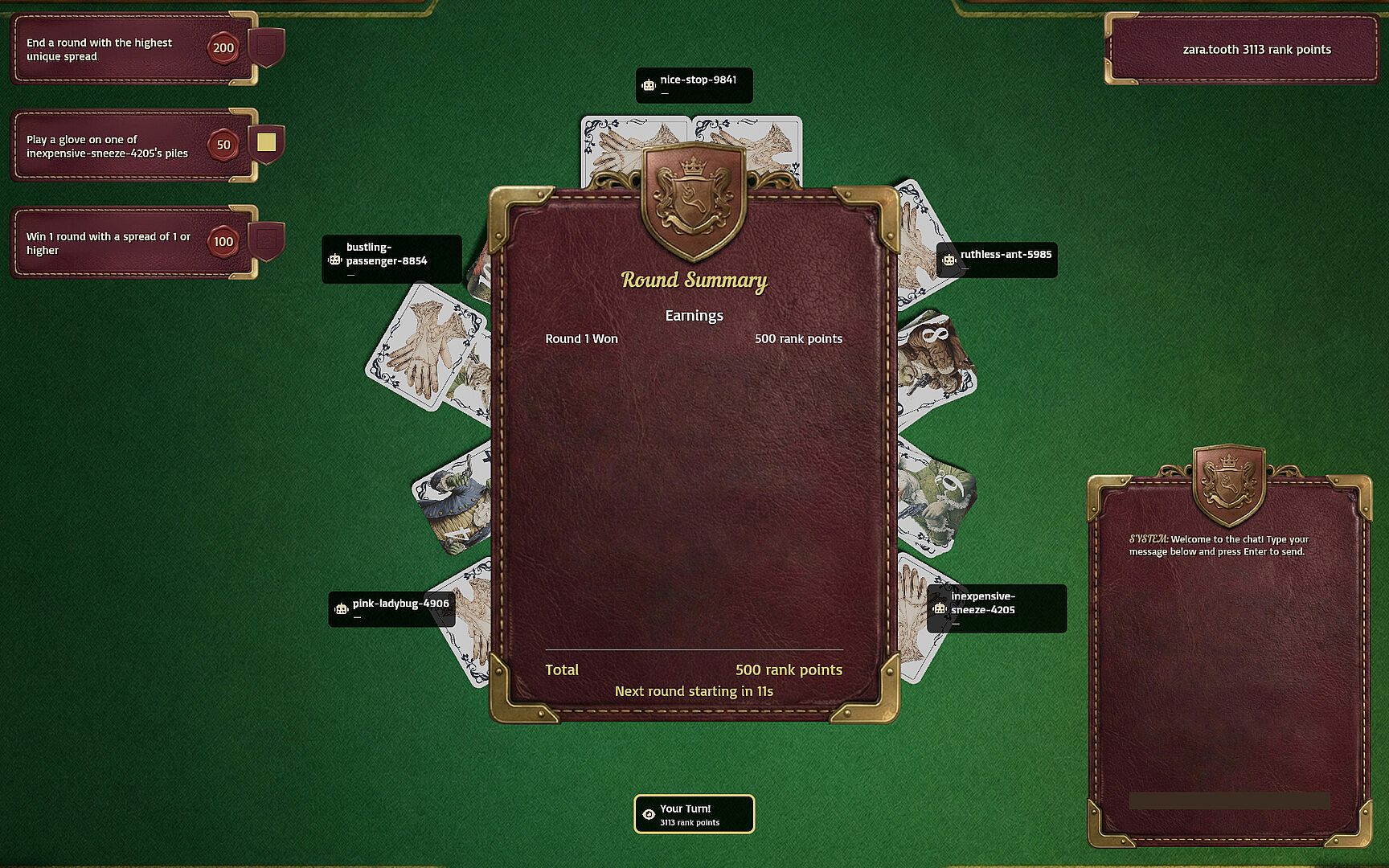
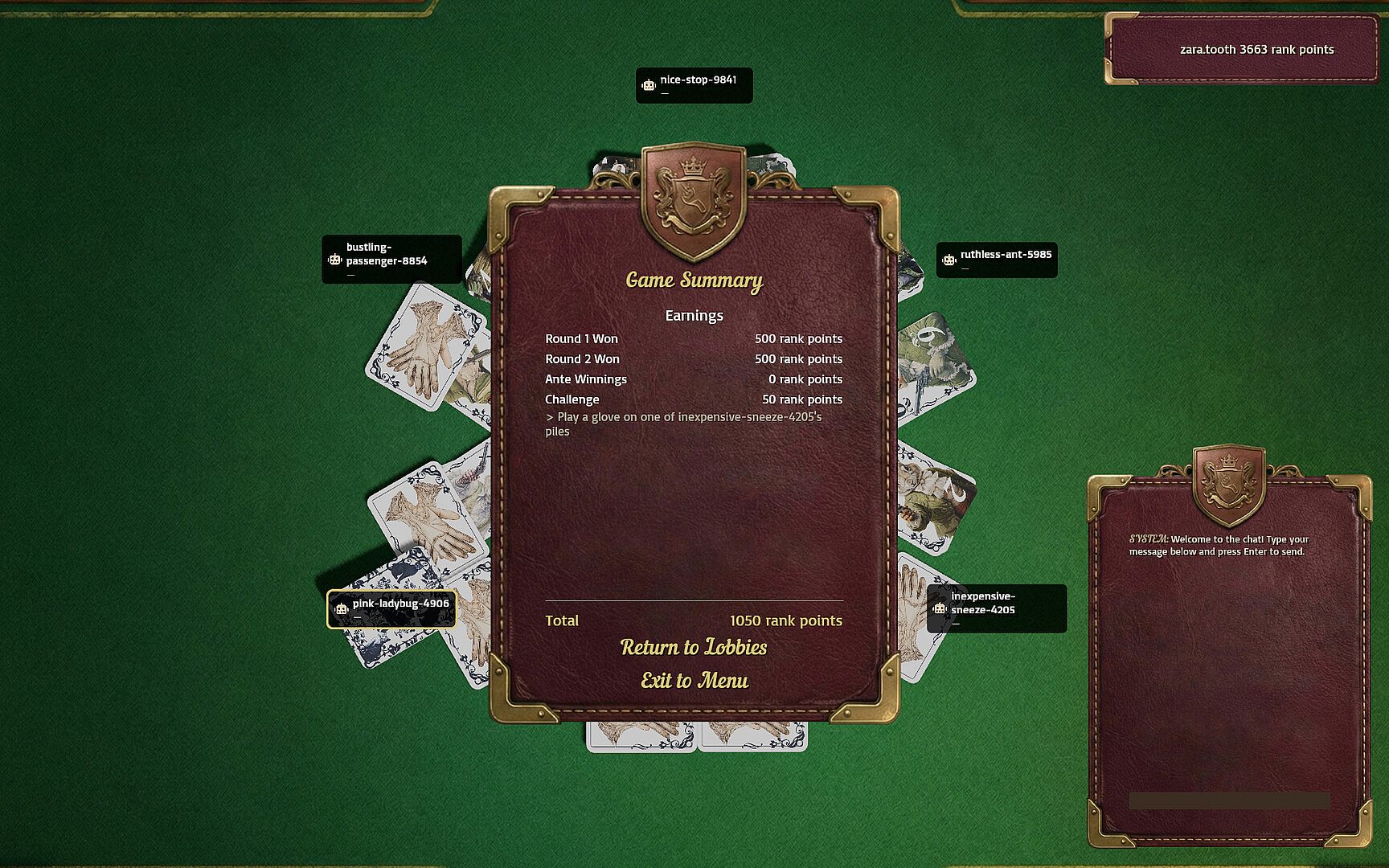
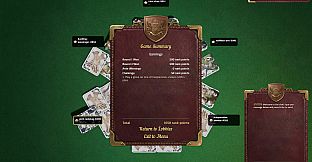
Local play supports direct matches without rank tracking. Online sessions introduce rank points, where each round win grants 100 points per opponent and losses deduct the same amount. Ties split points evenly. Hosts can set an ante requirement, deducting the value at the start and awarding double to the overall game winner. Every session includes three challenges with tiered point rewards of 50, 100, or 200, granted only at game completion for completed objectives. These systems create distinct experiences between casual table sessions and ranked online competition.
Core Mechanics and Strategy
Success depends on timing card placements to force favorable spreads while disrupting opponents. The zero-sum goal encourages careful observation of visible piles and hand management. Glove usage adds a defensive layer, protecting key values or denying opponents options. The automatic loss condition with dual Queens forces risk assessment on every play. Ties introduce secondary objectives around card count, rewarding efficient play beyond pure spread control. These elements combine to reward forward planning across multiple rounds.
Is It Worth Playing?
Players seeking a compact competitive card game with strategic depth will find the mechanics engaging. The rules support quick sessions while allowing repeated plays to refine approaches. Online features add progression through ranks and challenges, appealing to those who enjoy tracked performance. Local options make it suitable for groups without internet requirements. Feedback highlights the balance between accessibility and tactical choices, making it a solid choice for fans of card-based strategy titles. Those preferring longer campaigns or complex faction systems may look elsewhere, but the focused duel format delivers consistent replay value for its target audience.