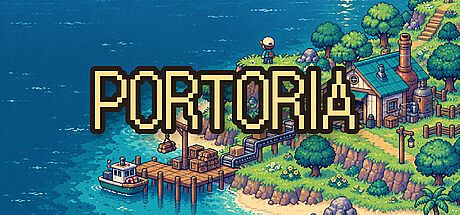


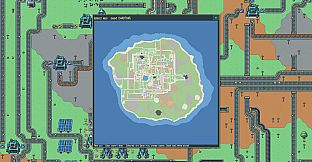
Portoria is a single-player strategy and simulation game focused on factory automation and international trade. Set on a remote island that becomes its own nation, the experience centers on one individual who relies entirely on machines to build production lines, process resources, and generate income through exports.
Gameplay
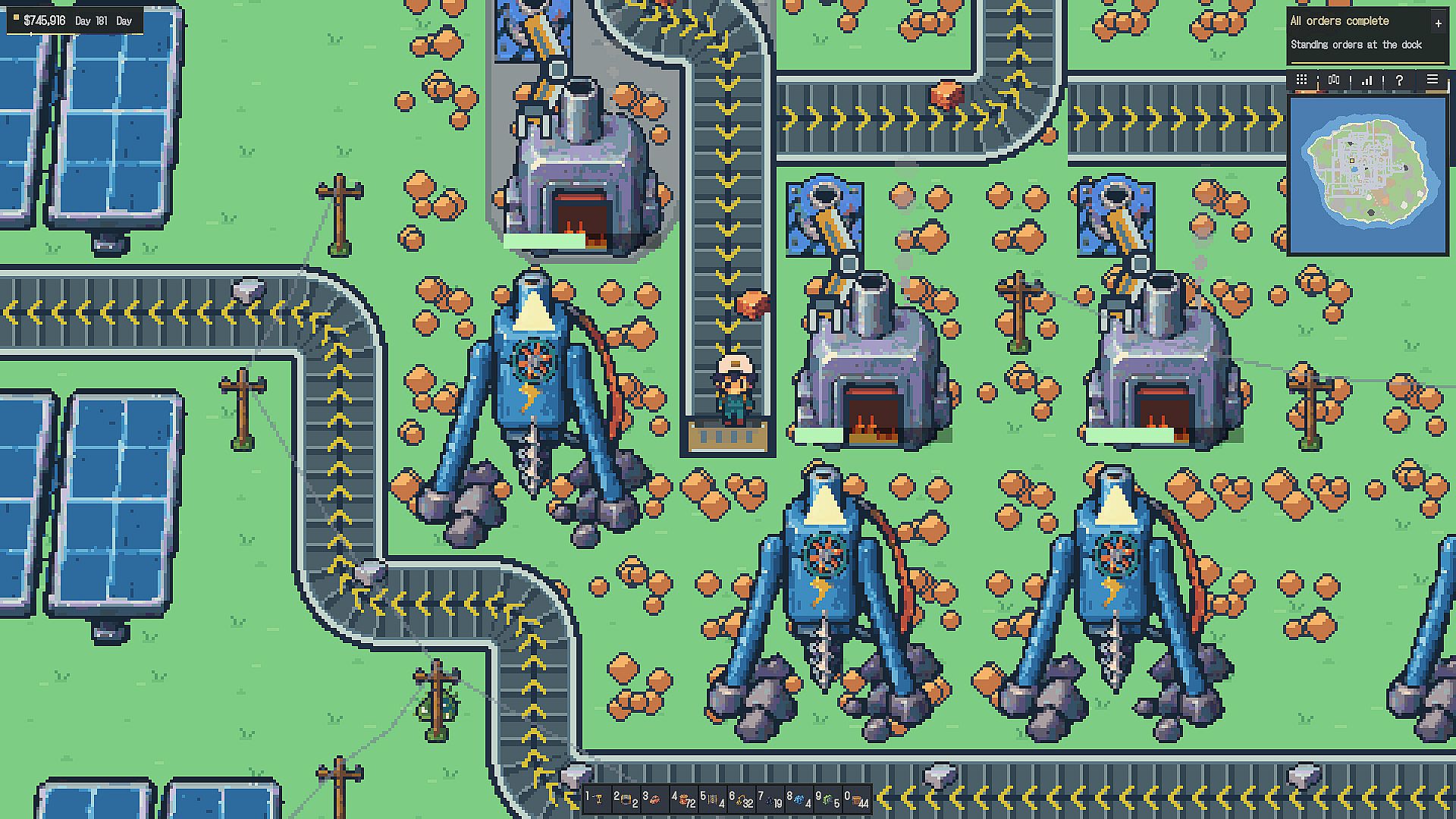
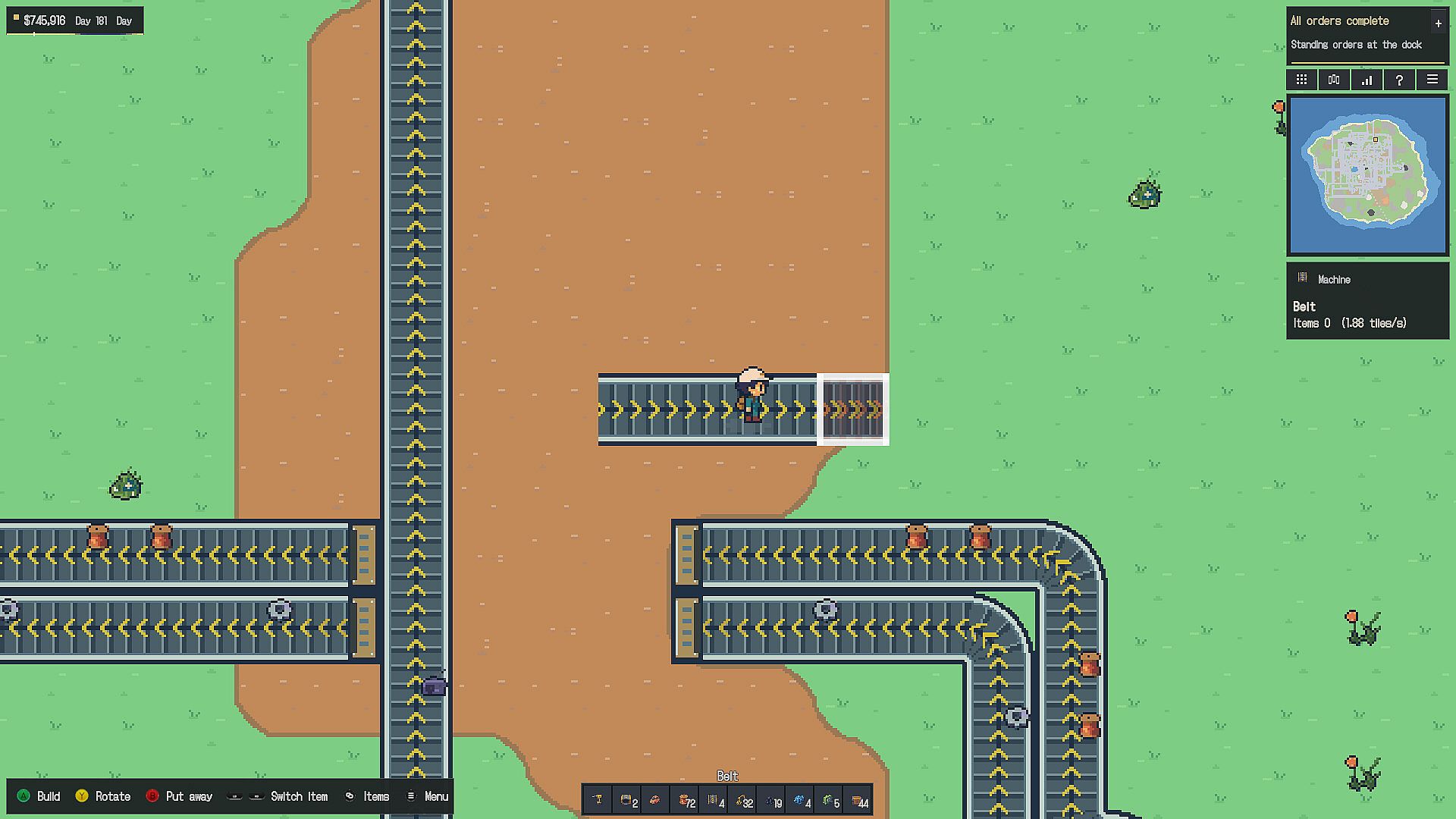
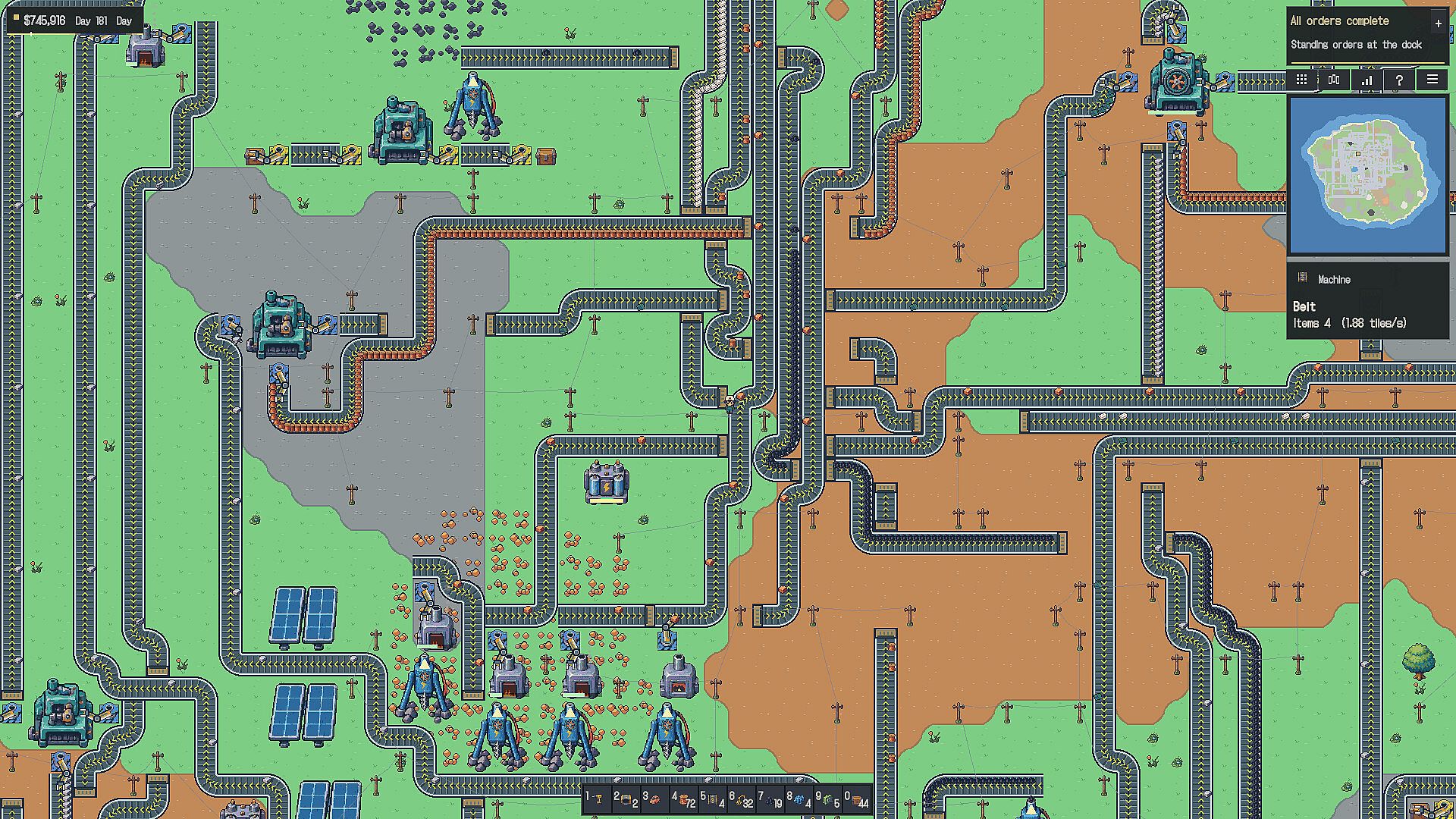
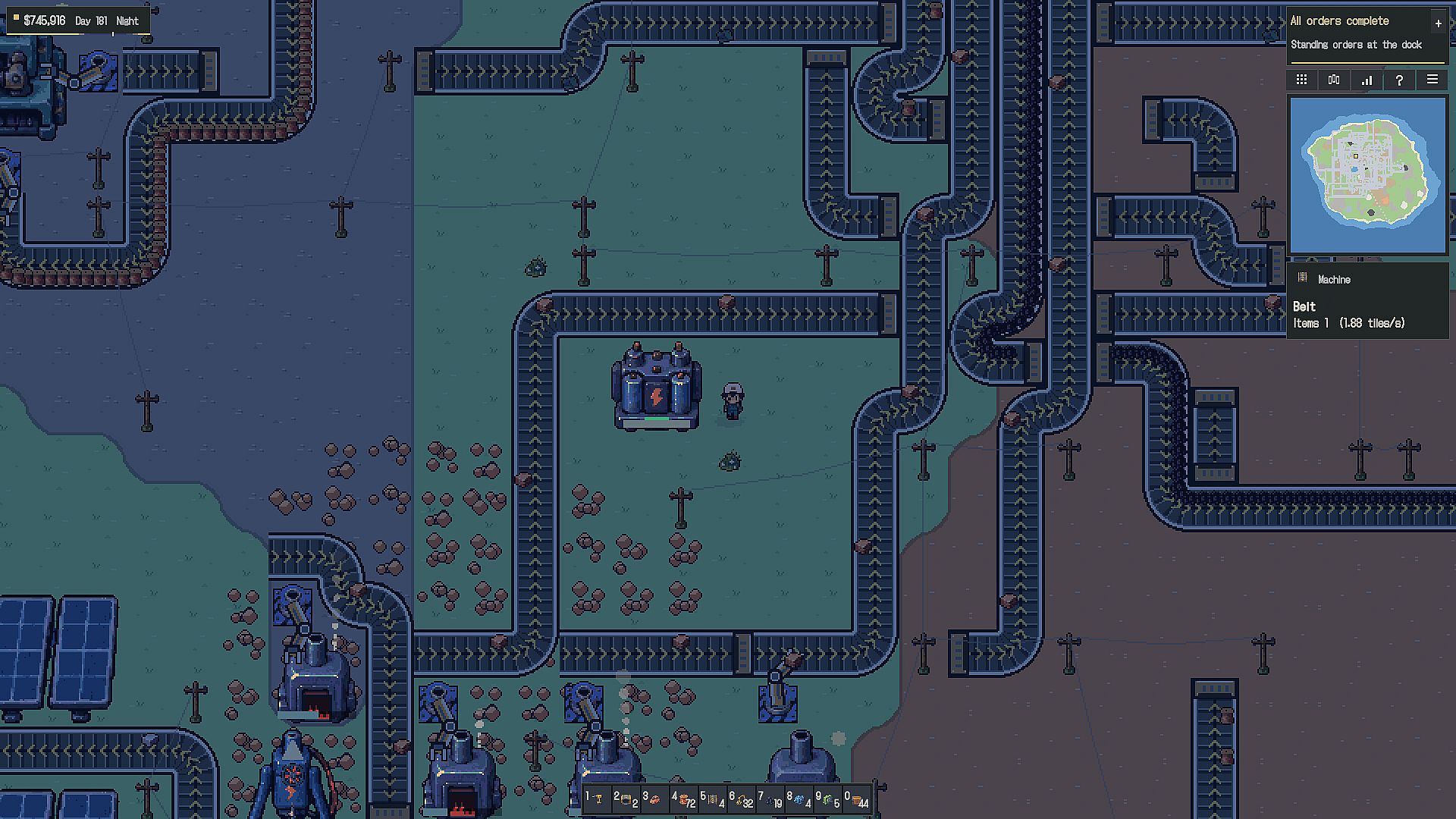
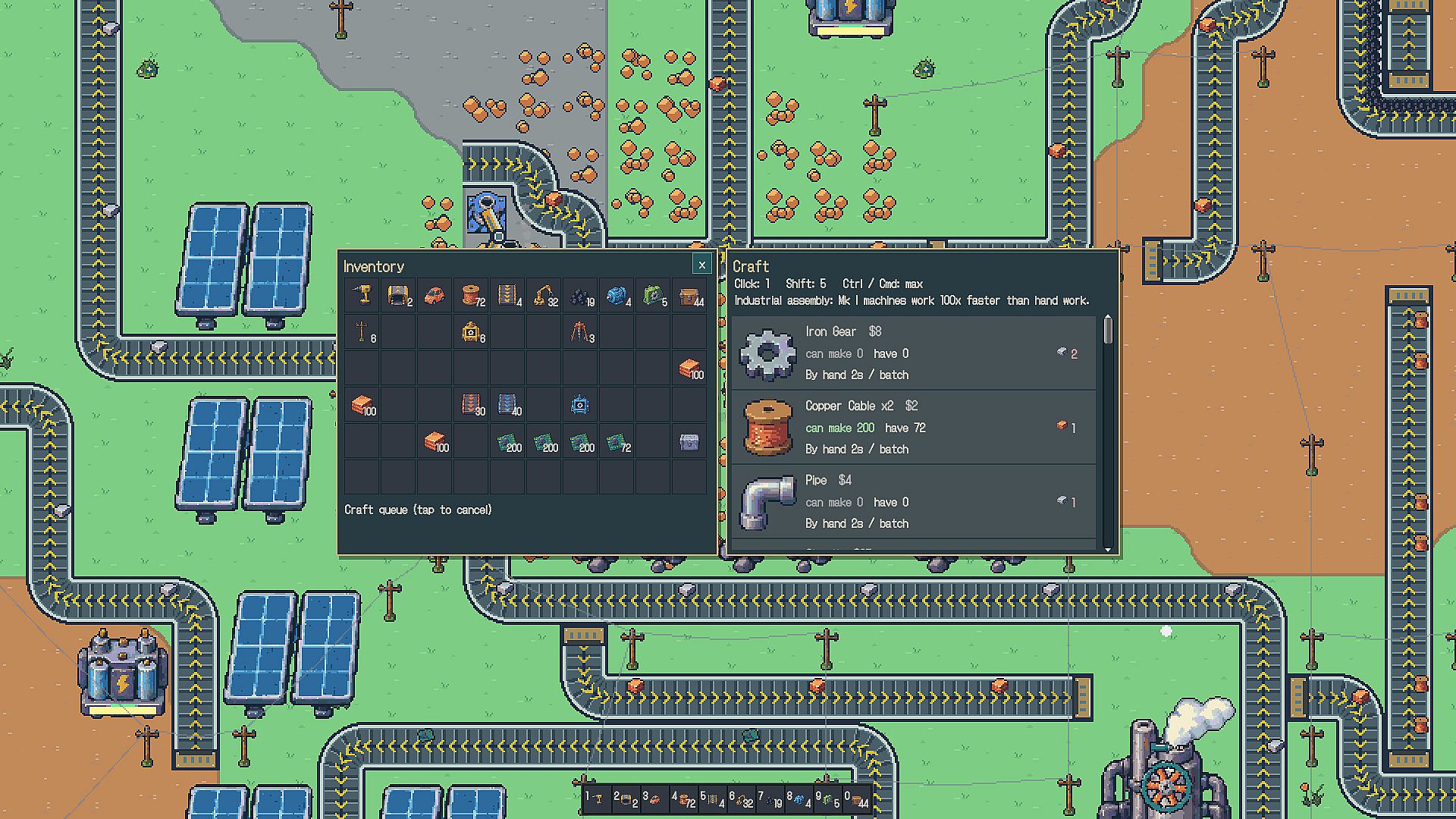
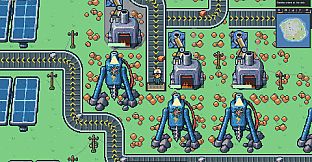
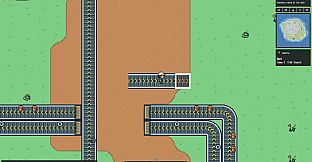
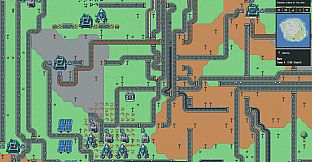
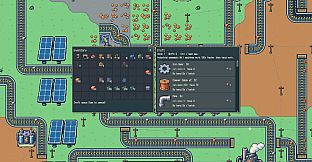
The core loop begins with manual mining and smelting of ore using basic tools. Players quickly transition to automated systems by placing drills, furnaces, inserters, and conveyor belts to create self-sustaining production chains. These chains incorporate splitters, underground belts, assemblers, steam engines, solar panels, and batteries to manage power and logistics across 30 distinct machines and 52 items.
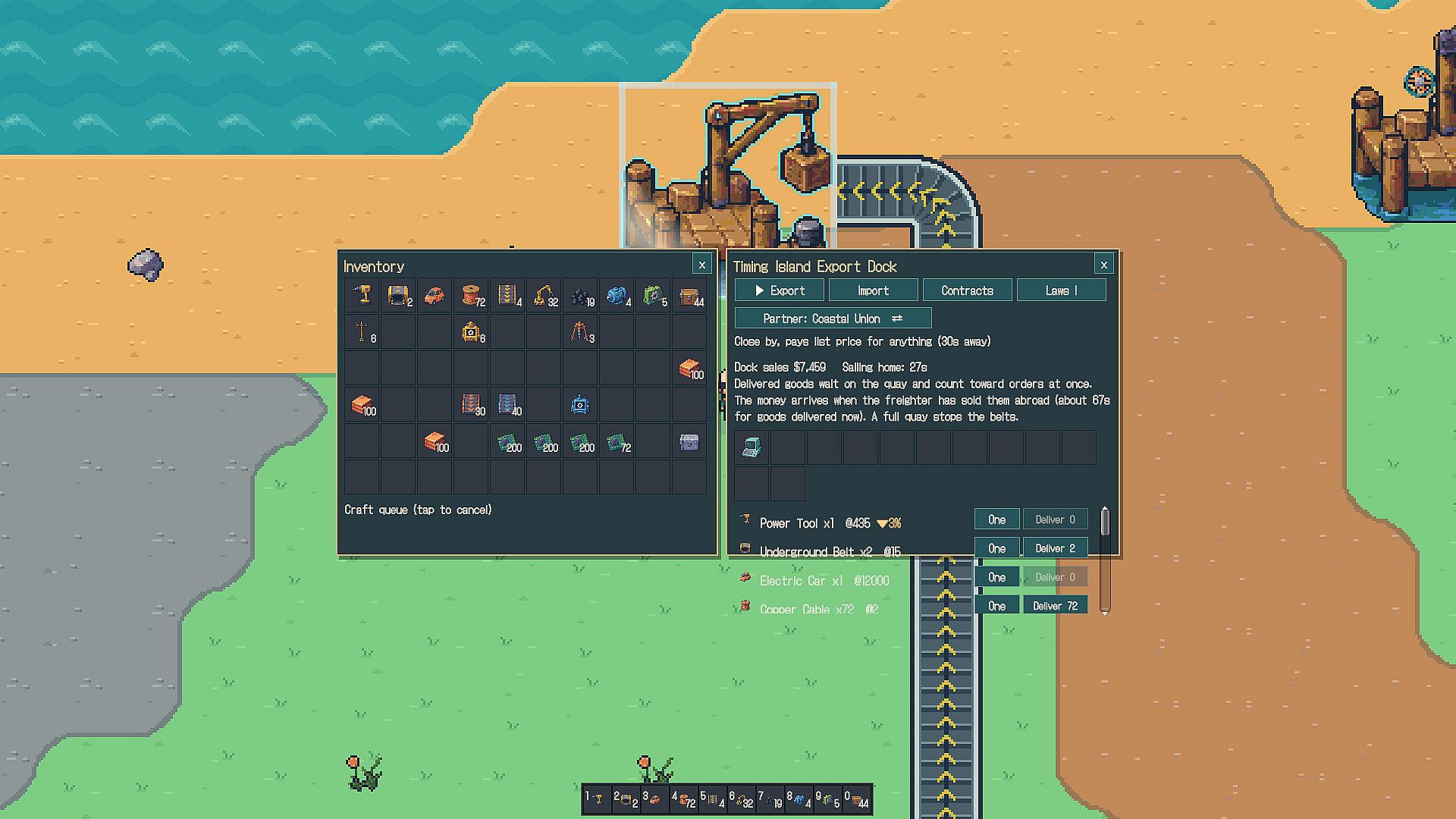
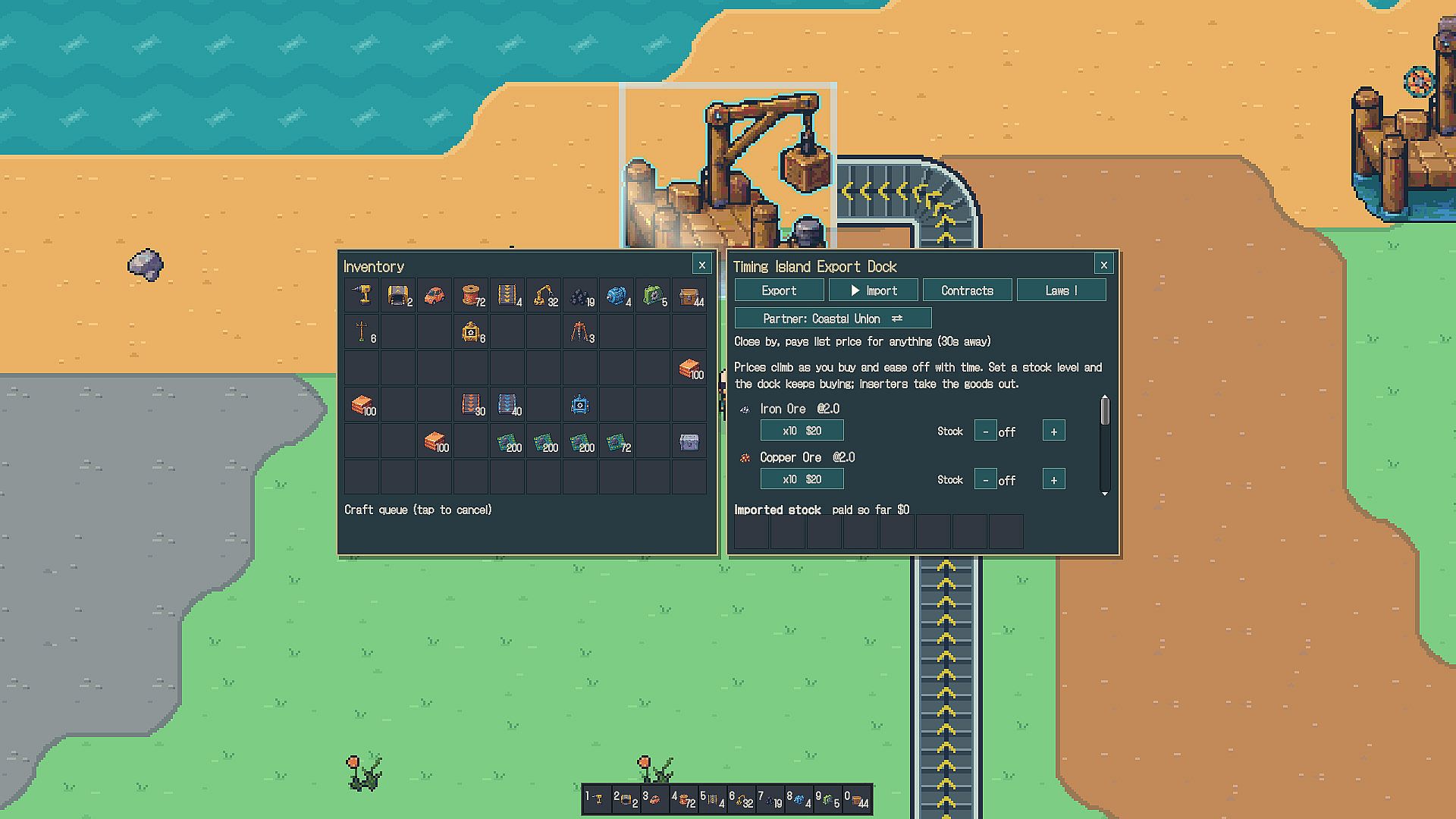
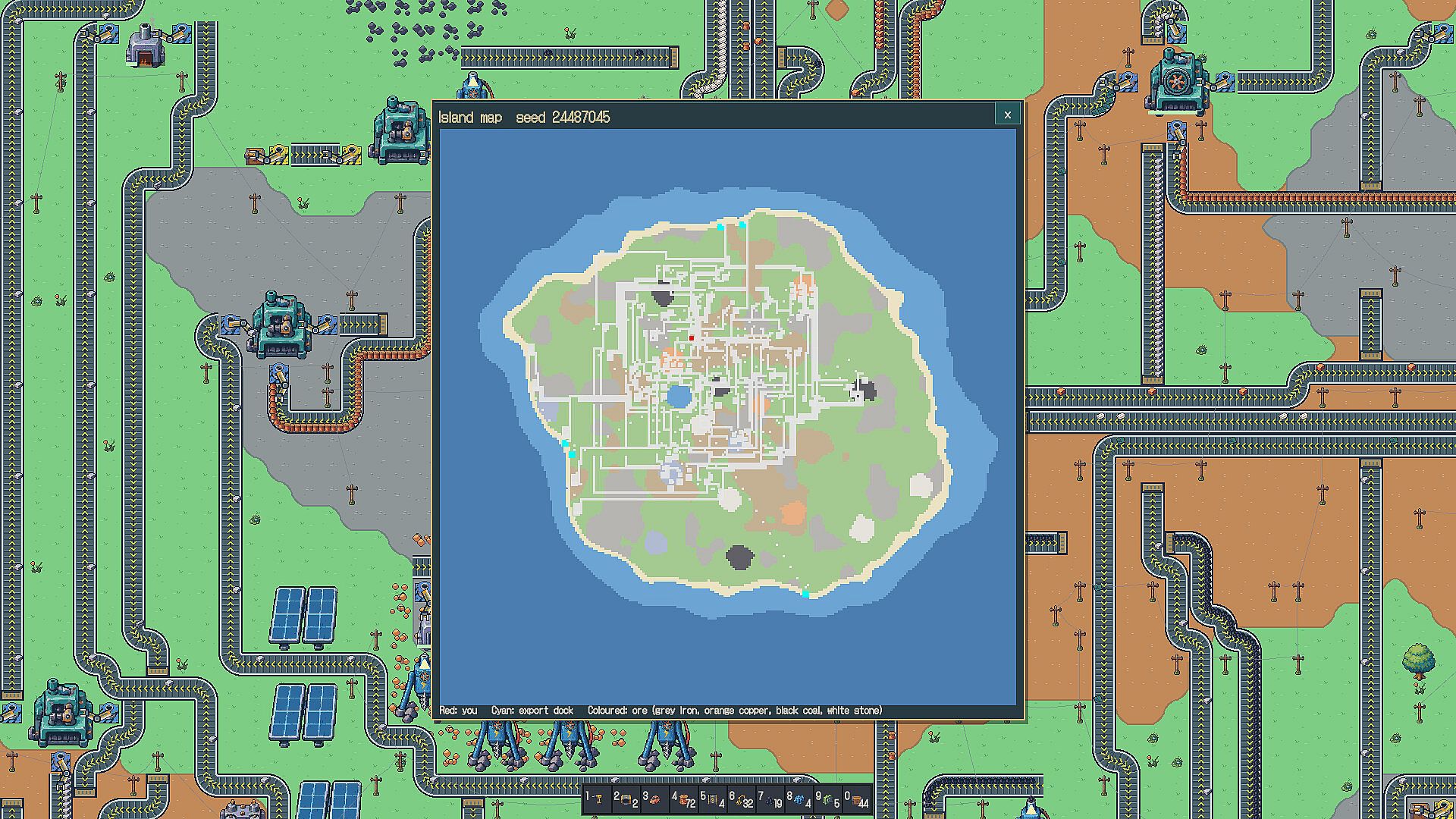
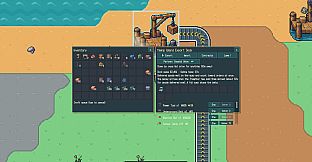
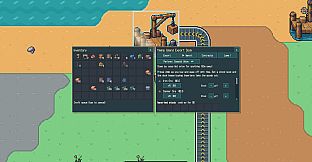
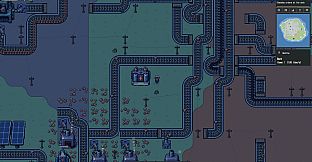
Goods move to an export dock where freighters transport them to overseas markets. Each trading partner operates an independent economy where oversupply lowers prices and high demand raises import costs. Players can set standing stock levels for automatic purchases or fulfill specific orders to maintain steady revenue. Day and night cycles affect solar power generation, requiring backup systems like batteries or steam engines to keep factories running continuously.
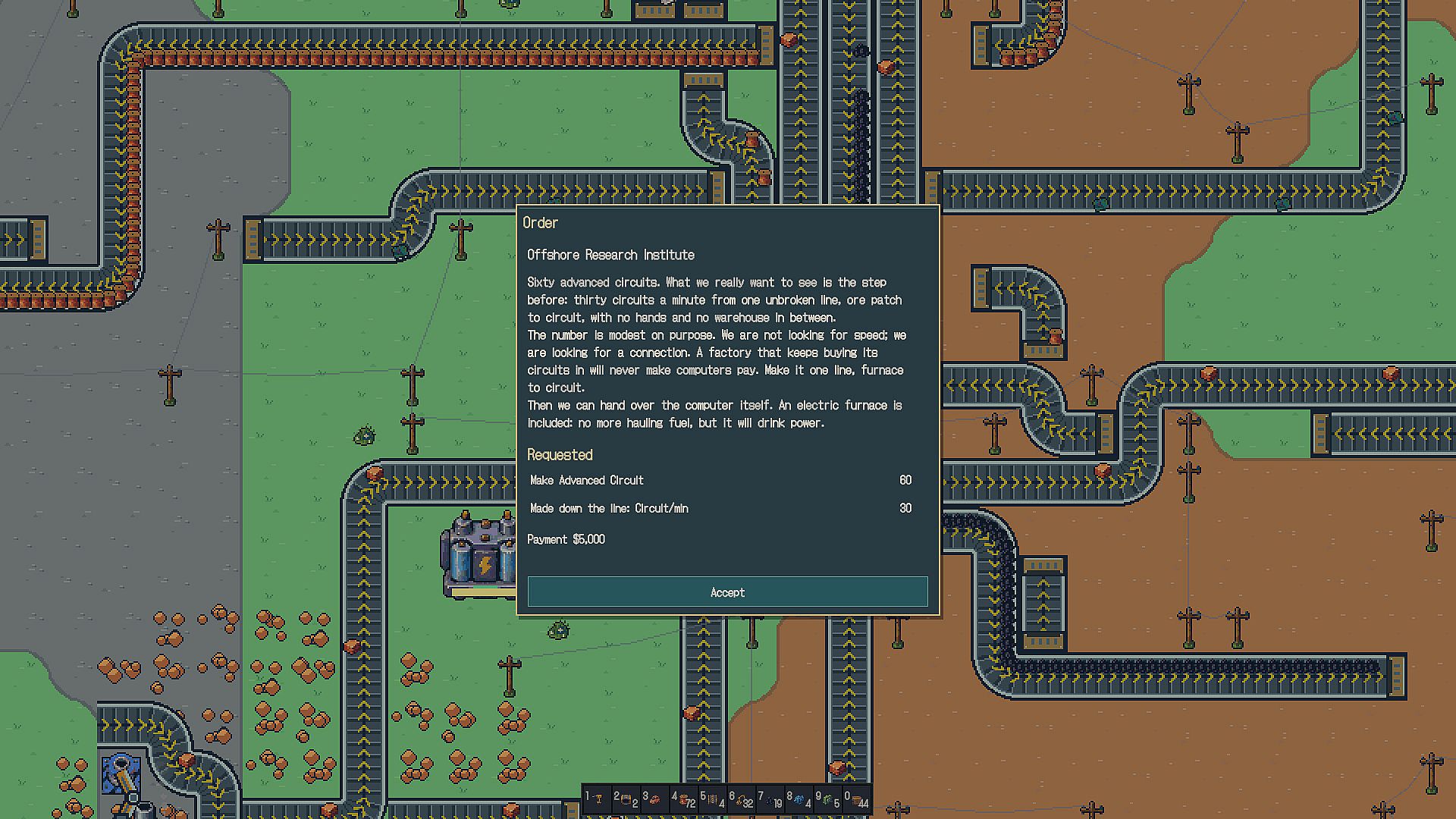
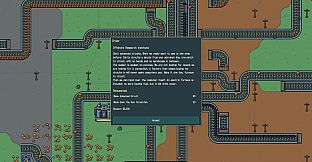
Progress advances through 28 story orders from clients that unlock new recipes and items, ranging from basic fittings to advanced products such as radios, computers, robots, and satellites. Side contracts provide additional income opportunities alongside the main progression. National rank increases with total earnings, allowing policies that influence export incentives, port capacity, and fleet speed.
Game Modes
Portoria offers a single continuous single-player experience without separate modes or multiplayer elements. The entire game revolves around building and optimizing automated factories while managing trade on one island map. There are no combat systems, enemies, or competitive elements, allowing players to advance at their own pace with no deadlines or failure conditions.
Core activities include expanding production lines, balancing power grids, fulfilling orders, and adjusting trade strategies based on market fluctuations. Five save slots and frequent autosaves support extended sessions or experimentation with different factory layouts.
Key Features and Mechanics
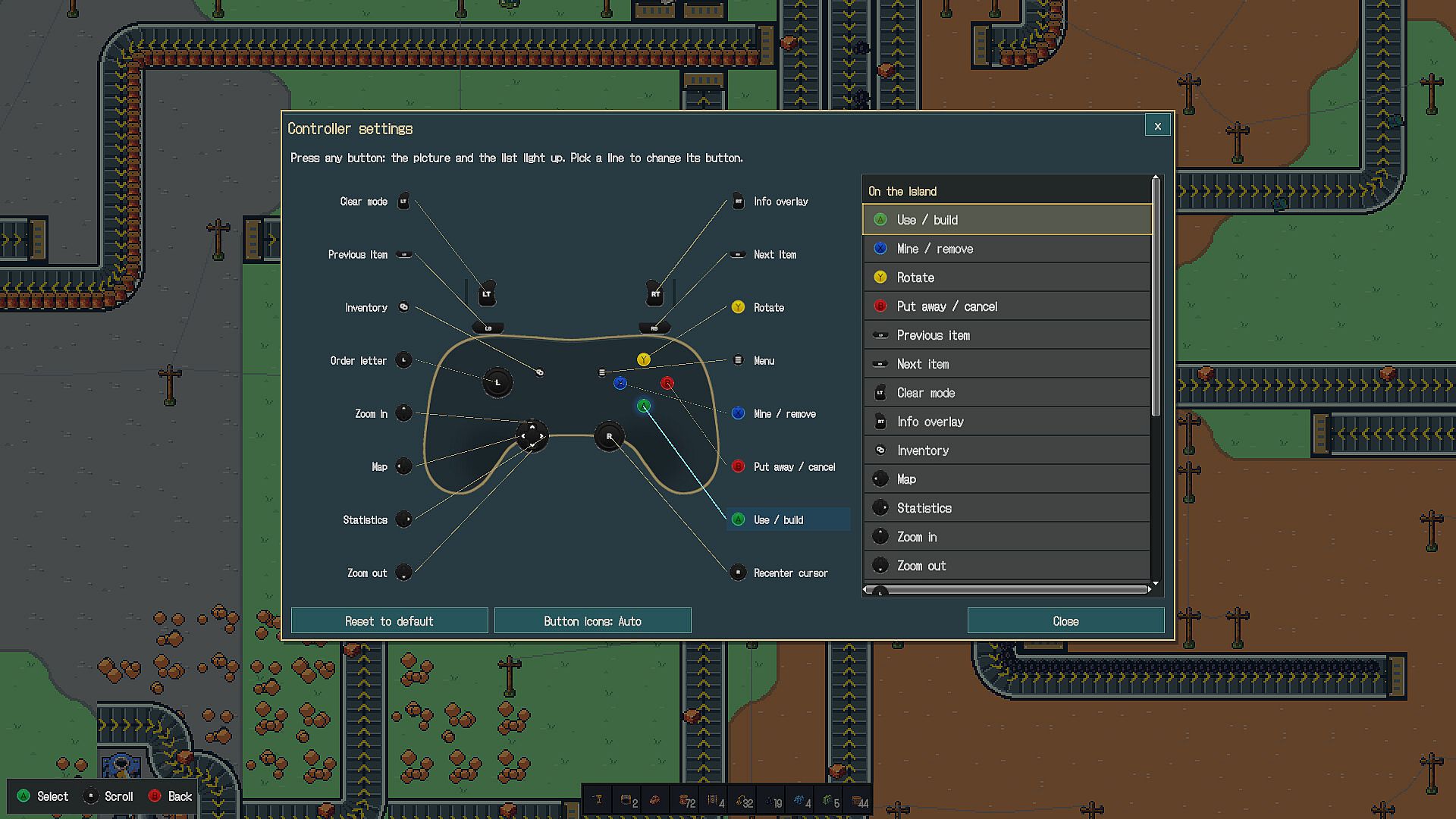
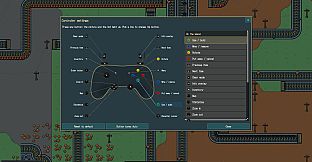
Original pixel art depicts the island environment and all machines with day-night lighting shifts. A soundtrack of 12 original tracks evolves in response to factory development stages. Controls support mouse and keyboard input along with full controller compatibility and button remapping. The interface supports multiple languages for broader accessibility.
Trade mechanics emphasize supply and demand across multiple partners rather than static pricing. Players monitor per-minute balance to scale operations sustainably. Policies unlocked through national ranking provide long-term adjustments to the economy without introducing new game modes.
Is It Worth Playing?
Portoria suits players who enjoy relaxed factory automation and logistics systems in a peaceful setting. The focus on machine-driven production and market-responsive trade creates a steady progression loop that rewards careful planning and iterative expansion. With no combat or time pressure, the game appeals to those seeking a calm simulation experience on PC.
Its recent release means limited long-term player data is available, but the verified mechanics align closely with the described single-player automation and trade systems. Those interested in building efficient production chains and managing resources without external threats will find the core loop engaging and self-contained.