












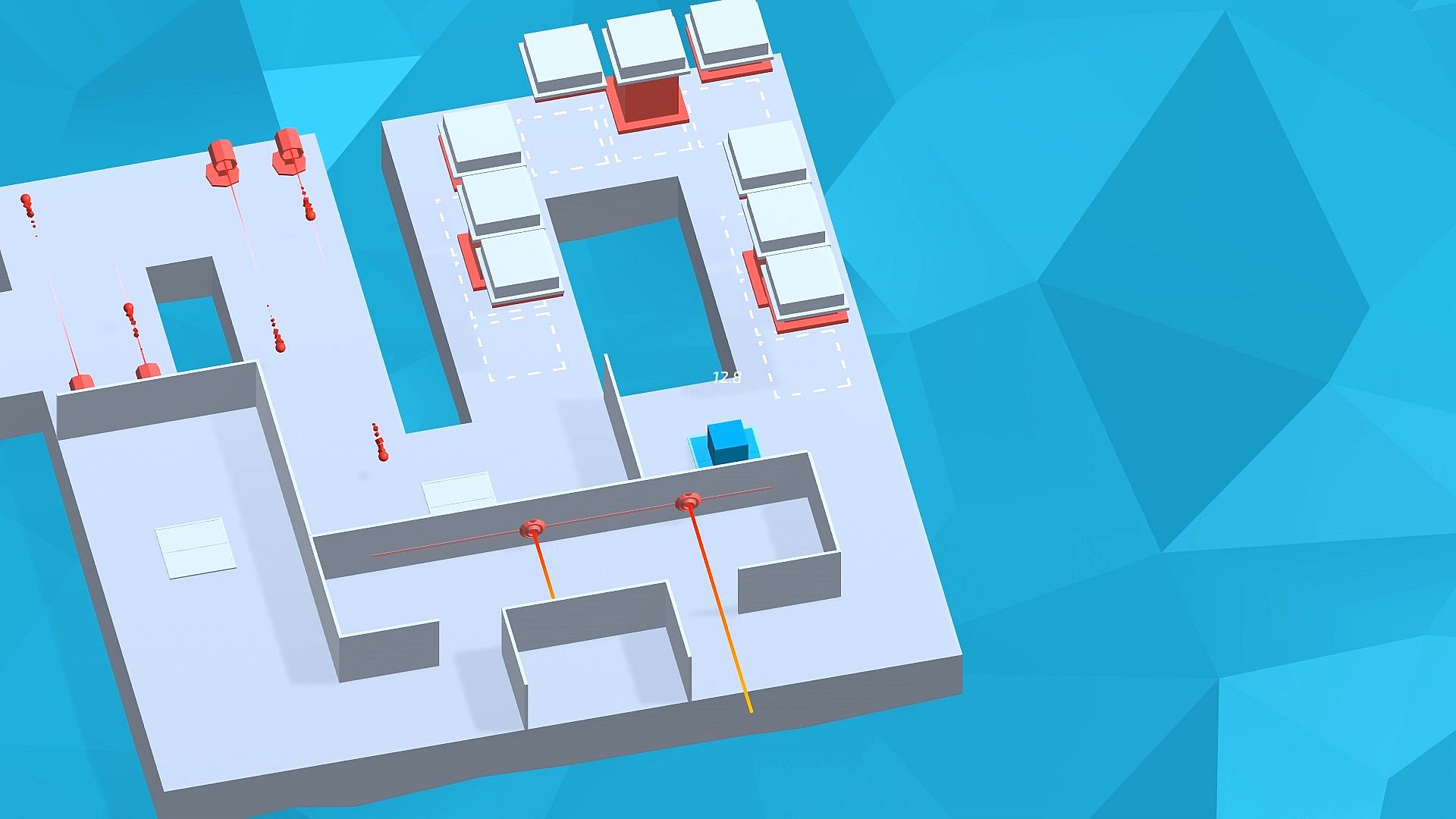













Poly Island stands out as a low-poly 3D adventure title that blends strategy elements with indie and casual appeal on PC. Players navigate a stylized island environment filled with obstacles, focusing on precise movement and timing to complete objectives across dozens of stages.
Gameplay
The core loop centers on progressing through linear levels by avoiding hazards that block the path to the finish. A customizable camera allows players to adjust their view for better awareness of incoming threats, while the low-poly aesthetic keeps the visuals clean and readable even during fast sequences. Levels introduce new obstacles progressively, requiring adaptation to patterns involving projectiles, environmental hazards, and moving elements. Each stage includes a timed element that encourages efficient routing and quick decision-making rather than trial-and-error repetition alone.
With 50 levels in total, difficulty scales steadily, starting approachable before demanding tighter execution and creative problem-solving. The absence of checkpoints in certain setups means full runs from start to finish, heightening tension on later stages. Input options include mouse, keyboard, or controller, and switching between them alters handling and precision in noticeable ways, such as finer analog control versus discrete key presses.
Game Modes
After completing the main campaign, three additional modes become available to extend replayability. One emphasizes beating each level under strict time limits, pushing players to optimize paths and minimize mistakes. Another limits players to three lives total, where exhausting them forces a full restart of the current level and intensifies the stakes as challenges mount. The third removes all checkpoints, requiring survival through an entire level without any midway saves or respawn points.
These modes build directly on the base mechanics, transforming familiar stages into fresh tests of consistency and planning. They reward mastery of obstacle patterns and encourage experimentation with different control schemes to find the most effective approach for each variant.
Level Design and Progression
Stages vary in layout and obstacle combinations, ensuring no two feel identical even as themes repeat. Early levels focus on basic dodging and timing, while later ones layer multiple hazard types simultaneously, demanding spatial awareness and quick reactions. The gradual introduction of new mechanics prevents overwhelming newcomers yet maintains engagement through increasing complexity.
Seventy-seven Steam achievements track specific accomplishments, such as completing levels under certain conditions or mastering particular obstacles, providing additional goals beyond simply reaching the end. This structure suits short play sessions while supporting longer runs for those seeking completionist challenges.
Is It Worth Playing?
Poly Island delivers a focused single-player experience centered on obstacle navigation and mode-based replay. With 81 percent positive feedback from its 44 user reviews, reception highlights its straightforward charm and value at low price points, though some note the content volume feels modest relative to higher expectations. The game suits players who enjoy precise platforming challenges, low-pressure strategy through timing and routing, or casual sessions with controller flexibility. Those seeking extensive ongoing updates or large-scale content may find it limited, given its 2018 release and lack of further expansions. For fans of compact indie adventures with escalating difficulty and post-campaign variants, it offers a solid, self-contained package worth considering on sale.