

PLEASE CONFIRM THE DECEASED is an indie simulation adventure game set in a municipal morgue where players take on the role of a night clerk responsible for verifying the identities and conditions of incoming bodies against their accompanying paperwork.
Gameplay
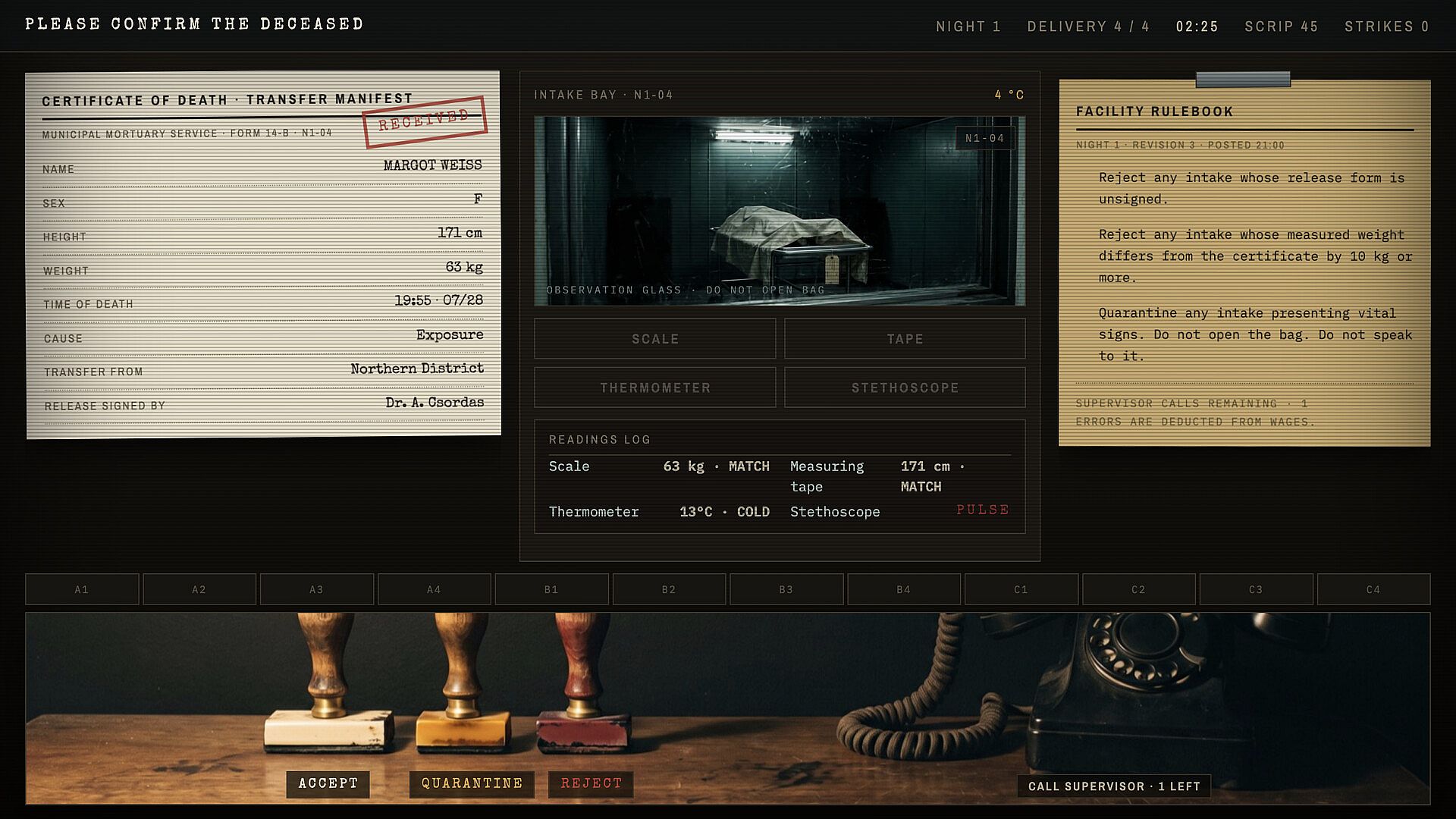
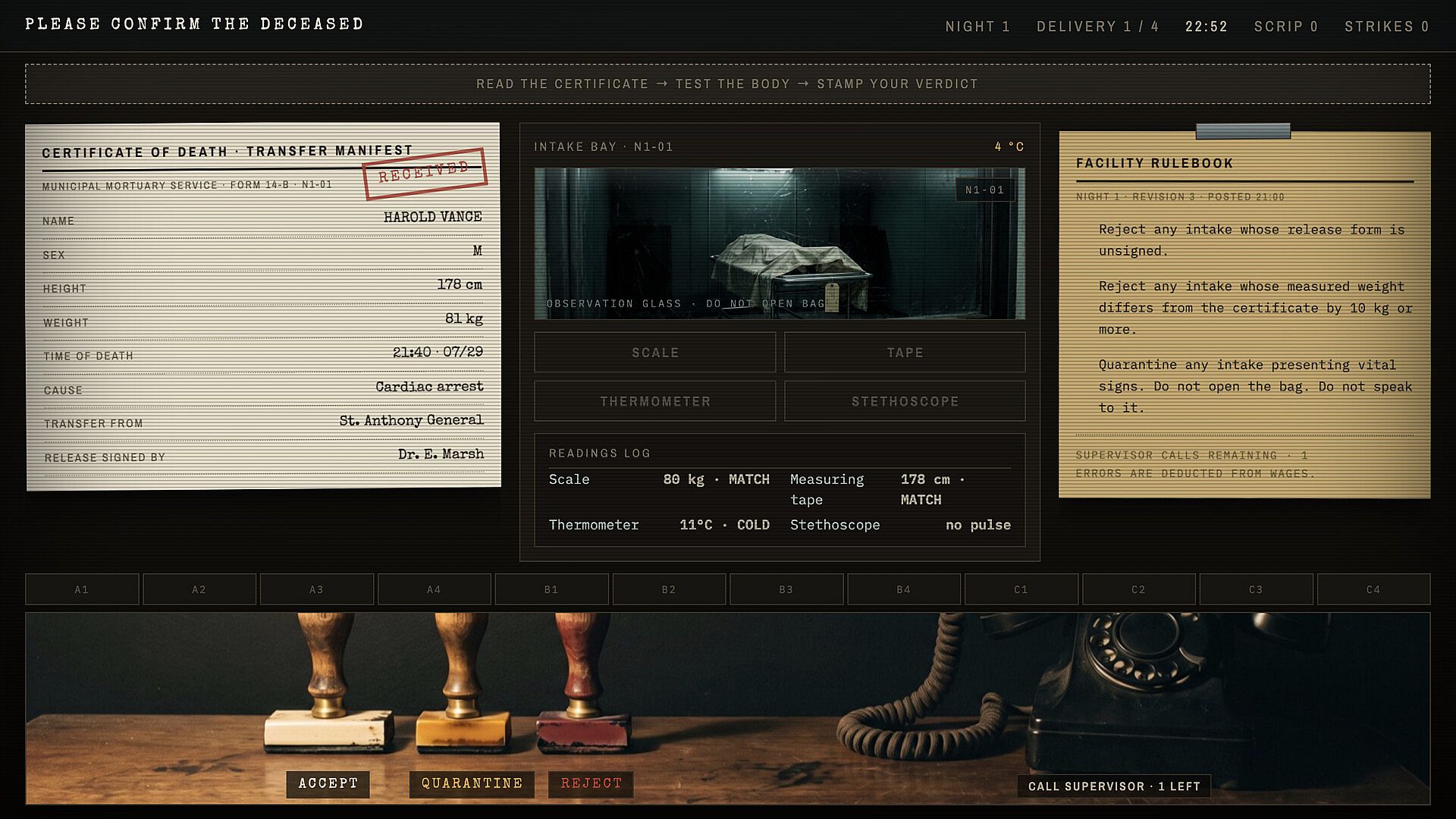
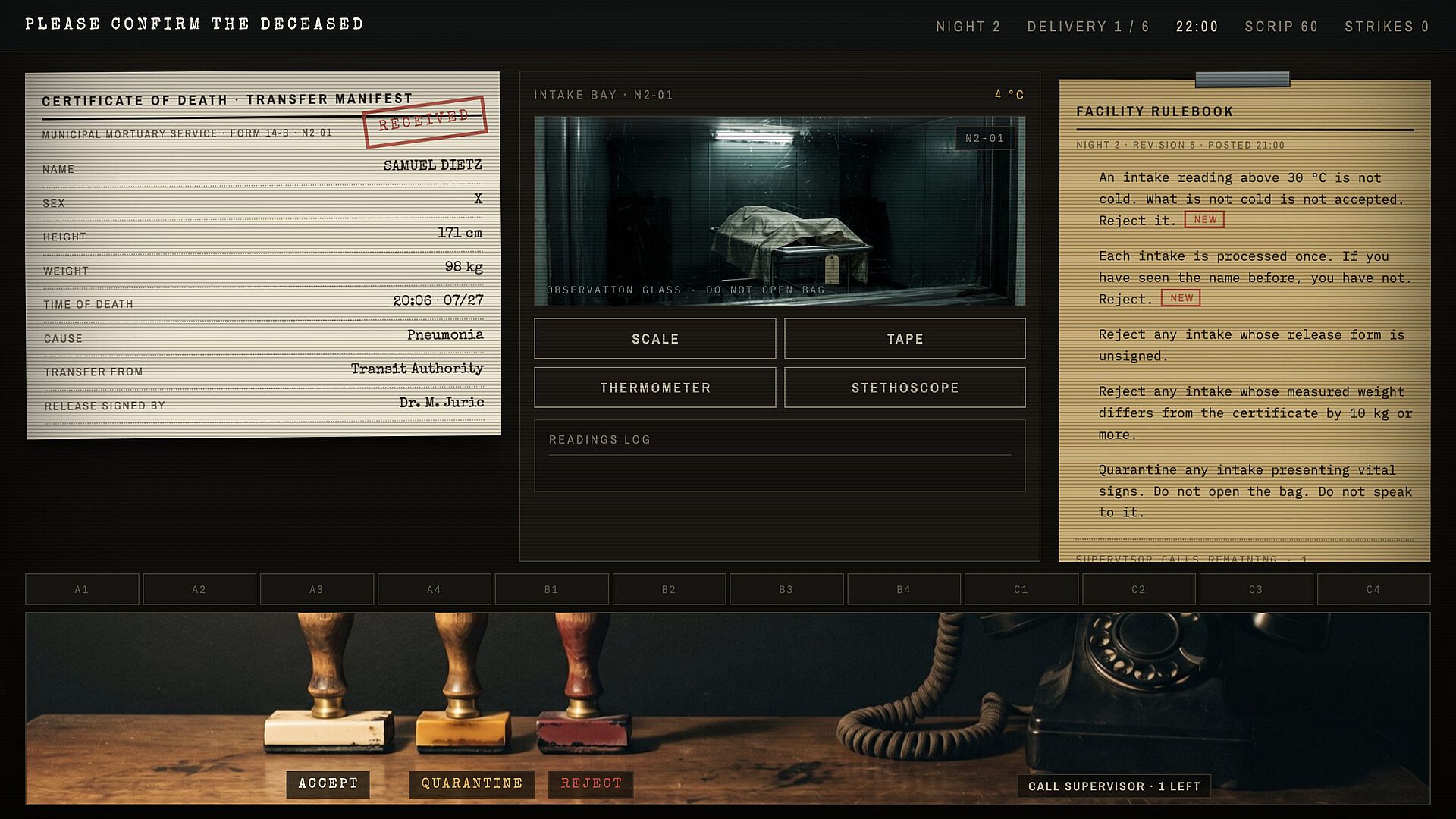
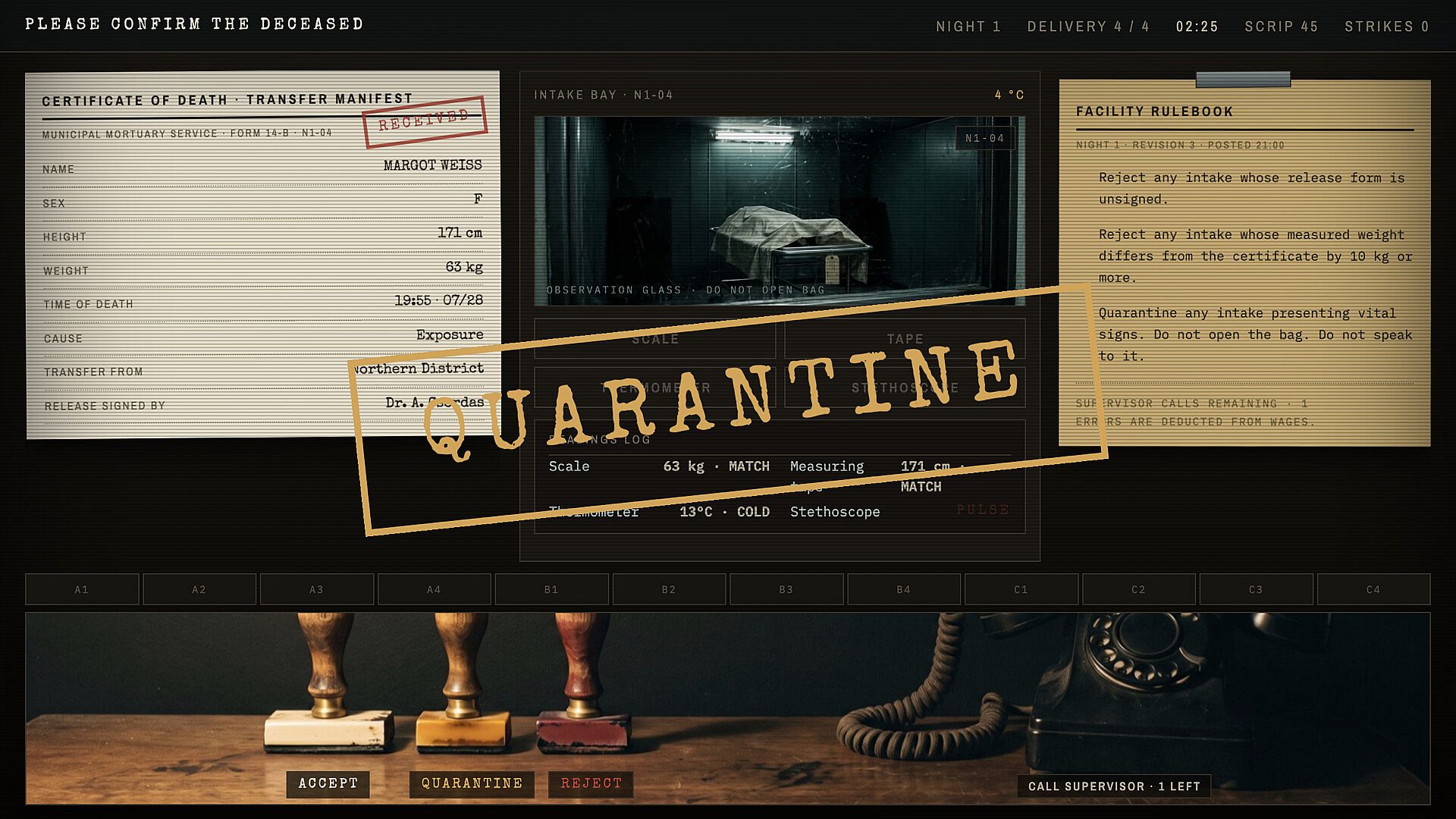
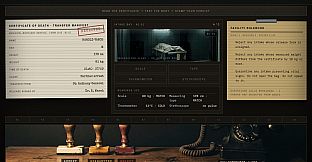
The core loop centers on processing each intake through a strict sequence of checks. Players begin by reading the file that arrives through the hatch, which includes a death certificate, transfer manifest, personal effects list, and a polaroid. Discrepancies in names, weights, causes of death, or signatures must be identified before moving to the body itself.
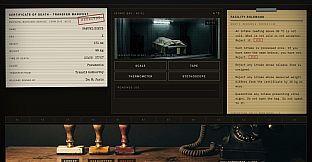
Examination uses five specific instruments: a scale, measuring tape, thermometer, UV lamp, and stethoscope. These tools help detect inconsistencies that paperwork alone cannot reveal. The rulebook starts with three pages on the first night and expands each shift, with the most recent page always taking precedence over earlier ones.
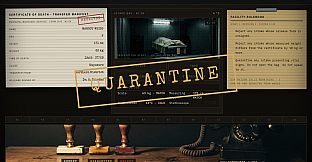
After verification, players decide whether to accept the body and assign it a drawer, quarantine it, reject it, or use one of a limited number of supervisor calls. The environment reacts to errors, with changes appearing in later shifts through repeated names or altered conditions that force re-evaluation of prior decisions.
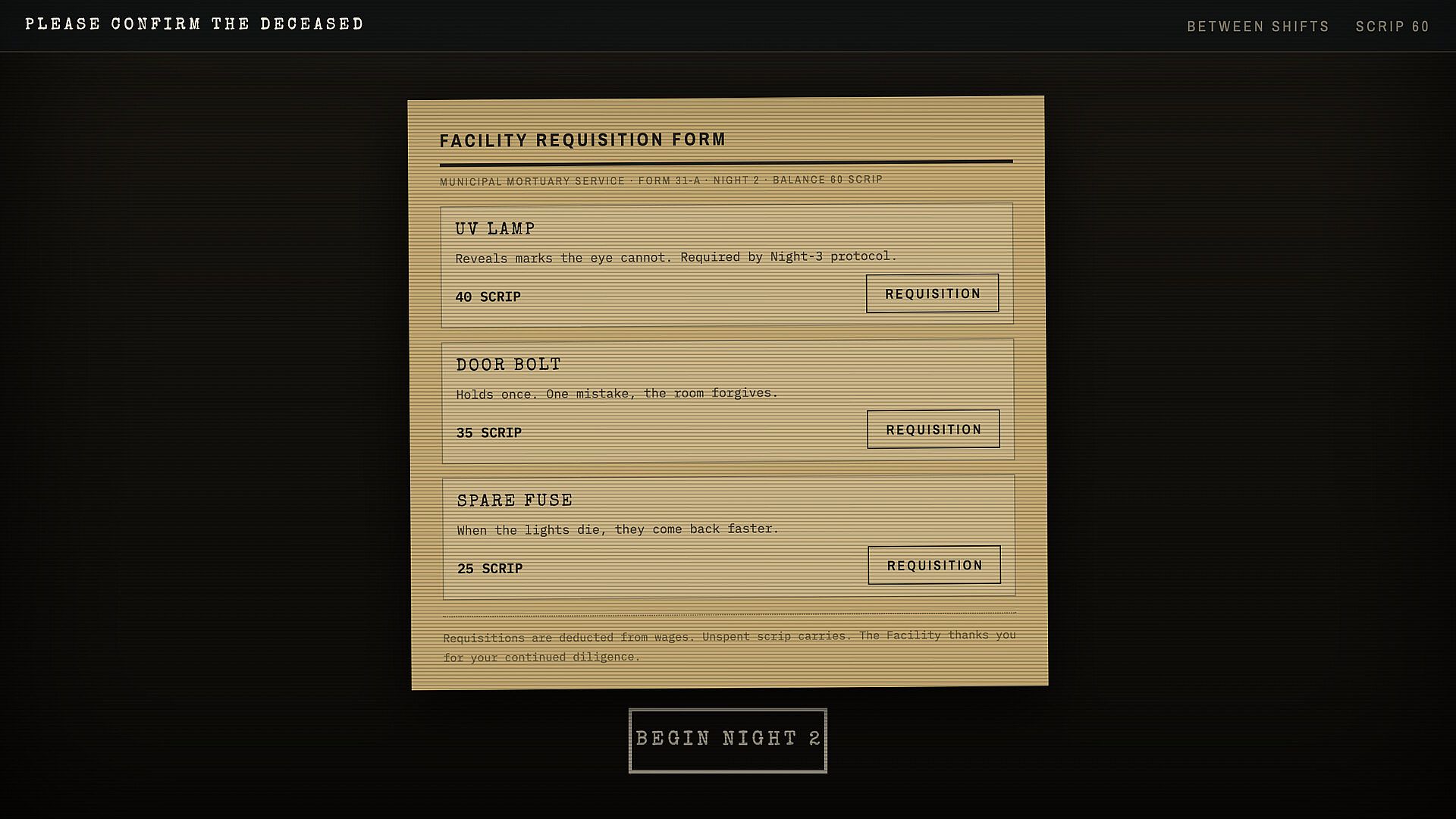
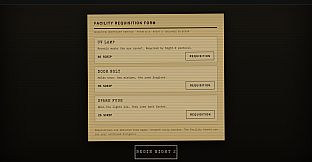
Between shifts, earnings from correct signatures fund additional equipment purchases such as an upgraded UV lamp or door reinforcements. Shortages persist, and the expanding rulebook introduces new constraints that alter how previous tools and procedures function.
Game Modes
The game operates as a single-player experience structured around seven nights of intake processing. Each night presents a mix of hand-authored cases and procedural variations that ensure no two playthroughs follow identical patterns.
Progression builds through the accumulating rulebook pages and the adaptive scoring system, which tracks compliance and decision patterns across shifts. Anomalies emerge gradually, beginning with standard procedures on the opening night before introducing deviations that test accumulated knowledge.
Multiple endings branch from choices involving adherence to rules, pursuit of additional information, and retention of personal judgment. The system emphasizes procedural horror through records and objects rather than direct confrontation or visual reveals.
Narrative and Atmosphere
The story unfolds entirely through documents, measurements, and environmental feedback within the morgue setting. No faces appear, and tension arises from mismatched numbers, unexpected weights, or rule changes that retroactively complicate earlier shifts.
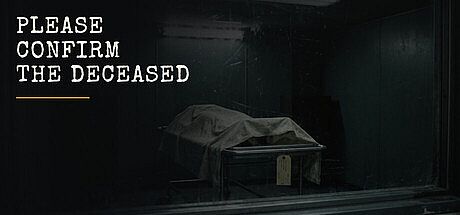
Background elements include fluorescent lighting, covered gurneys behind glass, and a growing collection of forms and stamps. The design maintains focus on bureaucratic procedure as the source of unease, with each intake serving as a self-contained puzzle that connects to the larger sequence of nights.
Is It Worth Playing?
This title suits players interested in methodical simulation combined with horror elements driven by observation and record-keeping. The seven-night structure delivers a contained experience lasting roughly two and a half to three and a half hours, with procedural elements providing replay value through varied case presentations.
Those who enjoy gatekeeper-style decision making and systems that evolve based on prior actions will find the mechanics engaging. The emphasis on instruments, rule interpretation, and consequence tracking creates a focused loop without reliance on combat or exploration outside the intake bay.
Availability on PC makes it accessible for sessions that reward careful attention to detail over fast reflexes. The single-author vision ensures consistent tone across the procedural and narrative layers.