

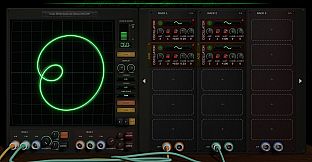
Oscilloscopia is an indie simulation puzzle game for PC in which players construct electronic signals to draw specific images on a simulated oscilloscope screen. The core challenge involves matching a target shape by generating and combining waveforms through a hands-on signal processing system.
Gameplay
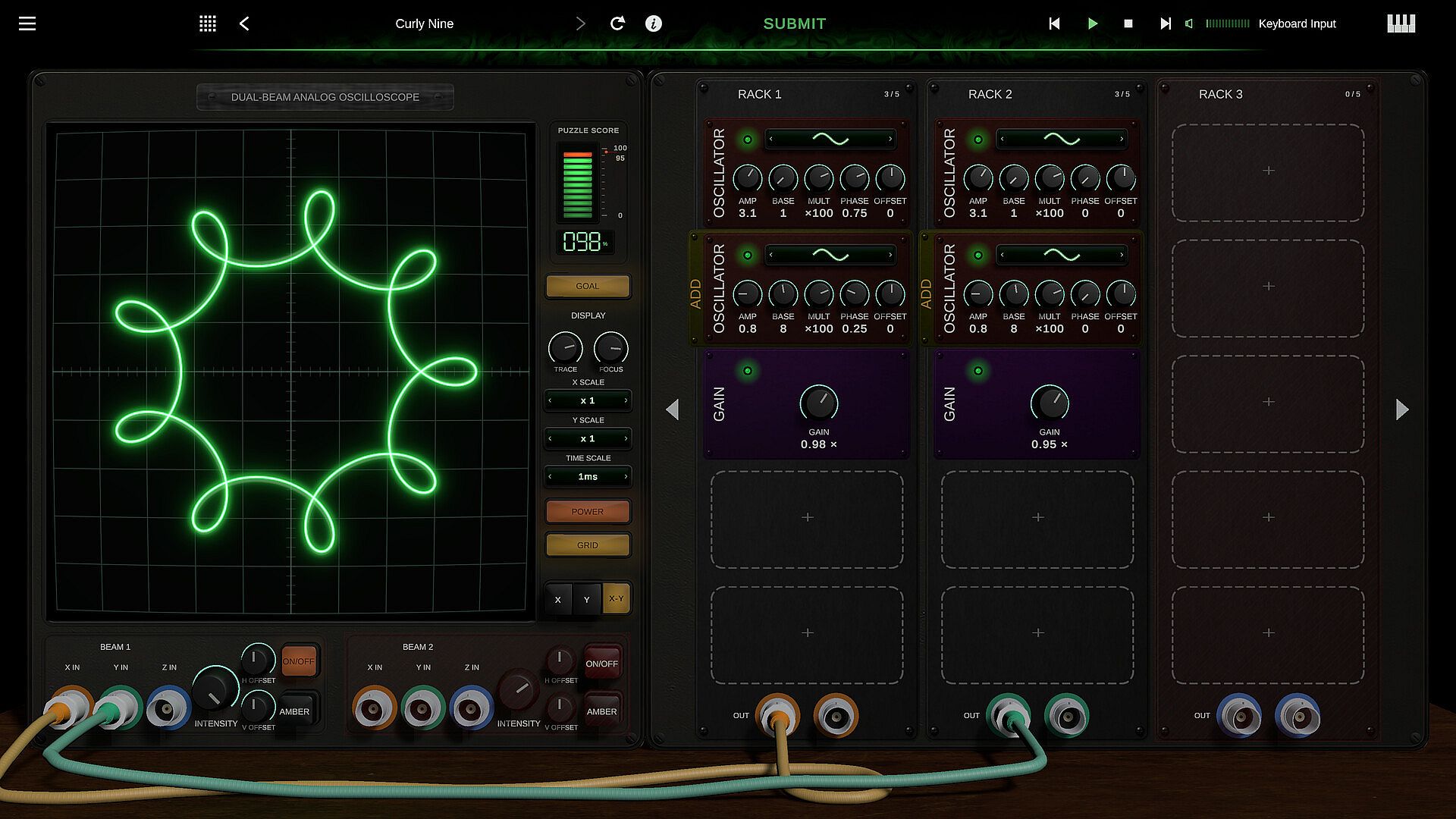
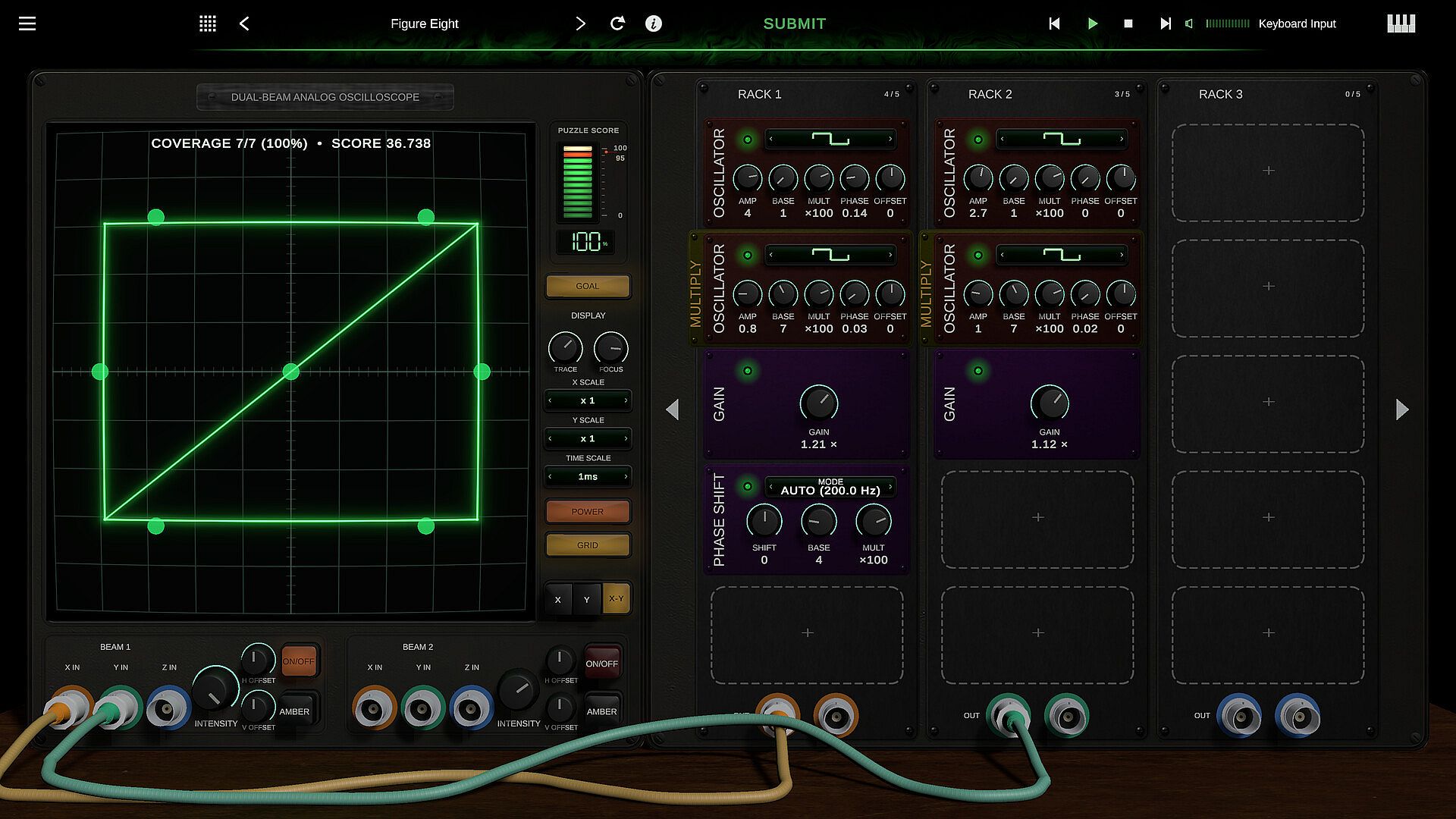
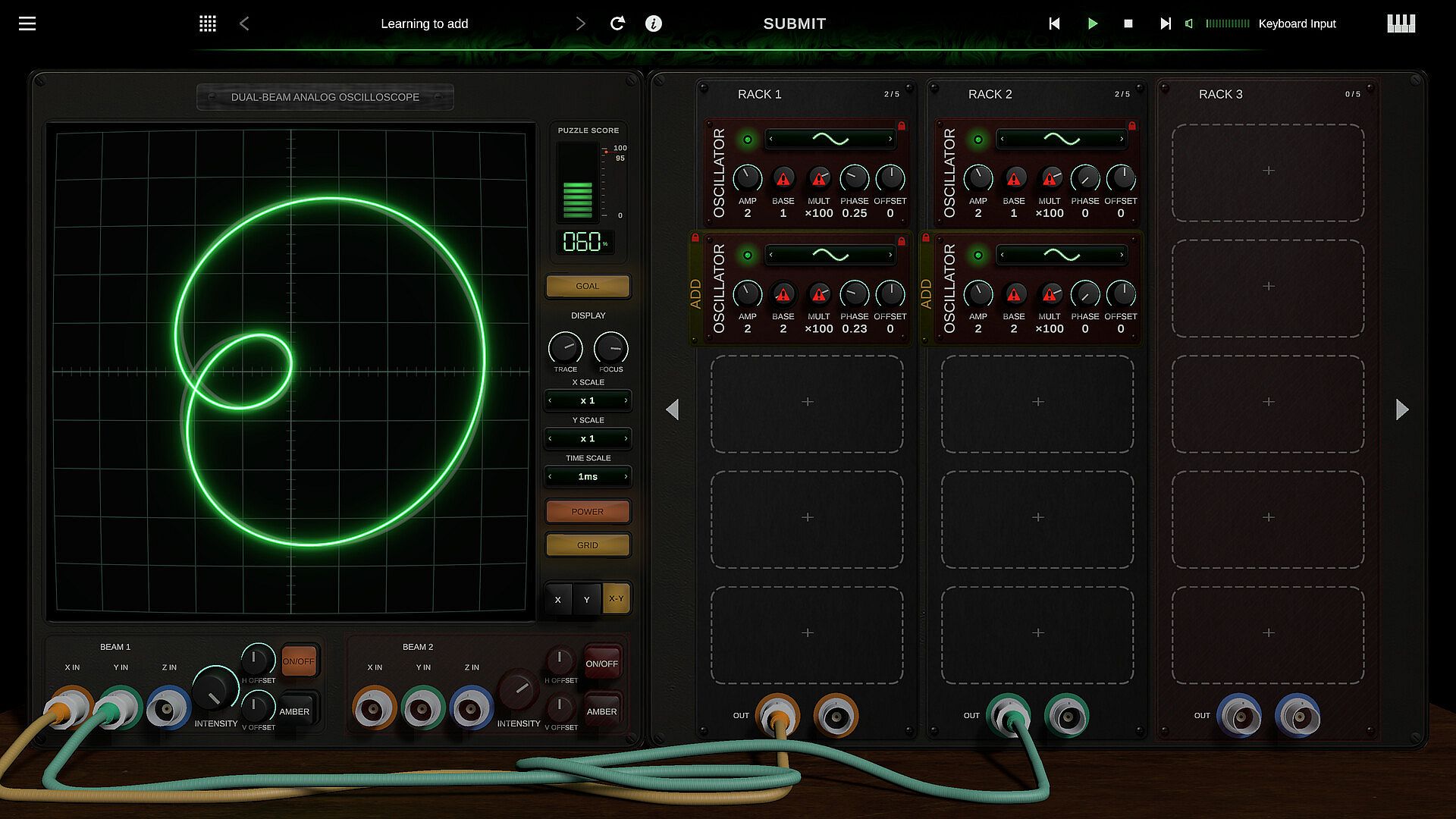
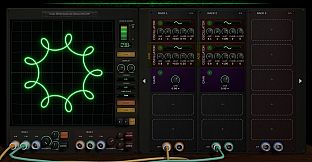
The experience centers on an authentically simulated dual-beam analog oscilloscope. Players adjust oscillators and additional modules mounted in a rack, tune their parameters, and route connections with virtual cables to produce the required trace. The phosphor glow on screen reflects the actual signal constructed rather than a pre-rendered graphic.
Each puzzle presents a target image, and the player experiments with frequency, amplitude, phase, and modulation to replicate it. Multiple valid solutions exist for most challenges, encouraging personal approaches to signal construction. The simulation includes realistic behaviors such as signal blanking and nonlinear effects that emerge naturally from the module interactions.
Progression introduces concepts gradually through a series of puzzles. Early stages cover basic waveforms and Lissajous figures before advancing to modulation techniques, filtering, delays, and audio integration. No prior knowledge of electronics is required, as the puzzles themselves demonstrate each principle.
Game Modes
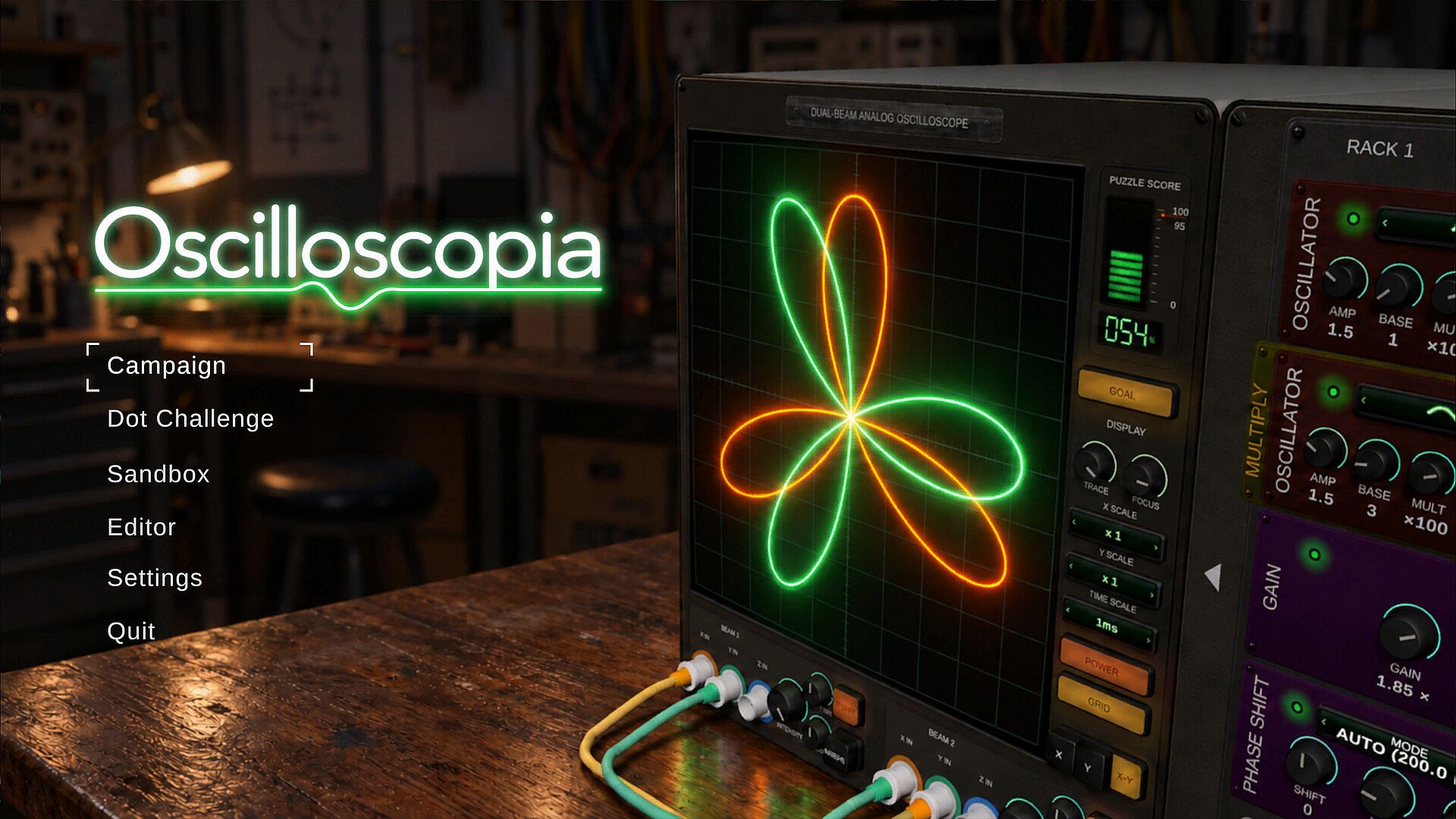
The campaign forms the main structured experience. It begins with guided tutorials and expands into more complex signal tasks, with branching choices that allow players to select the next challenge rather than following a strict sequence.
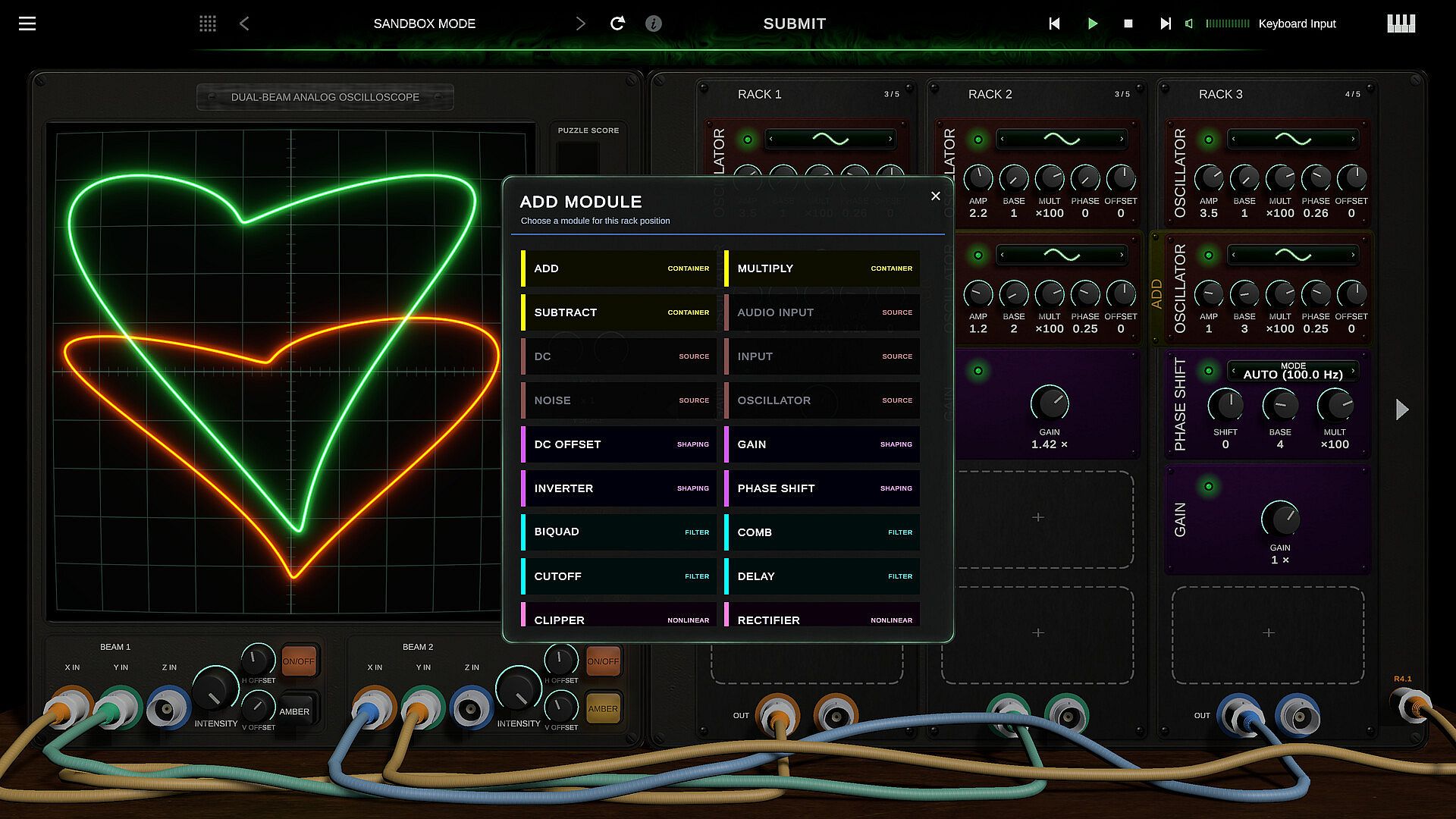
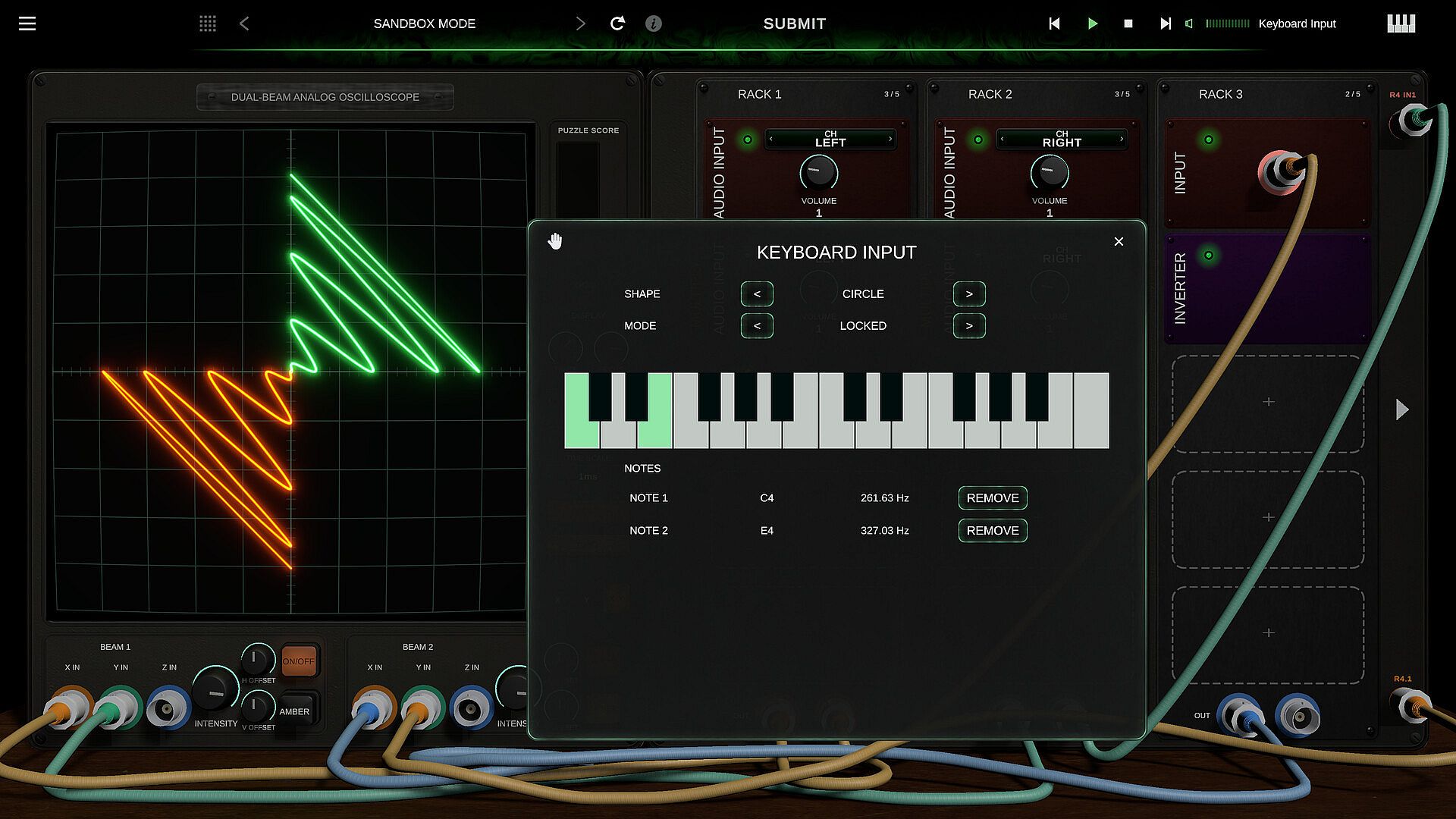
Sandbox mode provides an open environment for free experimentation. Players can connect any combination of modules, adjust settings without time limits, and explore signal behaviors at their own pace. Audio files can serve as input sources, turning the rack into a processing tool for external recordings.
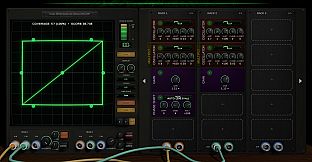
Dot challenge tasks players with connecting all visible points on the display using the shortest possible beam path. Scores improve as the campaign unlocks additional modules that expand the available techniques.
The integrated puzzle editor lets users design custom targets and module setups to share or replay. This extends the core systems beyond the built-in content.
Core Mechanics and Systems
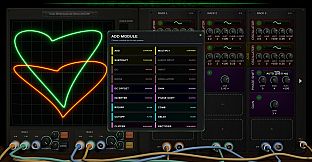
Signal construction relies on a modular rack where each added component contributes to the final waveform. Connections between modules determine how signals combine or modify one another, producing emergent results that reward careful observation of the oscilloscope trace.
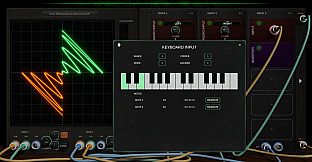
Advanced stages incorporate audio processing, allowing recorded sounds to drive or influence the visual output. This feature bridges the gap between abstract signal puzzles and practical audio manipulation within the same interface.
The simulation maintains consistent physics across all modes, so techniques learned in the campaign transfer directly to sandbox creations and custom puzzles.
Is It Worth Playing?
Oscilloscopia appeals directly to players who enjoy methodical puzzle solving and those with an interest in electronics or signal processing. The authentic simulation provides tangible feedback that rewards experimentation and incremental refinement of solutions.
Its single-player focus and emphasis on creative problem solving make it suitable for short or extended sessions. The campaign structure supports steady progression while the sandbox and editor options extend replay value for those who want to explore freely or create their own challenges.
Anyone drawn to precise, systems-driven puzzles will find consistent engagement here. The game teaches signal concepts through direct interaction rather than lectures, offering a practical way to understand waveform behavior without external study.