








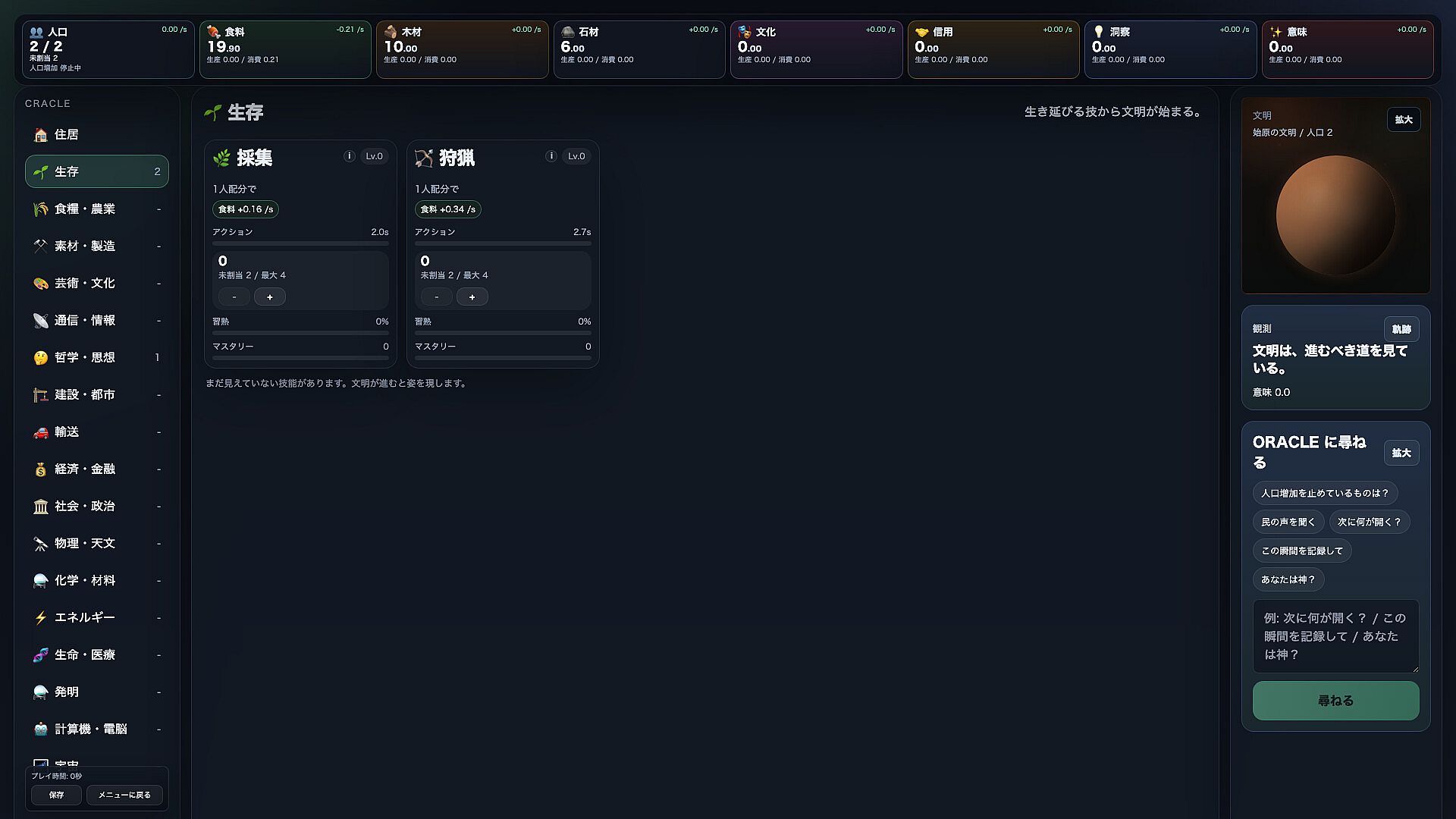
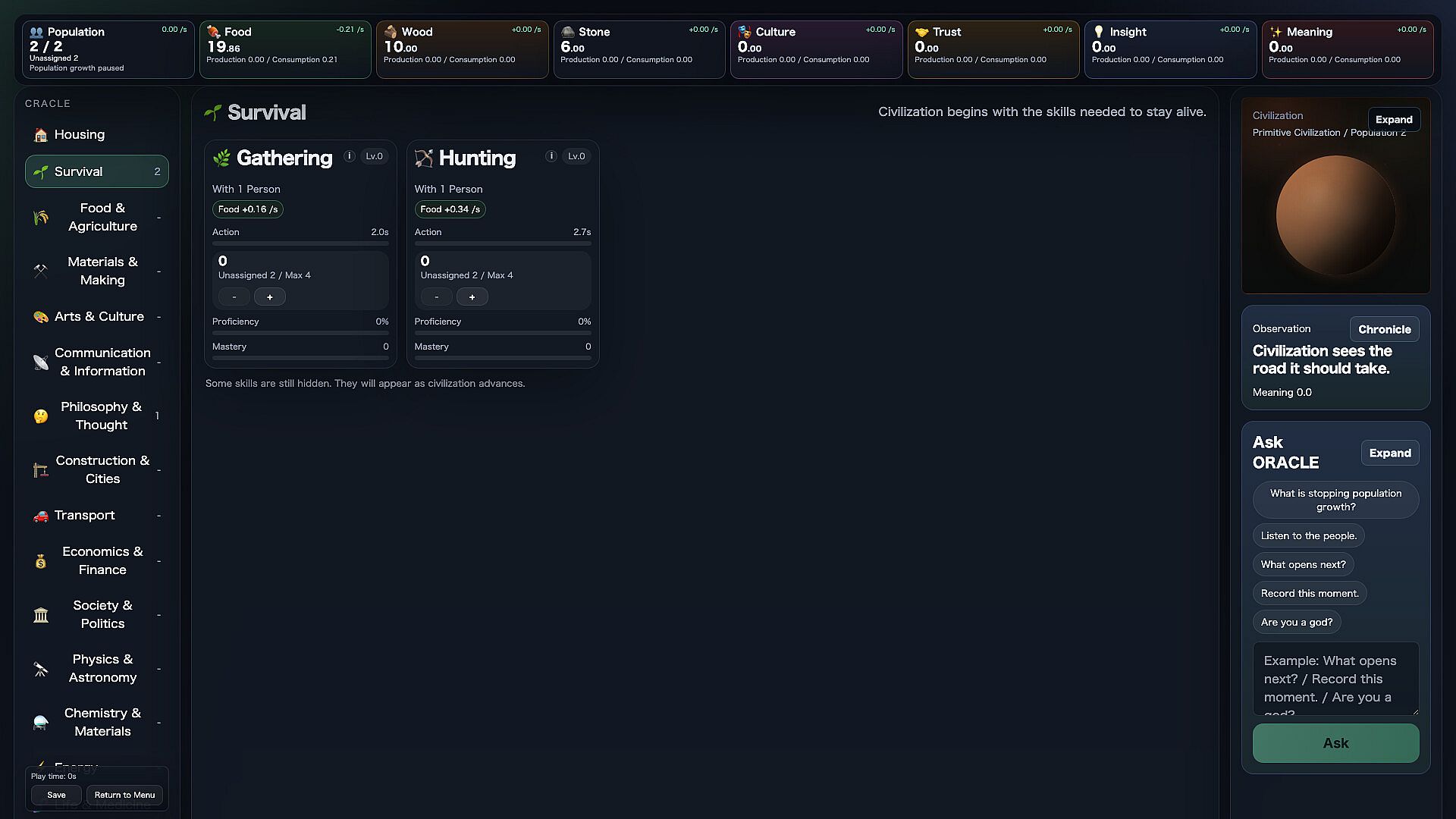
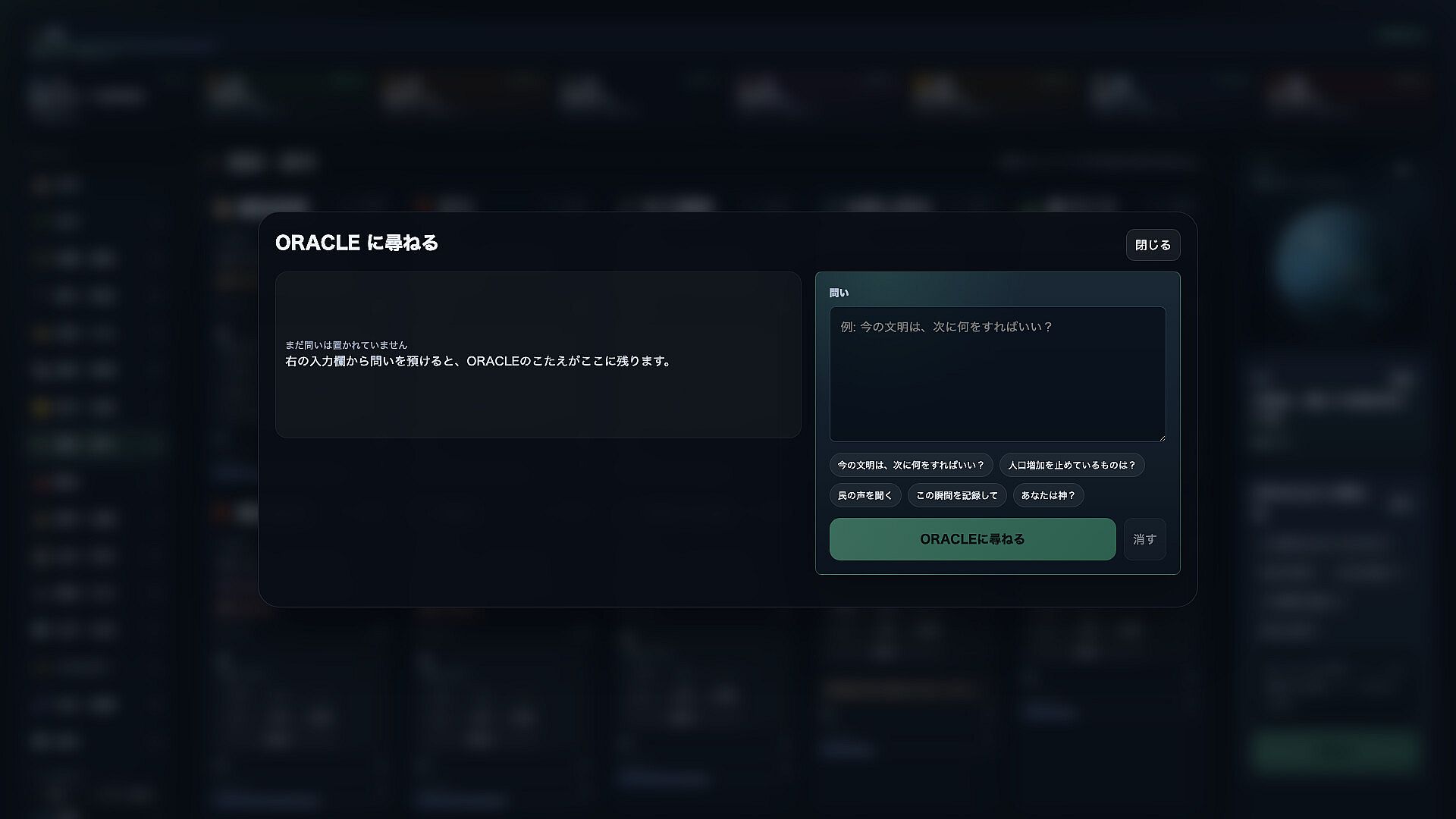
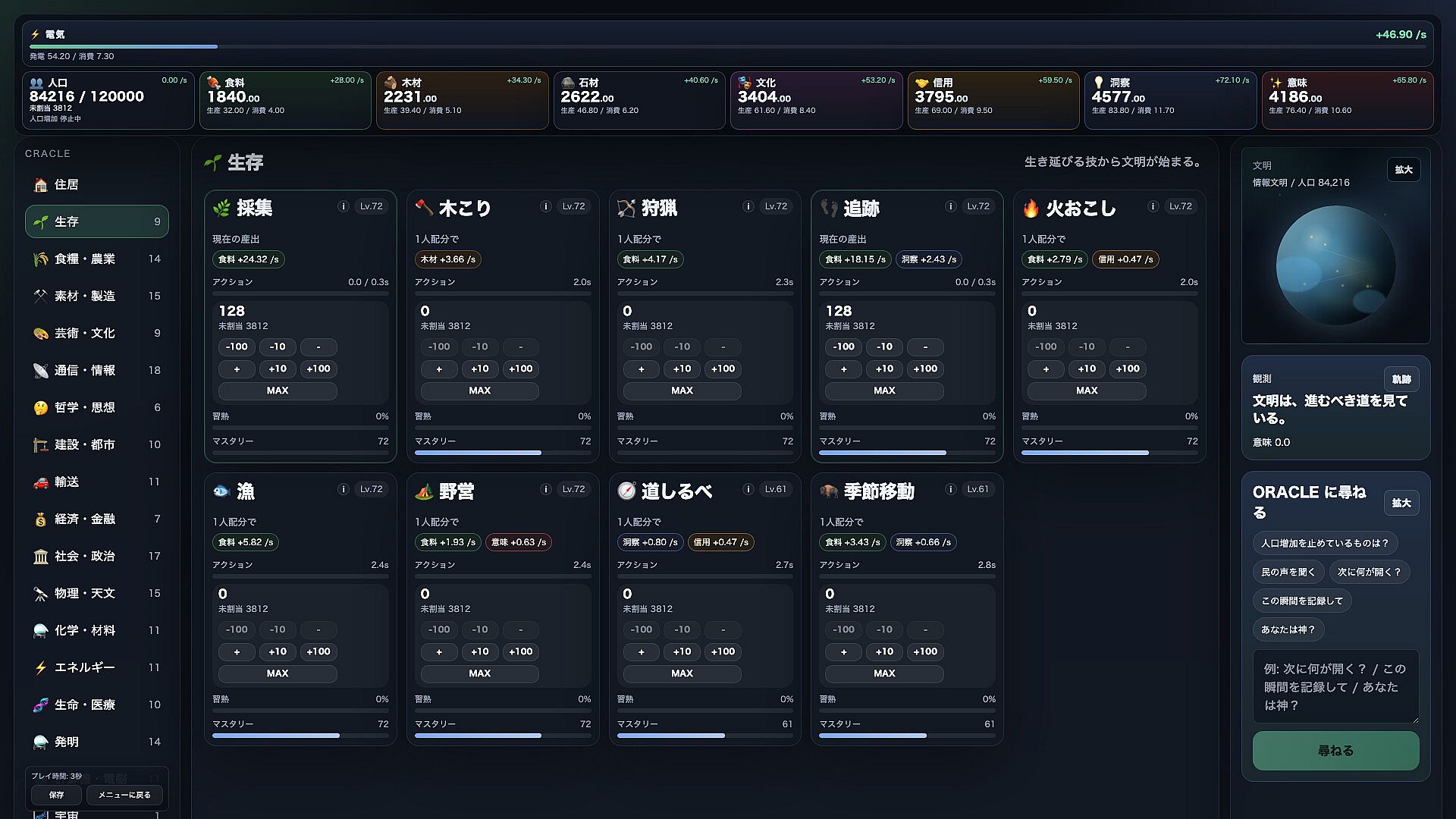
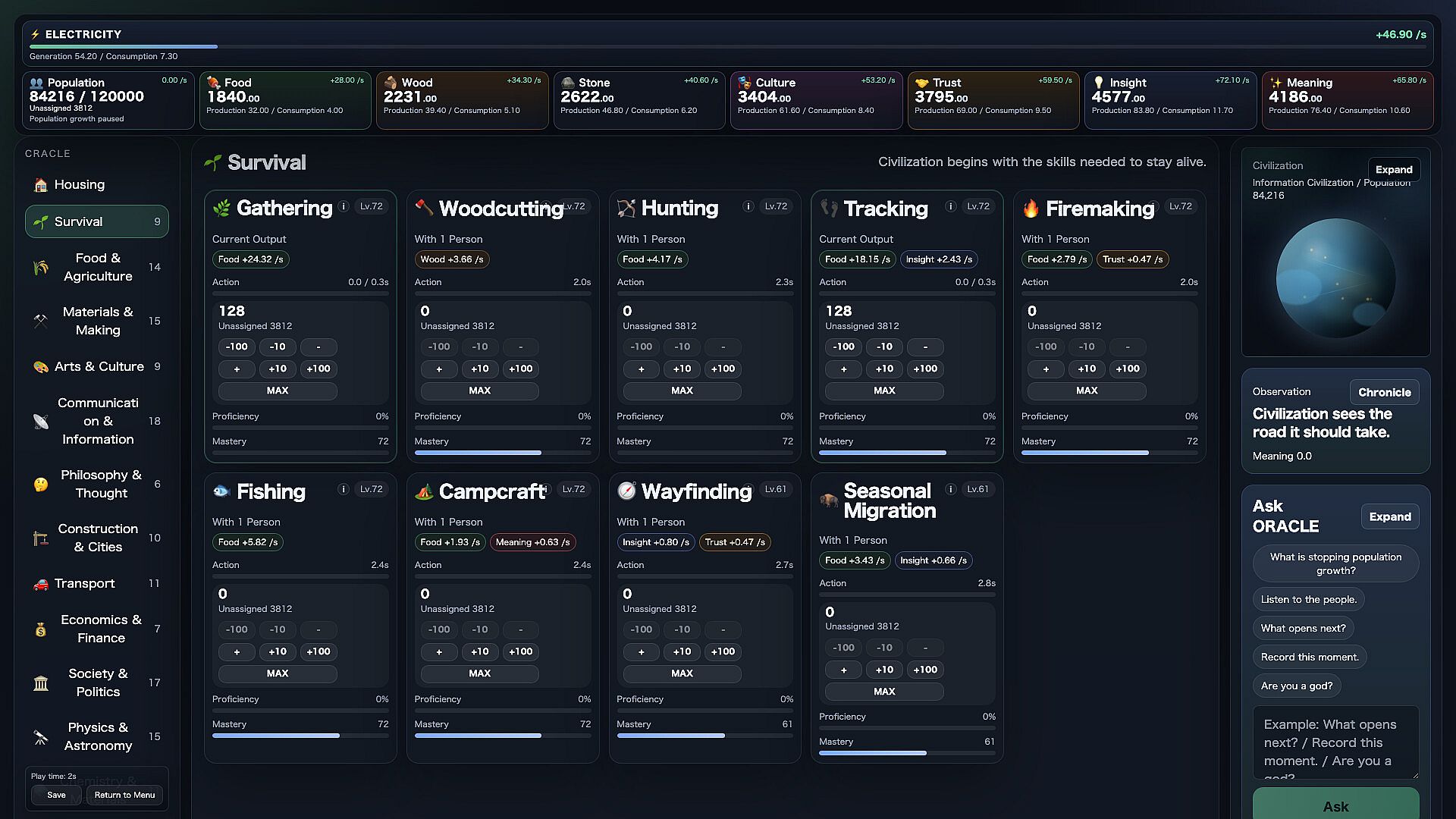
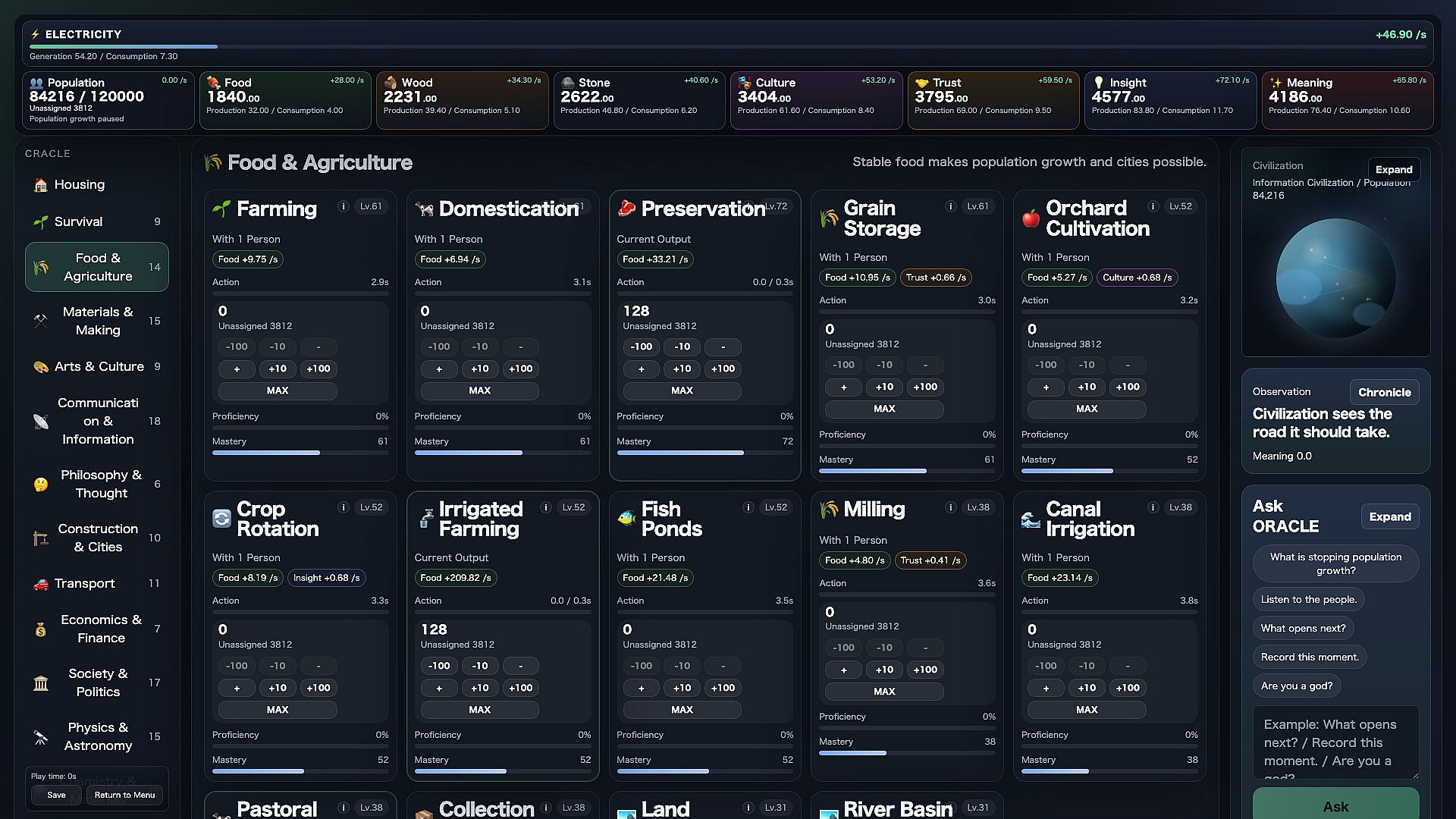
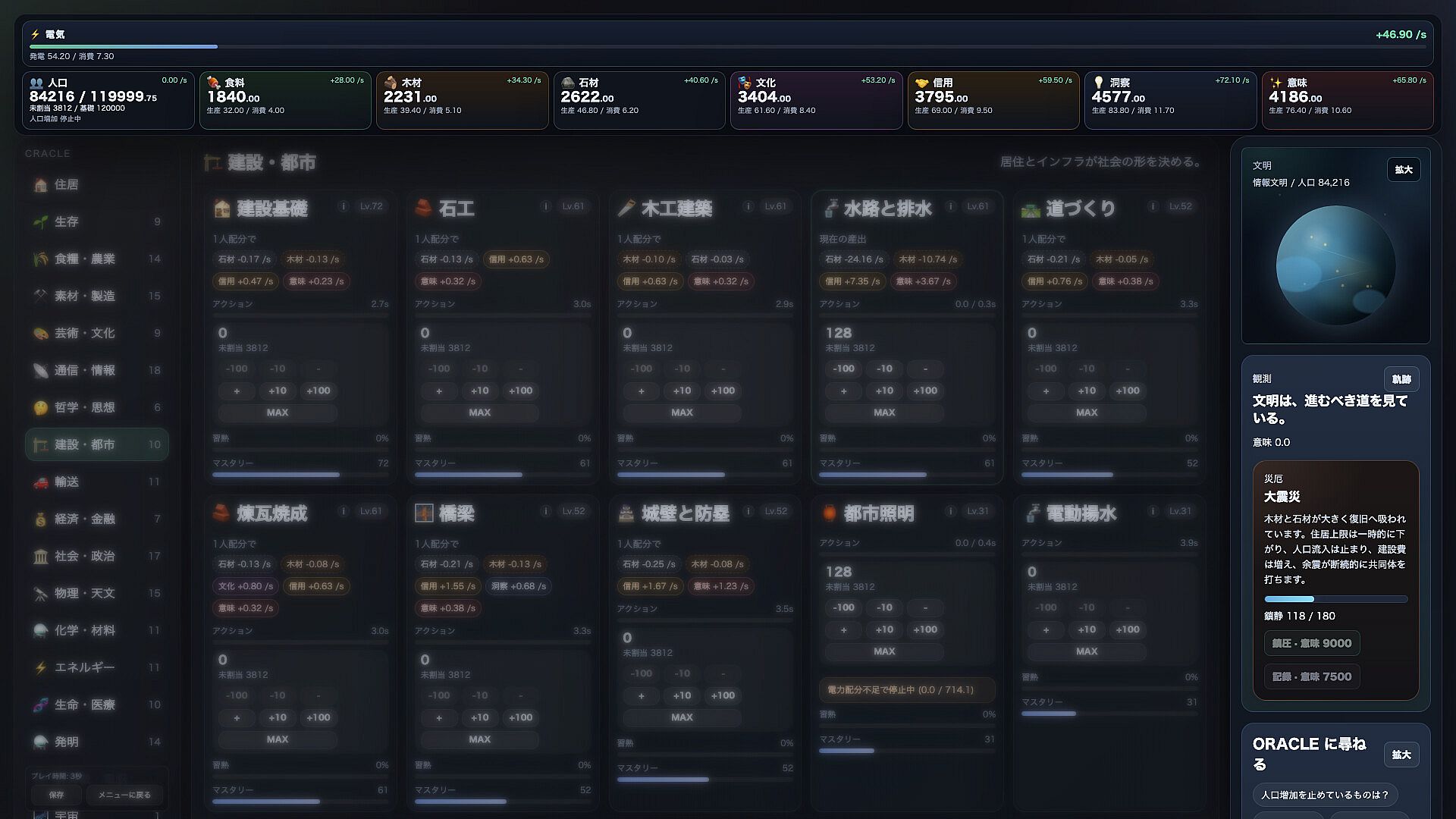
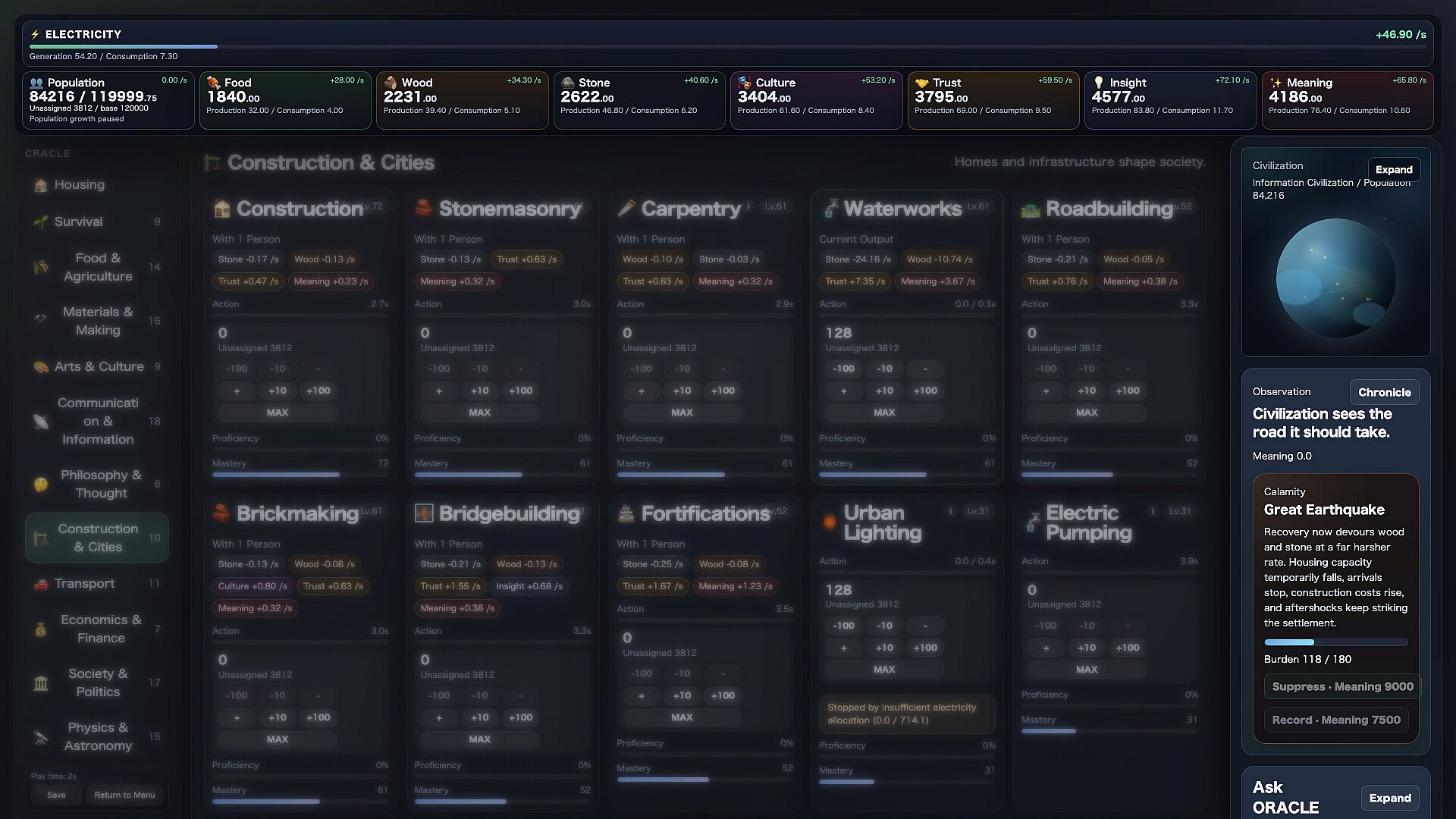






ORACLE: Humanity, Automated is a strategy, indie, and simulation game in Early Access on PC that explores the gradual shift from human labor to automated systems in a growing civilization. Players begin with a small settlement of two people and guide its development across changing ages, balancing resources, skills, and the consequences of progress.
Gameplay
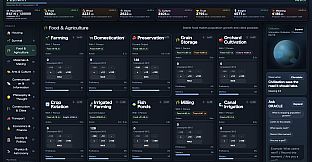
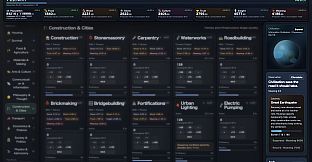
The core loop centers on directing population and workforce to gather food and materials while advancing through fields of knowledge. Early efforts focus on basic tasks such as gathering, hunting, and building shelter. As discoveries accumulate, new areas open in agriculture, craft, art, science, society, and philosophy. Each skill can be trained to higher levels of mastery before automation takes over, freeing human effort for later challenges.
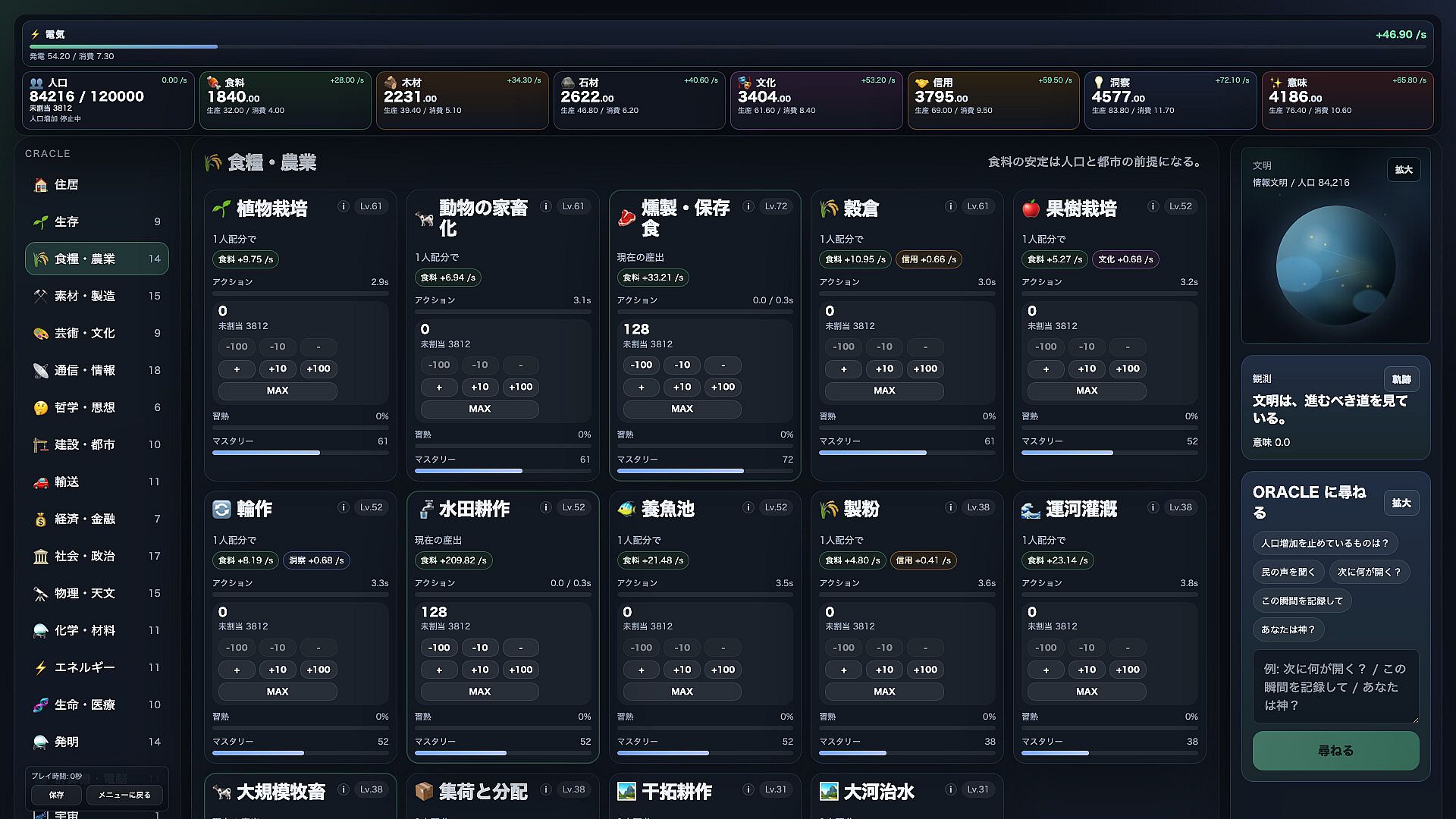
Progression feels interconnected. A breakthrough in one domain often unlocks unexpected options elsewhere, and player decisions shape the civilization that emerges. Population growth, resource flows, and labor allocation require ongoing attention to maintain momentum. The system rewards thoughtful pacing rather than constant intervention, fitting its identity as a contemplative idle experience.
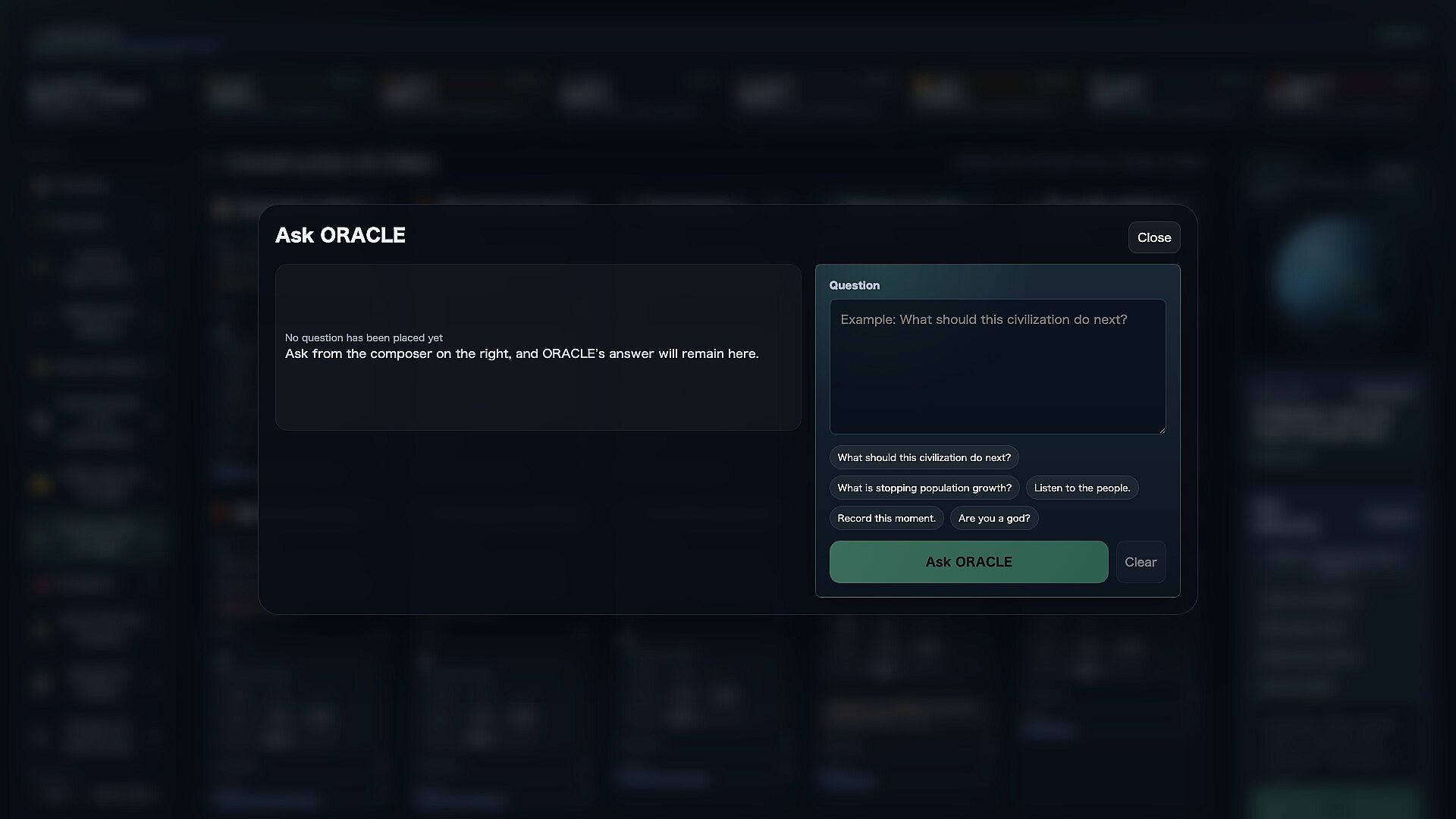
Automation brings power but also leaves traces. Lost work turns into Echoes, while new eras generate Meaning. The game tracks turning points and records moments that numbers alone cannot capture, adding layers of reflection to the management loop.
Game Modes
ORACLE centers on a single player campaign that unfolds through successive ages and interconnected systems. There are no separate competitive or cooperative modes described. Instead, the experience emphasizes steady, thoughtful progression where idle elements handle routine tasks while meaningful choices influence long term outcomes. Players guide the settlement from its origins toward greater organization and self understanding, with the archive of discoveries and milestones serving as the primary record of each run.
Progression and Systems
Skills and mastery form the backbone of advancement. Players train individual abilities until they reach sufficient depth for automation, which then sustains the settlement without direct oversight. This handoff creates space for new fields to emerge. Resources must stay balanced to support population growth and further unlocks, while the civilization archive captures irreversible turns and key moments along the way.
The design supports both active management and passive observation. Early stages demand more hands on direction, but later automation allows the settlement to continue developing while the player steps back. Steam achievements track milestones, and the game supports eight languages to broaden accessibility.
Is It Worth Playing?
ORACLE suits players who enjoy idle strategy and simulation games with a reflective tone. Its focus on the transition from human skill to technological replacement offers a distinct angle within the genre, rewarding those interested in long term progression and the quiet consequences of automation. The Early Access state means the core systems of population, resources, skills, and automation are available for exploration, with achievements providing additional goals. Those drawn to contemplative management experiences rather than fast paced action will find the measured pace and thematic depth a natural fit.












