




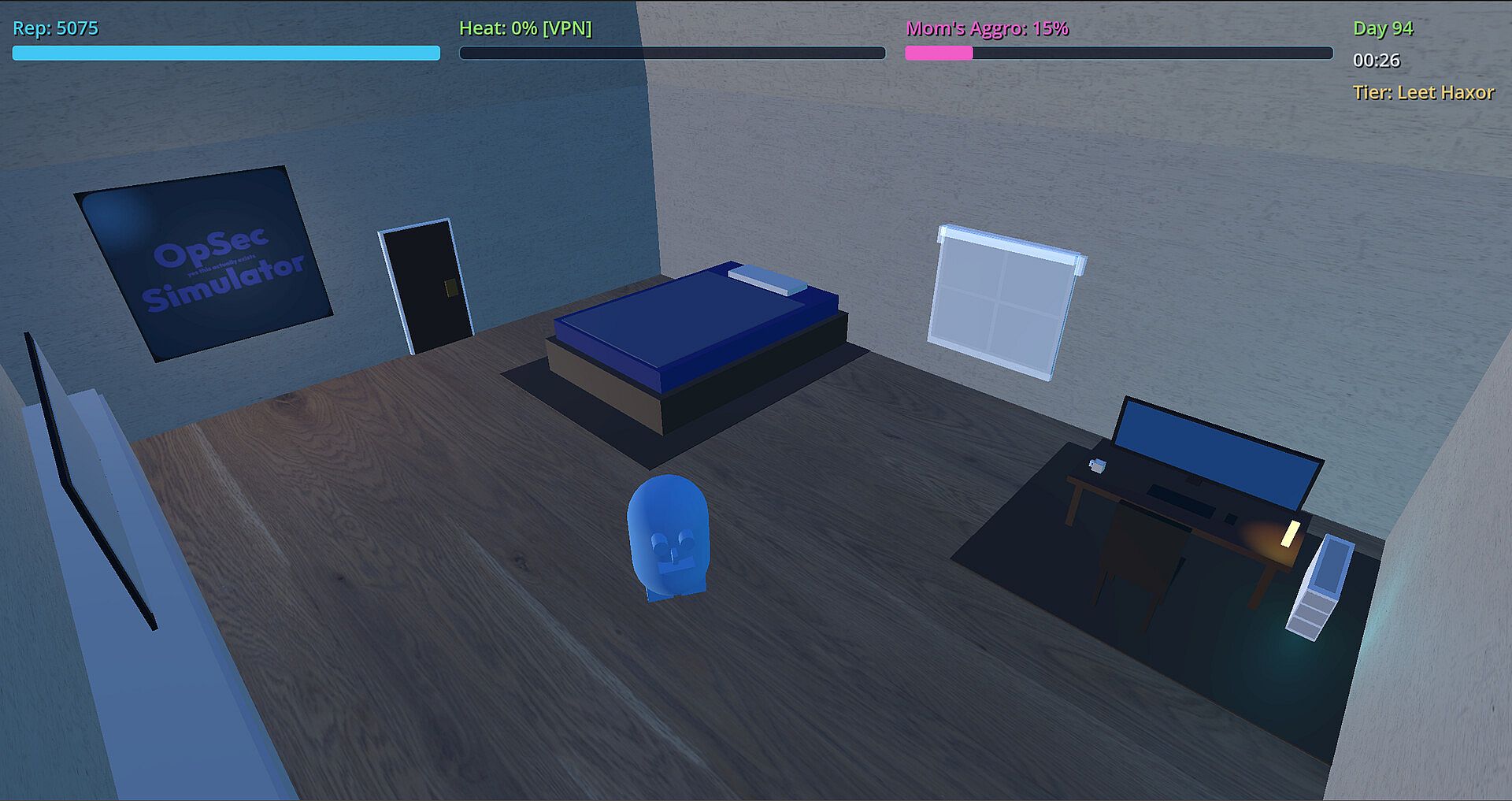
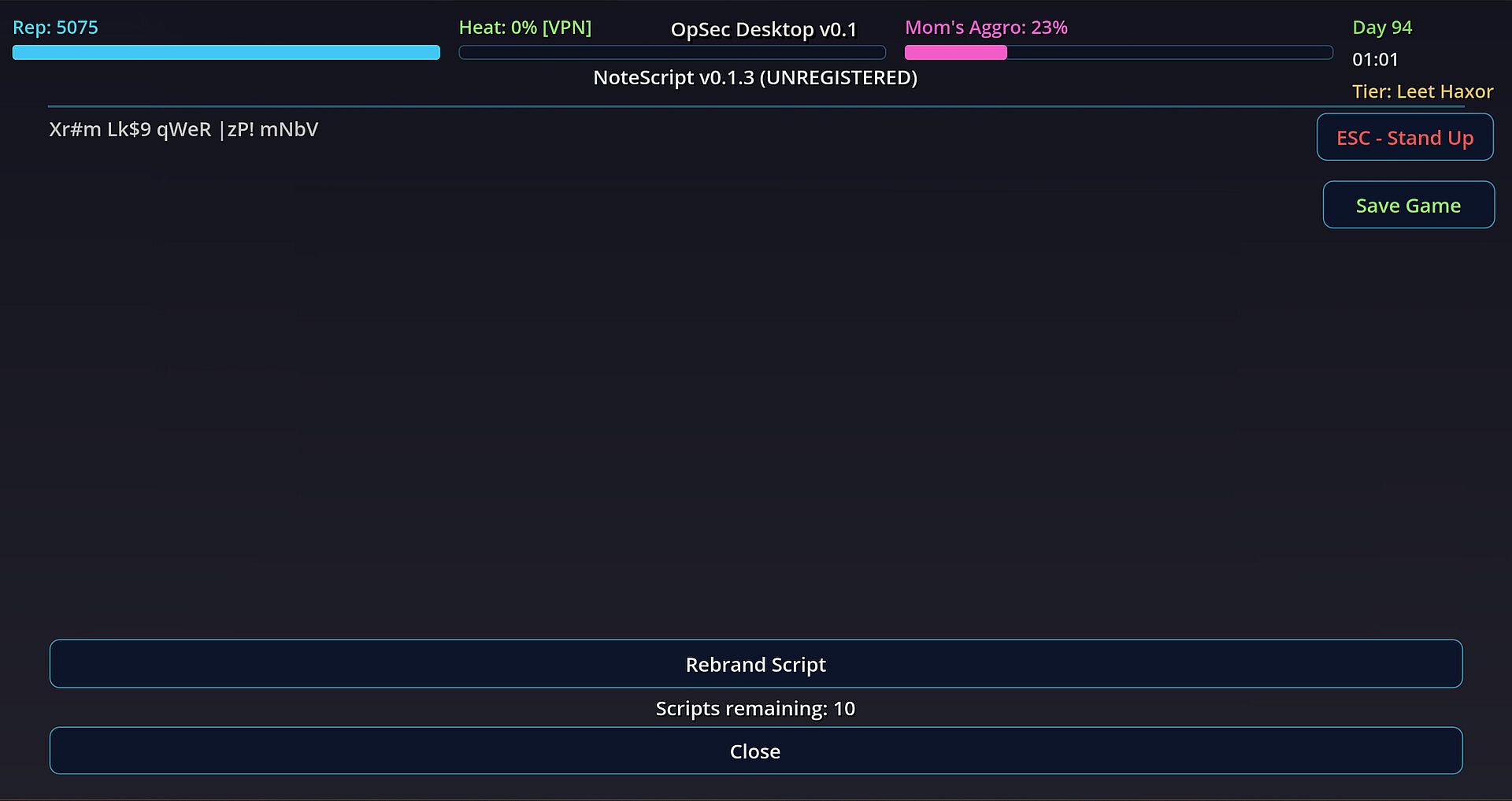
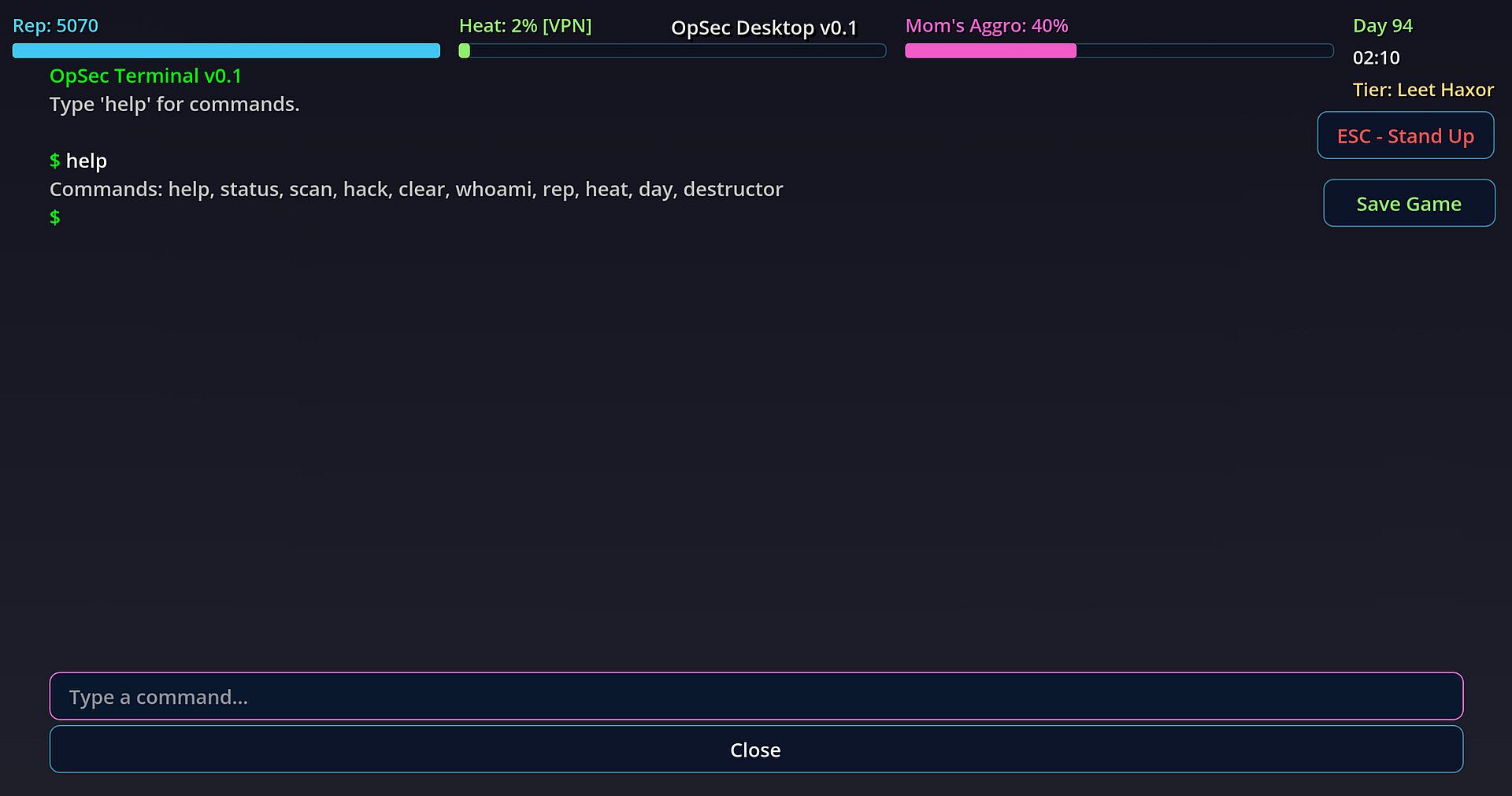
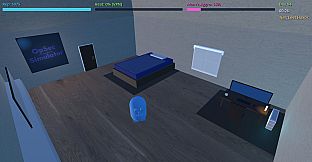
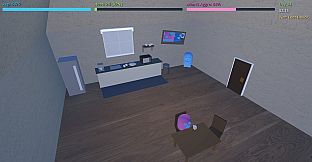
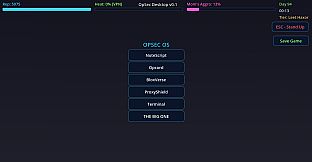
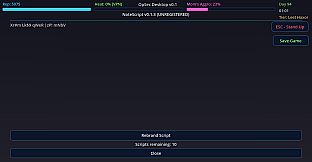
OpSec Simulator is an indie casual simulation game for PC that places players in the role of an unassuming capsule managing high-stakes digital operations from a bedroom while navigating the constraints of living under a parent's roof.
Gameplay
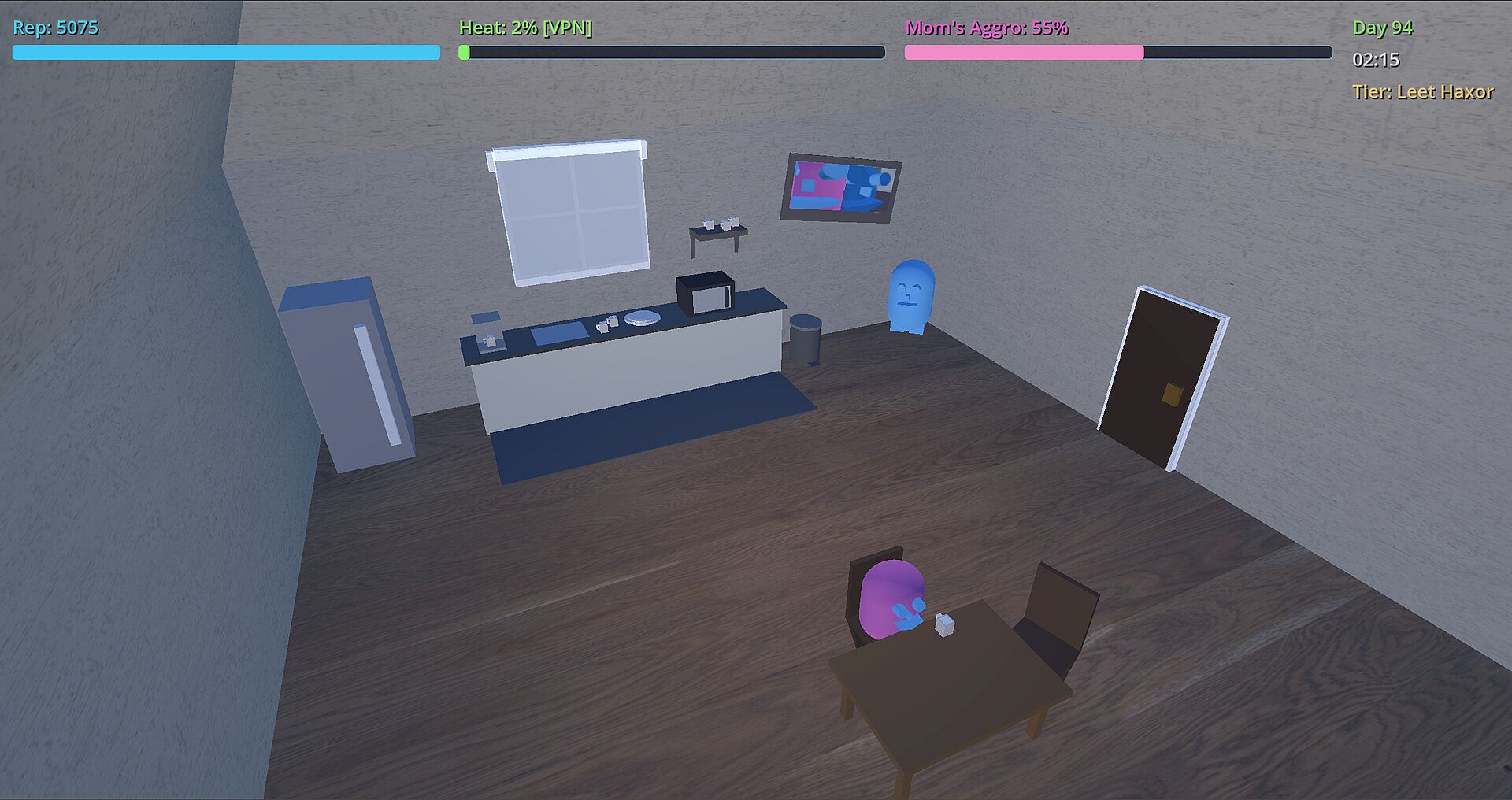
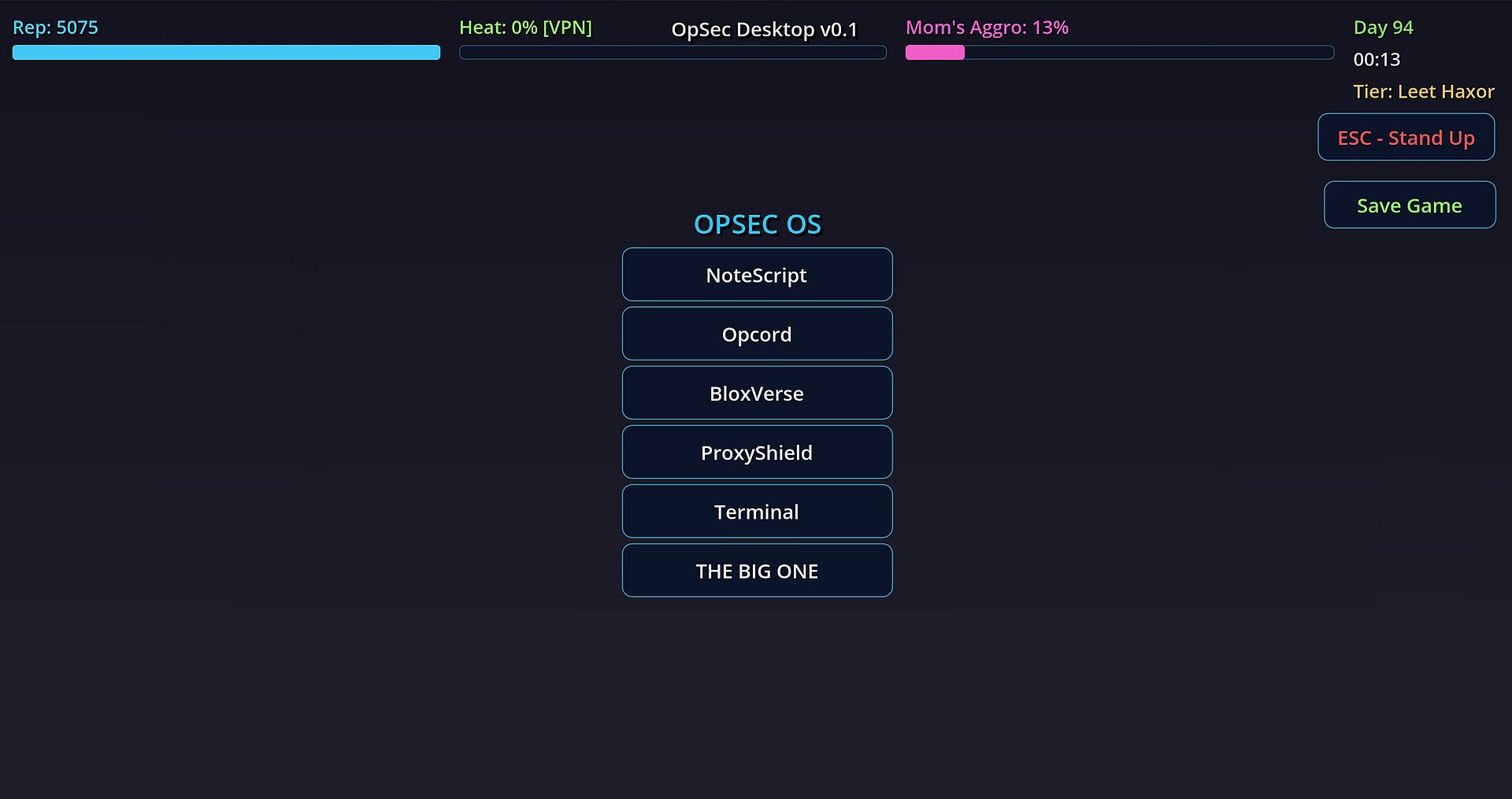
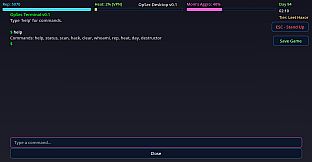
The core experience revolves around a daily loop that alternates between executing terminal-based tasks on a computer and handling interruptions from household routines. Players run operations by carving out screen time on the PC, completing commands that require focus and precision to maintain operational security. Attention must shift quickly when a call comes from the kitchen, prompting a dash to complete chores or risk raising the household alert level through inaction or suspicious behavior.
Fatigue management forms another layer, as extended sessions without rest impair reaction times and increase the chance of errors or detection. The loop emphasizes timing and prioritization across room transitions, chore timers, and screen cloaking to prevent anyone from walking in during sensitive moments. This creates a steady rhythm of micro-decisions that blend digital work with physical movement around the home environment.
Visual presentation uses a minimalist low-poly 3D style that keeps the focus on the mechanics rather than elaborate details. Tension builds through the constant need to balance competing demands without drawing attention, turning ordinary bedroom and kitchen spaces into zones of careful navigation.
Game Modes
OpSec Simulator centers on a single-player daily loop structure without separate named modes. The primary activity involves repeating the cycle of bedroom operations, kitchen responses, and rest periods, with each iteration testing the ability to sustain progress while keeping the household alert level stable. Success depends on consistent execution of terminal tasks alongside timely chore completion and adequate sleep to preserve performance.
Mechanics encourage experimentation within the fixed loop, such as adjusting the order of actions or optimizing screen time windows. The absence of additional modes keeps the emphasis on mastering the central rhythm of sneaking in digital work amid real-life interruptions.
Core Mechanics and Daily Routine
Terminal tasks form the operational backbone, requiring players to handle commands while monitoring for potential breaches in security. These activities occur in short bursts interrupted by the need to respond to calls or complete household duties. Ignoring these elements raises suspicion and escalates the overall alert state, forcing quicker adjustments in subsequent cycles.
Sleep and fatigue add a recovery dimension, where all-nighters lead to slower responses and higher error rates during tasks. Players must weigh the benefits of extra operation time against the drawbacks of reduced effectiveness the following day. The combination of these systems produces a mid-paced management loop that rewards careful planning over rapid reflexes.
Is It Worth Playing?
OpSec Simulator suits players who enjoy micro-management simulations with light stealth elements set in a familiar domestic context. The focus on balancing digital operations against household demands offers a distinctive loop that emphasizes timing and awareness rather than combat or exploration. Those drawn to casual indie titles with minimalist presentation and steady decision-making will find the routine engaging through repeated cycles.
The game delivers its experience through consistent mechanics without additional layers or expansions, making it a straightforward choice for short sessions or longer focused play. Reception centers on how well the core loop holds attention over multiple days, with the household tension providing ongoing motivation to refine strategies. It appeals most to fans of simulation games that blend everyday constraints with specialized tasks in a contained setting.











