

A shift in the control center
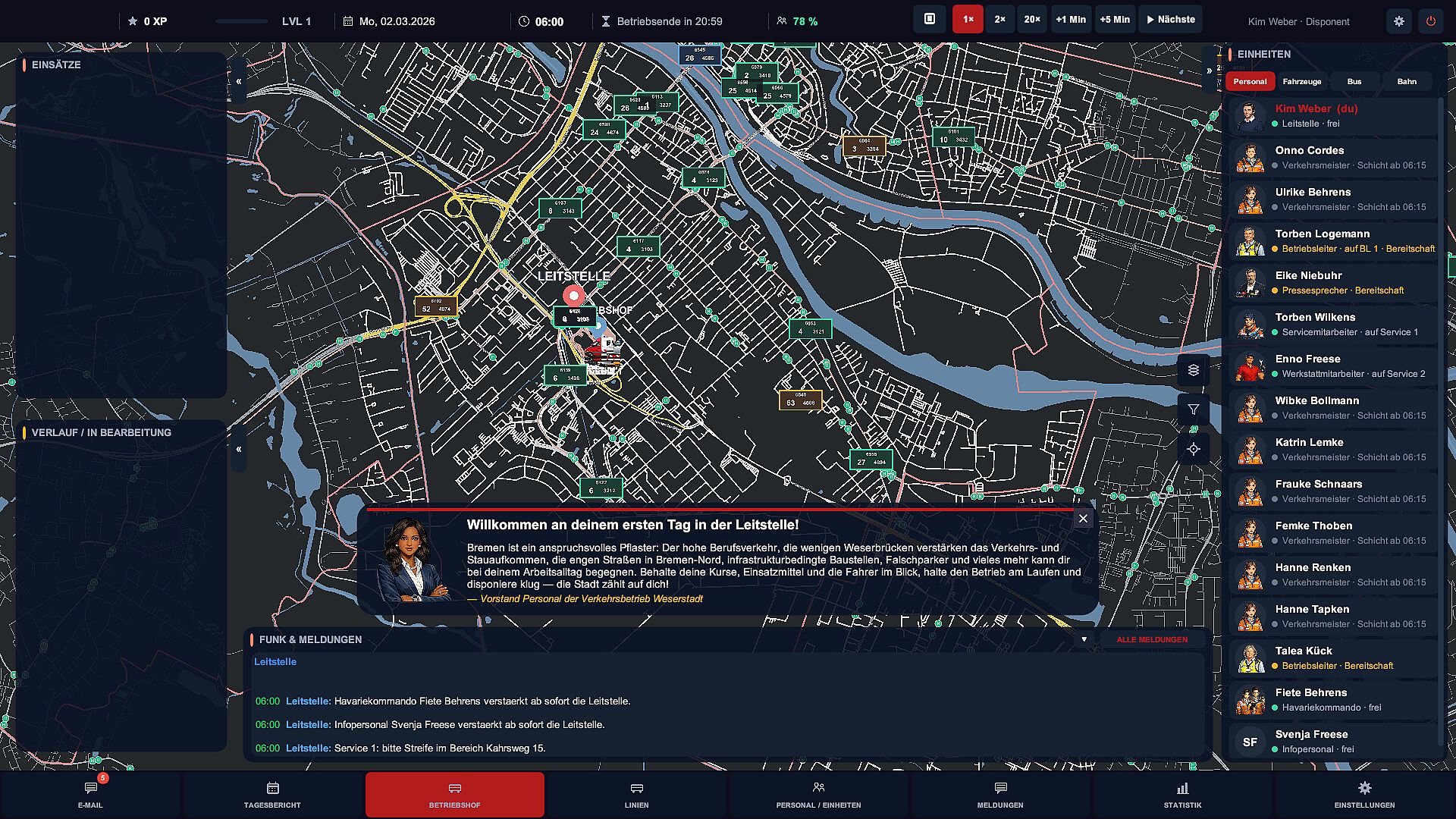
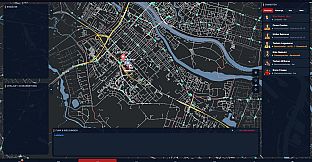
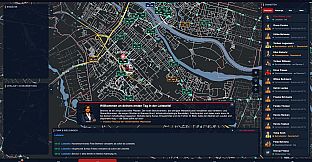
Bremen lies before you. Buses and trams run across the map on the realtimetable — every line, every stop, every duty in its place. Then the phone
rings: a driver reports a car parked on the tram tracks. Two stops further
on, the air conditioning has failed. And the vehicle on duty 6013 ends its
shift at 2:20 pm, but the relief driver is nowhere to be seen.
You decide what comes first.
What you play
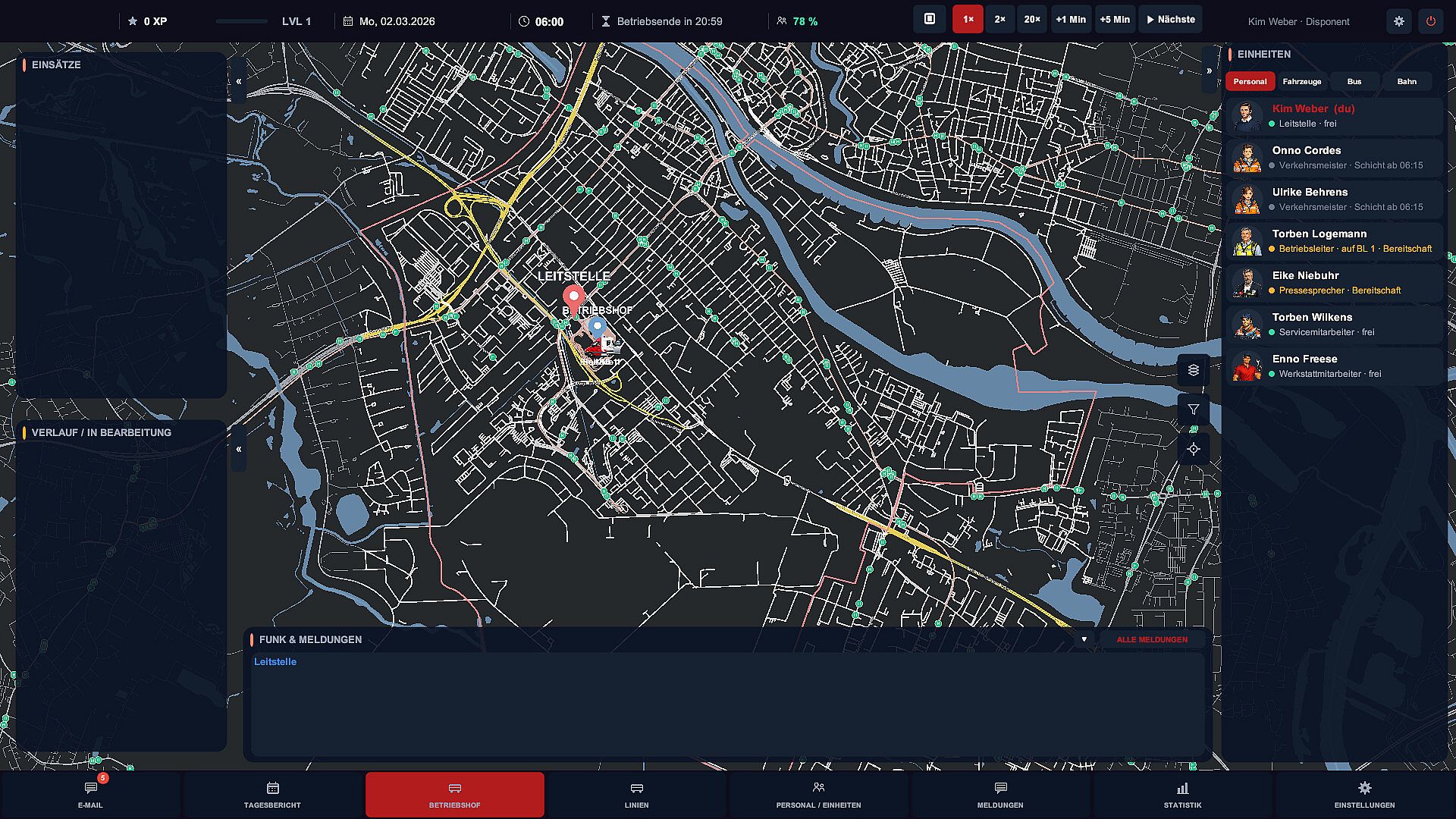
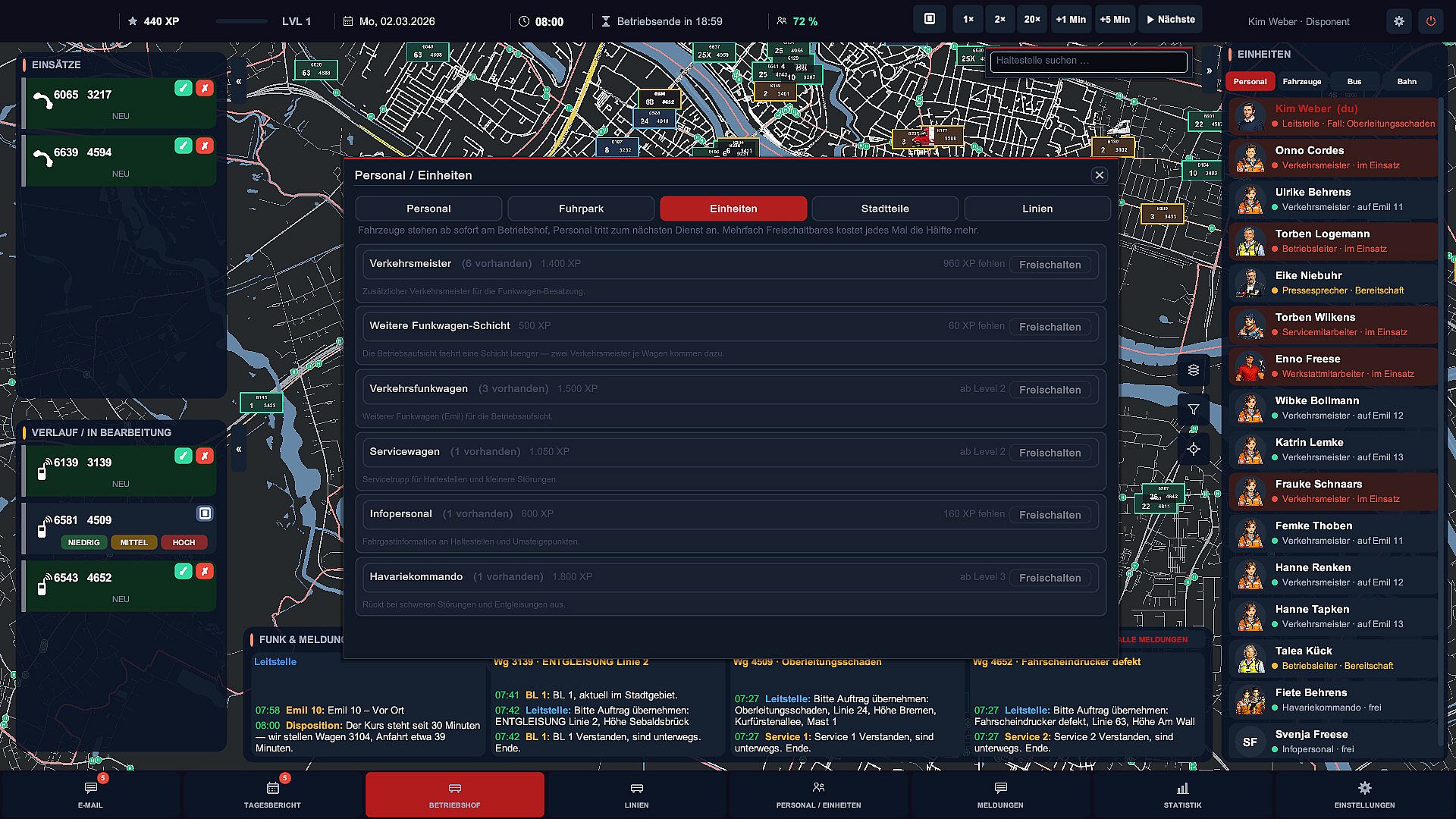
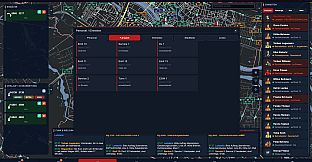
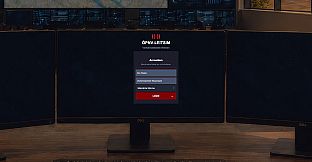
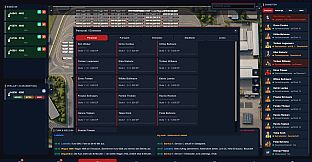
ÖPNV-LeitSim: Bremen is a control center simulation for buses and trams — nota driving game, not a city builder. You sit in the dispatch center, see the
whole network on the map and keep it running when things go wrong — on your
own or together with a friend. It plays in real time with time acceleration,
from a top-down view, with the mouse and a few keys. A shift lasts 8 or 12
hours of game time; with time acceleration that is about 30 to 90 minutes in
one sitting.
What's inside
- Bremen from real data: street network from OpenStreetMap, timetable
from the transport association's open GTFS data — 57 lines (46 bus, 11 tram,
including 9 night lines), every stop, every vehicle working, extra and special
trips included - 23 districts from Vegesack to Arsten, unlocked one by one
- 47 incident types in three levels of severity — from an empty
ticket roll via door faults, switch failures, overhead line damage and cars
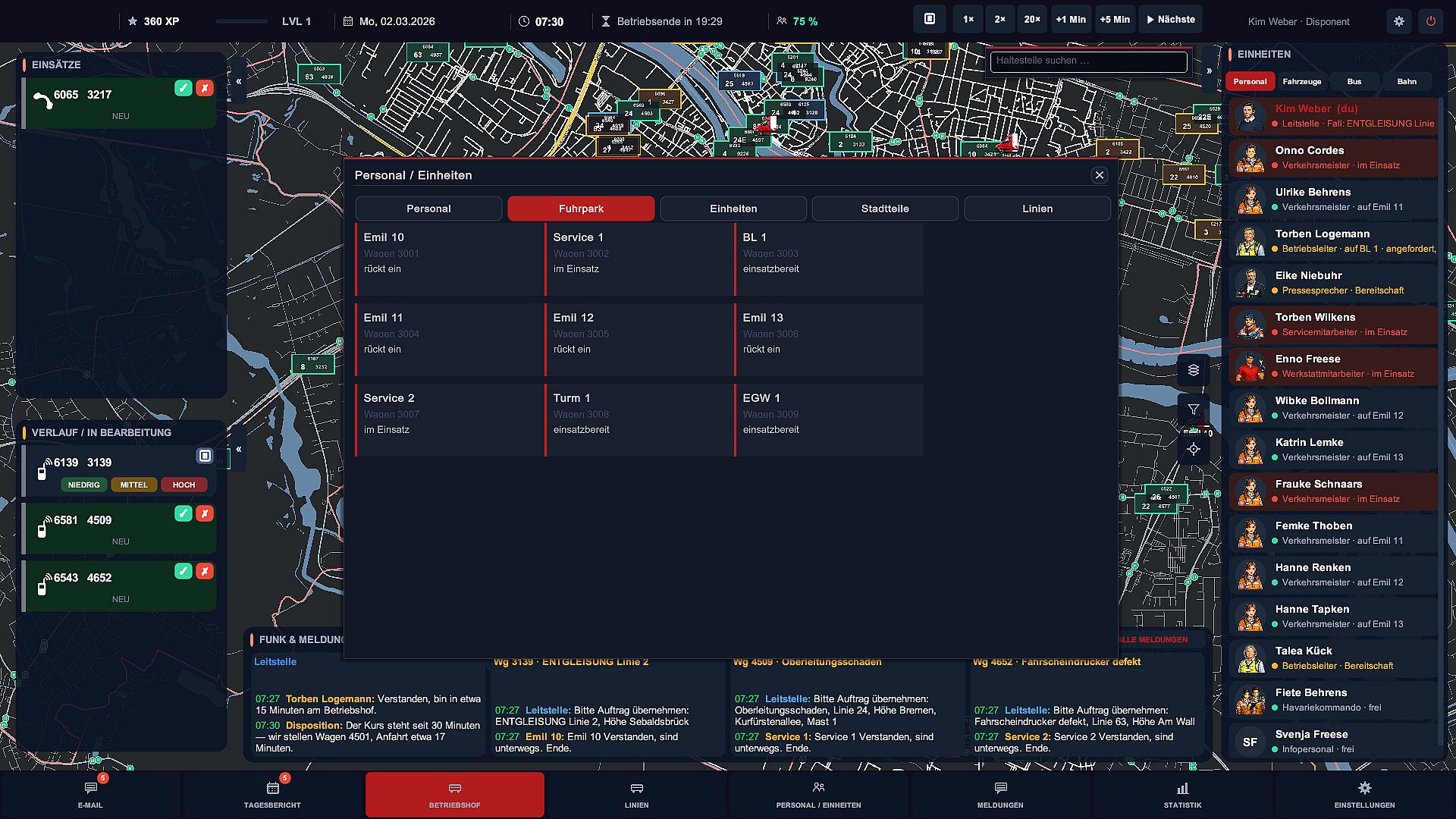
parked on the tracks up to derailments and traffic accidents with injuries - 9 types of response units: "Emil" radio cars with traffic
supervisors, service vans, tower wagons for the overhead line, equipment
trucks, rail grinder, street sweeper, tow truck, the operations manager's
car — and whatever you don't have yourself, you request: police, ambulance,
fire brigade - 9 staff roles with their own duty rosters: dispatchers, traffic
supervisors, operations manager, press officer, service technicians,
workshop, track maintenance, switch fitters, signal technicians - Shift system: either two 12-hour shifts or three 8-hour shifts — day
and night with their own traffic and their own kinds of incidents - Career with save games over as many shifts as you like, plus a free
mode without progression
How an incident unfolds
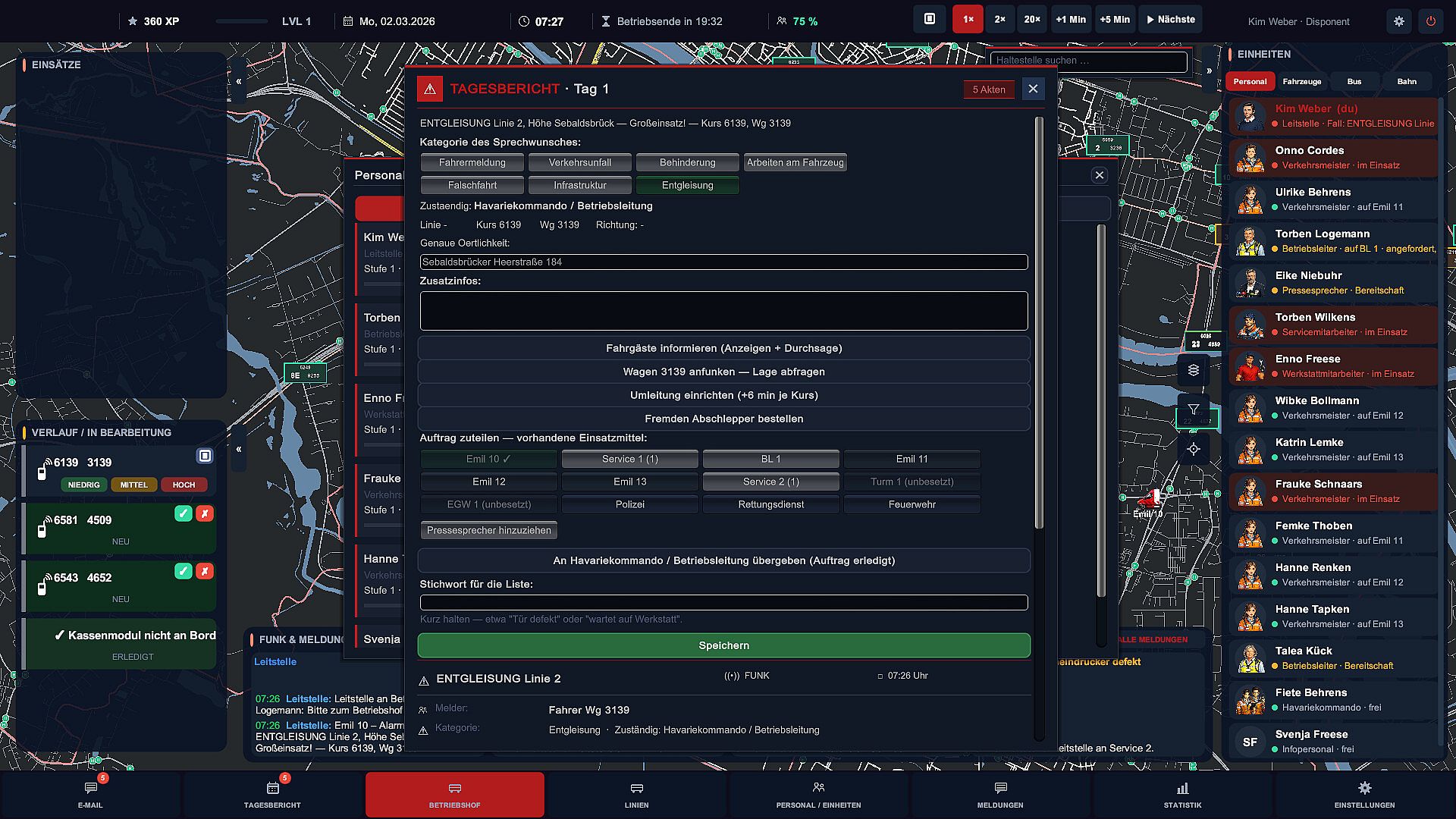
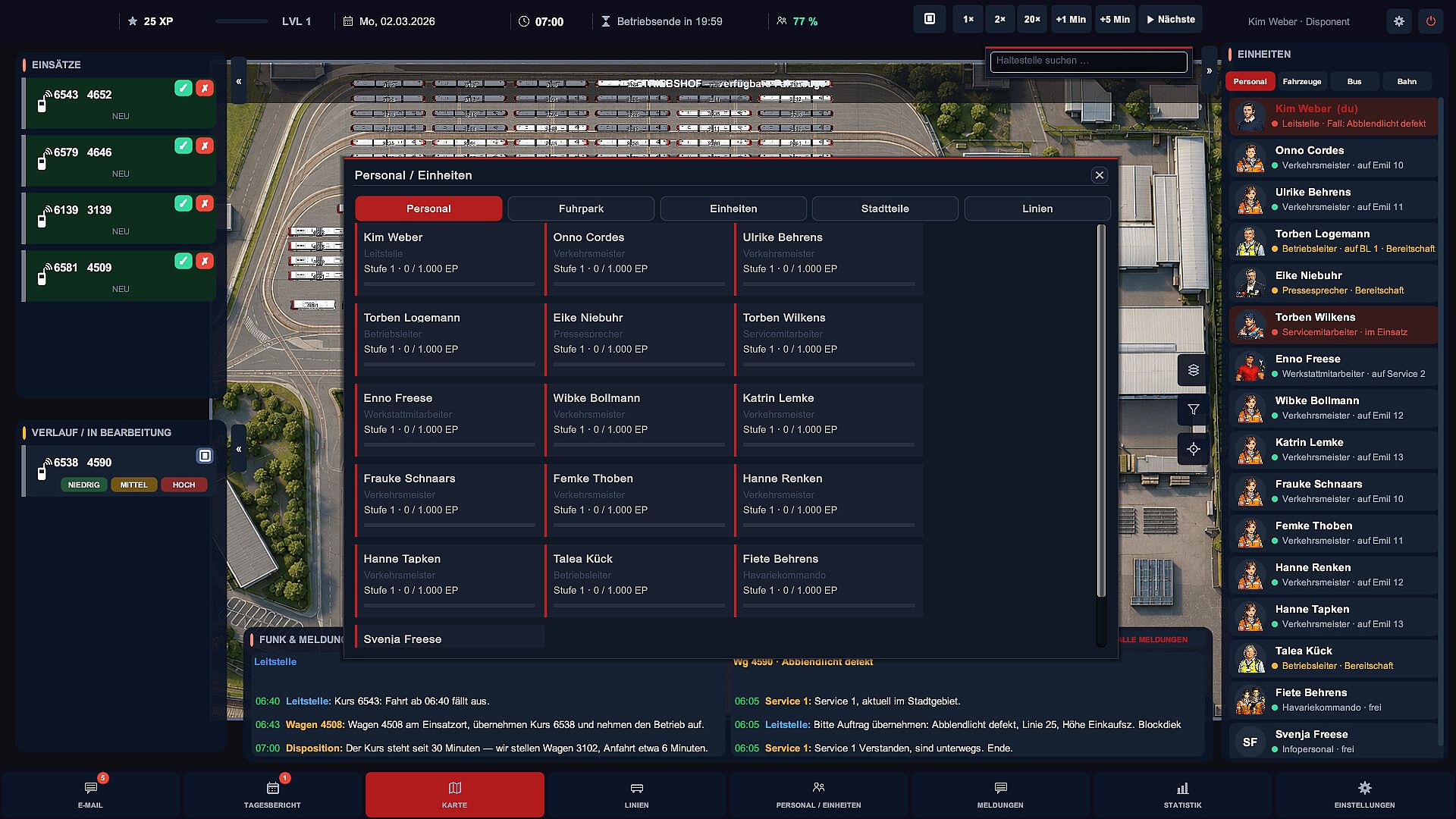
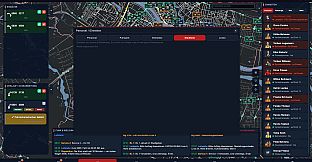
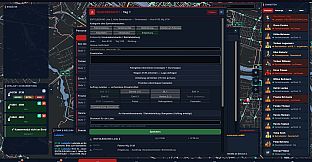
Every report comes in by radio or phone and lands in your incident list. Youaccept it — which ties up one dispatcher. In the case file you classify what
it is about, choose the right unit and send it off. The unit drives along the
real street network to the scene, works there and reports back by radio.
Serious incidents can only be closed by the operations manager; outside
office hours you call them in from standby.
And sometimes the right answer is not a unit but a diversion, a short
turn, a replacement vehicle from the depot or an announcement to the
passengers.
Operations don't wait
- A stranded vehicle holds up its working. Its following trips are
cancelled until someone arrives or the depot sends a replacement. - Trams can't overtake each other. Whoever catches up waits — except
at a turning loop with a passing track. - A signal failure blocks the line. Once the signal technician is on
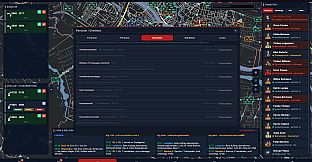
site, trams pass on sight and each one loses three minutes there. - Staff have working hours. Breaks, reliefs, sick calls, standby — and
drivers who finish at 10 pm, no matter where they happen to be. - Vehicles go to the workshop. A towed vehicle is missing for several
shifts.
Progression: satisfaction and experience
There is no money to manage. Two values count:- Passenger satisfaction — delays and cancelled trips push it down, a
well-run network raises it again. It is shown at the top of the screen and is
your report card at the end of the shift. - Experience — for every resolved incident, more for a quick response
and the right unit, and for every trip you save from cancellation. With it you
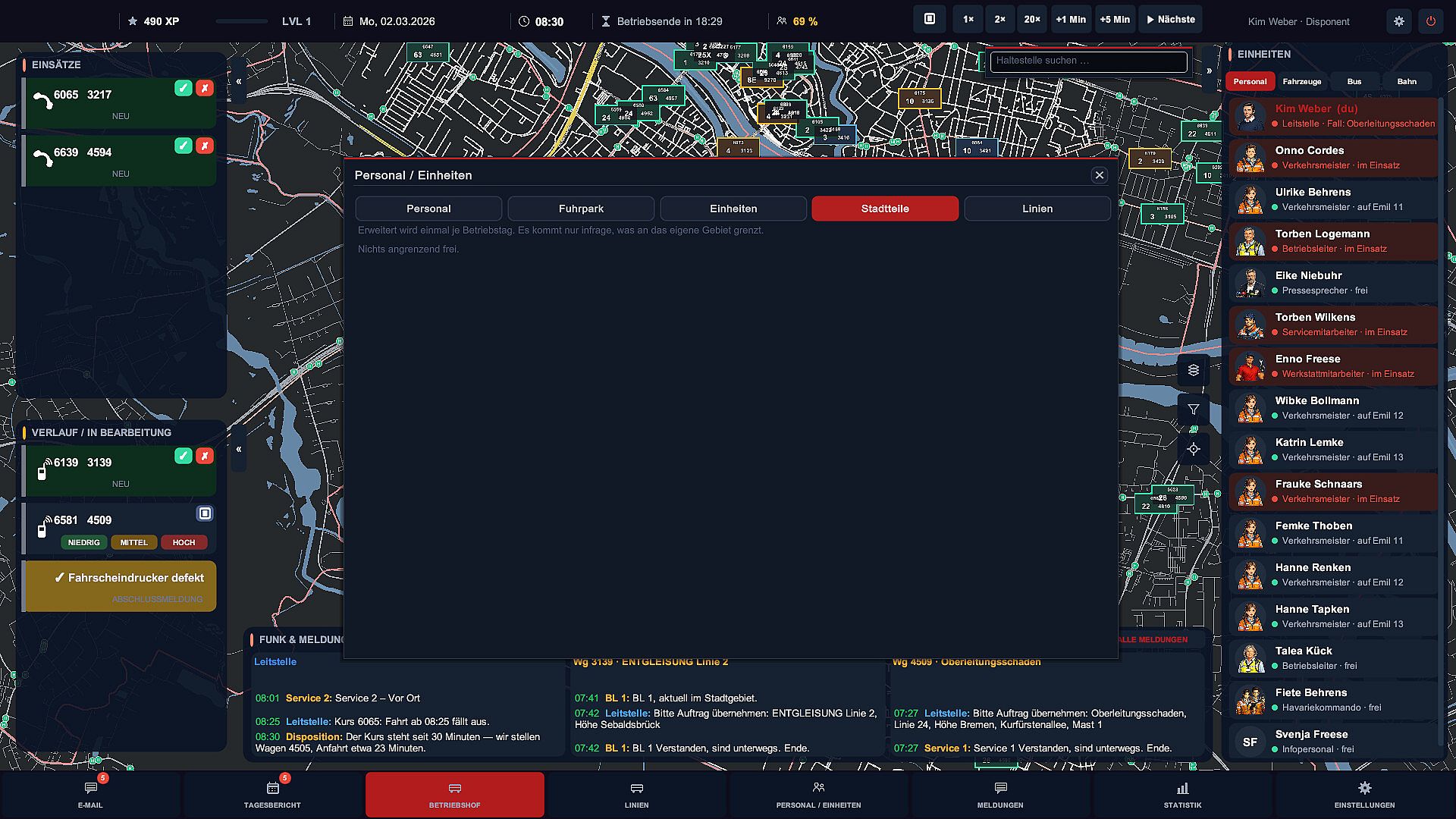
unlock new districts, more lines, additional vehicles (Emil 11 to 13, tower
wagon, equipment truck, emergency response team) and more staff. You can
expand at most once per operating day, and only into areas next to yours.
At the end of each shift you get a report: resolved incidents, cancelled
trips, knock-on delays, saved trips. There you choose your next shift — the
game saves automatically.
Two in the control center
Invite a friend via Steam and you sit together in the same control center.Each of you has your own desk: take reports, send units, call vehicles by
radio, set up diversions — the incident list shows who is handling each case.
You share control of game speed and pause, and both see who changed it last.
- Two players, online via Steam — invite through your friends list or
the Steam overlay - You play in the host's game: their career, their save, their
unlocks - Connection lost? The guest reconnects automatically and carries on
where they left off; their desk is kept free in the meantime - Both players need to own the game. No LAN, no split screen
Early, late, night
The early shift brings the rush hour. At night the map goes dark and servicethins out — but cars end up on the tracks, there is vandalism at the stops,
and the night works begin: welding on the track, vegetation cutting, work on
the overhead line. Some nights stay quiet. That's part of the job.
Getting started and controls
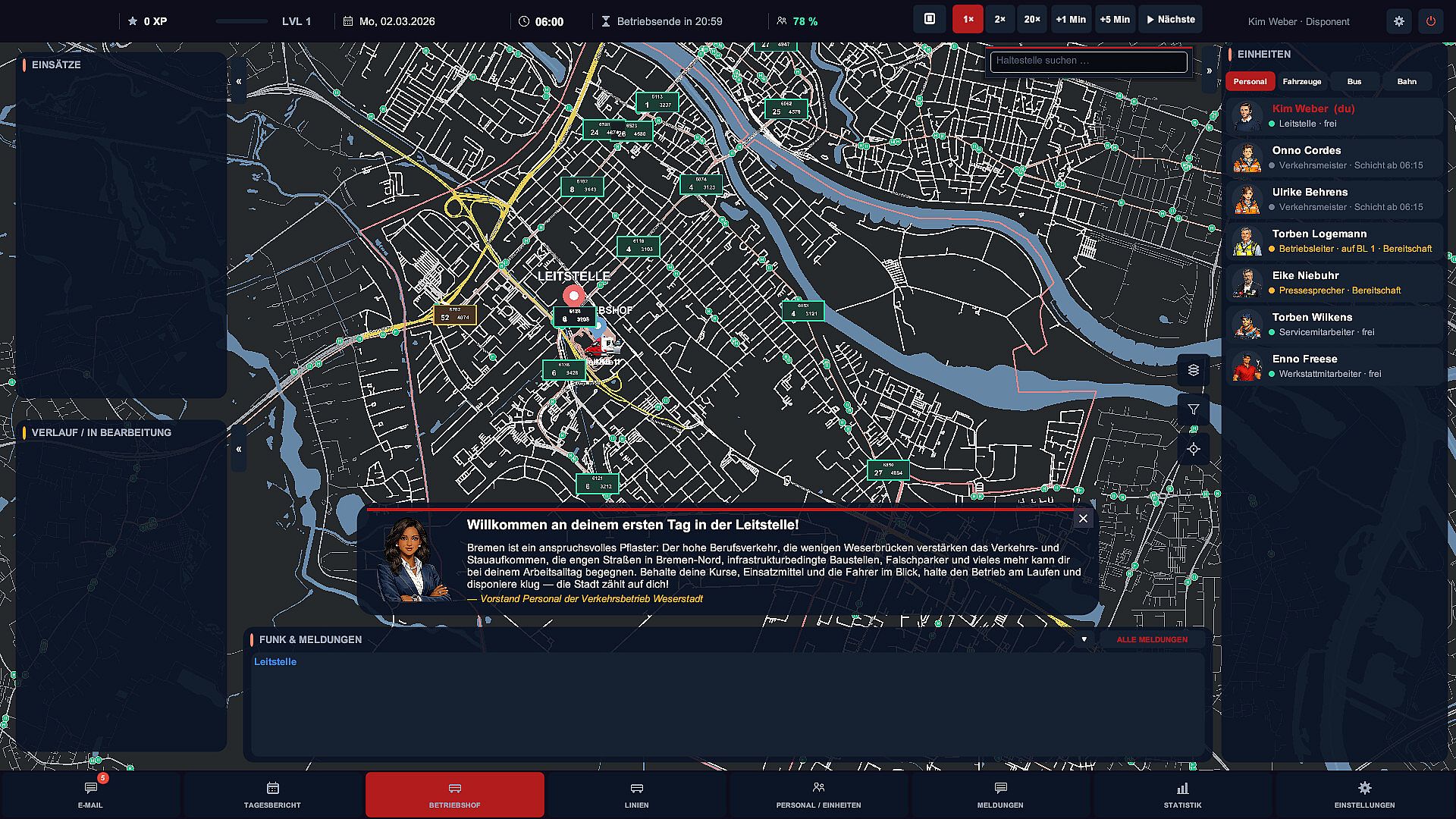
- Guided introduction: the first shift explains the map, incident
list, units and your first job step by step — with real tasks, not walls of
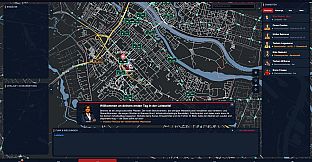
text. If you know it, skip it. - Managers who introduce themselves: the board, the head of the
control center and the operations manager speak to you with voiced lines;
radio traffic is read aloud. - Controls: mouse to pan and zoom the map, click on reports and units,
a few keys for speed and windows. No controller support. - Colors for red-green color blindness are the default — status and
warnings can be told apart without color vision. - Runs offline: on first launch the game sets up the city once (a few
minutes). An internet connection is only needed for playing together. - Language: German only (text, radio and voices). The game is not
available in English.