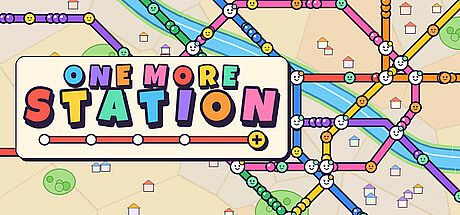


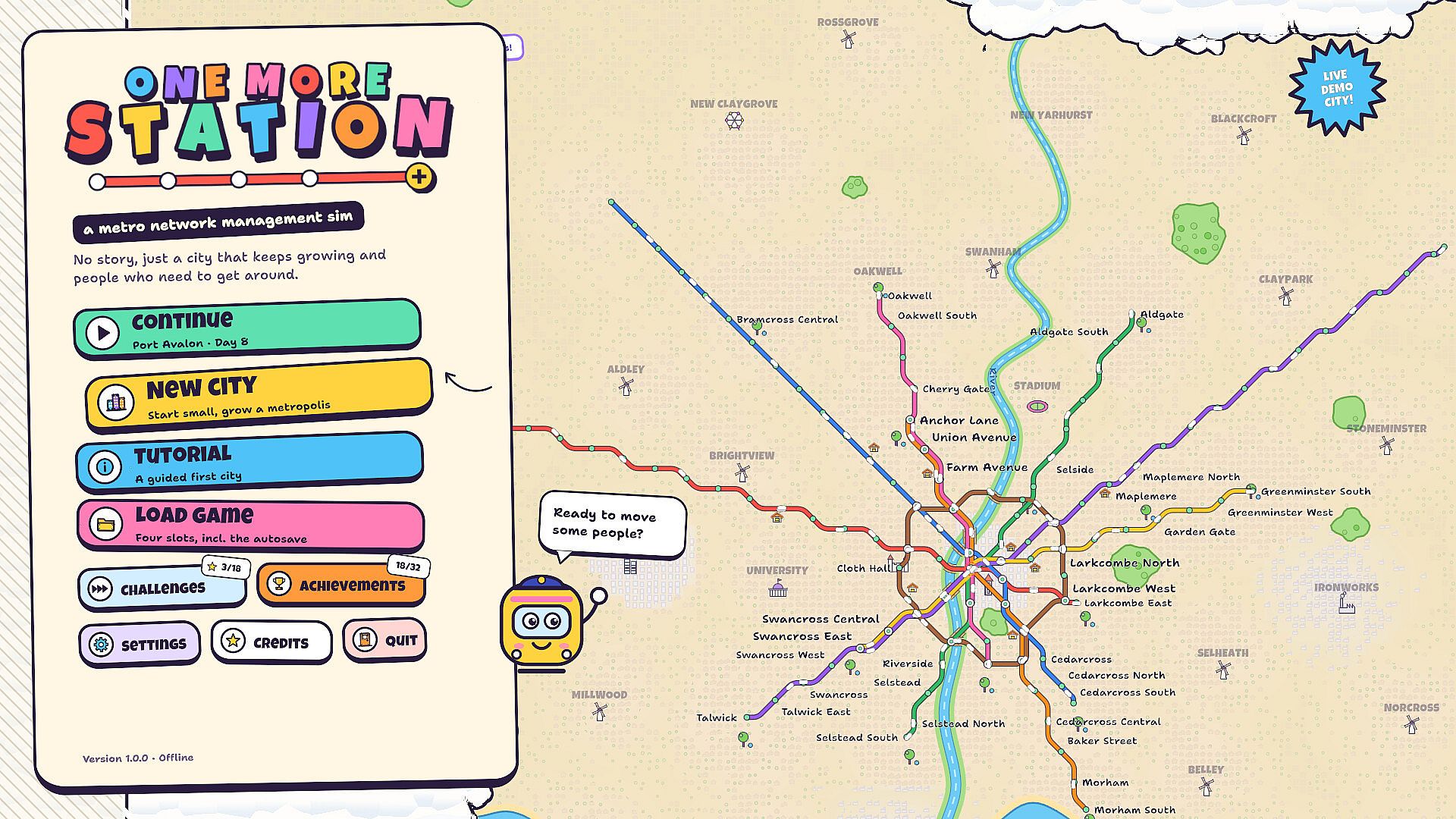
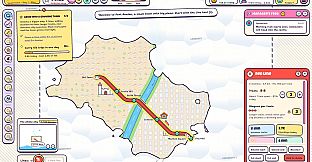
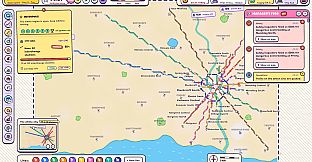
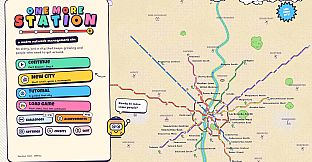
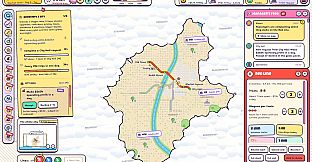
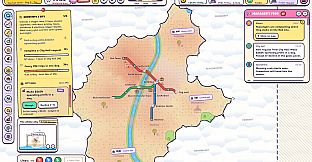
One More Station is a single-player strategy and simulation game focused on metro management. Players draw transit lines on a schematic map, purchase trains, adjust fares, and oversee the flow of commuters through an expanding urban network. The experience blends relaxed building with detailed systems that respond to every decision, all rendered in a distinctive hand-doodled visual style.
Gameplay
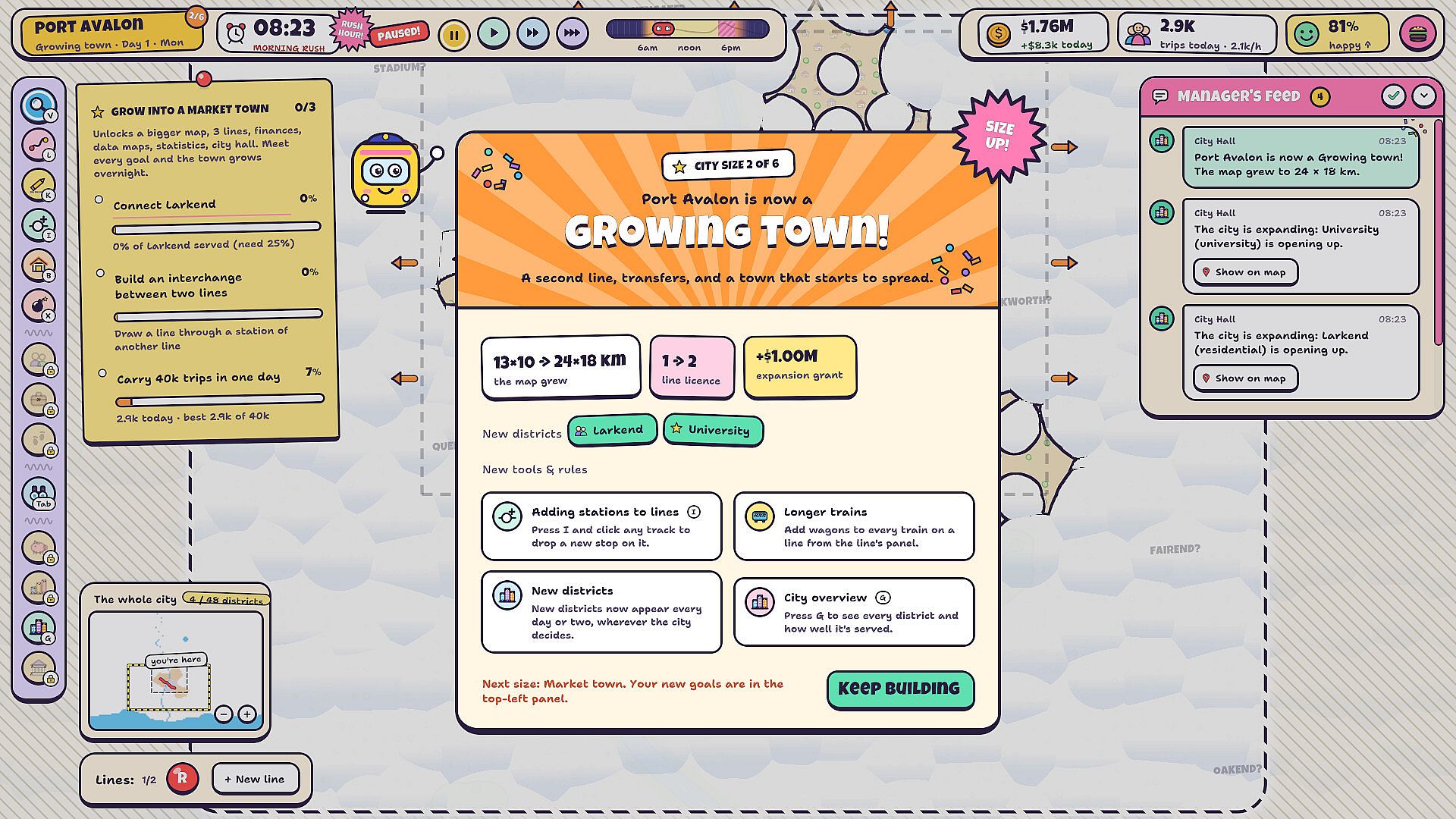
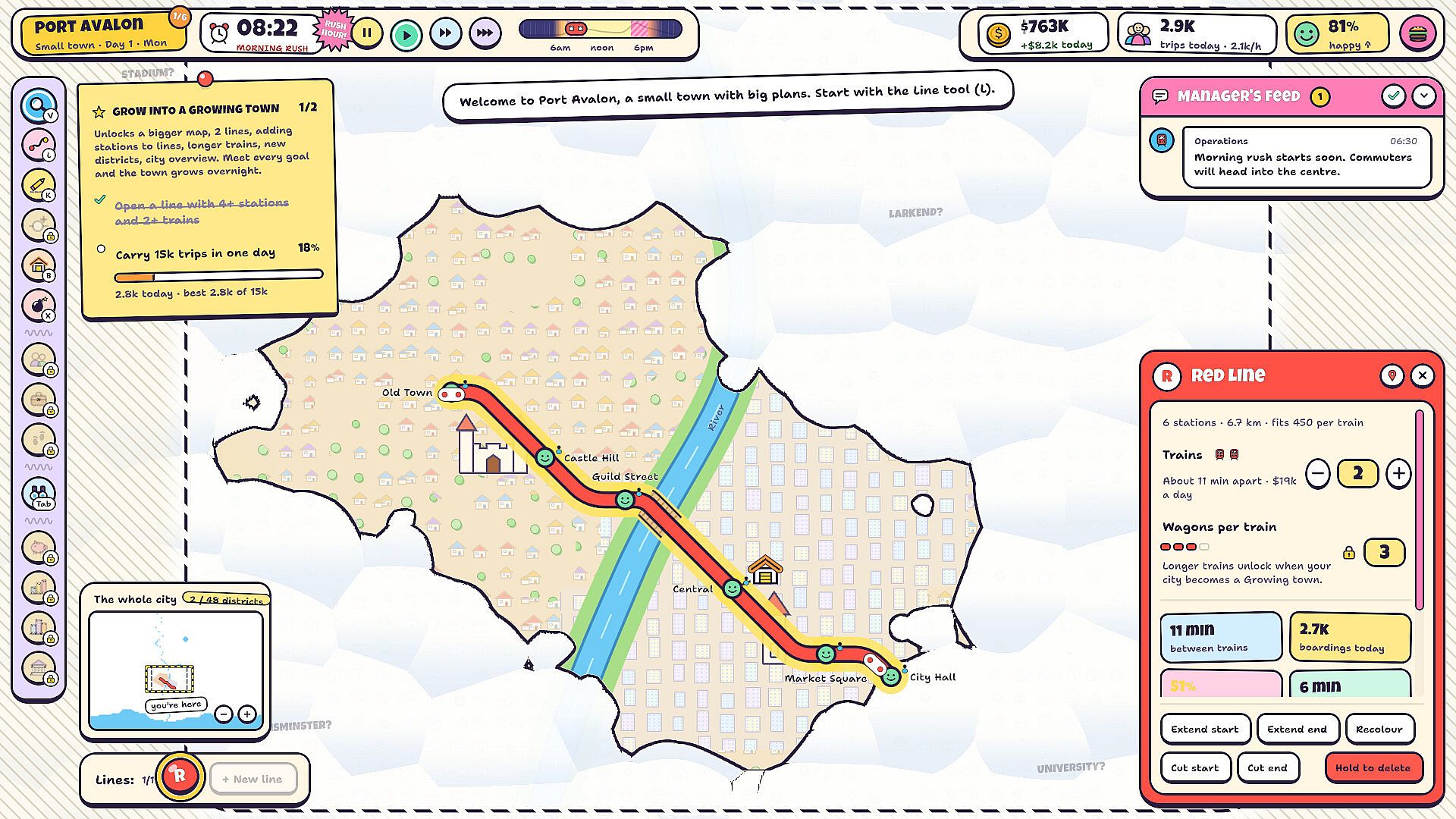
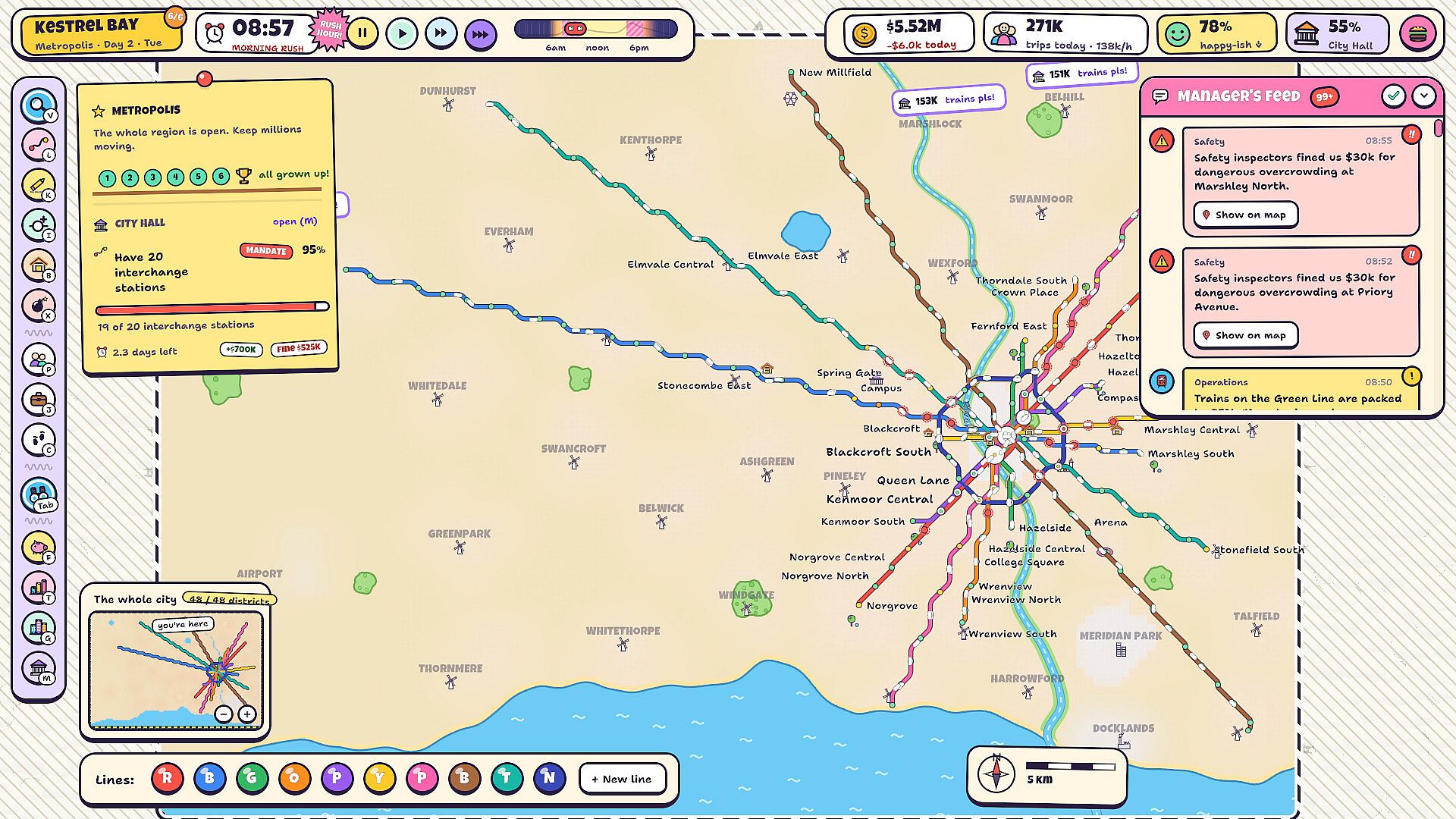
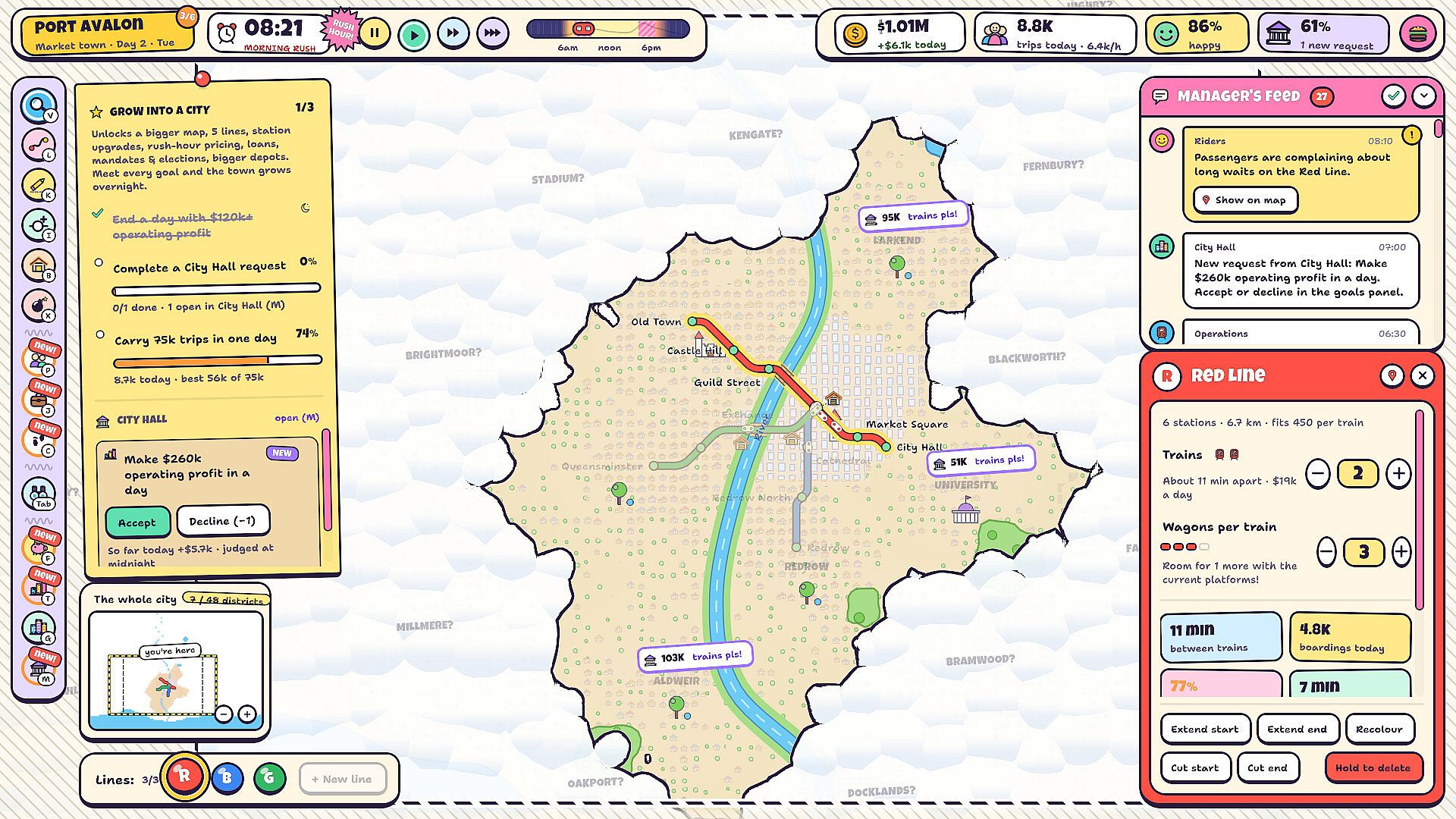
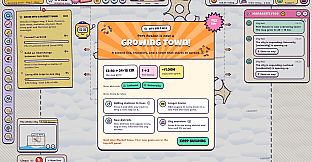
The core loop centers on planning and operating a metro system that grows alongside the city. Each session begins in a compact town with one initial line and basic tools. Meeting local objectives triggers overnight expansion, revealing new districts and unlocking mechanics progressively through growth cards. Cities generate procedurally with varied terrain including coasts, rivers, lakes, parks, and distinct districts.
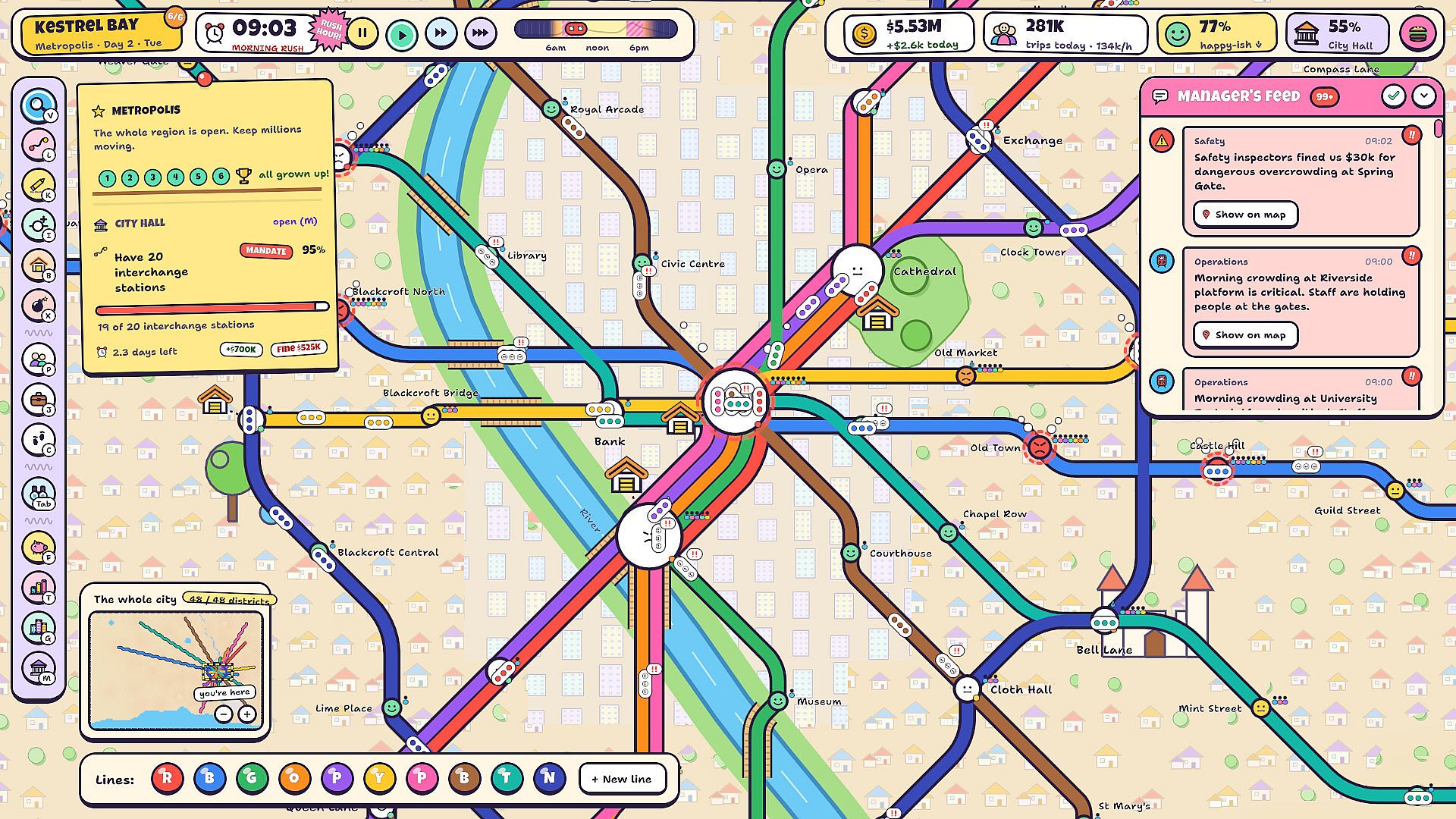
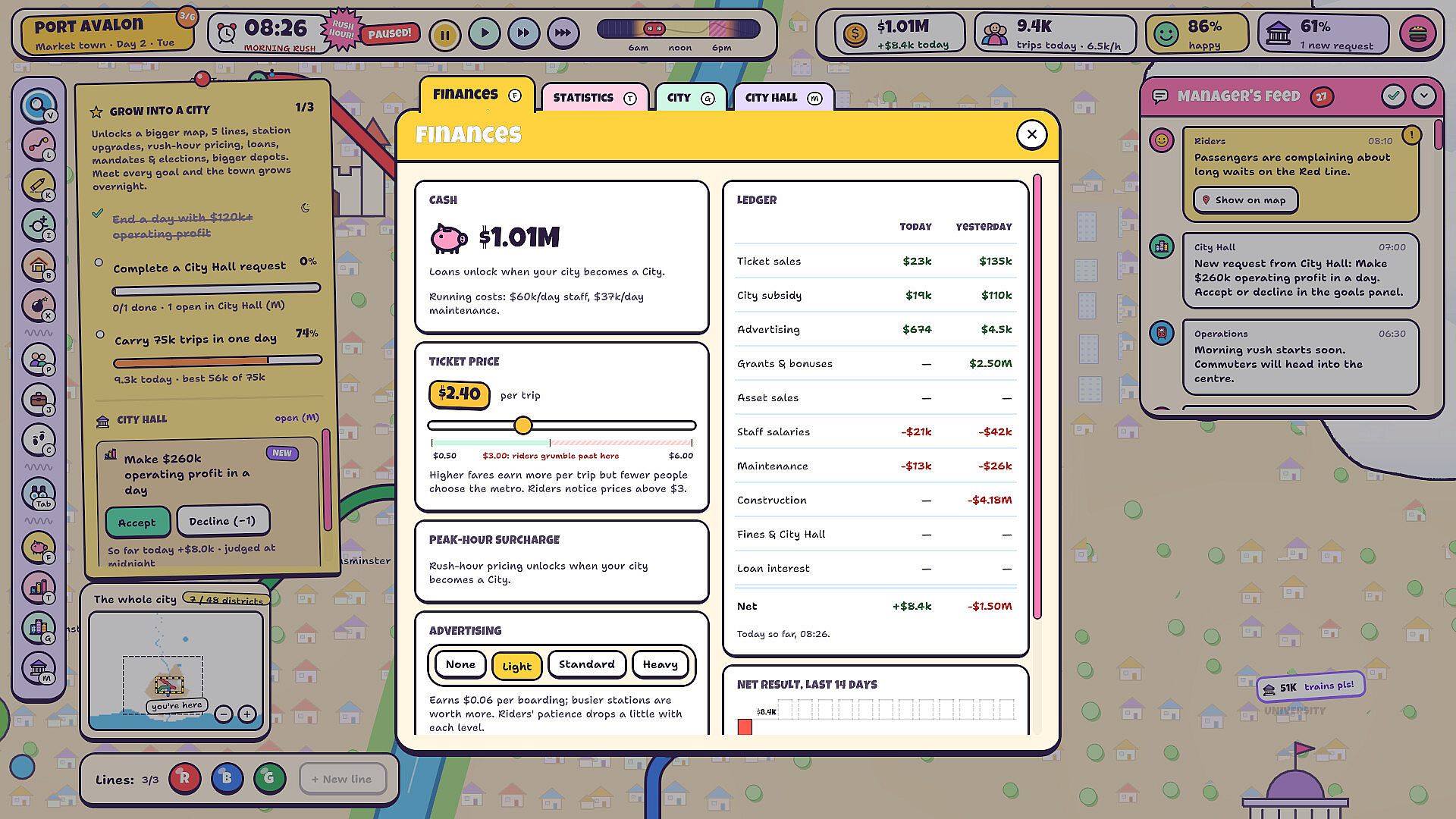
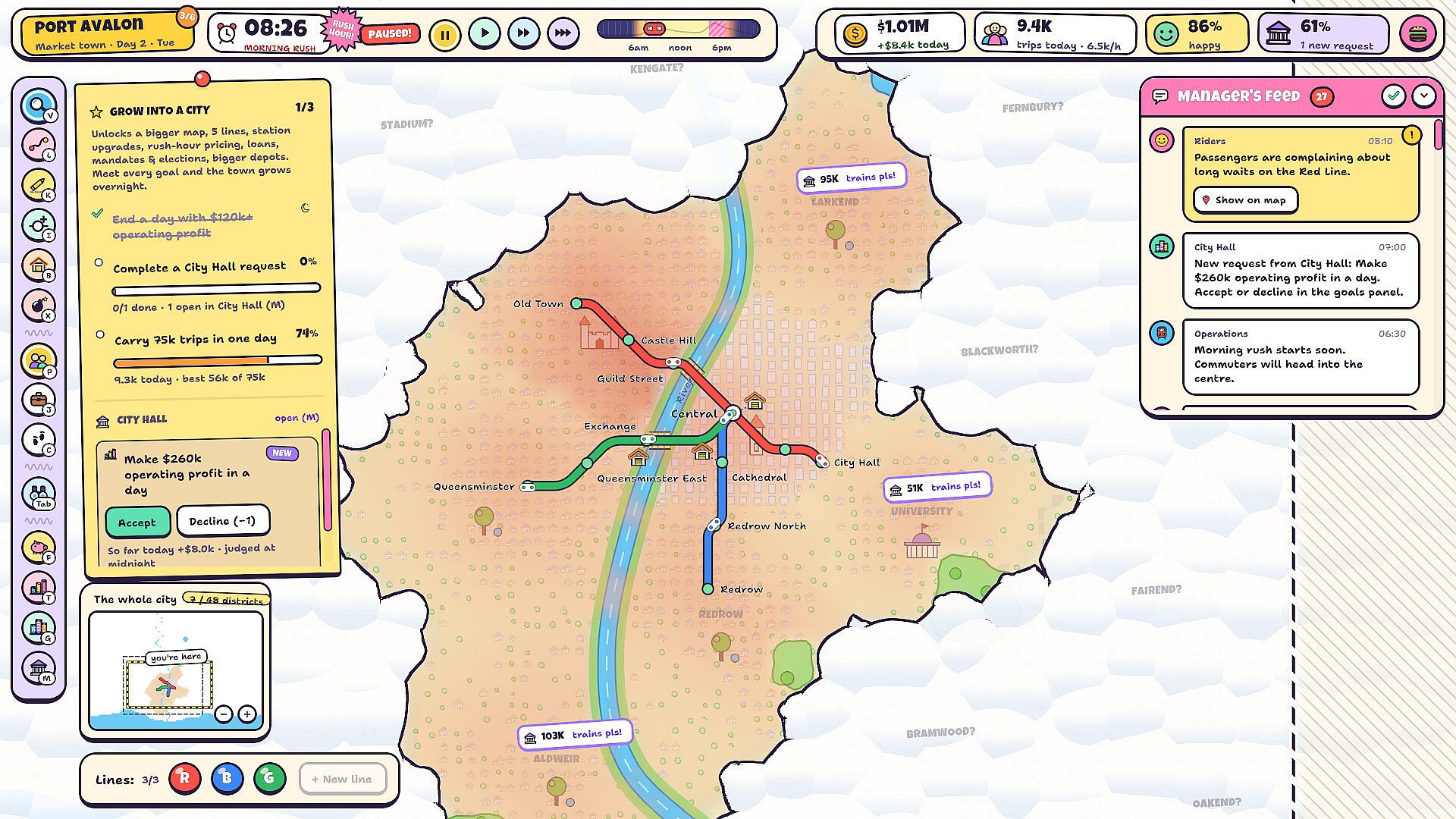
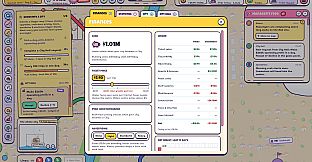
Commuters independently select destinations and weigh the metro against driving based on factors such as wait times, transfers, crowding levels, and ticket prices. Rush hours create peak demand in mornings and evenings, while weekends remain quieter. Platforms visibly congest when train capacity falls short. Construction options include octilinear routes, circle lines, interchanges, bridges, tunnels, depots, extended trains, and station upgrades. Economic tools encompass fares with rush-hour surcharges, advertising revenue, subsidies, and loans, each influencing rider satisfaction.
Supporting systems provide oversight through data maps, statistics panels, and a Manager's Feed that highlights emerging issues. Accessibility features include color-blind friendly crowding indicators, rebindable controls, a frame-rate limiter, and a generative soundtrack that shifts with the time of day. An undo function returns construction costs on the same day, and a hide-UI mode supports clean screenshots.
Game Modes
Play centers on campaign-style progression across six city scales, ranging from small towns to a 48-district metropolis. A brief guided introduction eases new players into the systems before growth cards introduce tools at appropriate moments. Six hand-crafted challenge scenarios each present a specific goal, time limit, and potential for up to three stars of completion.
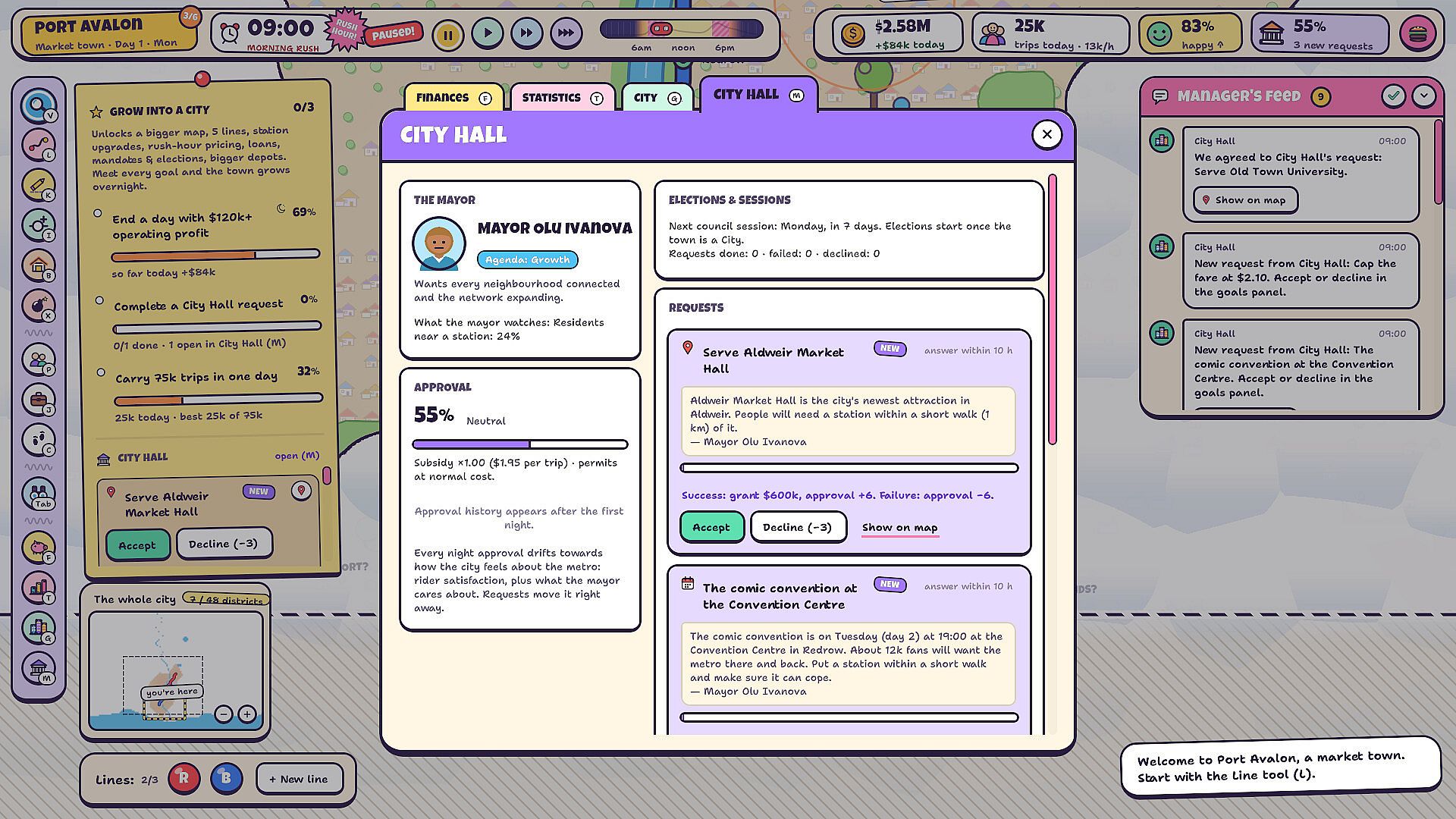
Difficulty settings allow a relaxed approach centered on freeform building or a demanding mode that emphasizes optimization and pressure. Procedural generation ensures varied layouts on every run, while the mayor system introduces targeted requests once the city reaches market-town scale. These requests cover connections to new districts, university service, fare caps, or event transport, with acceptance affecting subsidies and permit expenses.
City Management and Challenges
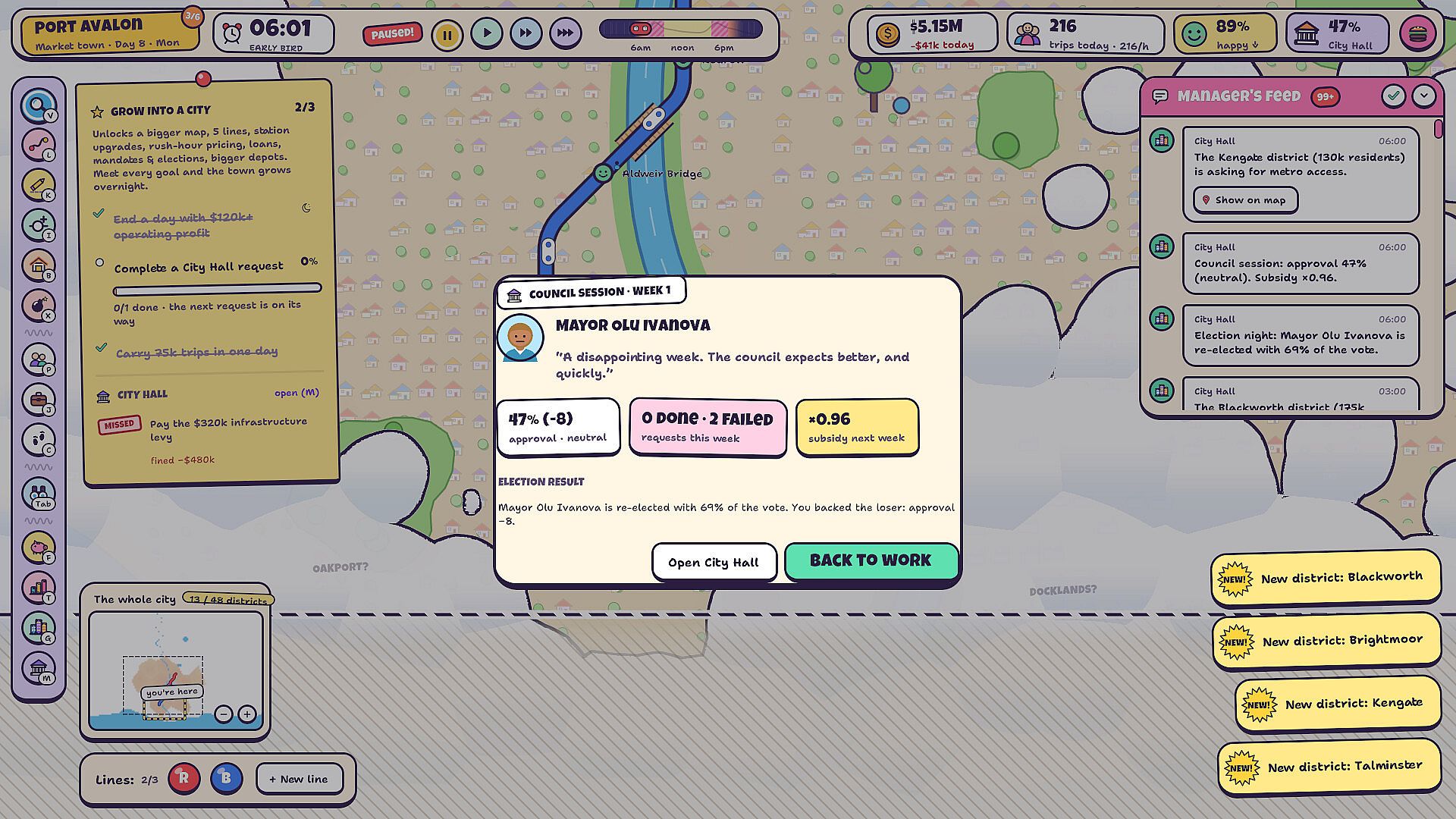
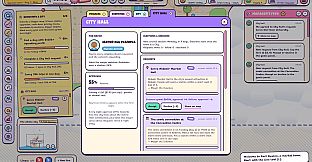
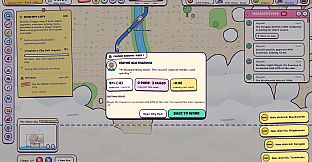
Political layers emerge as the city advances. Mandates, levies, and fines apply at the city level, accompanied by weekly council meetings and mayoral elections where players can endorse candidates. Bankruptcy triggers a single bailout from City Hall. Every resident's travel choice feeds back into overall performance metrics, creating interconnected cause-and-effect relationships without a traditional narrative.
Mechanics reward careful line placement and capacity planning while penalizing overcrowding or inefficient routing. The absence of scripted story events keeps focus on the simulation itself, where systems interact dynamically based on player-drawn infrastructure and policy choices.
Is It Worth Playing?
One More Station suits players who enjoy thoughtful management simulations with procedural variety and visible system feedback. Its combination of line-drawing construction, commuter behavior modeling, and layered economic and political elements delivers depth within a compact, single-player package. Accessibility options and multiple difficulty levels broaden appeal for both casual builders and those seeking optimization challenges. With 32 achievements and cloud saves supporting repeated playthroughs across different city sizes and scenarios, the game offers substantial replay value for fans of indie strategy titles centered on transit networks and urban growth. Those drawn to cozy-yet-crunchy sims that emphasize interacting systems over linear stories will find a focused experience here.