

One Million Skeletons is a strategy game for PC that places players in the role of a necromancer overseeing a self-sustaining army of the undead. The core loop revolves around resource management where the dead themselves fuel further growth, with skeletons performing labor to produce more forces that then advance against incoming threats.
Gameplay
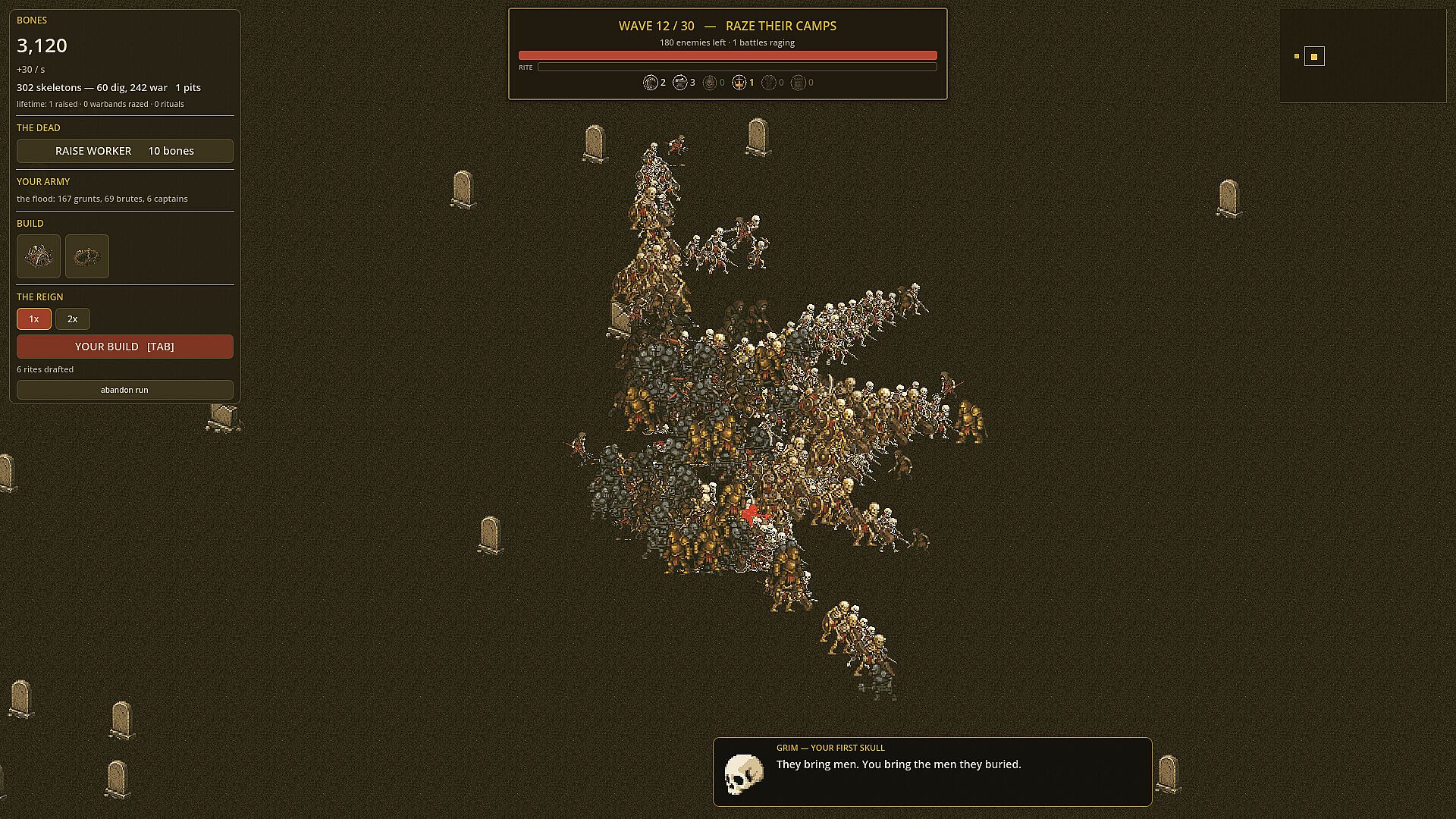
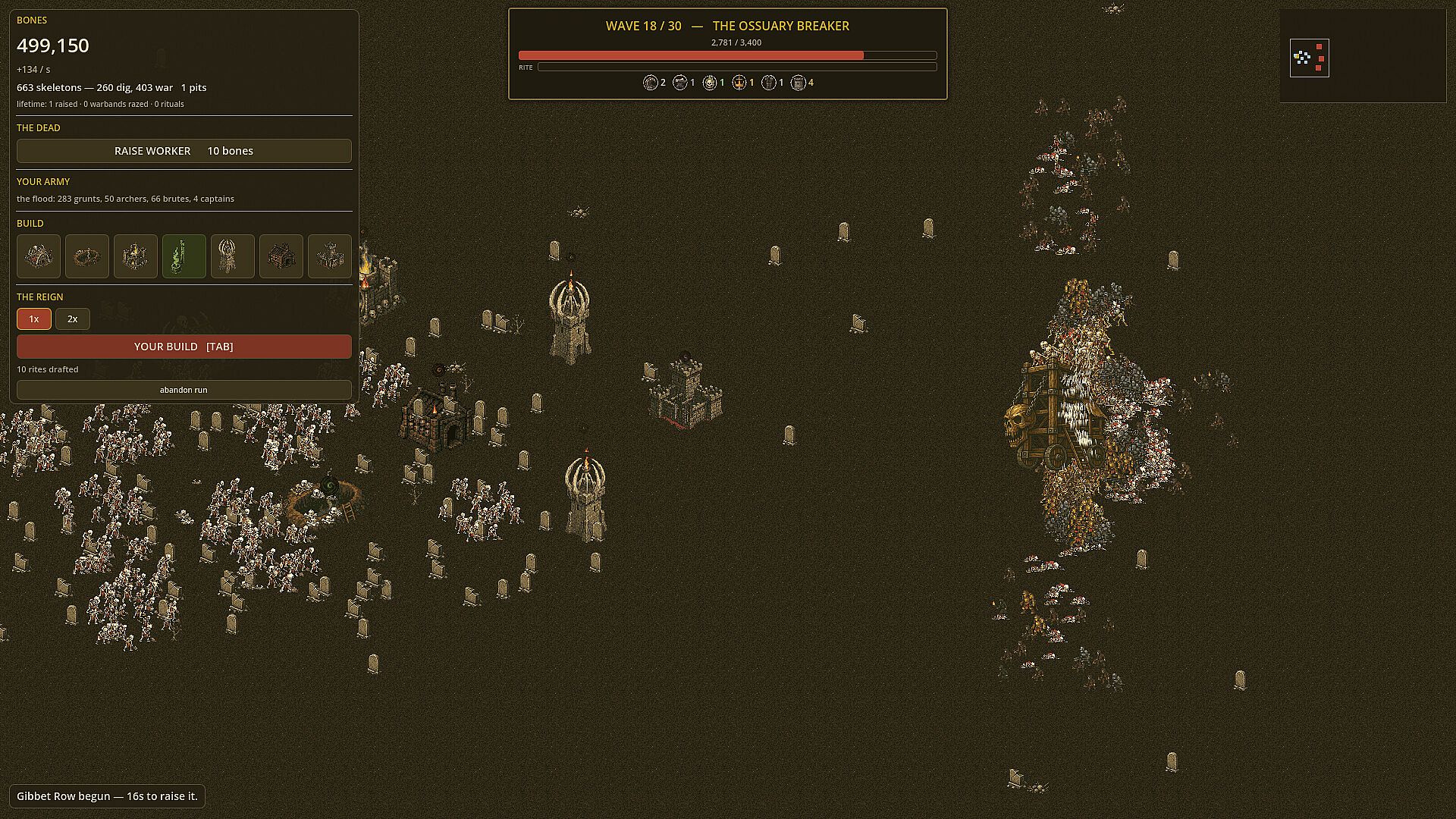
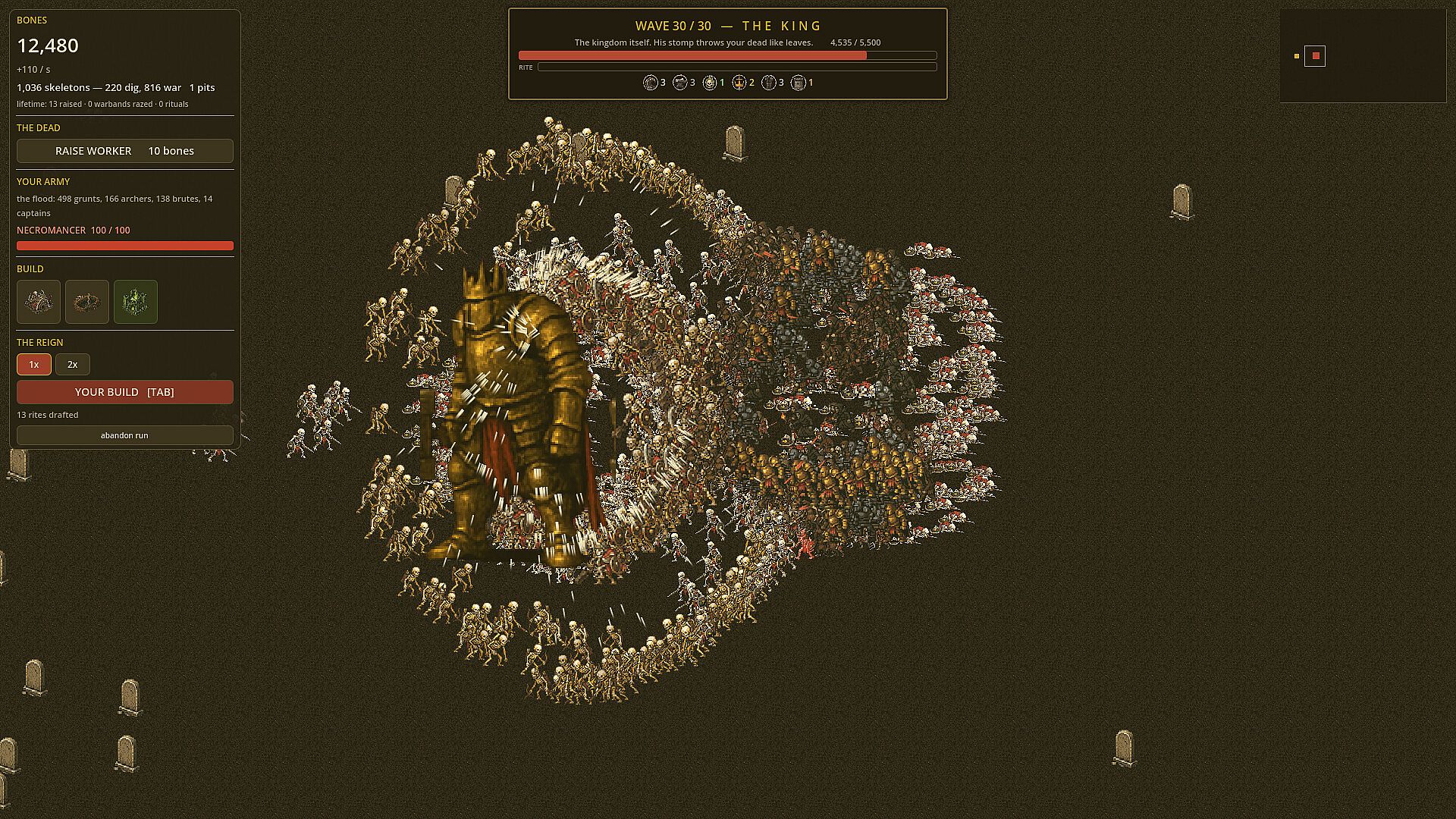
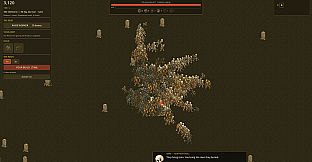
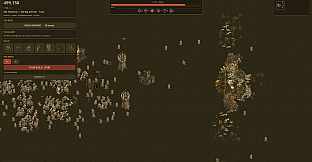
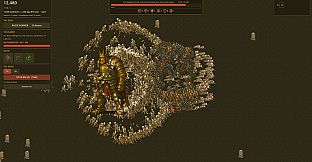
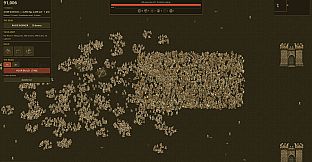
The central system treats bones and corpses as currency in a closed loop. Skeletons dig for bones, those bones raise additional skeletons, and any excess joins the march eastward to confront the kingdom's defenses. Every engagement occurs through direct physical contact between units, with damage resolved only at the point where bodies meet. This creates visible, on-screen simulations where a mass of skeletons colliding with a shield wall produces realistic crushing effects, gaps in formation, and bodies displaced by the impact.
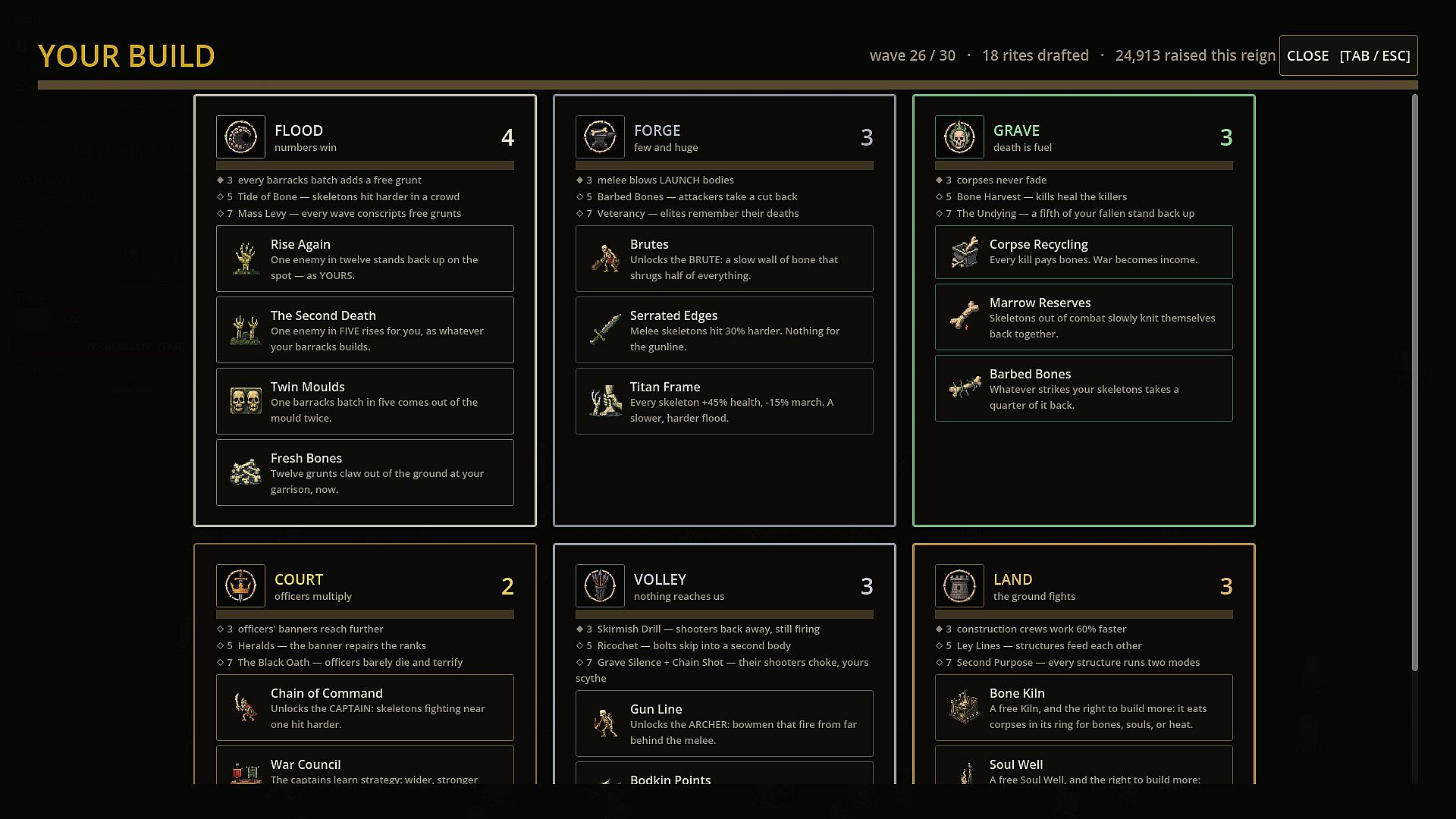
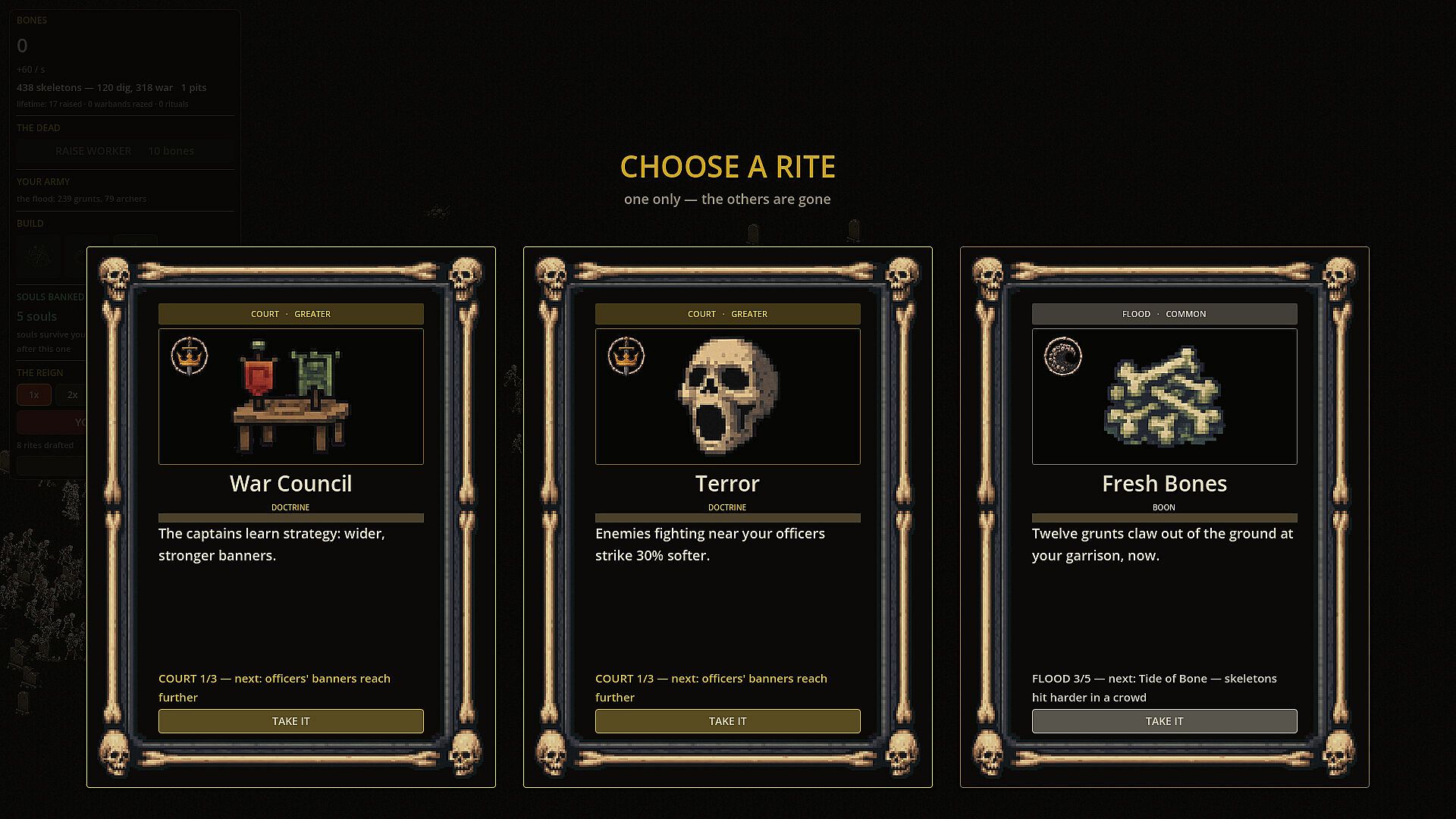
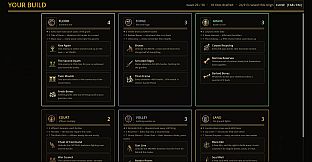
Players do not control individual units or adjust stats in real time. Instead, decisions focus on placement of structures and selection of rites that alter the behavior of the entire force. Structures such as the Bone Kiln, Soul Well, and Rib Tower function as cards that are positioned manually and completed by masons, each exerting influence over a chosen radius. Rites drawn from six schools modify fundamental rules once three from the same school are selected, enabling effects like persistent corpses that never fade, projectiles that chain to additional targets, or fallen enemies rising on the player's side.
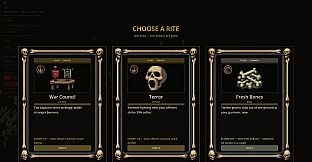
Kills contribute to a RITE bar that fills over time. Upon completion, one of three offered rites is chosen while the others are discarded. The economy extends across multiple attempts through a persistent souls bank, where successful runs against the final threat allow the next attempt to begin with modified conditions that reward relics upon victory.
Game Modes
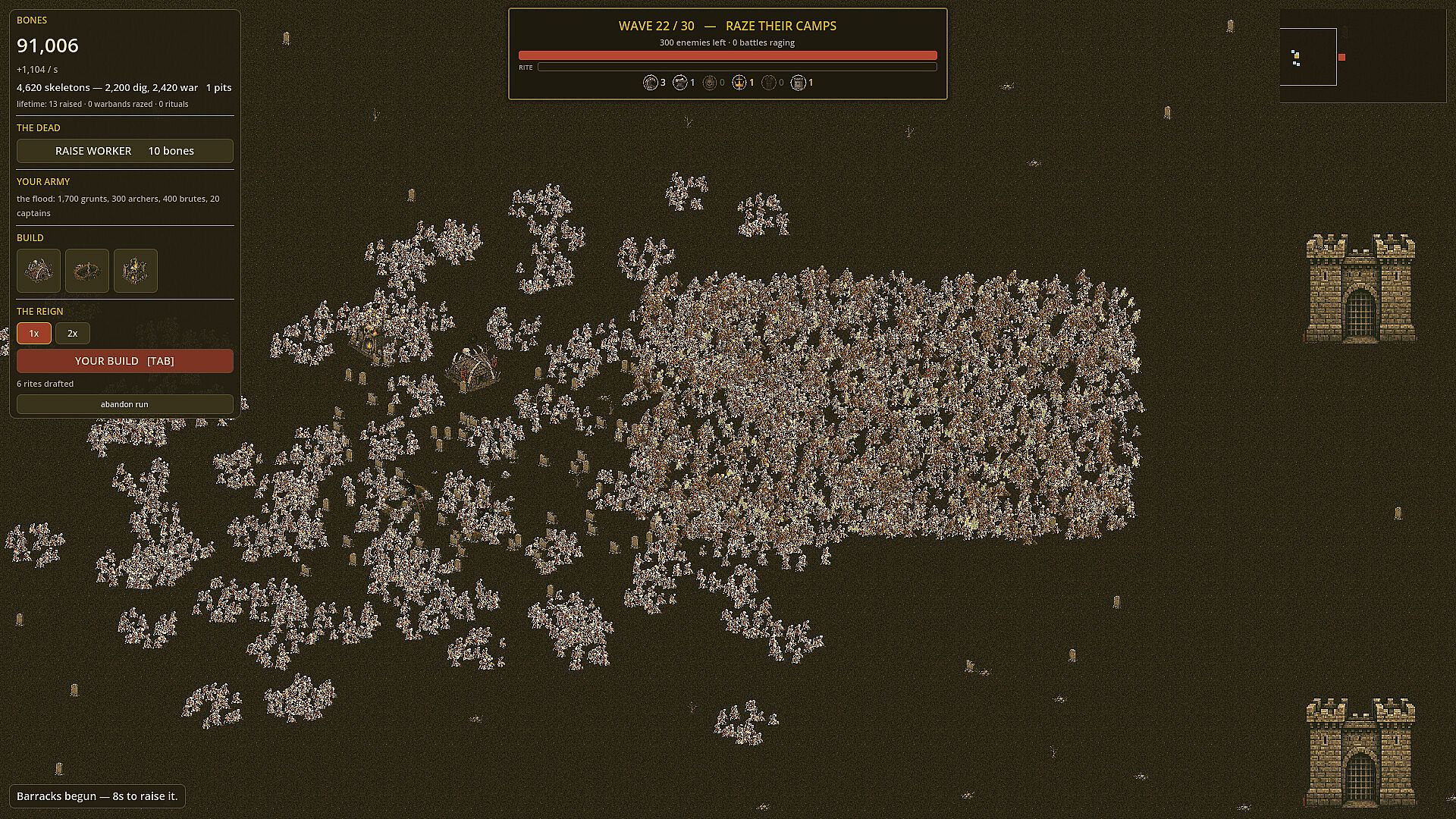
Play centers on a single reign lasting twenty-five minutes. Odd-numbered waves send enemy forces to assault the graveyard, while even-numbered waves allow the player's army to sortie and destroy opposing camps. This alternating structure builds toward wave thirty, where all accumulated pressure converges on a single powerful opponent.
The reign system itself serves as the repeatable framework, with each attempt building on prior successes through banked souls and optional burdens that increase difficulty in exchange for greater rewards. No separate competitive or cooperative modes appear in the design, keeping focus on solitary strategic oversight of the advancing horde.
Key Mechanics and Progression
Six distinct bosses appear across the waves, each with unique silhouettes and behaviors that test different aspects of the army composition. These include the Tithe Wagon, Ser Osmund the Wall, the Ossuary Breaker, Lady Vess of the Long Eye, the Grand Abbot as a walking cathedral, and finally THE KING at the conclusion of the thirtieth wave. Victory against this final colossus unlocks the next reign under customized terms.
A running total tracks every skeleton ever raised across all attempts, with the long-term goal of reaching one million. This counter provides a persistent measure of overall progress independent of any single reign's outcome. The absence of hero progression or unit micromanagement keeps attention on high-level choices about construction locations and rite commitments.
Is It Worth Playing?
One Million Skeletons suits players who enjoy strategy games built around emergent simulation rather than direct control. The emphasis on watching large-scale interactions unfold, combined with meaningful choices in structure placement and rite selection, creates a distinct experience for those interested in necromancer-themed army management. The twenty-five minute reign length supports focused sessions, while the cross-reign progression through souls and relics encourages repeated attempts to refine strategies against the escalating waves and bosses. Those who prefer games without traditional leveling or spreadsheet-style combat calculations will find the direct, visible combat resolution particularly engaging. The design avoids common strategy pitfalls by keeping all action on screen and all decisions at the macro level of economy shaping and rule modification.