

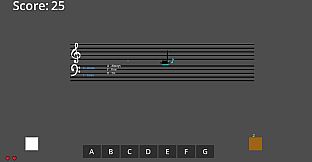
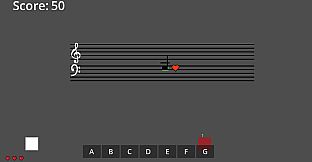
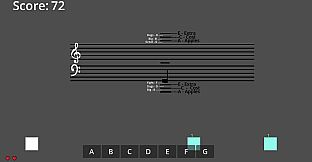
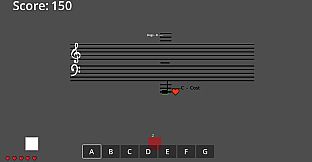
Note Defender: A Sight Reading Arcade is an indie arcade game for PC that combines music education with wave-based defense gameplay. Players identify musical notes on the staff to fend off incoming enemies, building sight reading skills through repeated practice in an engaging format.
Gameplay
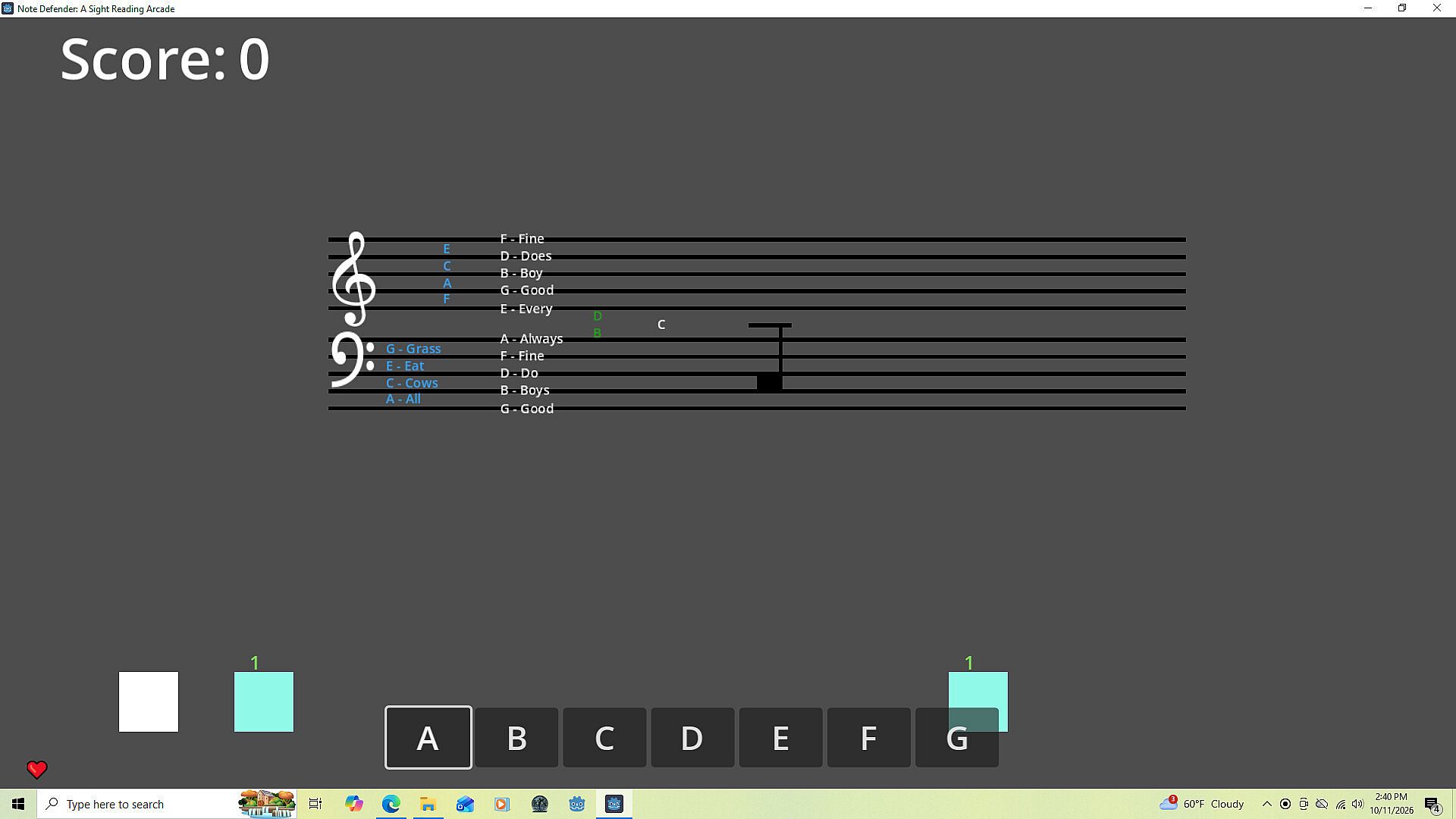
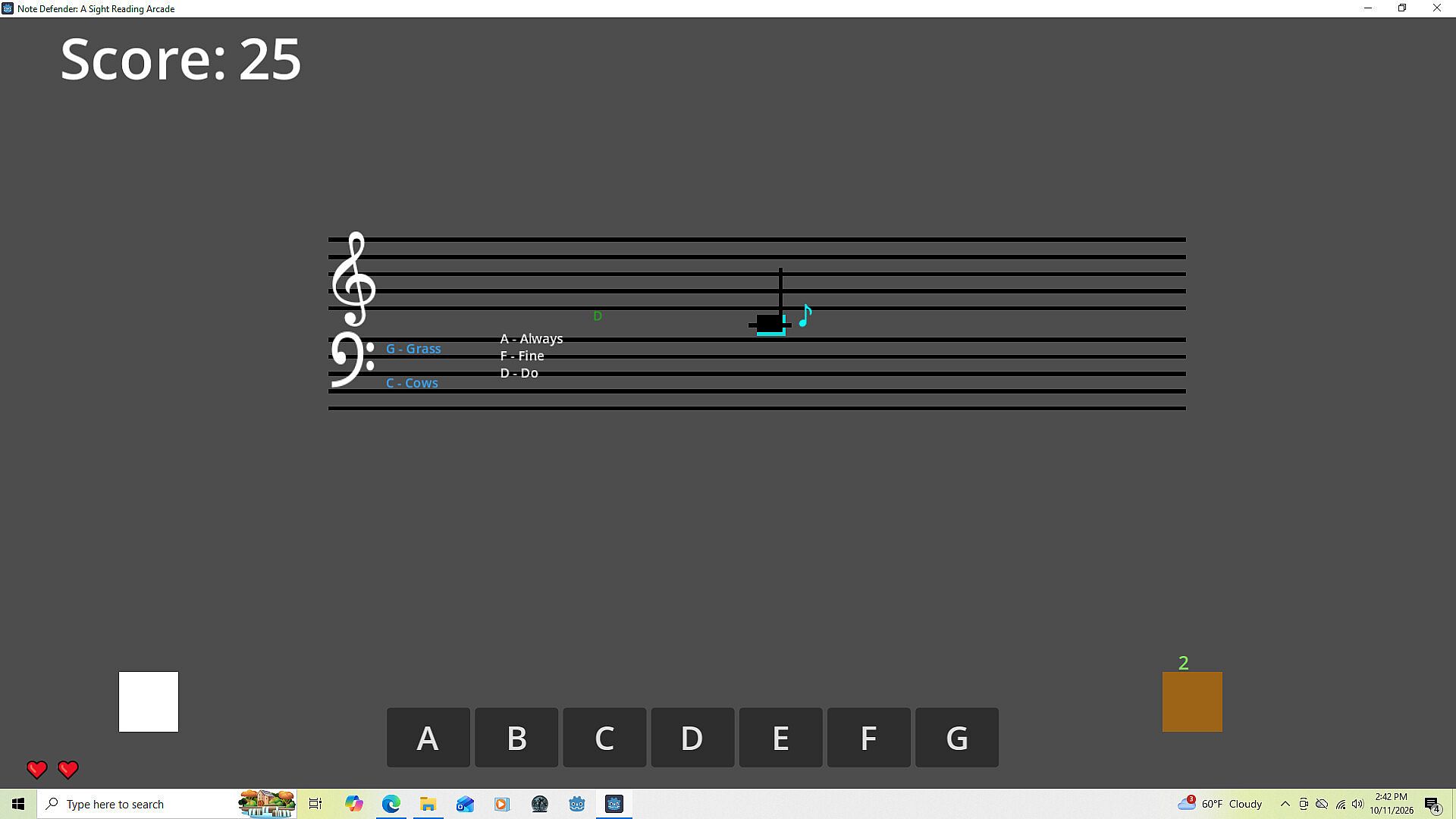
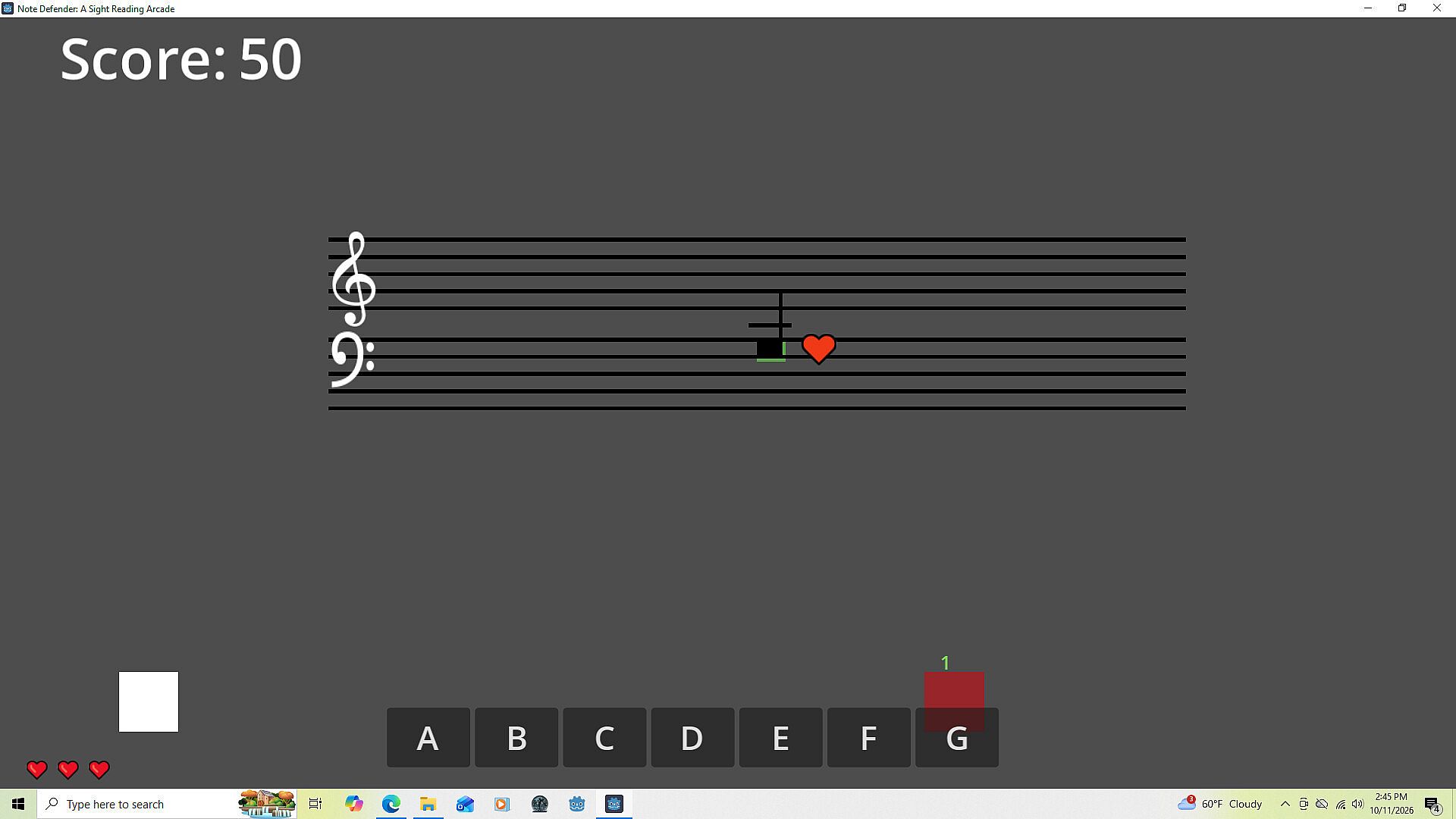
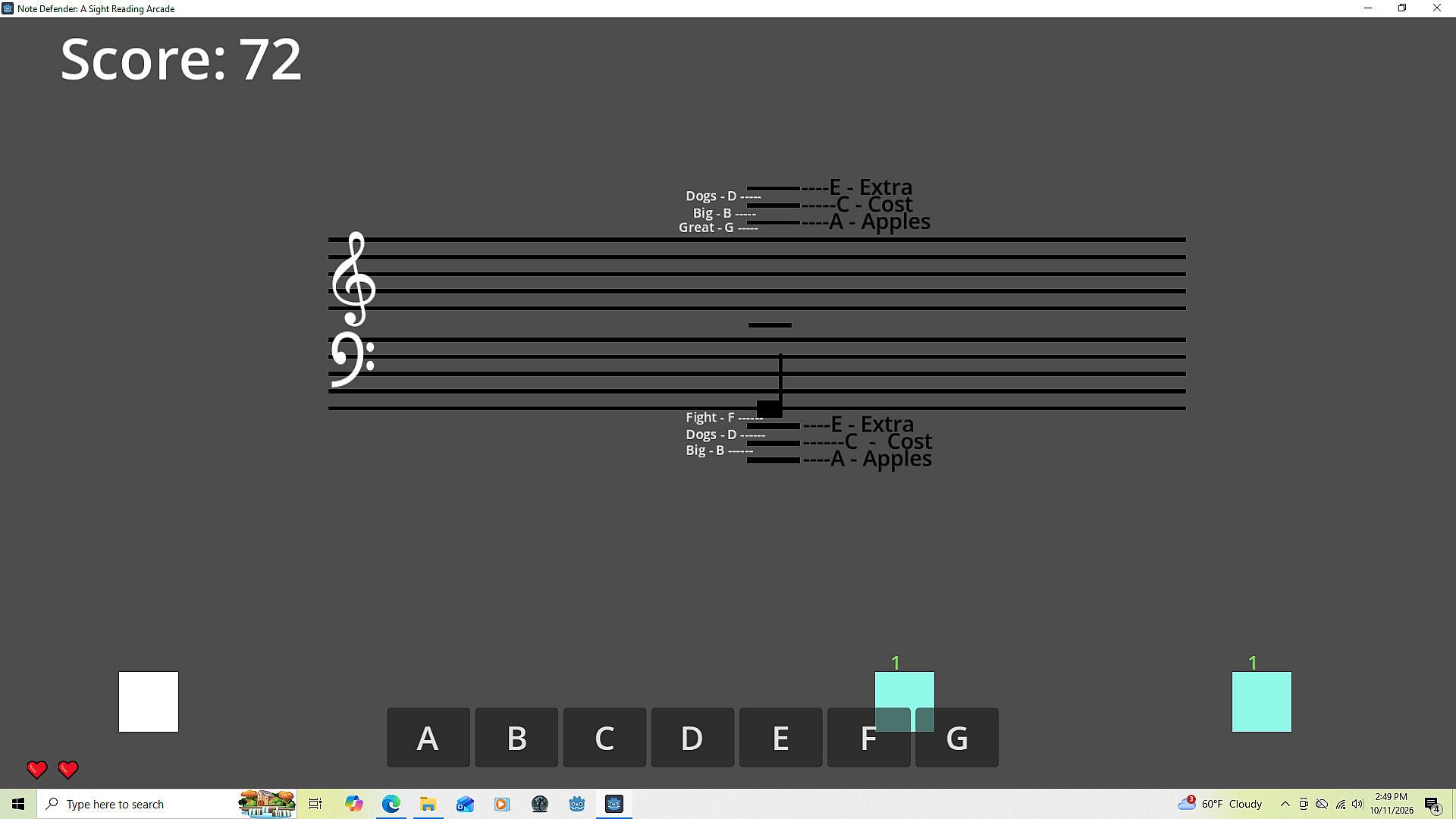
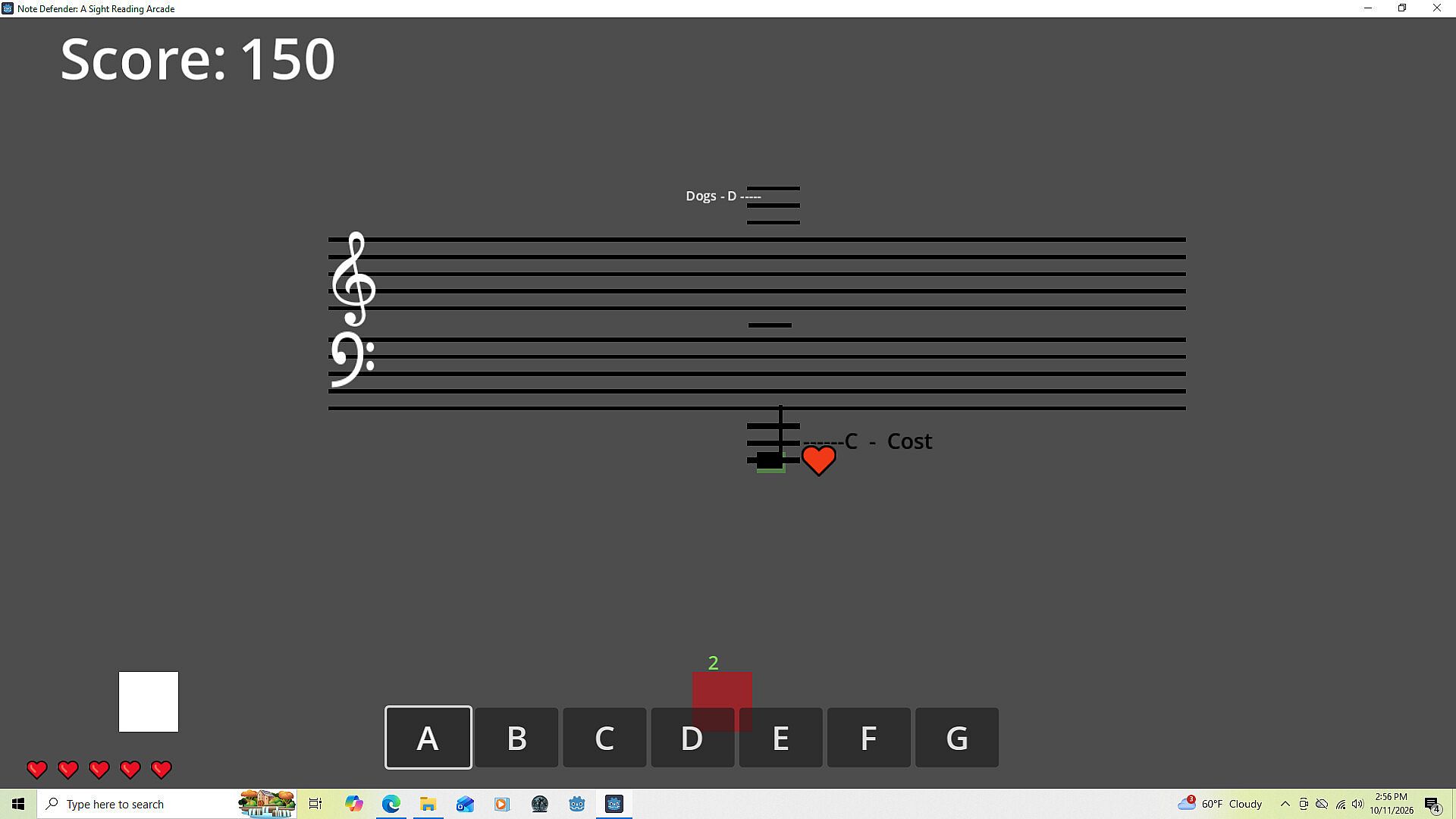
The core loop centers on identifying notes labeled A through G as squares advance toward the player. Correct answers trigger attacks that clear threats, while incorrect responses allow enemies to advance and reduce health. The system covers notes across nine ledger lines above and below the staff, spanning the full range of a standard 88-key piano and suiting most common instruments.
Progression introduces greater challenges over time. Early stages focus on basic staff positions, then ledger lines expand the range. Later stages remove either the treble or bass staff entirely, forcing recognition based on a single clef. This setup mirrors real-world reading demands for instruments like guitar, which often use one staff. Enemy squares gain durability as levels advance, requiring faster and more accurate responses to maintain momentum.
Four distinct powers activate based on performance and special note appearances. A correct identification fires a green laser at the nearest threat. Five consecutive correct answers unleash a red laser for double damage. Blue notes trigger a screen-clearing blast when answered correctly. Green notes restore one health point on a correct response, providing a recovery option during intense waves.
Game Modes
The experience unfolds through a single-player progression of increasingly difficult levels rather than separate named modes. Each stage builds on the previous by adding ledger lines, removing one staff, and raising enemy resilience. The structure emphasizes consistent practice in note identification without branching paths or alternate formats at this time.
Sharps and flats remain outside the current scope because the gameplay does not include an instrument input mode. Future development may add such features, but the present version concentrates on natural note names across the extended staff range.
Learning Focus and Target Audience
The design prioritizes practical sight reading improvement. By tying every correct identification to immediate defensive action, the game reinforces rapid recognition without relying on counting lines or spaces each time. The full piano range coverage makes it relevant for pianists while the single-staff challenges prepare players for guitar, violin, and similar instruments.
Beginners benefit from the gradual introduction of ledger lines and staff removal. More experienced musicians can use later stages to sharpen speed under pressure. The arcade presentation keeps sessions short and repeatable, suiting daily practice routines for students or hobbyists looking to strengthen notation fluency.
Is It Worth Playing?
Note Defender suits anyone seeking an active alternative to traditional flashcard drills for music notation. Its wave defense format turns note identification into a direct survival mechanic, which maintains engagement across repeated play sessions. The power system adds variety by rewarding streaks and special notes, while health restoration options prevent early frustration during learning phases.
Players focused on building automatic note recognition across a wide range will find the mechanics aligned with that goal. Those expecting sharps, flats, or instrument-specific input should note these elements are not present. The indie scope delivers a focused tool for sight reading practice on PC, with progression that scales difficulty in measured steps.