


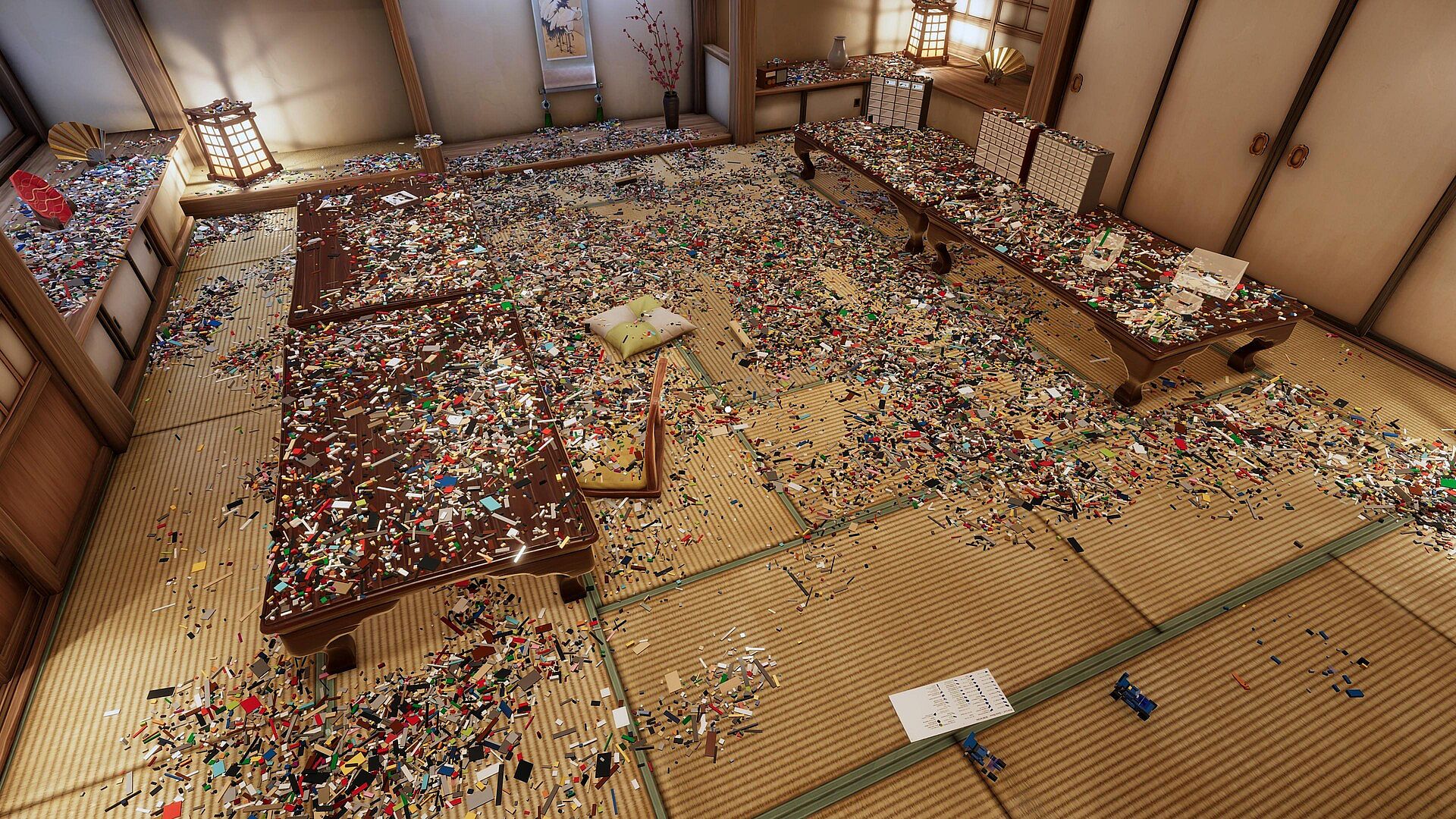
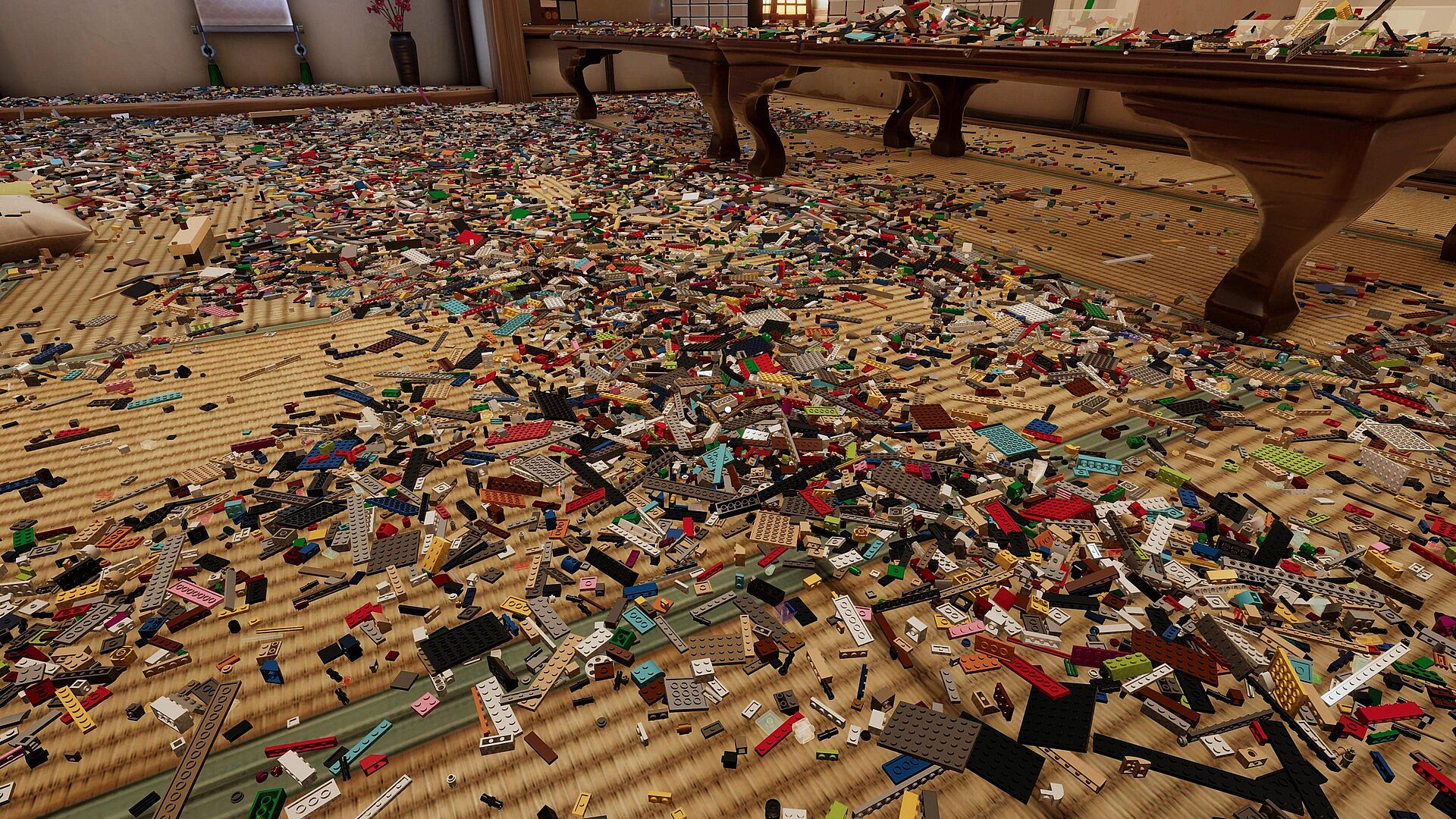
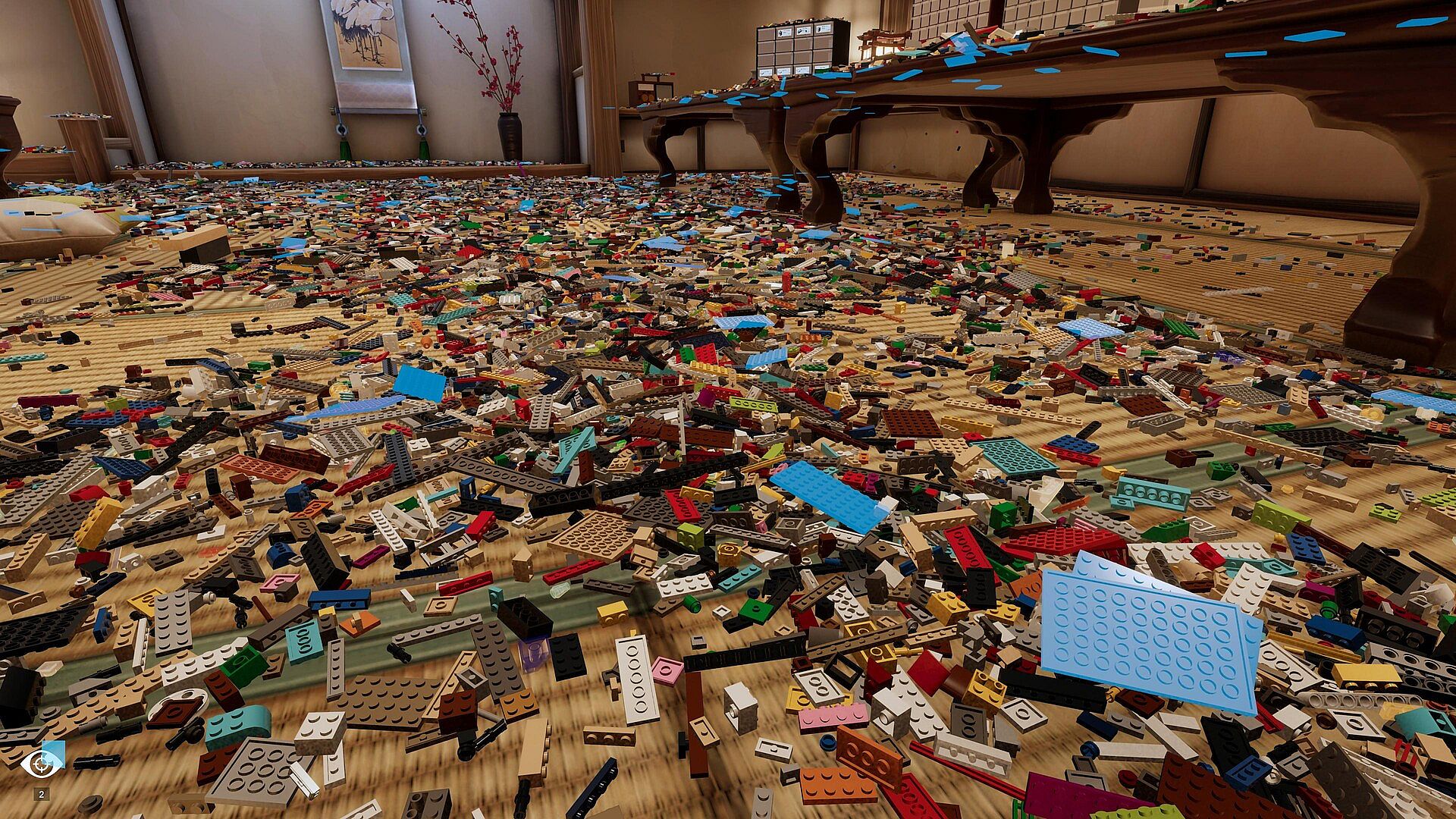
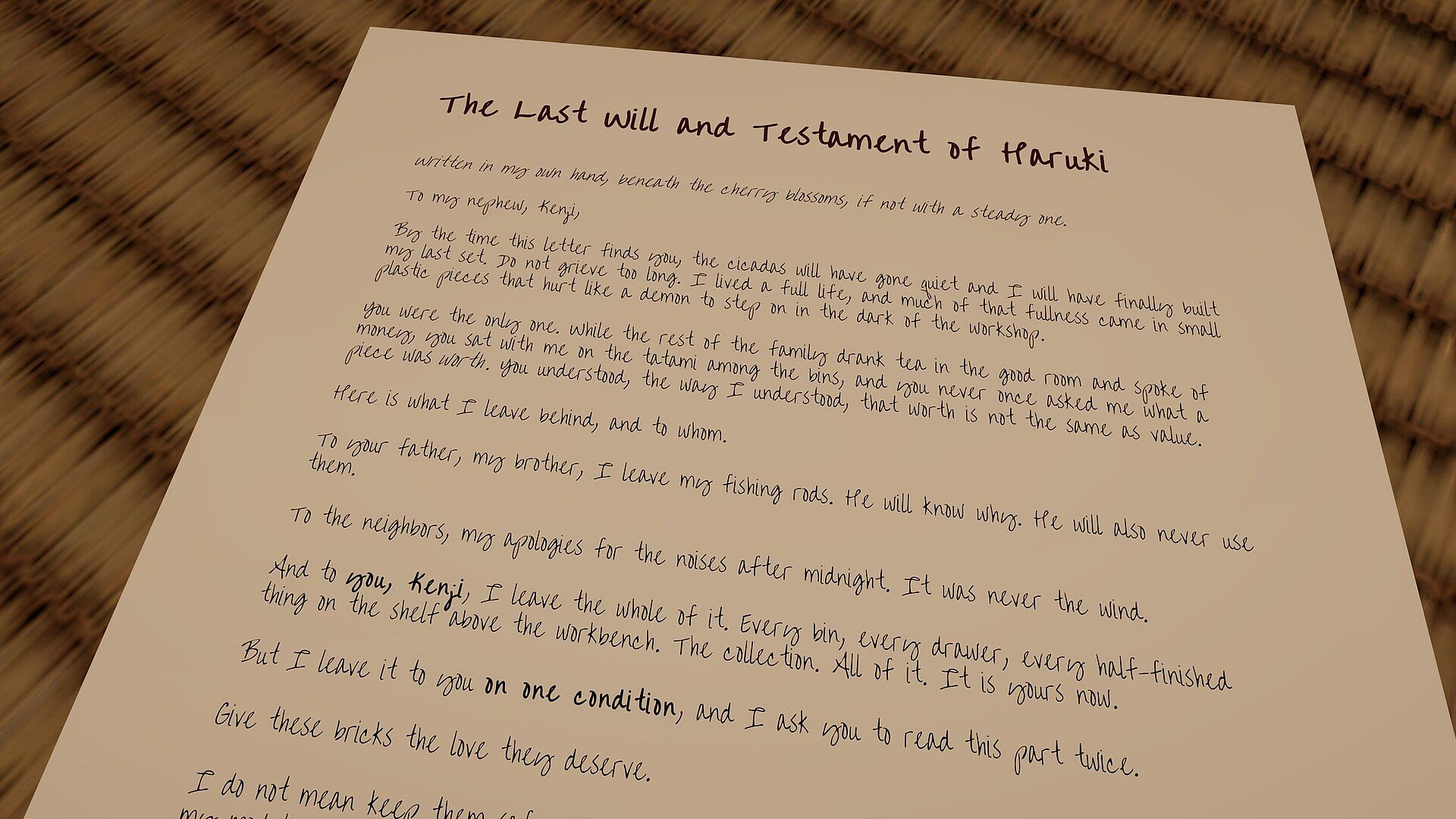
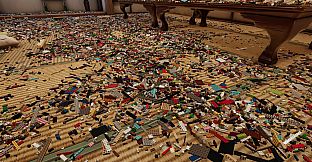
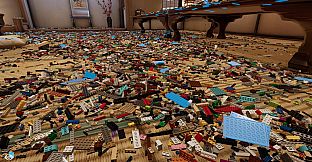

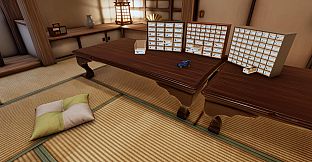
Never Sort By Color is a first-person casual simulation game centered on organizing an overwhelming collection of plastic bricks in a cluttered workshop. Players inherit a space buried under a massive pile and work methodically to restore order through careful sorting and setup of storage systems. The experience emphasizes deliberate, satisfying actions over speed or competition, making it a zen-like activity for those drawn to organization tasks and incremental progress.
Gameplay
The core loop involves approaching the enormous pile of bricks and extracting parts one handful at a time or through specialized tools that scale up efficiency. Early efforts focus on individual selections, while later stages allow broader sweeps that clear larger sections of the mountain. Visible reduction in the pile size provides constant feedback on advancement, turning the before-and-after state of the workshop floor into the primary measure of success.
Key tools support precise identification and movement of bricks. The magnet glove targets a specific part type and draws all matching loose pieces directly into the hand. Sorter's Eye highlights every instance of a chosen brick across the entire pile for quick location. Sieve trays enable scooping and shaking to separate pieces by size through gravity. Bucket sort assigns bins to quick-access keys for rapid, memory-based tossing of bricks. Locators illuminate the correct storage drawer when holding up a sample part. These systems encourage experimentation with different approaches to handling volume and variety.
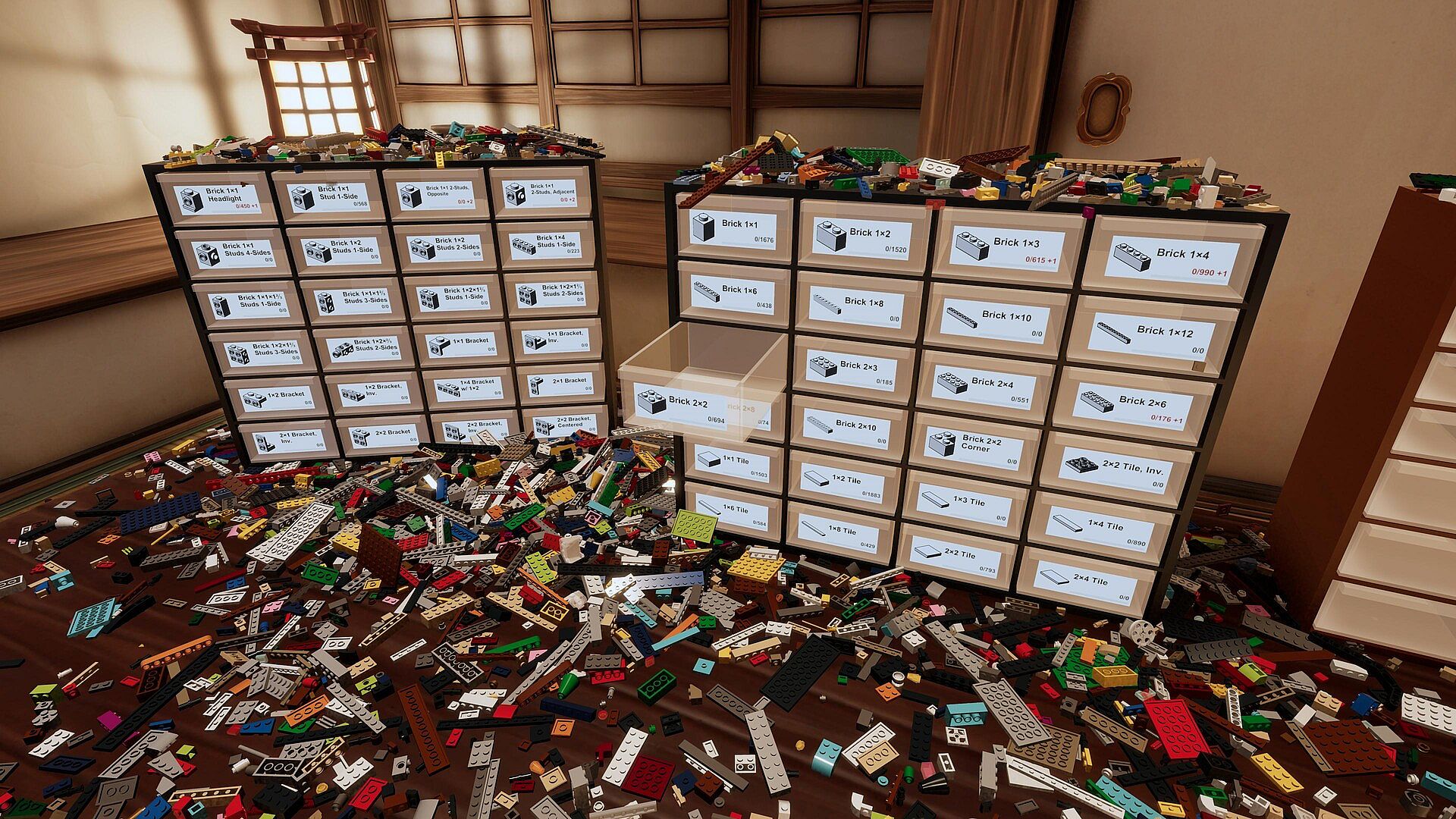
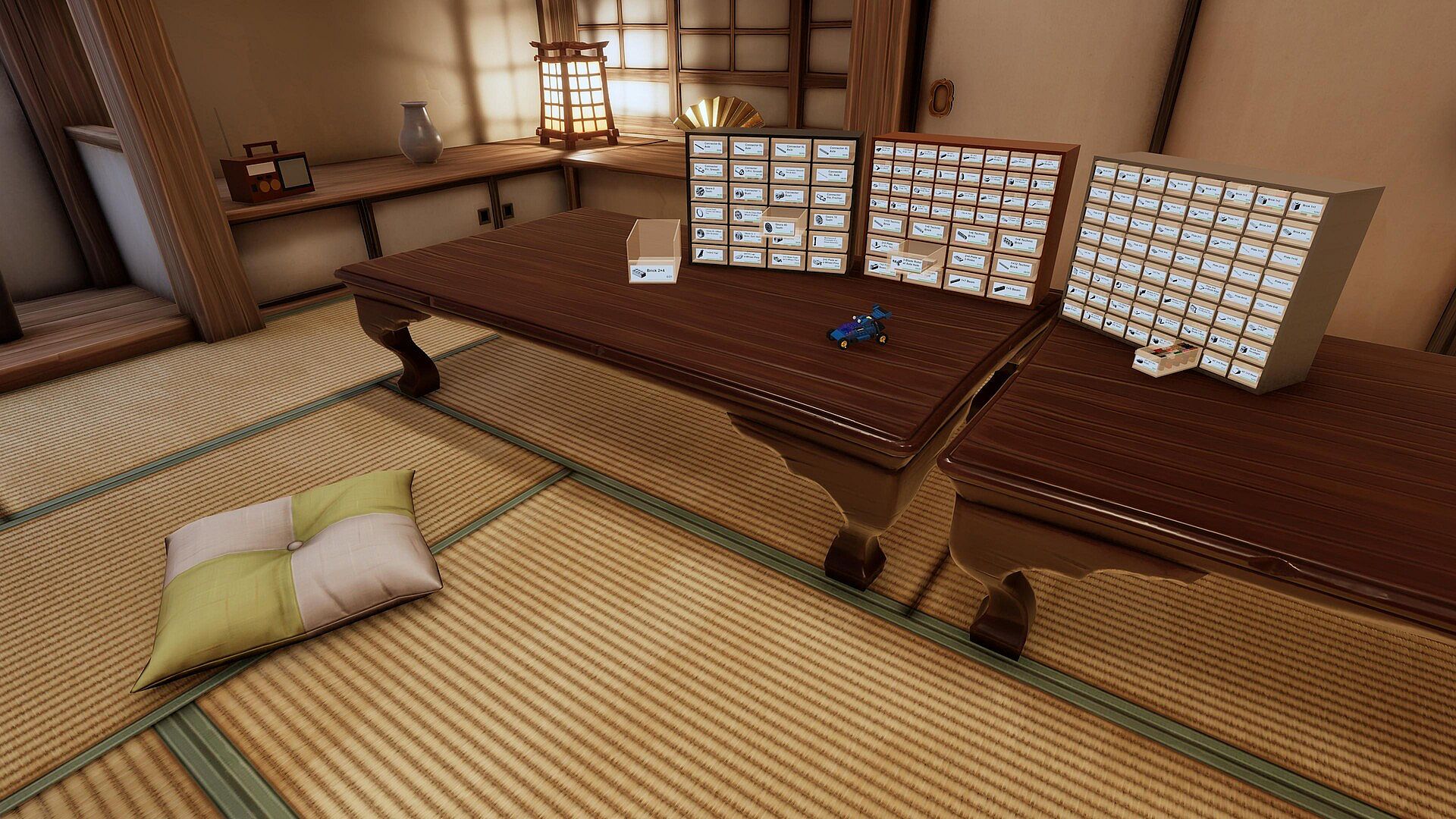
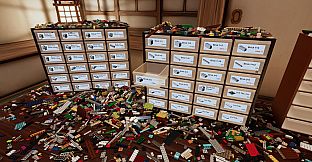
Storage expansion forms another layer of gameplay. Players purchase and arrange bins, trays, and cabinet walls into custom configurations, often stacking them high and labeling each container clearly. Proper organization directly impacts later tasks, as accurate drawers allow fast retrieval while mixed contents cause immediate rejection during use.
Game Modes
Never Sort By Color presents a single continuous single-player experience without distinct named modes or variations. The entire session takes place in one workshop environment, where the focus remains on progressive sorting of the central pile and expansion of personal storage. There are no timers, scoring systems, or failure conditions, allowing uninterrupted focus on the task at hand.
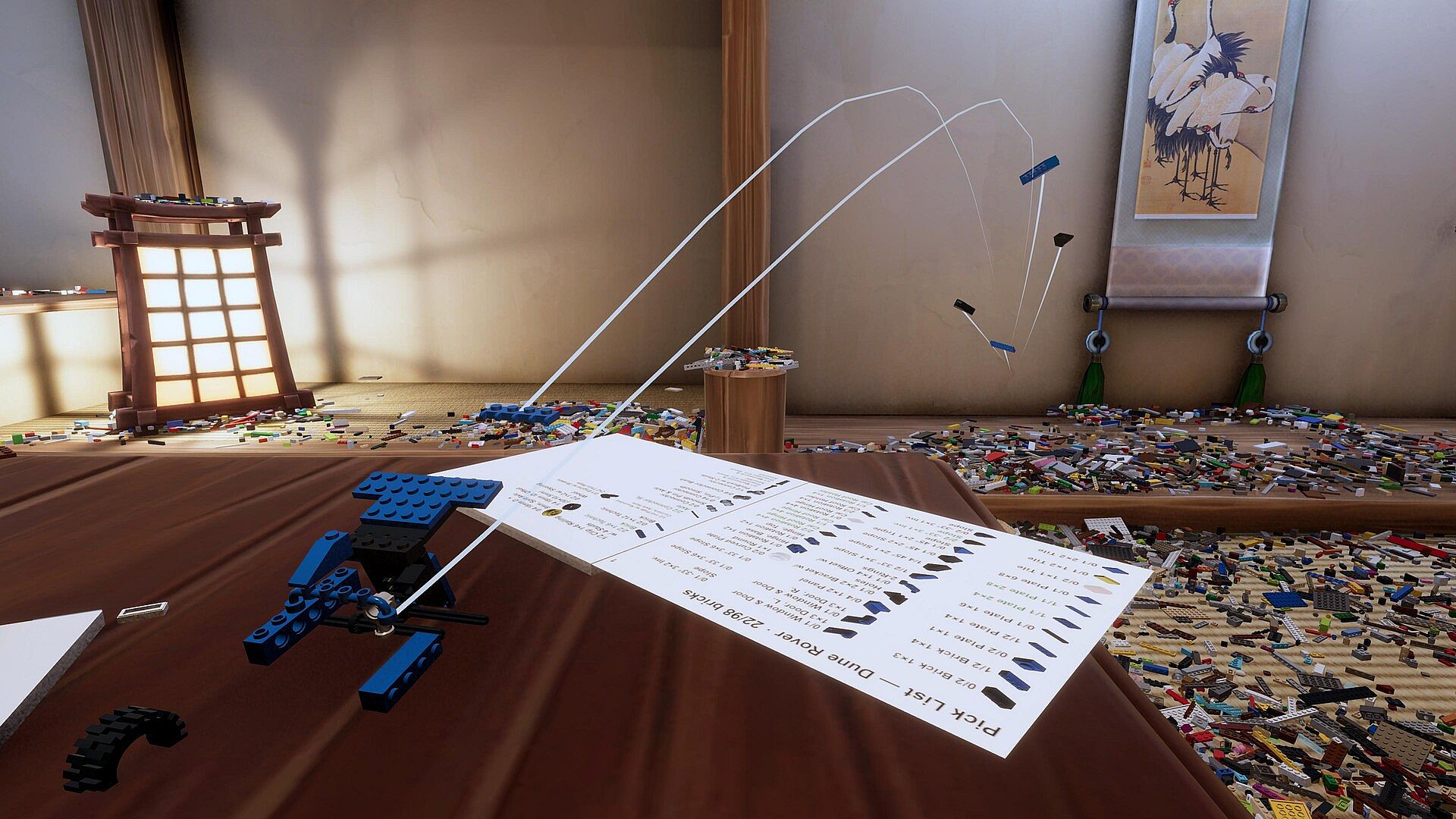
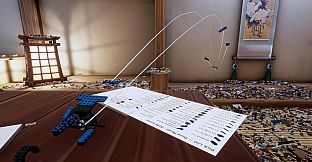
Progression occurs naturally through repeated sorting cycles that unlock better tools and more storage options. Instruction books scattered throughout the space introduce additional objectives tied to model construction, but these integrate directly into the main sorting flow rather than branching into separate gameplay styles.
Workshop Organization and Storage
Effective play requires thoughtful arrangement of the growing collection of bins and cabinets. Players experiment with layouts that support quick access, often creating dedicated zones for common part types. Labeling becomes essential for maintaining accuracy over time, as the system rewards consistent categorization by part rather than appearance. The physical act of stacking and positioning furniture adds a tactile dimension to the simulation, with the emerging clear floor space serving as visual confirmation of control regained.
Building Models from Instruction Books
Scattered instruction books provide opportunities to apply sorted parts toward complete constructions. Opening a book reveals a bill of materials that players pull from their organized drawers. Correctly sorted inventory results in rapid assembly, shown through a time-lapse sequence of bricks flying into place. Errors in drawer contents lead to visible rejection of mismatched pieces, reinforcing the value of precise sorting habits. Completed models remain in the workshop as decorative elements that players can interact with directly.
Is It Worth Playing?
Never Sort By Color suits players who enjoy methodical organization tasks and the quiet satisfaction of turning disorder into structure. The absence of pressure elements creates a low-stress environment ideal for extended sessions focused purely on the sorting process and workshop customization. Those seeking a relaxing simulation with tangible visual feedback from their efforts will find the core loop consistently engaging, while anyone preferring action, competition, or narrative-driven content may find the pace too deliberate. The game remains available on PC as a standalone title centered on its unique brick-sorting premise.