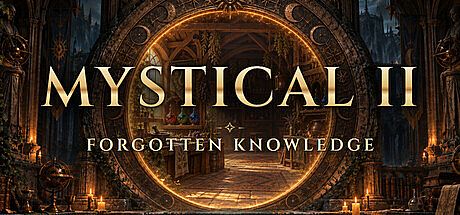


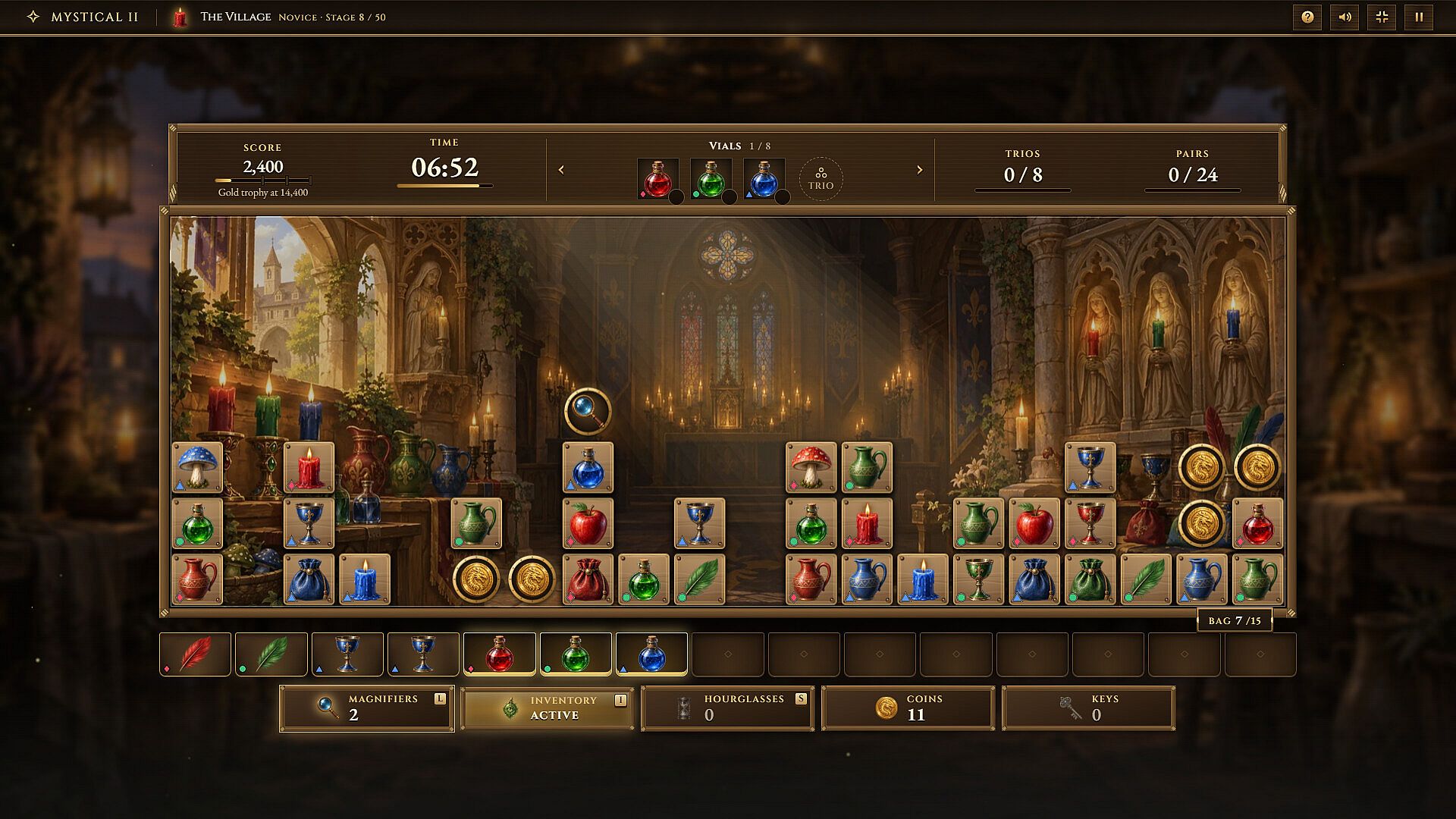
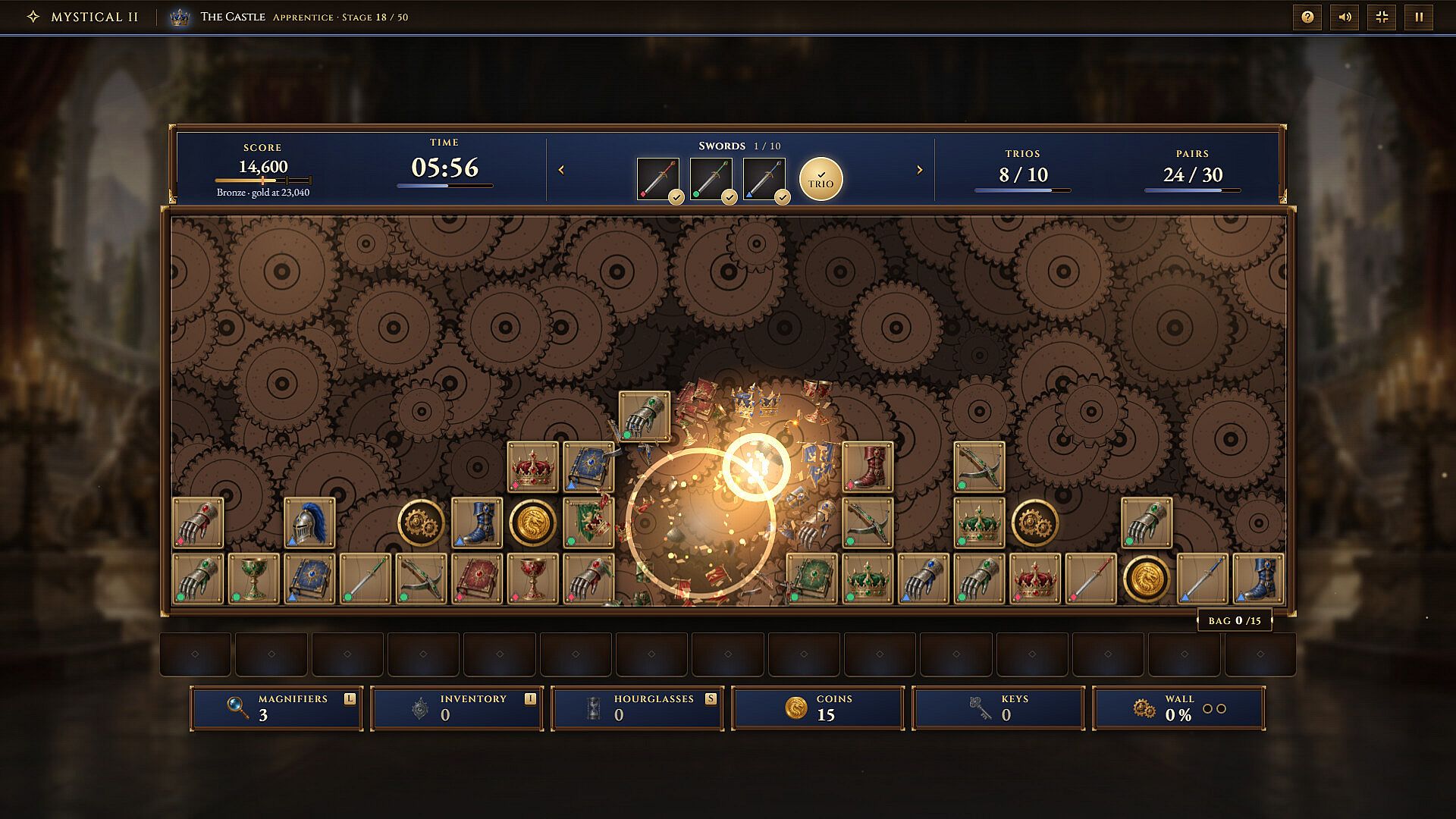
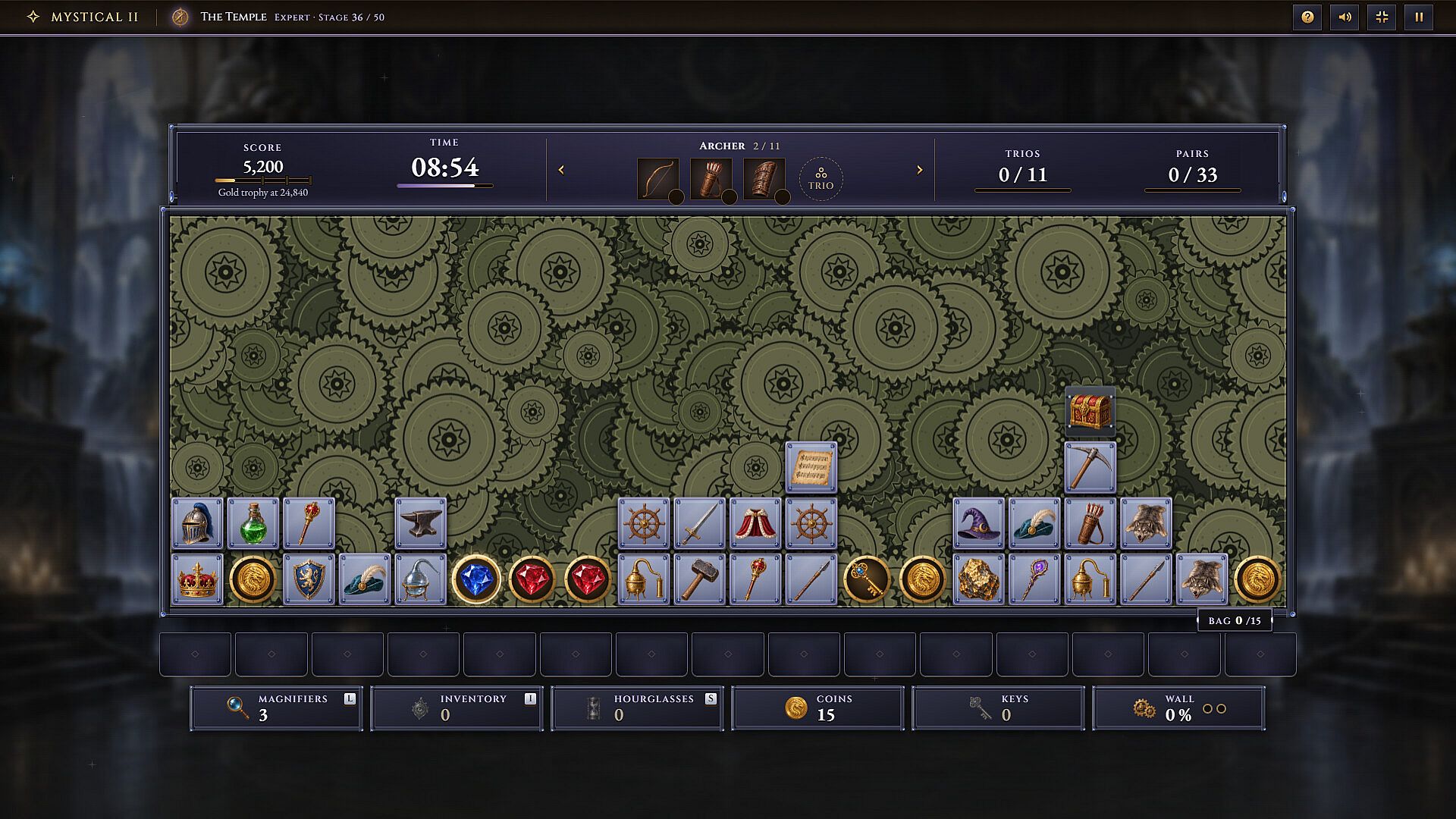
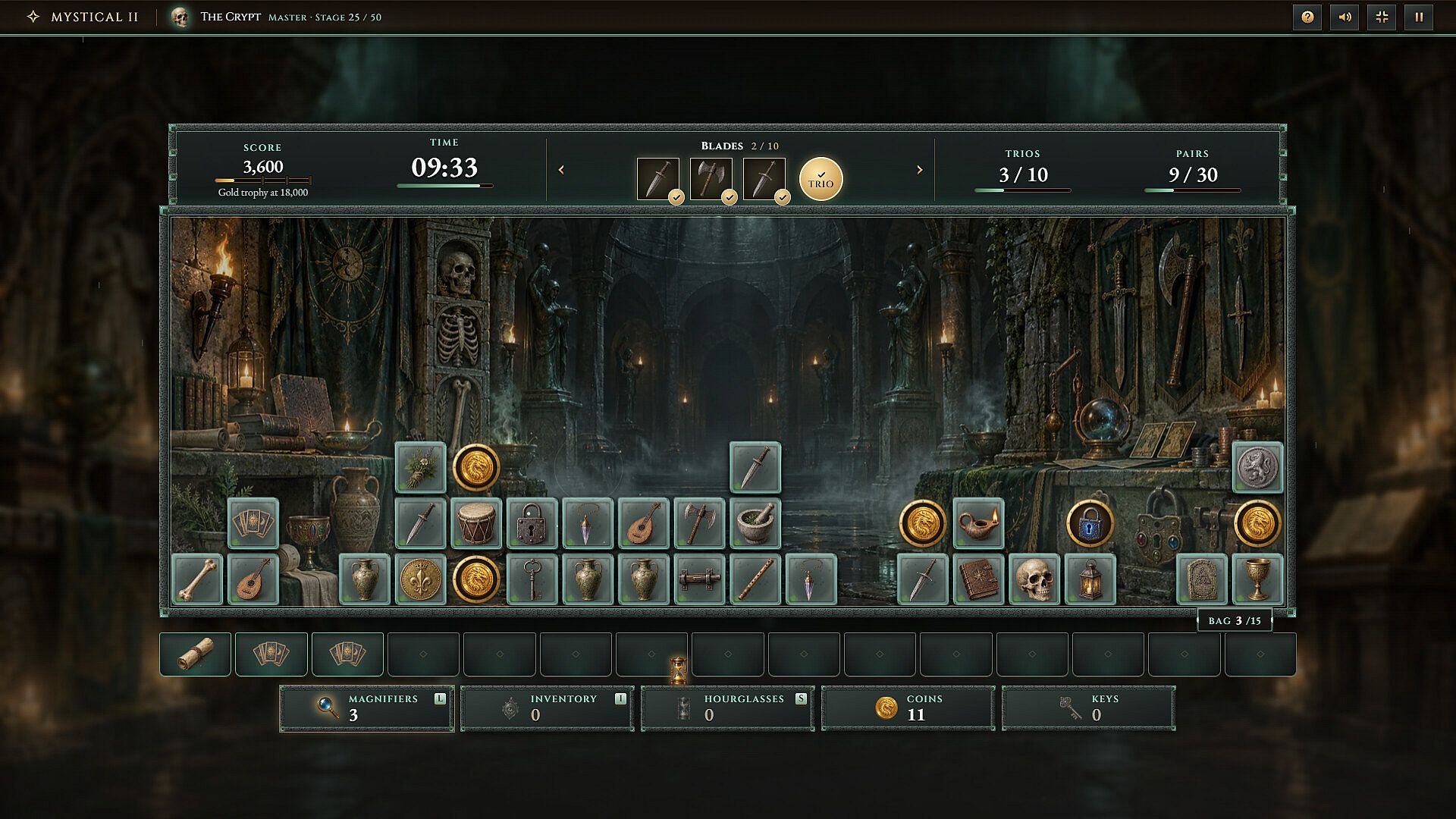
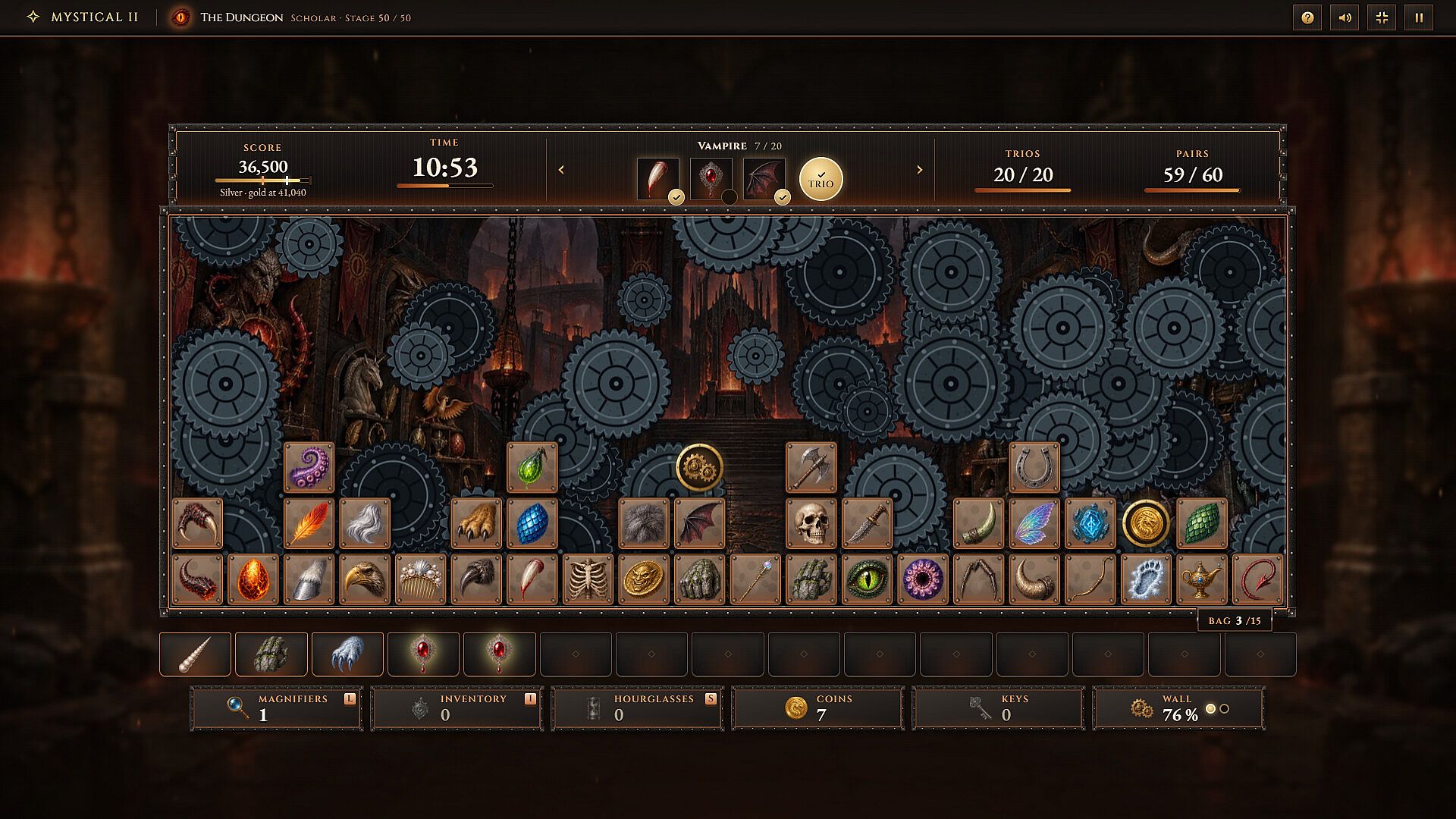
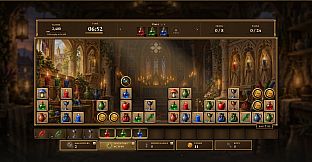
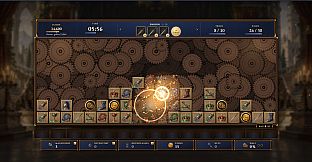
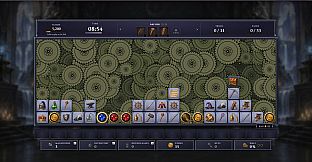
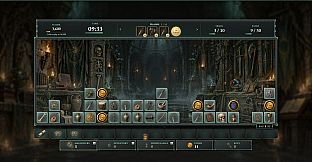
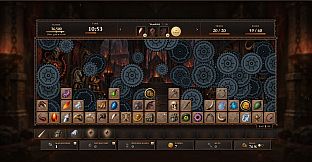

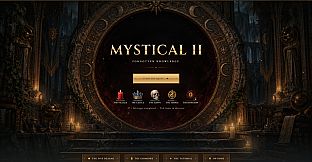
Mystical II: Forgotten Knowledge is an indie casual puzzle game for PC that challenges players to recover lost knowledge by collecting and matching objects across five distinct realms. Objects descend column by column onto a board, each requiring a gold coin purchase before entering a bag that holds only fifteen items at once. Players form trios from three different objects of the same family or pairs from two identical ones, then apply a magnifier to reveal the knowledge and increase the score. Every family requires one trio and three pairs to complete, with an ordered trio on the family card doubling the points. A column overflow, a full bag with no valid moves, or the timer expiring ends the attempt.
Gameplay
The core loop centers on careful selection and resource management. Each purchase commits space in the limited bag, so decisions about which objects to acquire directly affect survival and scoring. Bonuses appear as round medallions collected without cost, including extra coins, additional magnifiers, scrolls that multiply the next successful pick, hourglasses that restore a minute, and padlocks that pause the timer. Later stages introduce bombs to clear obstacles, stones that conceal rubies, sapphires, and morganites, and keys that unlock chests for further rewards. The bag mechanics force constant evaluation of current holdings against incoming objects, turning each stage into a test of foresight rather than speed alone.
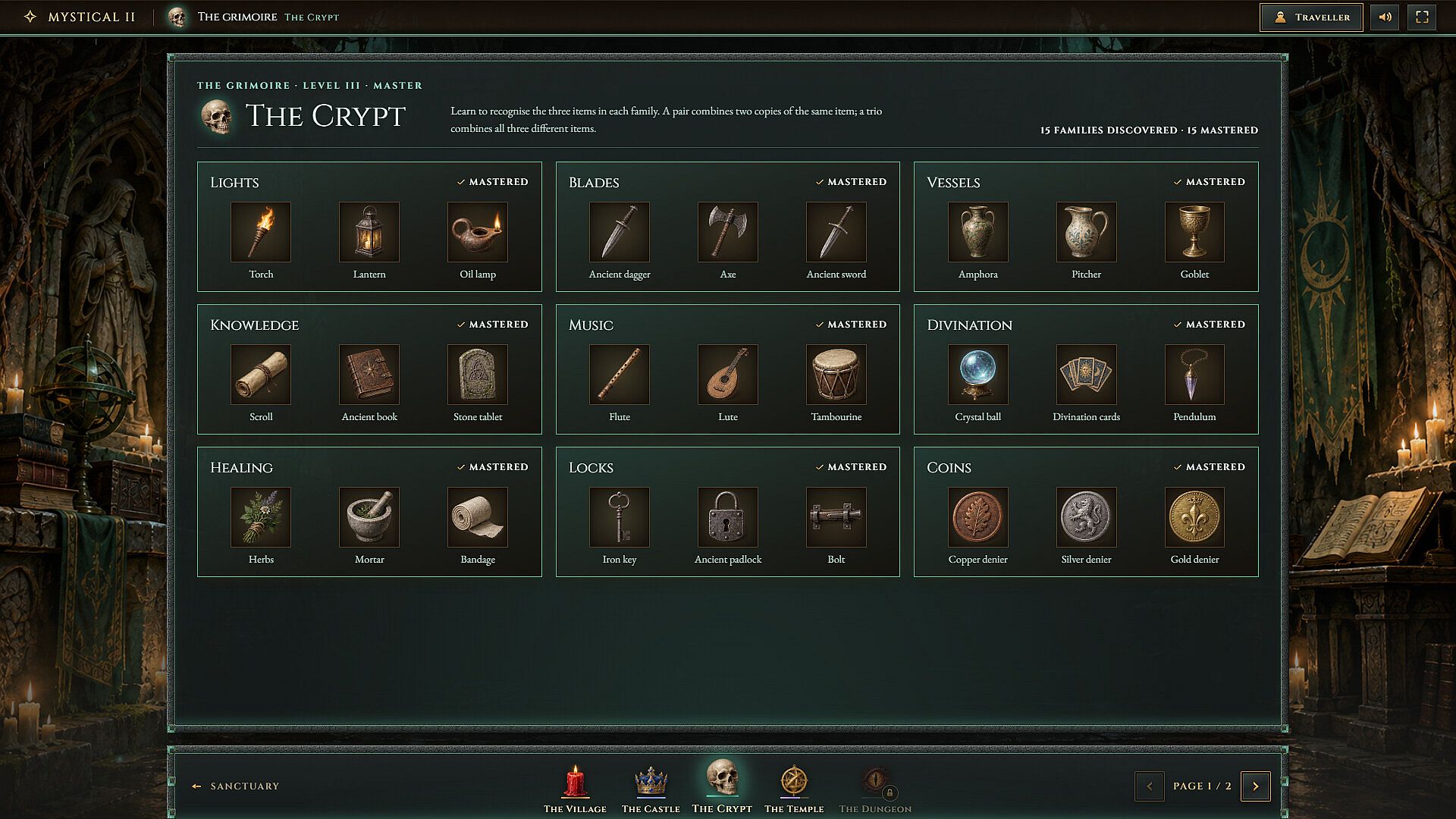
Seventy-two families contain two hundred sixteen painted objects in total. A grimoire records every family encountered, allowing players to review progress outside active stages. A filmed tutorial divided into six chapters demonstrates the systems using actual gameplay footage. Controls support both mouse and keyboard, and the entire experience runs fully offline in English or French.
Game Modes
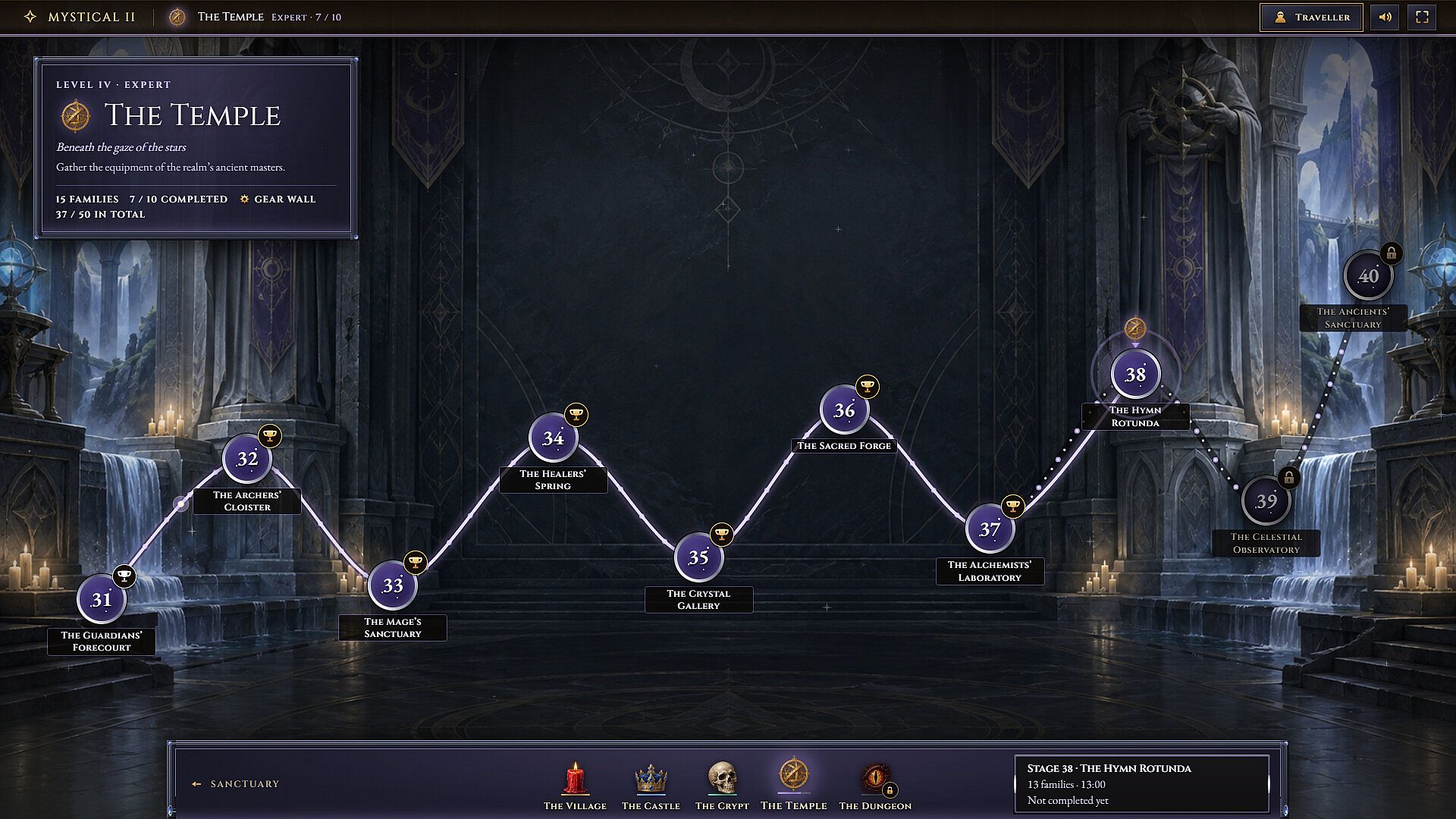
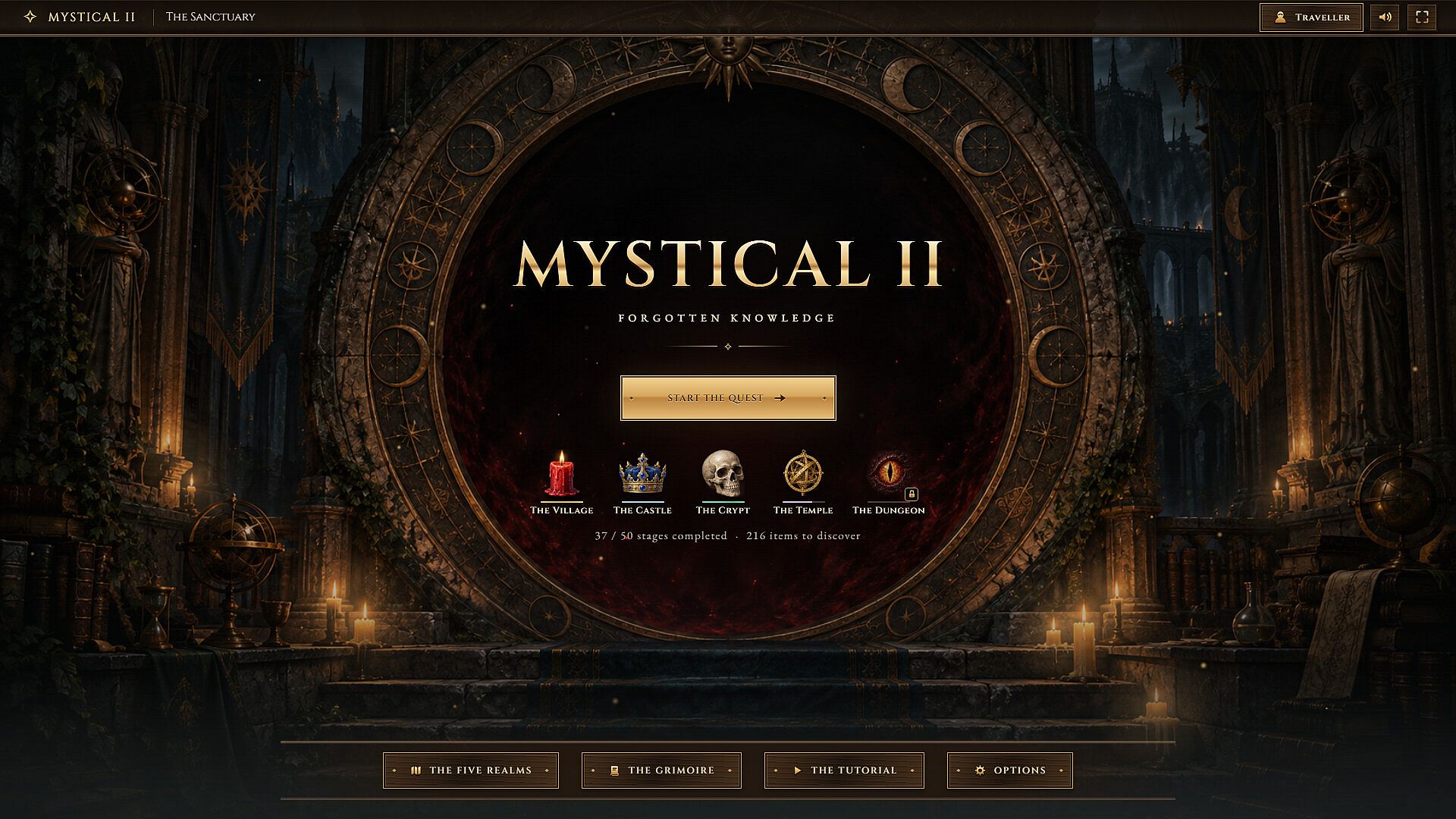
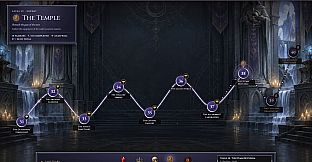
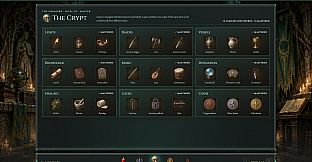
Progression unfolds across fifty stages divided among five realms, each with its own backdrop and specialized rules. The Village focuses on objects in three colors. The Castle adds more families alongside a wall of gears that must be dismantled. The Crypt features different objects that fulfill identical purposes. The Temple requires assembling the complete equipment of ancient masters. The Dungeon demands recognition of twenty creatures through details such as horns, scales, and claws.
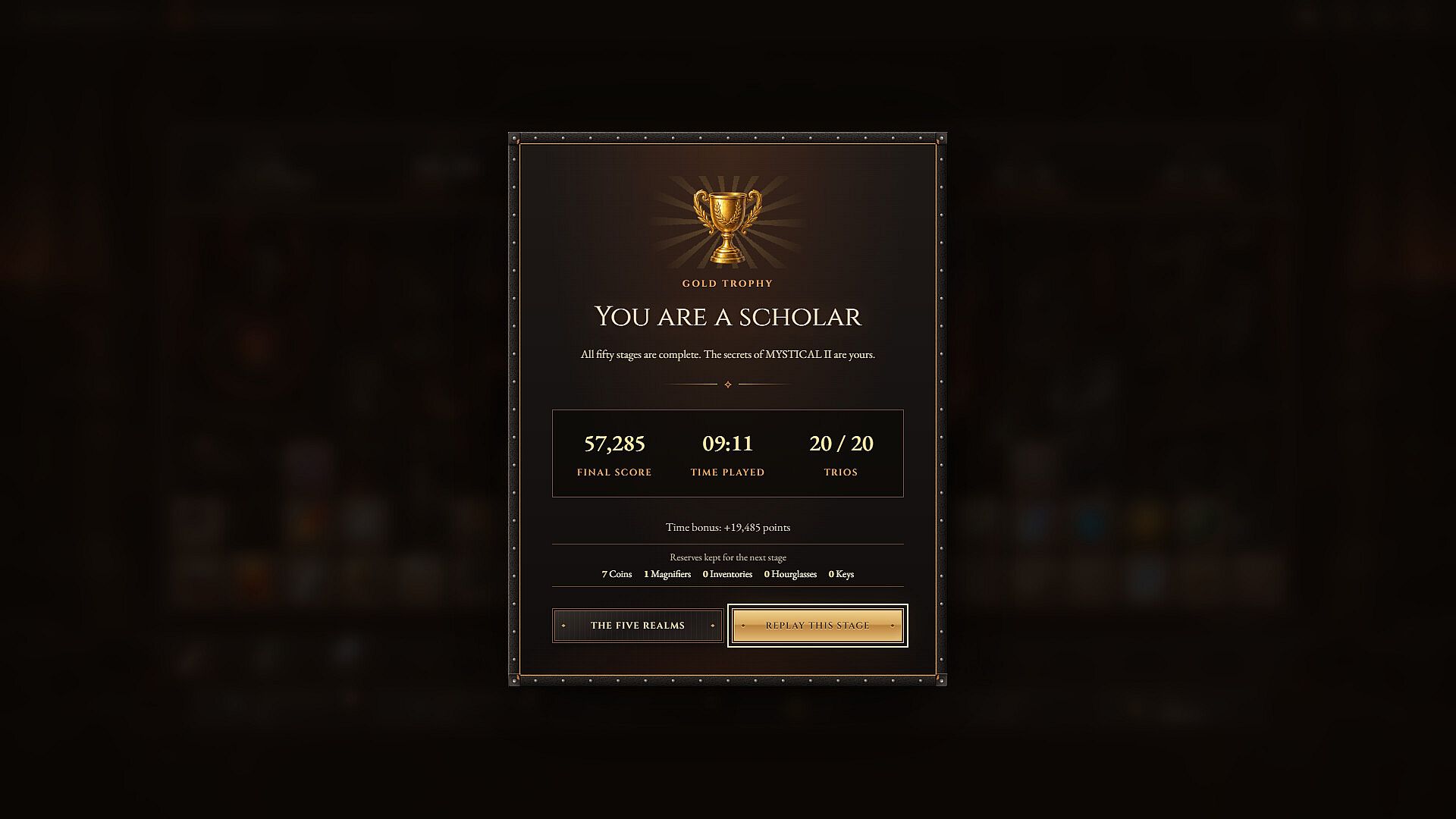
Every stage supports unlimited replays aimed at earning bronze, silver, or gold trophies based on performance. No separate competitive or cooperative modes exist beyond this single-player structure of sequential realm challenges and score improvement.
The Realms and Their Challenges
Each realm modifies the matching rules in targeted ways that build on the base system. Village stages emphasize color coordination among the falling items. Castle stages layer mechanical elements like the gear wall onto the core collection process. Crypt stages reward understanding functional equivalents rather than visual matches. Temple stages test comprehensive set completion. Dungeon stages shift focus to visual identification of creatures. These variations keep the fifty stages distinct while sharing the same bag-management foundation.
Additional tools such as bombs and hidden gems appear more frequently in later realms, providing relief during tight situations without altering the fundamental rules.
Is It Worth Playing?
Mystical II: Forgotten Knowledge suits players who enjoy deliberate puzzle games that reward planning over reflexes. The limited bag creates meaningful choices on every purchase, and the trophy system encourages repeated attempts on familiar stages to refine strategies. With fifty stages spread across varied realms, the content offers substantial single-player duration for the price. The absence of online requirements and the offline design make it accessible for focused sessions without interruptions. Those seeking quick matches or multiplayer elements will find less appeal here, while fans of object-matching puzzles with strategic depth stand to gain the most from the experience.