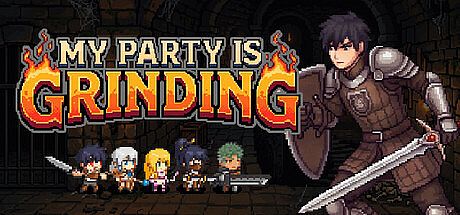






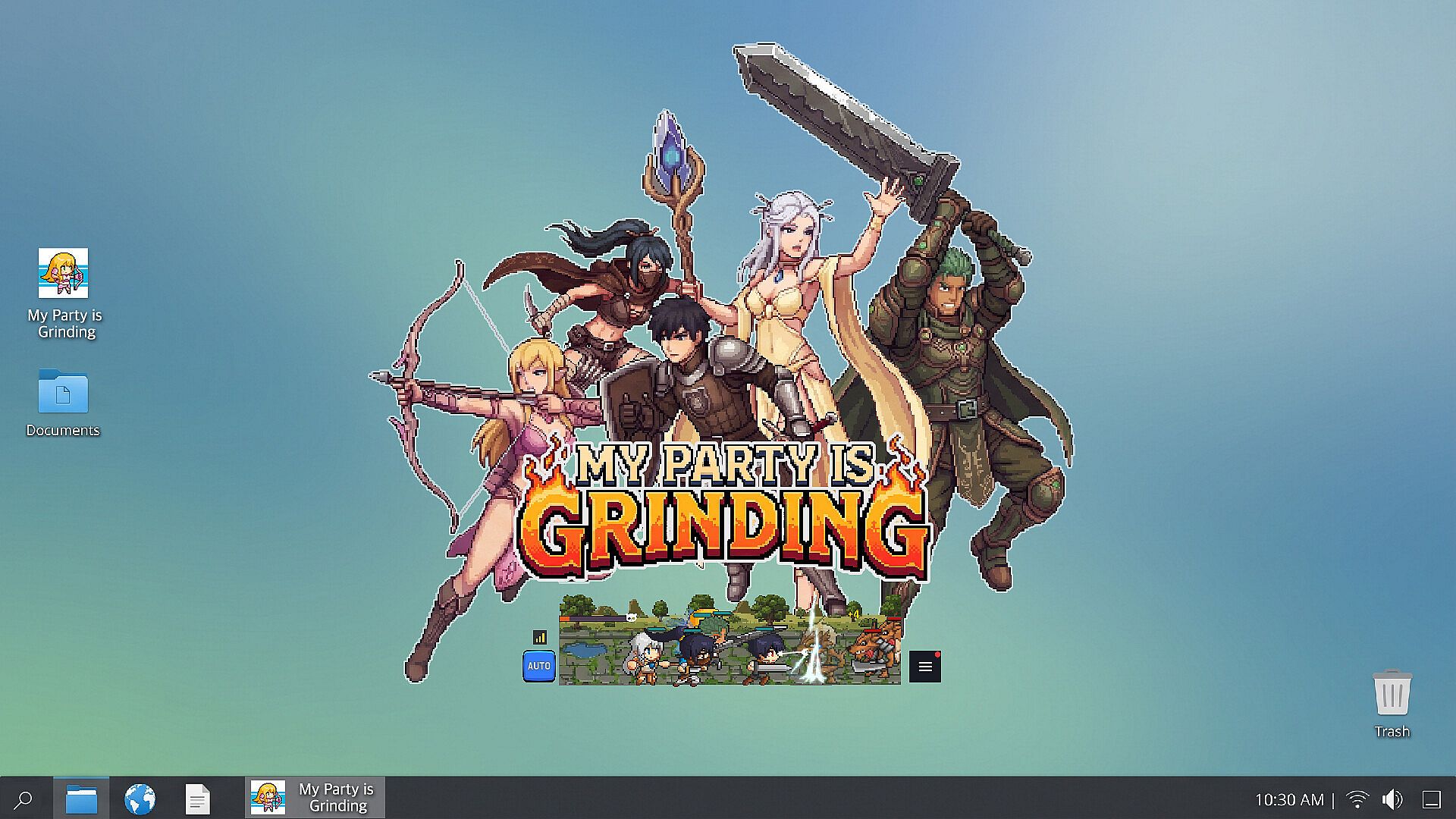
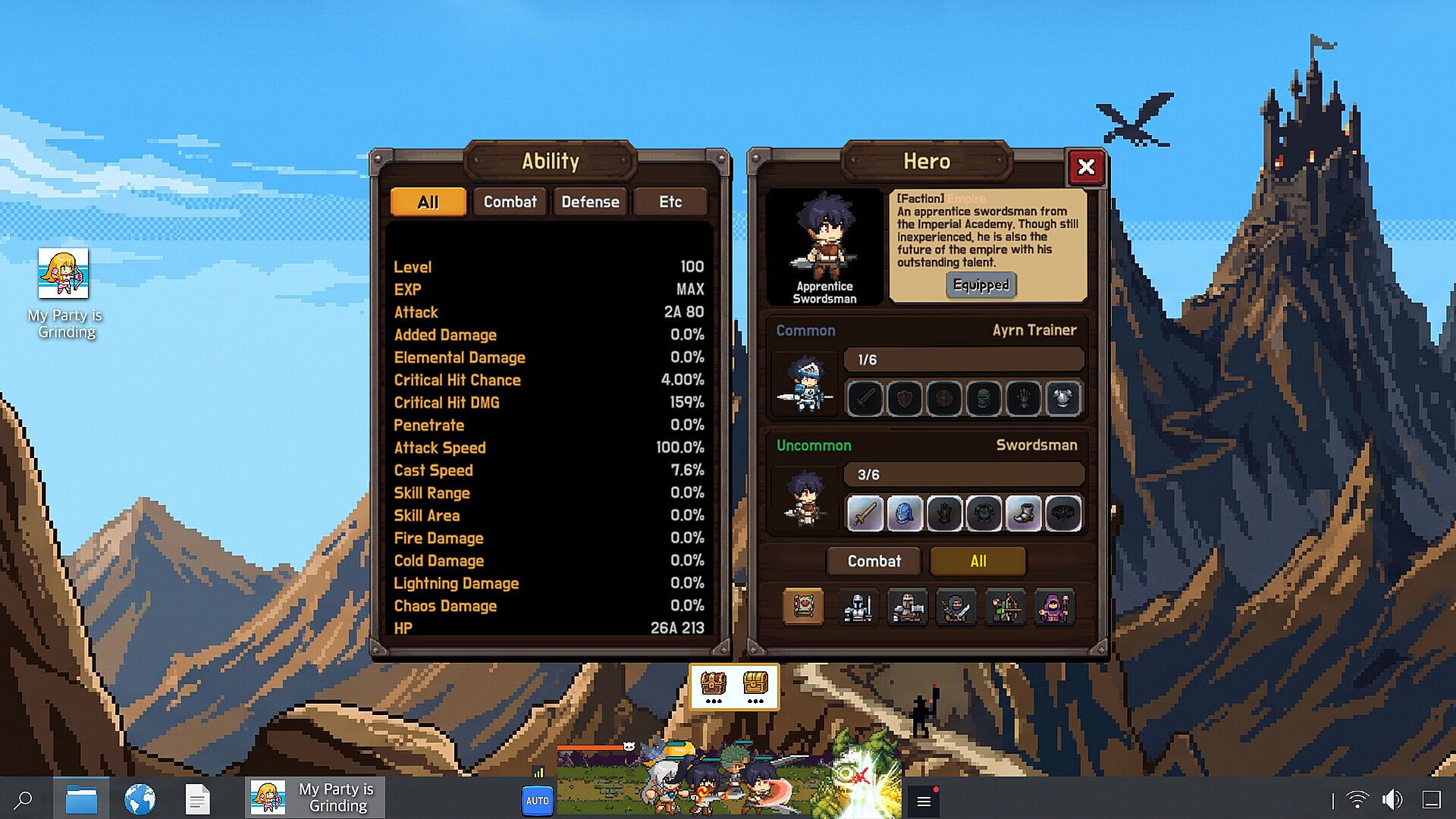
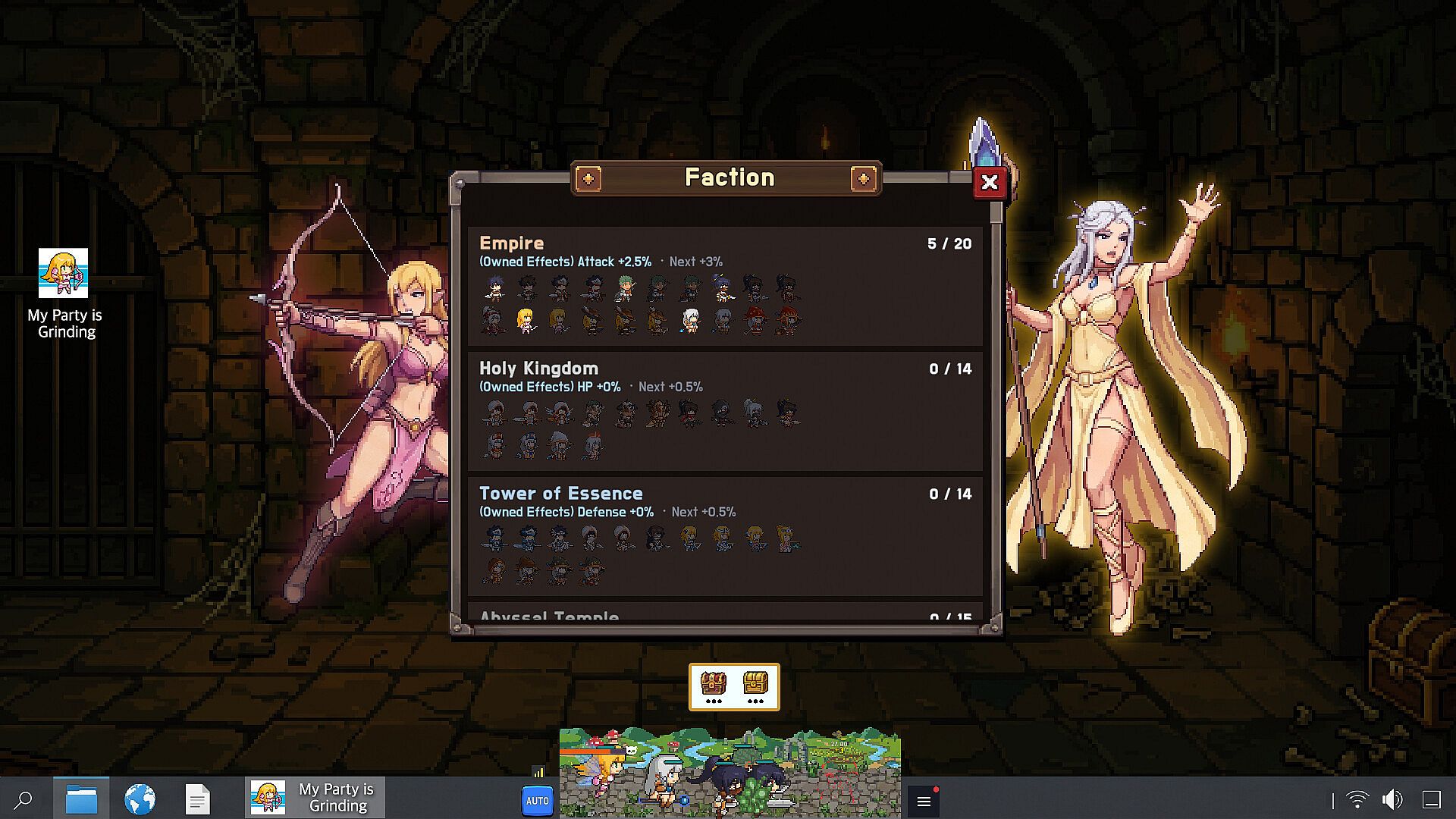
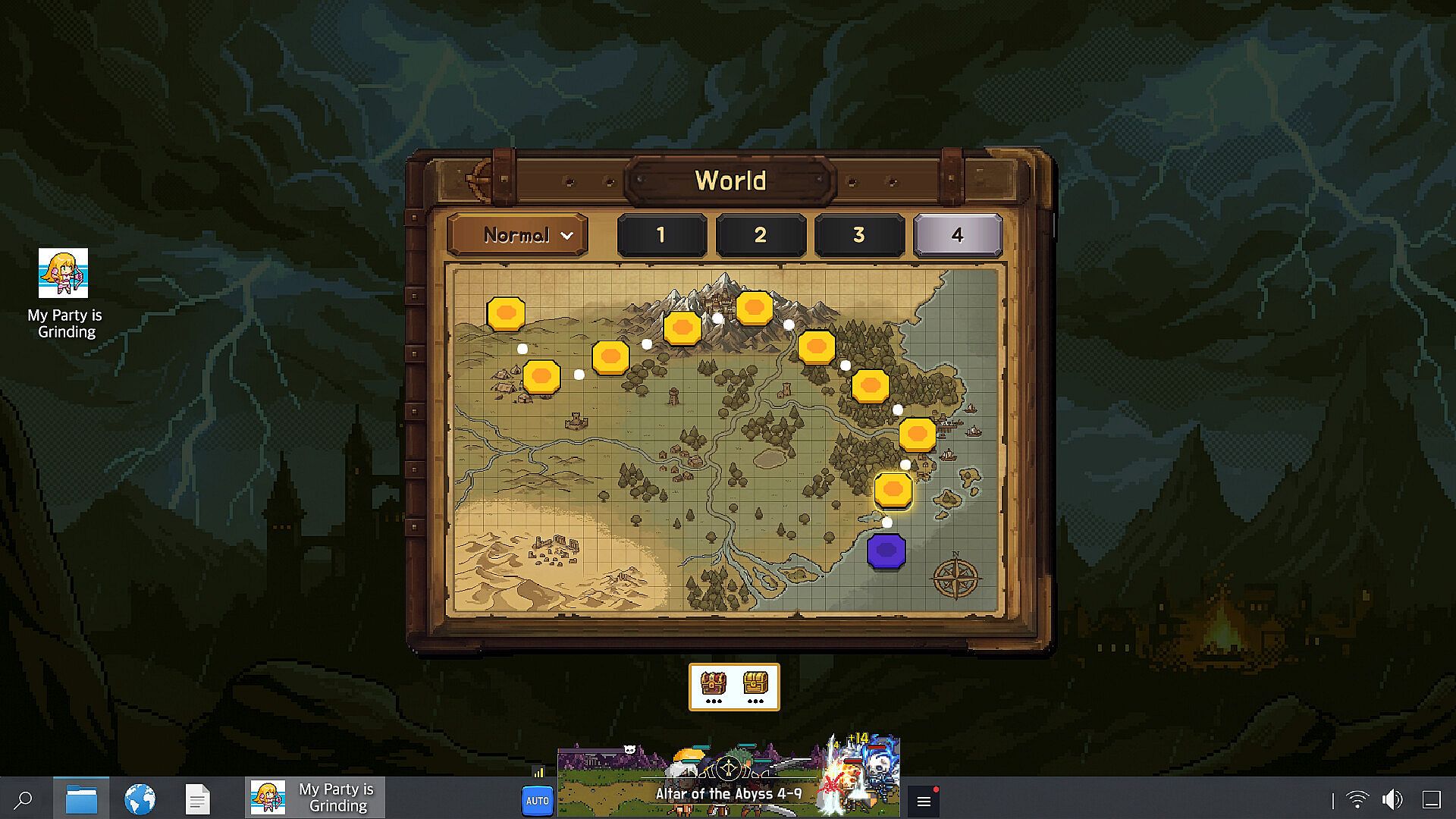
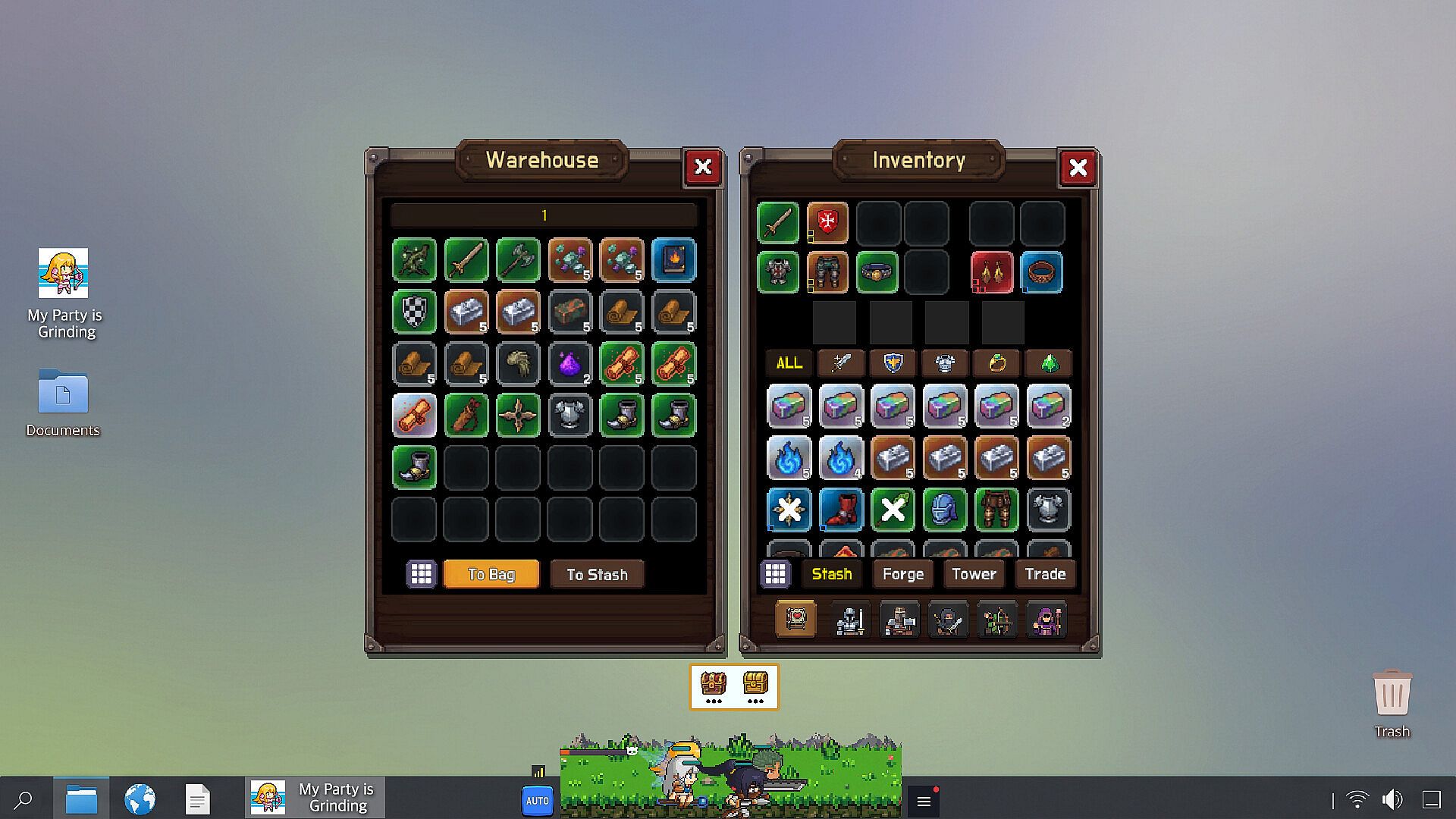
My Party Is Grinding is a free-to-play RPG that runs as a compact, semi-transparent window on your PC desktop. Players manage a party of heroes who handle all the combat, looting, and progression automatically while the rest of the screen remains available for work or other tasks. The setup blends idle mechanics with layered RPG systems, allowing steady advancement without constant attention.
Gameplay
The core loop centers on a persistent party window that stays visible alongside other applications. Heroes advance through battles, collect gear, and gain experience even when the window sits minimized or the computer is offline for up to eight hours. Interaction stays light: users can reposition the window, adjust zoom, toggle always-on-top behavior, or click through it entirely when focus is needed elsewhere. Occasional manual inputs, such as opening dropped chests, provide small moments of engagement without interrupting the flow.
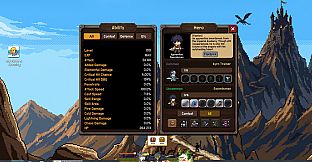
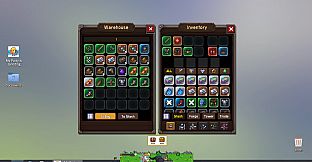
Five distinct classes form the party from the start: Knight, Warrior, Assassin, Archer, and Mage. Each receives stat allocation, skill loadouts limited to four active abilities at a time, and purely cosmetic costume options. Additional classes unlock over time, along with extra skill slots. Gear spans more than 400 pieces across eight grades and twelve equipment slots, with enhancement options that include gem insertion, engravings, and enchantments handled at dedicated crafting stations.
Game Modes
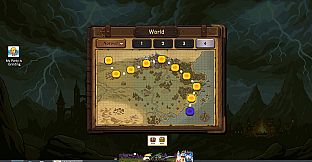
Progression unfolds across four regions divided into ten stages each, with five difficulty tiers labeled Normal, Hard, Nightmare, Hell, and Inferno. Stage and act bosses introduce signature abilities that require attention to party composition and mitigation layers. An auto-challenge option repeats the current stage indefinitely, maintaining gold and experience gains during extended sessions. Combat incorporates five damage elements with associated status effects, supported by defensive systems that include dodge, block, damage reduction, and armor values. A live damage meter tracks individual hero contributions, while downed characters can be revived to sustain longer runs.
Progression Systems
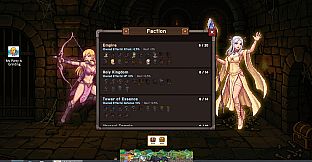
Long-term growth relies on the Orb Circuit, a directional tree containing over 200 nodes, paired with Constellations that deliver keystone bonuses. Costume collections tied to factions grant permanent party-wide stat increases, and owning multiple pieces from the same faction further strengthens every hero. Pets obtained through monster encounters provide ongoing bonuses simply by remaining in the collection. These layers operate continuously alongside the automated battles, creating compounding improvements that accumulate over days and weeks.
Is It Worth Playing?
The game targets players who enjoy steady RPG progression without demanding full-screen commitment. Its desktop format suits multitasking environments, while the depth in gear crafting, skill customization, and multi-axis progression trees offers substance beyond basic idle titles. Because the title remains unreleased with a planned launch in August 2026, no player reviews or long-term update history exist yet. Those drawn to single-player experiences that combine passive advancement with strategic party building and trading elements on the Steam Community Market may find the concept appealing once it becomes available.