




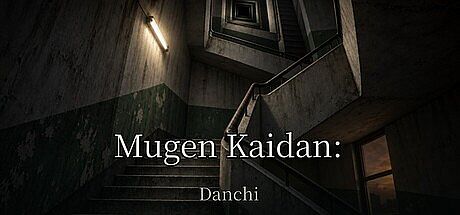


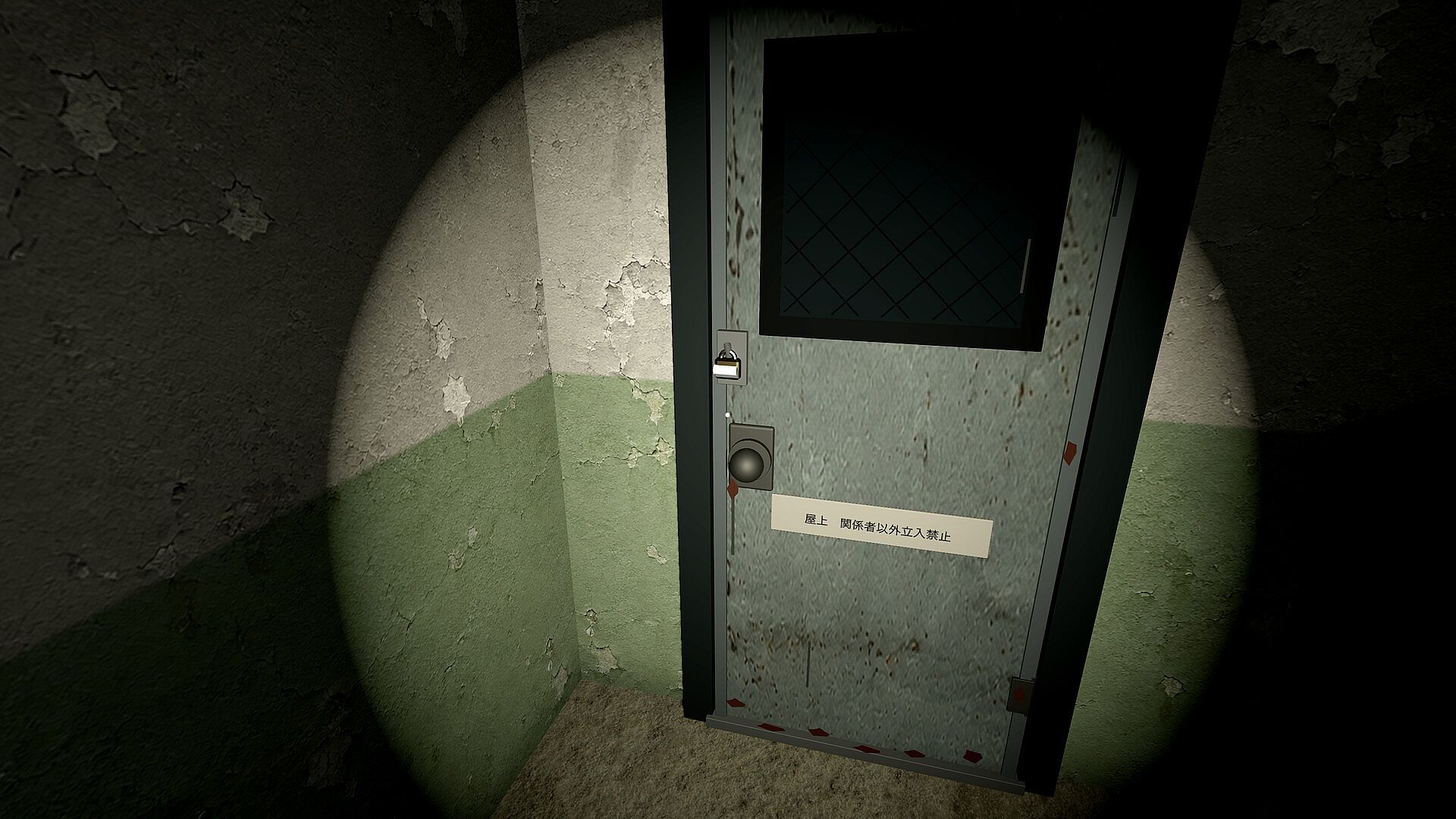
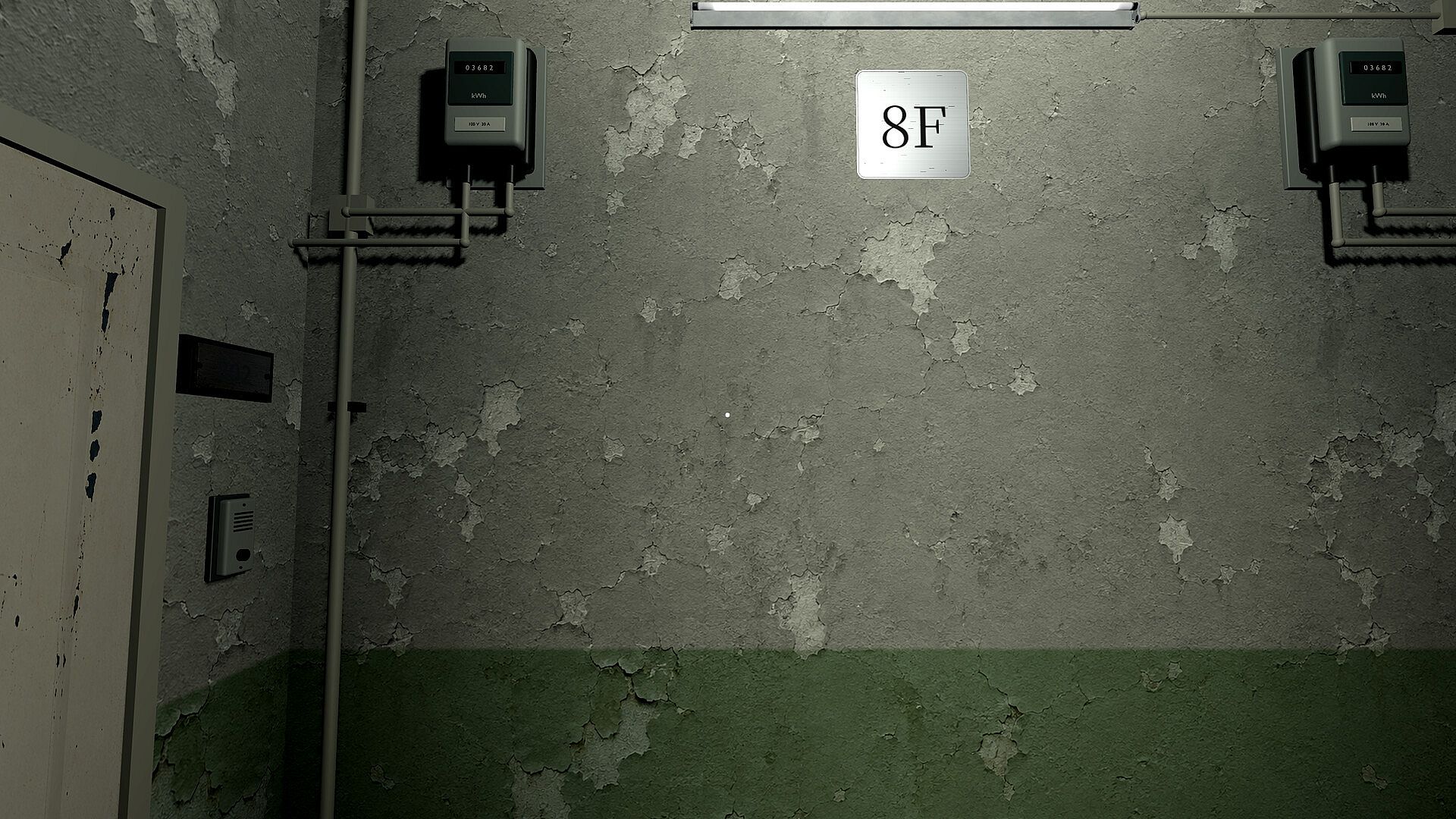
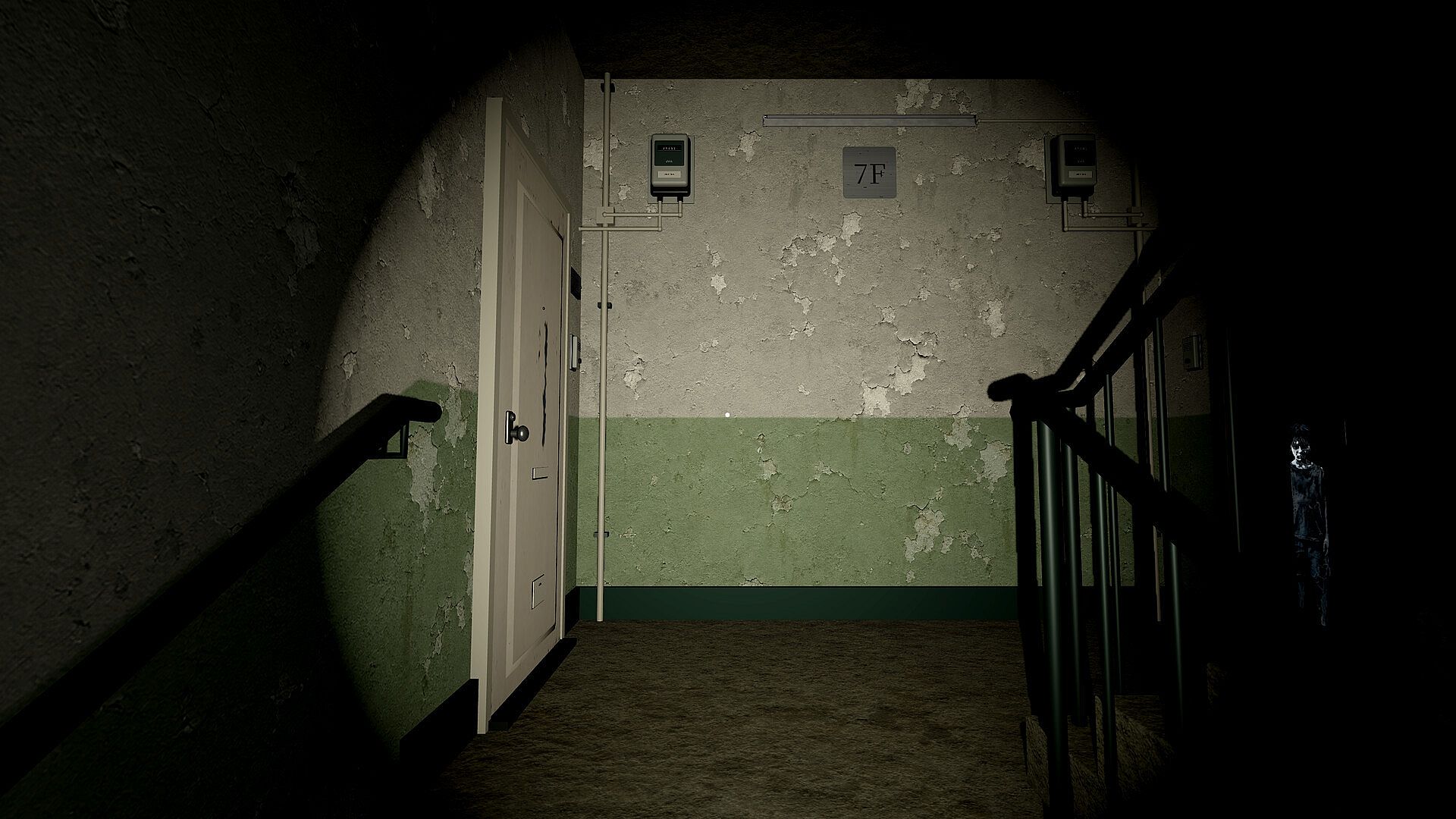
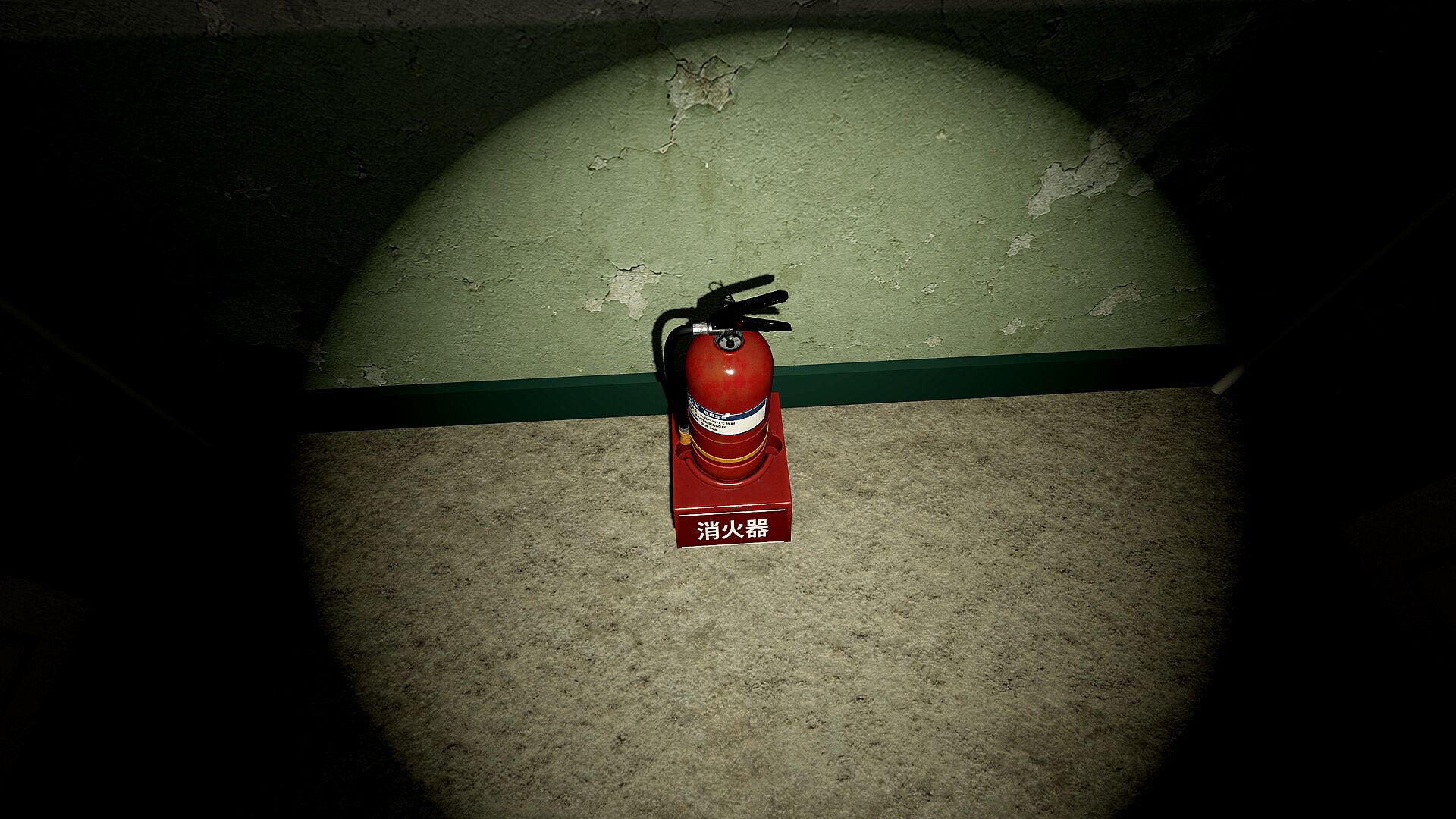
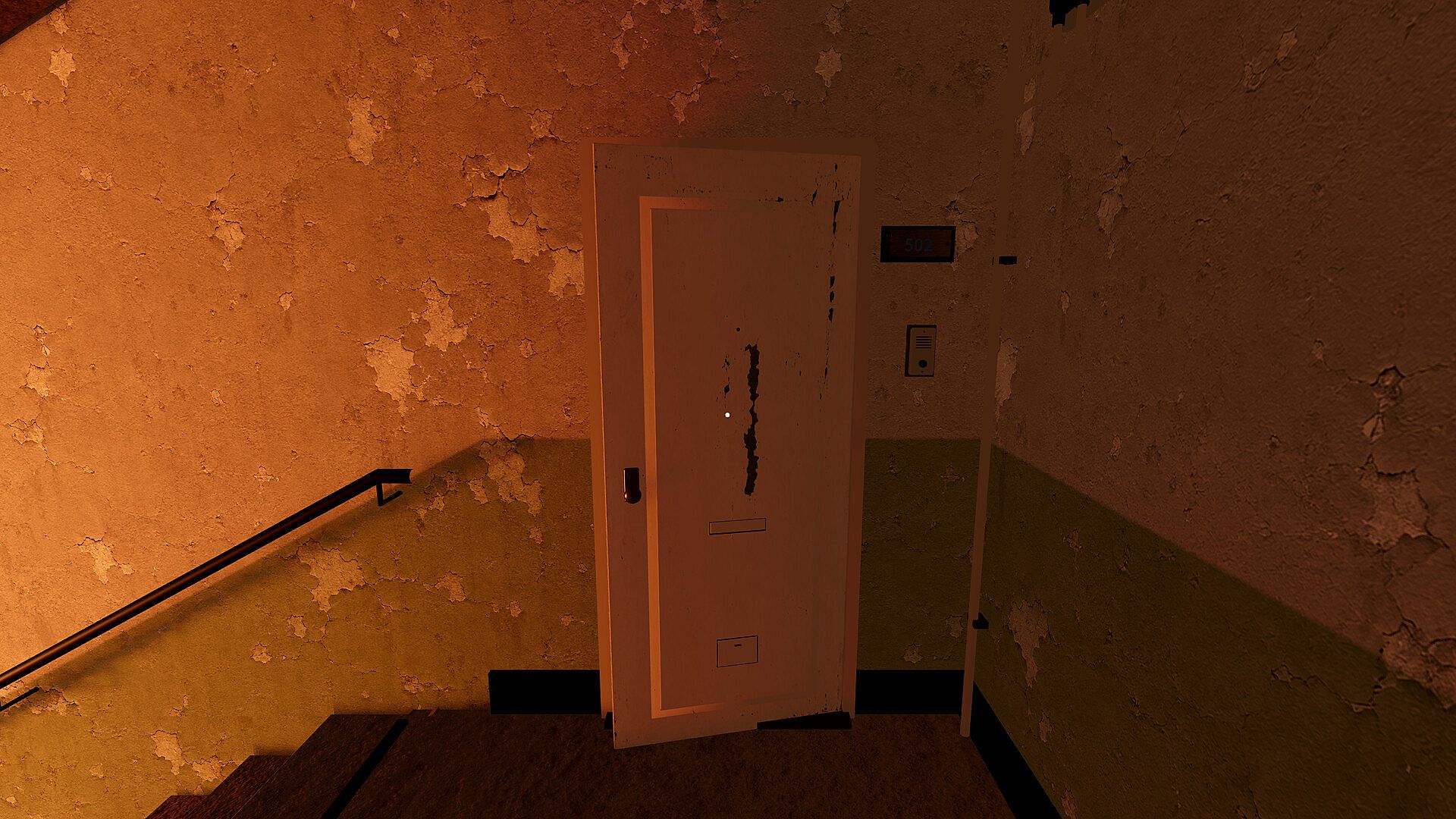
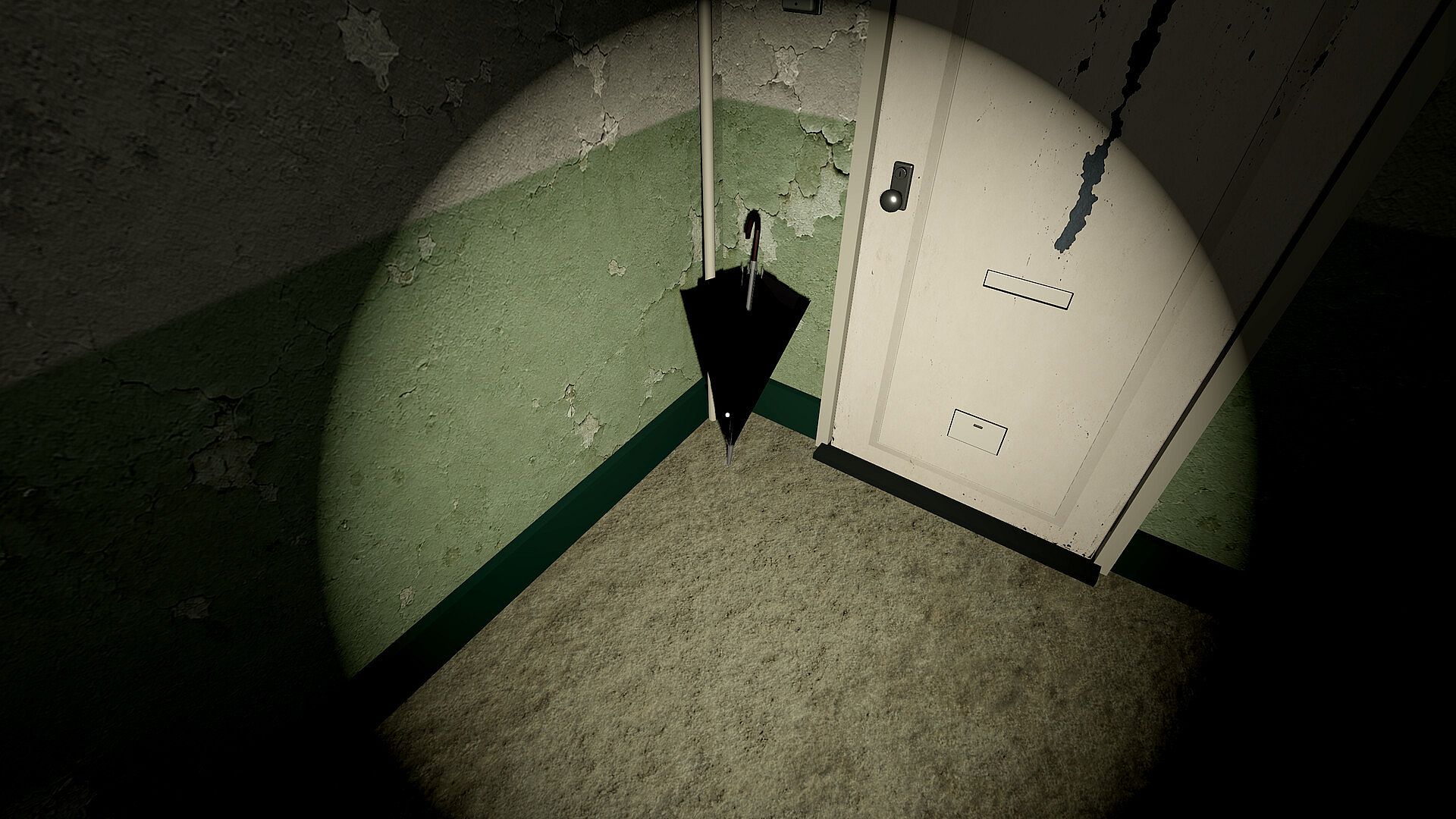
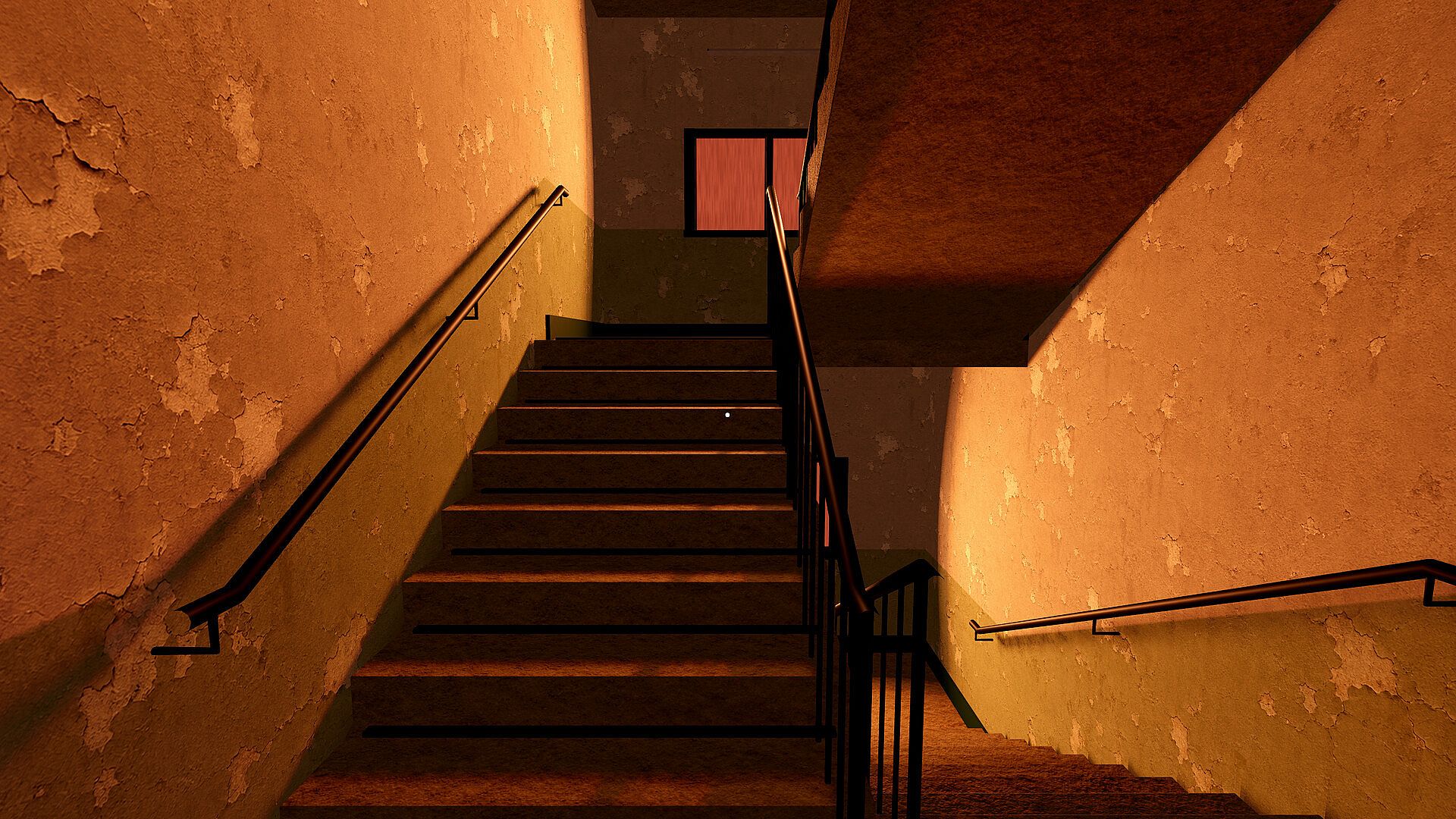
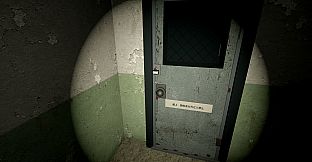
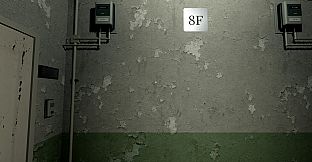
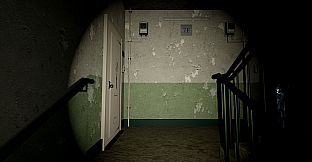

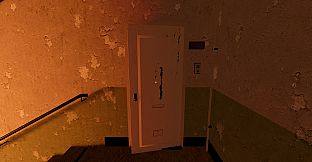


Mugen Kaidan: Danchi is a short first-person psychological horror adventure game set inside the stairwell of an aging Japanese apartment complex. Players begin on the fifth floor at dusk and ascend through floors that loop back on themselves, creating a disorienting cycle between the second and tenth levels. The experience centers on observation rather than action, with changes in the environment, spatial audio cues, and subtle contradictions in what the player sees and hears driving the narrative forward.
Gameplay
The core loop involves steady upward movement through the repeating stairwell while noting small shifts that occur over time. Dusk transitions into night, followed by a complete blackout that alters visibility and sound. Players examine doors with visible gaps, peer through windows at scenes beyond the glass, and listen for footsteps that do not align with their own pace. These elements build tension through environmental storytelling instead of direct threats or sudden scares. Manual saving combines with automatic progress tracking, allowing players to pause and resume without losing ground. Settings include separate sensitivity options for mouse and keyboard, volume controls, display modes, VSync toggles, and a customizable crosshair. The game runs on PC and supports both Japanese and English text.
Game Modes
The title offers a single-player experience built around one main scenario that branches into additional routes once completed. Five distinct endings reward careful attention to the clues scattered throughout the looping space. No combat system exists, and no game-over conditions arise from pursuits or failures in timing. Progress relies entirely on noticing and interpreting changes in the stairwell, following grounded details that point toward the rooftop exit. The structure emphasizes replayability through these multiple conclusions rather than separate difficulty levels or competitive formats.
Atmosphere and Design
Environmental horror emerges from ordinary details that grow inconsistent across loops. A door left slightly ajar on one pass may reveal something different on the next. Footsteps echo from unexpected directions, and window views shift in ways that contradict earlier observations. Spatial audio plays a central role, with sounds that seem to originate from nearby yet remain just out of reach. The stairwell itself transforms under changing light conditions, moving from the soft hues of dusk into deeper shadows and then total darkness. These elements stay rooted in realistic apartment architecture, avoiding supernatural spectacle in favor of quiet unease built from repetition and small contradictions.
Is It Worth Playing?
This title suits players who enjoy deliberate, observation-driven psychological horror that unfolds over a compact session. The absence of combat or chase sequences keeps the focus on exploration and interpretation, making it accessible for those who prefer atmospheric tension over action. Multiple endings and post-completion routes encourage a second pass to uncover every variation. Customizable controls and save options support comfortable play sessions without unnecessary friction. For fans of short-form indie adventures centered on memory, sound, and environmental detail, the game delivers a focused experience grounded in its looping stairwell premise.











