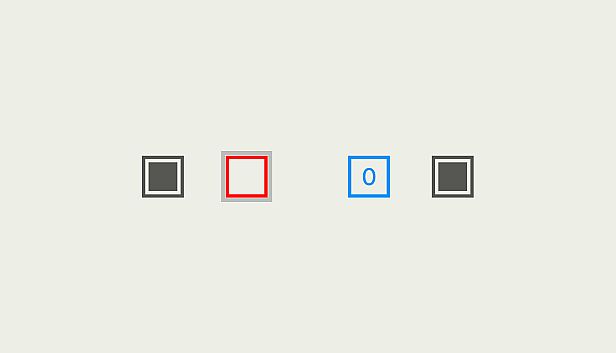


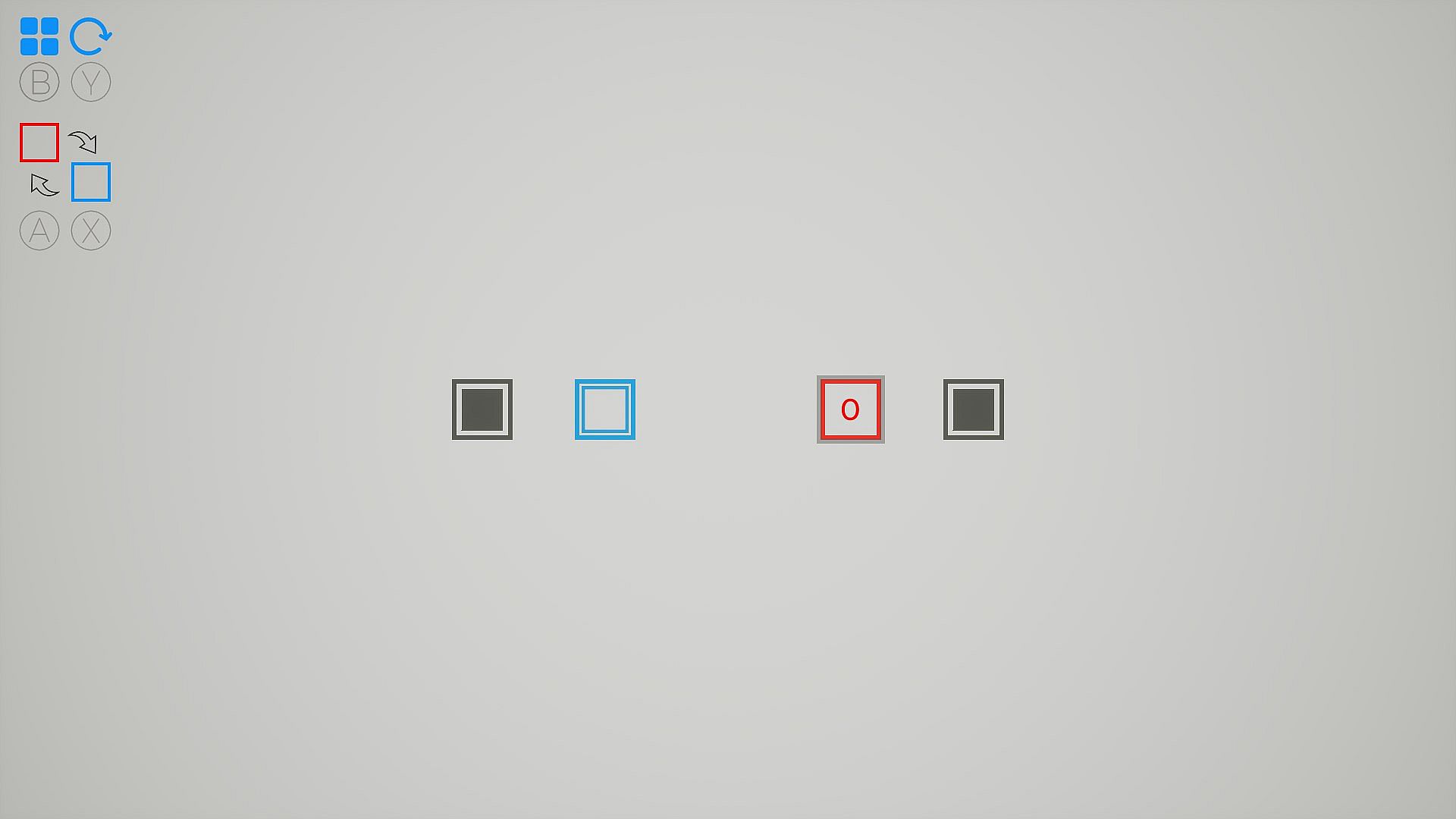
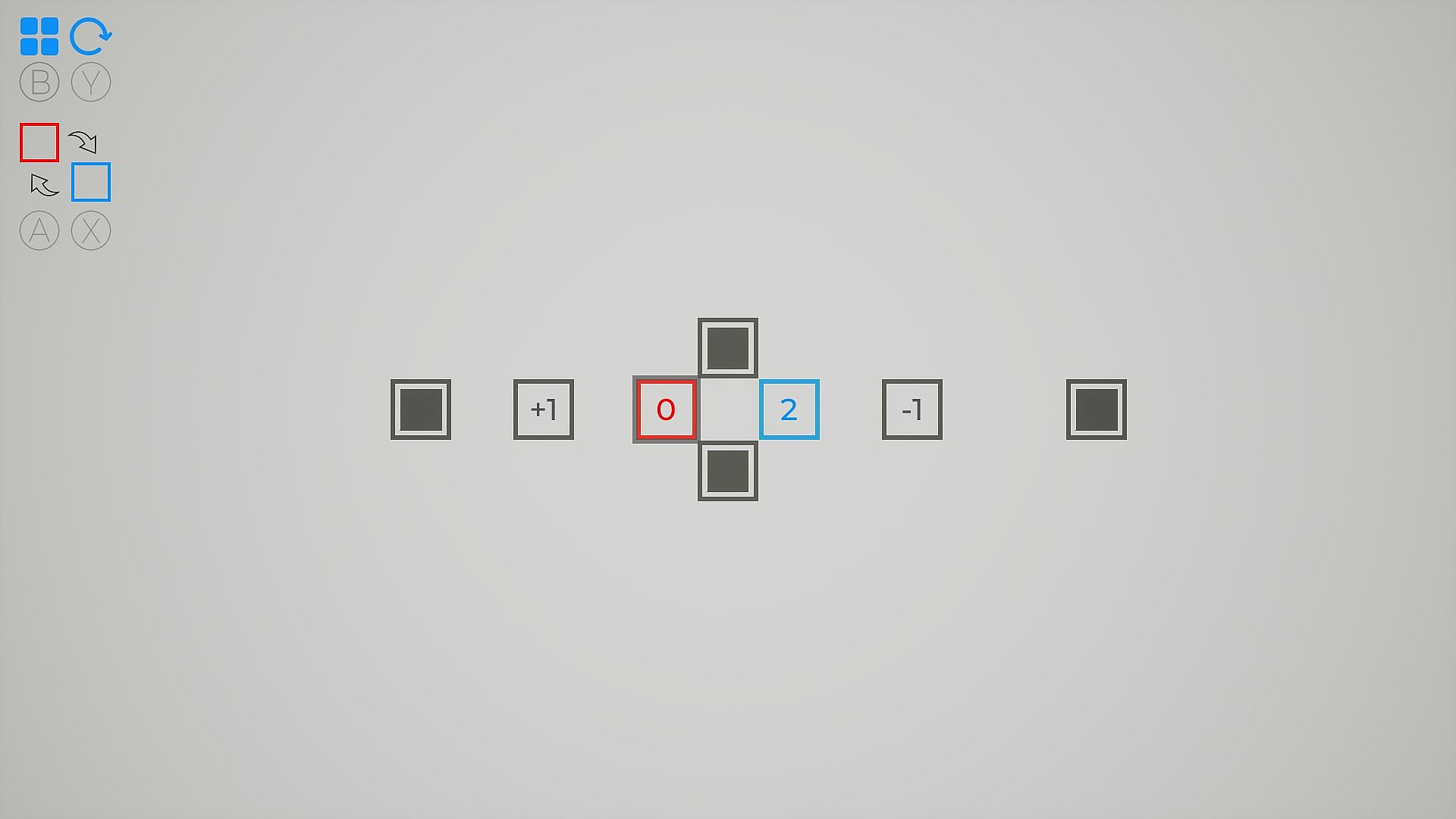
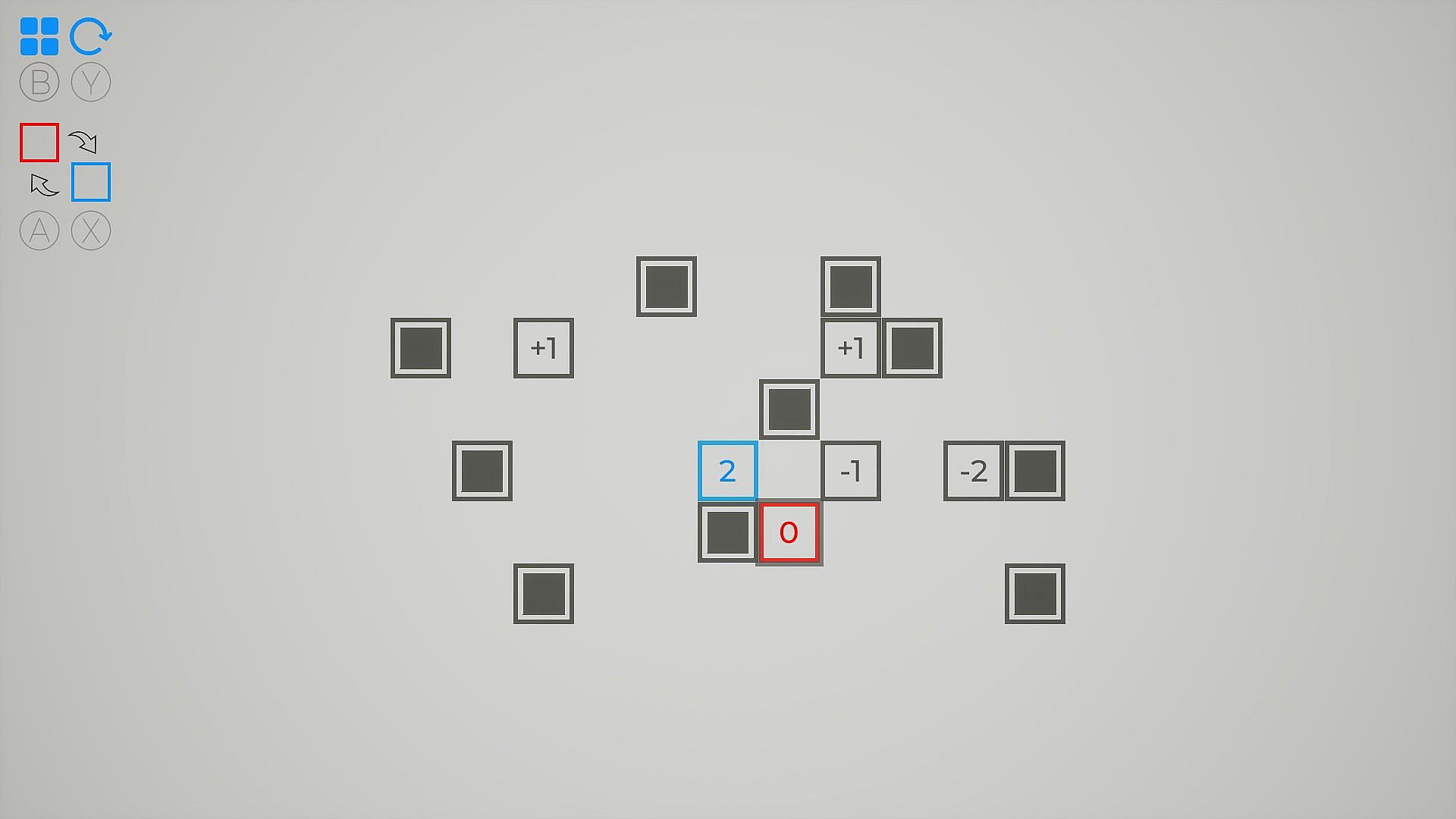
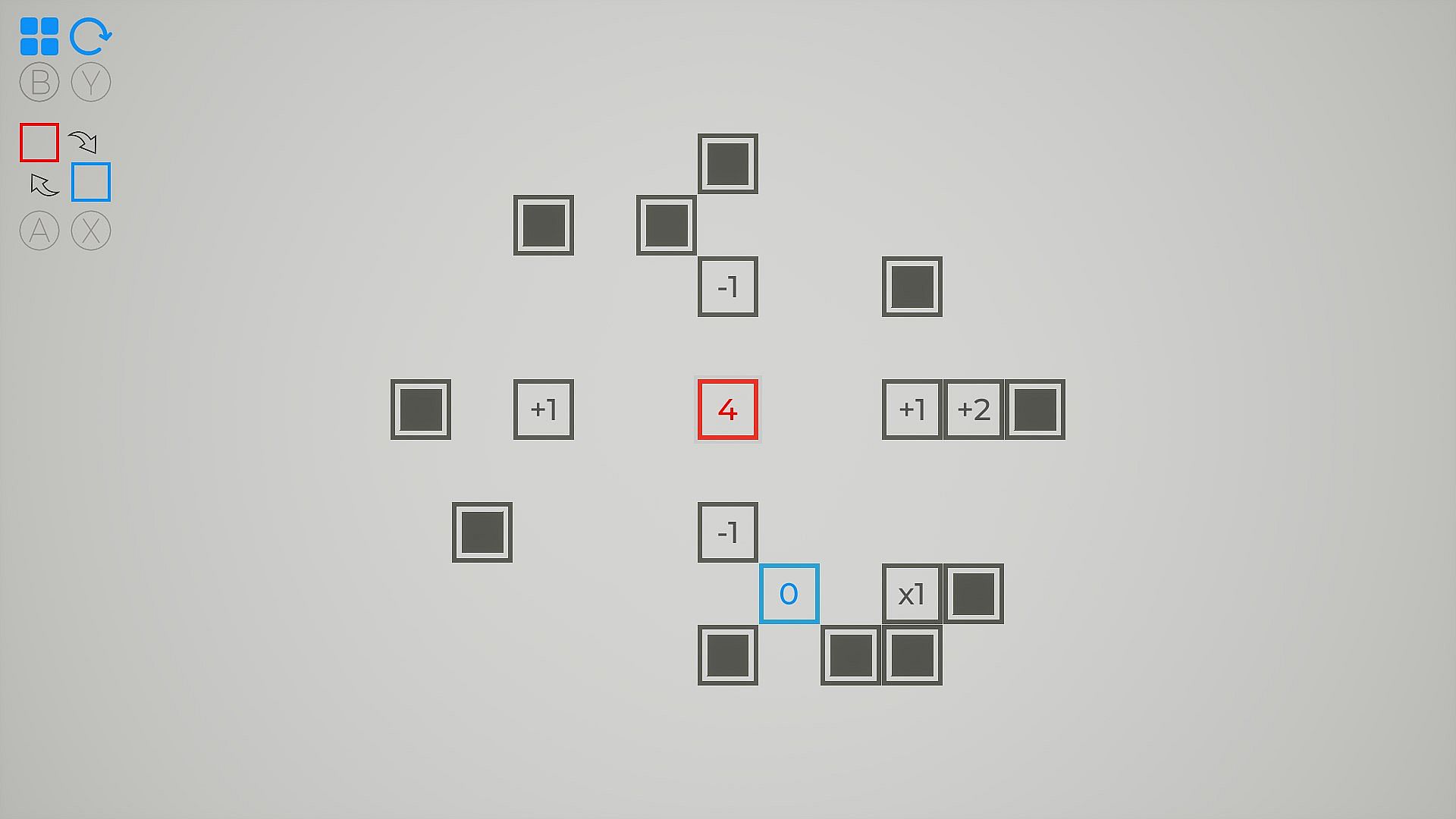
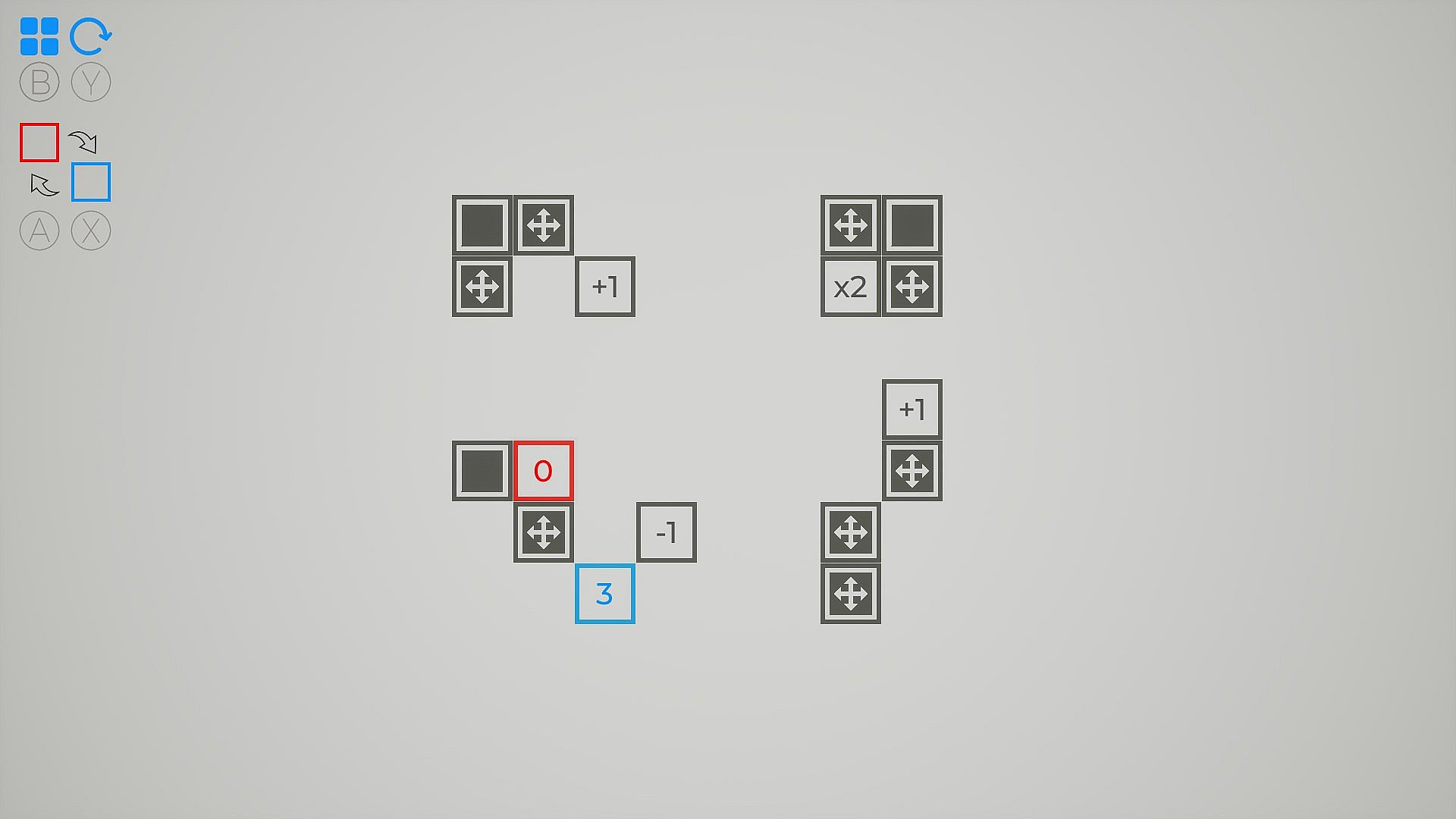
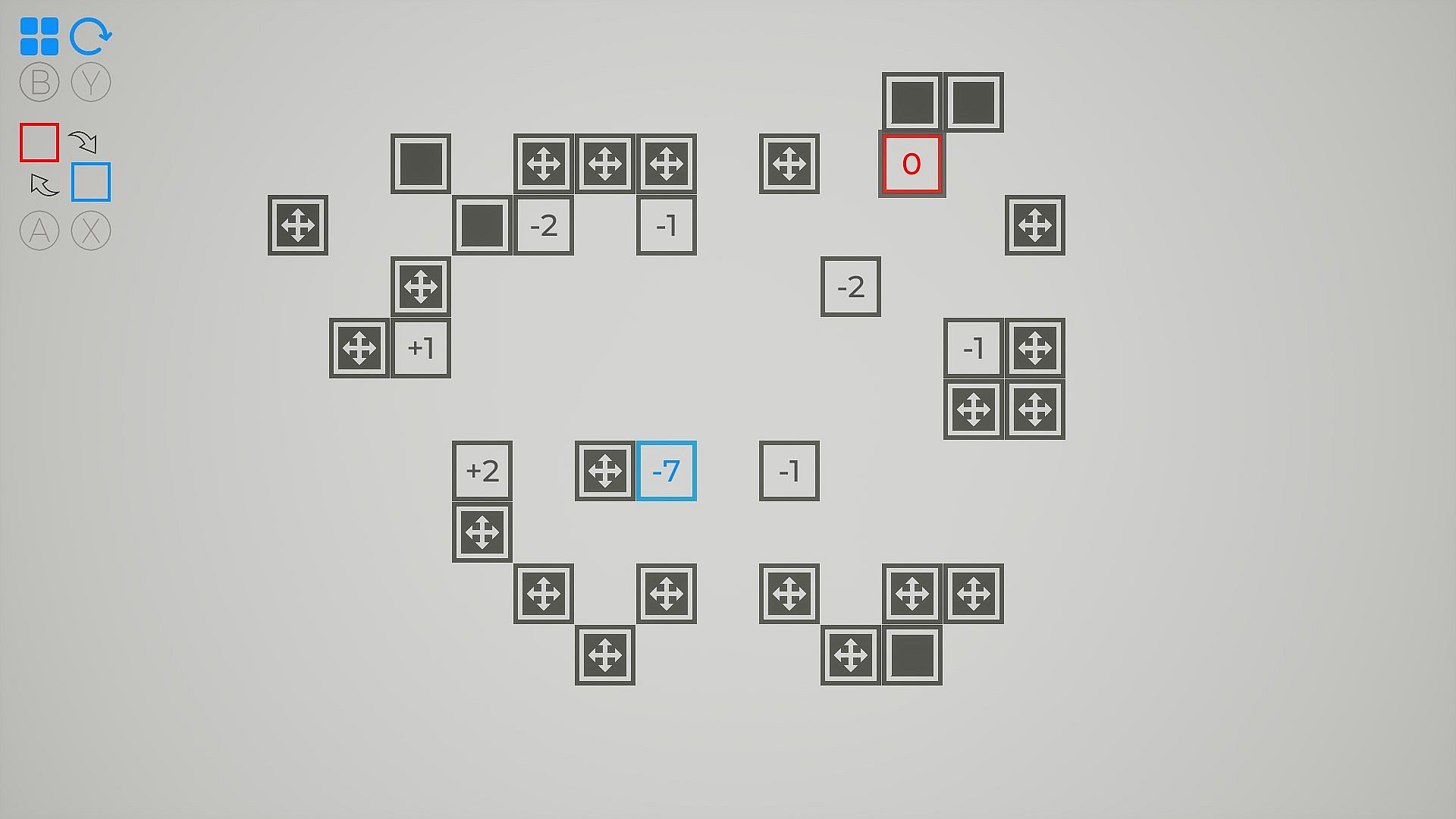

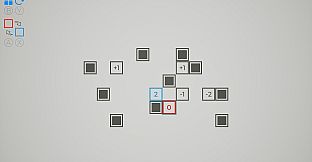
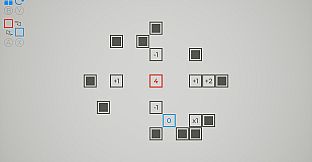
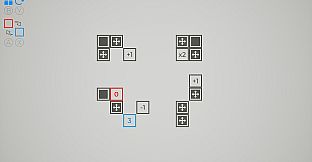
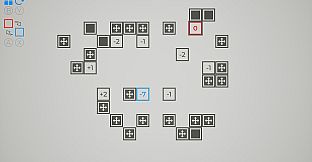
Moves: Perfect Pair stands out as a strategy and casual puzzle game built around logic, planning, and mathematical thinking on Xbox Series X|S. Players take control of two separate blocks that must reach identical numerical values before uniting to open a portal and finish each stage. The core loop centers on alternating movement between the blocks while interacting with tiles that perform addition, subtraction, multiplication, or division on their current values.
Gameplay
The central challenge requires careful sequencing of moves because each block carries its own starting number and every operation changes that value independently. A player might guide one block across an addition tile to increase its count, then switch to the second block and apply a multiplication tile to bring the two numbers closer together. Success depends on anticipating the outcome of each interaction several steps ahead, since overshooting or creating mismatched values forces backtracking or additional moves that consume limited space on the grid.
Levels are handcrafted and increase in complexity gradually. Early stages introduce one operation type at a time so newcomers can learn the basic arithmetic effects. Later stages combine multiple operation types on the same grid, add obstacles that block direct paths, and require the blocks to cross each other without colliding. Every decision carries weight because an inefficient route can leave one block stranded with an unreachable target value.
Experimentation forms a natural part of the process. A player may test several movement orders before discovering the shortest sequence that equalizes the numbers. The game rewards foresight and pattern recognition rather than speed, allowing time to study the layout and calculate the necessary operations in advance.
Game Modes
Moves: Perfect Pair presents its content through a single-player progression of handcrafted levels. There are no separate competitive or cooperative modes described; the entire experience revolves around solving these individual puzzles in sequence. Difficulty scales through added layers of arithmetic complexity and tighter spatial constraints rather than through different rule sets or multiplayer formats.
Progression feels deliberate. Completing one level unlocks the next, and each new stage builds directly on the mechanics introduced earlier. This structure keeps the focus on mastery of the core systems instead of switching between unrelated gameplay styles.
Visuals and Presentation
The game uses clean, minimalist visuals that keep attention on the blocks, numbers, and operation tiles. Grids remain uncluttered, and color choices distinguish the two blocks clearly while highlighting active tiles. Intuitive controls let players alternate between blocks with simple inputs, removing any barrier between planning and execution.
Sound design stays restrained, providing subtle feedback for successful operations without distraction. The overall presentation supports extended sessions by avoiding visual noise that could obscure the mathematical relationships players need to track.
Is It Worth Playing?
Moves: Perfect Pair suits players who enjoy logic puzzles that emphasize planning and arithmetic reasoning over reflexes or narrative. Its focused design makes the rules easy to grasp within the first few levels, yet the increasing demands on foresight and efficient routing create a satisfying challenge that rewards repeated attempts and careful calculation.
Those who appreciate minimalist strategy games with clear objectives and no extraneous systems will find a consistent experience here. The absence of additional modes keeps the package streamlined, directing all attention toward the central puzzle loop of matching values through mathematical operations. For anyone seeking a thoughtful, self-contained puzzle title on Xbox Series X|S, the game delivers a clear path from simple introductions to demanding later stages without unnecessary complexity.