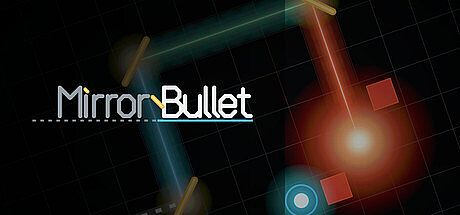


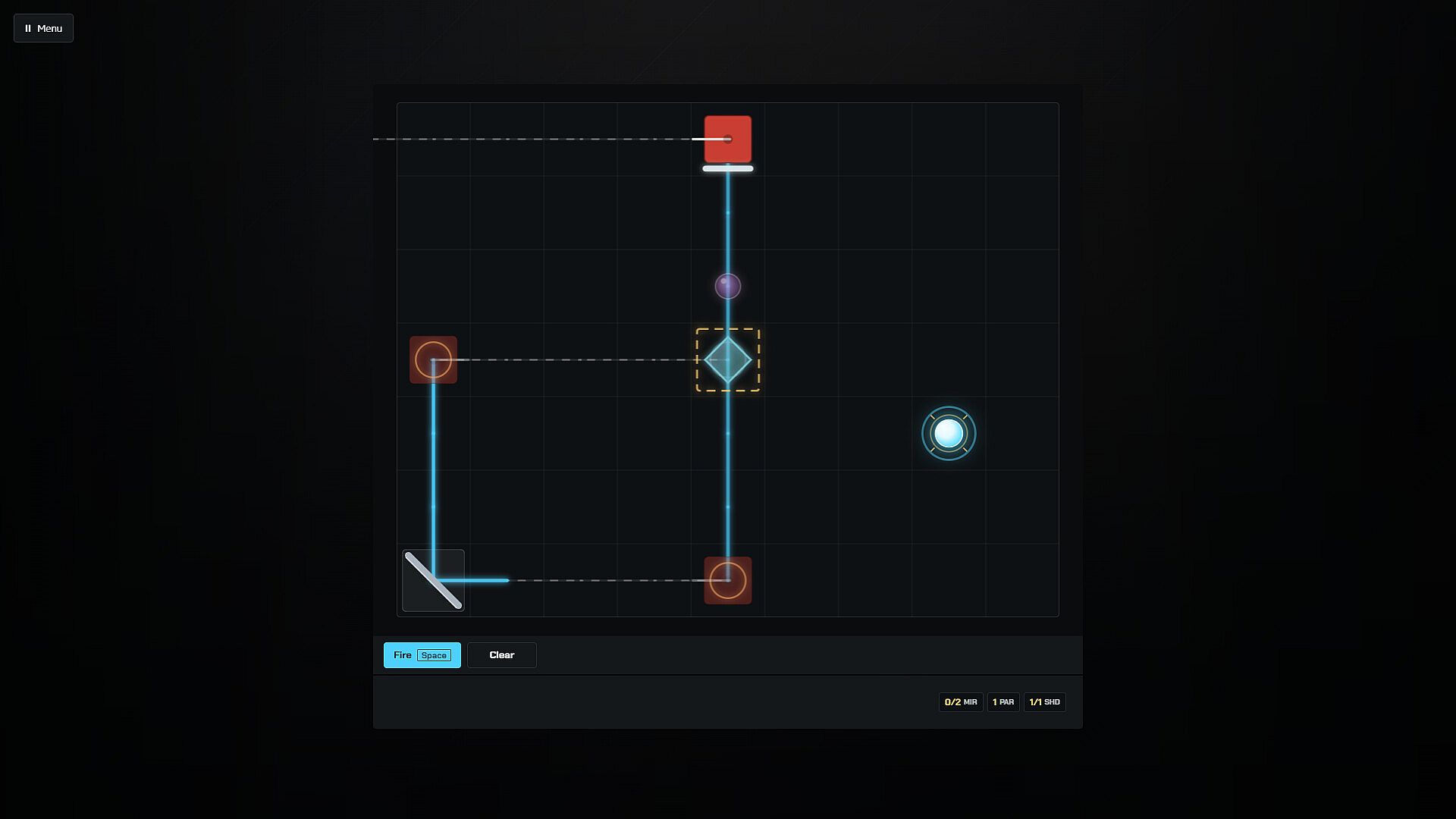
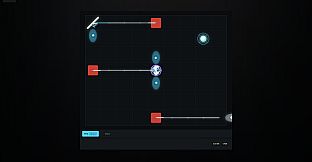
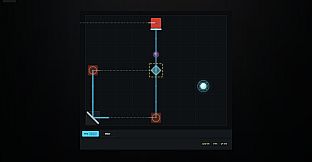
MirrorBullet is a single-player strategy puzzle game developed for PC that centers on precise reflection mechanics and deterministic problem solving. Players position a limited number of mirrors to redirect enemy fire into lethal paths while navigating a grid filled with fixed obstacles and interactive elements. The core loop involves analyzing the board, placing up to four mirrors, and firing a single shot that follows exact bounce rules without any randomness or timing elements.
Gameplay
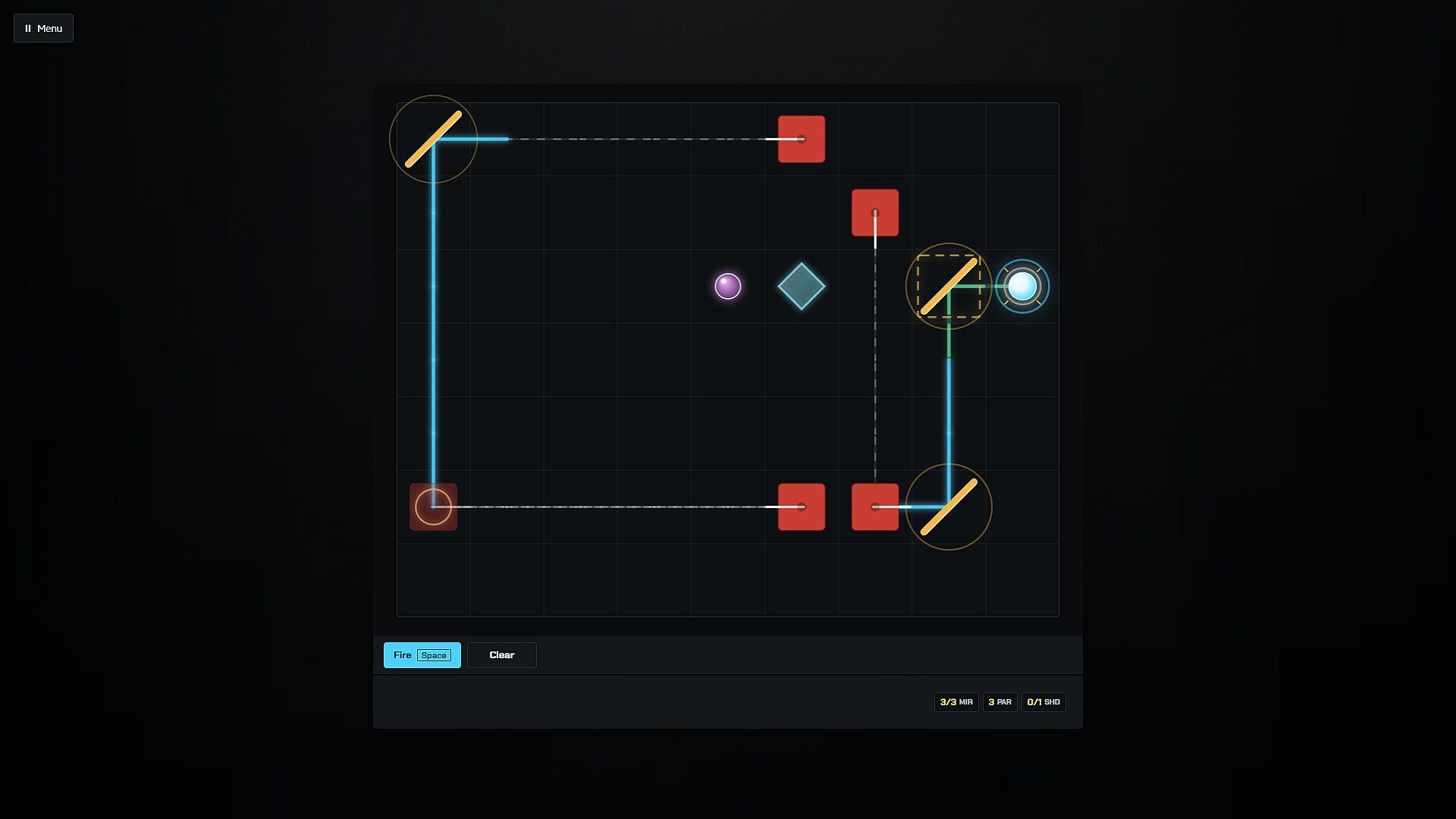
The central rule states that an unreflected shot cannot destroy anything. Enemy sentries release one round each that passes harmlessly through all objects until it strikes a mirror and gains lethality. Each additional bounce increases the shot's power: one reflection destroys a target and stops, two reflections allow piercing through additional objects, and three or more trigger a 3x3 detonation at the impact point. This escalation creates risk because the same powerful shot can also damage the player's core if the path is miscalculated.
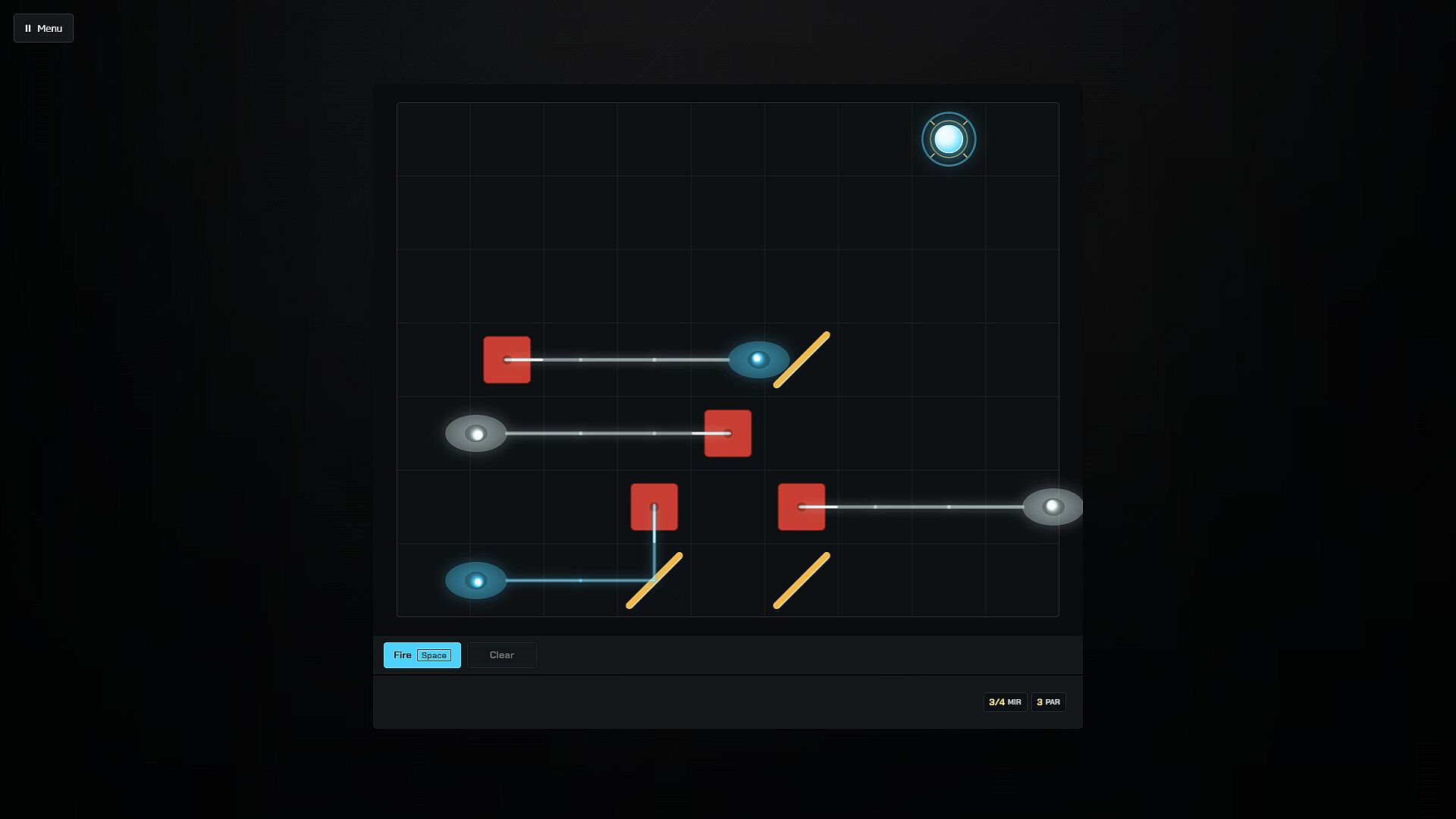
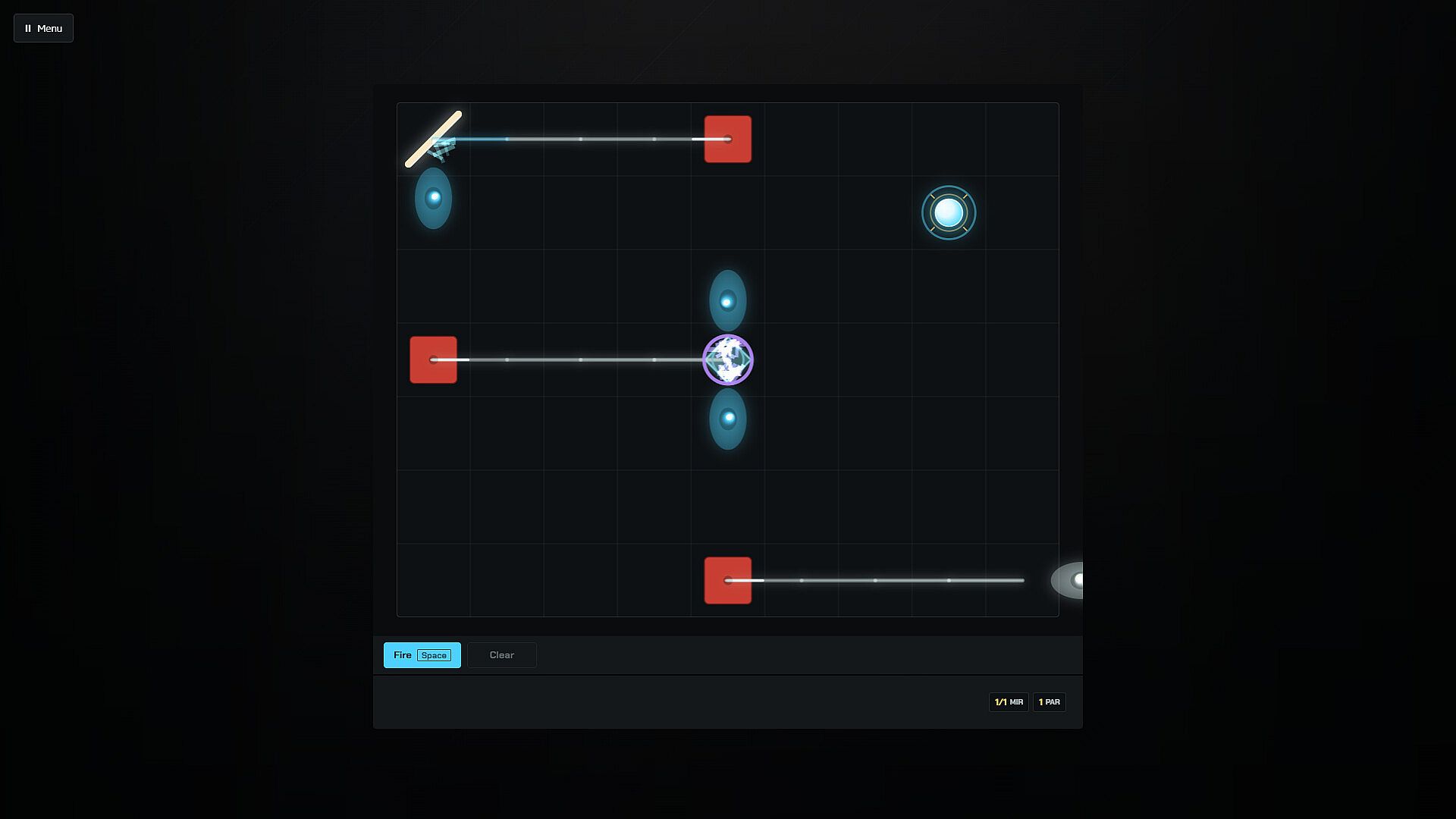
Boards feature immovable reflectors, prisms that split a single round into two paths, shields that neutralize hits, walls, and optional shards for collection. Armoured sentries require shots with sufficient bounces to break. Hovering over a cell previews the exact trajectory a mirror would create, allowing full planning before commitment. The 9x7 grid layout keeps every stage solvable through visible information alone, with no hidden variables or procedural generation.
Game Modes
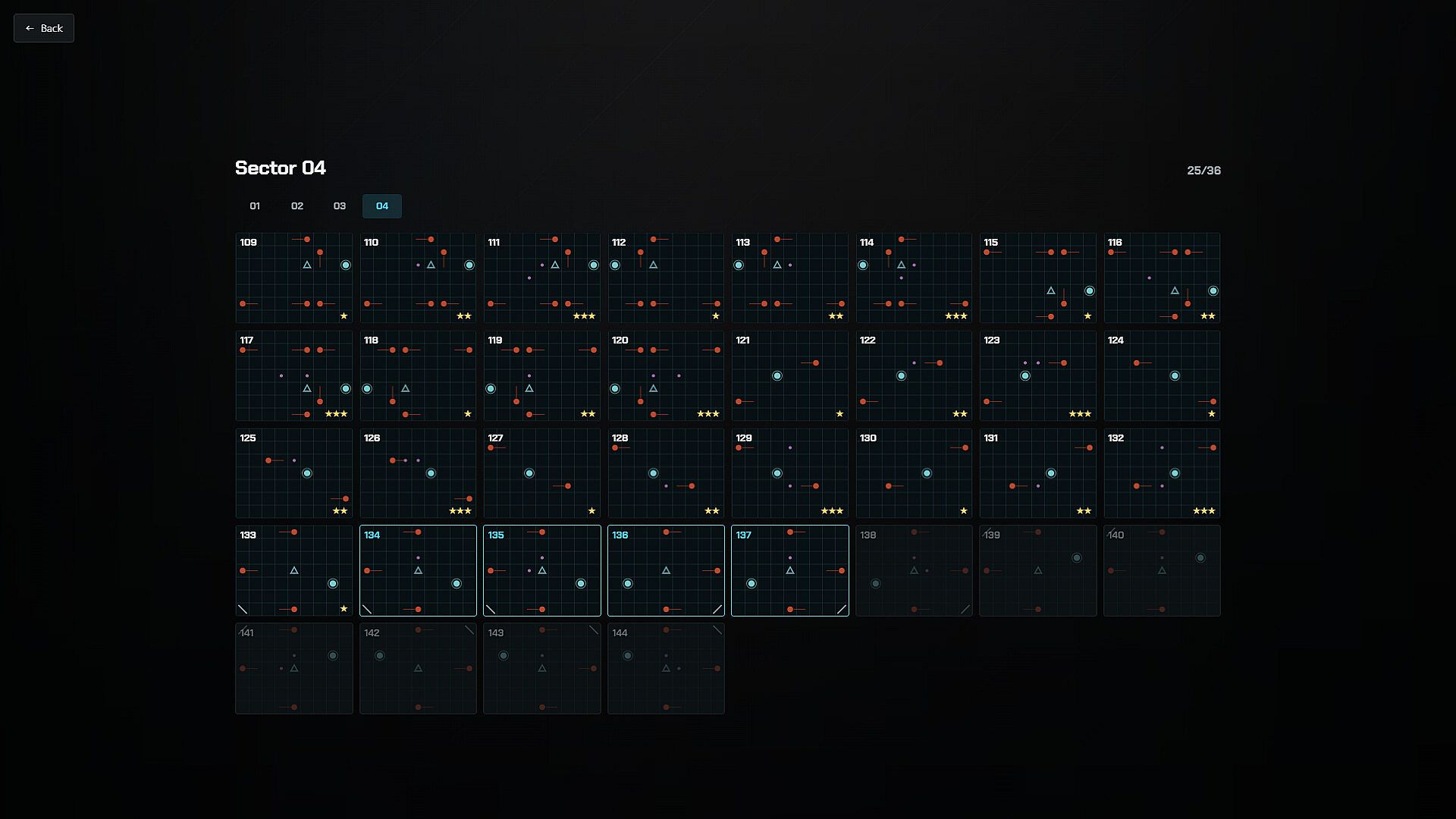
Progression occurs through individual stages that support three distinct completion levels. Basic clearance requires destroying all targets. Par clearance demands the solver-proven minimum number of mirrors, verified automatically during development so that no stage ships without a confirmed optimal solution. Shard-complete solutions exist within the same par limit, meaning full collection never requires extra mirrors beyond the minimum.
These tiers function as layered objectives rather than separate modes. Achieving all three on a stage grants three-star status, confirming that nothing remains undiscovered. The deterministic nature ensures every attempt follows identical rules, allowing repeated testing of mirror placements until the exact sequence succeeds.
Stages and Progression
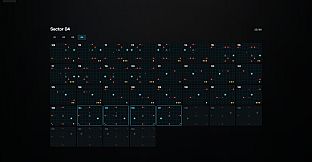
The game contains 216 stages built on the 9x7 grid. Each stage ships only after an automated solver confirms its par value as the true minimum mirror count. This process repeats on every build to maintain consistency. Shards appear as optional collectibles that integrate into optimal paths without increasing mirror usage.
Prediction tools display routes at three tiers: two bounces, four bounces, or the complete path. Line patterns rather than colors encode bounce levels across four palette options, including colour-vision variants. These systems support repeated attempts on the same board while preserving the no-hints design.
Is It Worth Playing?
MirrorBullet suits players who enjoy pure logic puzzles and circuit-like board analysis without reaction elements or luck. The emphasis on reading fixed layouts and planning exact paths rewards careful observation over quick reflexes. Accessibility options include reduced-flash mode, adjustable screen shake down to zero, UI scaling, and full key rebinding, broadening appeal for extended sessions.
With 15 achievements tied to the eight tracked statistics and replay export in readable JSON format, the game supports self-directed challenges and solution sharing. Full English and Japanese text support further extends reach. As a coming-soon title with no reviews available yet, its value depends on interest in deterministic strategy puzzles that prioritize proven minimal solutions over expansive content or multiplayer elements. Those drawn to tight, verifiable puzzle design will find the structure consistent and the mechanics self-contained.