

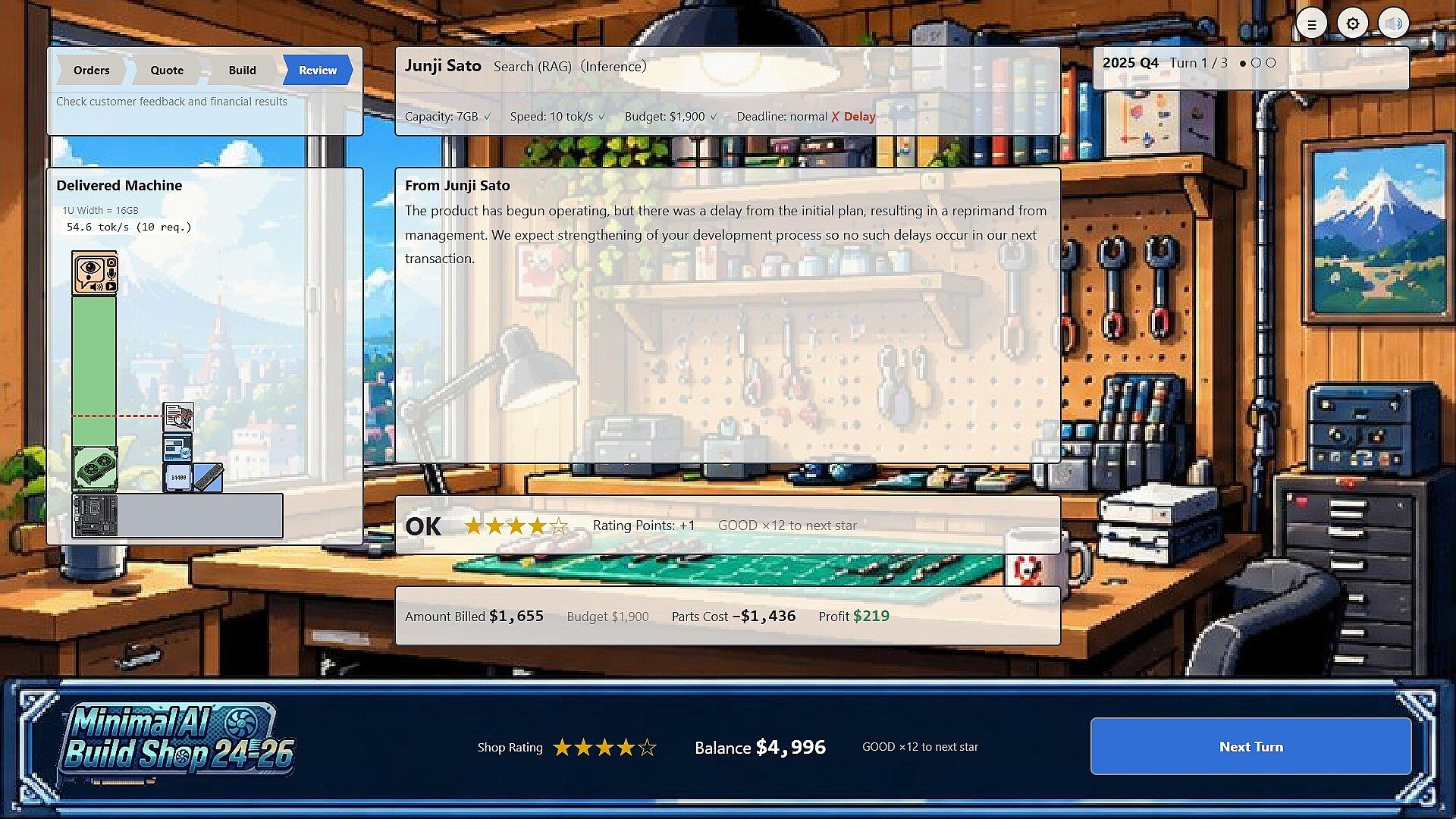
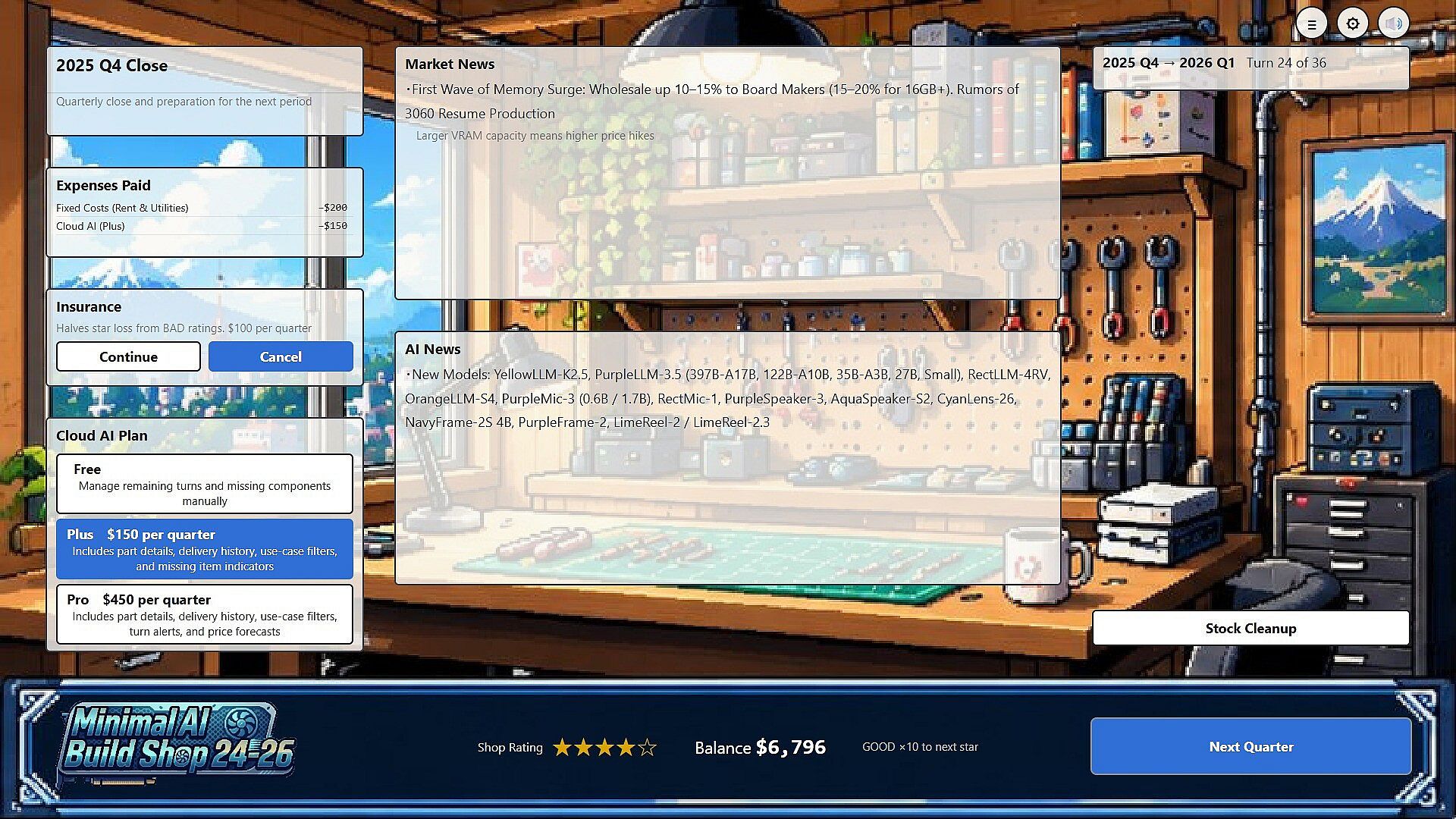
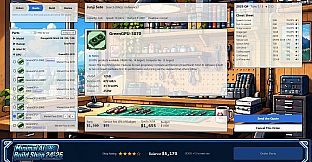
Minimal AI Build Shop 24-26 is an indie casual simulation game set in a small PC assembly shop during the early years of widespread generative AI adoption. Players manage incoming customer requests by selecting components and configurations that match each order's budget and performance needs, all within a pixel-art environment on PC.
Gameplay
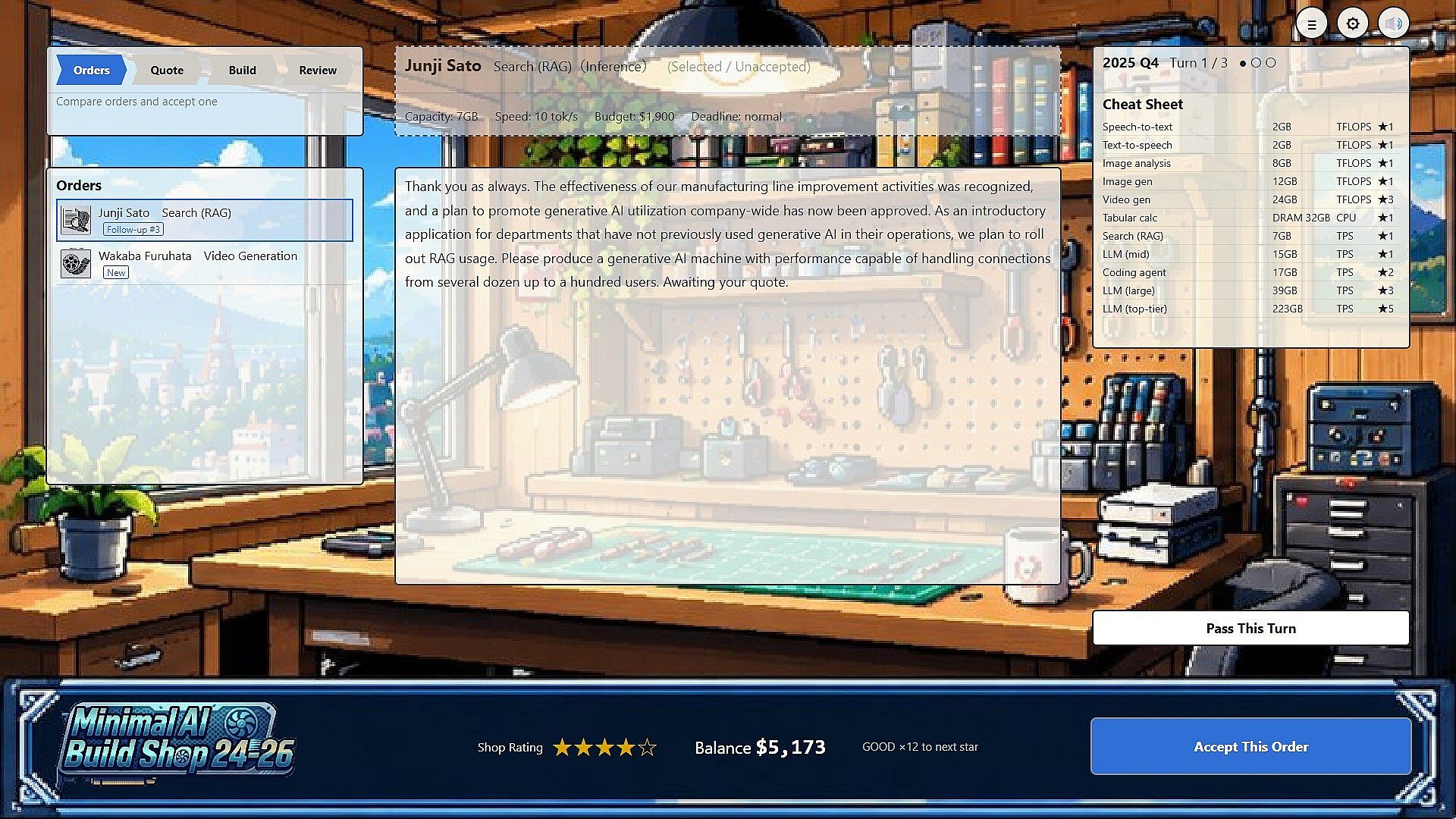
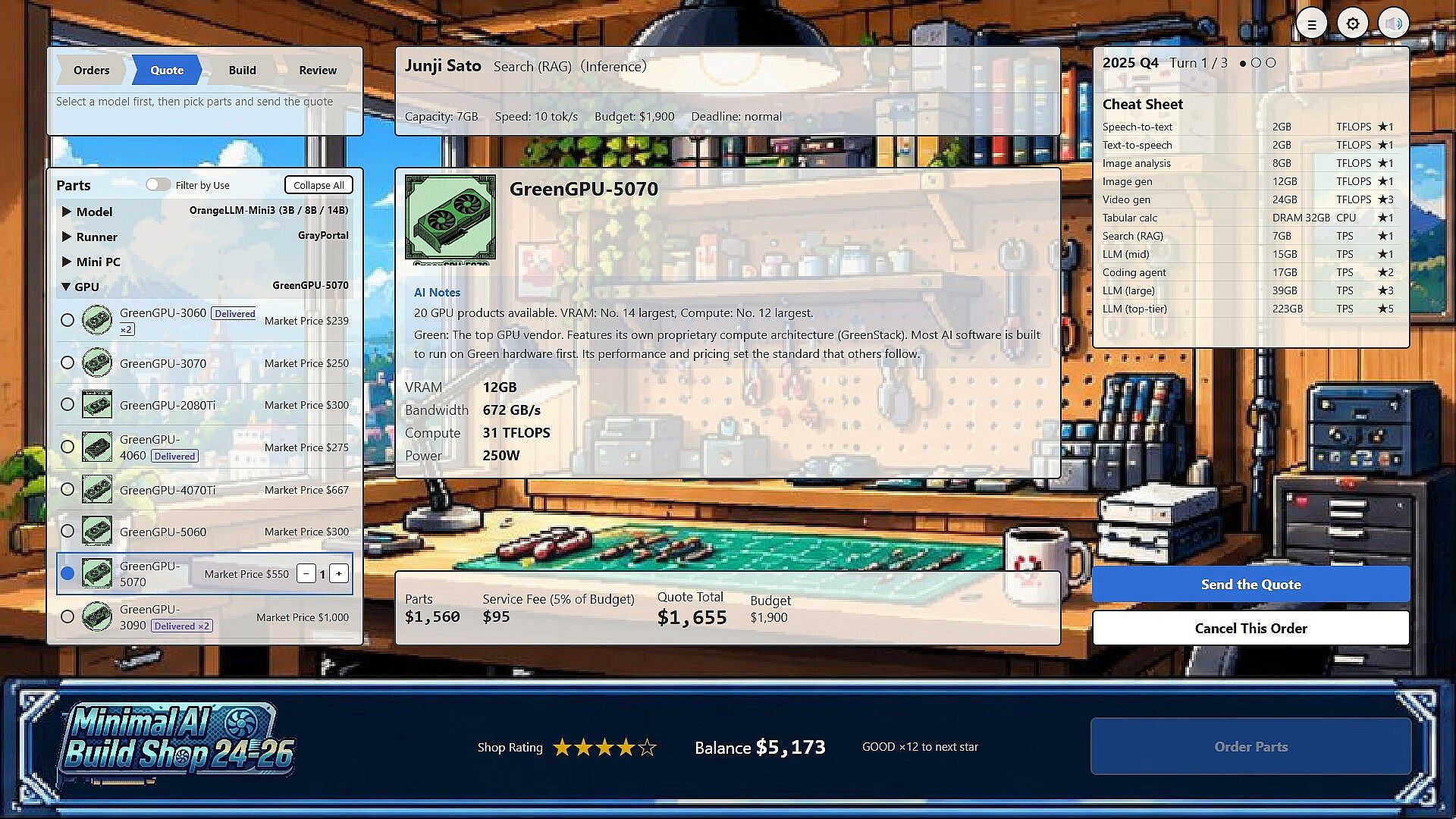
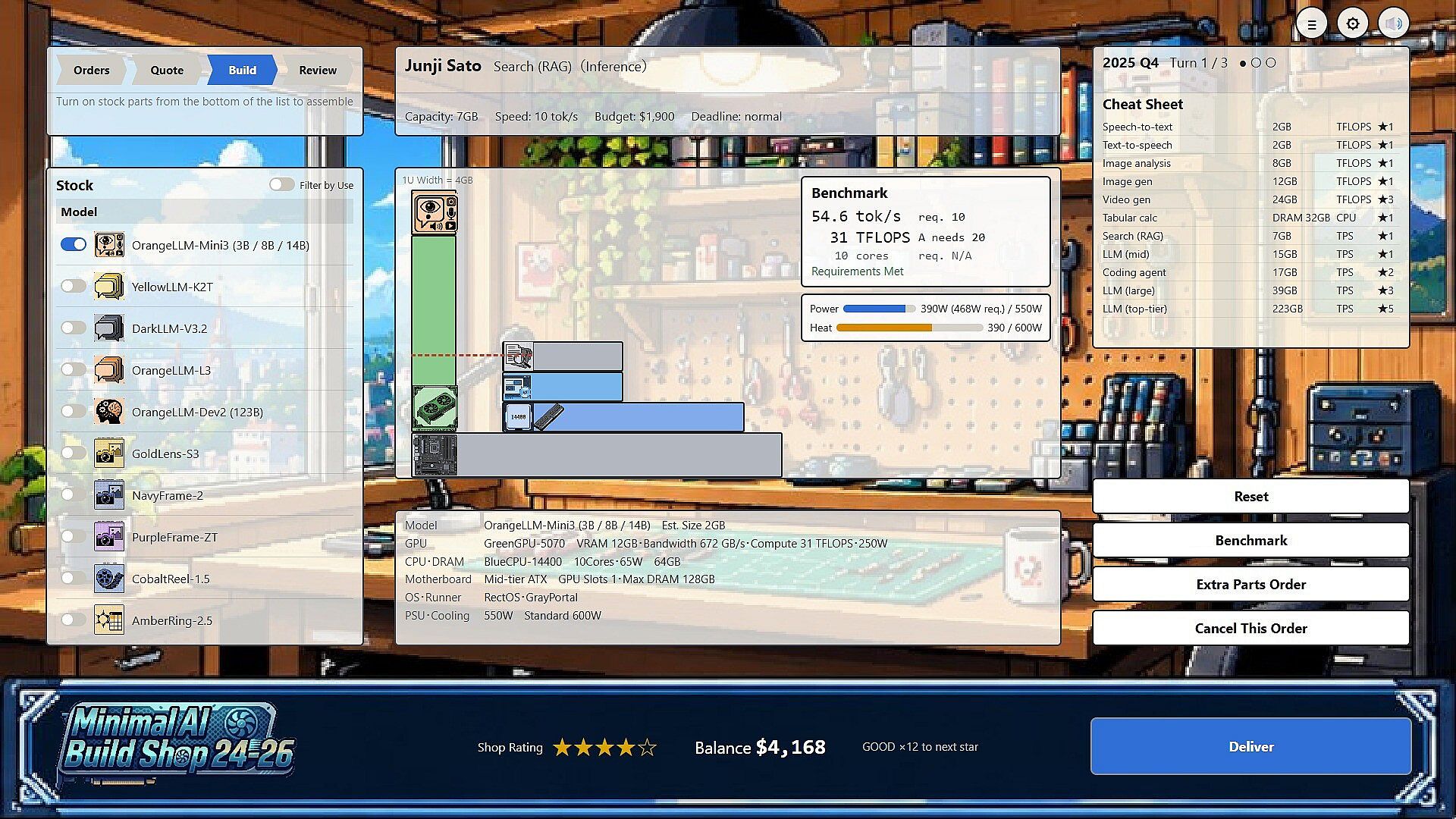
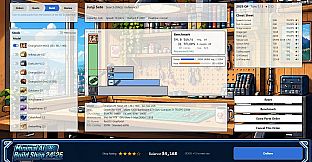
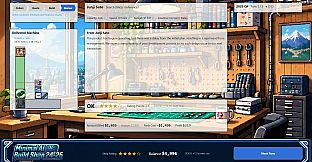
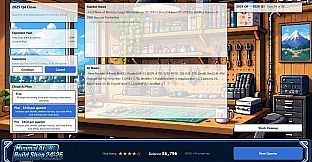
The core loop centers on processing order emails that arrive at the shop. Each request outlines specific requirements for an AI system, such as document processing, custom art style replication, or conversational companionship. Players review the details, consider the available budget, and choose from parts including GPUs, memory modules, power supplies, and cooling solutions. The game handles calculations for compatibility and performance, displaying results through a block diagram and benchmark tool. Used components offer lower costs but carry risks, while new parts provide reliability at a higher price. Seasons progress from 2024 through 2026, introducing new fictional AI models and fluctuating component prices that influence decision making across multiple playthroughs.
Returning customers appear with upgrade requests, adding variety to the sequence of roughly fifty orders. The experience emphasizes careful part selection and budget management rather than complex controls or time pressure. A full playthrough lasts around five hours, and the lightweight design allows smooth operation even on older hardware.
Game Modes
The game operates entirely in single-player format with no separate multiplayer or competitive modes. Progression follows a linear structure of customer orders that unfold over the three-year in-game period. Players advance by successfully fulfilling requests, which unlocks further emails and repeat business from prior clients. Seasonal shifts in available models and pricing serve as the primary source of replay variation, encouraging different approaches to part sourcing and configuration choices on subsequent runs.
Shop Management and Progression
Inventory decisions form a key layer of strategy. Players balance the appeal of discounted used parts against the stability of new stock while tracking how configurations perform against each customer's stated goals. The fictional nature of all companies, products, and AI models keeps the focus on mechanical puzzle-solving rather than real-world brand knowledge. Achievements track milestones such as completing orders under specific constraints or handling a set number of upgrades.
Is It Worth Playing?
This title suits players who enjoy short, focused shop simulators with light management elements and a contemporary tech theme. The concise length and relaxed pace make it accessible for casual sessions, while the part-selection puzzle and seasonal changes provide enough depth for multiple completions. With its emphasis on single-player progression and straightforward systems, the game appeals to those seeking a low-pressure experience centered on building functional AI setups from customer briefs. As an upcoming release scheduled for December 2026, it currently has no player reviews available, but the described mechanics align with the cozy simulation genre for interested buyers.