







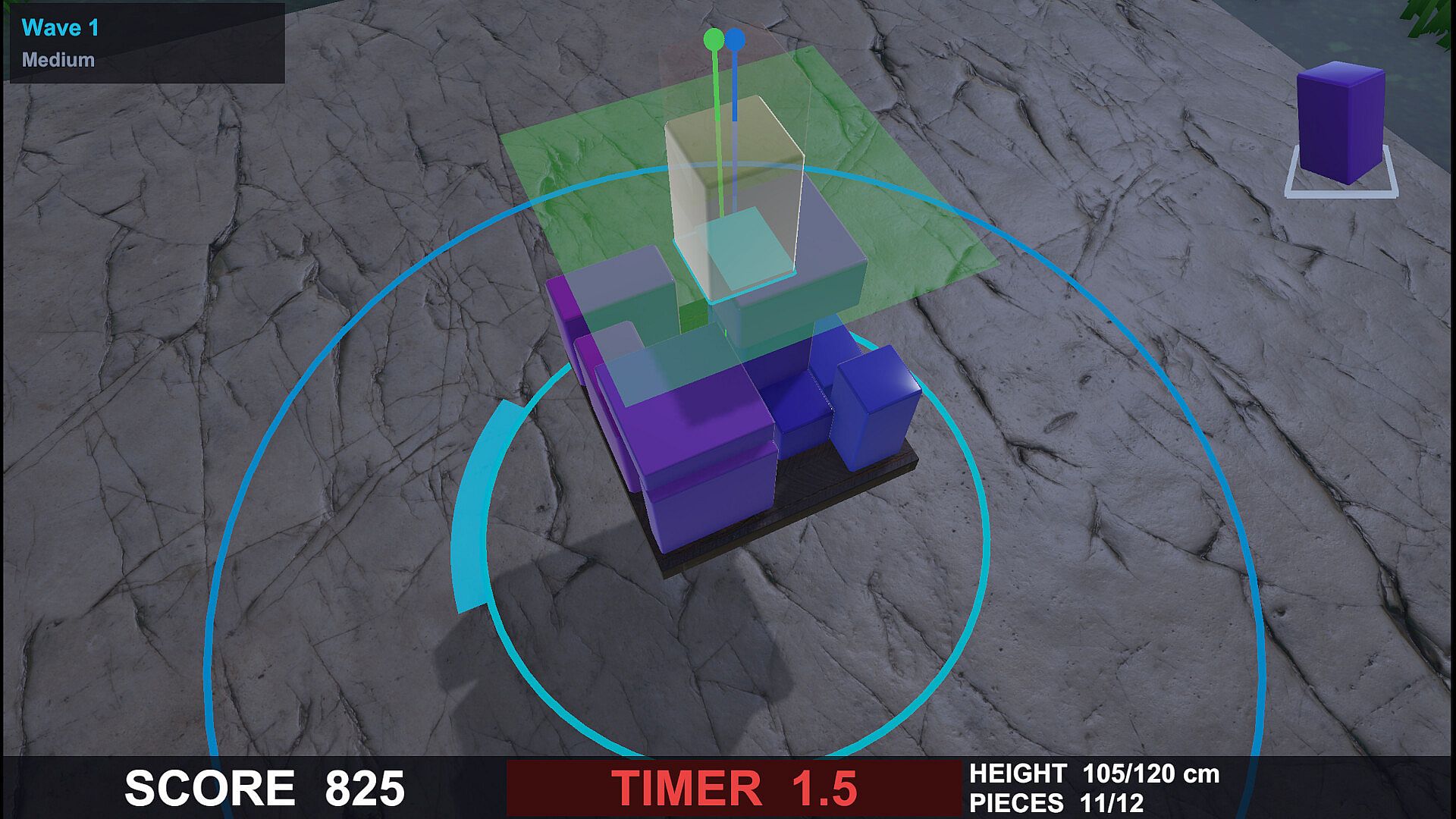
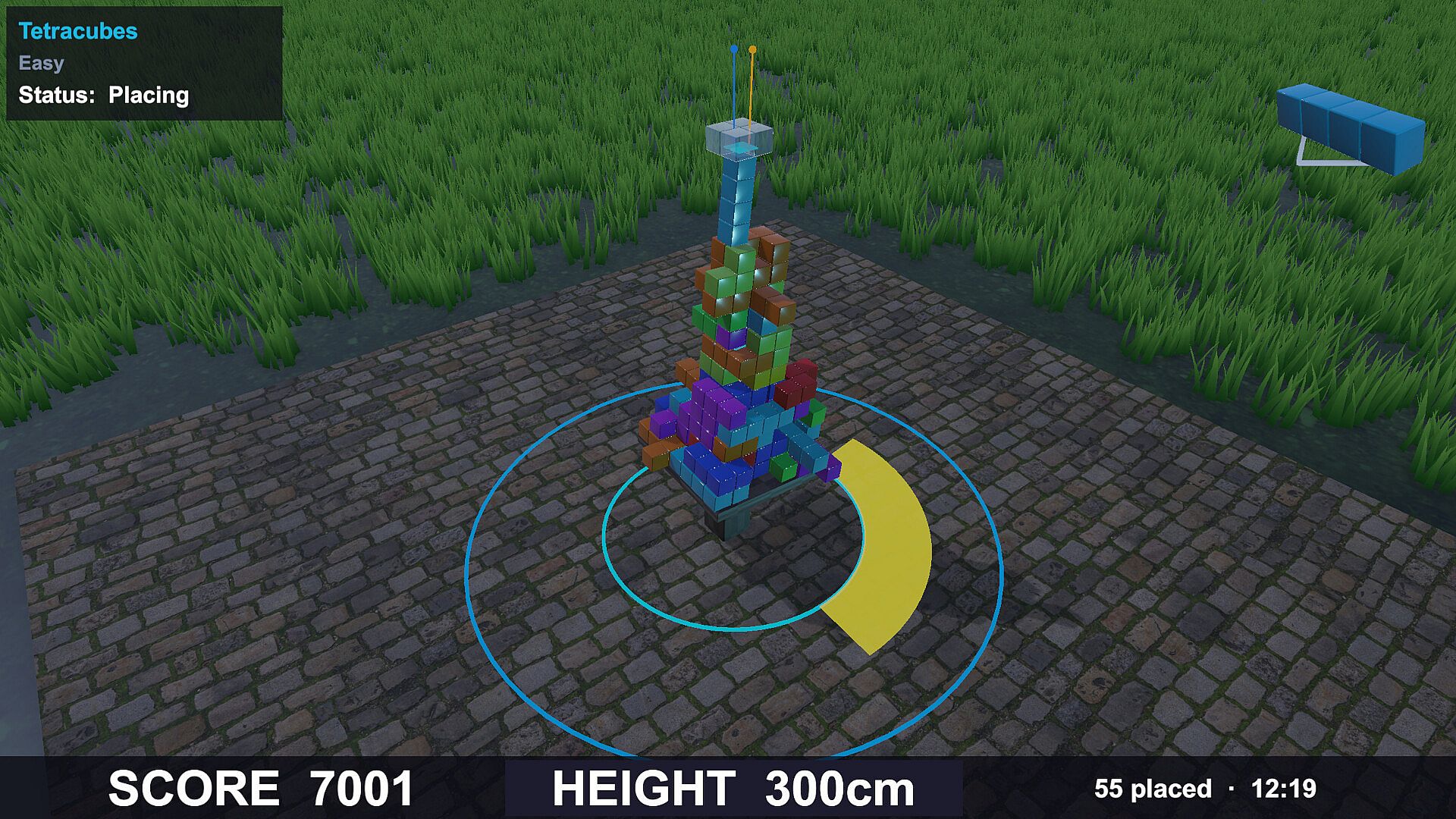
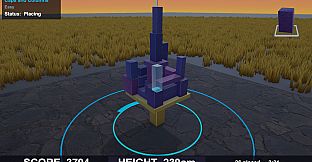
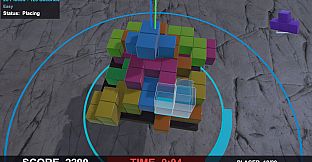
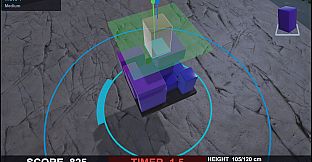
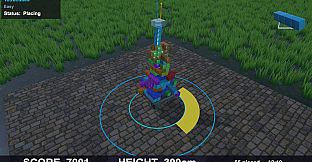
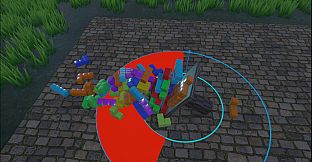
Master Stacker: Tower Trials is a physics-based 3D balance game that combines strategy, indie, casual, and simulation elements on PC. Players construct towers from irregular objects placed on a raised balance plate, where each addition influences stability through real-time physics calculations. The core challenge lies in reading lean indicators and committing to placements that either reinforce or destabilize the structure, with collapse resulting in failure.
Gameplay
The central loop revolves around positioning awkward blocks, planks, and other items using assisted precision tools before releasing them into the simulation. Players rotate objects to find optimal orientations, then observe how the tower settles under gravity and weight distribution. A single misstep can initiate a wobble that propagates through the stack.
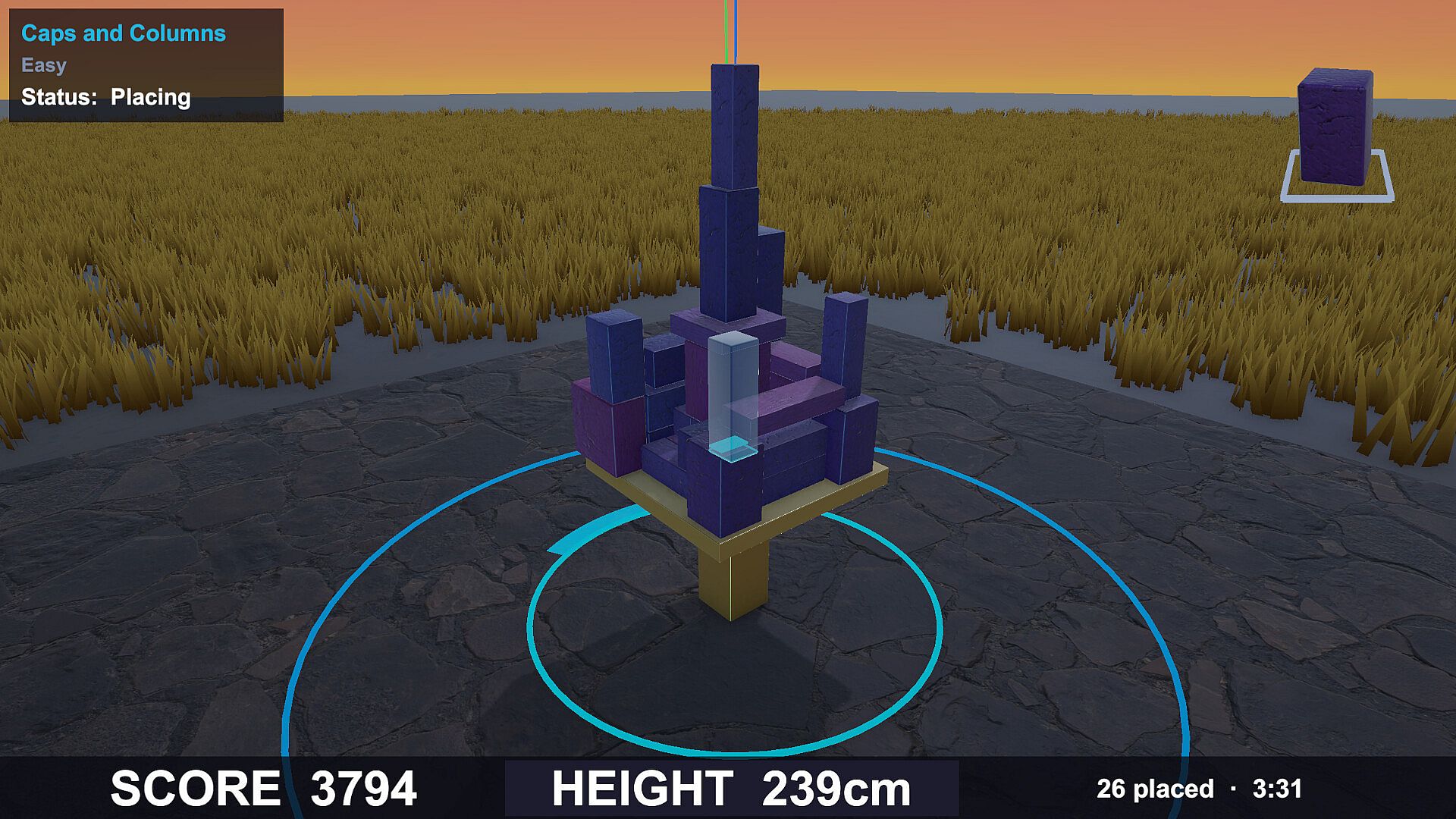
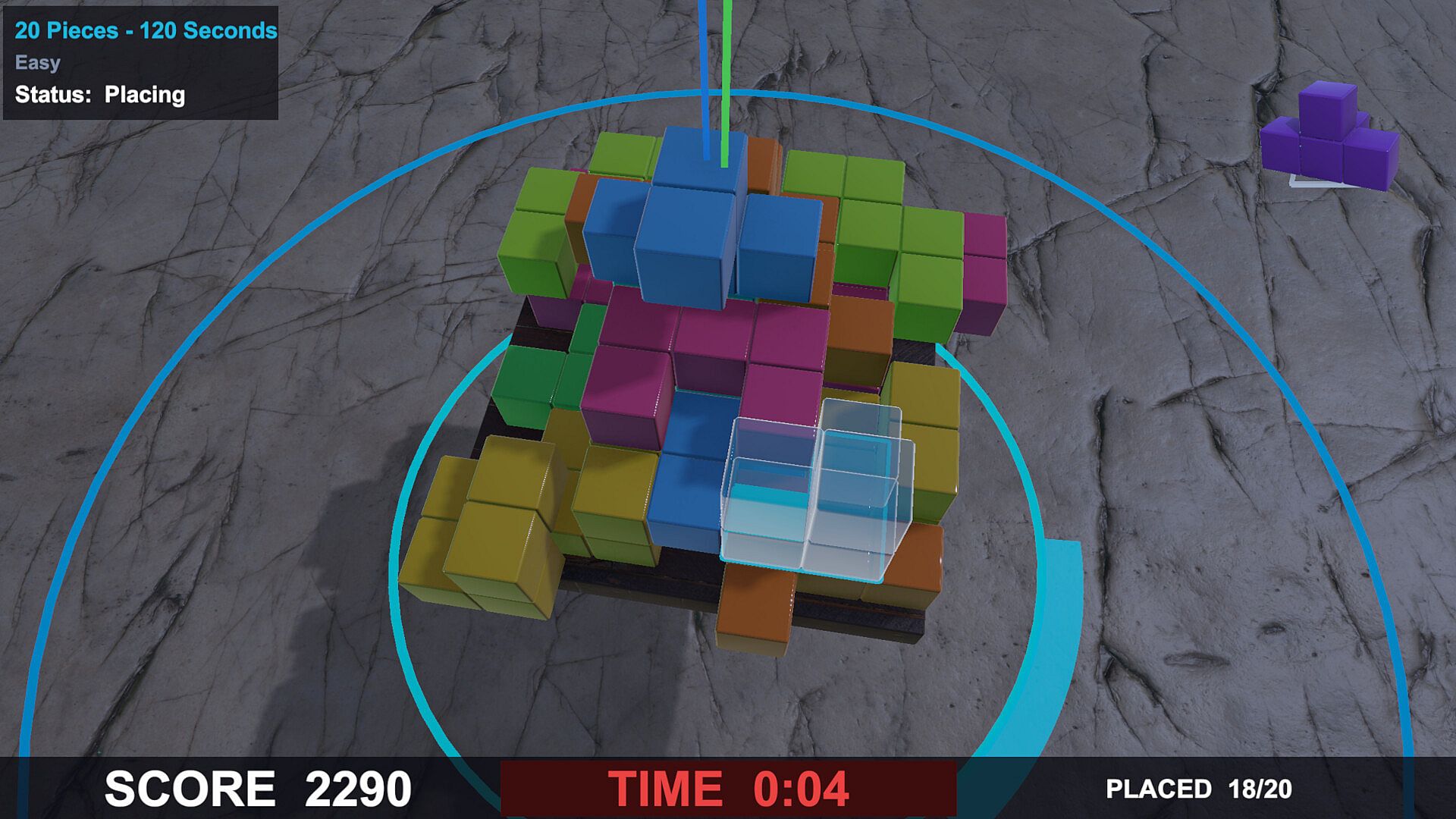
Feedback systems provide clear visual cues without removing the need for careful judgment. Center-of-mass lines highlight balance points, stability indicators show overall risk levels, ghost previews illustrate potential outcomes, and landing shadows help align pieces accurately. These tools support deliberate decision-making rather than trial-and-error guessing during tense moments.
Every placement carries consequences because the physics engine treats objects as independent rigid bodies with shifting centers of gravity. A counterweight positioned correctly can arrest an impending collapse, while an apparently safe addition might tip the entire structure. The emphasis remains on readable 3D stacks that reward observation and measured risk-taking over speed alone.
Game Modes
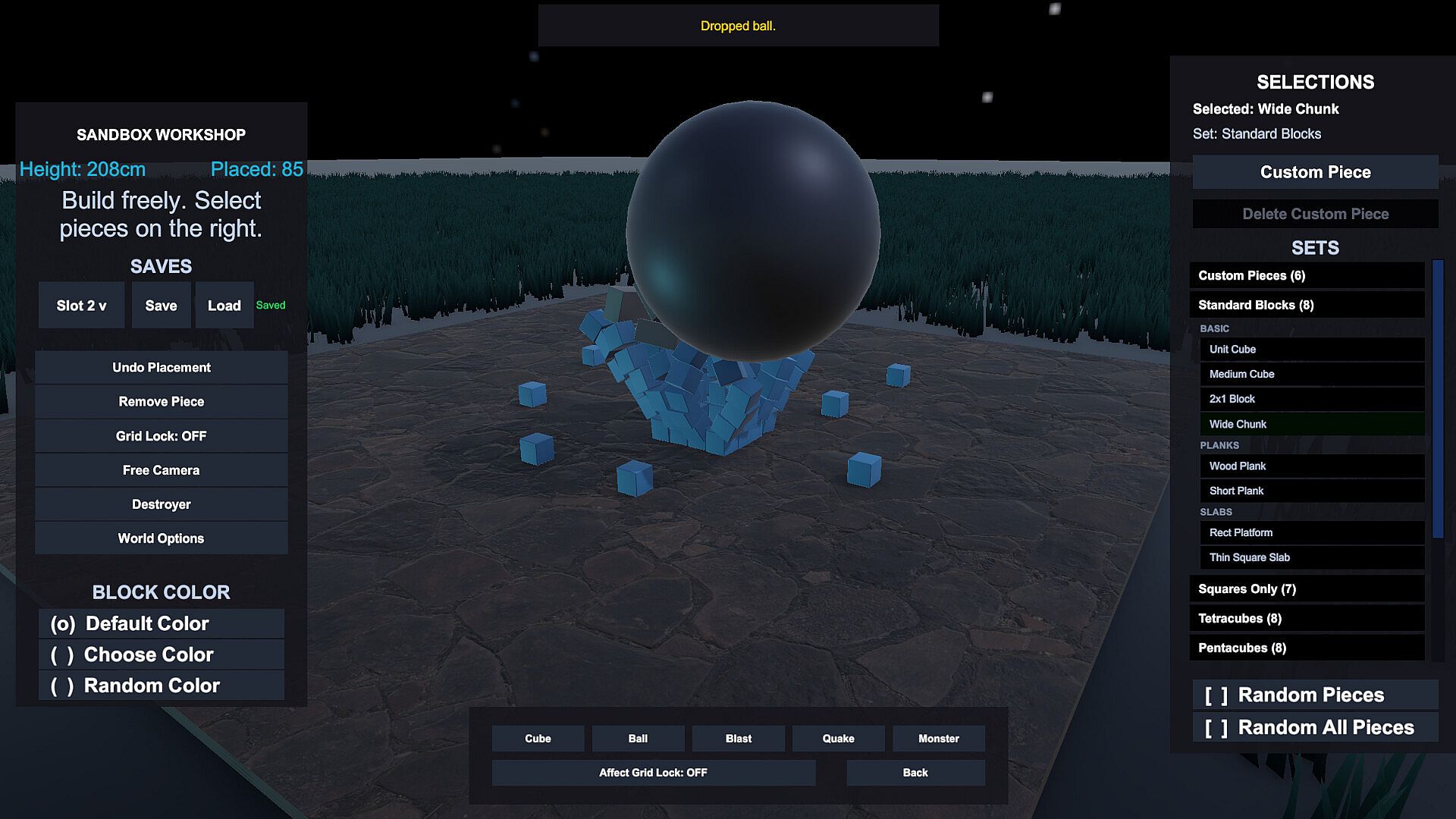
Solo play offers several distinct challenges focused on different stacking objectives. Endurance runs test how long a tower can remain upright under continuous additions. Fixed-object clears require incorporating every provided piece without collapse. Height-focused attempts push for maximum elevation before instability sets in. Timed speed challenges add pressure through clock constraints, and a relaxed sandbox mode allows unrestricted building for practice or creative exploration.
Multiplayer options include turn-based online sessions where two participants alternate placements on a shared tower. Each player inherits the current state and must leave the opponent with a more precarious configuration. The individual who causes the final collapse loses. A separate head-to-head survival format pits players against one another in endurance scoring, with the highest stable tower determining the winner. Co-operative sandbox sessions enable friends to construct towers together without competitive pressure.
Core Mechanics and Design Focus
The game prioritizes strategy through its physics foundation rather than chaotic randomness. Objects possess distinct shapes and weights that interact unpredictably once released, encouraging players to anticipate secondary movements after initial contact. Pauses between placements allow assessment of settling behavior before the next commitment.
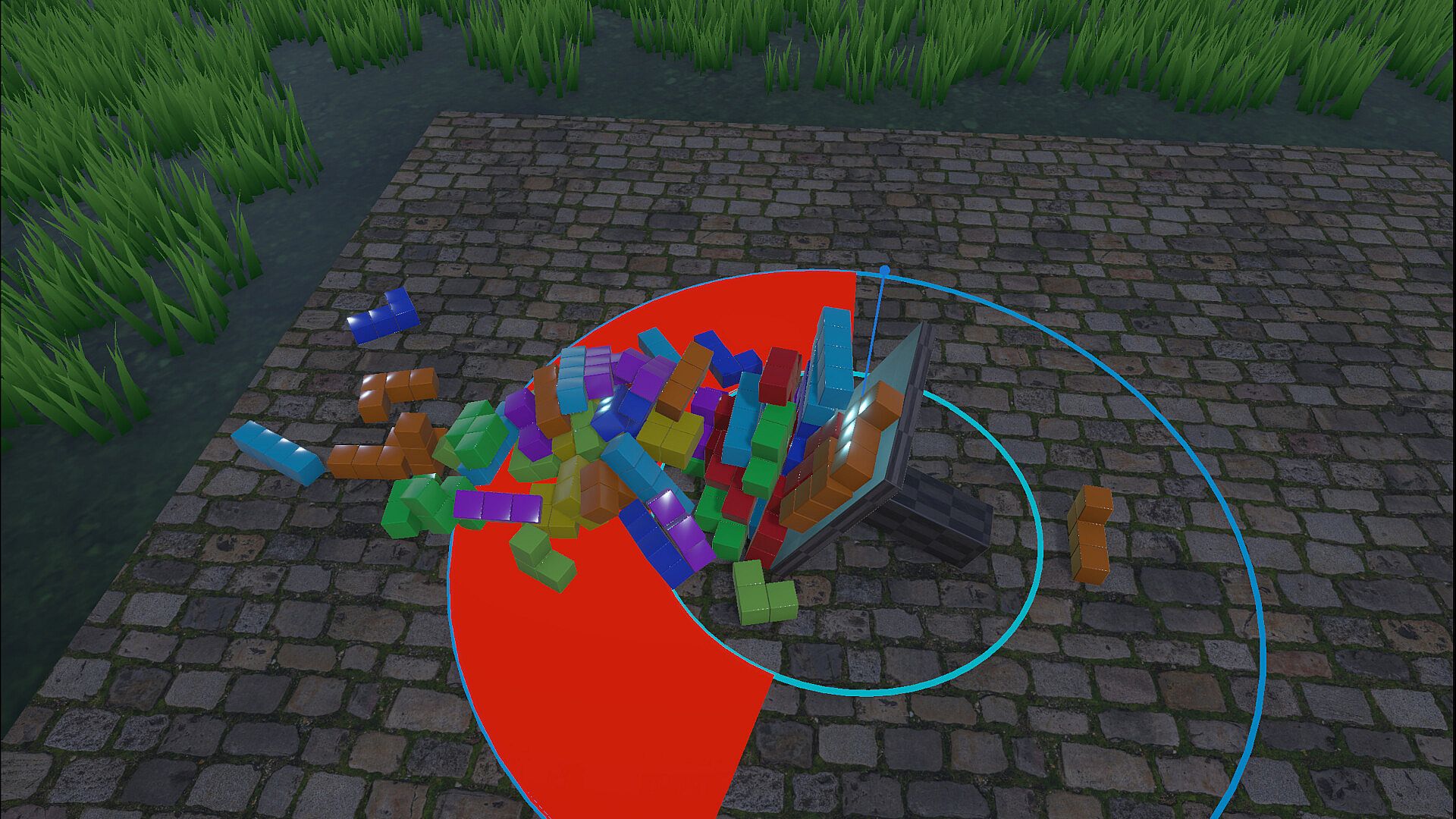
Design choices center on readable physical interactions, including last-second adjustments that convert near-failures into continued builds. Spectacular collapses serve as learning moments rather than punishments, illustrating exactly where balance failed. The absence of complex resource systems keeps attention fixed on spatial reasoning and weight management.
Is It Worth Playing?
Master Stacker: Tower Trials suits players who enjoy deliberate physics puzzles and competitive stacking scenarios in a strategy and simulation context. Its early access status means the experience centers on the described placement tools, solo objectives, and online turn-based or endurance formats without additional unconfirmed layers. Those drawn to tense balance decisions, counterweight tactics, and shared-tower confrontations will find direct alignment with the available systems. The straightforward ruleset and visual feedback make it accessible for casual sessions while supporting deeper strategic refinement over repeated attempts.












