





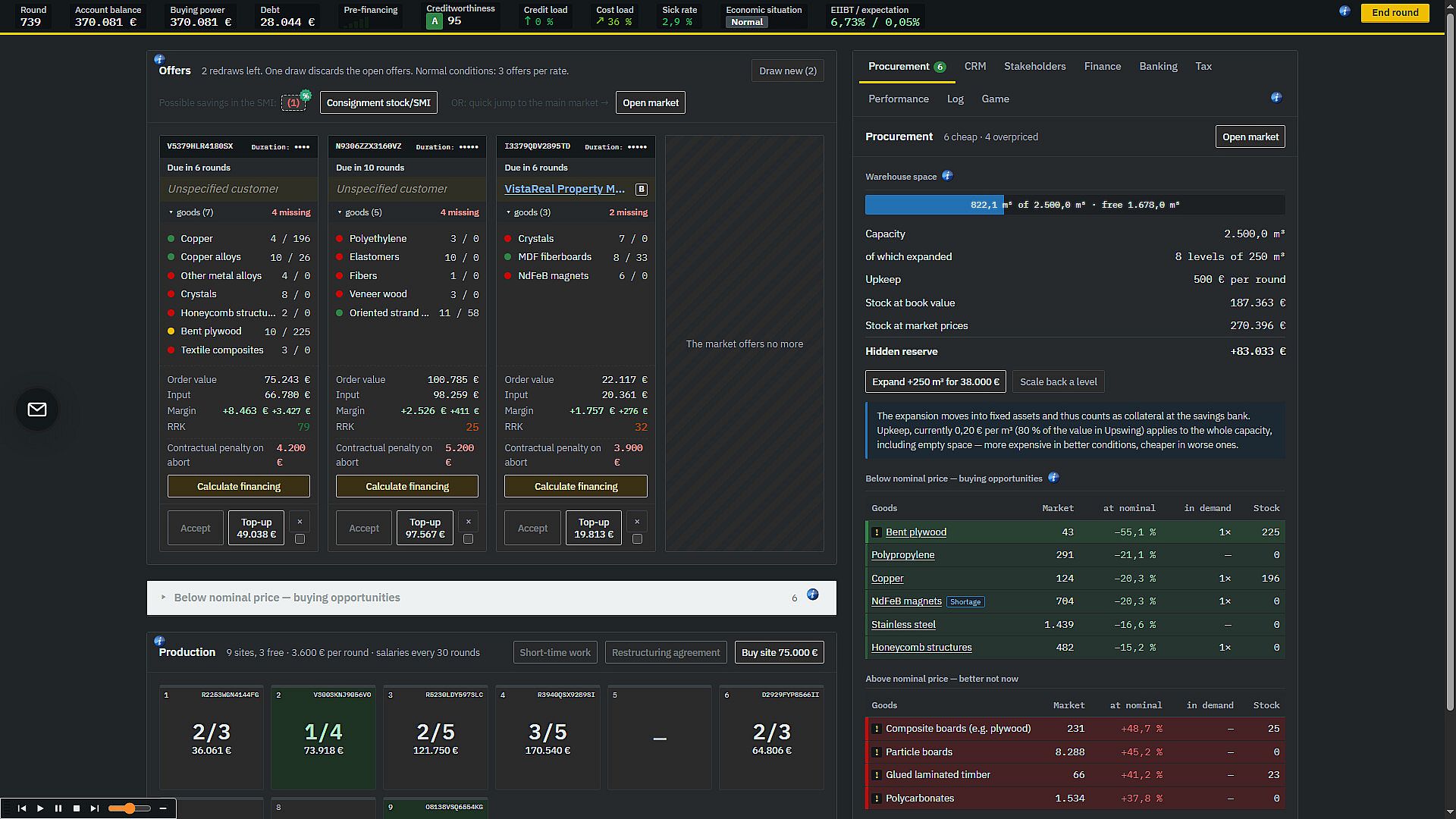
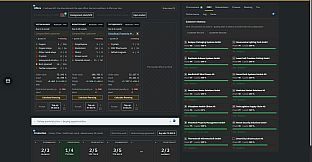
Margin Matters is a strategy and simulation game for PC in which players manage a manufacturing company inside a fully simulated economy. Orders arrive from customers and each one occupies a production site for a set number of turns. The core challenge lies in selecting contracts that deliver acceptable margins without locking up capacity on low-value work. Materials must be sourced from open markets or surplus stock held by other firms, while cash flow, loans, credit lines, and investor involvement keep operations solvent through changing economic conditions.
Gameplay
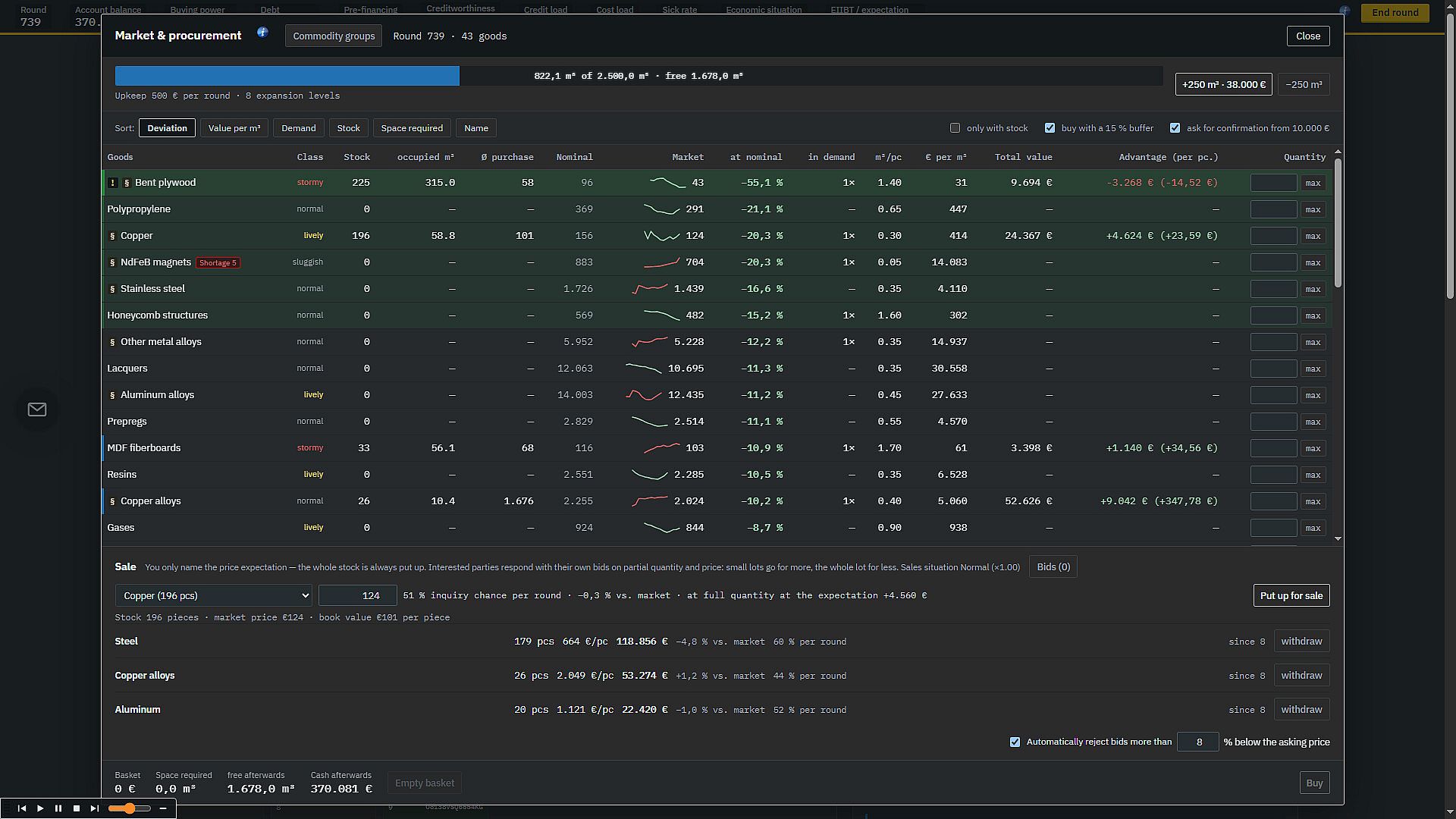
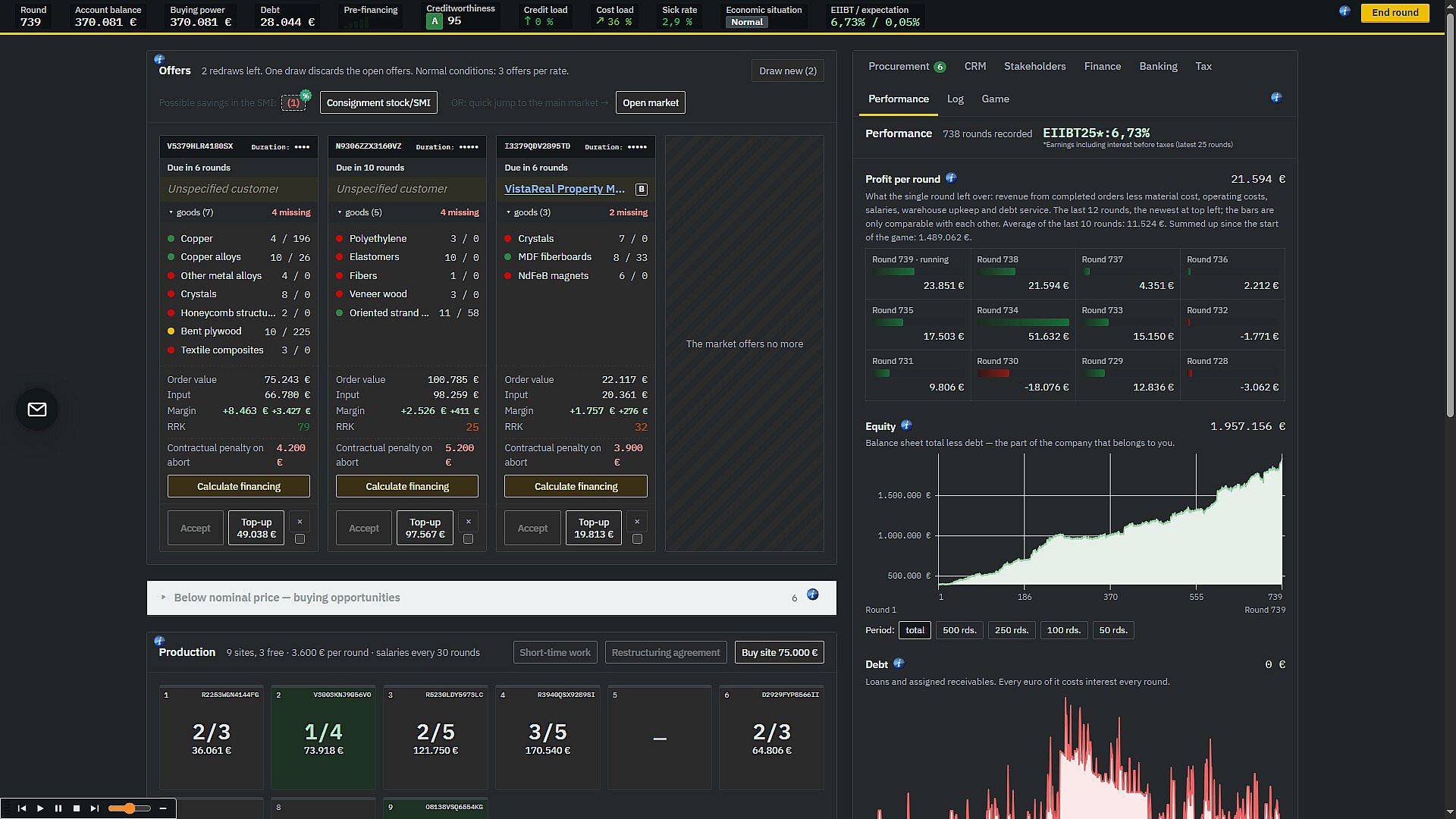
Players compare offer details directly, weighing the margin against the duration an order will occupy a site. Wrong choices leave facilities idle or filled with thin returns, while strong selections generate the capital needed for expansion. Material procurement requires tracking what remains available before committing to production. Financing options include taking loans, drawing on credit, selling future receivables, or bringing in outside investors. A company can hold promising orders yet still fail if cash runs out before revenue arrives.
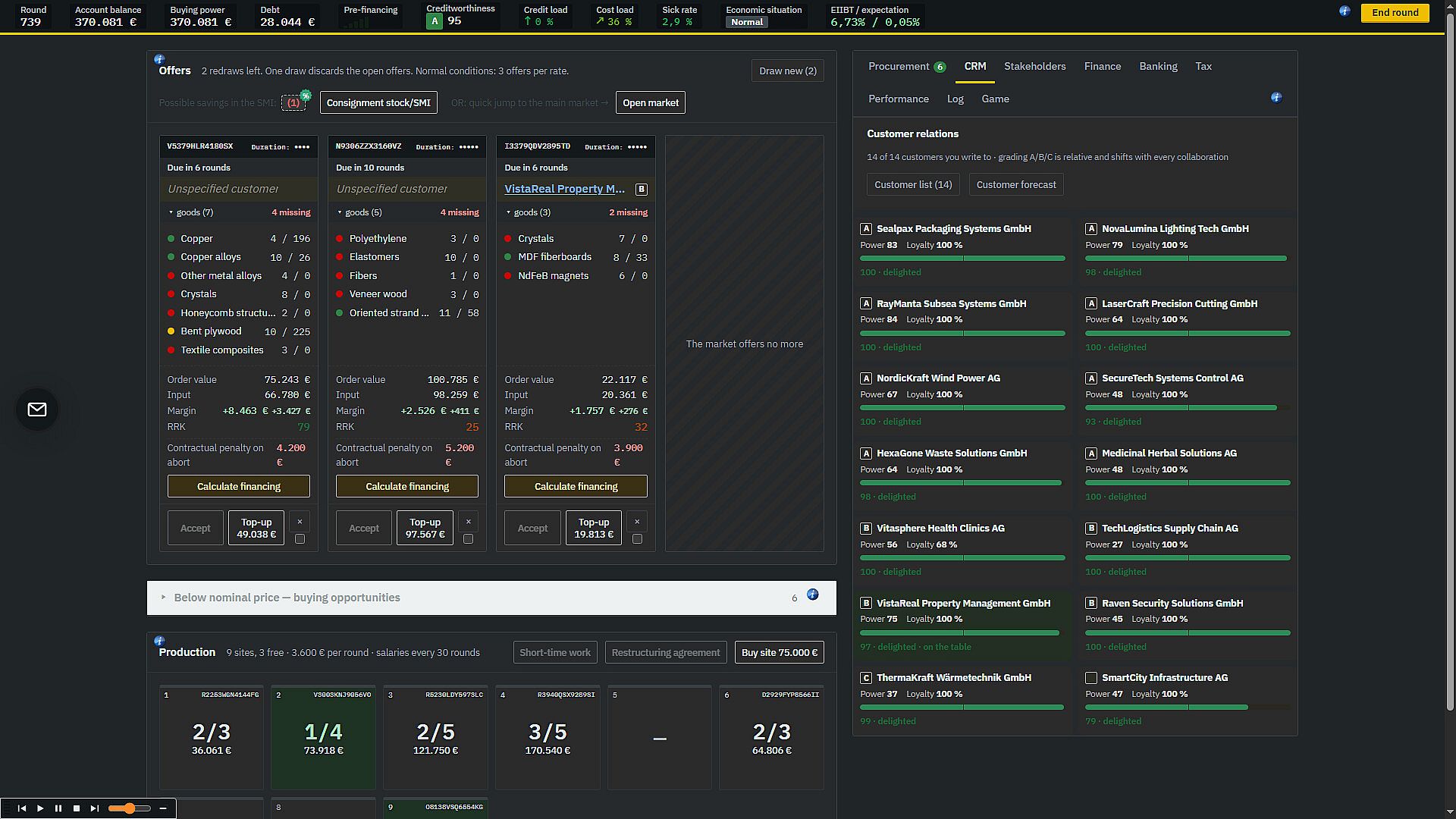
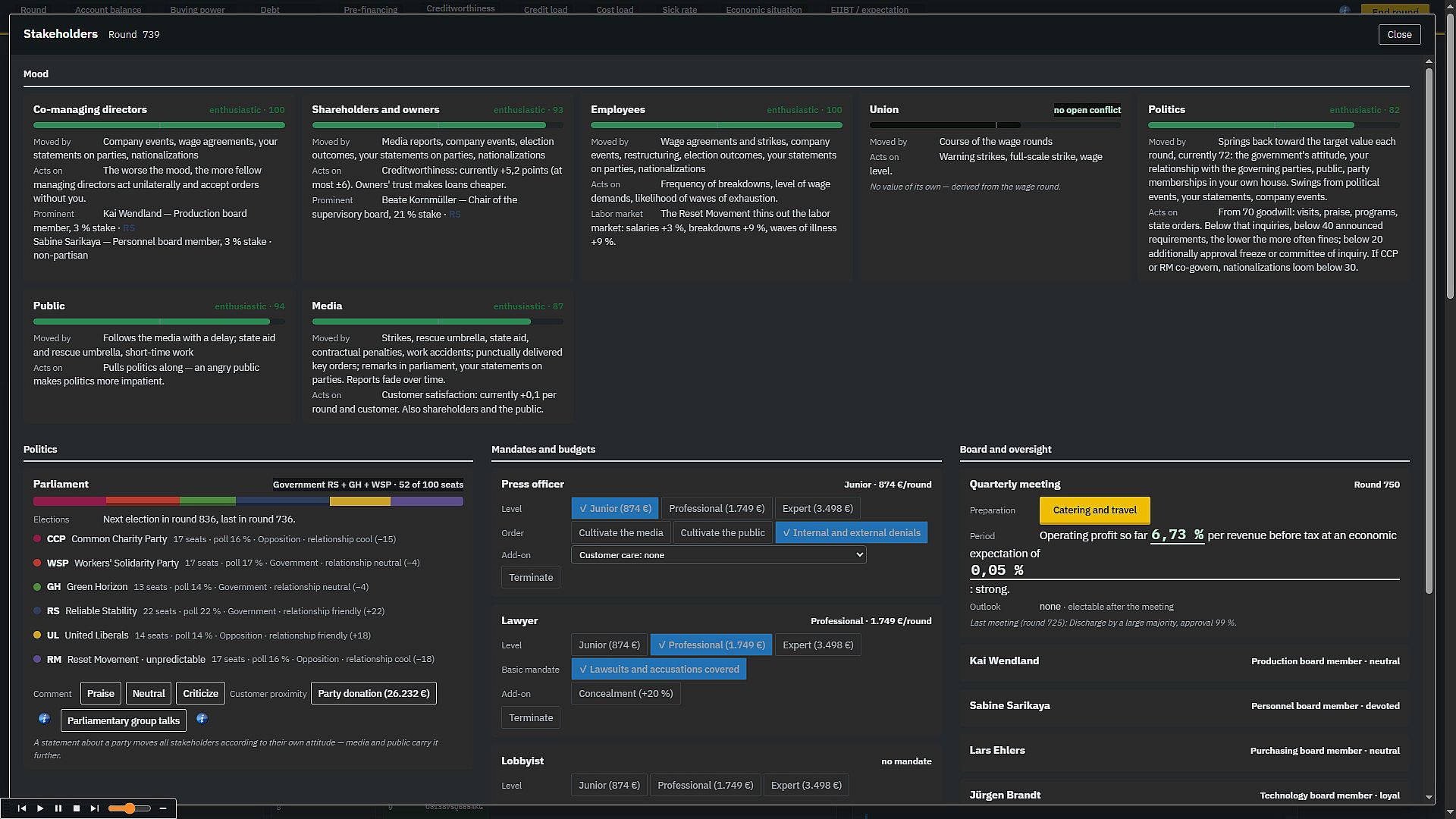
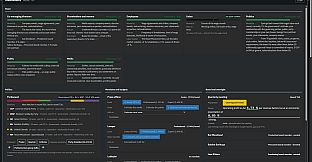
Expansion happens gradually through additional production sites and larger warehouse capacity. Economic cycles influence prices, order volume, and interest rates, forcing ongoing adjustments to strategy. As the business grows, external pressures appear in the form of shareholders seeking returns, employees expecting wages, union demands, board ambitions, media scrutiny, and political attention. Every transaction follows strict double-entry accounting so the books remain balanced at all times. Decisions rest on visible numbers and personal judgment rather than hidden formulas.
Game Modes
The game runs entirely in single-player mode with turn-based pacing and no time limits. Early turns include optional guidance that players can pause or disable. All progress saves locally on the player's machine, allowing uninterrupted sessions across multiple sittings.
Key Systems and Progression
Production sites form the central constraint. Each accepted order reserves one site for a fixed number of rounds, so capacity planning becomes essential once multiple contracts run simultaneously. Warehouse space limits raw material storage, and expansion decisions must account for both current demand and anticipated market shifts. Financing tools interact directly with operations: loans carry interest that reduces net margins, while factoring future income or accepting investors dilutes control in exchange for immediate liquidity.
Later stages introduce layered oversight. Shareholders monitor quarterly results, the workforce expects consistent pay, and external groups react to performance or policy choices. These elements add layers of judgment beyond pure production arithmetic. The interface supports both light and dark themes for extended play, and a built-in handbook explains every term in English, German, and French.
Is It Worth Playing?
Margin Matters suits players who enjoy deliberate, numbers-driven strategy without timers or multiplayer pressure. The emphasis on visible arithmetic, balanced ledgers, and real economic consequences rewards careful reading of offers and market conditions. Recent updates have refined production economics, company behavior, and interface clarity, keeping the simulation responsive even in longer campaigns. Those who prefer abstract management or fast-paced action may find the pace too measured, yet the game delivers consistent depth for anyone drawn to industrial simulation and financial oversight. Local saves and optional hints make it accessible for new players while preserving challenge for experienced ones.











