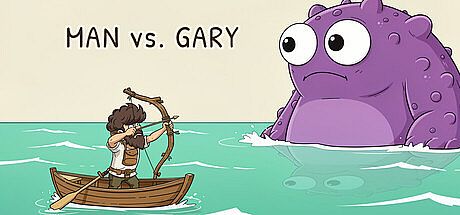


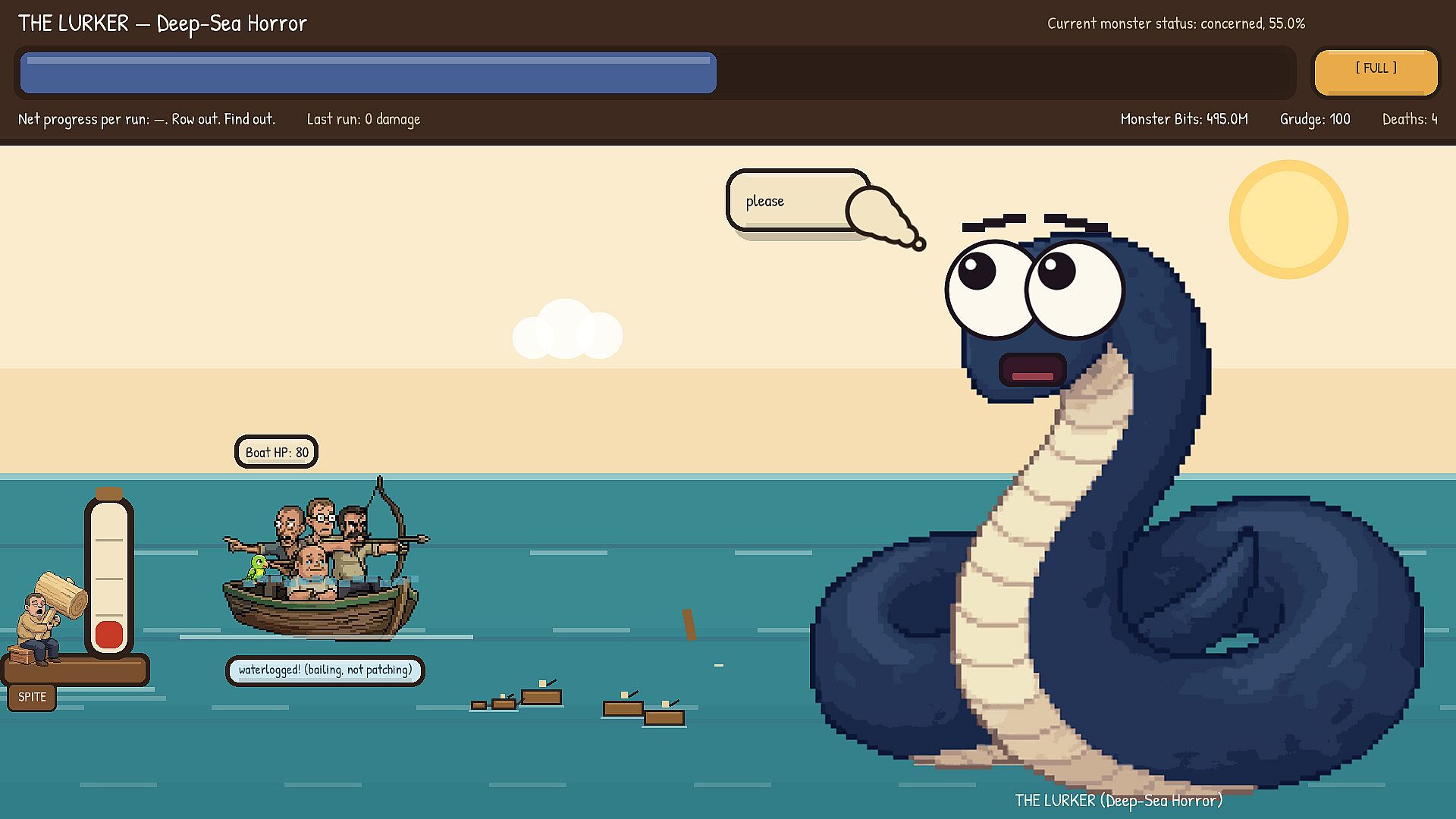
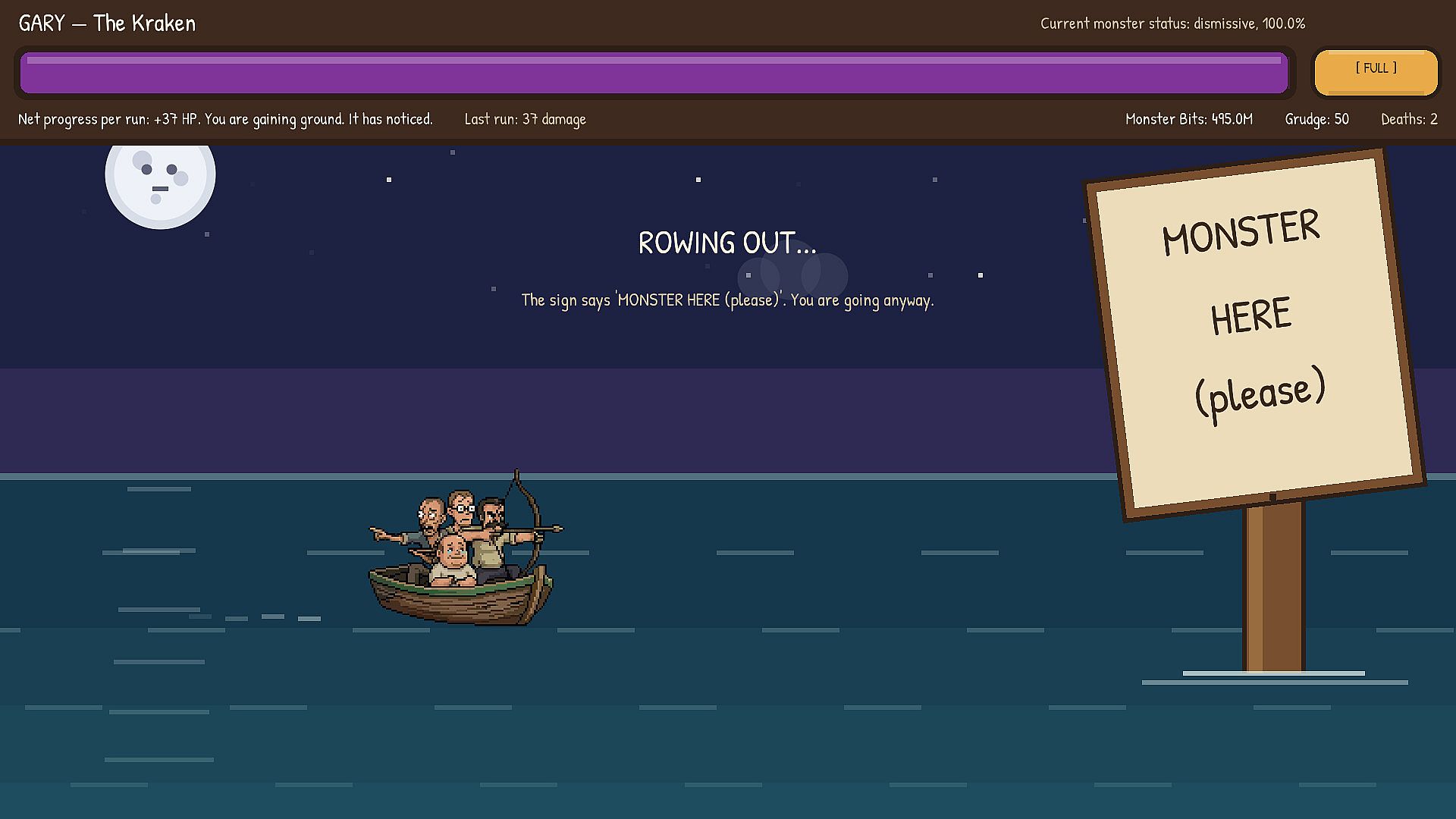
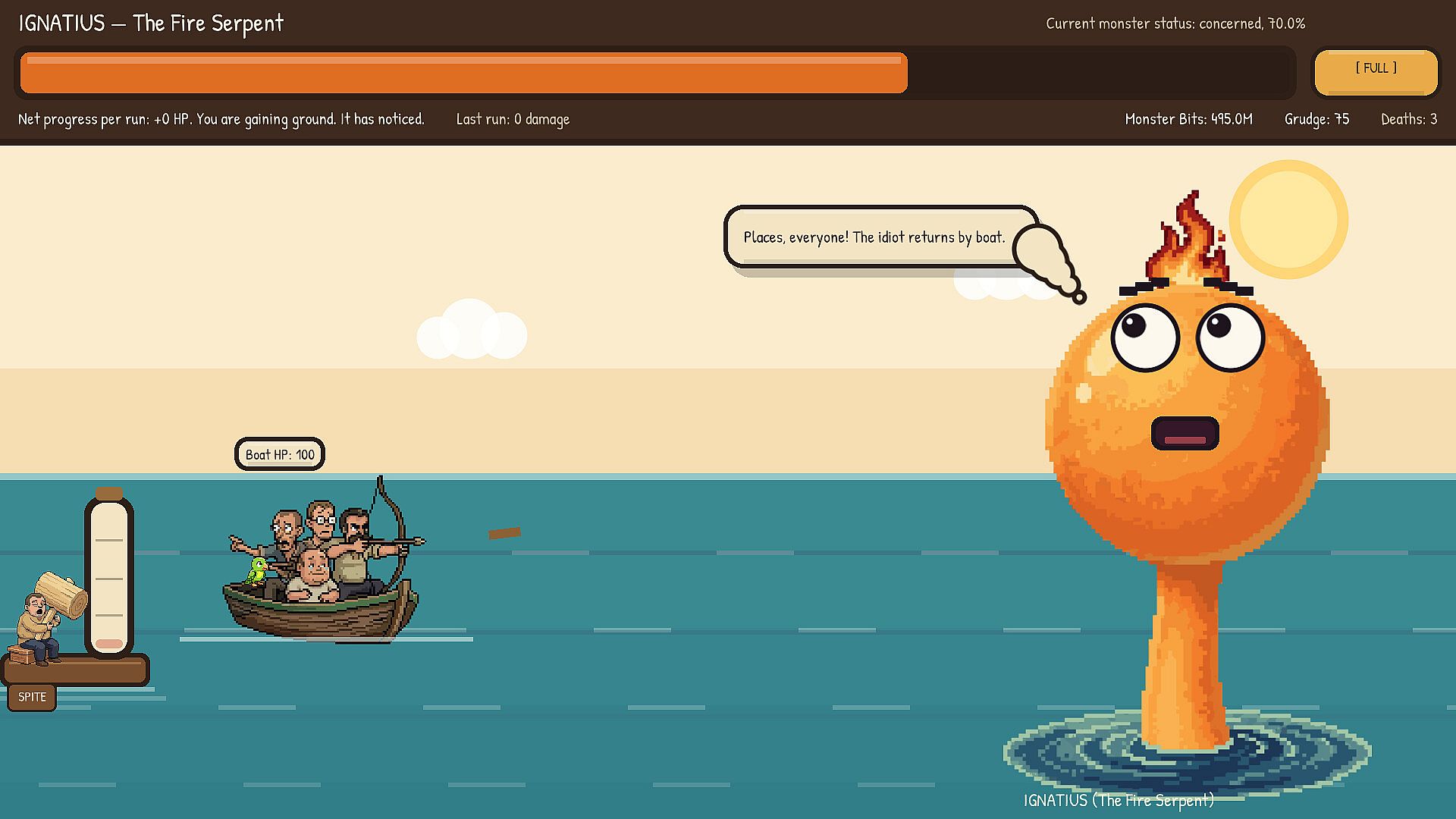
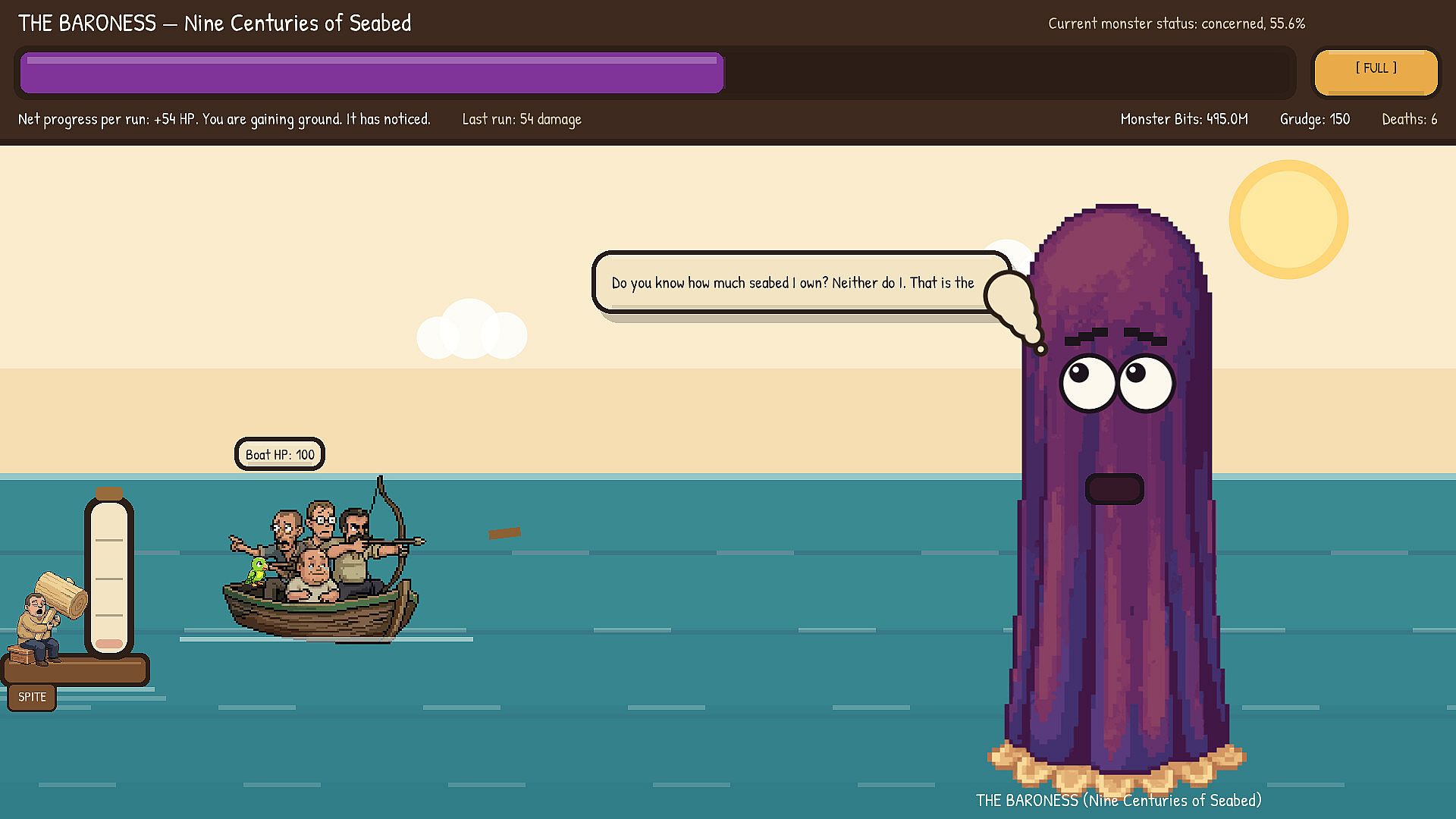
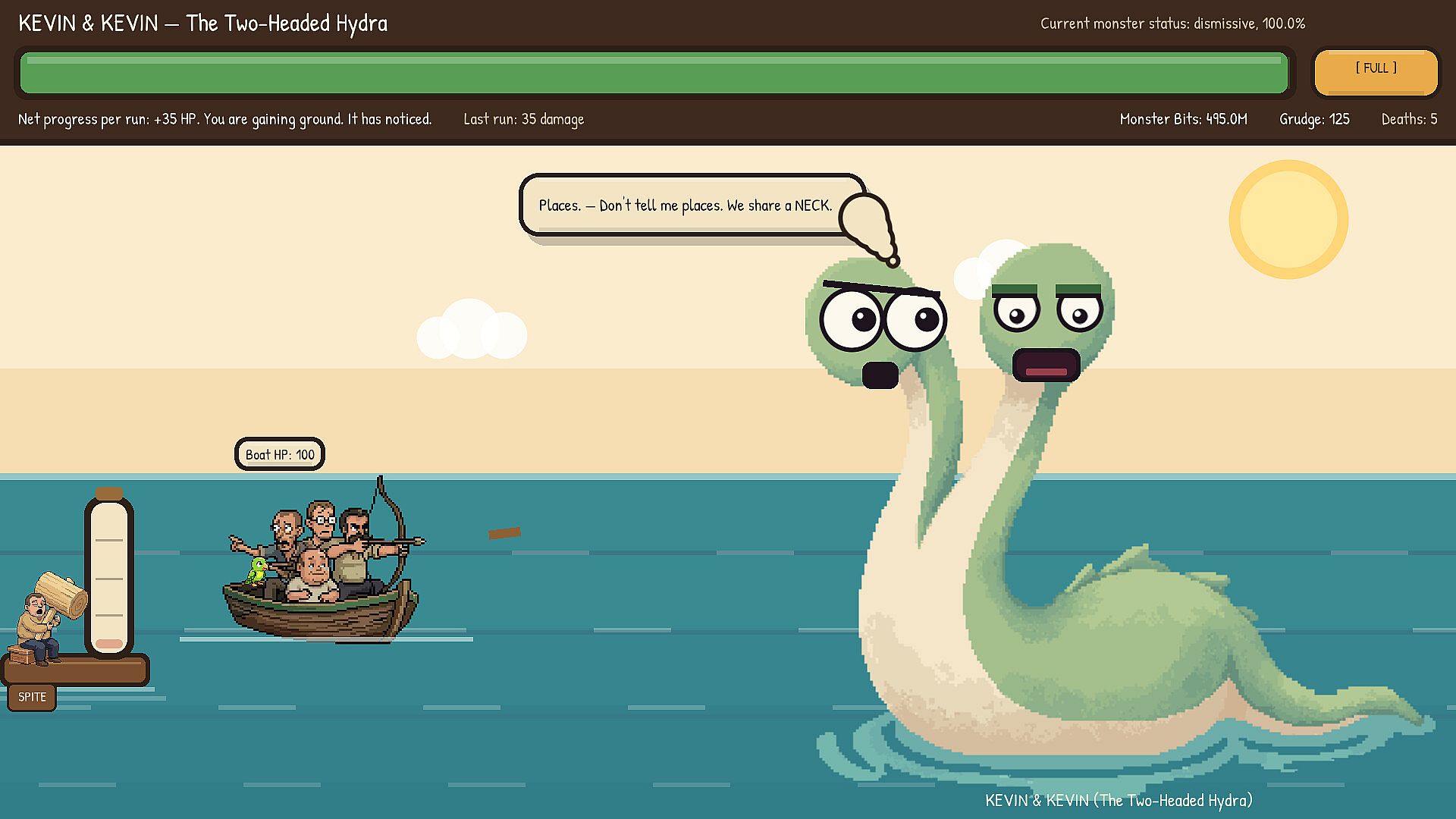
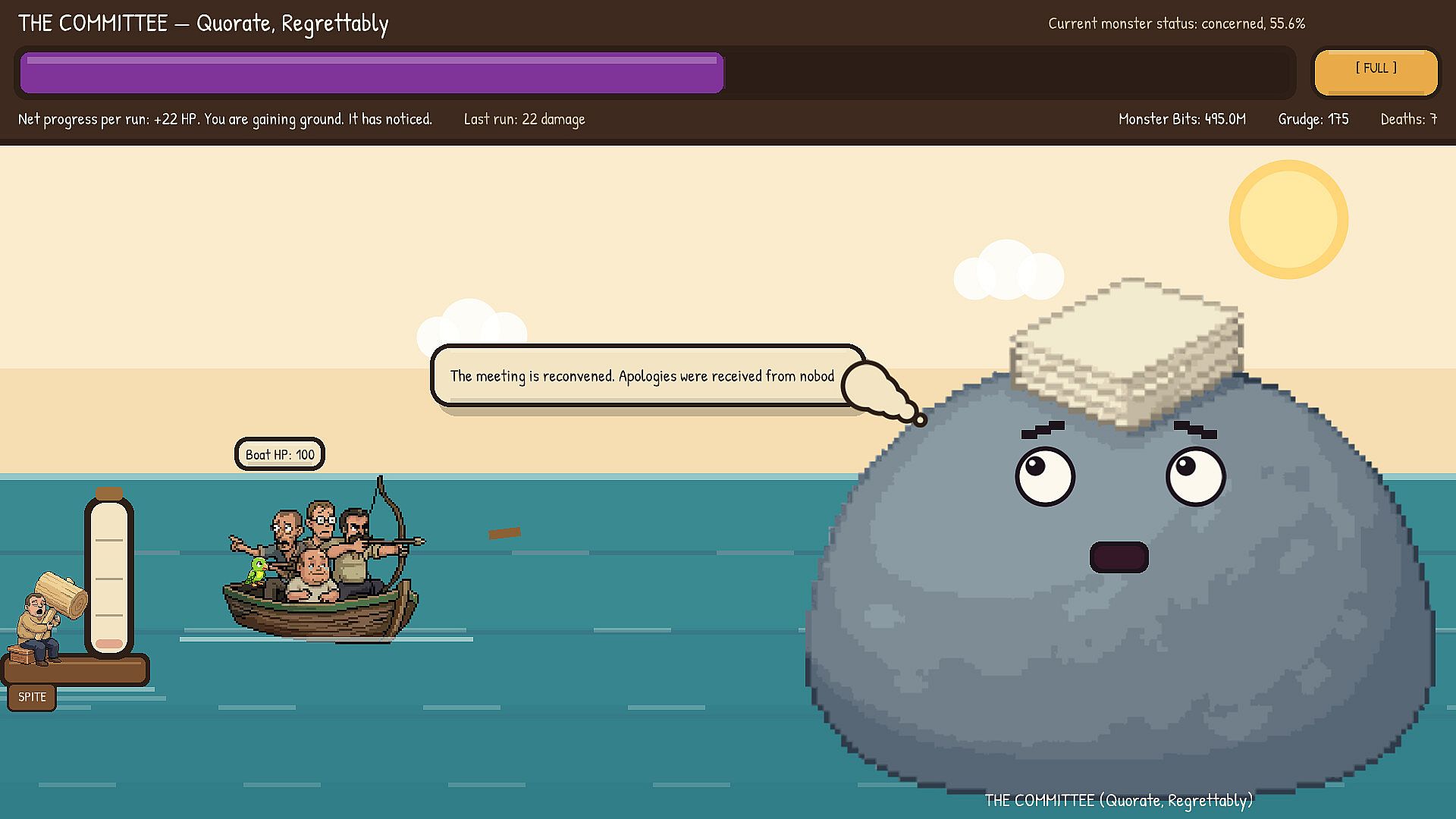









Man vs. Gary is an indie RPG and simulation title built around idle progression and repeated encounters with oversized sea creatures. The core premise places a single sailor in a tiny boat armed only with a bow against Gary, a district-sized kraken who treats the conflict as an inconvenience rather than a threat. Progress comes through persistent damage that carries across deaths, turning each drowning into a step toward eventual victory rather than a setback.
Gameplay
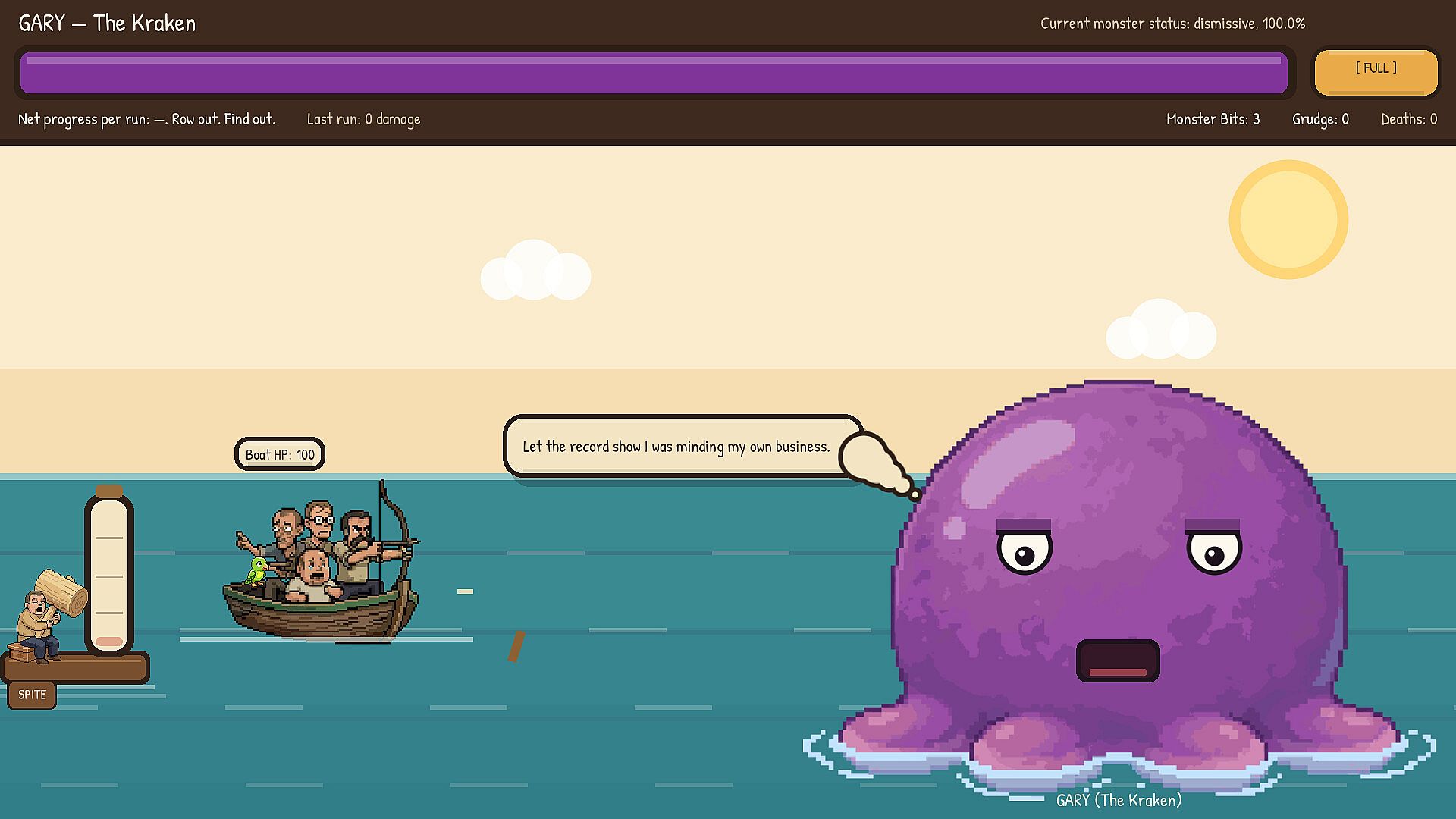
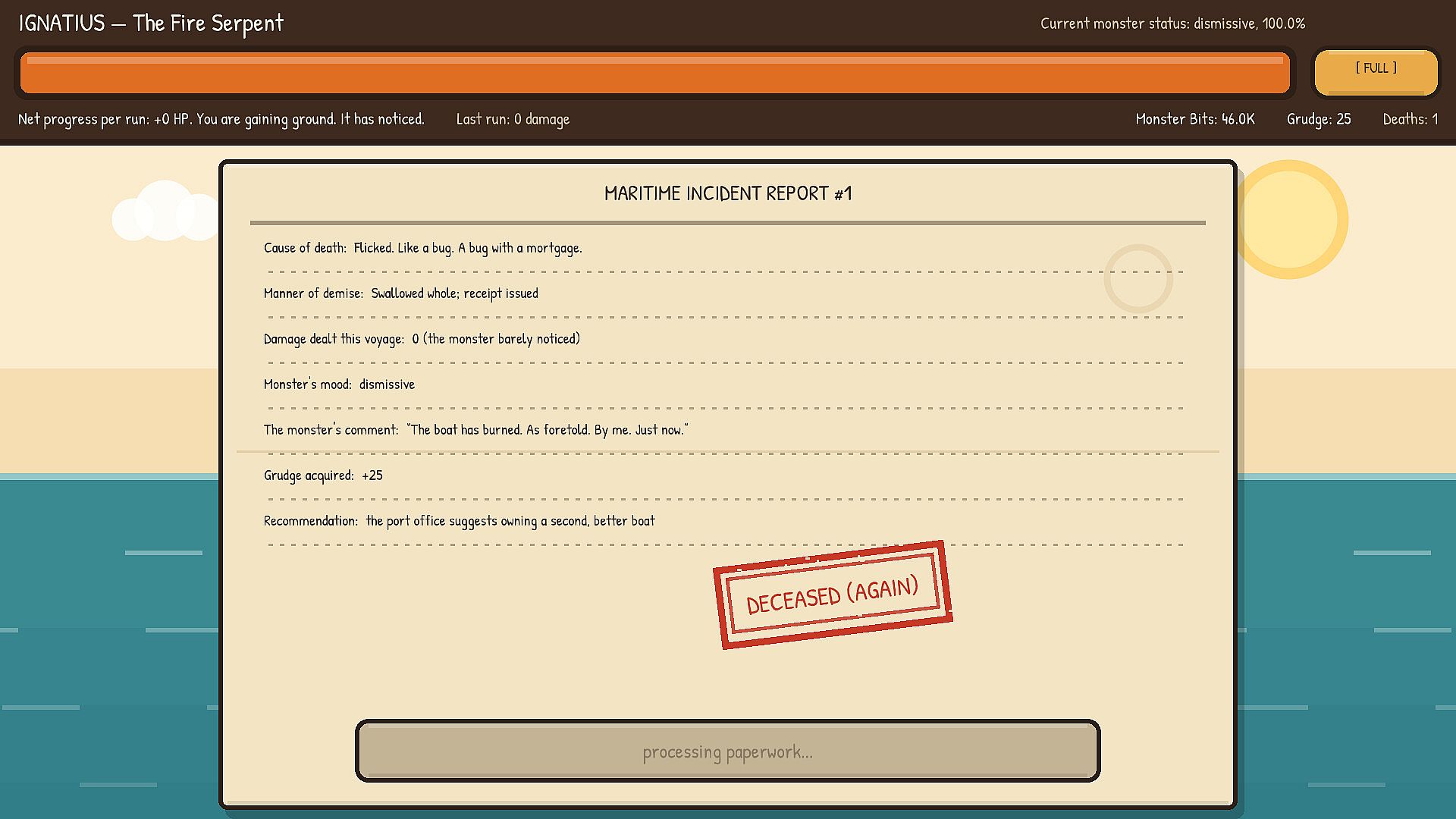
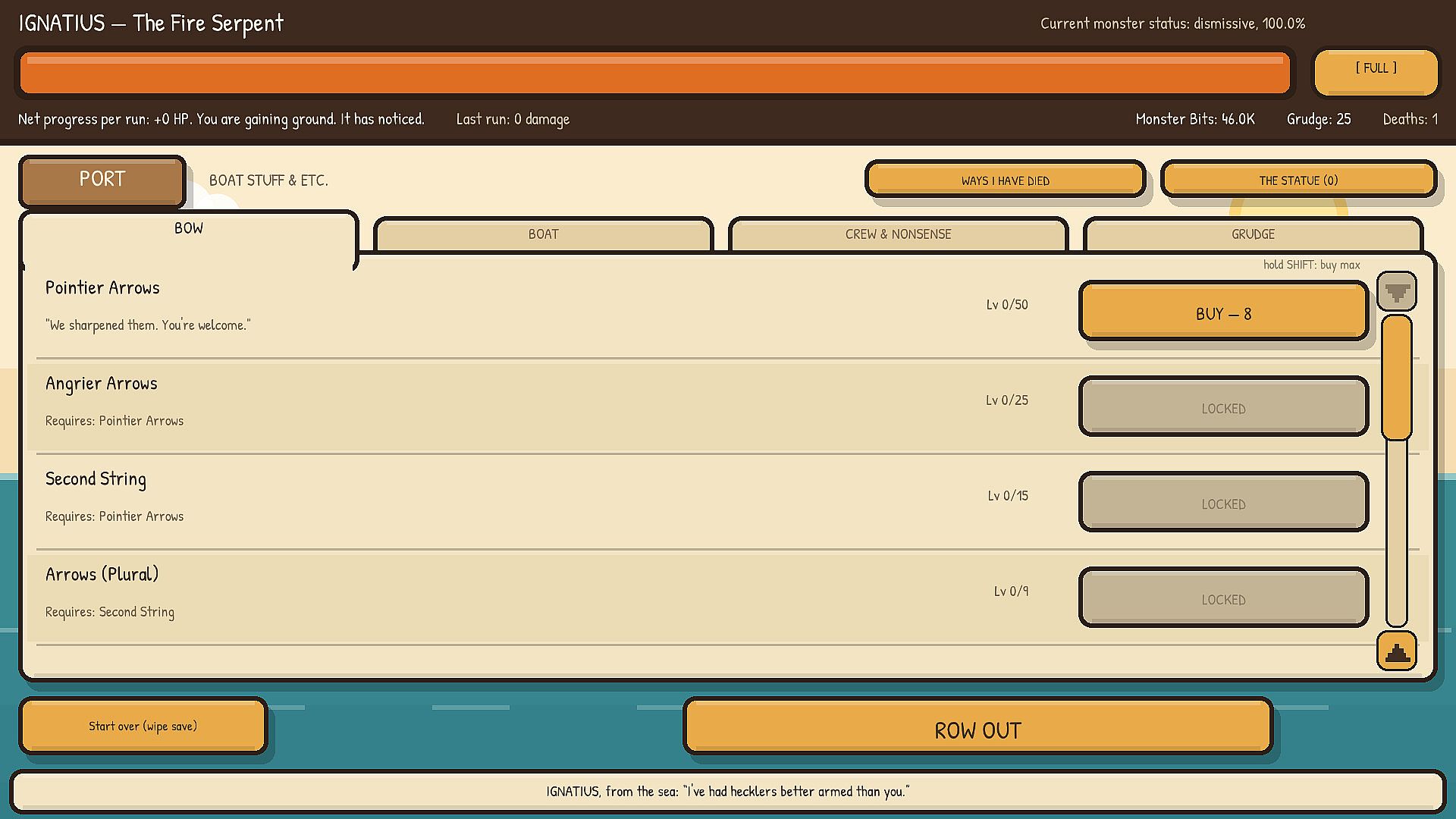
The loop centers on rowing into the bay, firing arrows at the monster, and eventually sinking. Every shot contributes permanent harm to the creature's health pool, which never resets between attempts. While away from the game the crew continues rowing, shooting, and filing reports, so returning players find incremental advances and new Maritime Incident Reports waiting. A roster of opponents appears in sequence, each with distinct personalities and behaviors that influence the commentary delivered during fights. The hand-illustrated storybook aesthetic frames these encounters as pages in an ongoing bureaucratic comedy rather than traditional combat sequences.
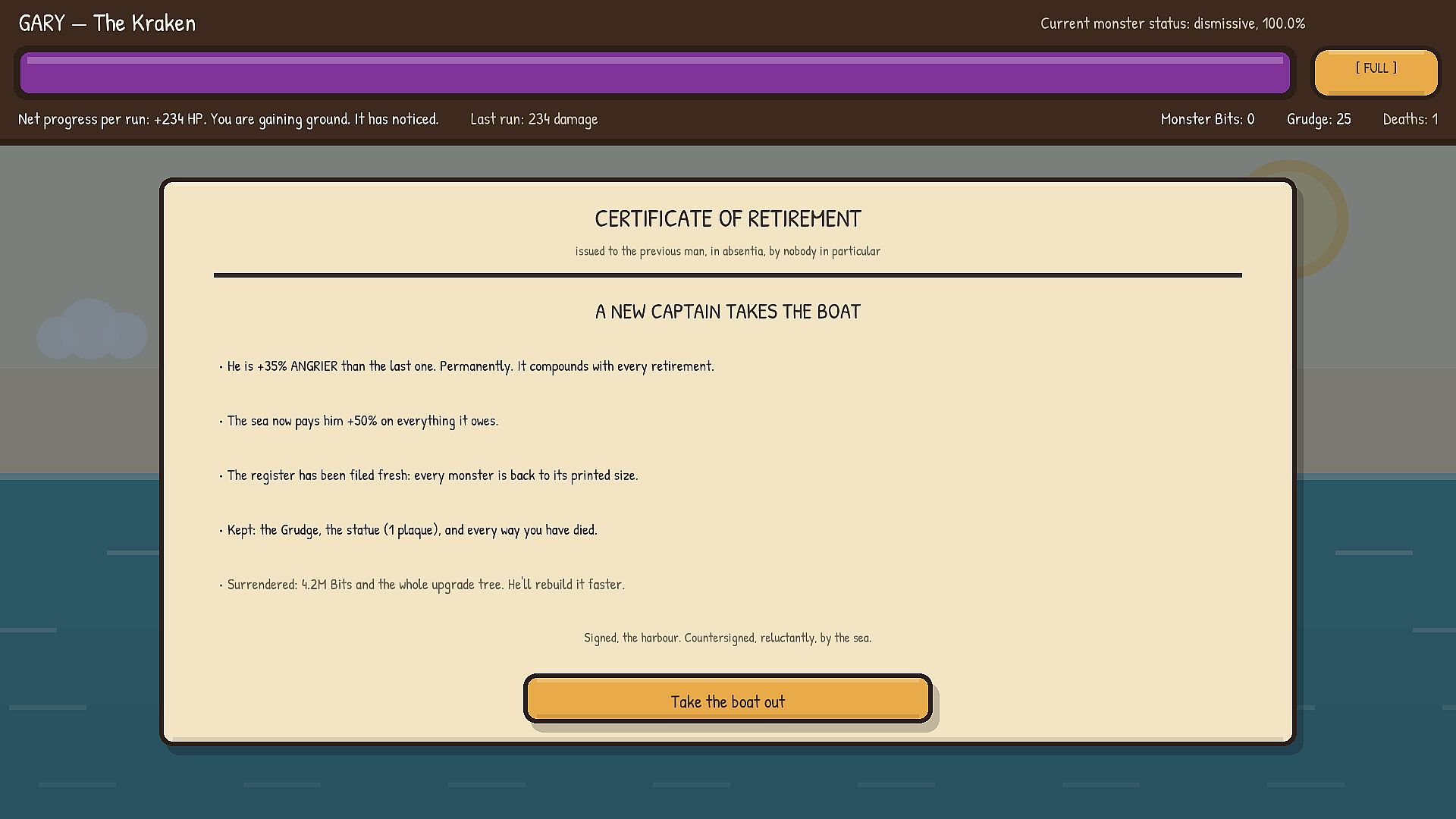
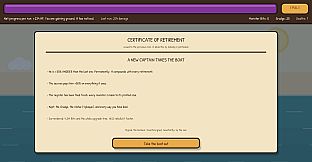
Retirement offers a second layer of advancement. When progress stalls, the current captain can be replaced by a new sailor who inherits accumulated grudges, damage bonuses, and a growing collection of death records. These bonuses stack across retirements, shortening later fights without erasing prior effort. The system frames each handover as a promotion complete with a certificate, keeping the focus on long-term accumulation instead of restarts.
Game Modes
The experience functions as a single continuous idle boss-siege without separate selectable modes. All activity occurs within the same persistent world where the monster's health and the player's death history remain fixed. The Drowning Board provides a global ranking based solely on total deaths recorded, turning repeated failures into a measurable achievement that anyone can pursue at their own pace. Commentary lines, bureaucratic paperwork, and occasional mandatory tea breaks occur automatically during idle periods, maintaining the satirical tone whether the player is actively clicking or simply checking in later.
Story and Tone
Narrative delivery relies on hundreds of deadpan lines spoken by the monsters and supporting characters. Gary comments on the tedium of the fight, while other entities such as the fire-aware Ignatius or the apologetic Deep Sea Lurker add their own perspectives. The Committee requires formal motions before any action, and a gentleman gull observes events without intervening. These exchanges unfold mid-sentence when the monster finally falls, reinforcing the game's emphasis on process over decisive triumph. Every element traces back to the work of a single developer, resulting in a consistent voice free of external content updates or additional paid features.
Is It Worth Playing?
Players who enjoy idle games that reward long-term persistence and appreciate dry humor will find a focused match here. The absence of energy systems or microtransactions keeps the loop straightforward, and the retirement mechanic provides tangible acceleration for those who stick with the grind. Because the entire experience runs in the background, it suits anyone looking for low-pressure progress that accumulates whether the game sits minimized or receives direct attention. The comedy and persistent damage model distinguish it from standard clicker titles, delivering a complete package built around one core idea executed with care.