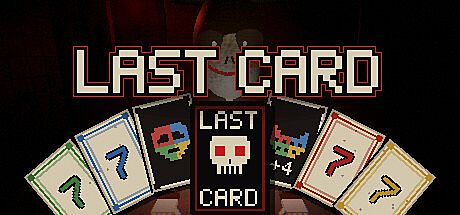


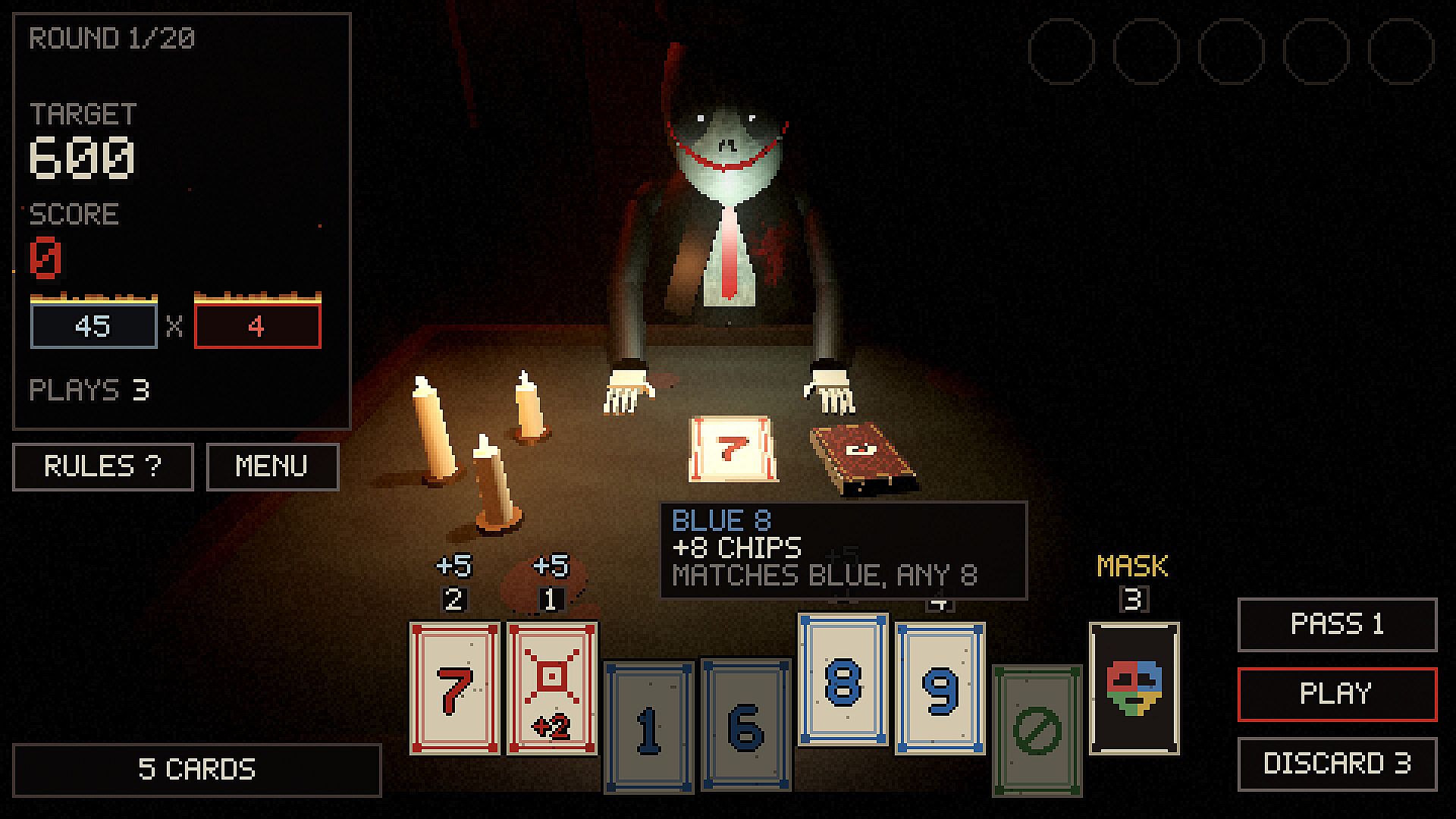
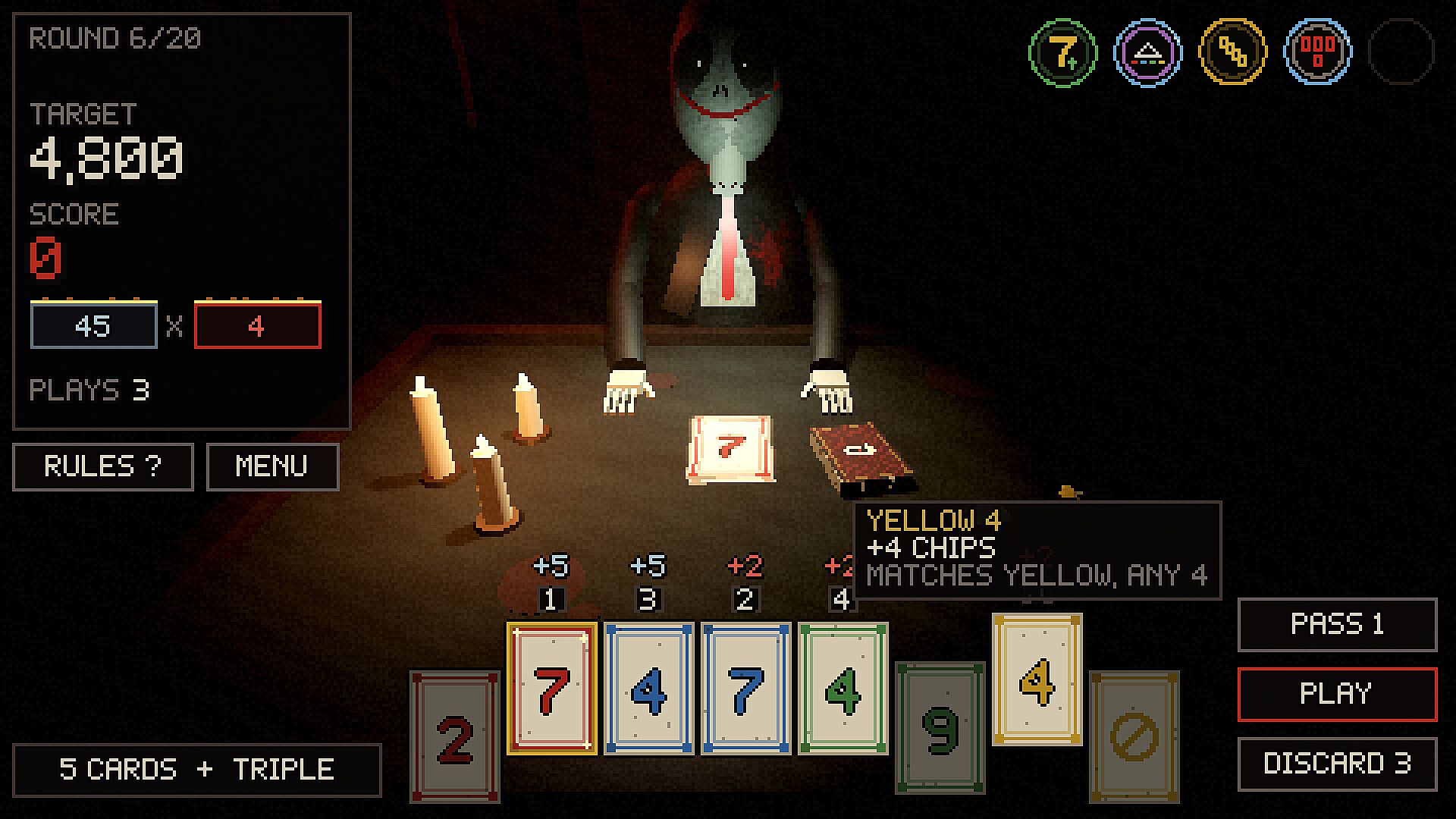
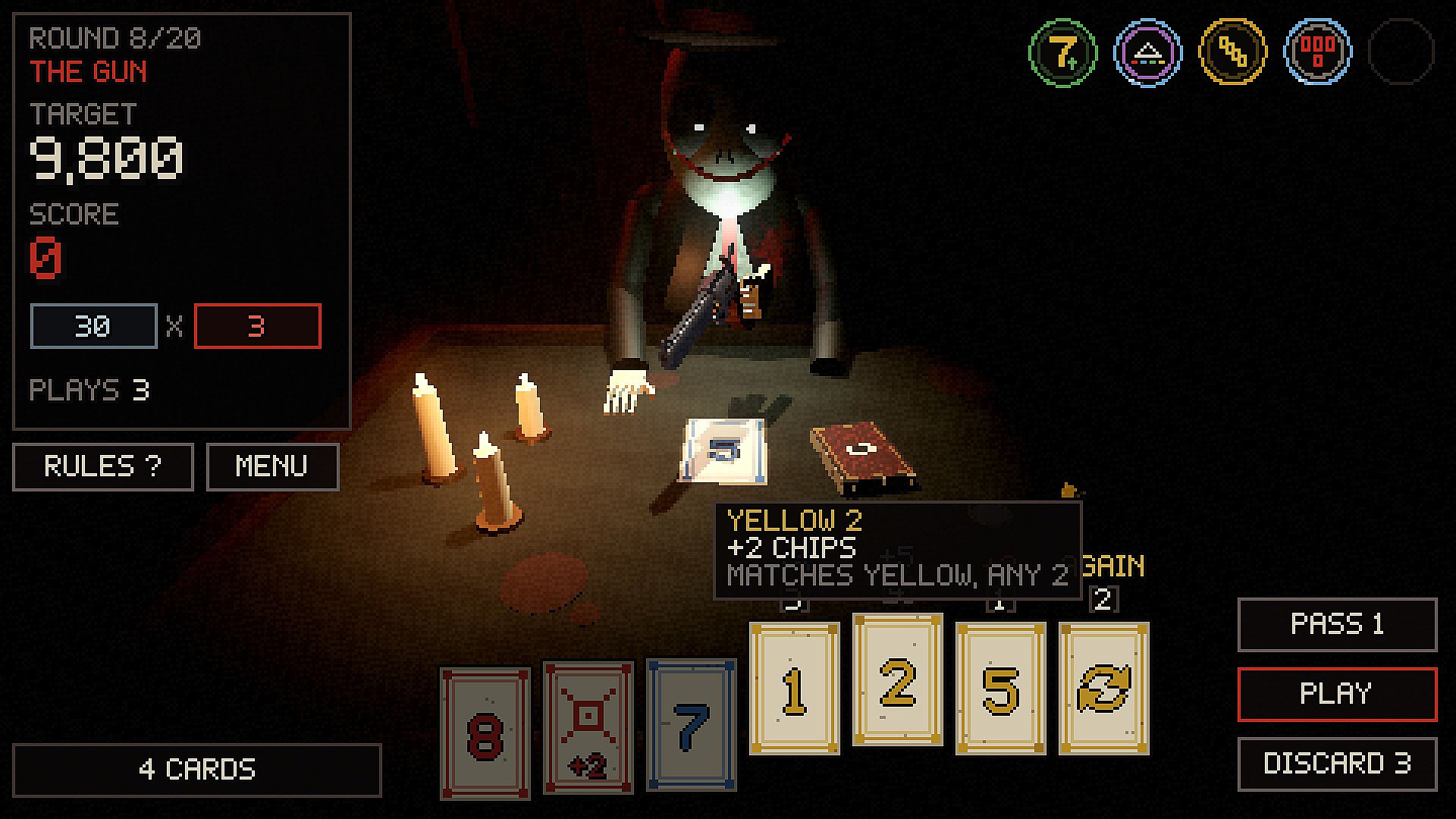
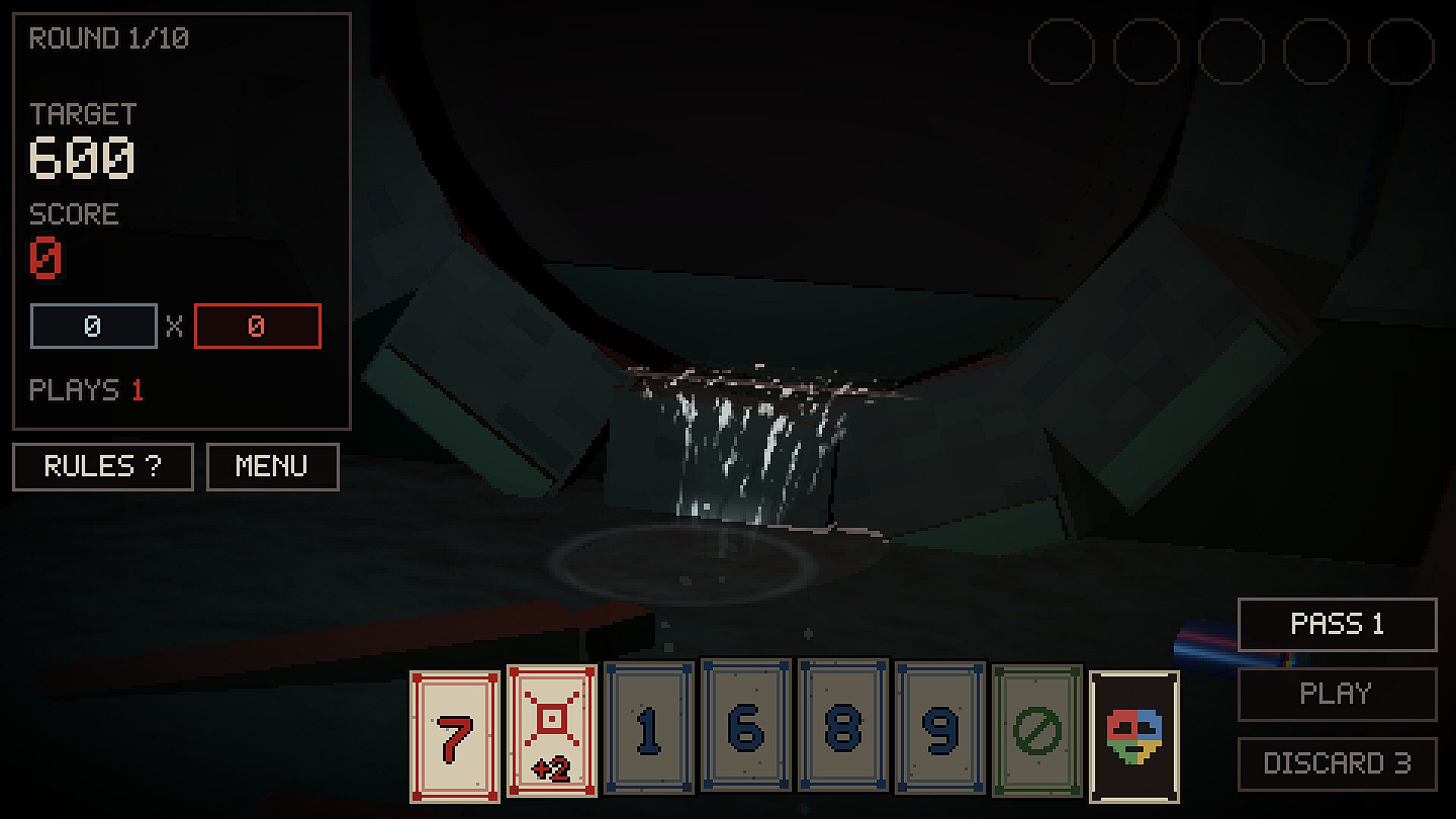
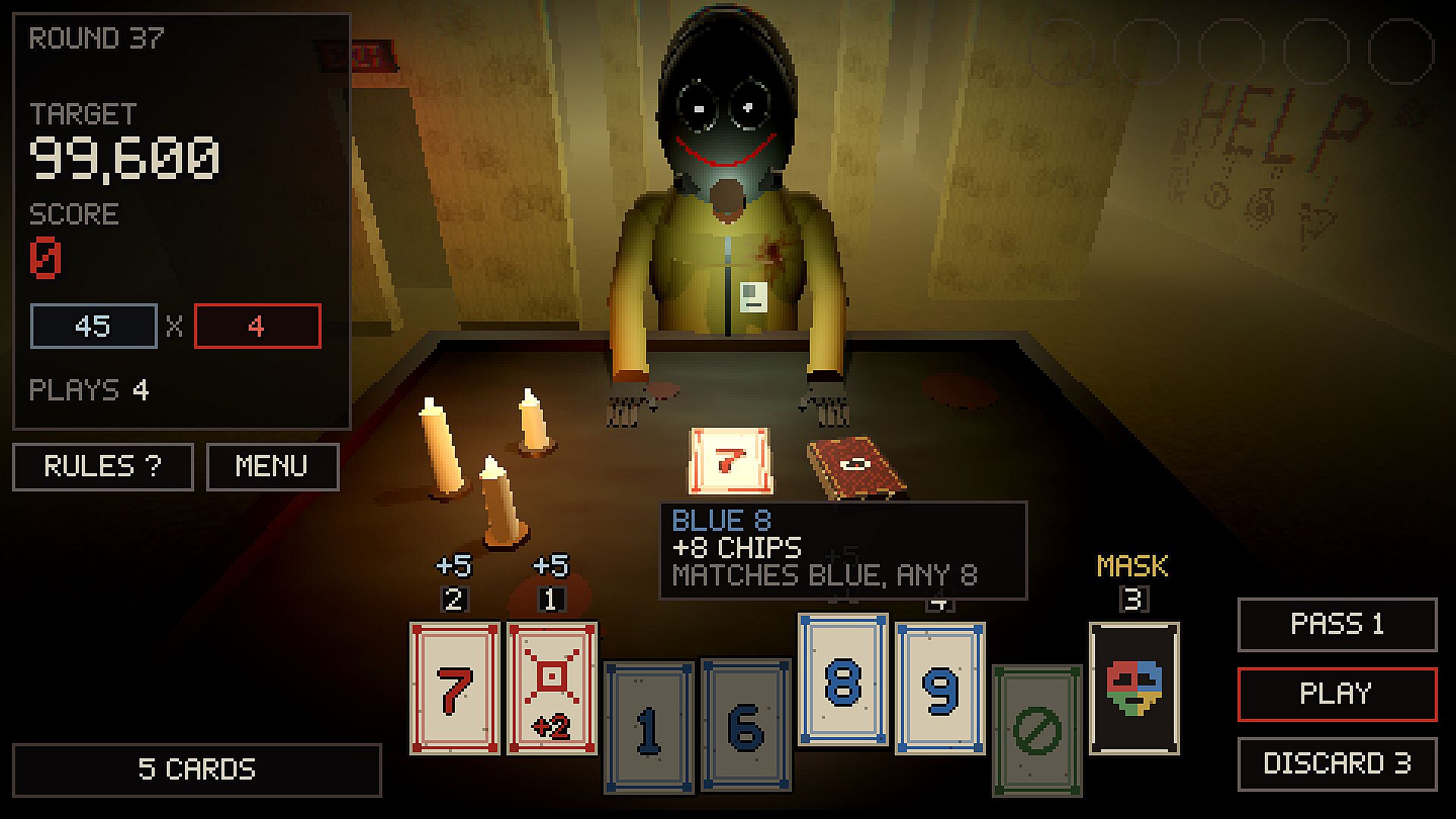
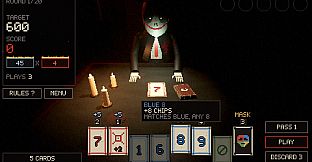
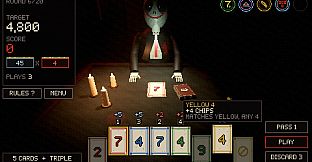
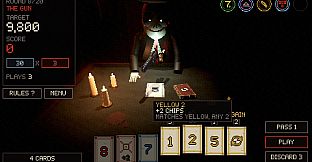

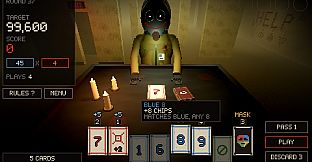
Last Card is a strategy indie casual game for PC that puts players in a tense card game against a persistent dealer. The core loop revolves around managing a hand of eight cards while attempting to meet escalating targets over multiple rounds. Each turn allows three plays, and every card played must match the previous one in color, number, or symbol to build chains of up to five cards. Staying on one color builds chips, while switching colors increases a multiplier, with the final score calculated as chips multiplied by the multiplier. This setup forces constant decisions between steady accumulation and riskier shifts for bigger rewards.
Gameplay
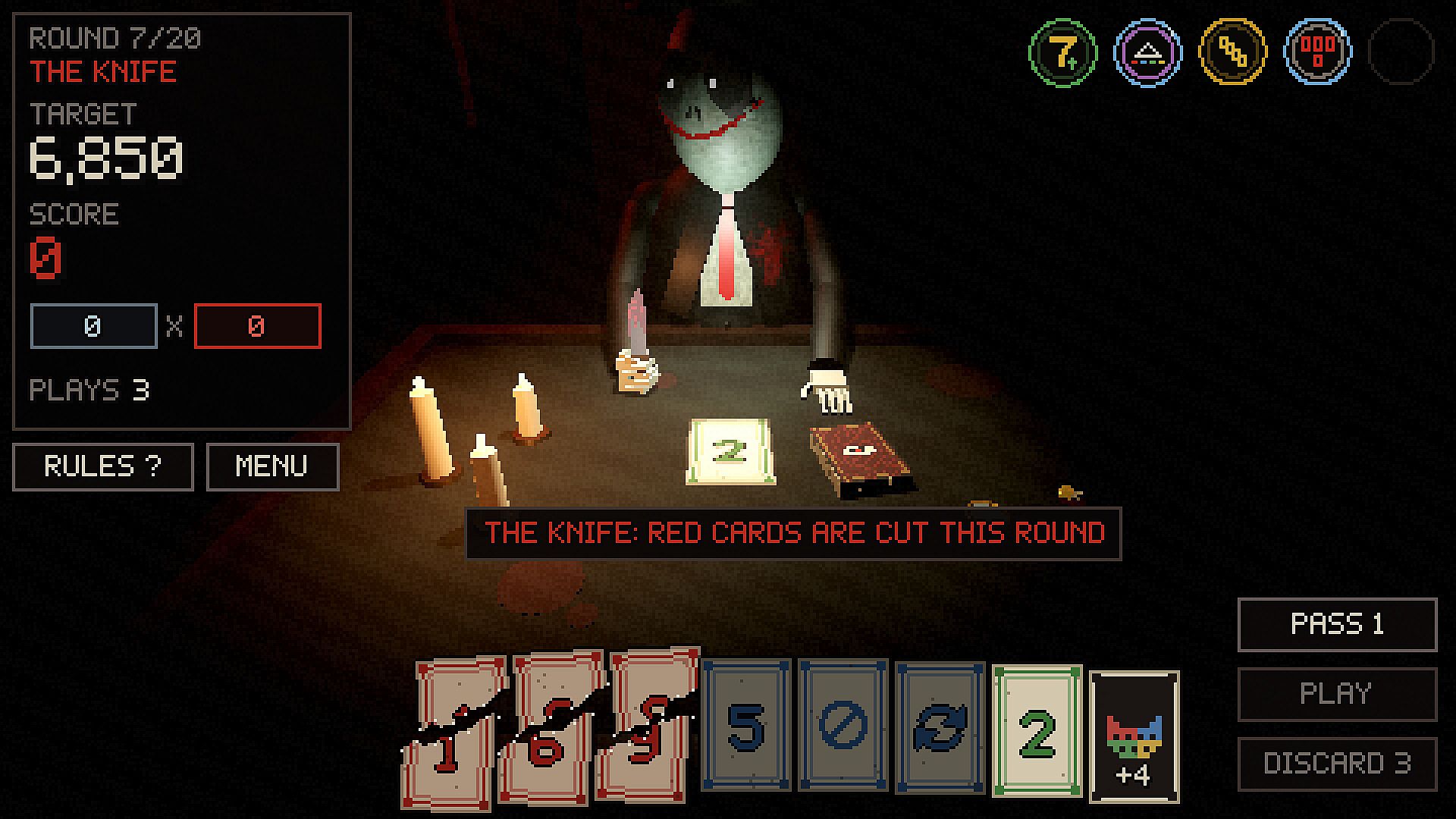
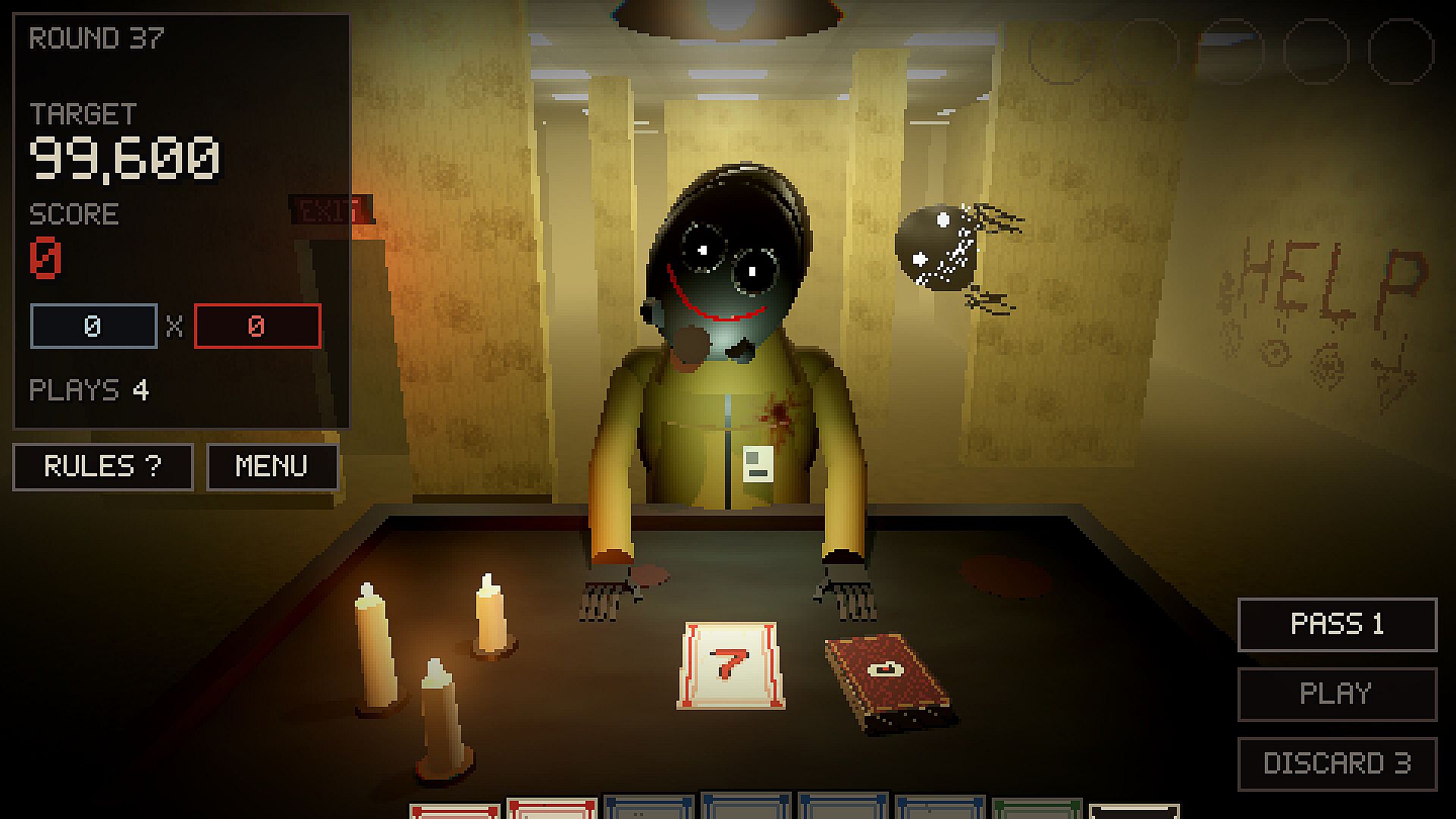
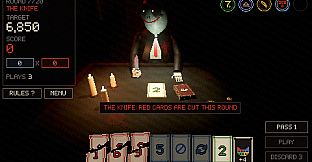
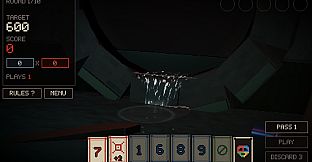
The dealer responds after each player action by placing a card that sets the starting point for the next chain. Special cards like +2 force a ROT card into the hand, which cannot be played and occupies space until discarded. Occasional table events include a knife that disables a color for the round or a gun that removes a random card from the hand. These interruptions keep the pressure high and limit options in meaningful ways.
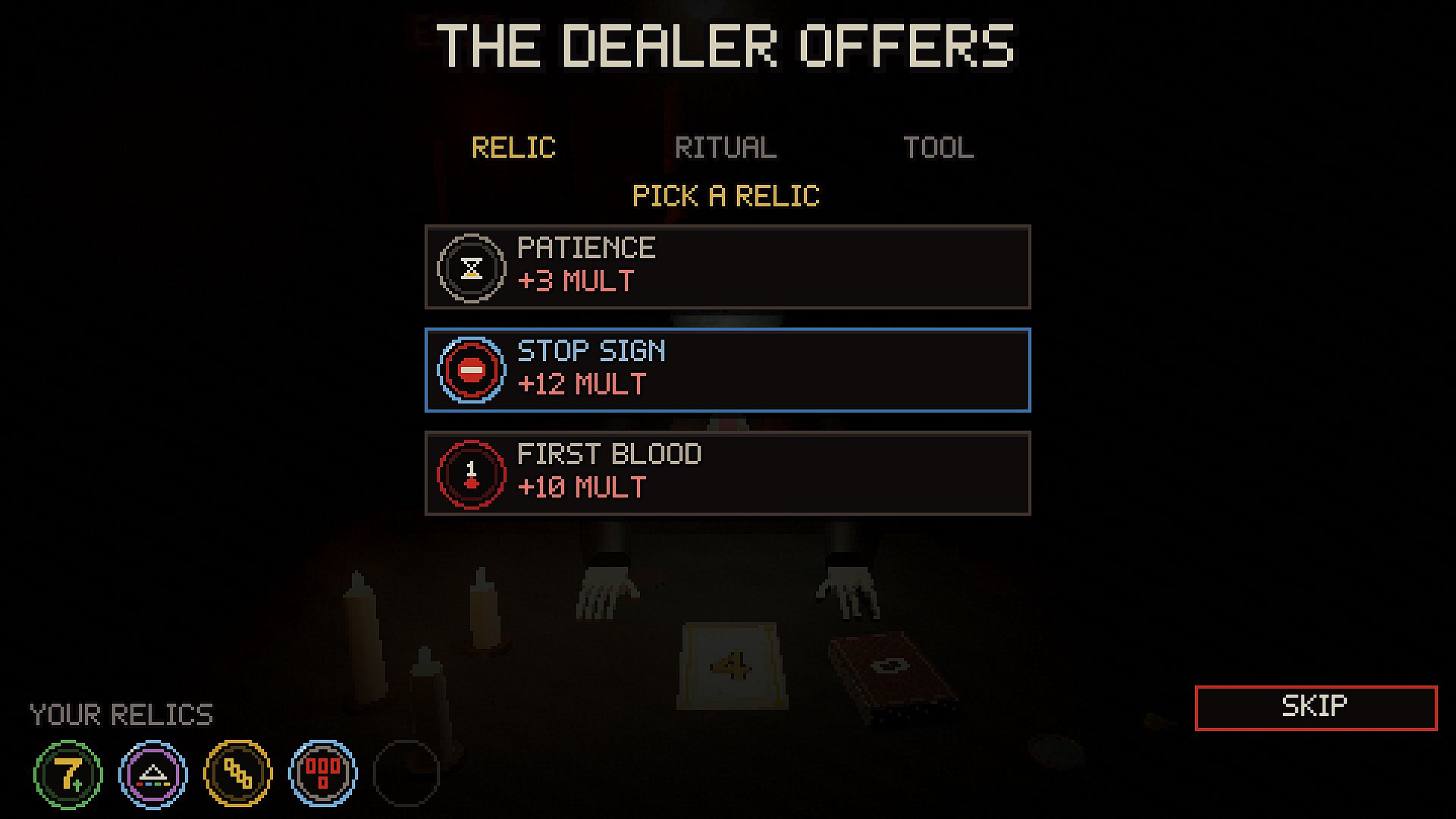
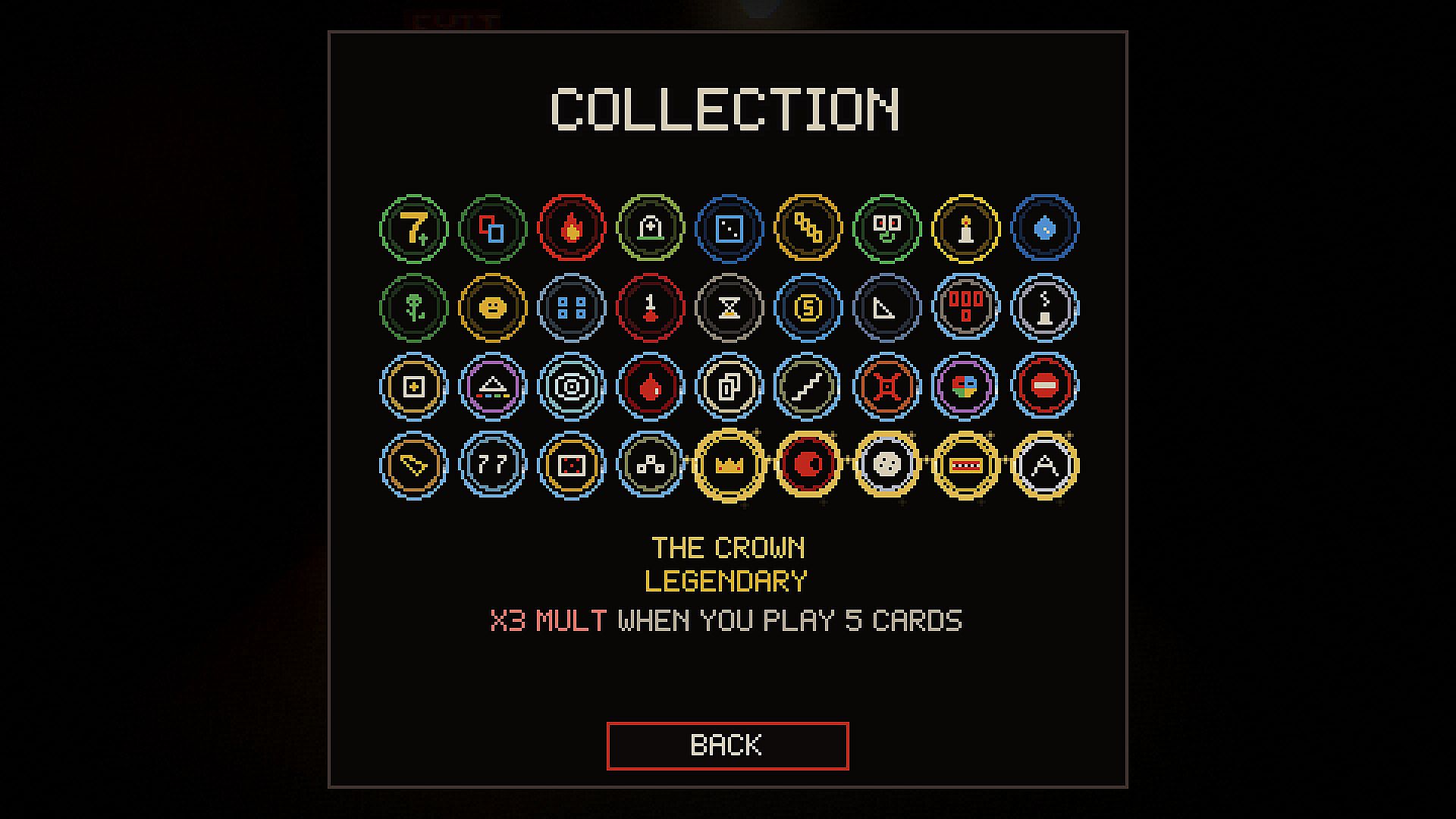
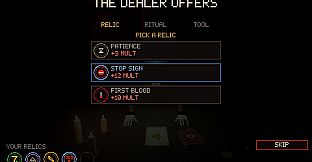
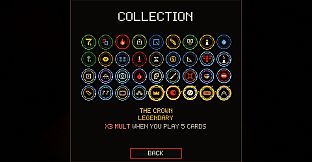
Clearing a round grants access to three relics chosen from a pool of 36. With five relic slots available, players select one of three rituals per relic: inking a card gold, bleeding one red, burning one permanently from the deck, or copying one to appear more frequently. Every third round offers a tool such as peeking at the dealer's next card, relighting a candle, or gaining an extra play. There is no currency or refunds, so each choice is permanent for that run.
Visuals use 480x270 pixel art with film grain and a single swinging bulb for atmosphere. All sounds, including the bulb hum, breathing, and heartbeat, were created programmatically. The game supports 10 languages and includes 21 achievements tied to various playstyles and collections of altered cards.
Game Modes
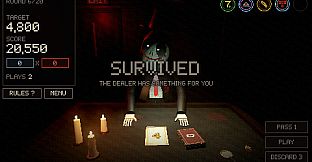
Standard play consists of 20 rounds across four nights, with every fifth round featuring a boss that removes one key element such as half the color-switch multiplier, one play per turn, a relic slot until the next morning, or turning all dealt cards into +2s. Defeating the boss opens the back door to endless mode, where targets rise continuously, the environment shifts, and new threats appear from the corridor.
One-candle mode offers a shorter, higher-stakes variant that ends after a single candle is lost. Daily challenges provide a shared shuffle for all players to attempt the same setup. These modes emphasize different aspects of risk management and adaptation without altering the fundamental rules.
Atmosphere and Presentation
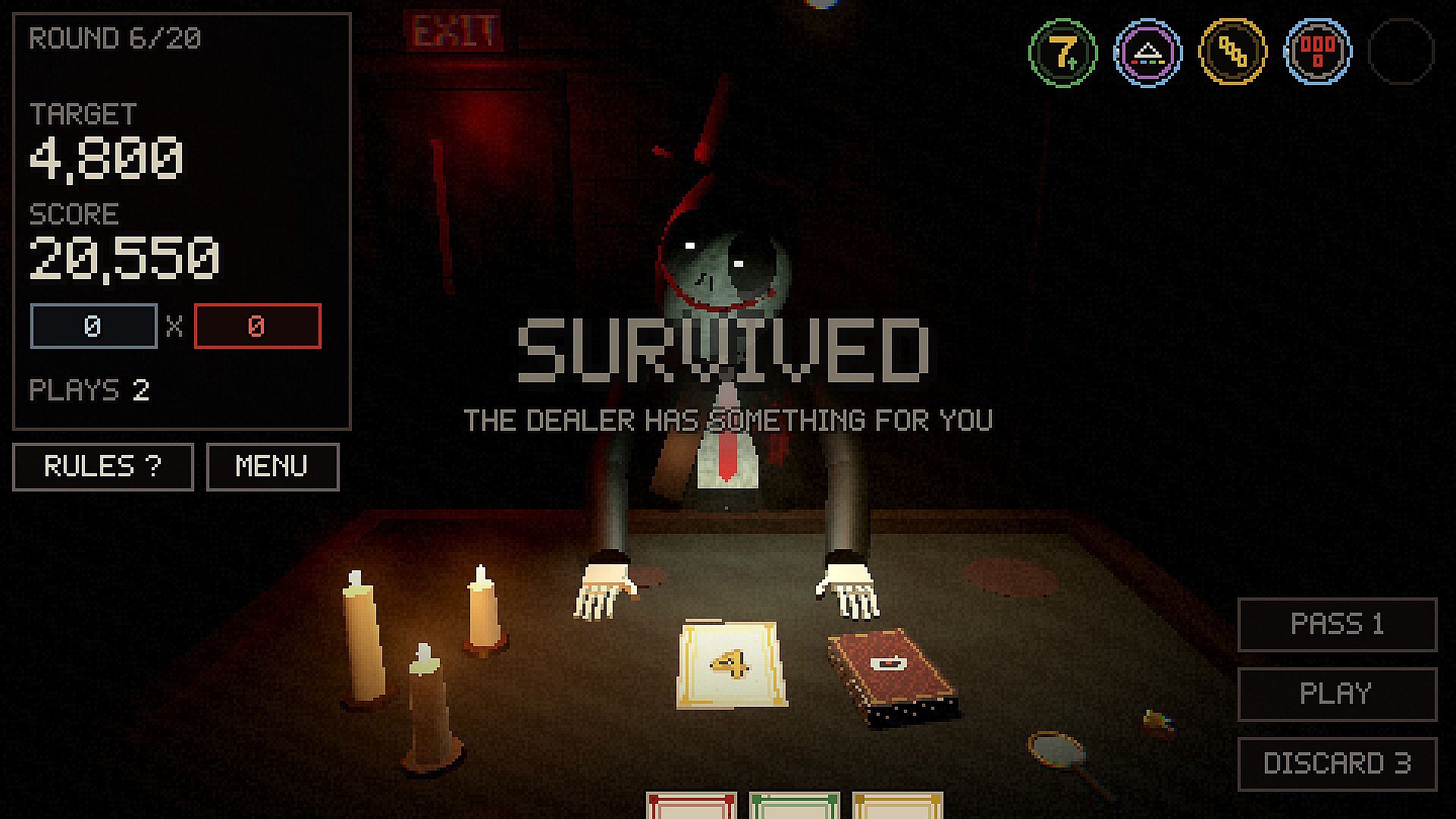
The setting unfolds in a dimly lit room where three candles track progress. Missing the target extinguishes a candle, darkening the room and intensifying the bulb hum until the final play brings audible heartbeat effects. Losing the third candle triggers an ending that reflects prior choices before fading to black. The dealer tracks the cursor, adding a sense of direct confrontation to every decision.
Relics and rituals permanently modify the deck, encouraging experimentation across runs. Tools provide temporary advantages that can turn a difficult round around. The combination of fixed rules and variable modifiers creates replayability focused on optimization rather than randomization alone.
Is It Worth Playing?
Last Card suits players who enjoy deliberate strategy card games with roguelike progression and high-stakes resource management. The single-player focus against the dealer emphasizes planning and adaptation over competition with others. Those drawn to pixel-art presentations, procedural sound design, and compact sessions will find the 20-round structure and endless mode provide clear goals without overwhelming length.
The game rewards careful relic selection and ritual choices that shape future hands. Short one-candle runs and daily challenges add variety for repeated attempts. With its emphasis on meaningful permanent changes and atmospheric tension, it appeals to fans of indie strategy titles that prioritize tight mechanics over expansive content.