







Jigsaw Addict is a casual indie jigsaw puzzle game for PC that focuses on assembling famous paintings through realistic piece placement. Players fit interlocking pieces into place on a virtual table, either alone or alongside others in real time. The experience centers on the tactile satisfaction of snapping pieces together while viewing detailed artwork from museums around the world.
Gameplay
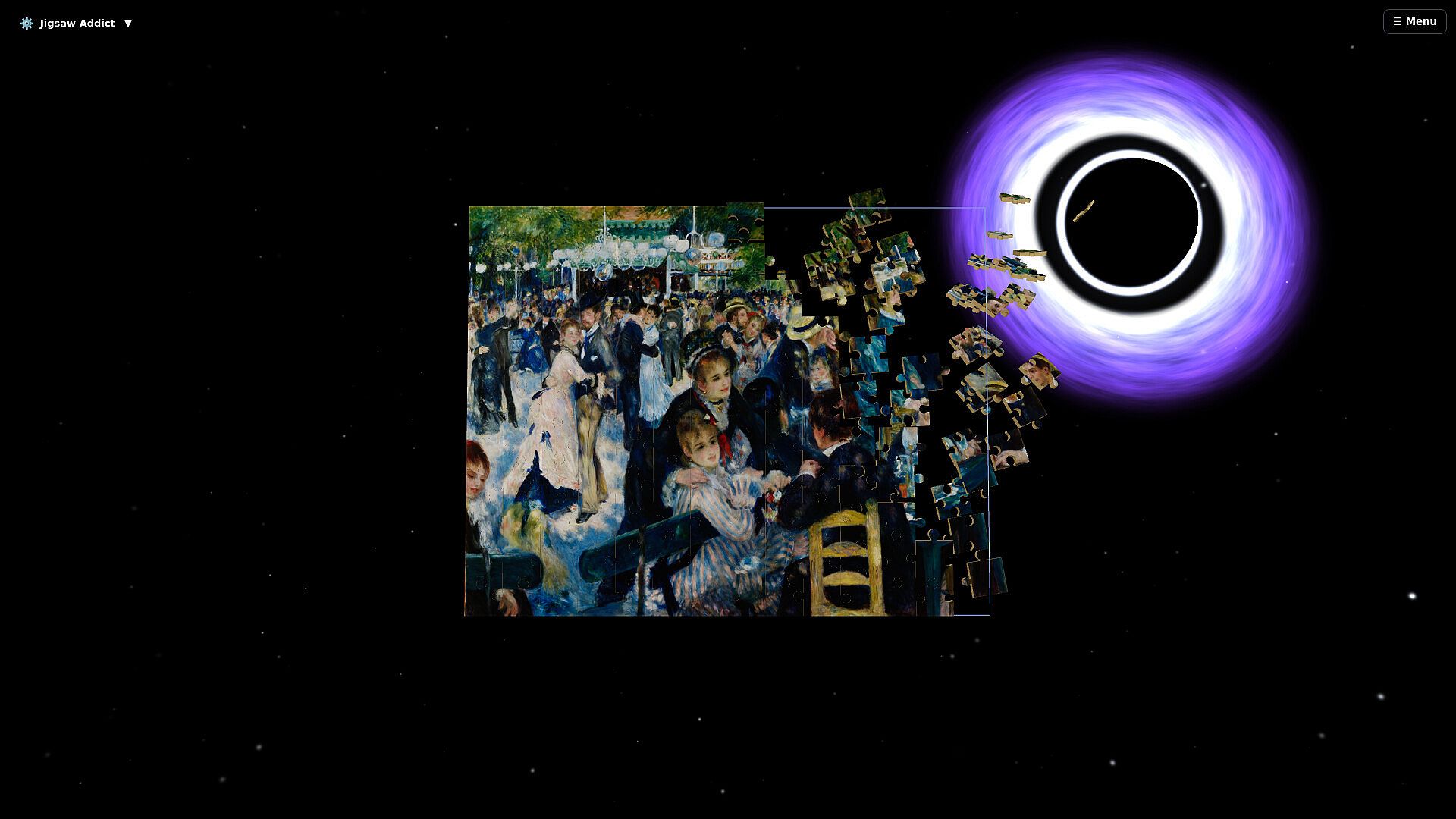
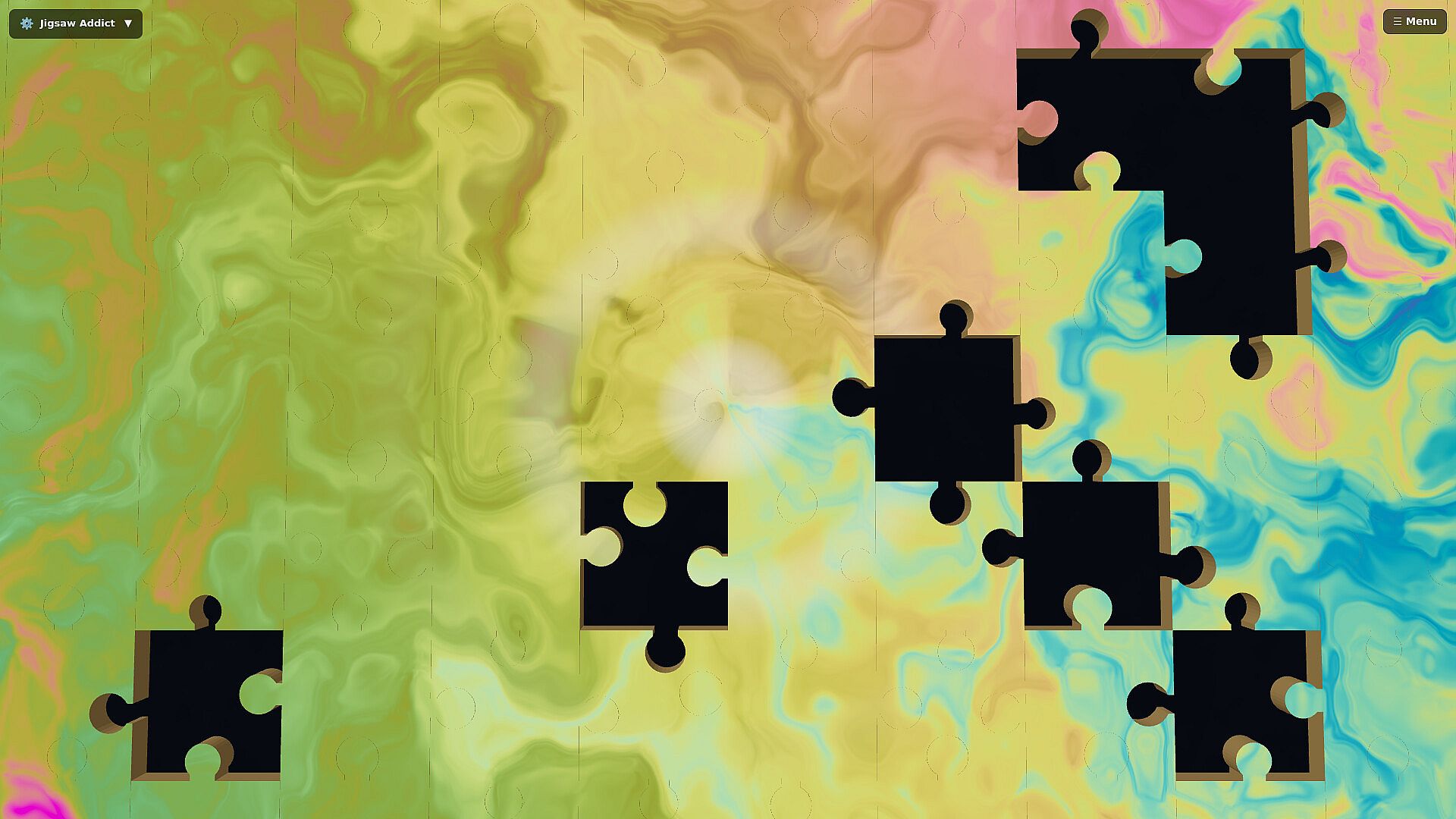
The core loop involves selecting a puzzle, scattering the pieces across the table surface, and dragging them into position with the mouse. Pieces feature true interlocking shapes that require precise alignment to connect. As sections form, the full image gradually reveals itself. Players can rotate the view, zoom in for detail work, and use optional aids such as piece outlines or a flashlight tool to highlight edges. A preview window shows the target image at adjustable opacity, helping with orientation without removing the challenge of assembly.
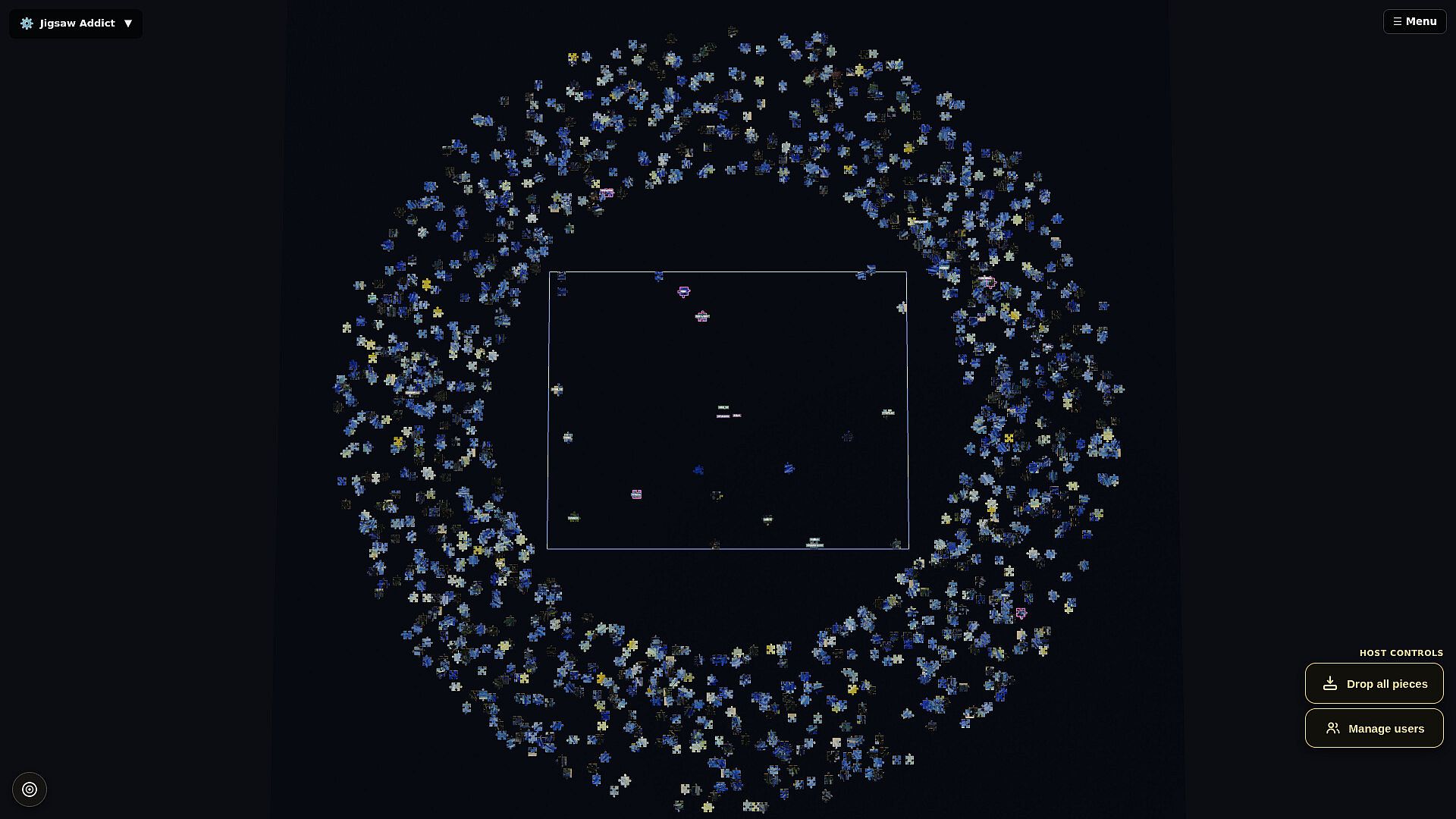
Cross-platform rooms allow seamless joining from different devices, with server locations chosen for low latency. Multiple cursors appear on screen during group sessions, showing exactly where each participant is working. The system supports simultaneous placement, so progress happens collaboratively without turn-based restrictions. Replays of completed sessions can be reviewed or exported as video files for later viewing.
Game Modes
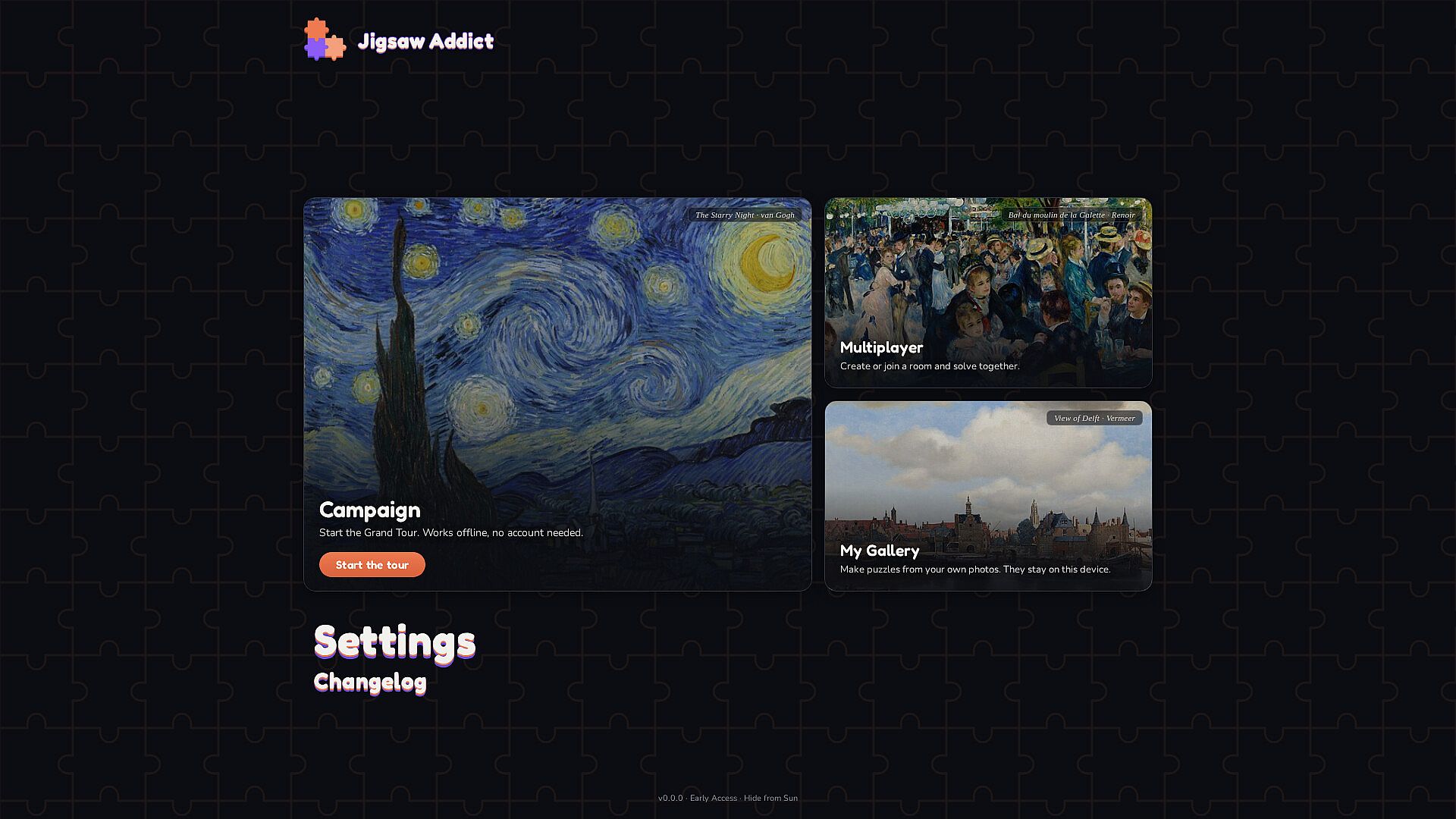
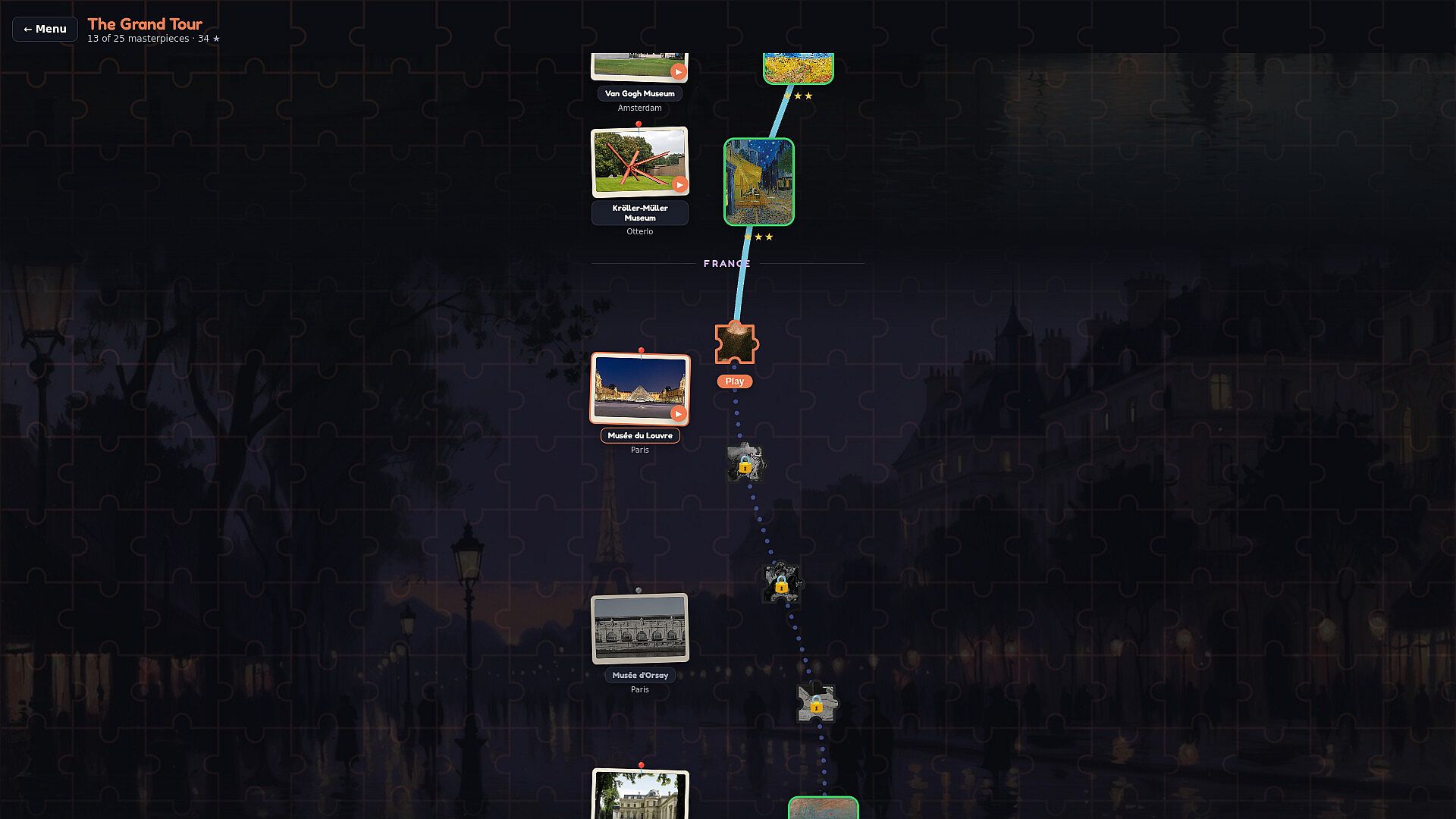
Single-player Campaign mode presents a structured tour through real museum collections. Each location offers a selection of paintings accompanied by brief historical notes. Puzzle sizes increase progressively, starting with smaller grids suited for quick sessions and advancing to larger, more complex layouts that demand sustained focus. The mode runs entirely offline and requires no login or account creation.
Multiplayer co-op centers on shared rooms created with unique codes. Friends or strangers join instantly, working side by side on the same puzzle. Public rooms appear in a browser for open participation, while private sessions can include optional passwords. Leaderboards track lifetime statistics such as pieces placed and puzzles finished across all play styles.
Custom image support lets users upload any photo or artwork and generate a new puzzle on demand. Options include choosing piece count and cut style to control difficulty. A built-in gallery draws from public-domain sources for immediate access without external files.
Additional Features and Tools
Board helpers provide practical assistance during play. Piece outlines make boundaries clearer on crowded tables, while flashlight mode illuminates nearby edges. Adjustable preview images aid recognition without solving the puzzle outright. Table skins and cursor trails add visual variety, and completion celebrations mark finished puzzles with simple animations.
Profiles store personal progress and statistics that persist across sessions. The public room browser displays active games by size and participant count, making it easy to find compatible groups. All systems emphasize accessibility, with cross-platform compatibility ensuring web, mobile, and desktop users share the same lobbies.
Is It Worth Playing?
Jigsaw Addict suits players who enjoy methodical puzzle assembly in either solitary or social settings. The campaign delivers consistent offline content that expands over time with new museum additions, while co-op rooms provide immediate group interaction through shared progress. Custom puzzle creation extends replay value for those who want to work with personal images.
Those seeking a focused, low-pressure experience will find the mechanics rewarding through precise piece fitting and visual payoff. Group play adds coordination and friendly competition without complex rules. The combination of verified offline support, real-time collaboration, and ongoing content additions makes the game a solid choice for casual puzzle enthusiasts who value both independence and shared sessions.