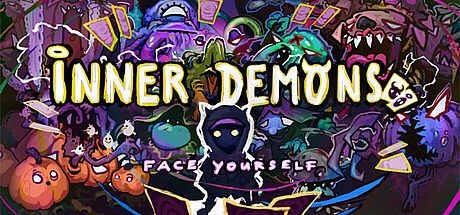


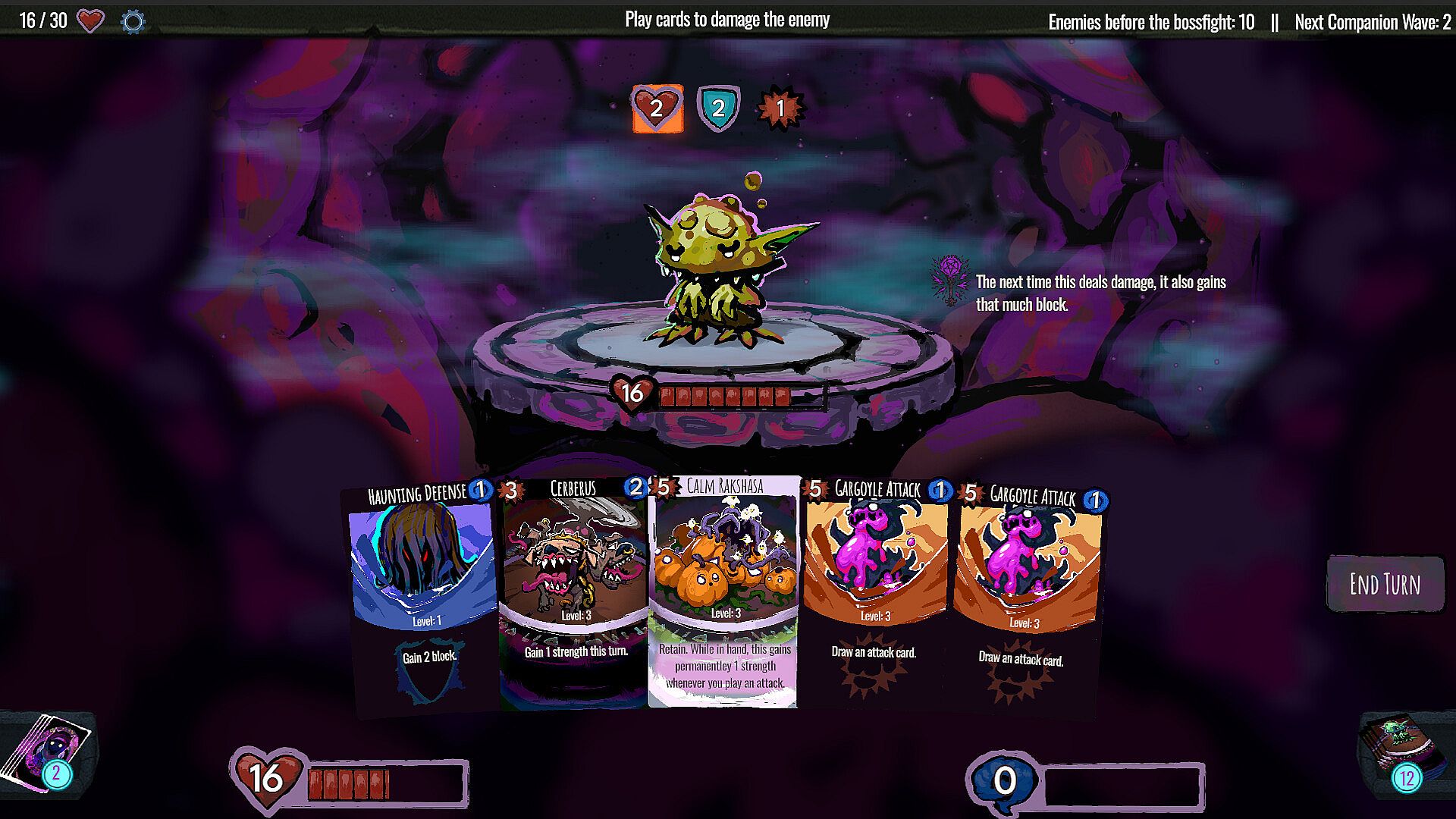
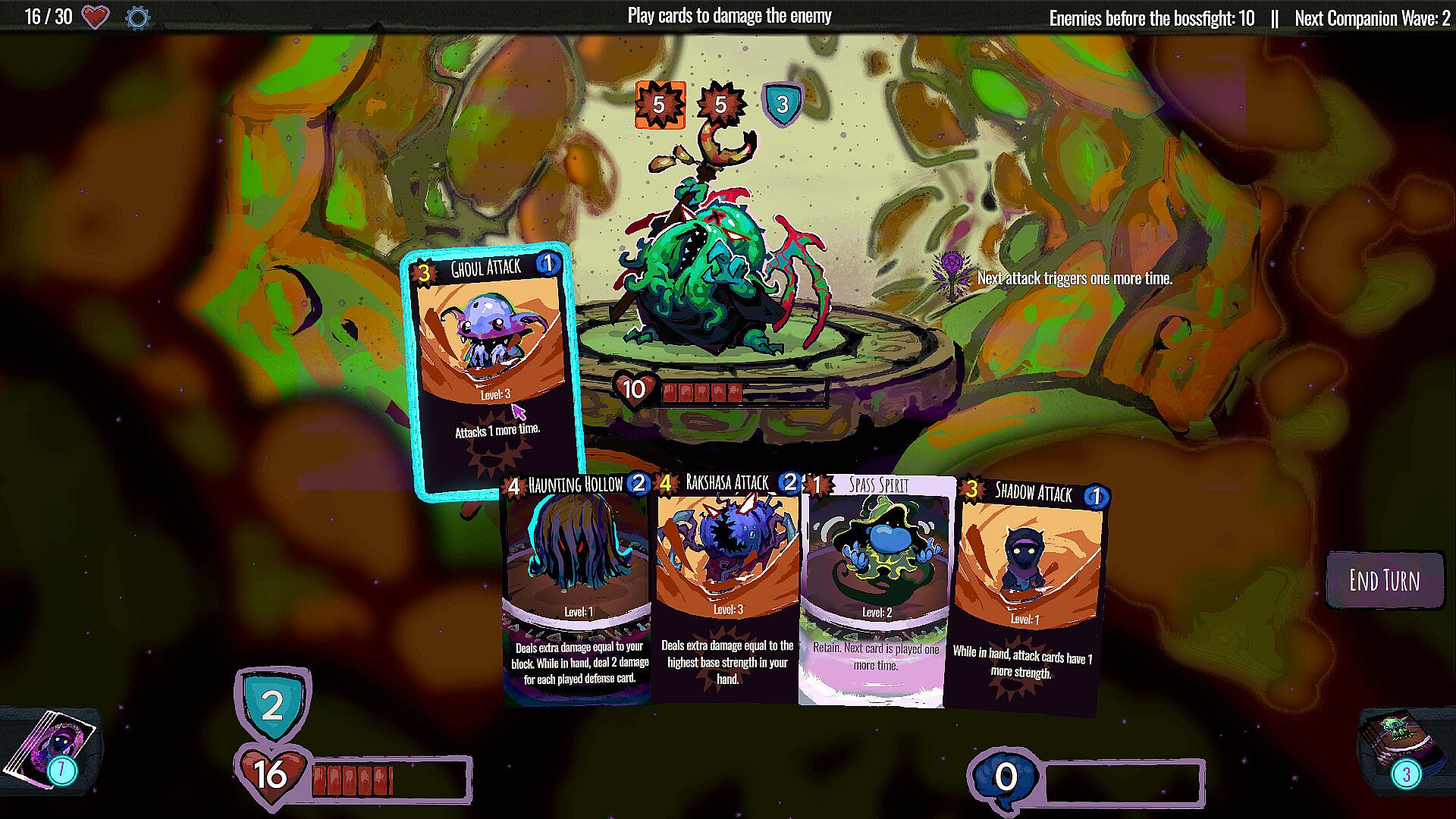
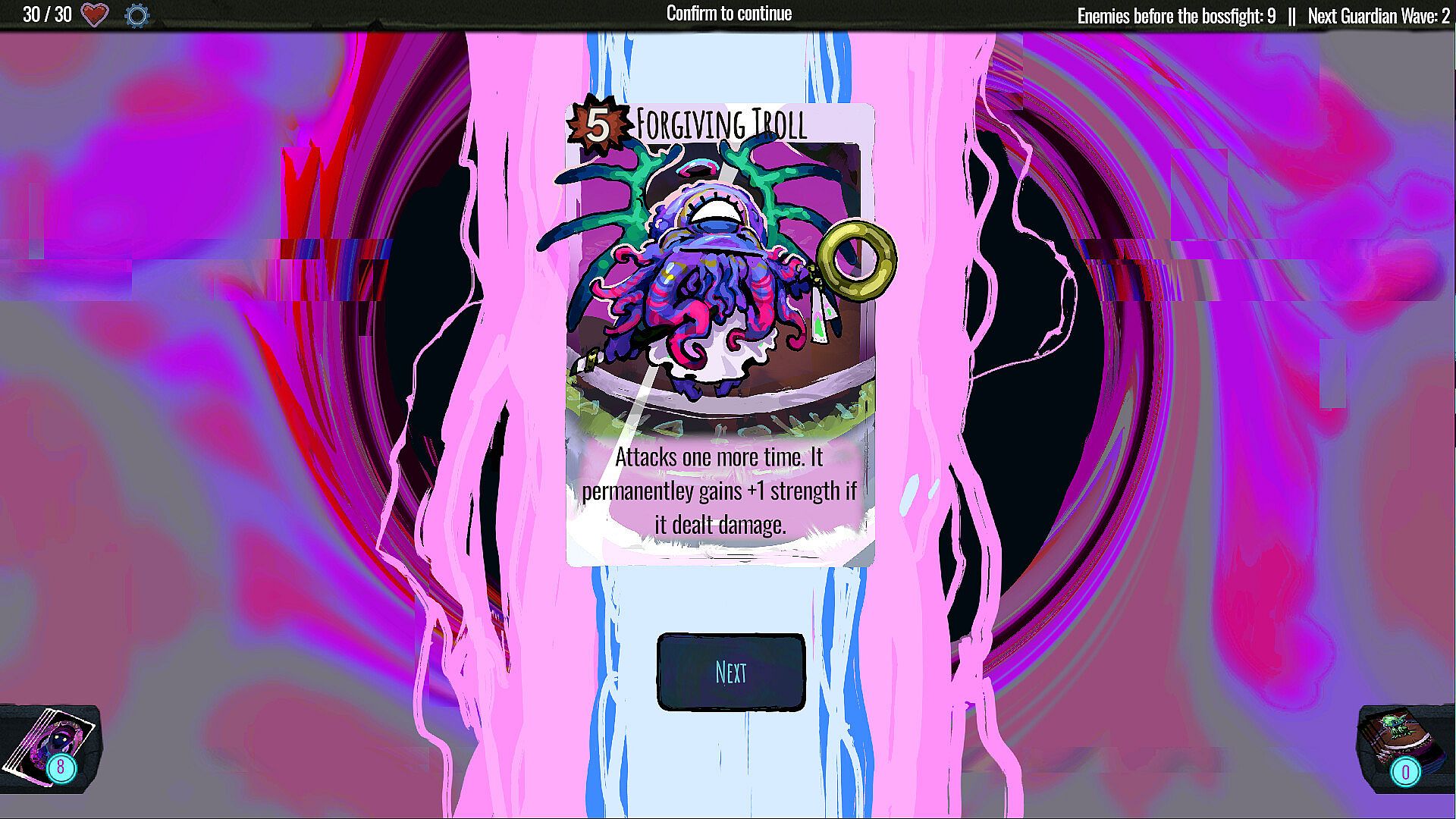
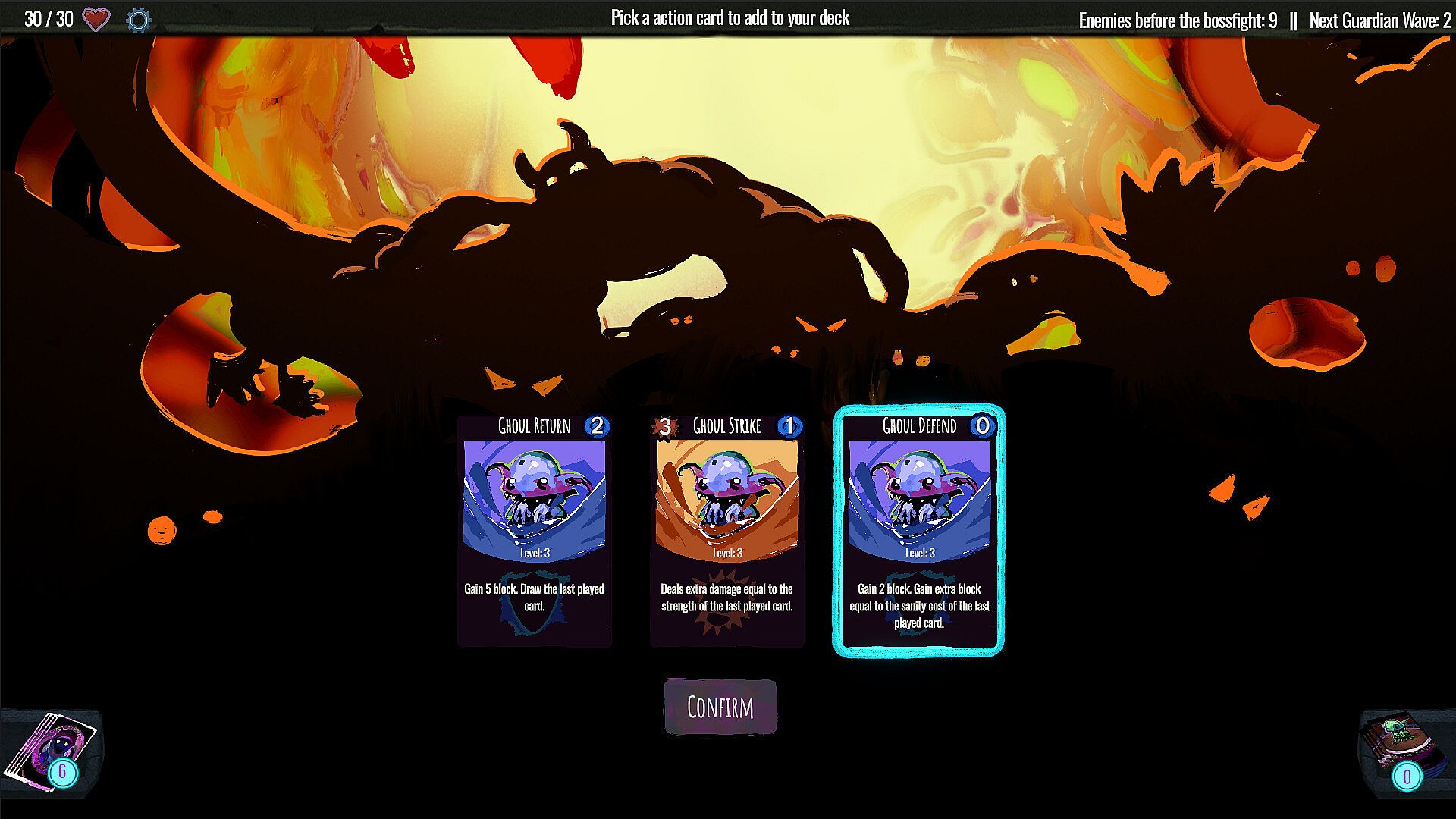
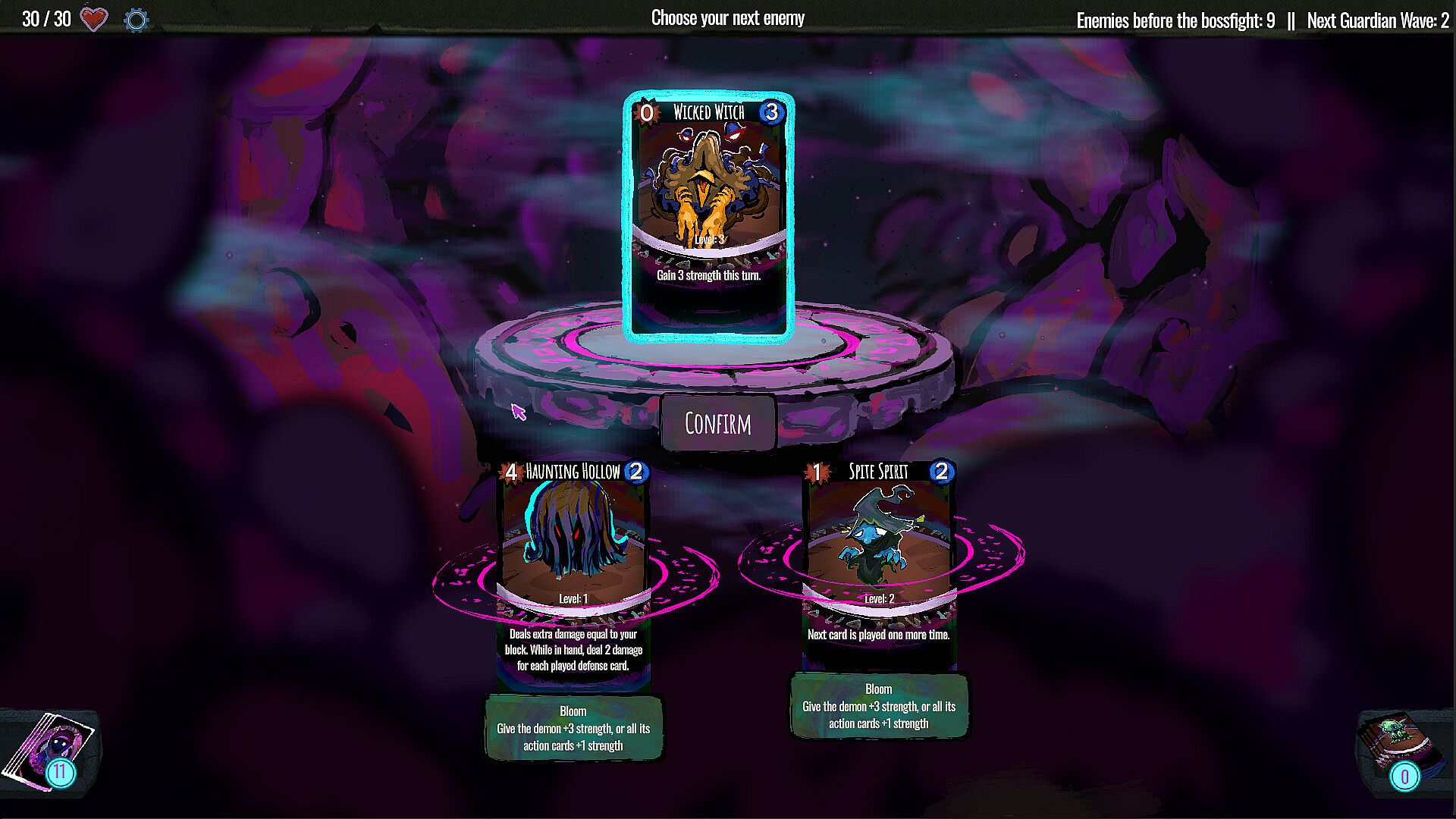
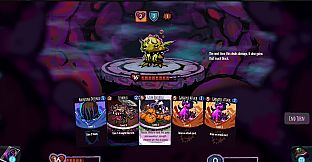
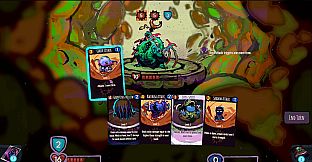
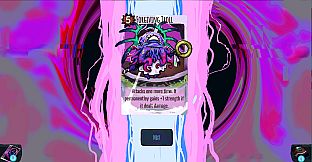
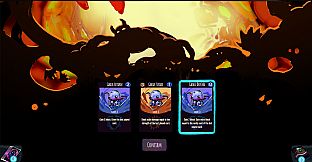
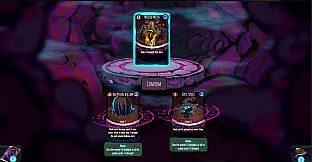
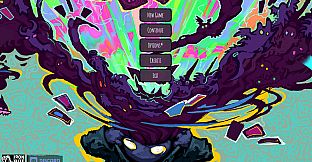
Inner Demons - Face Yourself is a single-player turn-based strategy game that combines roguelike elements with deckbuilding mechanics on PC. Players construct and manage a deck of demon cards, where each selection influences both immediate combat power and the challenges that appear later in a run. The core loop revolves around balancing short-term gains against long-term risks, as played cards can transform into opponents that must be confronted directly.
Gameplay
The experience centers on deliberate decision-making during each turn. Players draw from their deck to deploy demon cards that grant abilities or damage, yet every card carries the potential to become an enemy in subsequent encounters. This setup creates constant tension, as opting for a powerful card now might mean facing an enhanced version of it after defeat. Runs emphasize adaptation, with choices about card retention or removal shaping the path forward.
Defeating opponents allows their conversion into permanent guardians. These additions strengthen the deck for future attempts, providing incremental upgrades that persist across failures. The roguelike structure means each new run begins with fresh opportunities, informed by prior insights into which cards prove most reliable or hazardous. Combat unfolds in a structured sequence where positioning, card order, and sacrifice options determine outcomes without reliance on real-time reflexes.
Progression ties directly to the deck itself rather than external systems. Stronger builds emerge from careful management of threats, encouraging players to experiment with different combinations while accepting that no configuration remains entirely safe. The result is a focused loop of build, confront, and refine that rewards foresight over repetition.
Game Modes
The game operates exclusively in a single-player roguelike format. Each session consists of procedurally influenced runs where the player advances through encounters, selecting and battling demons drawn from their own deck. There are no separate competitive or cooperative modes, keeping the focus on individual progression through repeated attempts.
Within runs, dynamic enemy selection emerges naturally from card choices. Players influence which threats appear by deciding what to play and when, leading to varied sequences even on repeated attempts. Failure resets the run but carries forward any guardians earned, allowing gradual refinement of strategies across multiple sessions without altering the fundamental single-player structure.
Core Systems and Progression
Deck composition serves as both the source of power and the origin of opposition. Cards provide abilities during player turns but can manifest as adversaries if not handled strategically. Sacrifice options let players remove cards from their deck to reduce future risks, though this comes at the cost of immediate strength. The system creates meaningful tradeoffs that evolve as runs lengthen and decks expand.
Permanent guardians represent the main avenue for long-term growth. Each successful defeat adds a new element that bolsters subsequent runs, turning past victories into tools for overcoming tougher challenges. This mechanic encourages persistence, as insights from one attempt directly inform the next without requiring external unlocks or separate campaigns.
Is It Worth Playing?
Inner Demons - Face Yourself suits players who enjoy deliberate, choice-driven strategy in a roguelike framework. The emphasis on deck management and enemy creation from personal choices offers a distinct twist on traditional deckbuilders, appealing to those who value planning and adaptation over fast-paced action. With its single-player focus and emphasis on meaningful decisions, the game targets individuals seeking repeated runs that reward careful observation of card interactions.
Since the title remains in development with a release date to be announced, interested players can monitor its progress for updates on final mechanics. Those drawn to turn-based strategy and roguelike elements will find the core concept aligns closely with the described systems, making it a potential fit once available. The absence of multiplayer or additional modes keeps the experience streamlined around personal confrontation with the deck.