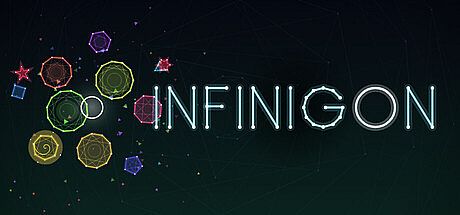













Infinigon is a simulation game built around geometric shapes and incremental growth on PC. Players steer a triangular lens through fields of neon polygons, breaking them apart while managing upgrades and chain reactions that expand across the screen.
Gameplay
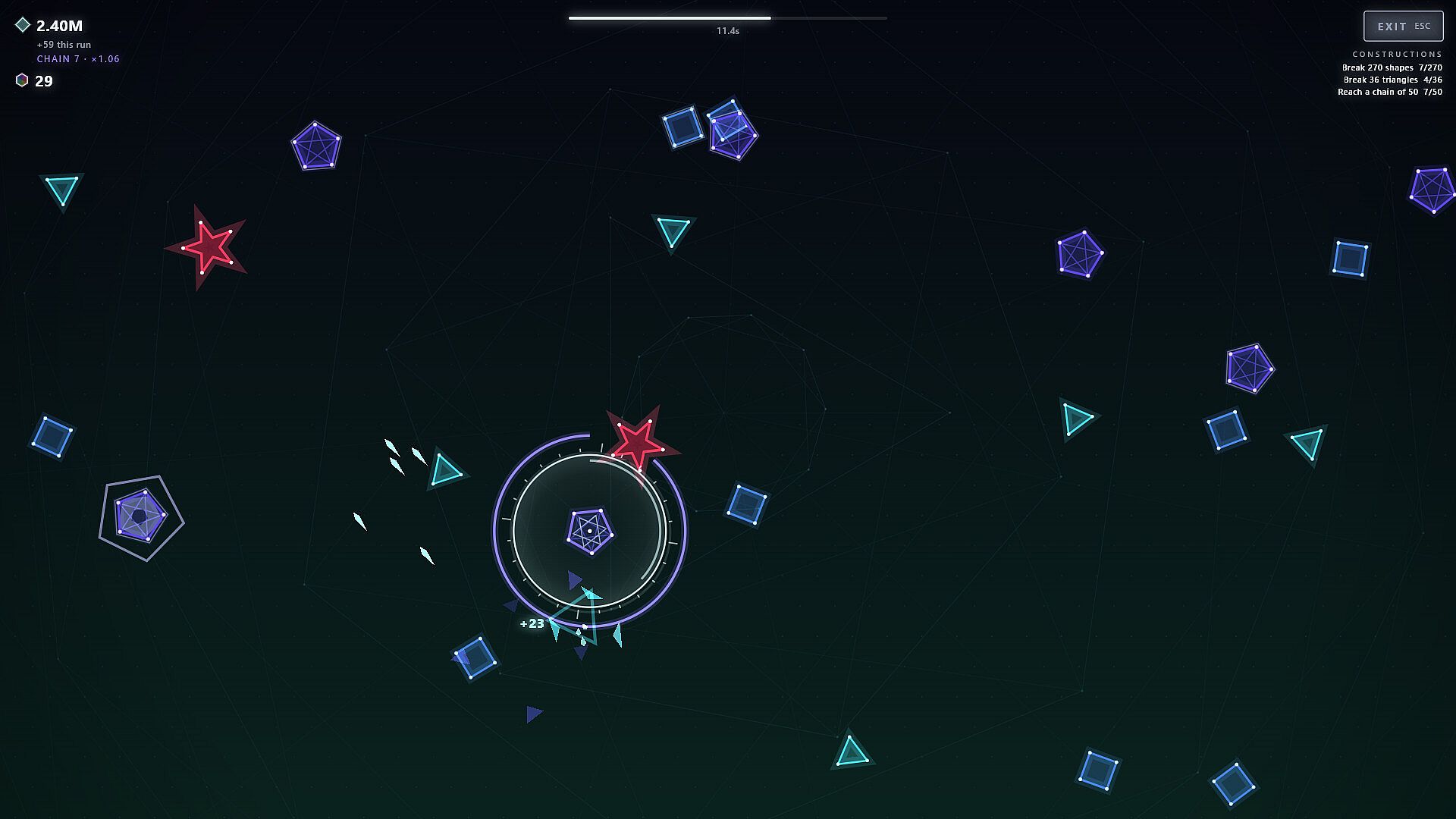
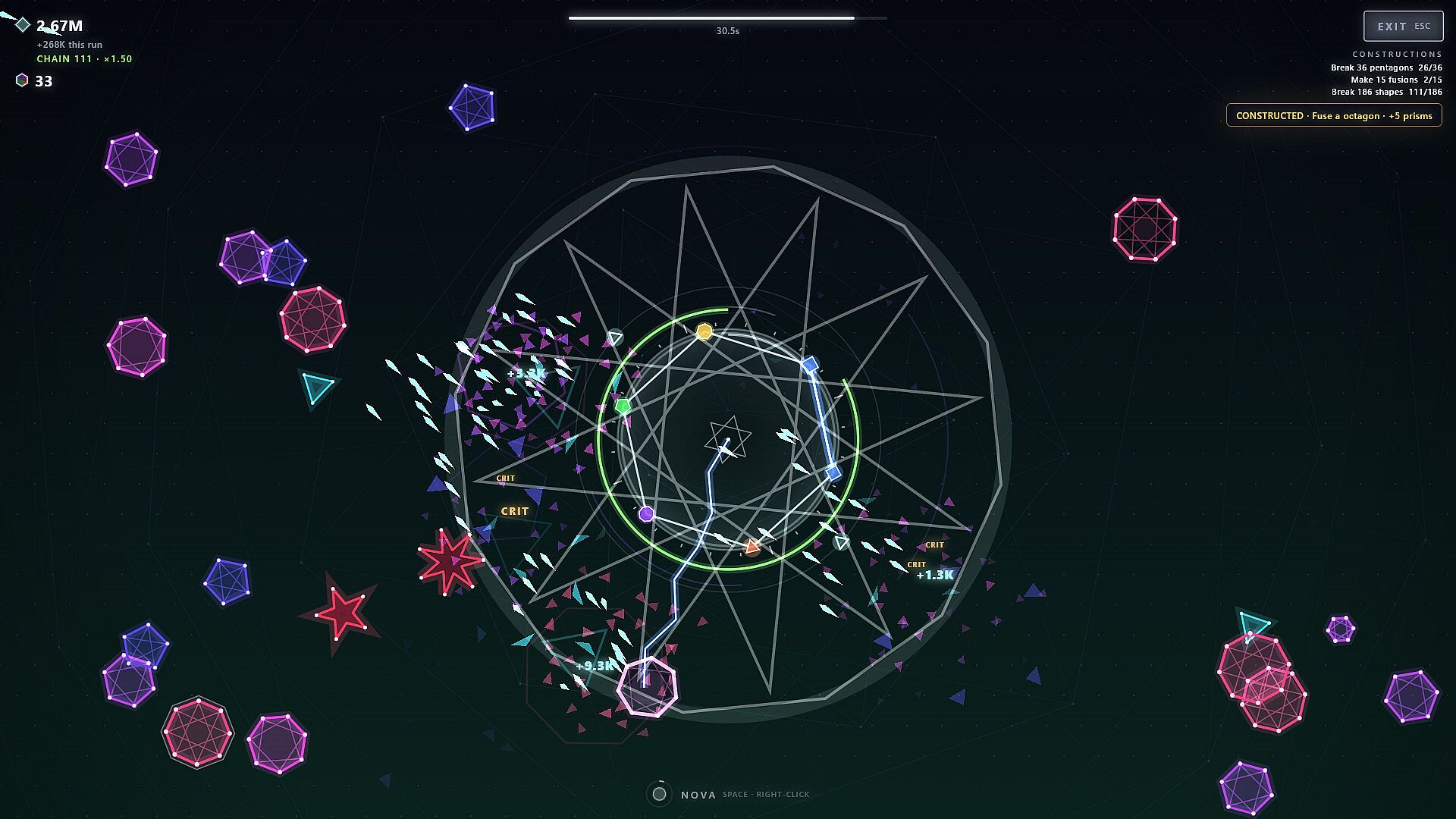
The core loop centers on steering the lens to collide with drifting polygons. Each broken shape splits into smaller triangles along diagonals, and touching shapes fuse along edges to form larger ones with more sides. Two triangles combine into a square, while two squares create a hexagon. This system encourages decisions about when to harvest shards for upgrades or allow the field to expand into complex, high-sided forms.
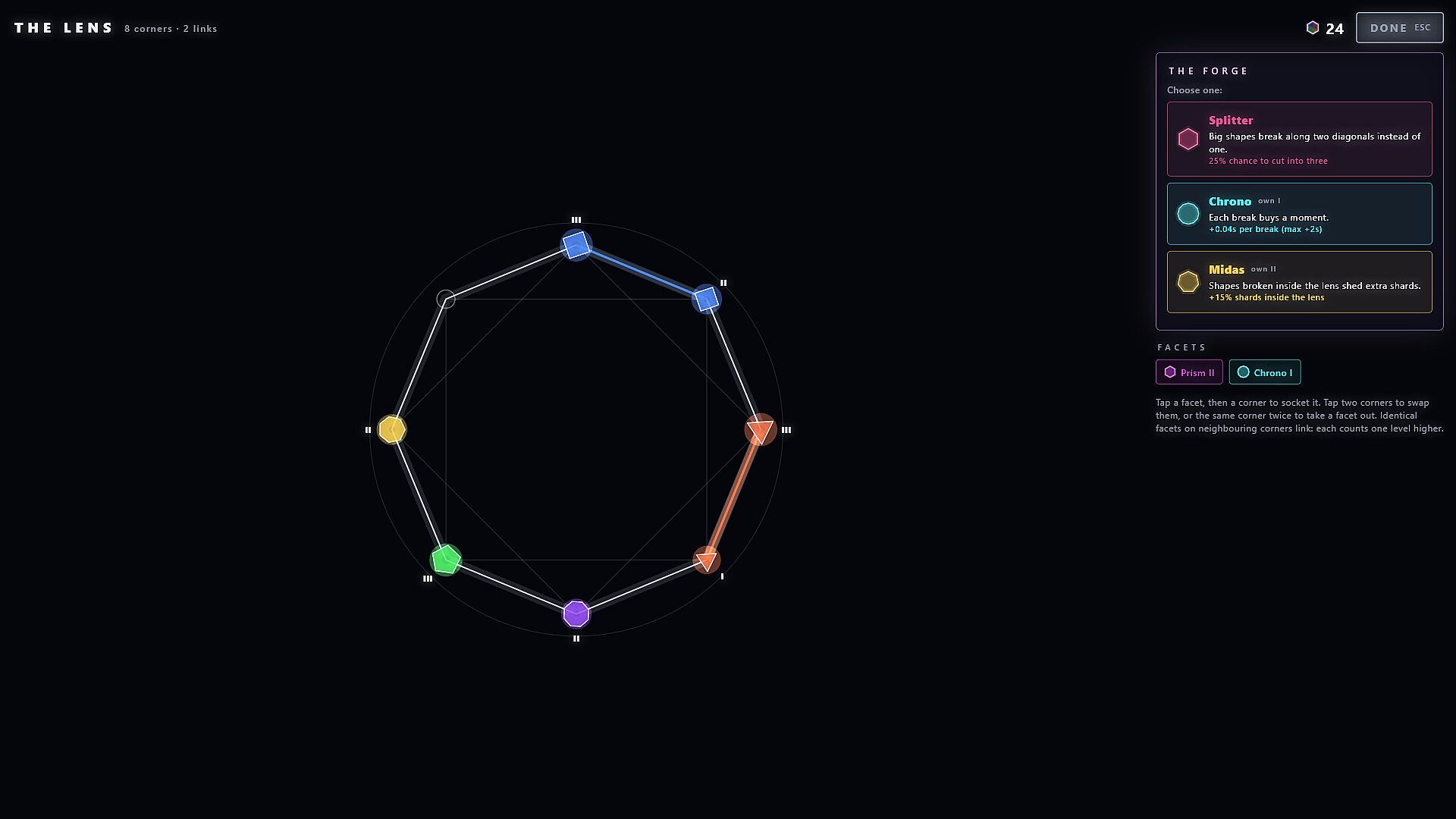
The lens itself evolves as a shape. It begins as a triangle with corners that hold facets such as Ember, Fork lightning, Gravity, or Catalyst. Identical facets fuse for greater power, and adjacent matching facets link together. Additional corners unlock as progress continues, expanding the available facet slots and potential combinations.
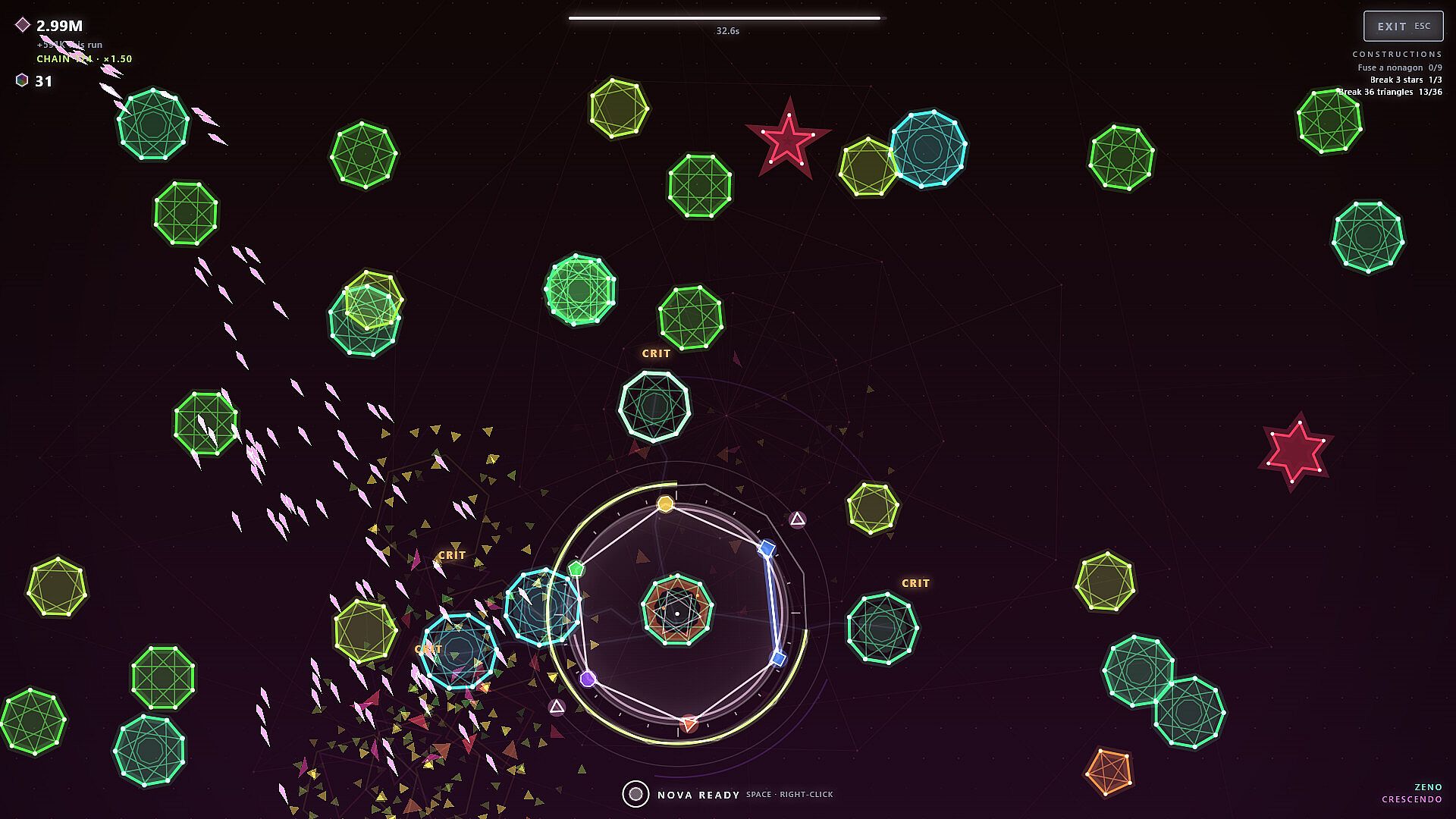
Golden shapes trigger a pause when broken, allowing selection of a Theorem that alters run conditions. Examples include Pythagoras for stronger critical hits, Euler for free Novas, Zeno for slowed time, and Crescendo for rewards tied to breaking shapes in ascending order. These stack with facet abilities to create varied break patterns and screen-filling reactions.
Hostile star polygons appear and pursue the lens while draining time. They can be avoided or destroyed for Prisms that provide further benefits. Active play involves timing detonations, chasing special shapes, and positioning satellites, while the system supports less direct engagement through automated elements.
Game Modes
Infinigon supports two primary approaches to play. Active sessions focus on direct control of the lens, manual triggering of abilities, and pursuit of high-value targets within the polygon field. This style emphasizes timing, positioning, and rapid decision-making during chain reactions.
An autopilot option converts the experience into an idle format. The game shrinks to a persistent strip that remains visible on screen even when minimized or closed. The field continues to develop and generate resources in the background, allowing steady accumulation without constant input.
Progression Systems
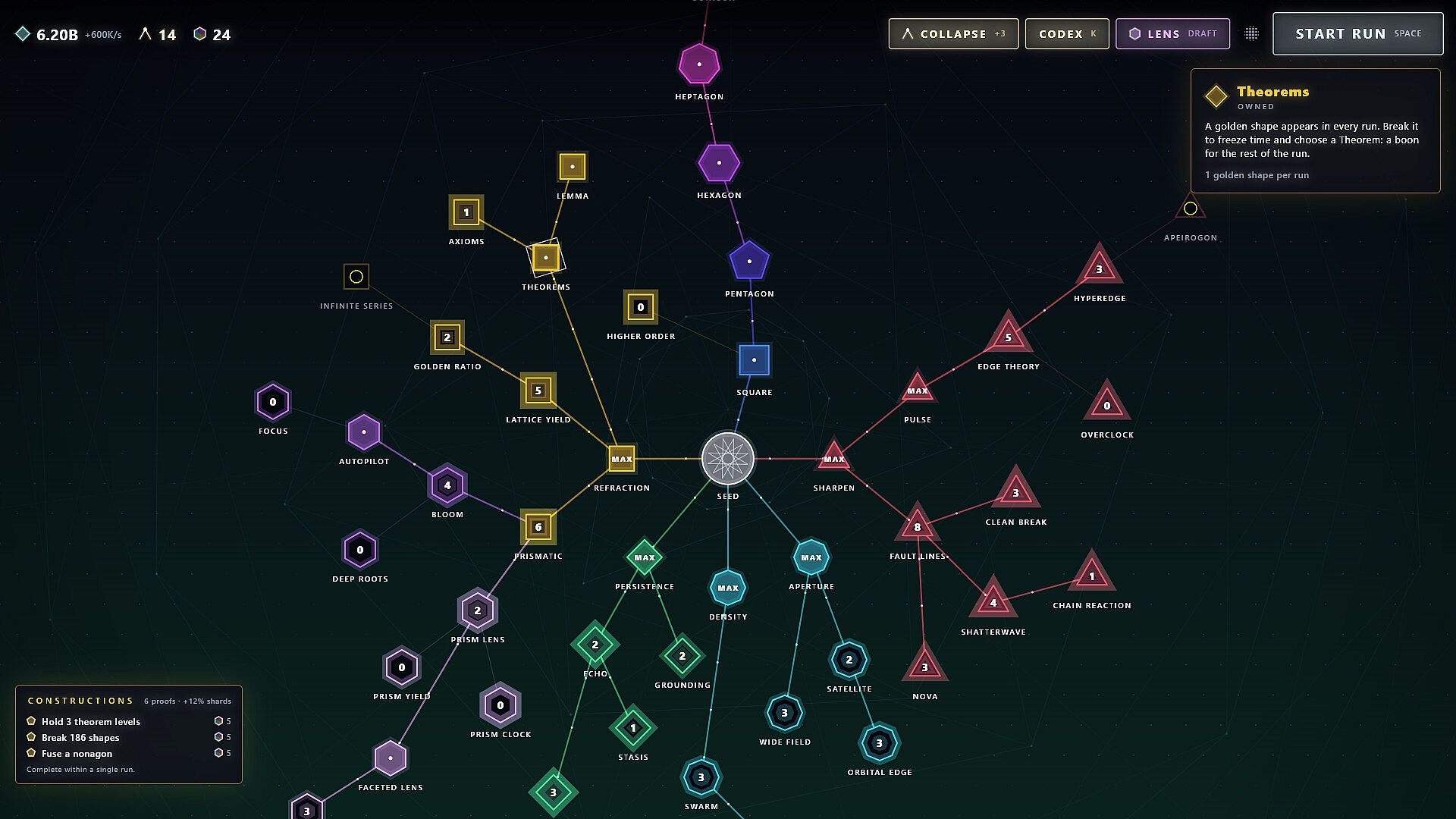
Shards collected from breaks fund a constellation of upgrades that expands as the lens gains sides. Early choices unlock access to squares, pentagons, hexagons, and further polygons, each bringing new fusion possibilities and break behaviors. The upgrade tree reveals itself gradually, rewarding consistent runs with deeper customization options.
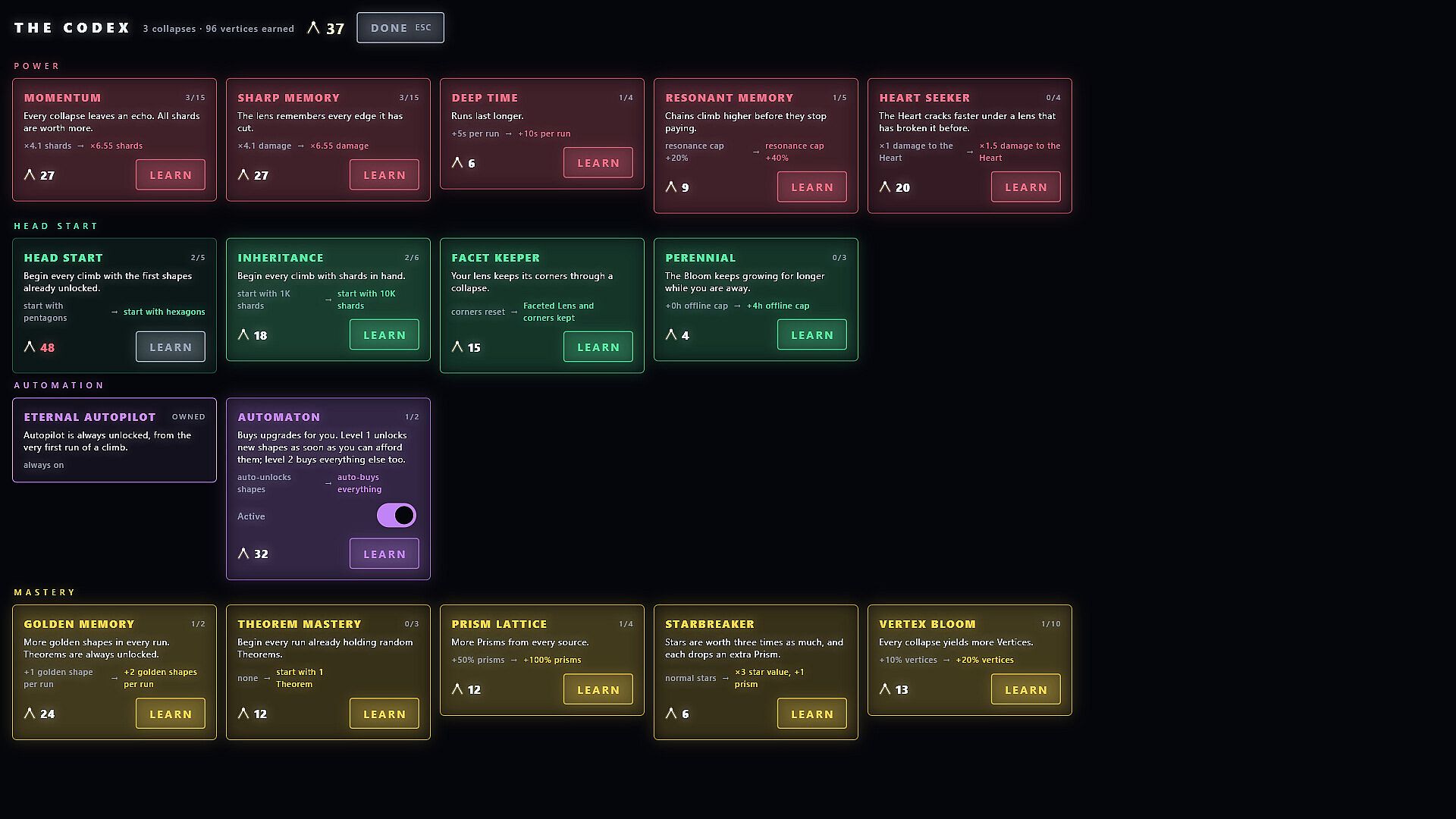
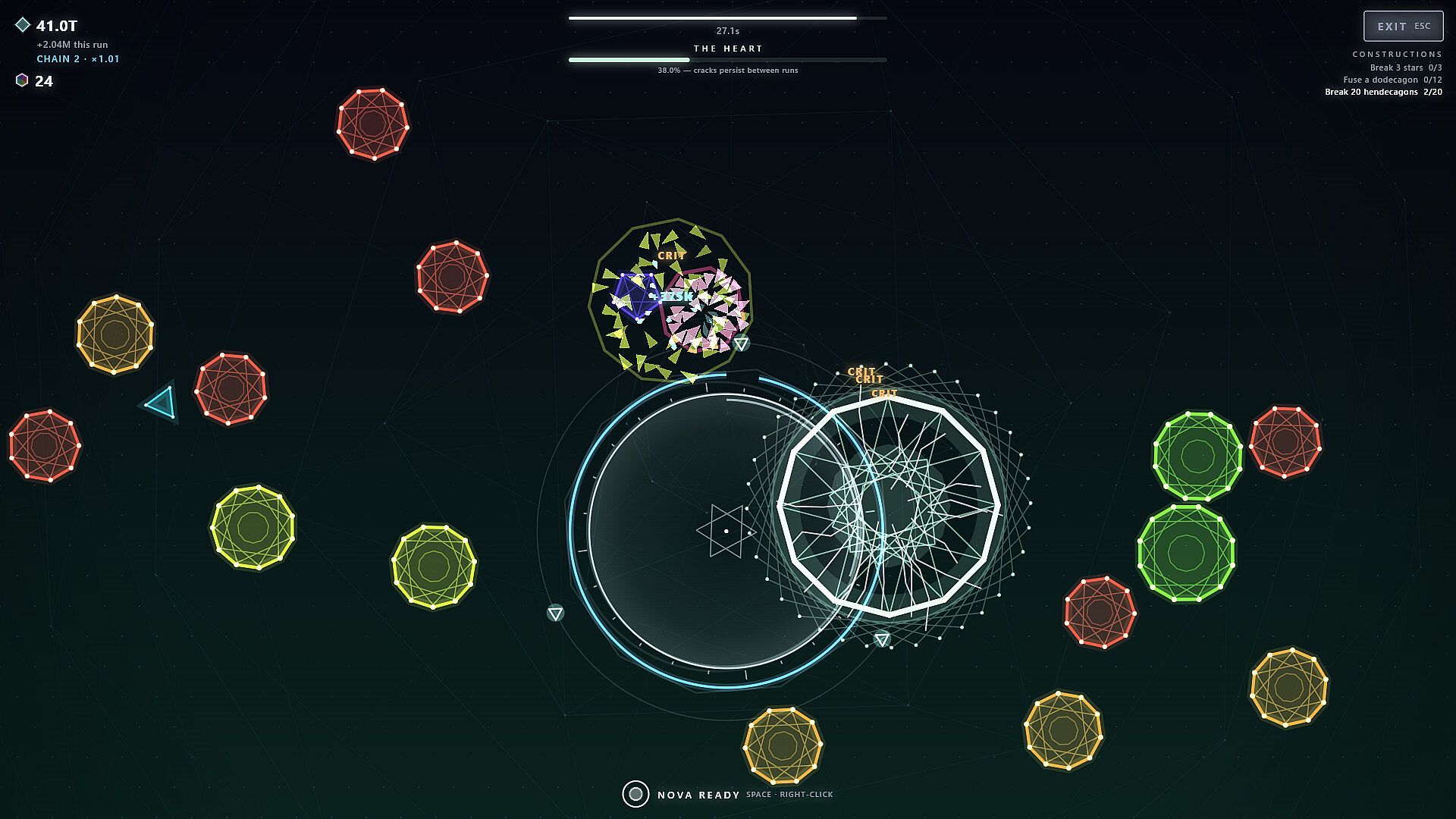
Persistent elements carry across runs. Cracks inflicted on the central Heart remain between attempts, altering the lattice structure upon completion. Breaking through leads to a shifted dimension featuring different colors, increased shape difficulty, and improved rewards, creating a sense of layered advancement beyond individual sessions.
Is It Worth Playing?
Infinigon suits players who enjoy simulation mechanics centered on geometric systems, incremental building, and the choice between hands-on management and background growth. The fusion and splitting rules create emergent patterns that reward observation and planning over direct combat or narrative elements.
The mix of active control and autopilot features makes it accessible for different schedules. Those who prefer short, focused sessions can engage directly with Theorems and facets, while others may appreciate the idle strip for passive progress during other activities.
Because the game remains in development with no released version or player data available yet, potential buyers should monitor updates from the developer for confirmation of final mechanics and balance. The described systems emphasize geometry as the central interaction, which may appeal to fans of abstract puzzle-like simulations rather than story-driven or competitive titles.