
















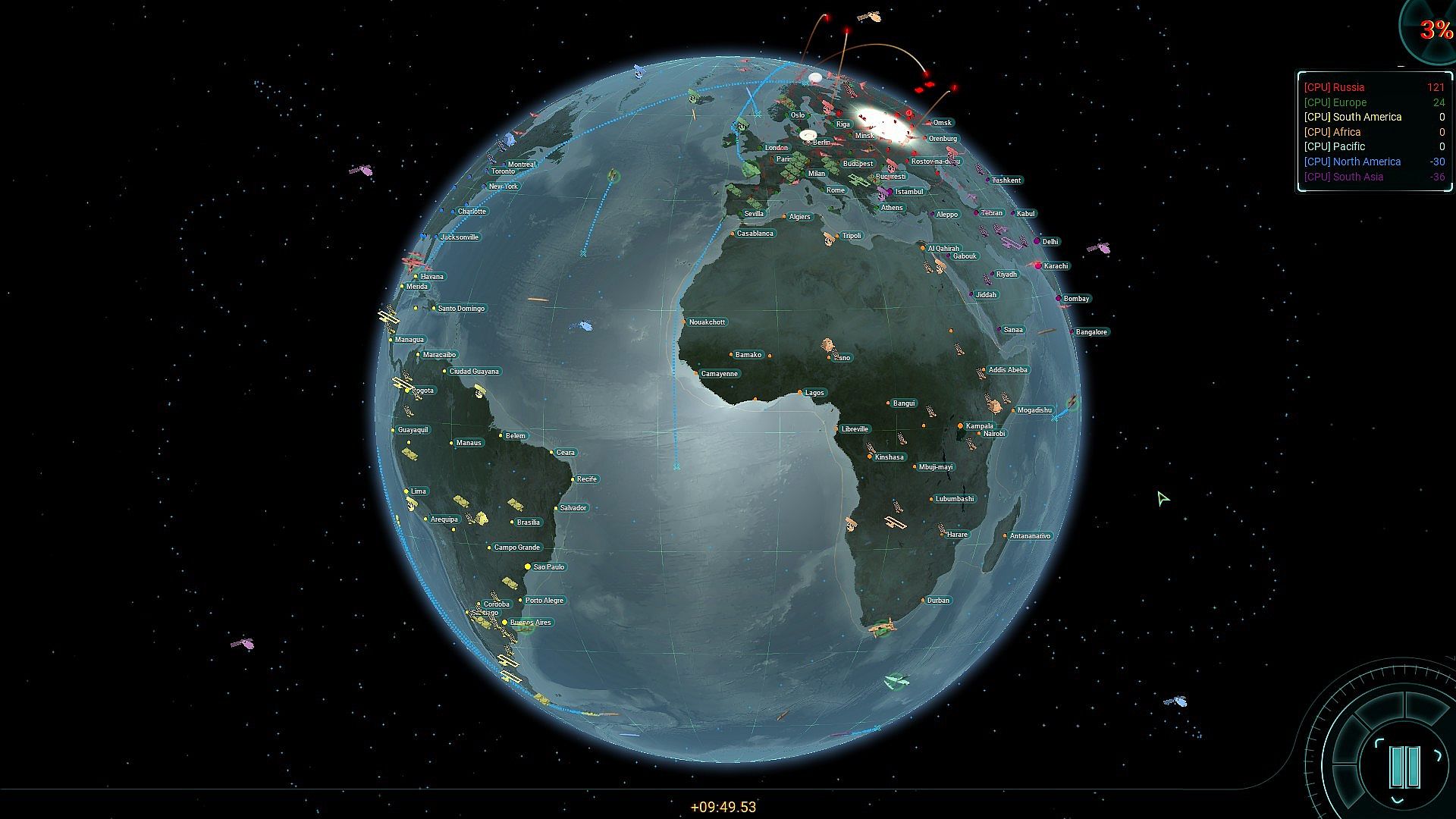
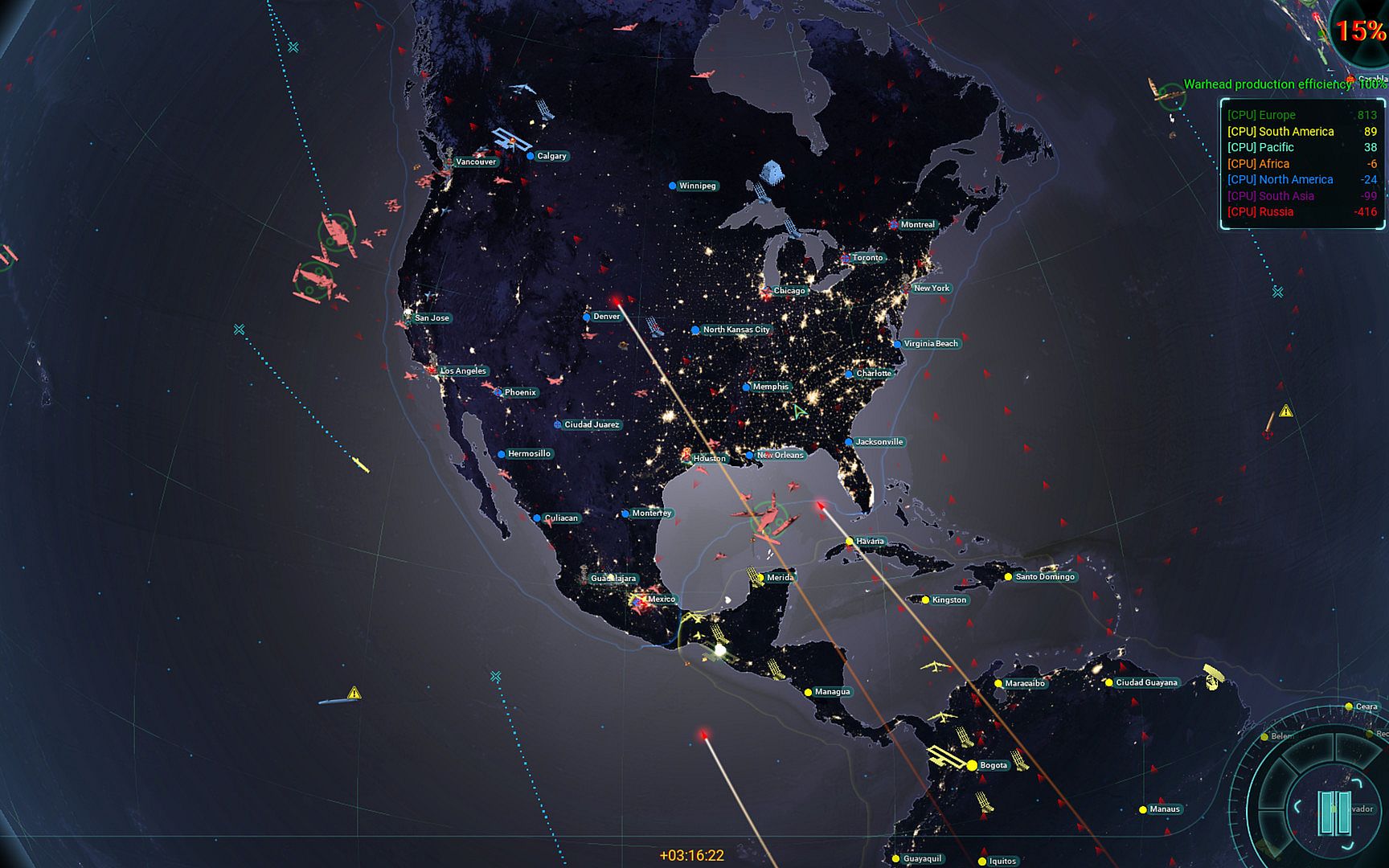
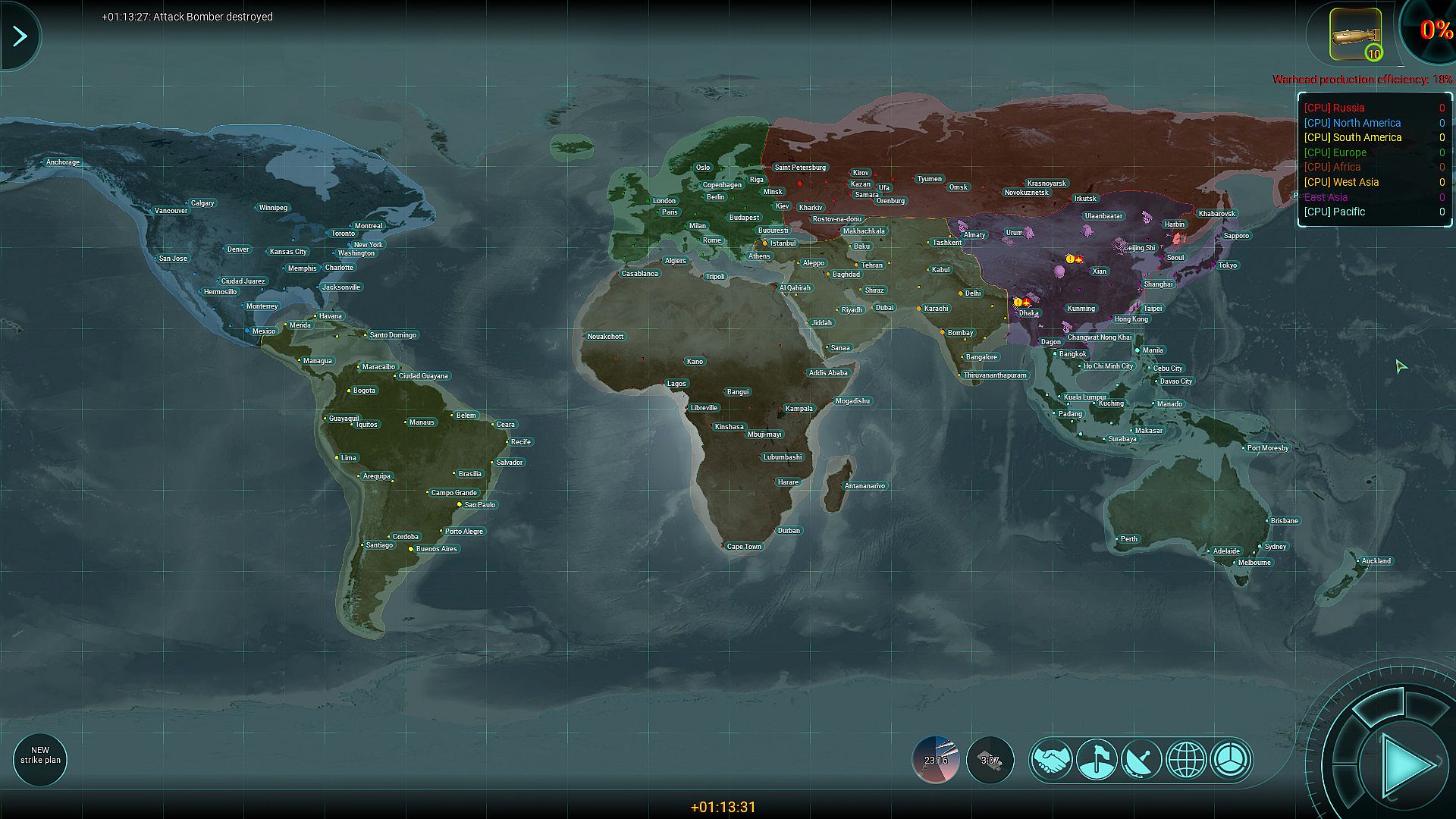
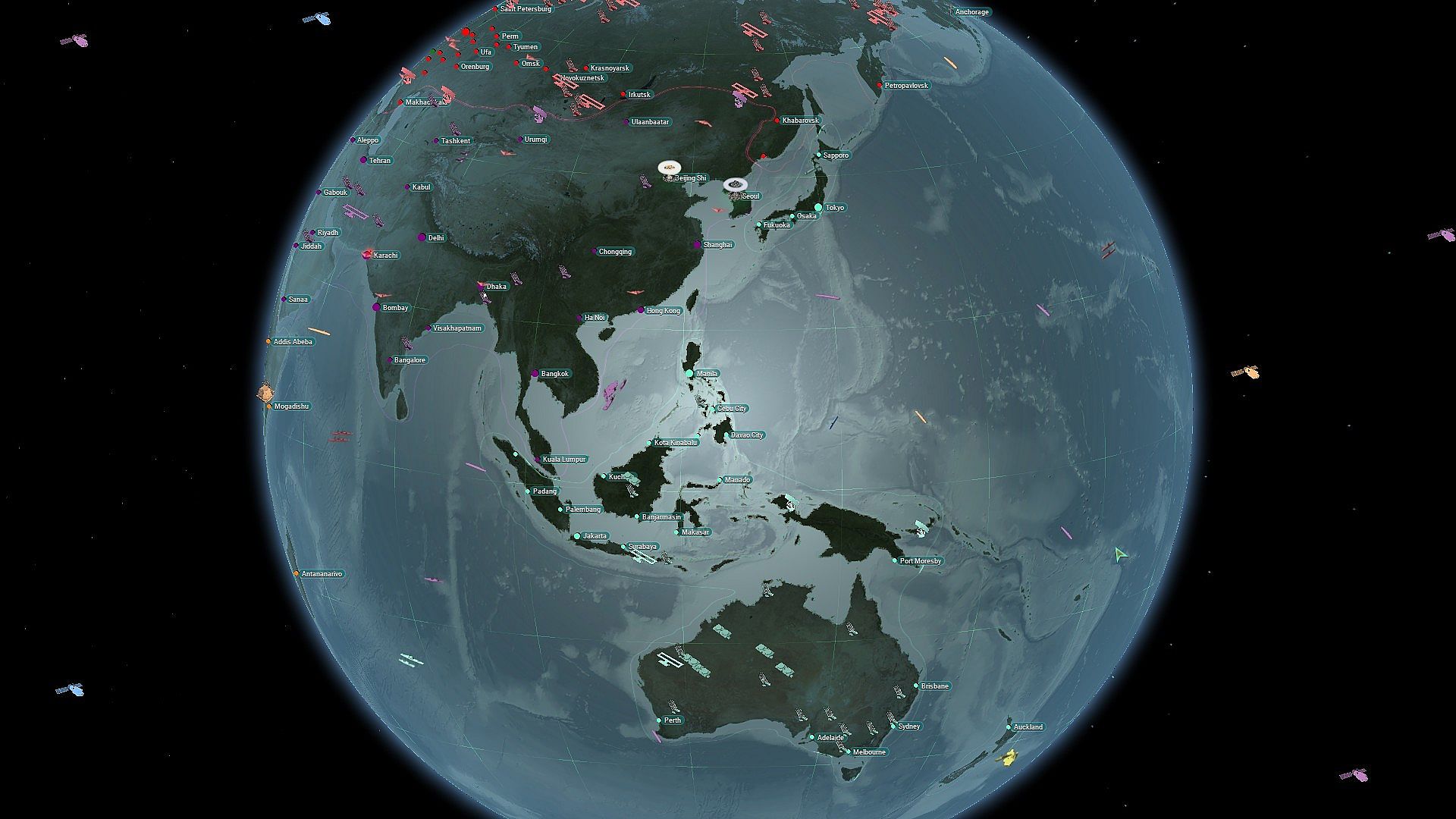
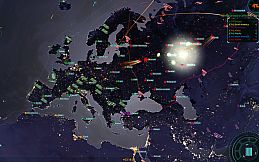
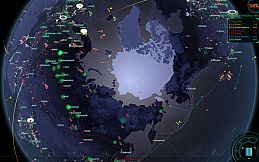
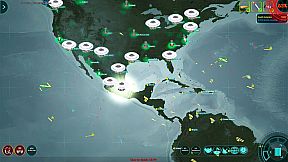
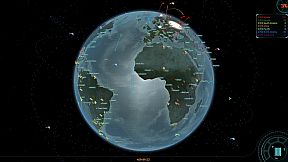
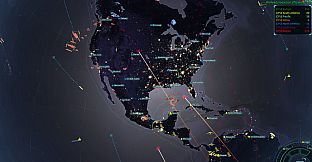

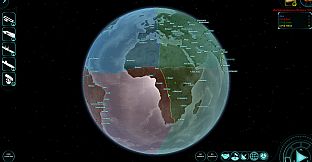
ICBM is a real-time strategy game centered on nuclear warfare and global conflict. Players command one of several continental powers, research technologies, expand arsenals, and launch coordinated strikes with ships, planes, and missiles while defending their own population centers from retaliation.
Gameplay
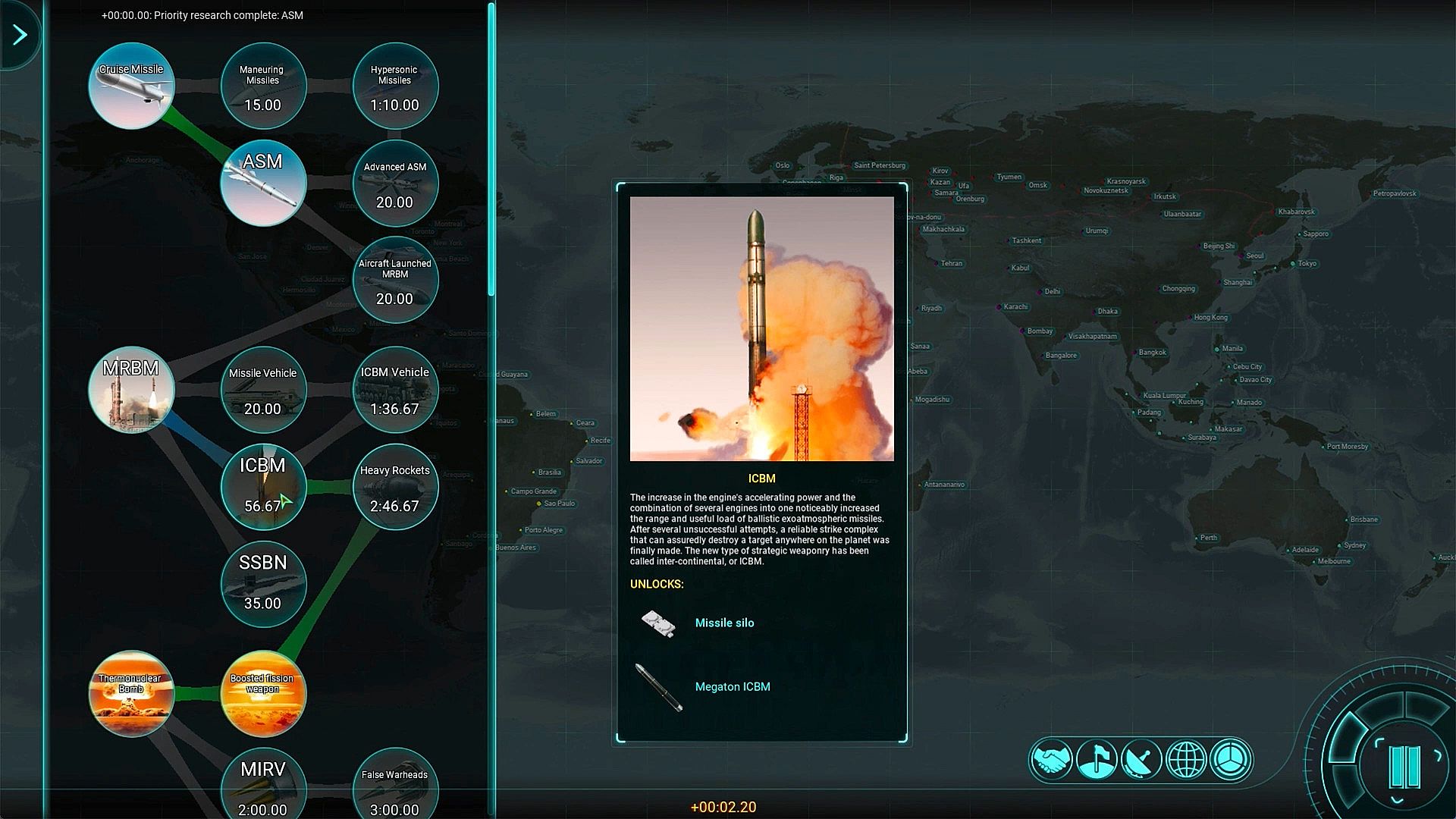
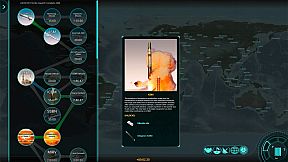
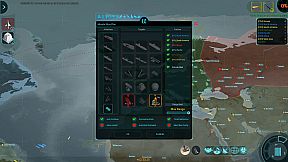
The core loop revolves around a preparation phase followed by active combat. In the buildup, players allocate resources between technology research and unit production. The tech tree offers dozens of options that improve missile ranges, warhead yields, defensive systems, and delivery platforms. Balancing investment in new developments against mass production of proven weapons determines how effectively forces can counter varied enemy approaches.
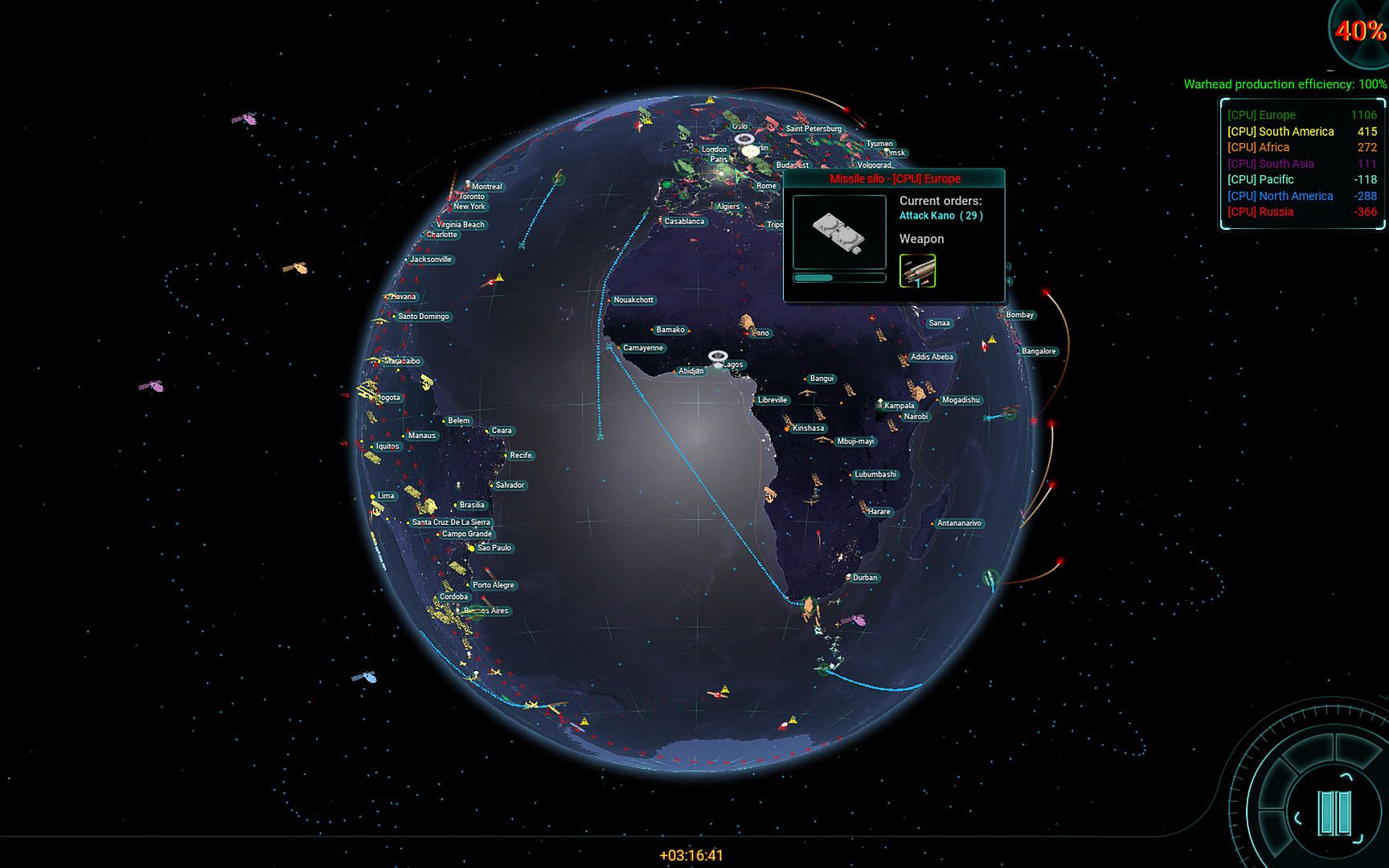
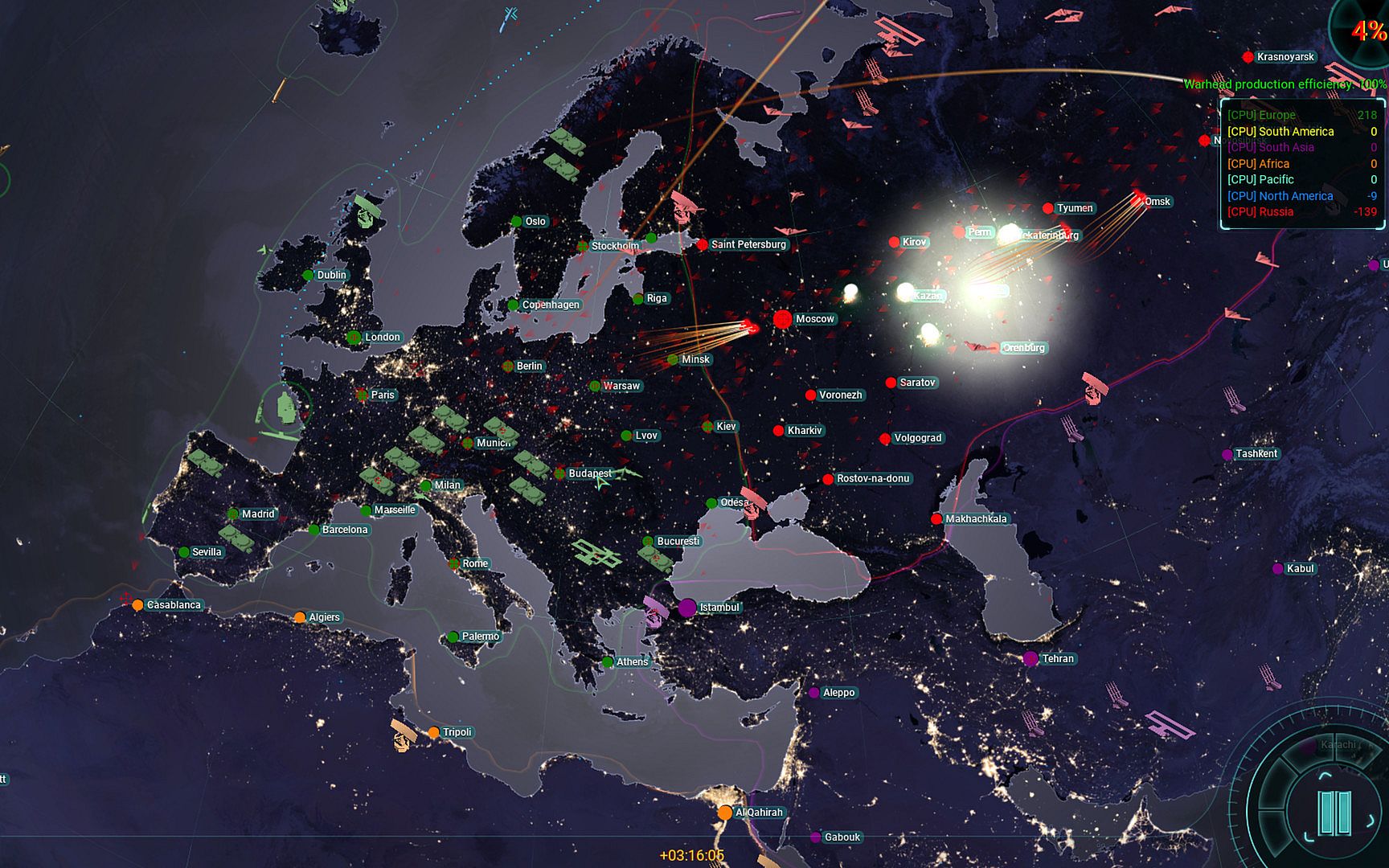
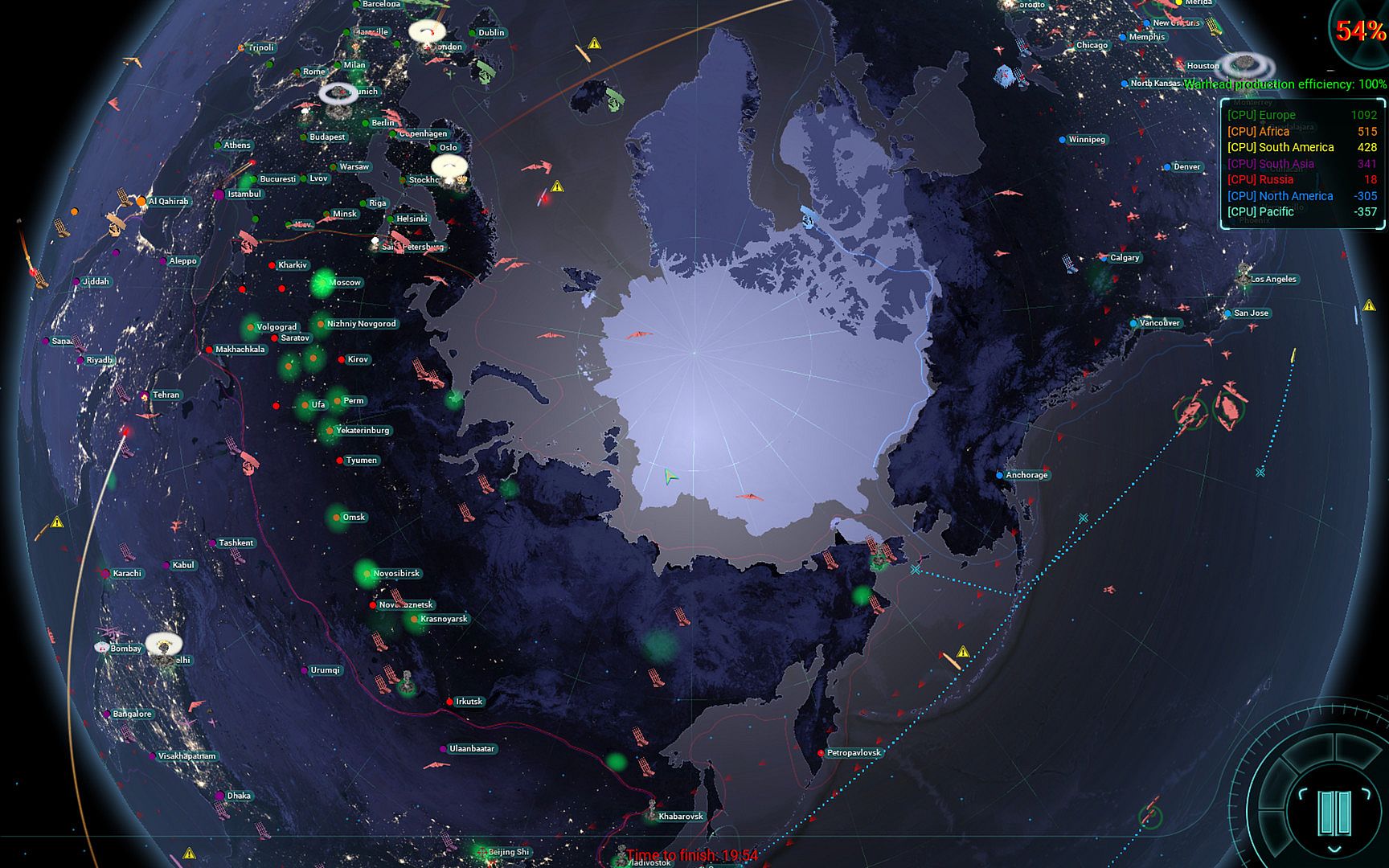
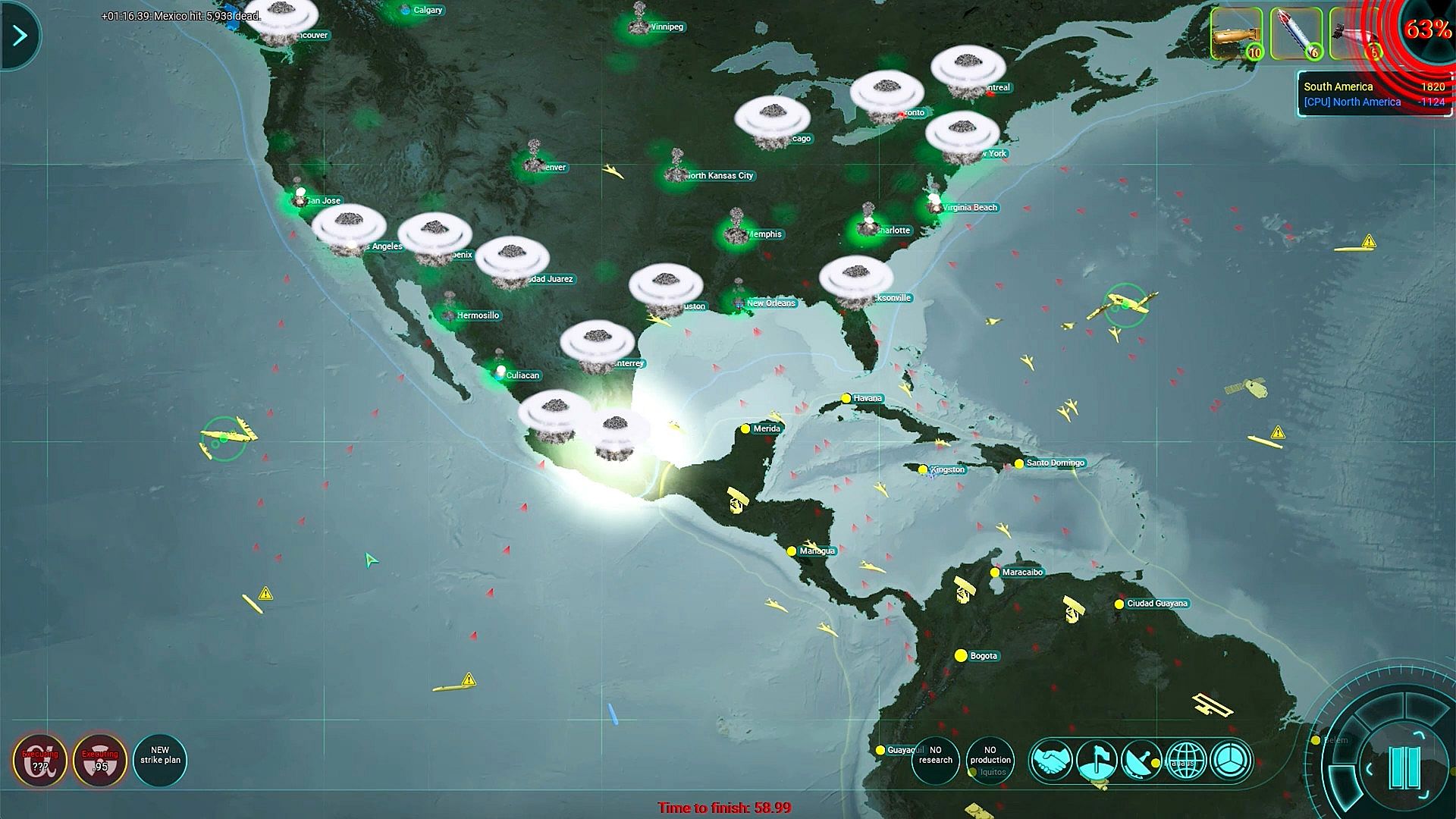
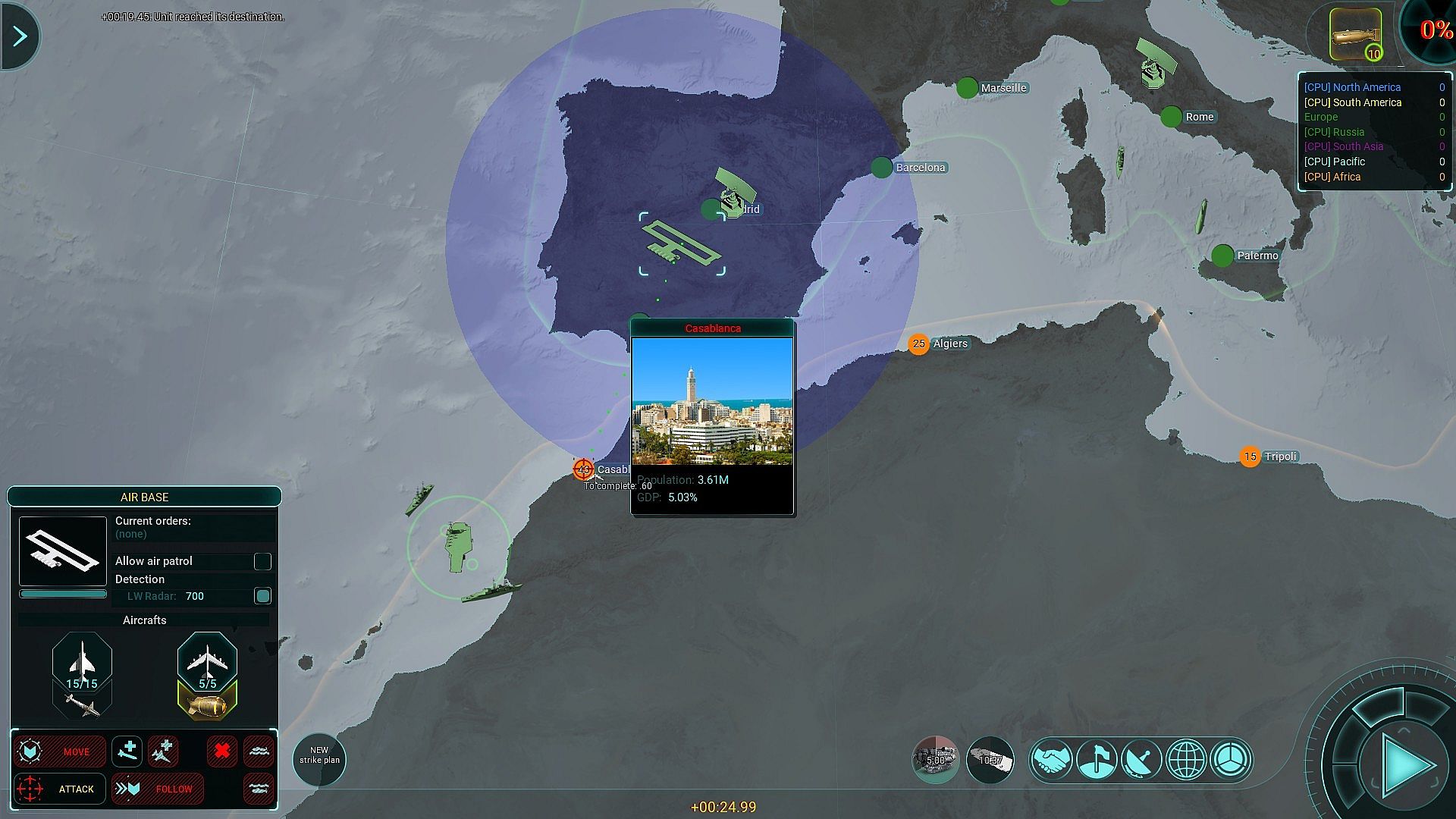
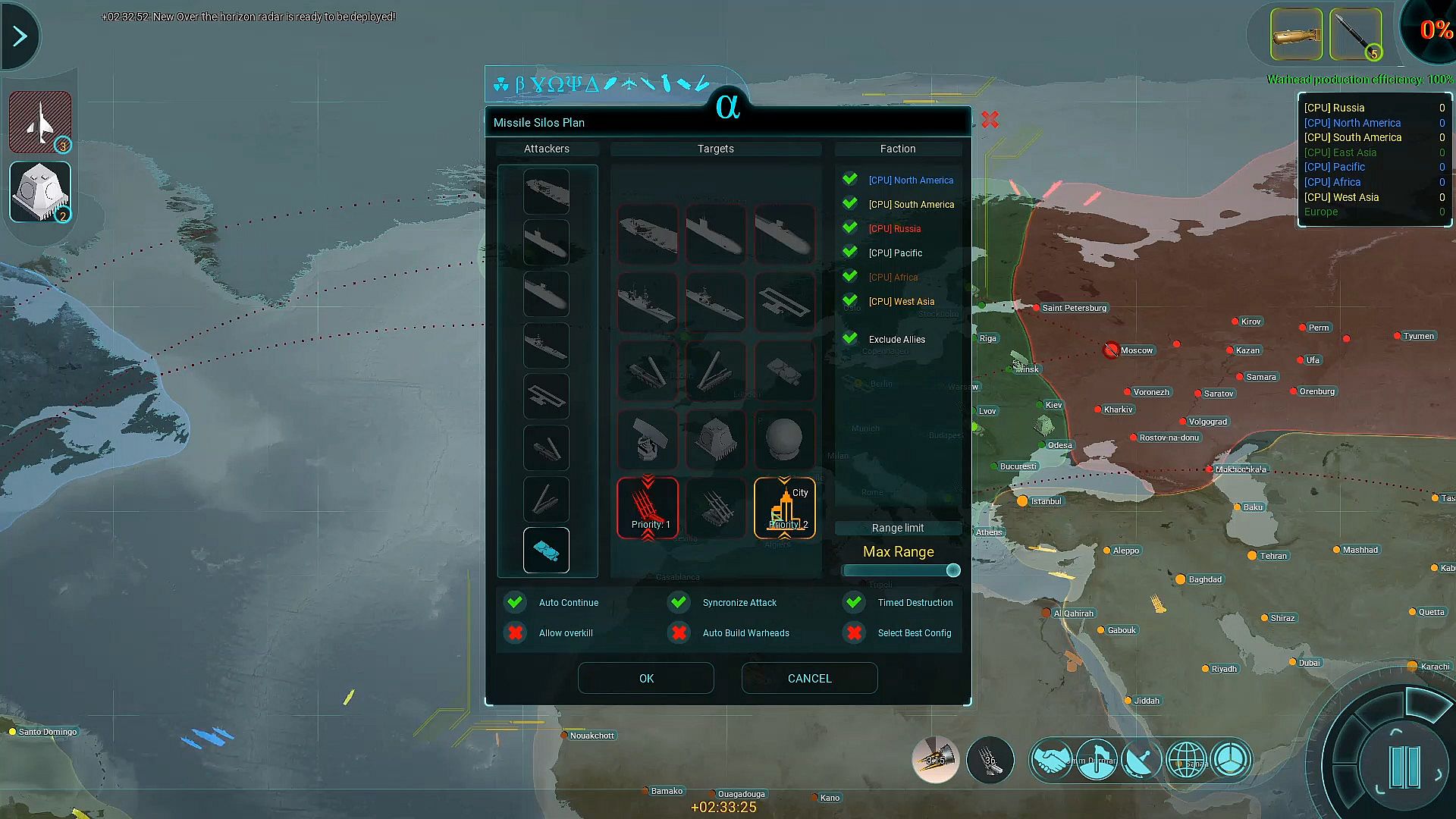
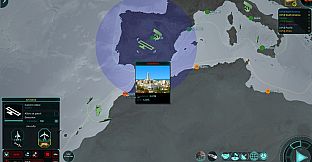
Combat involves twenty distinct unit types across naval, air, and missile categories alongside twelve nuclear weapon variants. Submarines can approach undetected, bombers deliver large payloads over distance, and intercontinental ballistic missiles provide rapid long-range options. A strike planner tool lets commanders predefine targets on enemy structures, units, and cities, then synchronize launches to saturate defenses. Diplomacy adds another layer, allowing temporary alliances for technology sharing or joint operations that can shift as former partners turn hostile.
Game speed remains adjustable throughout matches. Faster settings accelerate contamination spread for decisive endings, while slower paces extend the tension of prolonged exchanges. The system supports both careful planning and rapid escalation depending on player preference.
Game Modes
Four primary modes shape the experience. Standoff serves as the standard format, typically lasting one to two hours with balanced research and a defined peace period before nuclear exchanges begin. Conquest extends the scope to three to six hours, emphasizing extended conventional buildup, deeper diplomacy, and larger-scale operations before full nuclear release.
Blitz compresses the action into fifteen to forty-five minutes with reduced research depth and immediate focus on warhead deployment. Campaign mode presents a series of linked scenarios that introduce specific objectives and narrative constraints across multiple maps.
Multiplayer supports up to eight participants in free-for-all, fixed-team, or cooperative formats. An ELO system tracks performance across matches. Full modding tools allow creation or alteration of maps, units, technologies, and rulesets for further variety.
Strategic Depth and Multiplayer Focus
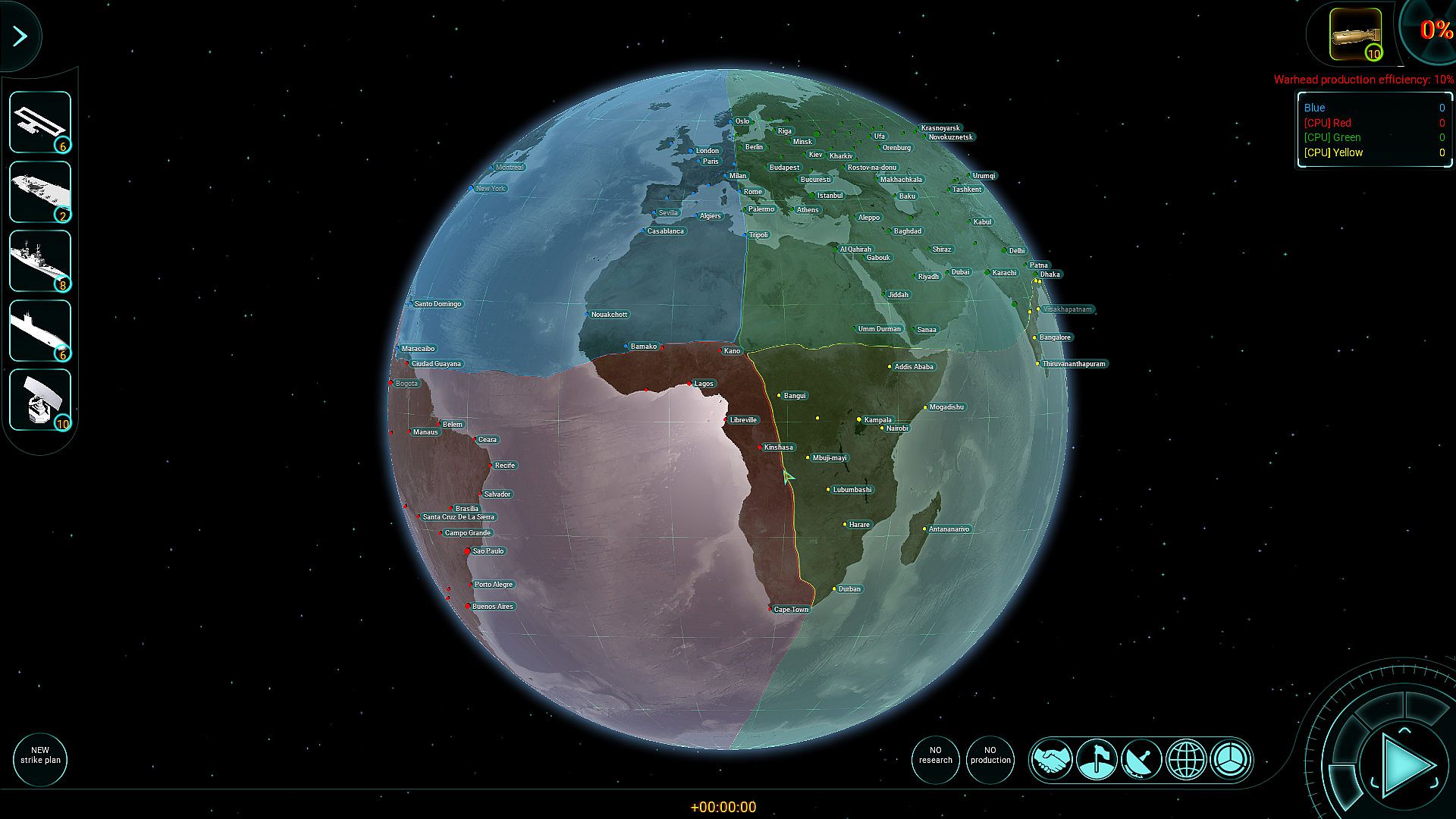
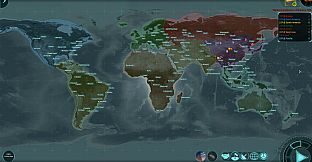
Matches emphasize positioning and timing over direct unit control. The round world map and regional starting positions encourage different opening strategies depending on geography and available assets. Conventional forces play a larger role in the Escalation version, providing options before nuclear thresholds are crossed.
Single-player opponents use competent AI that handles basic defense and counterattacks, though human opponents reveal more dynamic responses through diplomacy shifts and unexpected strike patterns. The combination of pausable real-time pacing and pre-planned strikes reduces repetitive micro-management while preserving tension during critical exchanges.
Is It Worth Playing?
ICBM suits players who enjoy deliberate strategy sessions built around escalation and deterrence rather than constant unit micro. The verified modes provide clear variety in match length and complexity, from quick Blitz games to extended Conquest campaigns. Multiplayer stands out for its diplomatic and alliance mechanics that reward coordination and adaptability.
Recent updates have refined AI behavior, quality-of-life features, and pacing, with ongoing support including new content additions. Those seeking a focused nuclear strategy experience with strong modding potential and customizable match settings will find consistent value in repeated playthroughs. The game remains available on PC with active development continuing into 2026.