


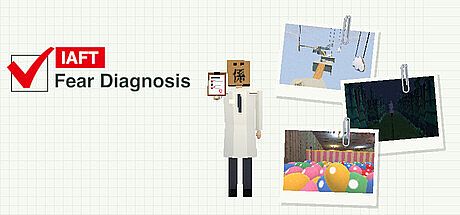


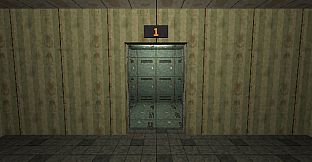
IAFT Fear Diagnosis is a first-person indie adventure game that blends horror with comedy. Players step into the role of a test subject at the Institute for Applied Fear Technology, where a diagnostic questionnaire determines which fears shape a unique test environment built inside the facility.
Gameplay
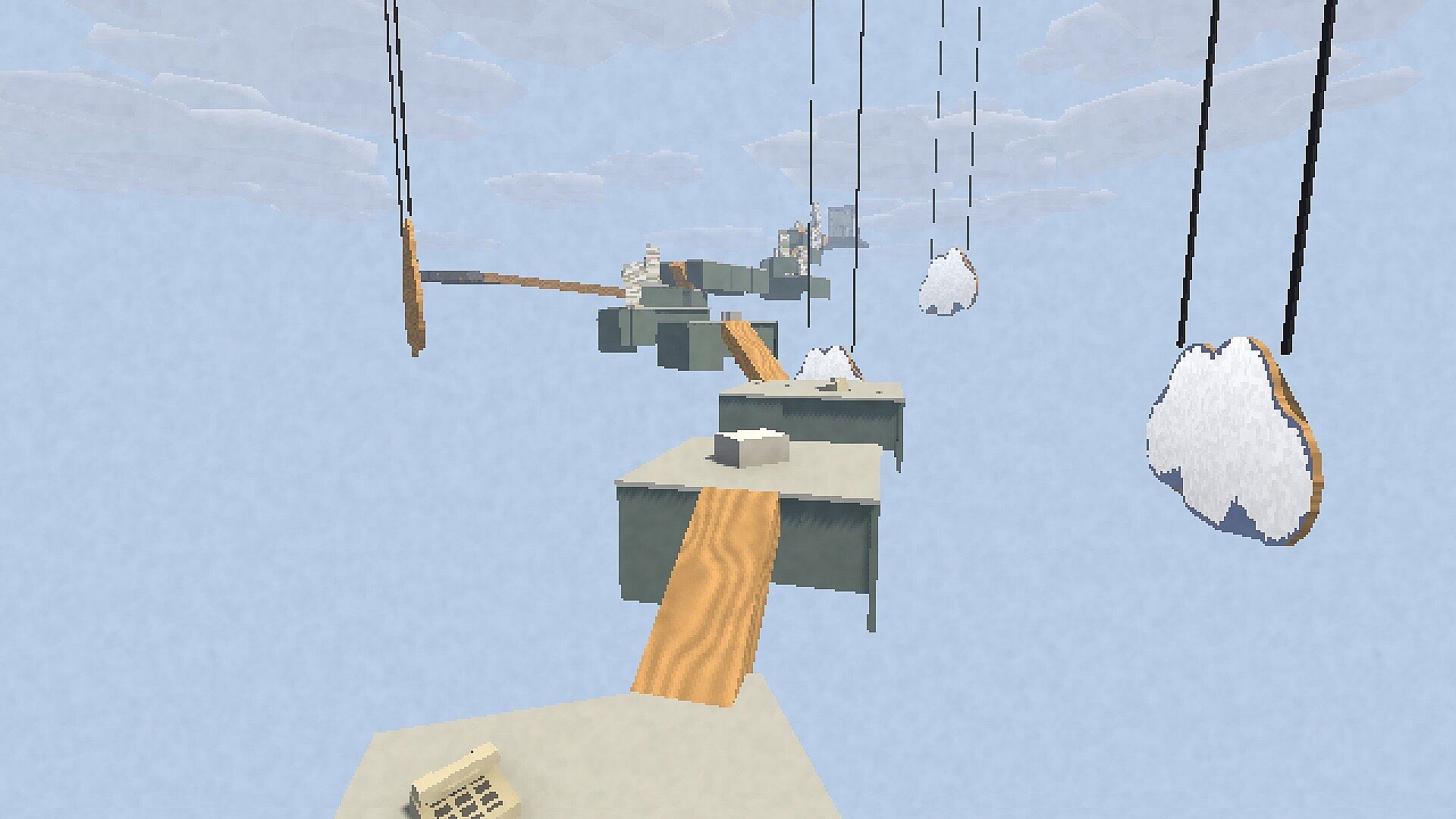
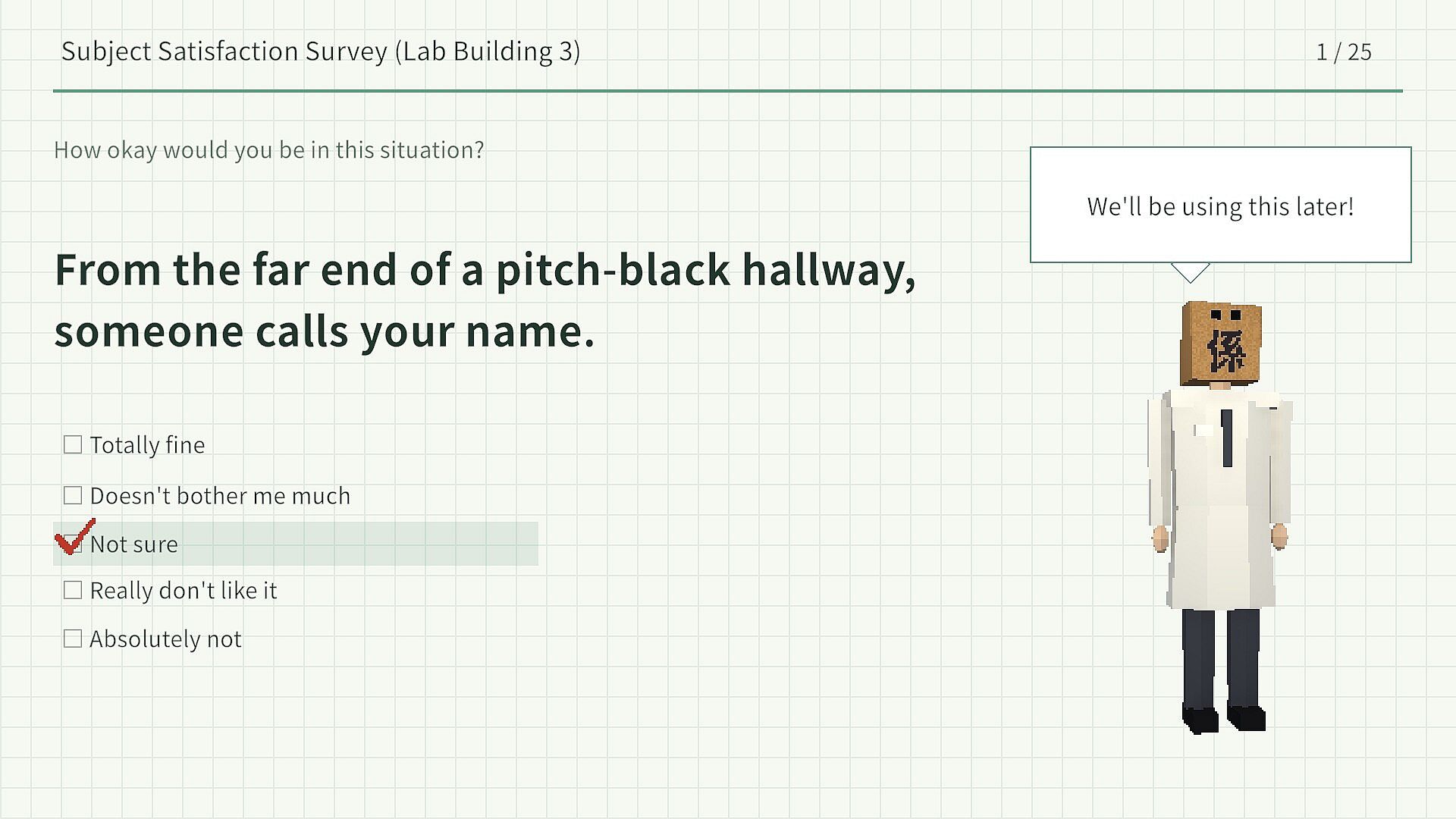
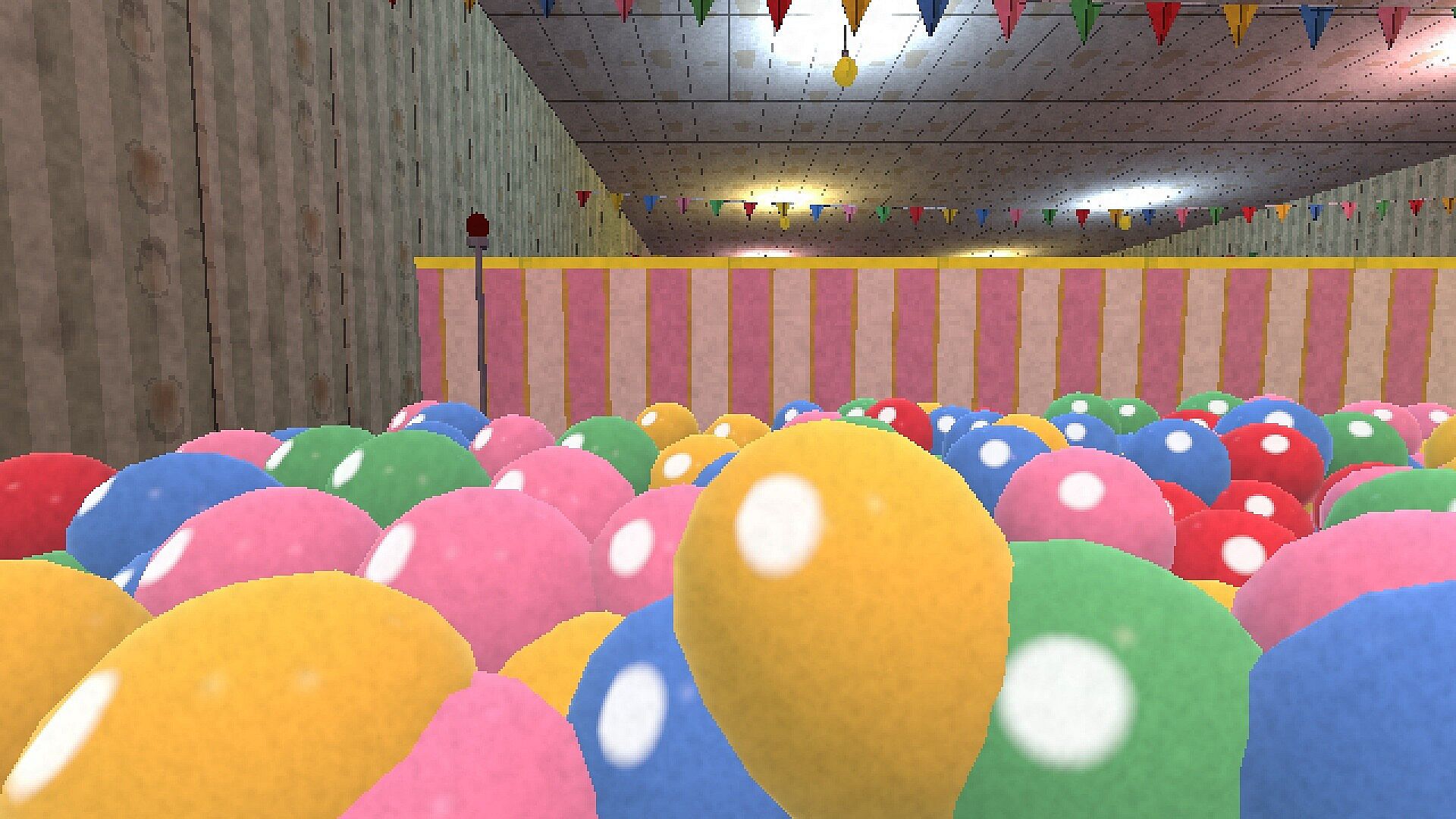
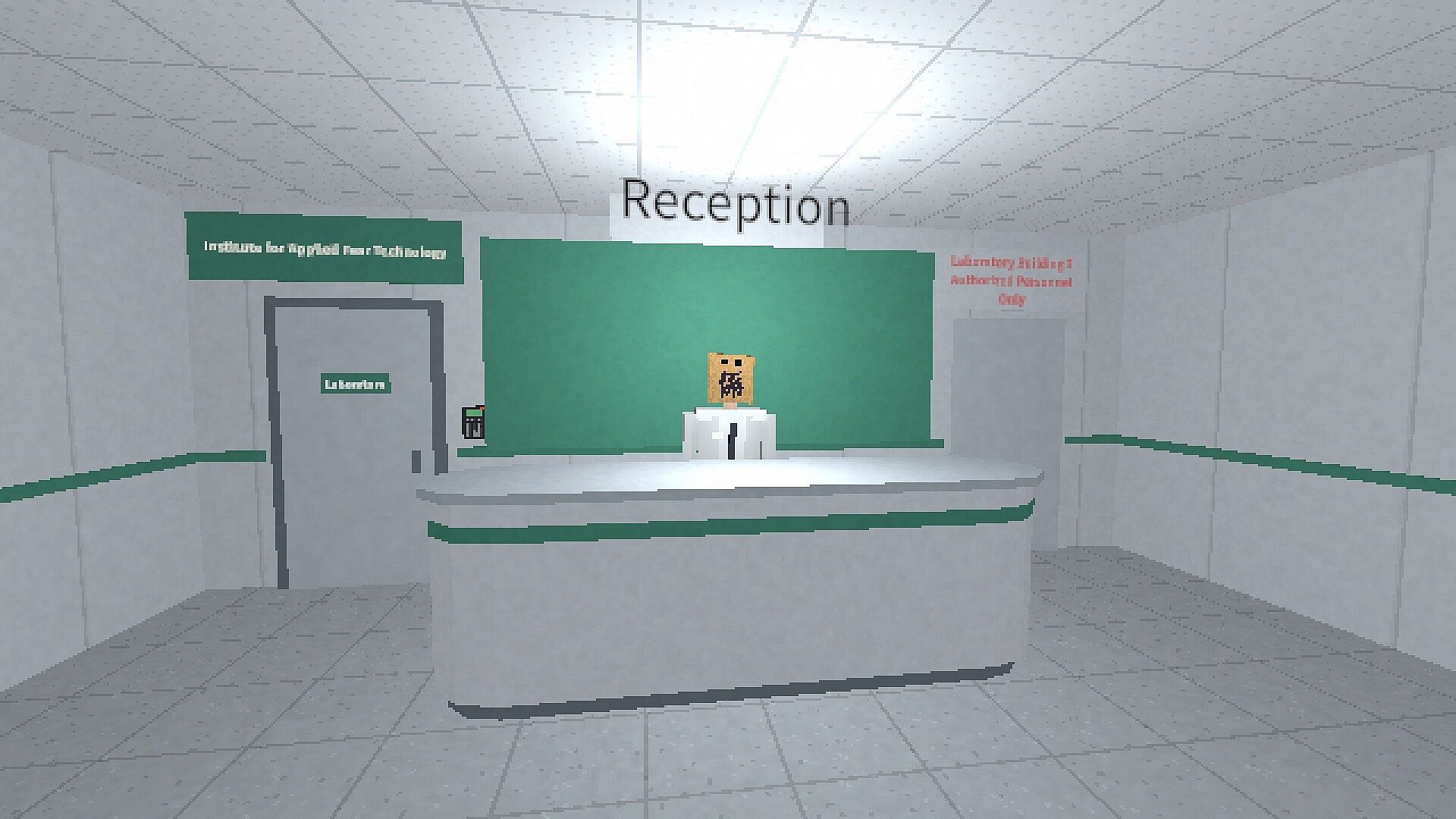
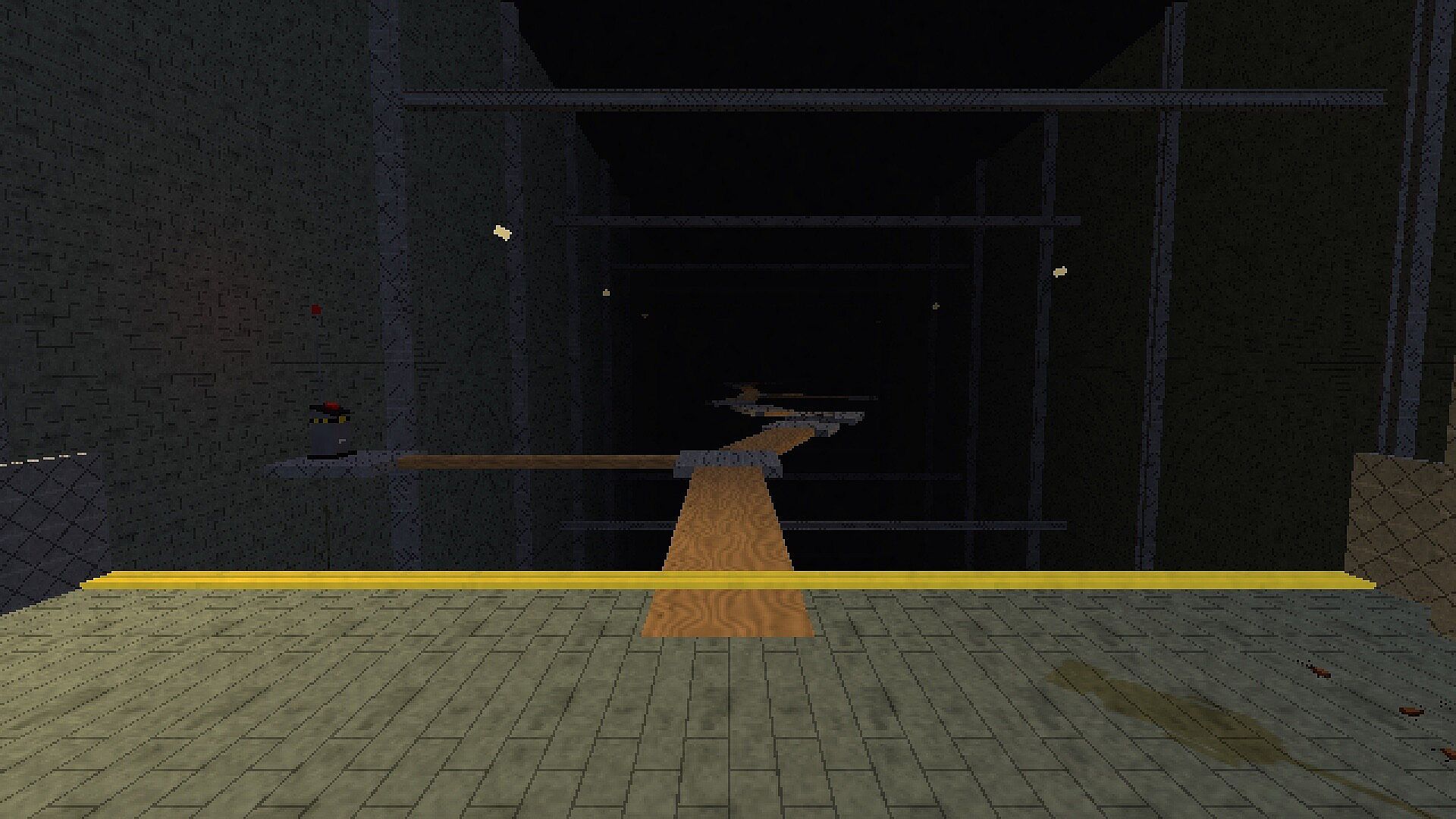
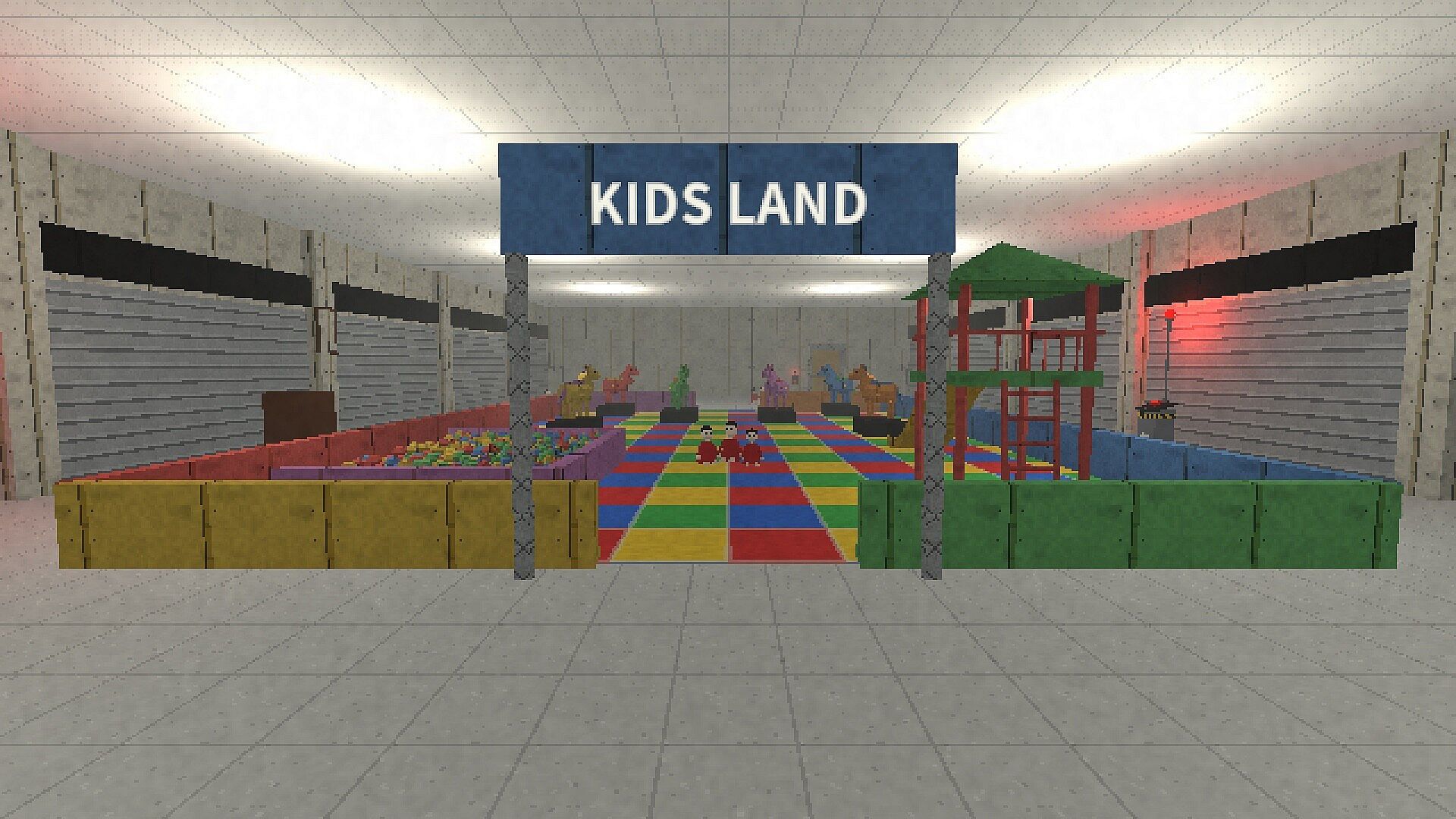
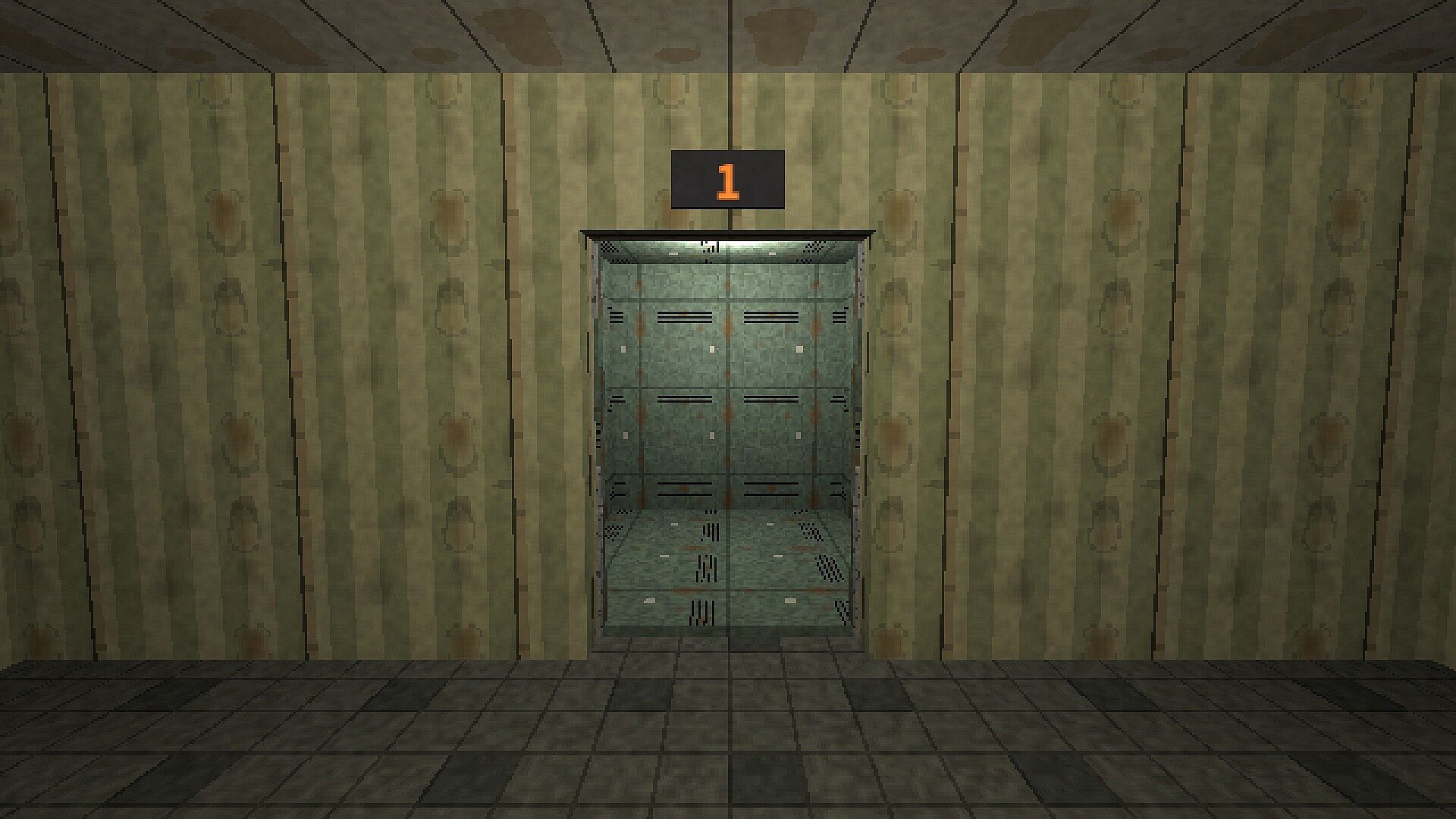
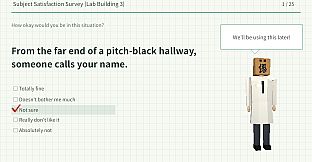
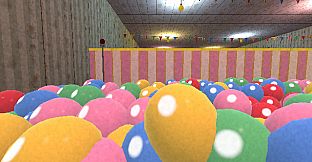
The core loop begins with a fear diagnosis consisting of questions about common phobias and everyday anxieties such as heights, confined spaces, darkness, insects, dolls, ghosts, public attention, and routine tasks like paperwork. Answers determine which fears rank highest and how they combine into the stage layout. Each run lasts roughly ten minutes and sends the player through a custom-built set that might include an office suspended in the sky, a corridor that narrows progressively, a party hall filled with balloons, or an elevator that refuses to stop. Navigation involves walking, crouching, jumping, and reacting to environmental hazards or pursuing figures that appear based on the diagnosis results. The attendant, always wearing a paper bag over their head, provides overly polite guidance through the handmade-looking sets. Players can exclude specific fears in the settings menu so those elements never appear, even if they score high on the diagnosis. A collection system records every location and trap encountered, allowing players to track progress toward seeing additional combinations.
Game Modes
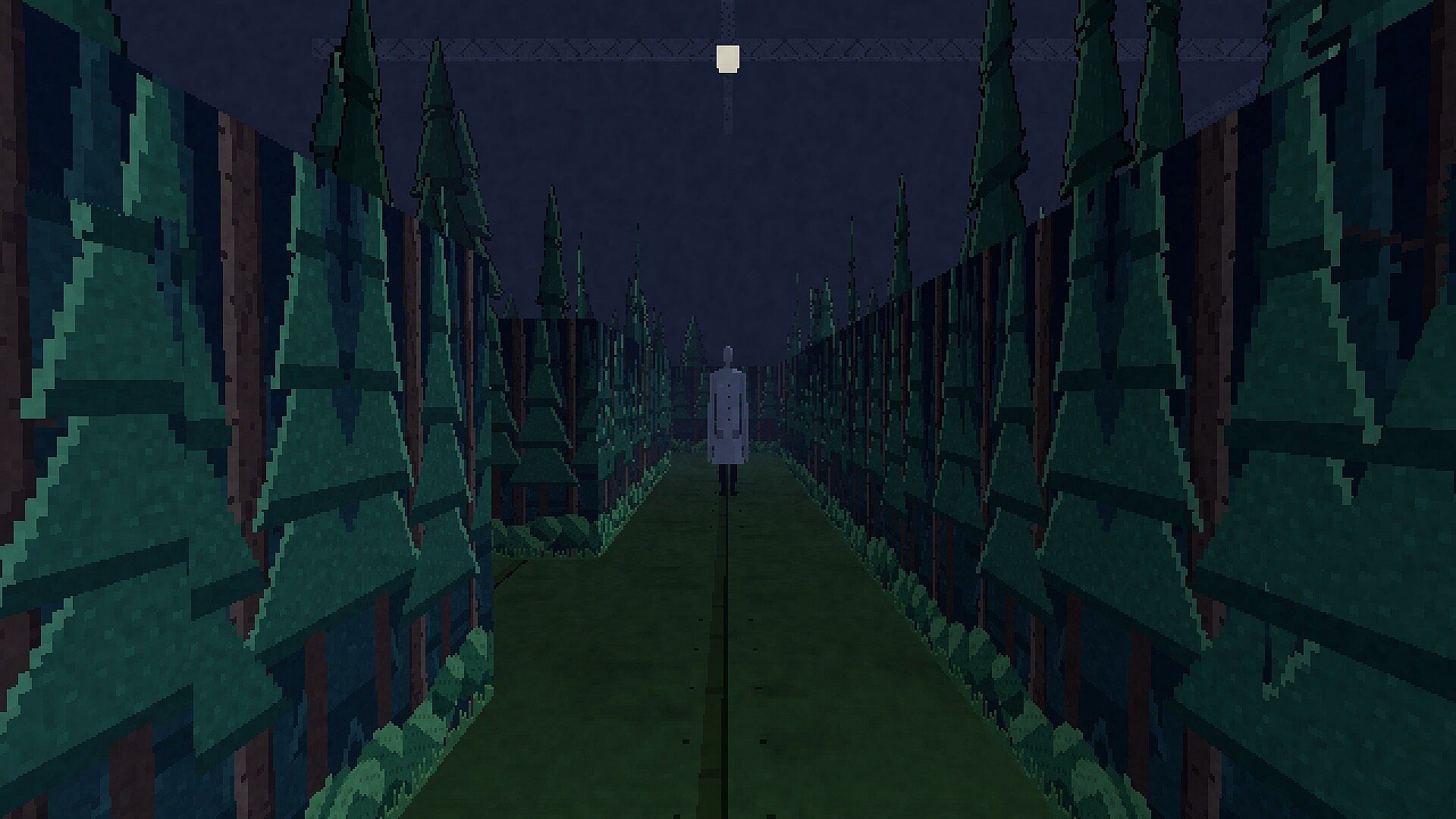
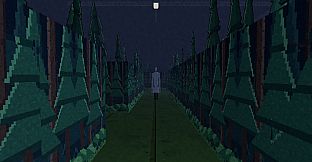
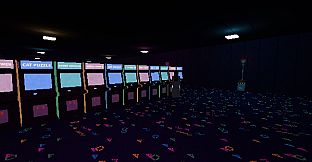
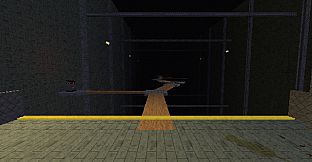
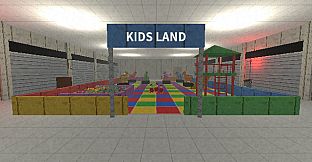
The game operates as a singleplayer experience centered on repeated diagnosis and stage runs. There are no separate multiplayer or competitive modes. Instead, replayability comes from retaking the diagnosis, which features slightly varied questions each time and produces different fear rankings and stage combinations. Recent demo updates have introduced additional stage variety such as liminal spaces, night woods, bottomless shafts, skeleton radio towers, and blacked-out warehouses, along with new escape sequences that can involve running, collecting keycards, hiding in lockers, or waiting for an elevator. Between experiments, players now traverse a research wing where a PA system directs them to the next lab. These elements keep each short session distinct without requiring separate game modes.
The Fear Diagnosis System
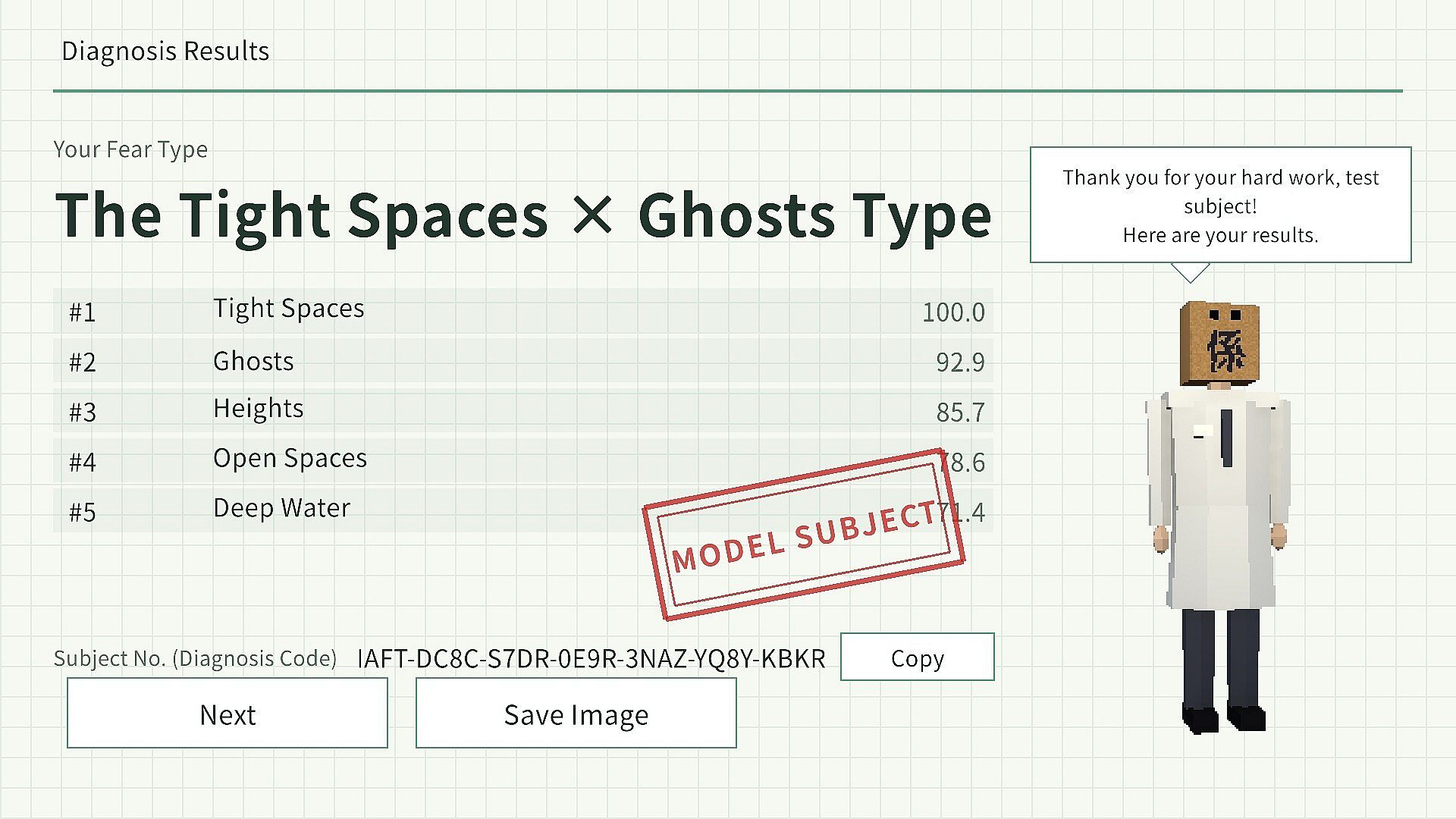
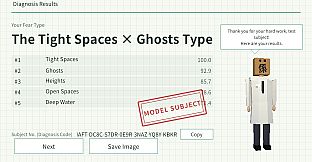
The diagnosis serves as the central mechanic that personalizes every playthrough. Over two million stage combinations are possible depending on how fears are ranked and merged. Results include a named fear type and an image that can be saved, along with a breakdown page showing which answers determined the top fear. Demo updates have refined the process with new comparison questions, the ability to revisit previous answers, and attendant reactions to responses. A final round comparing top fears helps clarify rankings. Players receive a subject number tied to their diagnosis, which can be used to recreate the exact same stage on another run or share with others.
Atmosphere and Presentation
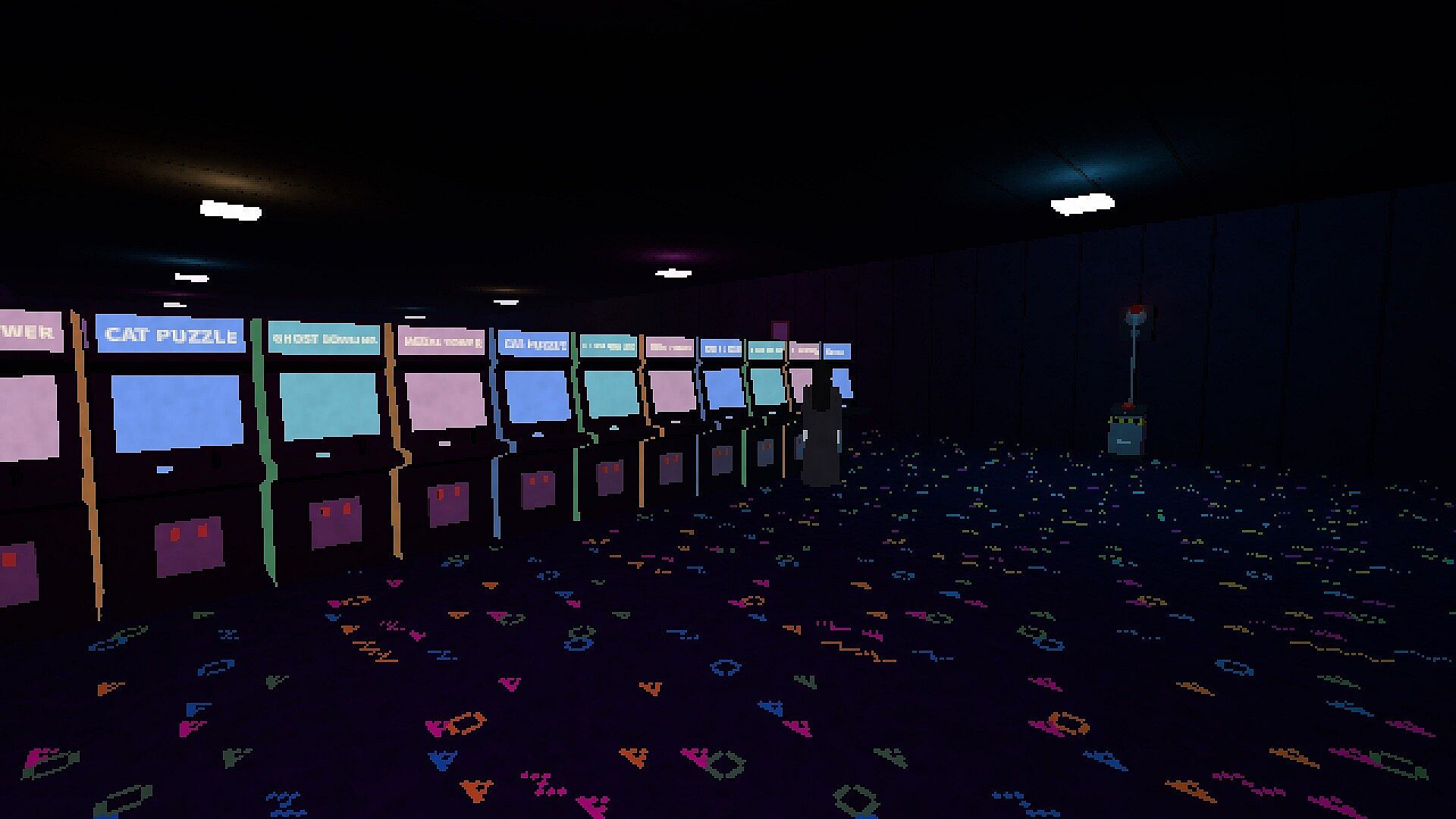
The game uses a slightly rough, nostalgic low-poly aesthetic that emphasizes the handmade quality of the test sets. Sound design focuses on heartbeat audio during tense moments and stage-specific effects. The tone mixes genuine scares with ridiculous elements, such as the polite attendant and unexpected endings after each experiment. The developer drew inspiration from a wide range of horror sources beyond ghosts, aiming to capture everyday and inexplicable fears in one package. Demo updates continue to expand available stages and refine mechanics ahead of the full release.
Is It Worth Playing?
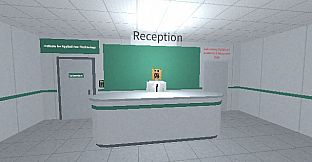
The free demo lets players experience the full flow of reception, diagnosis, stage navigation, and results with a selection of fears, and collected data carries over to the full version. The full game launches on December 1, 2026. This title suits players who enjoy short, replayable horror sessions built around personalization rather than linear storytelling or large-scale campaigns. Those who appreciate procedural variety within a singleplayer framework and do not mind excluding certain phobias will find the core loop engaging. The humorous framing and low-poly presentation distinguish it from more conventional horror experiences, making it a niche recommendation for fans of experimental indie adventures.











