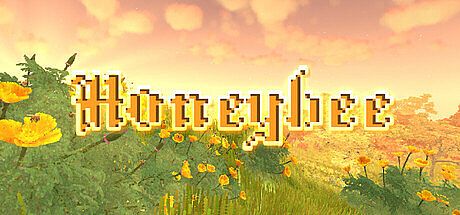


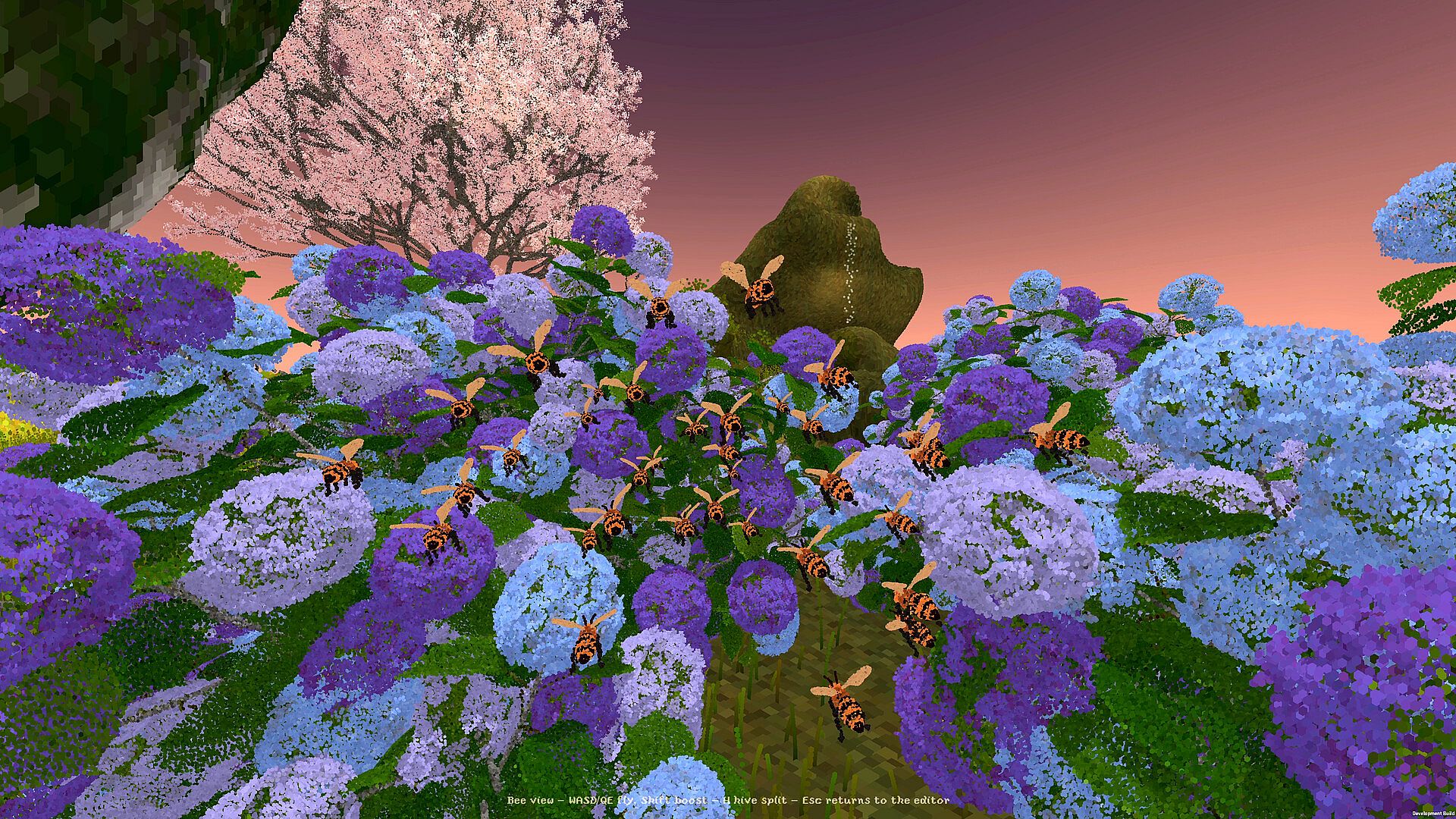
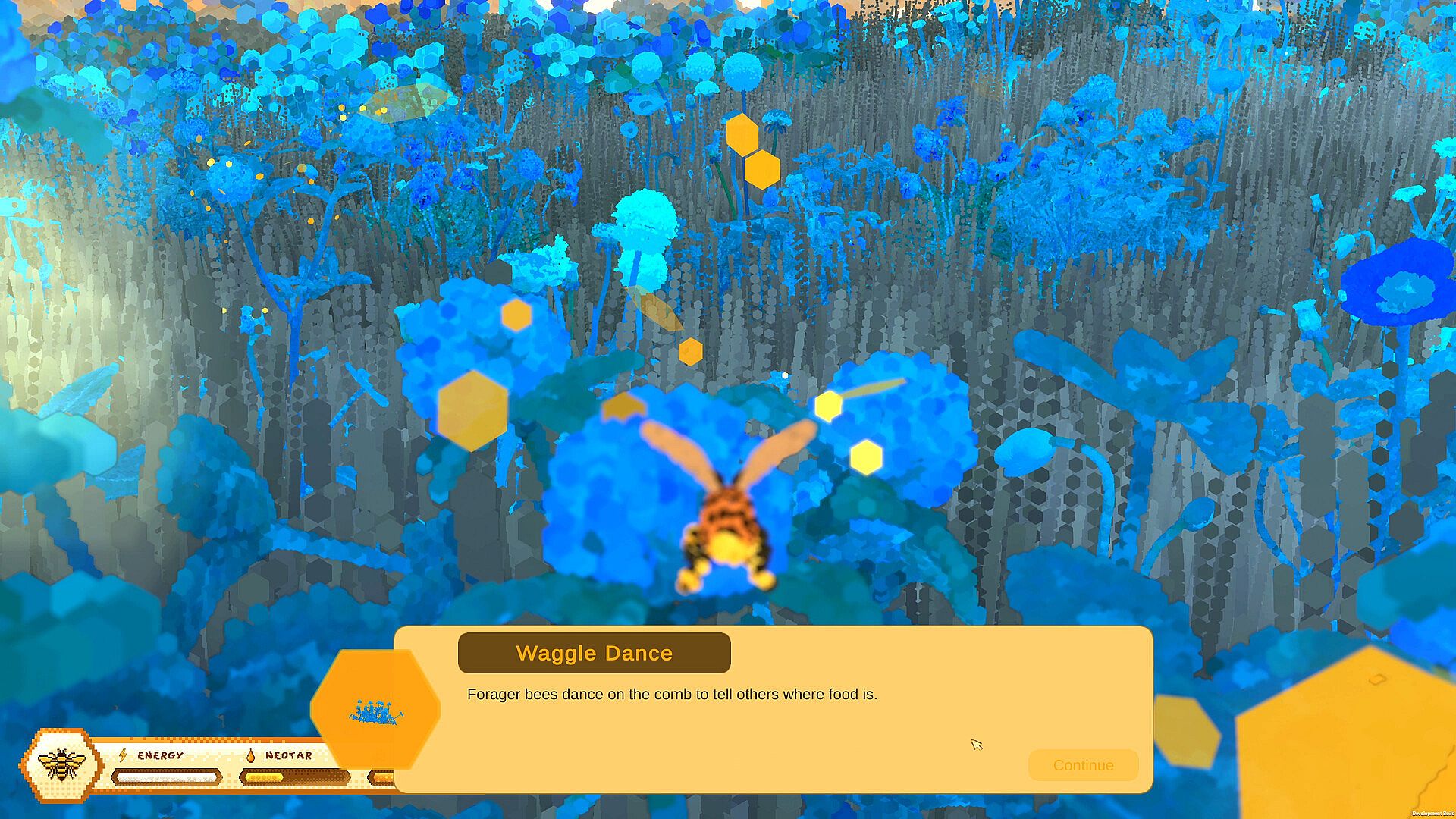
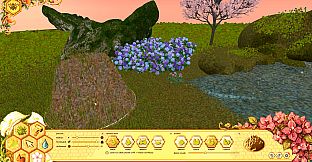
Honeybee is an indie casual adventure game built around pointillist puzzle mechanics on PC. Players take on the role of pixelated pollinators tasked with supporting a hive while discovering more about surrounding ecosystems through hands-on activities and creative building.
Gameplay
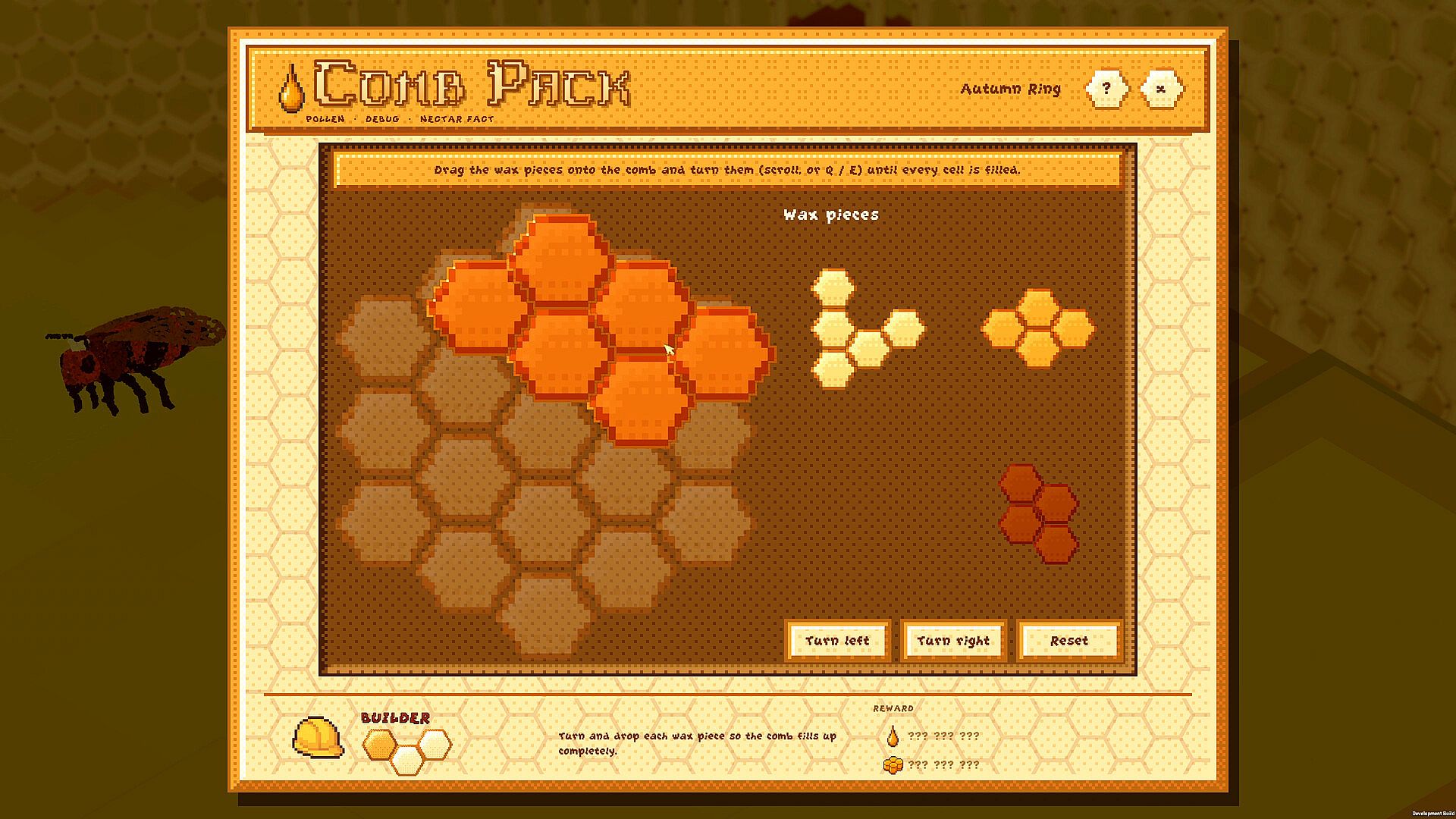
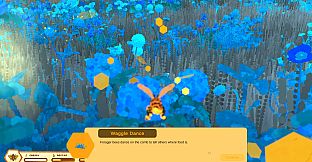
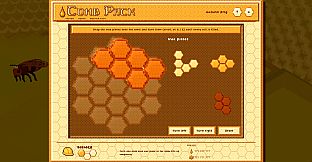
The core loop centers on hive maintenance and growth. Bees handle specific jobs that keep the colony running, such as scouting routes for resources, instructing younger bees, assembling honeycomb structures, and applying learned details to practical tasks. These actions tie directly into puzzle solving that improves overall bee efficiency and output.
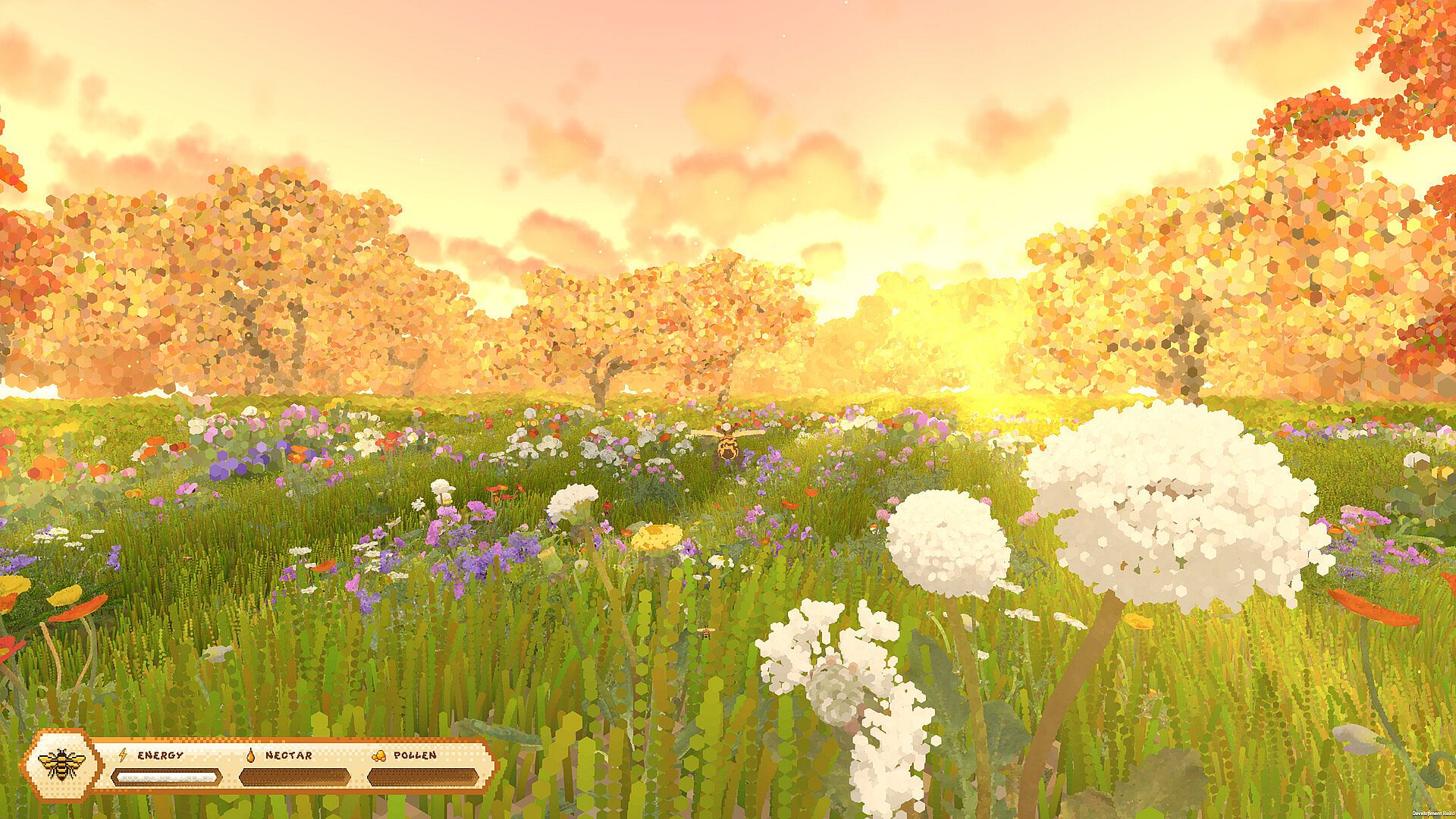
Puzzles take the form of more than fifty bee-themed challenges and short minigames. Completing them reveals additional knowledge and unlocks hundreds of distinct plants, rocks, and trees. The pointillist visual style emphasizes small, deliberate placements that build larger scenes, encouraging careful observation of patterns and connections within the environment.
Progress feeds into broader exploration of the game's world, where new areas open as the hive expands. Every element reinforces an educational layer about real ecosystems, presented through direct interaction rather than separate tutorials.
Game Modes
Honeybee operates entirely in single-player. The primary structure divides into focused sections that function as distinct play styles. Hive tasks emphasize management and incremental improvement through repeated assistance with bee duties. Puzzle sections deliver self-contained challenges that reward completion with tangible unlocks for the broader experience.
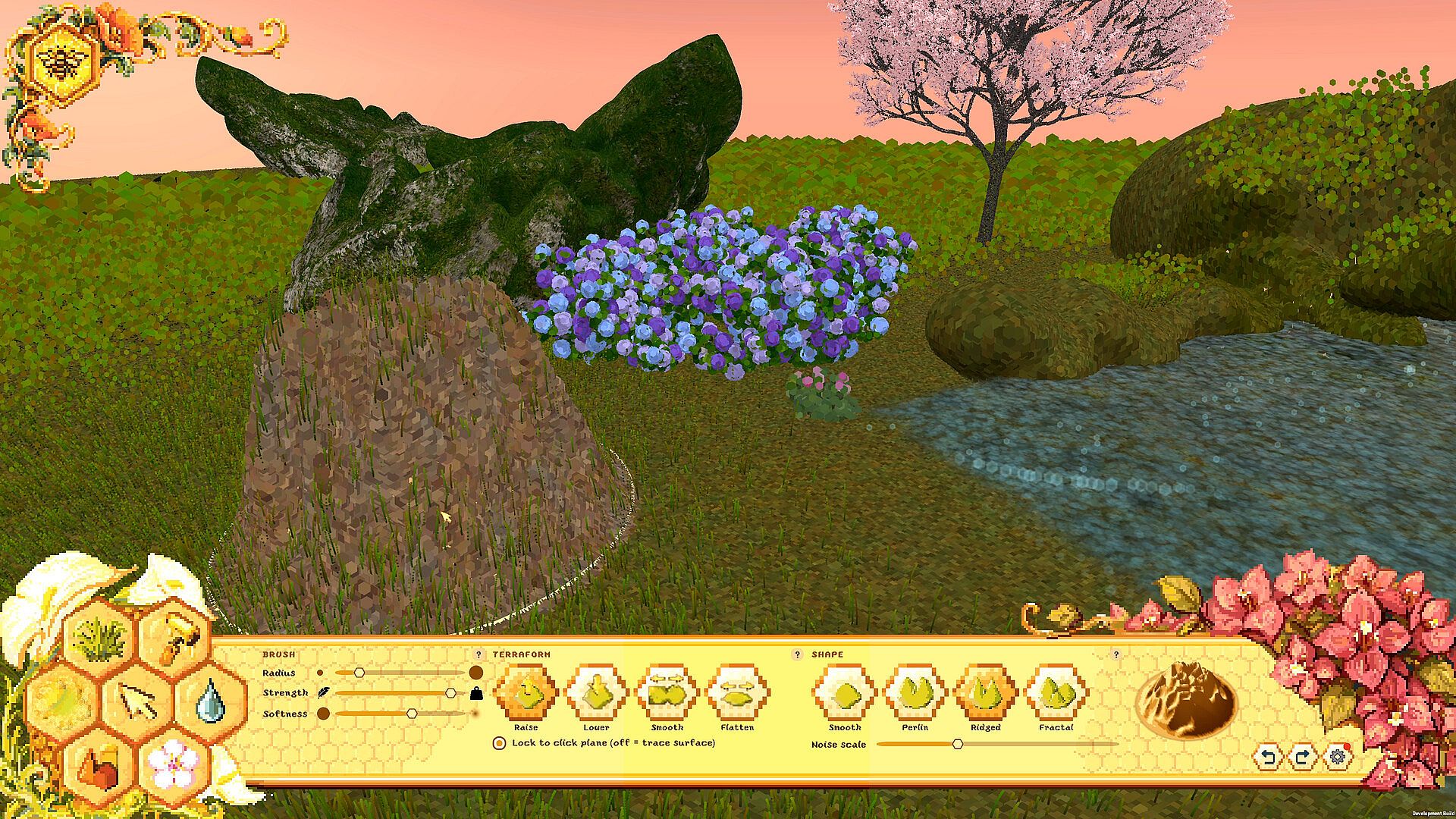
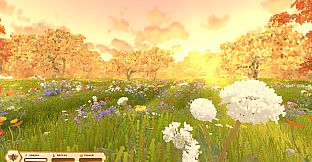
The meadow section shifts to open-ended creation once players have gathered enough elements from earlier play. A gridless sandbox editor supports free placement of custom volumes, terrain adjustments, and integration of unlocked natural objects. This mode removes strict boundaries, allowing personal meadow designs that reflect discoveries made during puzzle and hive phases.
Exploration and Ecosystem Learning
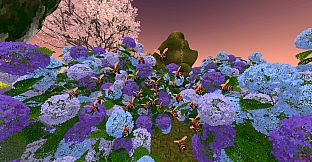
World expansion happens gradually as hive activities and puzzle solutions open new routes and areas. Each discovery adds to a growing collection of garden elements, creating a direct link between problem solving and environmental variety. The pointillist approach highlights fine details in flora and terrain, making the learning process visual and tactile.
Players encounter over seven hundred distinct plants, rocks, and trees across the experience. These items serve both functional and aesthetic purposes once transferred to the meadow editor, turning collected knowledge into personalized outdoor spaces without grid constraints or placement limits.
Is It Worth Playing?
Honeybee suits players who enjoy relaxed puzzle adventures with creative outlets and light educational themes. The single-player focus keeps attention on personal progress through hive tasks, puzzle completion, and sandbox building rather than competition or multiplayer systems. Because the game remains unreleased with a date still to be announced, current details rest on the described systems of hive assistance, fifty-plus puzzles, and the gridless meadow editor.
Those drawn to casual indie titles that blend puzzle solving with open creation will find the structure appealing. The absence of reviews at this stage means expectations should align with the provided mechanics of ecosystem exploration and hive growth. Once available, it offers a contained experience centered on deliberate, visually distinctive play without additional modes or external requirements.