























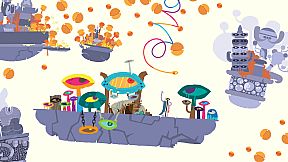


Hohokum is an indie adventure game centered on freeform exploration in a series of distinct, handcrafted worlds. Players take control of the Long Mover, a serpentine creature that glides through surreal environments filled with interactive elements. The experience emphasizes discovery at a personal pace rather than structured challenges or competition.
Gameplay
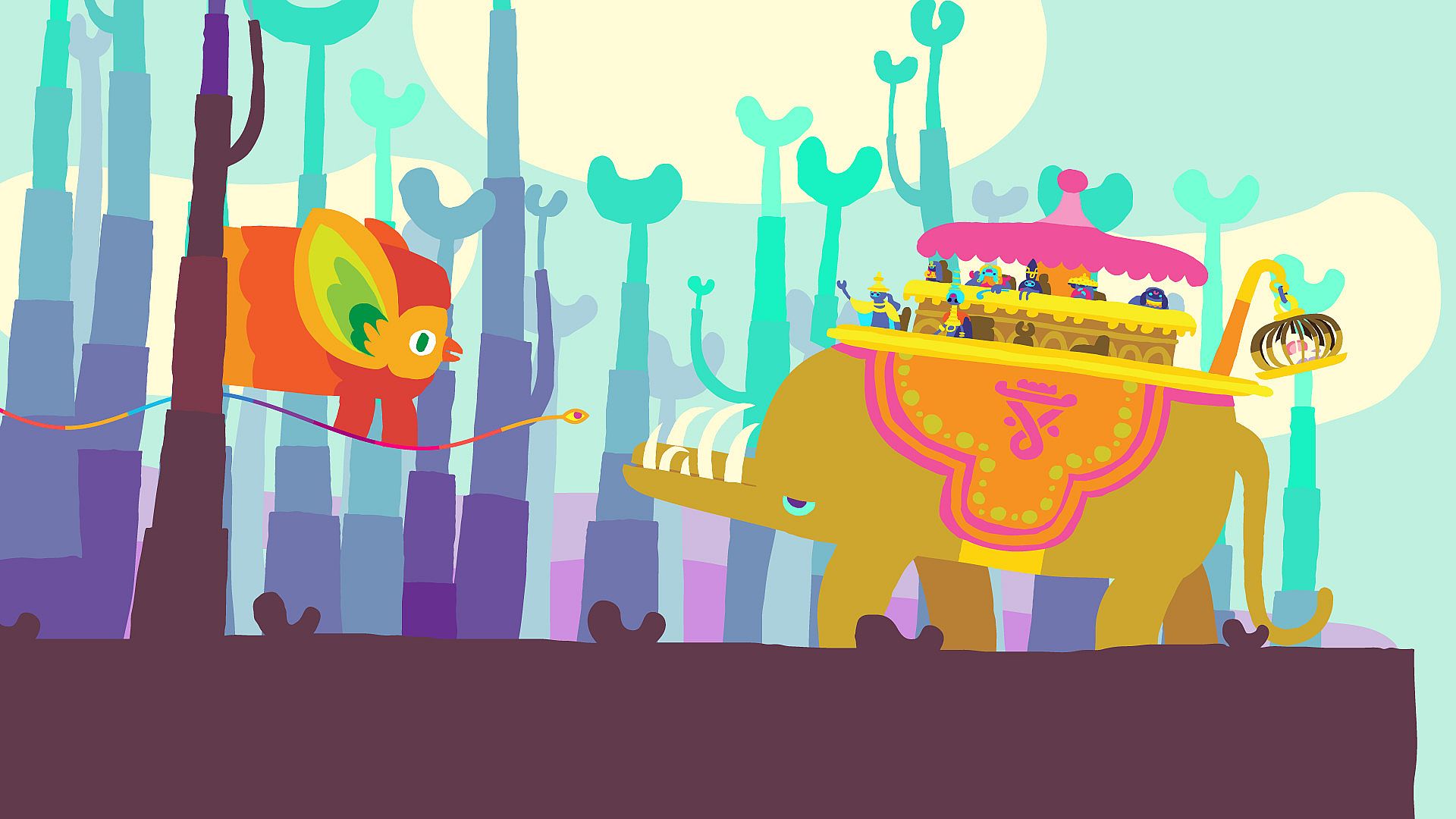
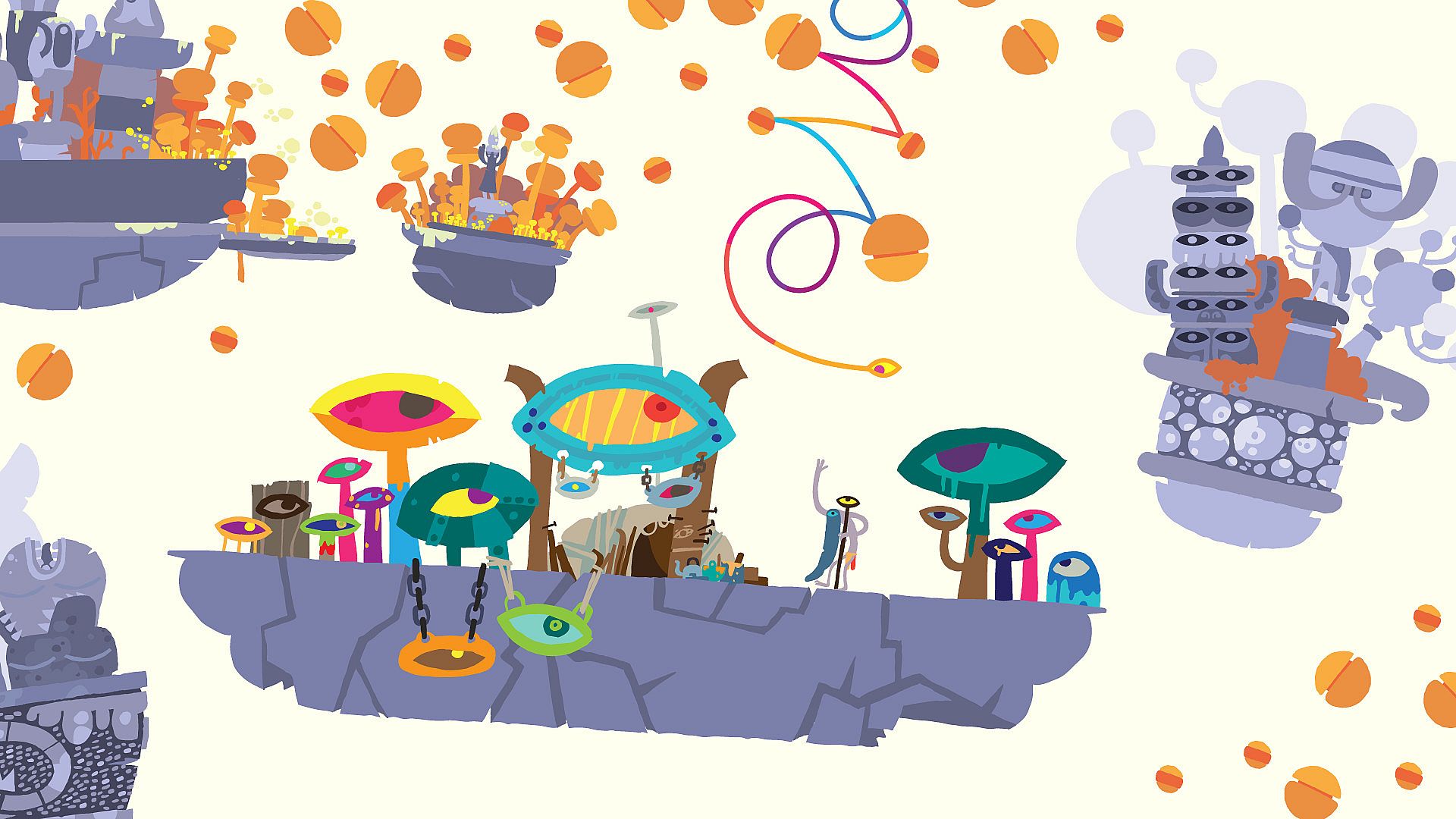
The core loop involves navigating the Long Mover through colorful, abstract spaces where movement feels fluid and responsive. Players steer the creature to touch objects, characters, and environmental features that trigger visual or auditory reactions. Each of the seventeen worlds presents its own set of loose activities, such as guiding sea life or aligning with other kite-like forms, without enforcing a single path or required sequence.
Interaction remains light and intuitive. Speed and direction adjust naturally through steering, and contact with certain surfaces or items produces immediate feedback in the form of animations or sound shifts. There are no combat systems, resource management, or failure states. Progress comes from optional goals scattered across the levels, yet the design supports extended periods of unstructured roaming where players simply observe how the surroundings respond to their presence.
Game Modes
Hohokum operates entirely as a single-player experience with no separate multiplayer options or competitive formats. The structure revolves around a non-linear journey across its collection of self-contained worlds. Each area functions as an independent playground rather than a traditional stage with checkpoints or timers.
Within this single mode, players encounter varied interaction styles that change from one world to the next. Some sections reward careful observation of patterns, while others invite repeated passes to unlock additional visual layers. Achievements track certain milestones, yet they remain optional markers rather than core requirements. The absence of branching campaigns or difficulty settings keeps the focus on personal pacing and repeated visits to favorite locations.
Visuals and Audio
Artist Richard Hogg supplies the distinctive artwork that defines every environment. Bright palettes and whimsical shapes create a consistent tone across the worlds, with each location featuring unique character designs and toy-like objects that stand out against the backgrounds. The visual style avoids photorealism in favor of clean, playful forms that shift and react during play.
The soundtrack draws from multiple contributors associated with Ghostly International Records. Tracks blend electronic and organic elements that evolve based on player movement and interactions. Music layers build or recede as the Long Mover travels, reinforcing the sense of a living space rather than a static backdrop. Sound effects tie directly to specific actions, such as collisions or alignments, adding another layer of immediate response without overwhelming the primary score.
Is It Worth Playing?
Player feedback on Steam shows very positive reception, with 85 percent of reviews rating the game favorably. Reviewers frequently highlight the relaxing quality of the exploration and the appeal of its art and music combination. Some note that later sections can feel less directed, which aligns with the overall design choice to minimize explicit guidance.
The game suits individuals seeking a low-pressure single-player adventure that prioritizes atmosphere over objectives or progression systems. Its short length and replay-friendly structure make it accessible for short sessions or longer, aimless visits. Those who value artistic presentation and open-ended interaction will find consistent value, while players expecting conventional goals or multiplayer elements may prefer titles with more defined structure.
- Seventeen distinct worlds encourage multiple playthroughs focused on different interactions.
- Achievements provide light tracking without altering the core experience.
- Full controller support enhances the gliding mechanics on PC.