

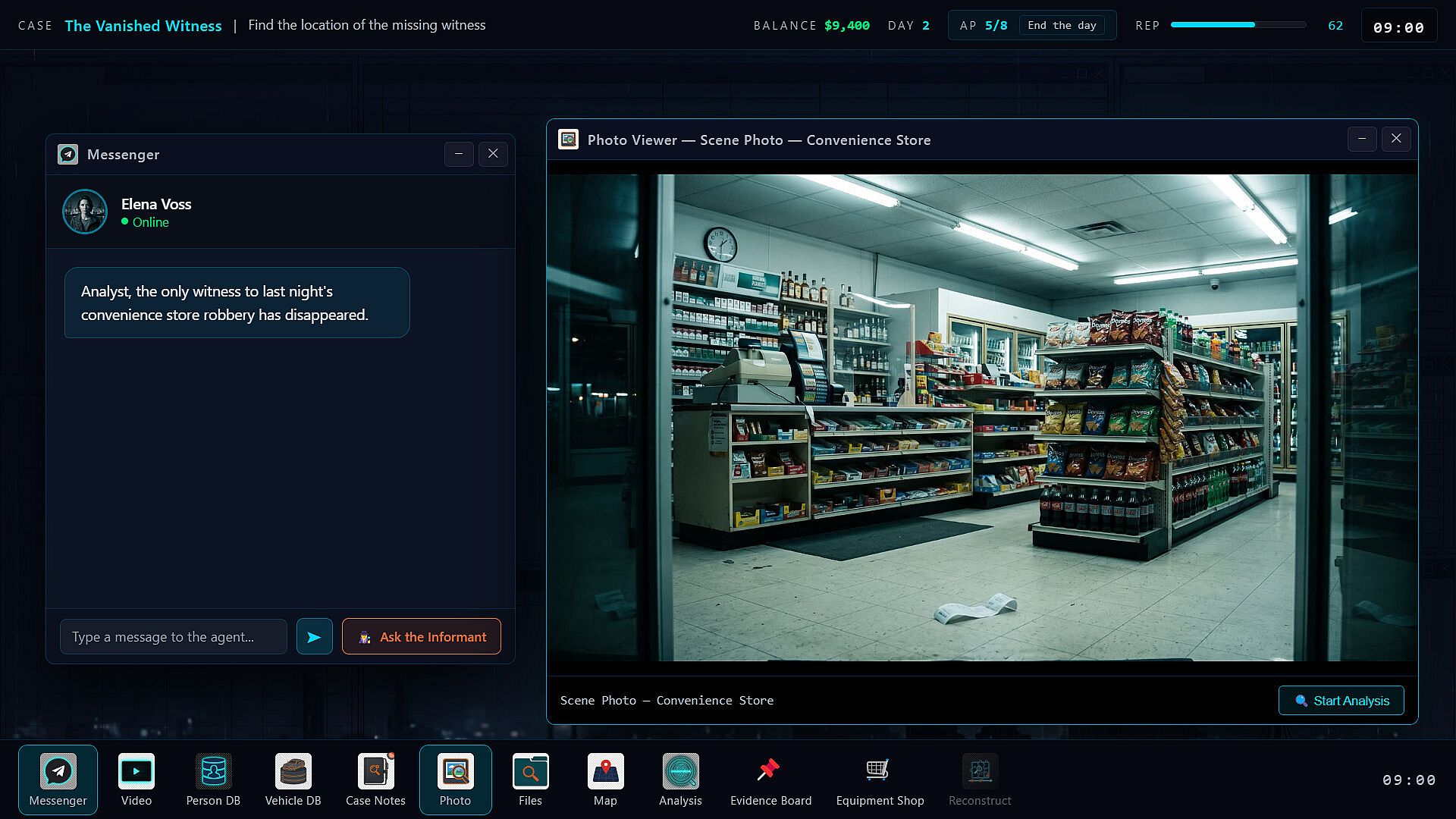
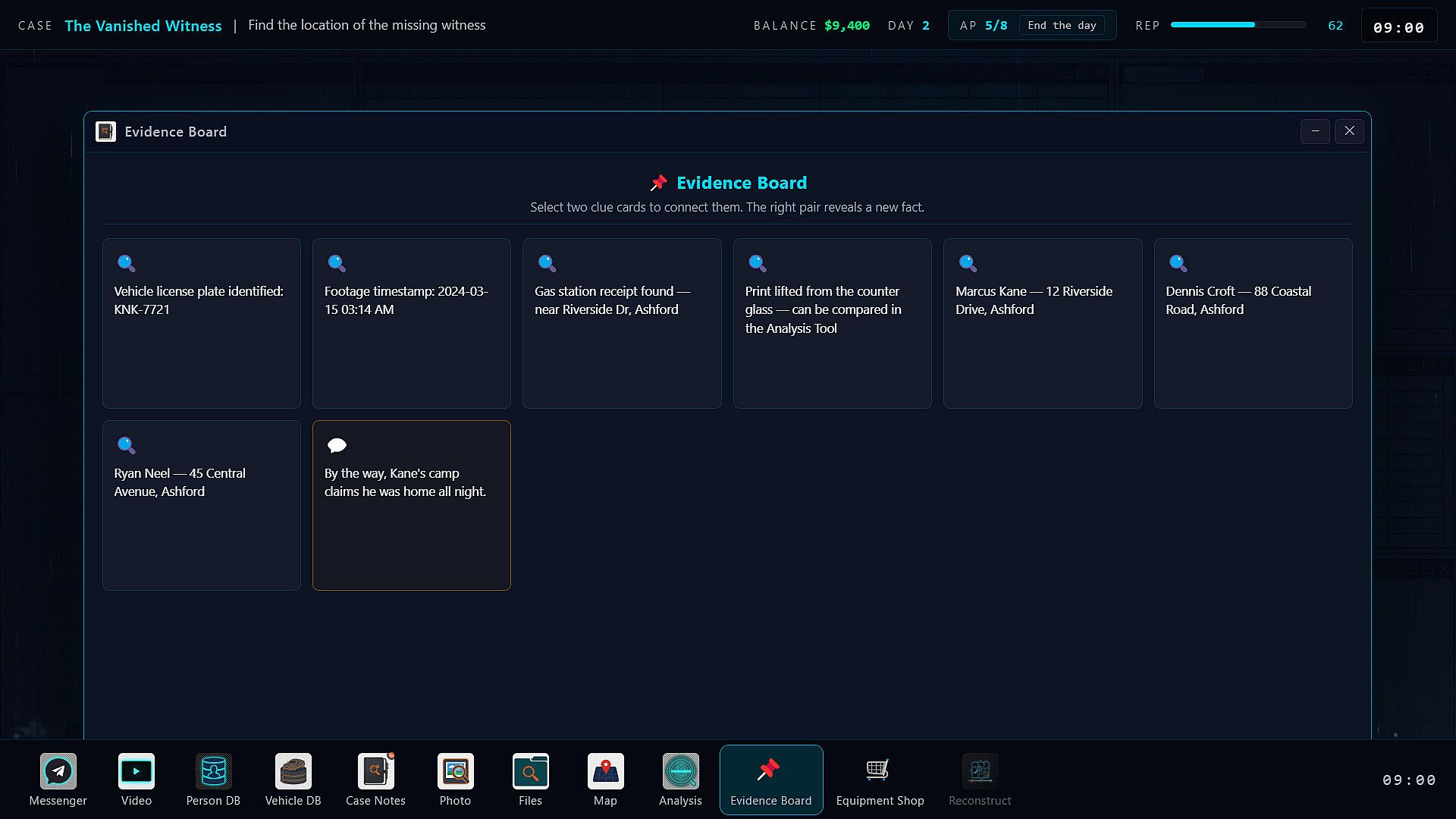
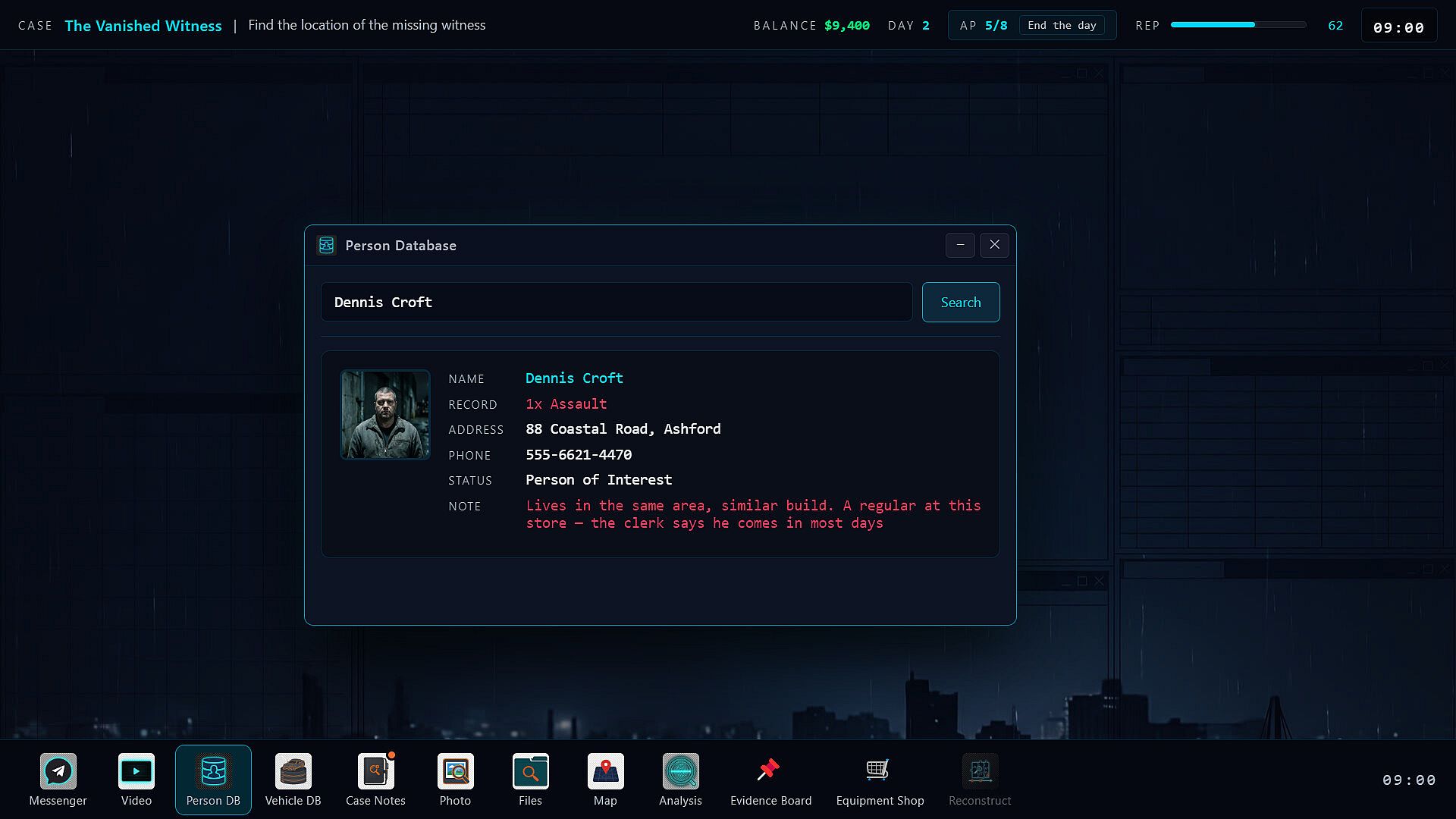
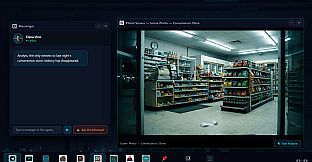
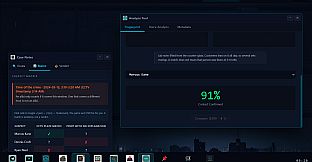

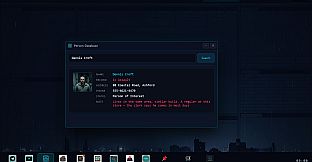
Hired Eye is a simulation and adventure game set on PC where players act as a desk-bound analyst for a private investigation agency in the city of Ashford. The experience centers on reviewing photographs, footage, transcripts, and database entries to build defensible reports on criminal cases without ever visiting a crime scene. Evidence interpretation forms the core loop, with players comparing fingerprints, voices, names, and license plates to establish connections rather than definitive guilt.
Gameplay
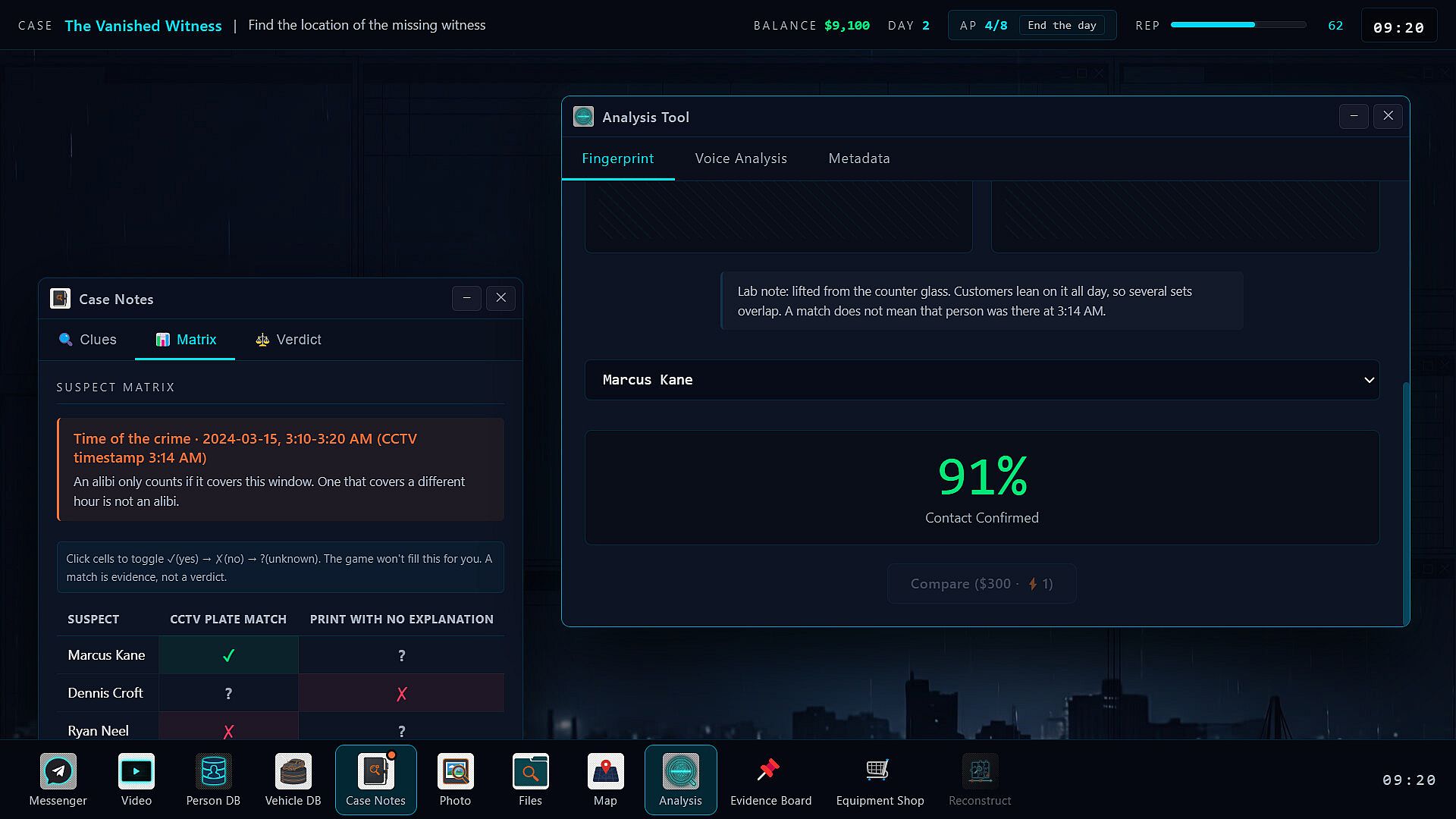
Players examine marked evidence items and read source-based transcripts to piece together timelines and motives. Matches in the databases indicate contact between individuals or objects, which must then be weighed against alibis and the context of why a suspect might have touched a particular item. The process demands careful cross-referencing before any accusations are made.
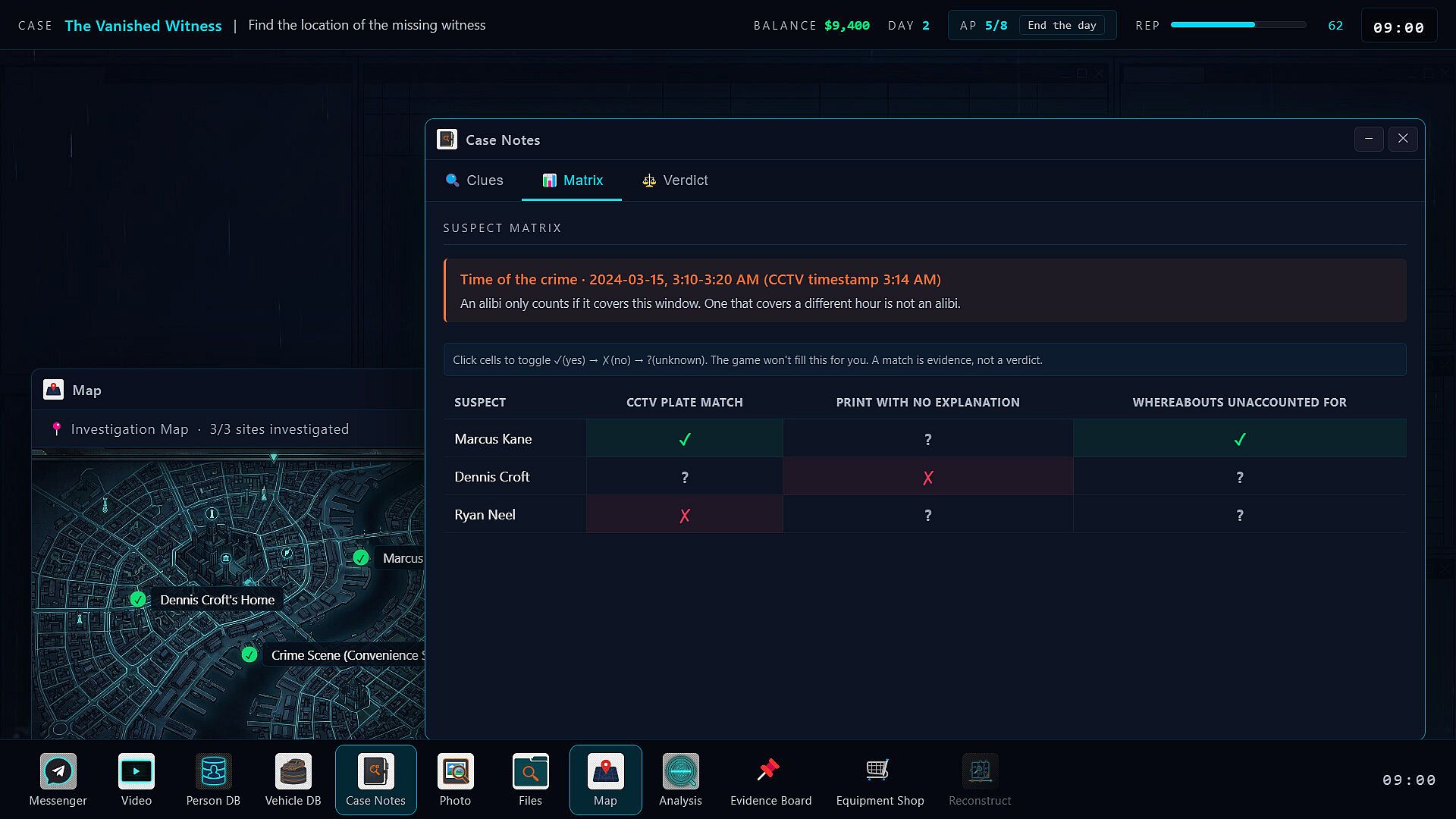
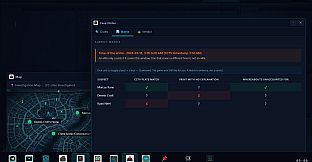
A manual suspect matrix requires players to fill in rows by hand for each potential suspect. Criteria can be toggled between confirmed, ruled out, or unknown, and every column must be resolved for the chosen suspect. The game provides no automatic assistance, so inconsistent judgments result in the report being returned for review. This system encourages methodical analysis over quick conclusions.
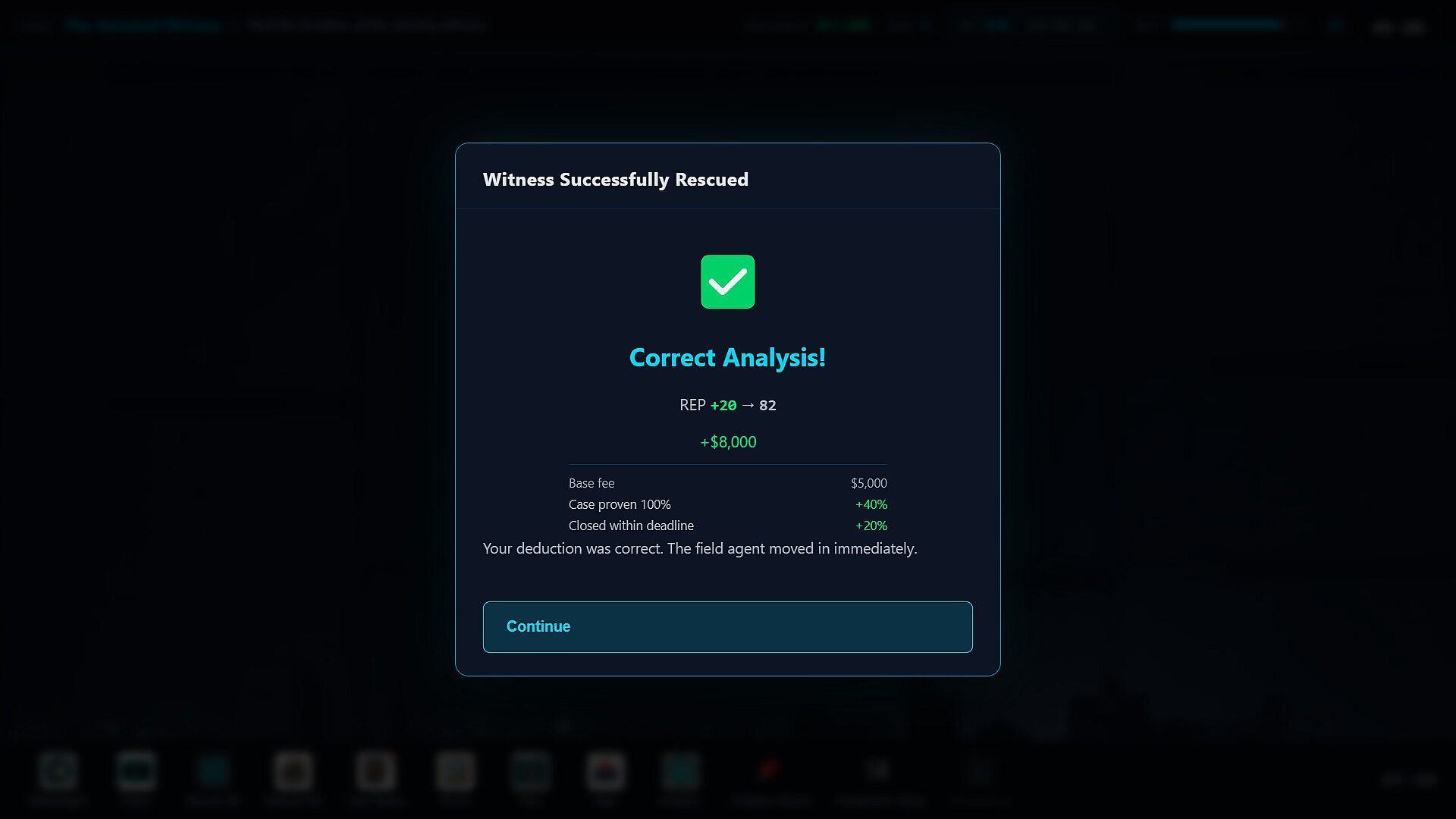
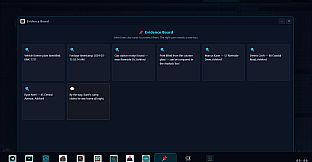
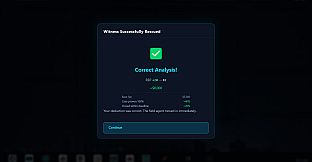
Optional reconstruction allows players to organize evidence into stronger proof for added reputation ahead of a verdict. It is not required to accuse a suspect, but careless use reduces reputation. A correct verdict always advances to the final decision phase, where players determine what to do with the established truth.
Game Modes
The game operates as a single-player desktop investigation experience built around eight authored cases in Season 1: The Ledger. These include a disappearance, a homicide, extortion, embezzlement, a shell company, an abducted agent, a leak, and an overarching name that surfaces across multiple files. A hidden assignment can be unlocked through specific choices and planning.
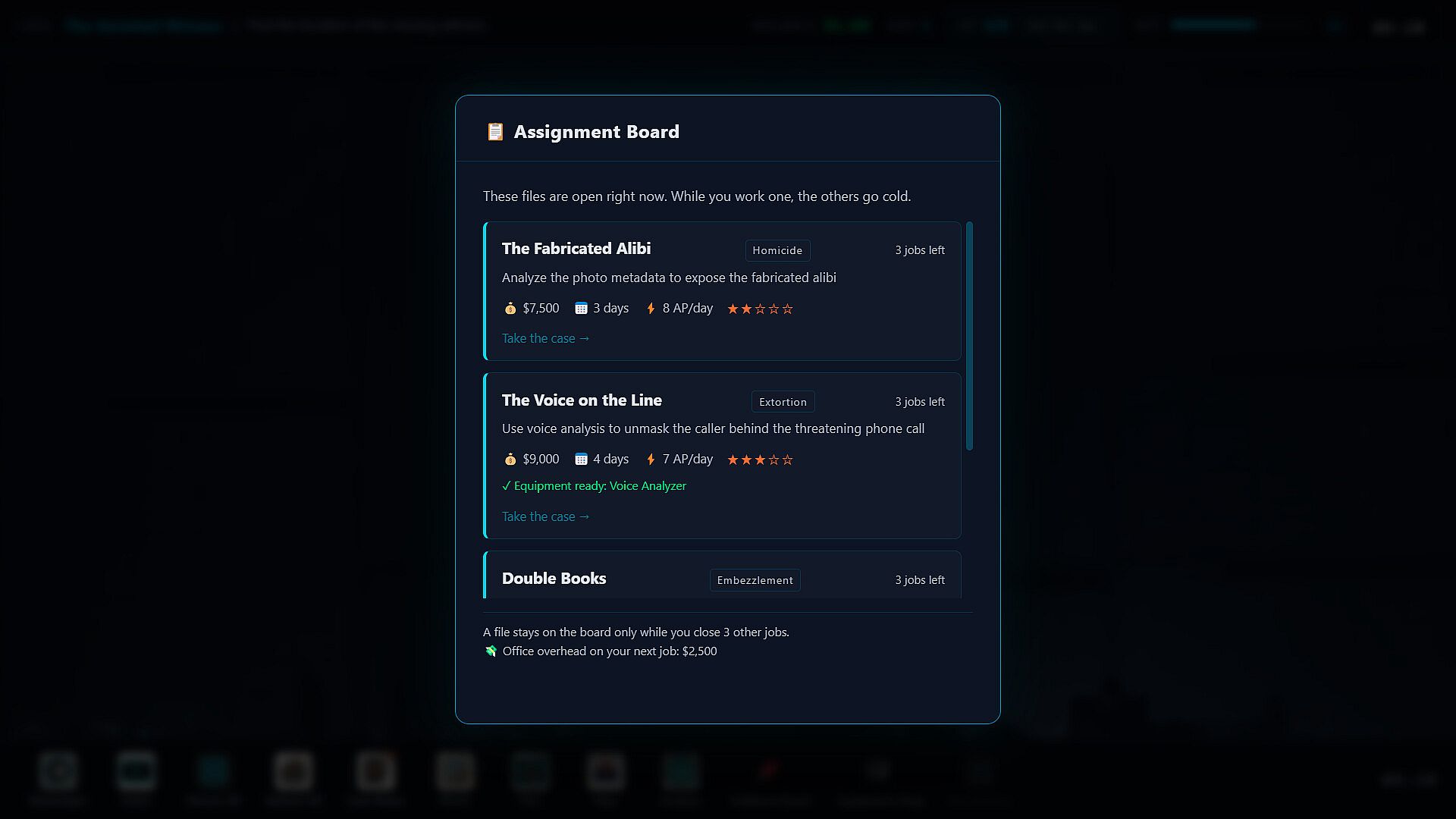
Assignments compete for attention, and players must select their order while monitoring deadlines. Offers that wait too long vanish, and neglect can leave files unresolved even if all eight cases remain reachable in one run with careful resource management. Action points serve as the primary currency and do not regenerate automatically; ending the day is the only way to recover them, though client fees shrink with delays and files can go cold if too much time passes.
Money earned from cases funds upgrades such as lab contracts that reduce action point costs for analysis, field agents who handle locations, extra days, safehouses for protection, and specialist equipment needed to prove certain files. Interpreting results remains the player's responsibility regardless of tools acquired.
Story and Progression
Season 1: The Ledger forms a standalone narrative that resolves its central case. Organizational pressure builds over repeated risky decisions, leading to visible consequences such as a car with a covered plate outside the office, anonymous calls to clients, or envelopes containing photographs of the player. These elements influence available options and endings.
Six endings emerge from combinations of accuracy, reputation, morality, and heat level. The interface and all case text support English, Korean, Japanese, and Simplified Chinese. No future content is required to complete the main story, though additional explorations of Ashford remain possible in principle.
Is It Worth Playing?
Hired Eye suits players who enjoy deliberate evidence analysis, manual deduction systems, and resource management within a single-player simulation framework. The emphasis on filling the suspect matrix by hand and balancing action points against deadlines creates a focused investigative loop that rewards patience and planning over action or exploration.
Those drawn to noir-style detective work and moral decision-making at the end of each case will find the structure engaging. The game remains in a pre-release state with no player reviews available yet, so prospective buyers should monitor updates on its exact launch timing and any refinements to the core systems before committing.