













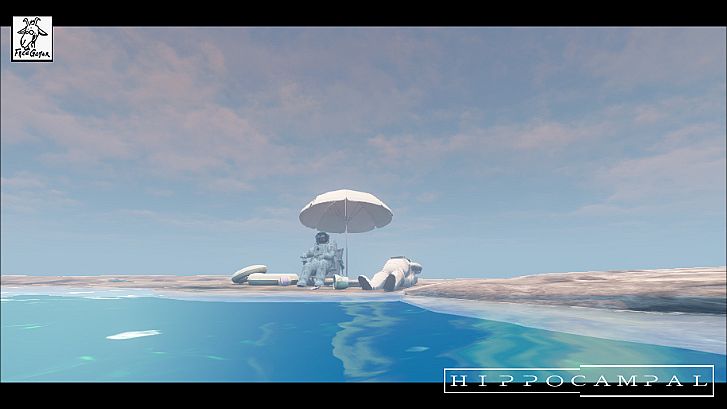
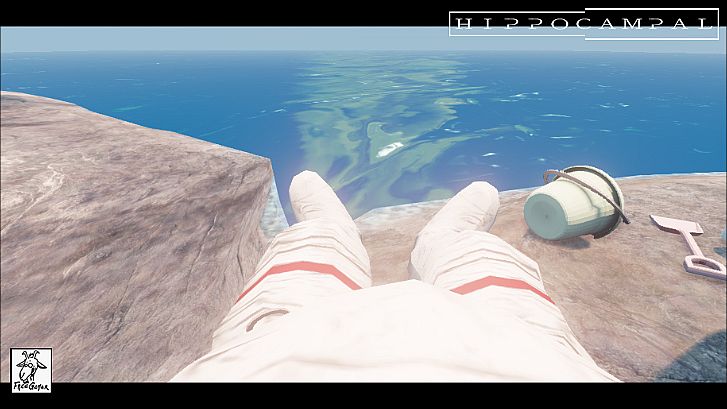
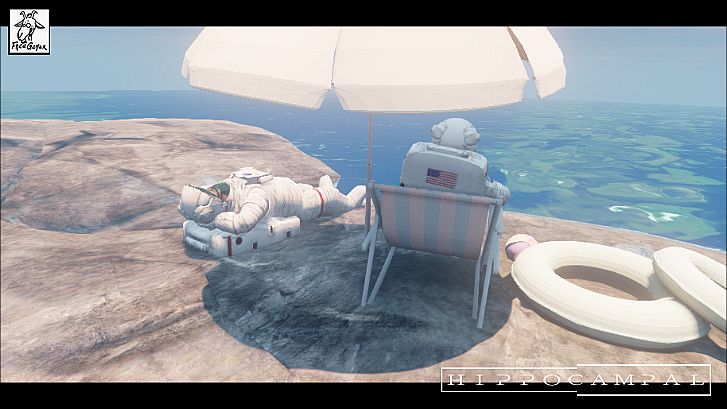
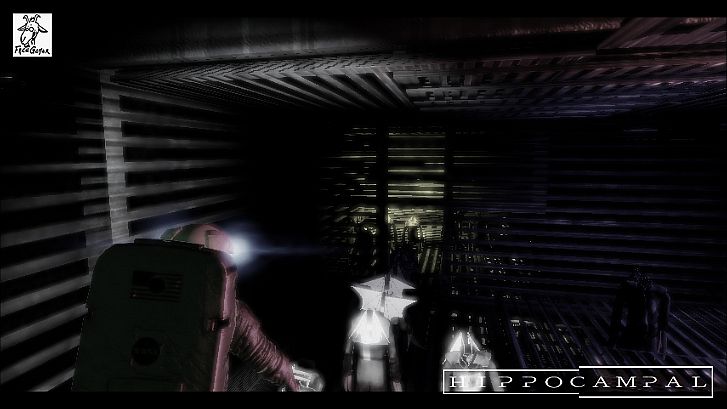
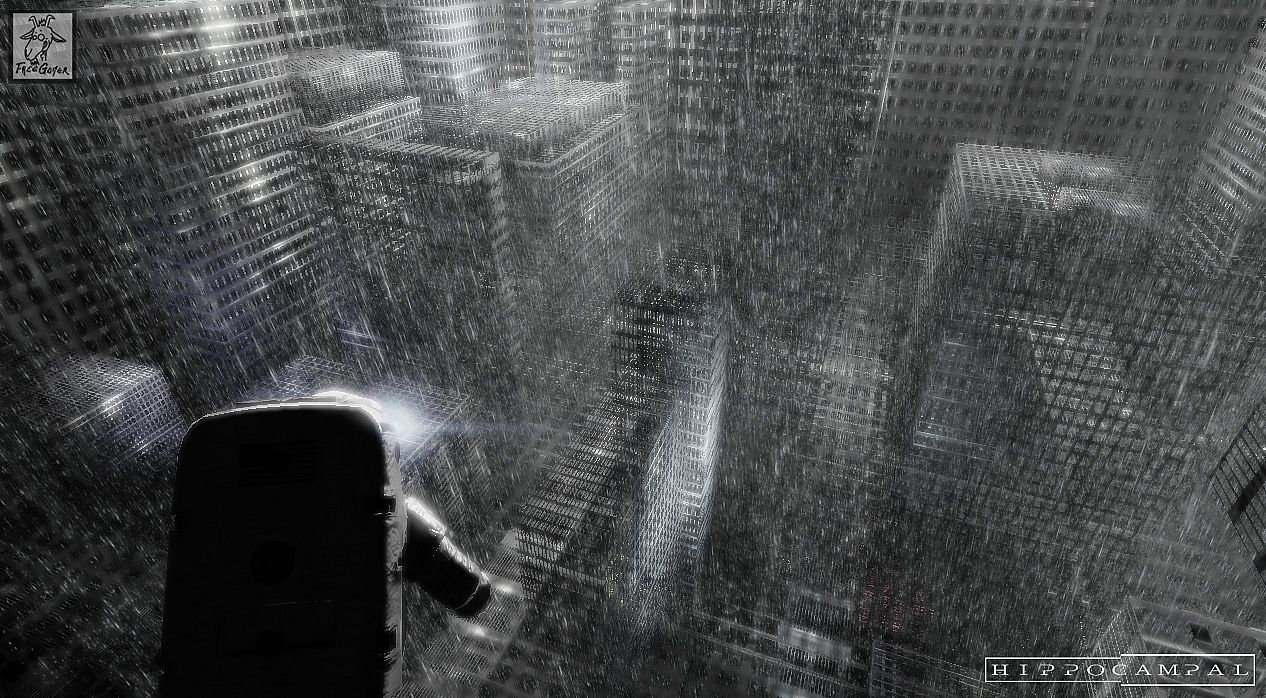
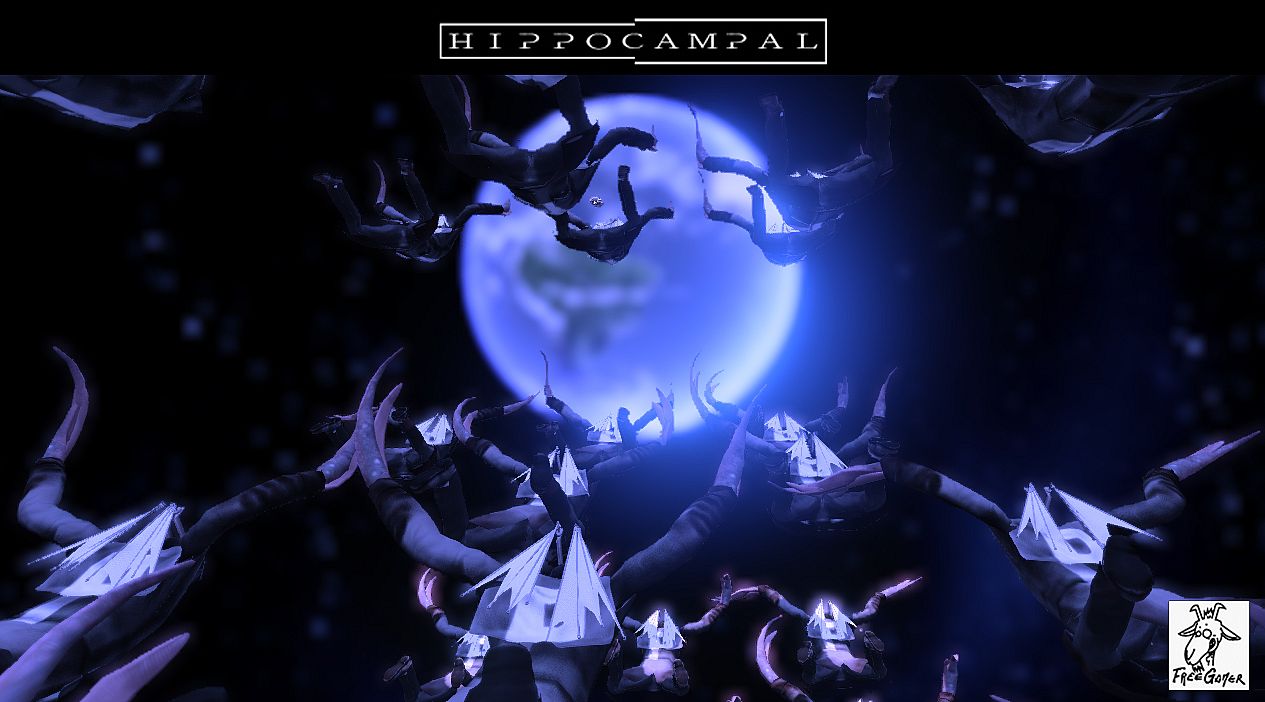
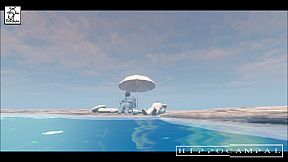
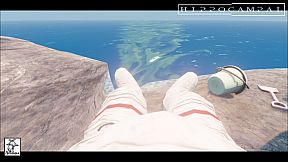
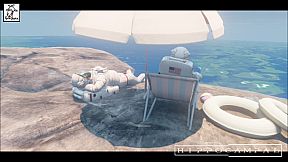
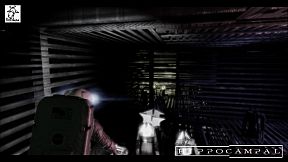

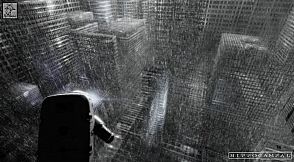
Hippocampal: The White Sofa is an indie experimental exploration game built around walking and observation in a surreal environment. Released in 2014 for PC, it presents players with an astronaut named M.kurt.C who begins in orbit before a sudden collision returns him to Earth amid strange creatures. The core appeal lies in its blend of satire and quiet reflection rather than action or objectives.
Gameplay
The gameplay centers on third-person navigation through abstract spaces. Players move the character across varied terrain and indoor settings filled with symbolic objects and scenes that reference familiar tropes from movies, comics, and other games. There are no combat systems, complex puzzles, or inventory management mechanics. The design relies on environmental exploration as the central mechanic. Movement feels deliberate and unhurried, encouraging close attention to details that shift in meaning depending on the player's perspective. Satirical elements appear through exaggerated or ironic depictions of heroic archetypes and expected behaviors, poking fun at the pressure to conform to certain roles. Understanding emerges gradually as repeated traversals reveal connections between elements in the world.
Game Modes
The game operates as a single continuous experience without distinct modes or branching paths. There are no multiplayer options, competitive elements, or alternate scenarios to select. The entire session follows the same contemplative structure from start to finish, with progress measured only by the player's growing familiarity with the surroundings. This unified approach keeps the focus on personal interpretation rather than replay variety or structured challenges.
Story and Themes
The narrative begins with the astronaut enjoying downtime in space until an unexpected impact forces a return to Earth. From there, the story remains open-ended, shaped by how the player interprets the crash's effects and the presence of the creatures. Themes revolve around identity, relaxation versus action, and resistance to imposed expectations. Satire targets both the protagonist and broader cultural ideas about heroism and purpose. The contemplative tone invites players to consider their own reactions to the events without providing explicit answers or resolutions.
Player Reception
Feedback highlights the game's unusual style and minimal mechanics. Some appreciate the room for personal meaning and the straightforward walking focus, while others find the pace slow and the humor ineffective. With 96 reviews on its primary distribution platform, the overall rating sits at mostly negative. Players note the short length and interpretive nature as either strengths or drawbacks depending on individual taste for abstract titles.
Is It Worth Playing?
This title suits those seeking a brief, low-pressure exploration experience that prioritizes atmosphere and satire over traditional gameplay loops. Its simple controls and lack of failure states make it accessible, yet the abstract presentation demands patience and a willingness to engage with symbolism. Current support remains limited to the original release with no additional content or updates. If abstract indie games that mock conventions appeal, the experience delivers a unique perspective. Those preferring clear goals, combat, or structured progression will likely find it unsatisfying. The game remains available at a low price point for PC users interested in sampling its distinctive approach.