


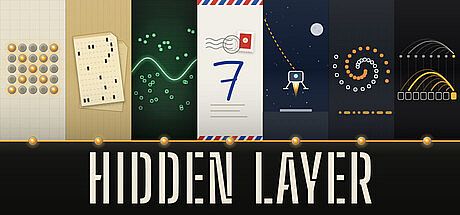


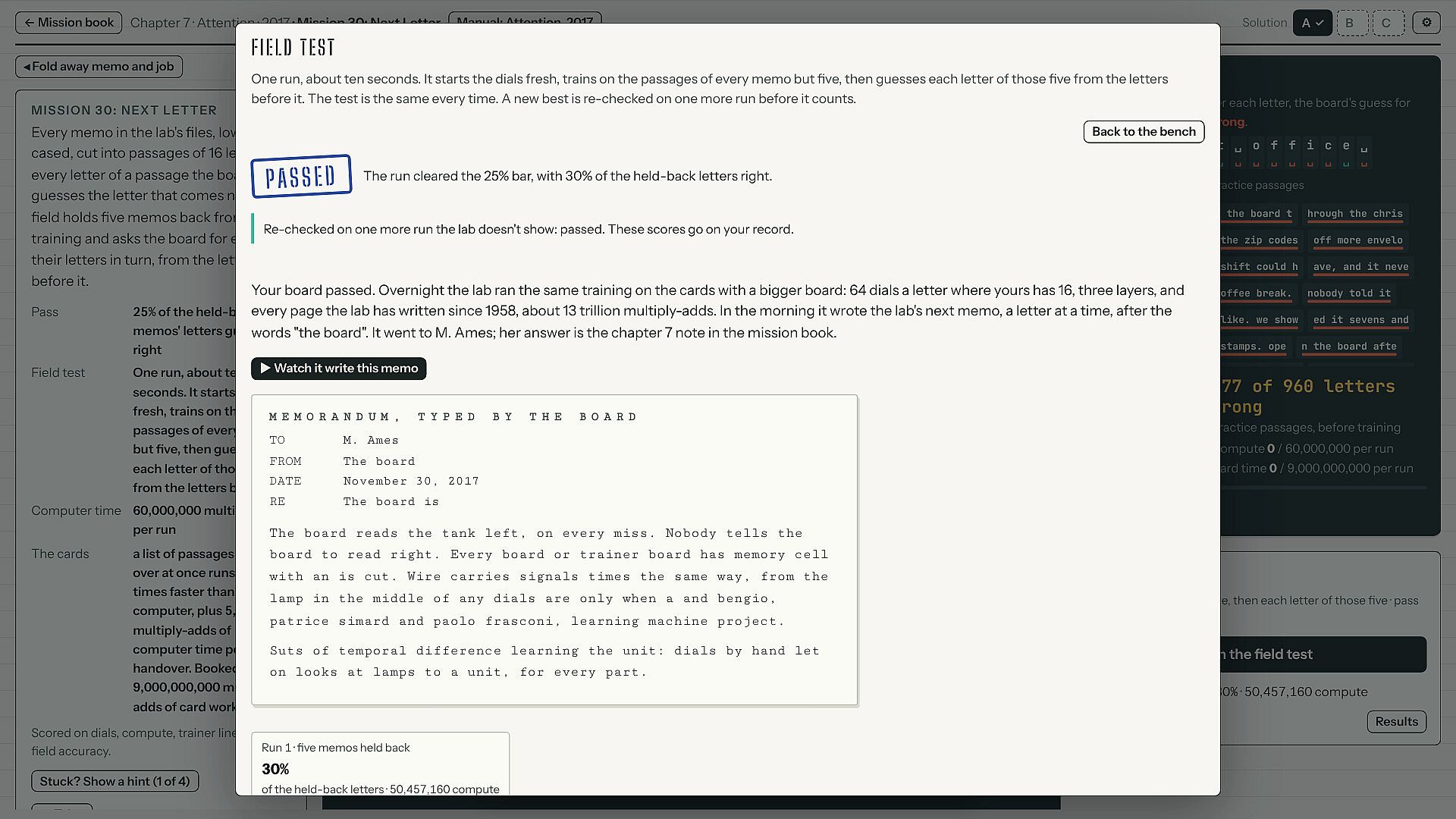
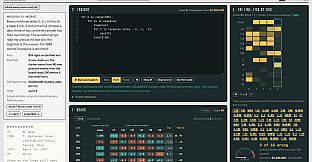
Hidden Layer is an indie simulation game for PC that puts players in the role of an operator at a fictional research lab, constructing the foundational concepts of artificial intelligence from the ground up across decades of real historical development.
Gameplay
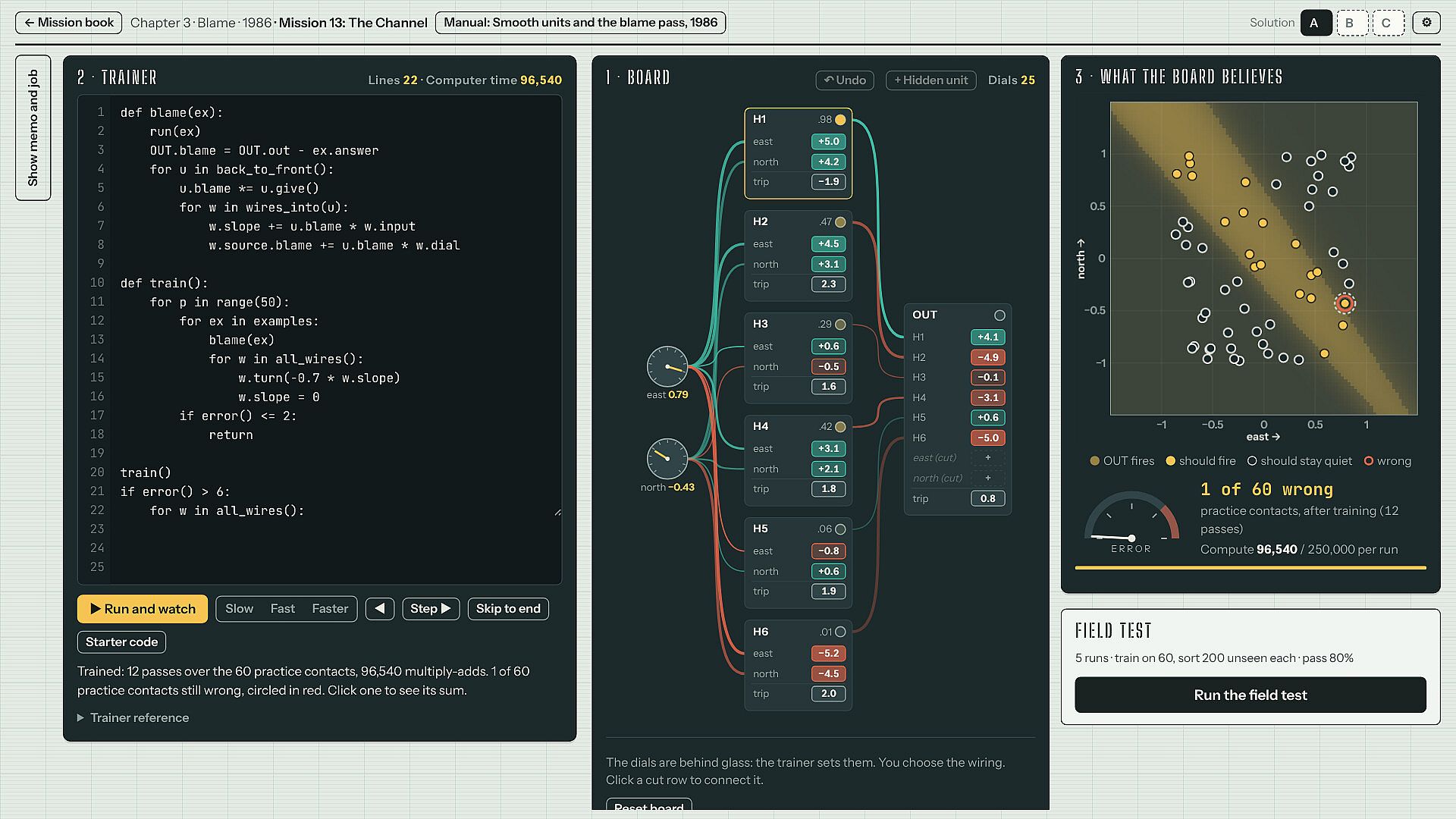
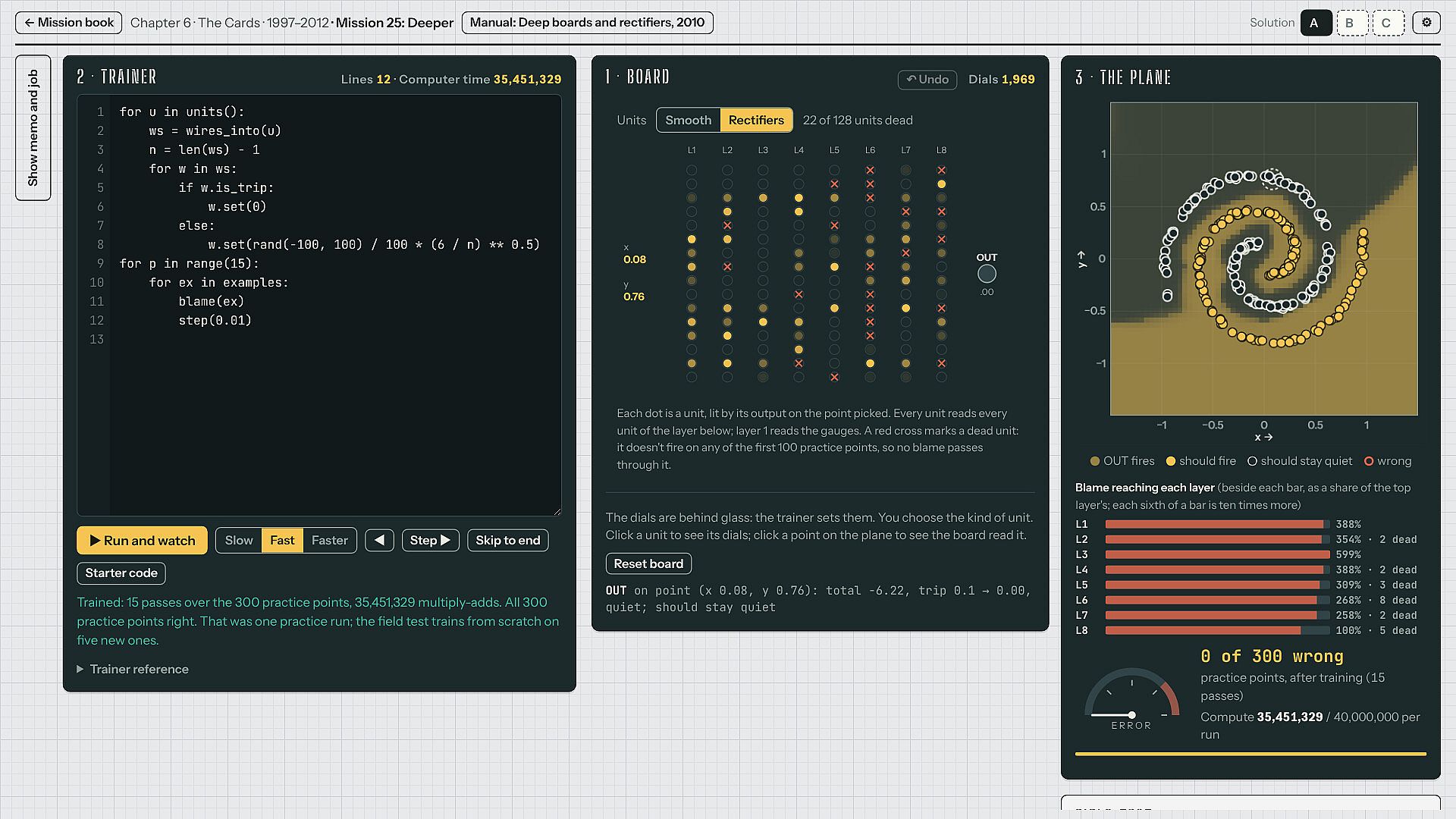
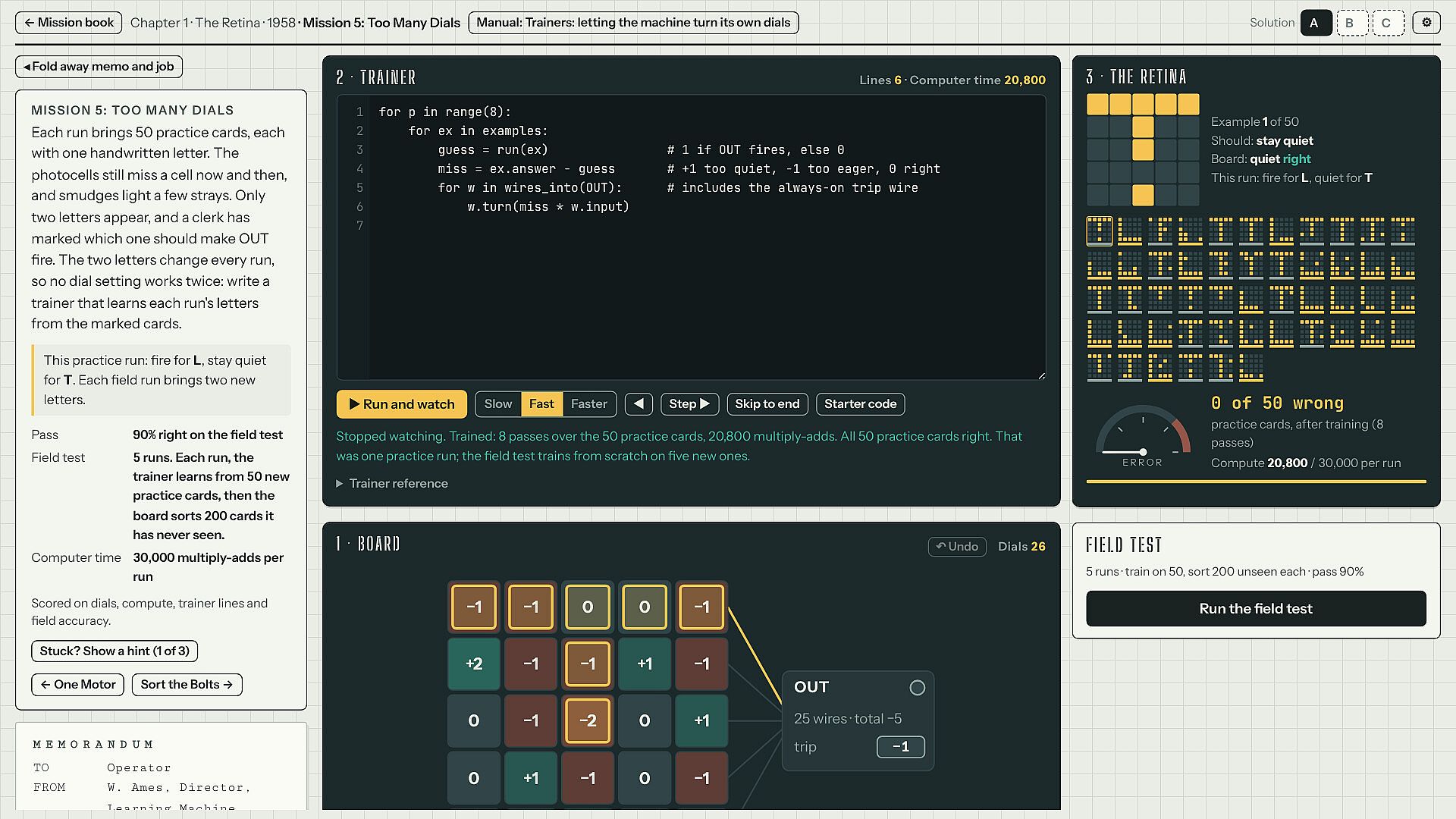
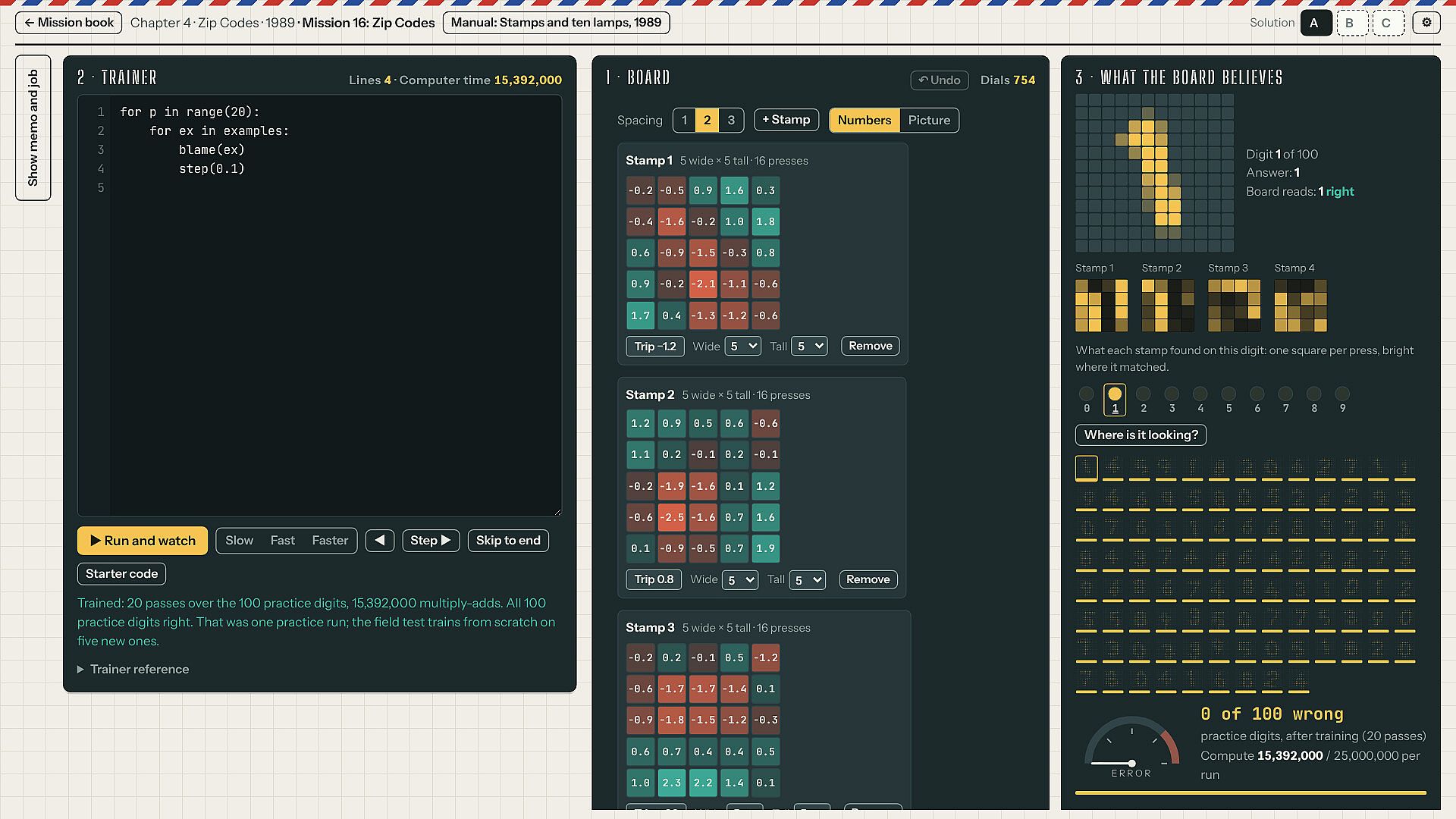
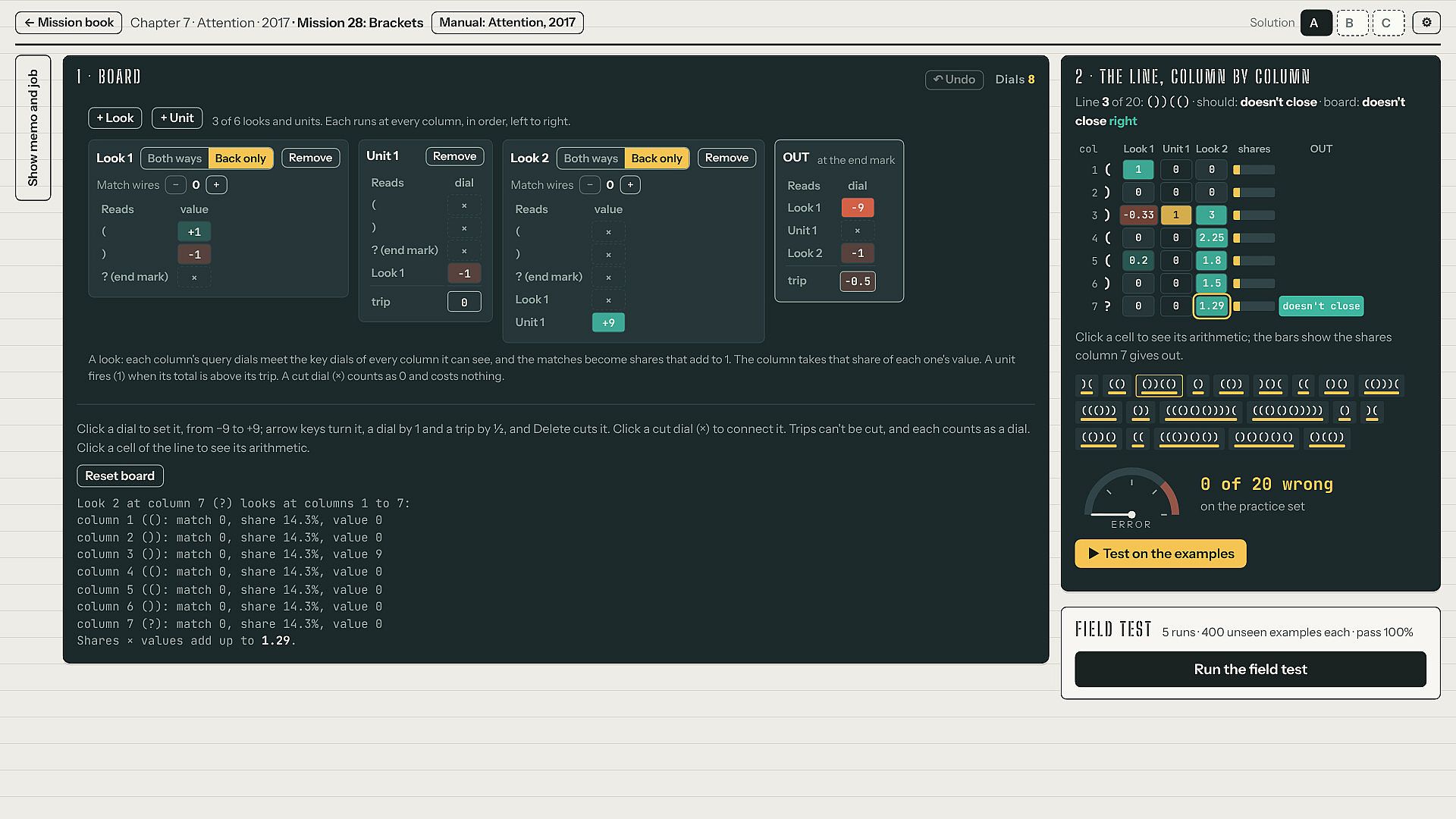
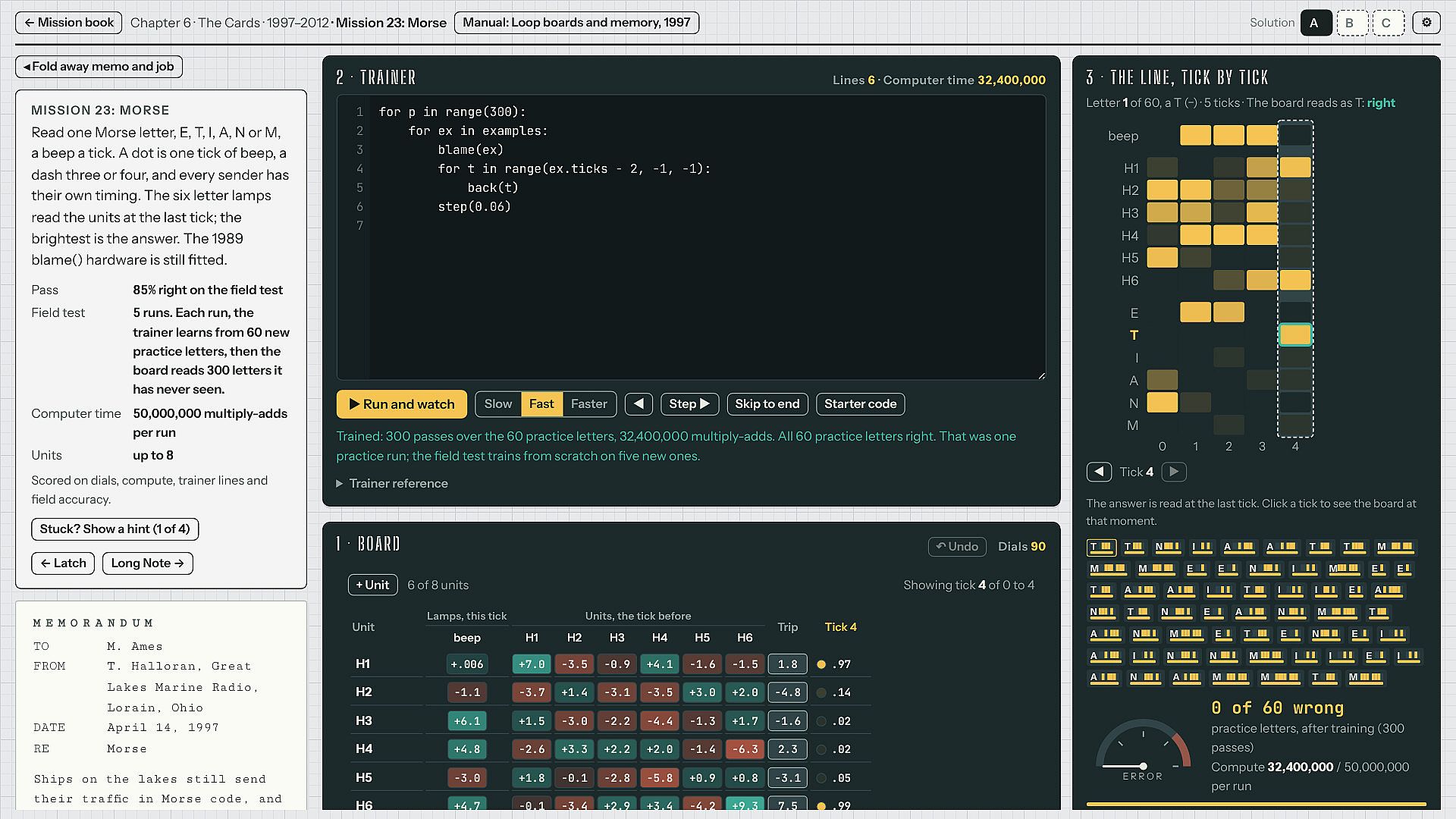
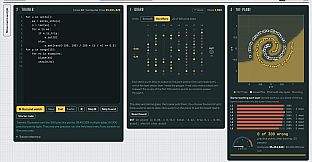
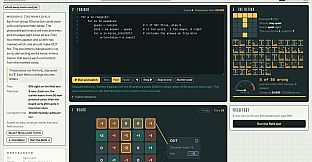
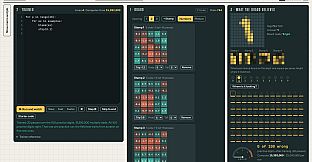
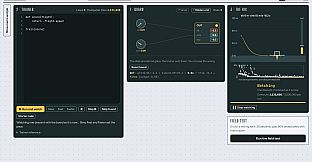
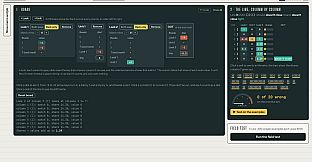
The core loop centers on building and training early machine learning systems through hands-on interaction with simulated hardware and code. Players begin in 1958 by adjusting dials on a photocell grid machine to match example inputs, then progress to writing short Python programs that automate the training process. These trainers use basic loops, lists, and functions without external libraries, mirroring how the systems operated in their original eras. Training unfolds step by step, allowing observation of individual example processing and parameter adjustments. Solutions undergo repeated field tests on unseen data to verify consistent performance. Optimization options include minimizing hardware elements, reducing computation time, shortening code length, or maximizing accuracy, each tracked via histograms. New terminology and capabilities appear as the timeline advances, reflecting inventions like neural networks, backpropagation, convolution, reinforcement learning, memory mechanisms, deep learning, and attention.
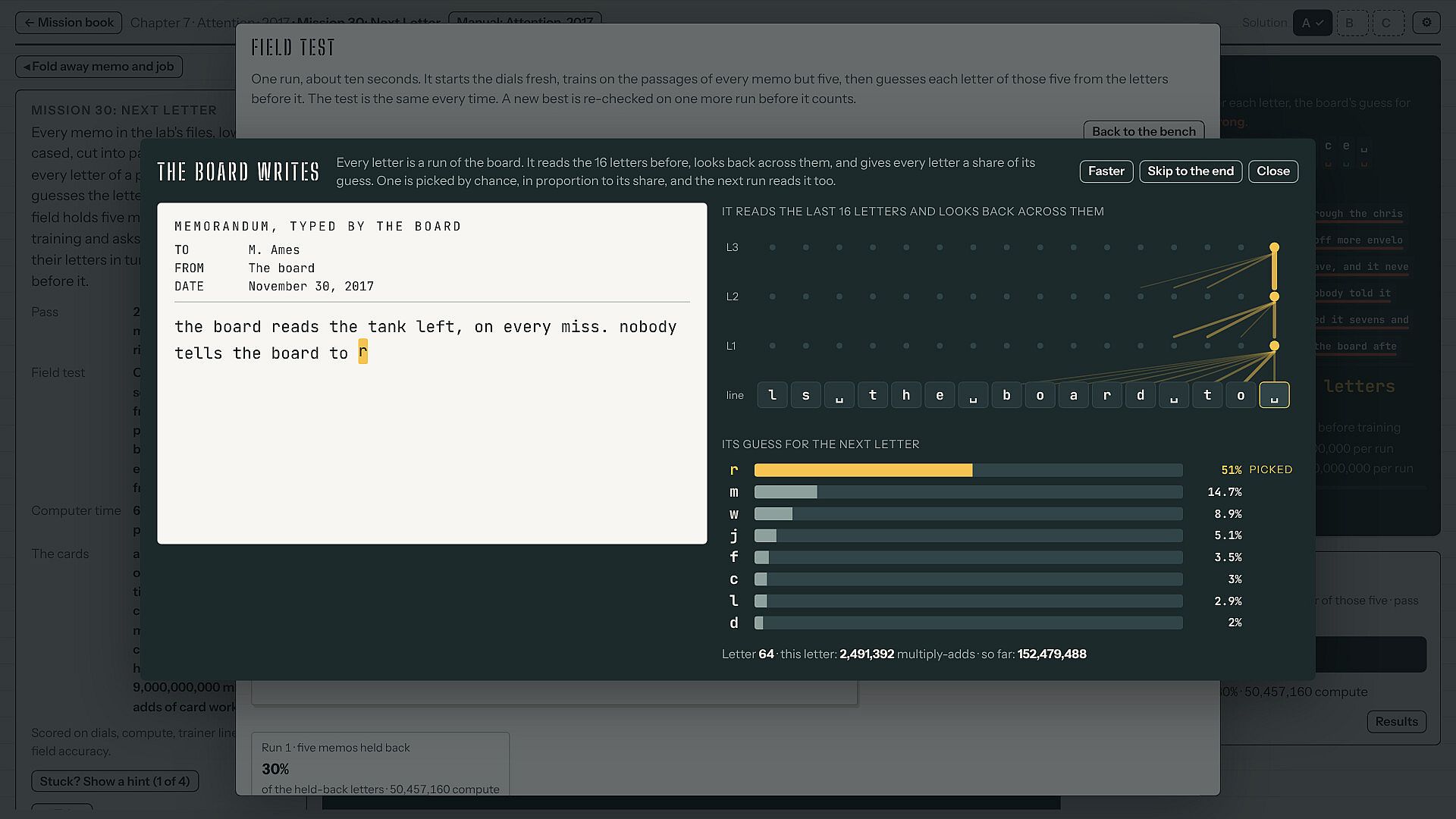
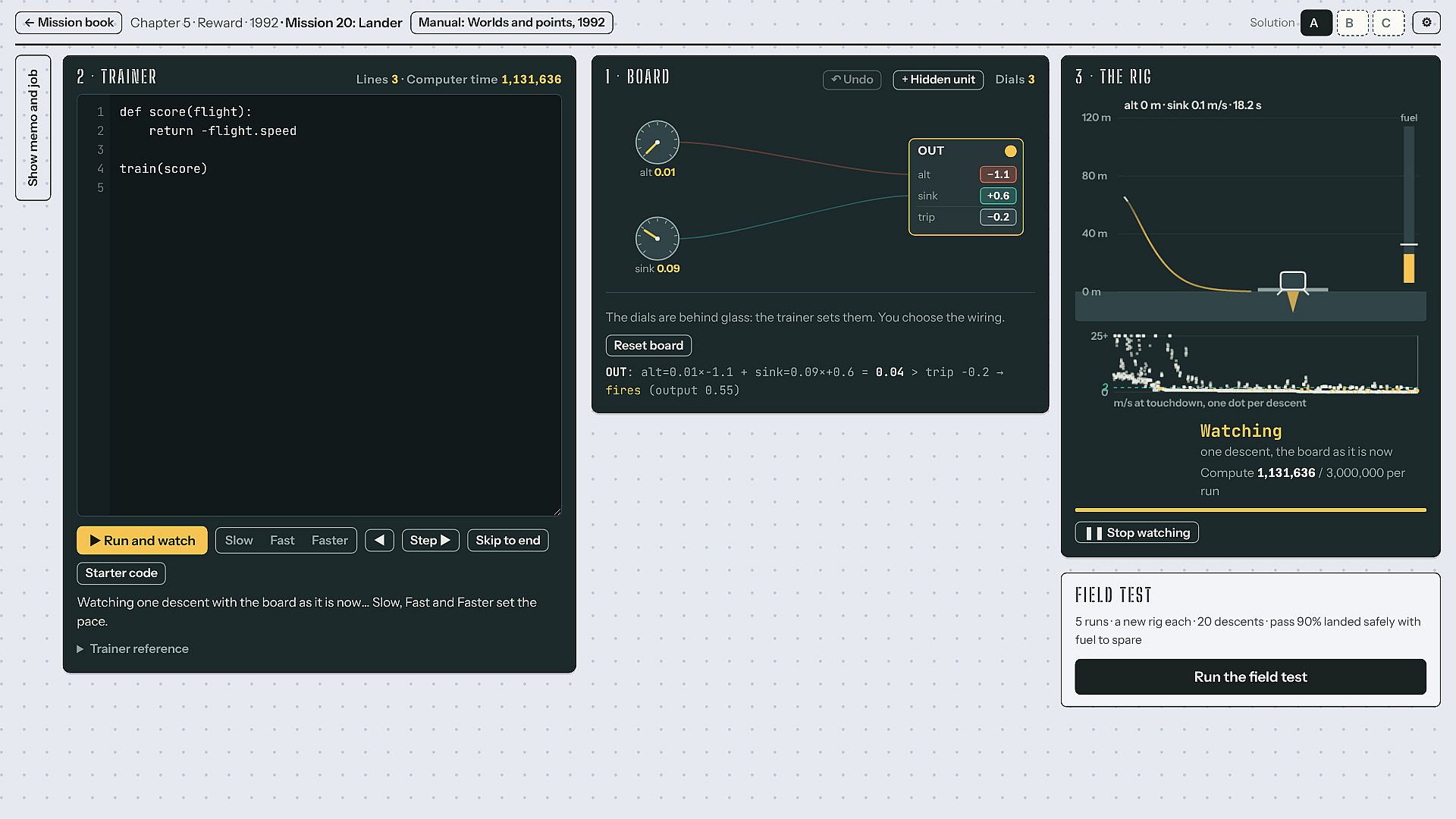
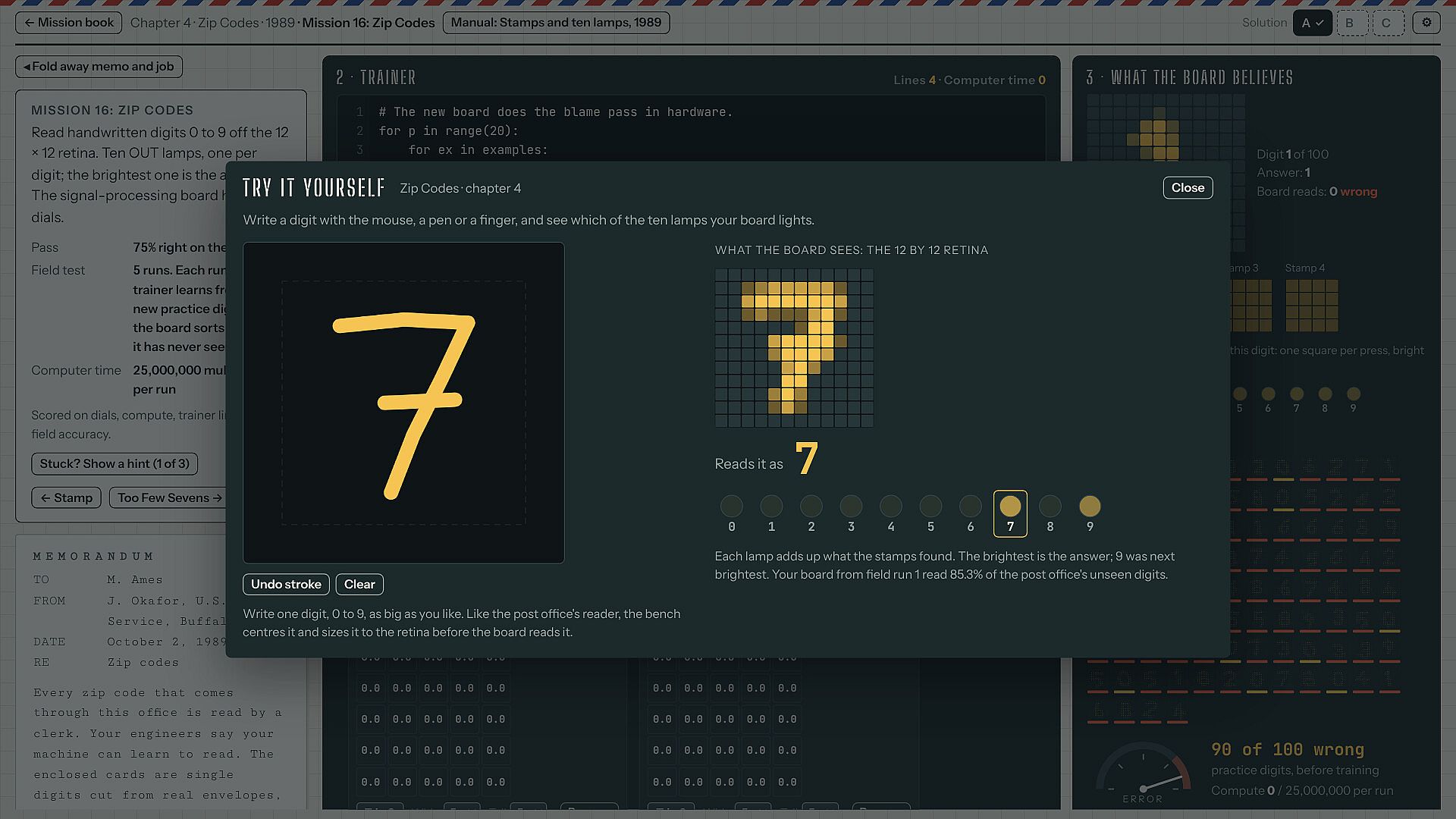
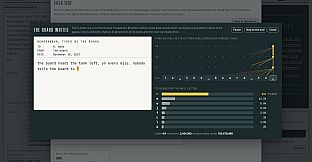
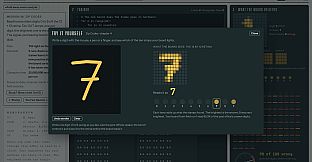
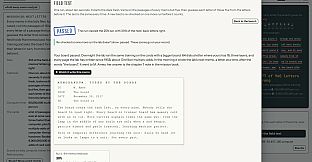
Additional activities include drawing custom inputs for recognition tasks, manually controlling a reinforcement learning lander before automating it, and generating text with later models. A separate break room features the MENACE machine from 1961, a physical tic-tac-toe learner built from matchboxes and beads that players can operate or observe across many games. Background music evolves with each era's instrumentation, improving in fidelity as chapters are completed. An integrated manual and optional hints support players without prior machine learning experience.
Game Modes
The experience follows a linear historical progression divided into seven chapters spanning 1958 to 2017. Each chapter introduces one or more core ideas through dedicated training scenarios and field evaluations. Progression requires successful solutions that generalize reliably. The structure includes dedicated sections for exploring built systems after training, such as custom drawing interfaces and interactive demonstrations. A standalone break room activity allows repeated play with the MENACE tic-tac-toe setup independent of the main timeline. No multiplayer elements exist; the entire game operates in single-player mode with self-paced advancement through the eras.
Historical Context and Features
Archive notes accompany each chapter with factual background on the real developments represented. The game emphasizes practical implementation over abstract theory, requiring players to produce working code that trains models from scratch on new examples every time. Visual feedback shows dial movements and learning progress during sessions. Players can revisit completed chapters to refine solutions according to different optimization goals. The simulation stays faithful to the constraints and capabilities of each period, introducing concepts only when they historically emerged.
Is It Worth Playing?
Hidden Layer suits individuals interested in the origins of modern AI through direct construction rather than passive explanation. Its single-player focus and emphasis on writing functional Python trainers provide a distinctive educational simulation experience on PC. With a planned release in Q1 2027 and no user reviews available yet, the game's value will depend on how well its historical accuracy and programming challenges resonate with those seeking insight into machine learning foundations. The built-in manual ensures accessibility for newcomers while offering depth for those exploring optimization and generalization mechanics.











