


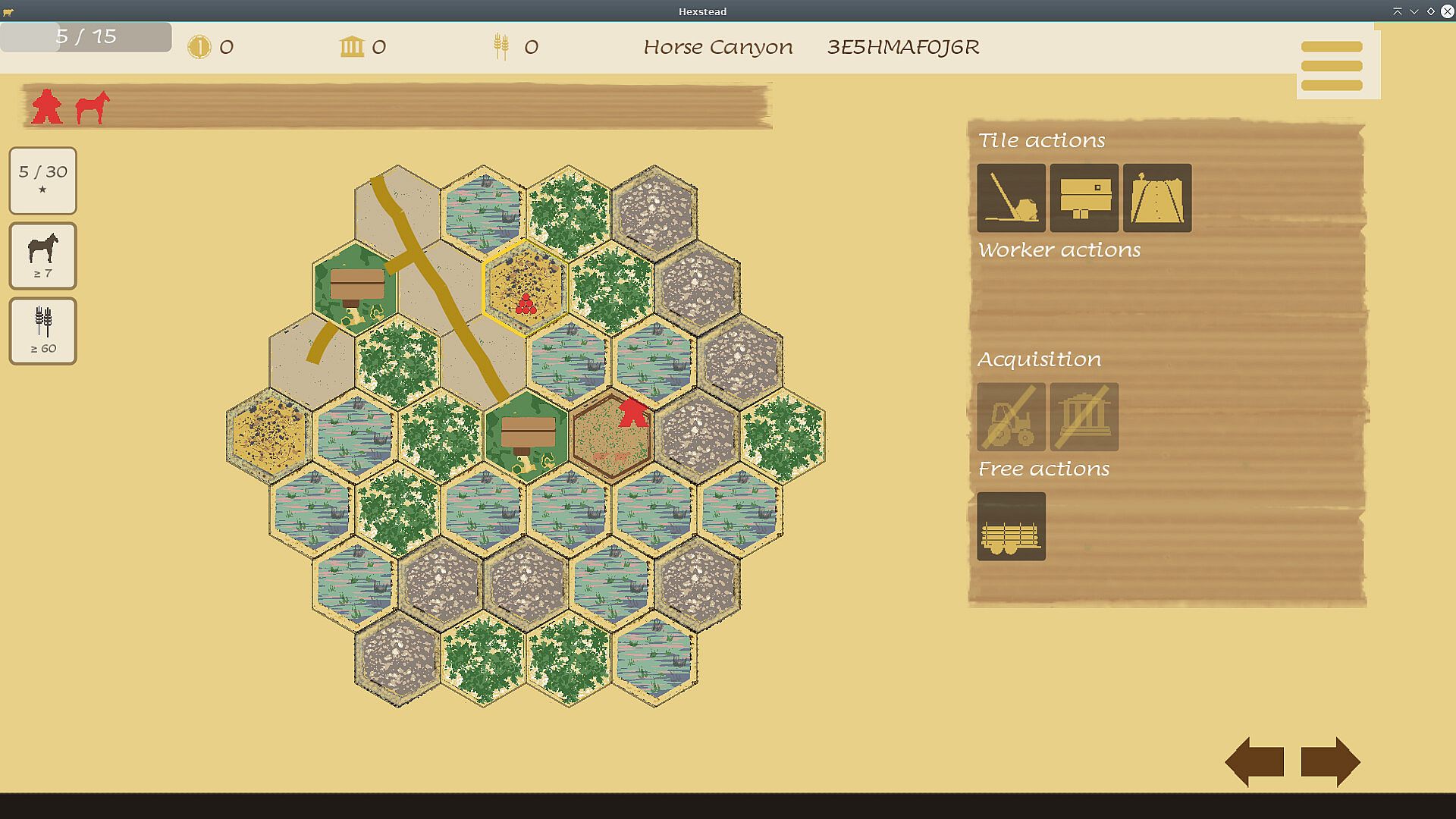
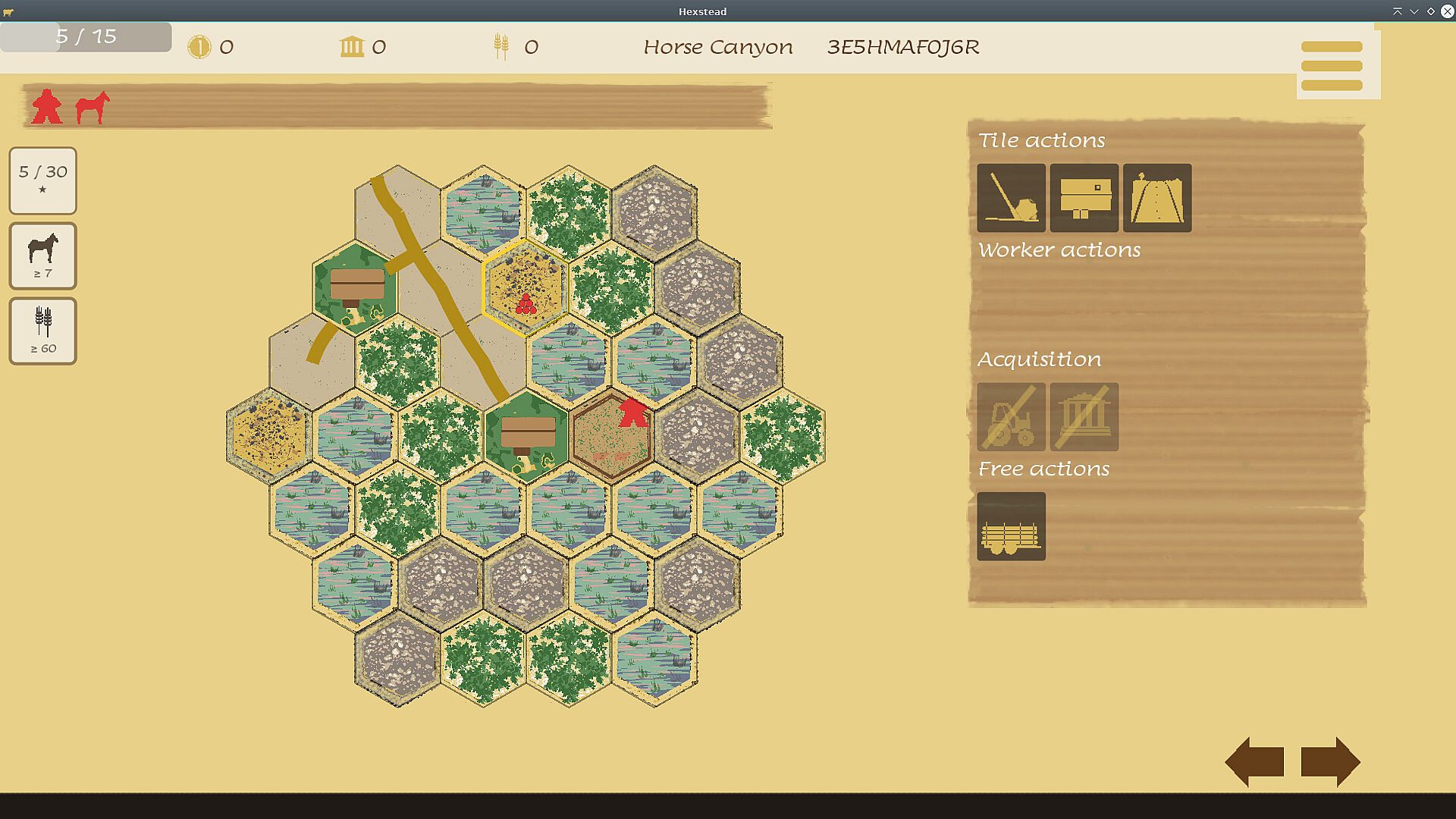
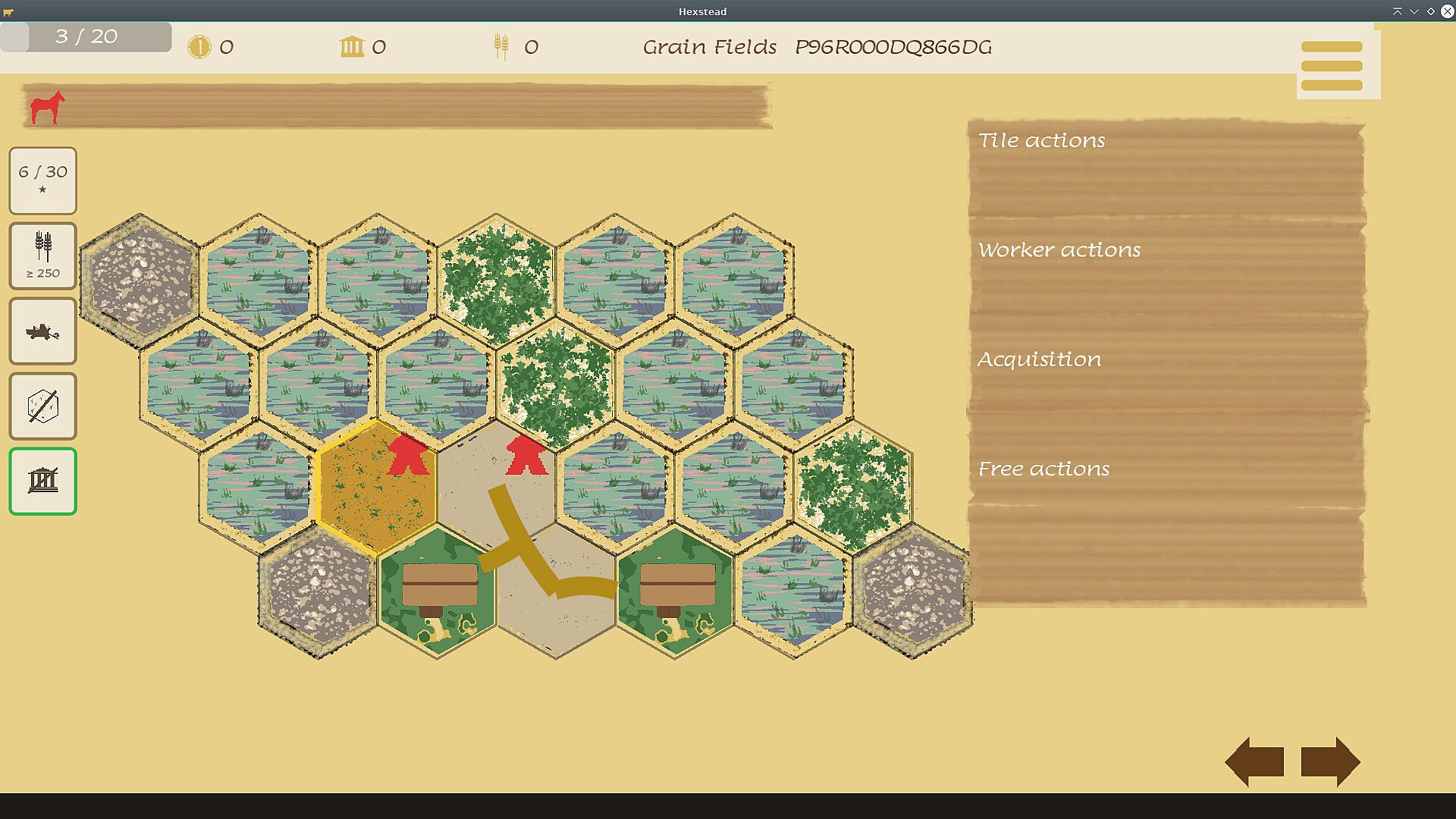
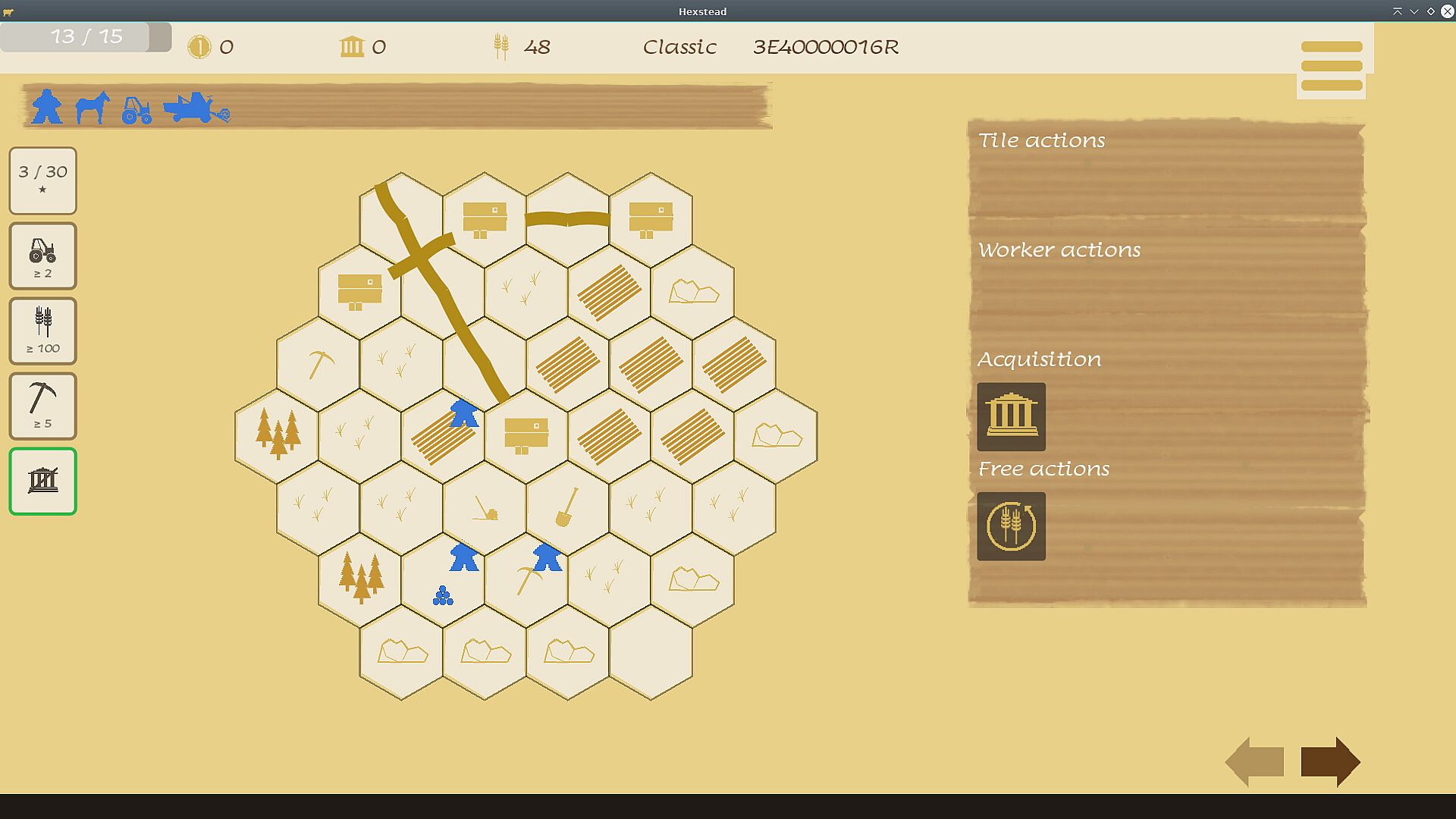
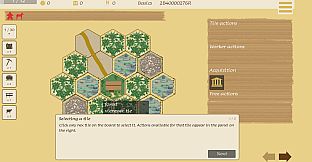
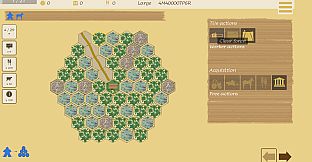
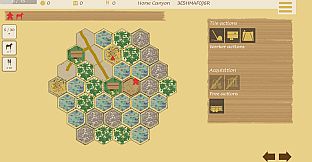
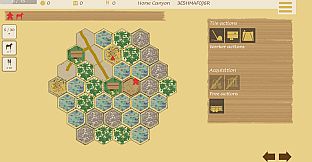
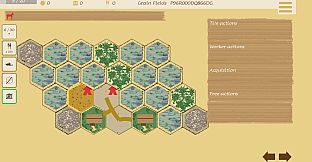
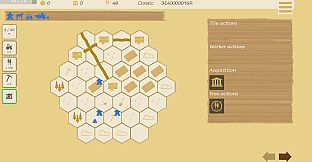
Hexstead is a casual farming simulation game for PC that centers on transforming wild land into a productive farm using hexagonal tiles. Players begin with basic resources and gradually expand operations through careful planning and resource management on maps that vary in shape and size.
Gameplay
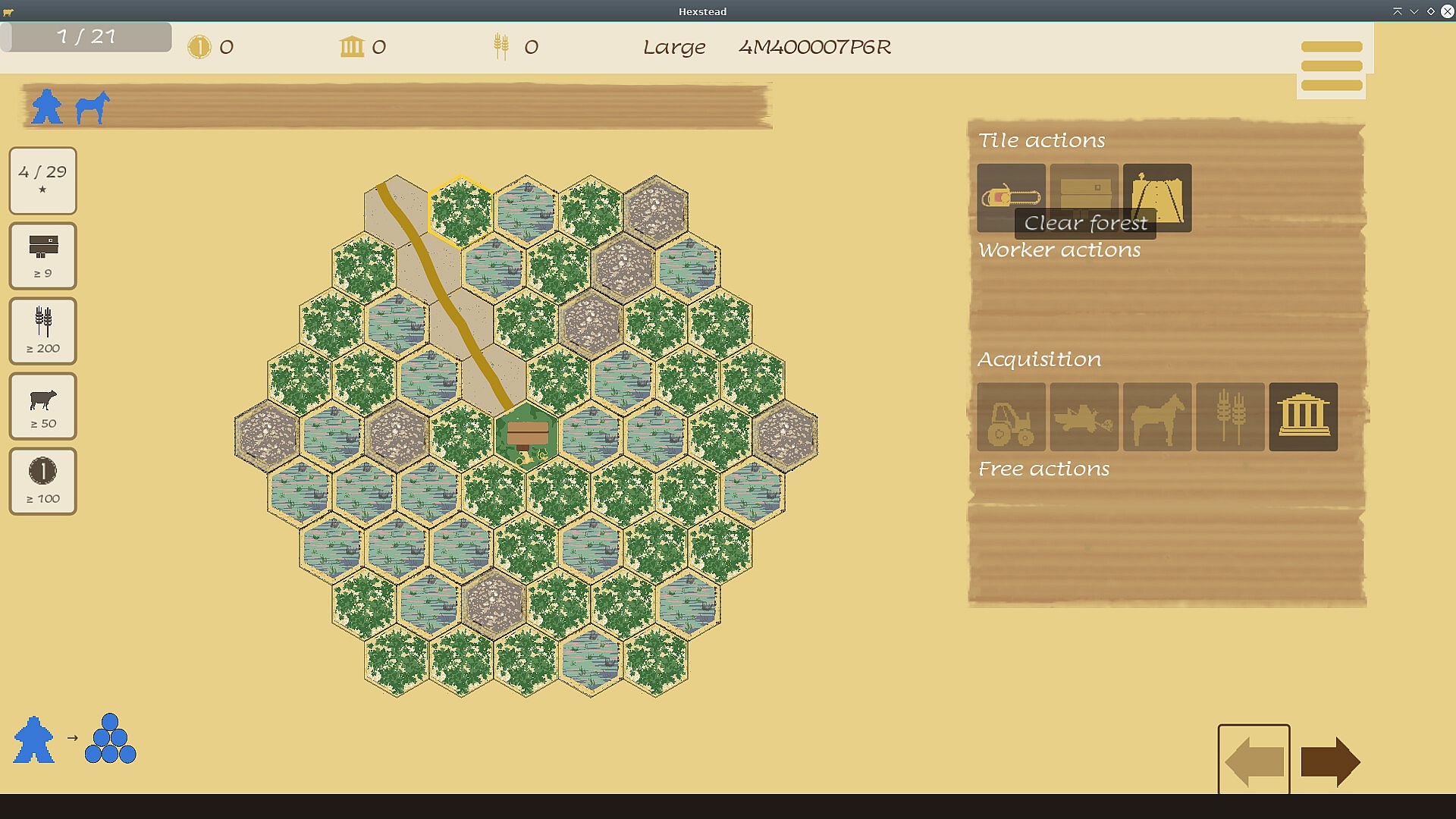
The core loop involves assigning workers to specific tasks across the hexagonal landscape. Clearing land creates arable fields for crops, while harvesting trees yields wood and quarrying stone generates income. Building additional houses increases the available workforce, and constructing pens allows for cattle raising. Machinery purchases accelerate grain growth and harvesting cycles. A horse assists with movement and tasks around the farm. Each action contributes to turning untamed wilderness into organized farmland, with progression tied directly to completing objectives on each map.
Maps consist of varied hexagonal tiles that influence layout and available resources. Players place workers strategically to balance immediate needs like resource gathering with long-term goals such as expansion and production. The system emphasizes incremental development, where early efforts in quarrying and woodcutting fund later investments in housing, livestock, and equipment.
Game Modes
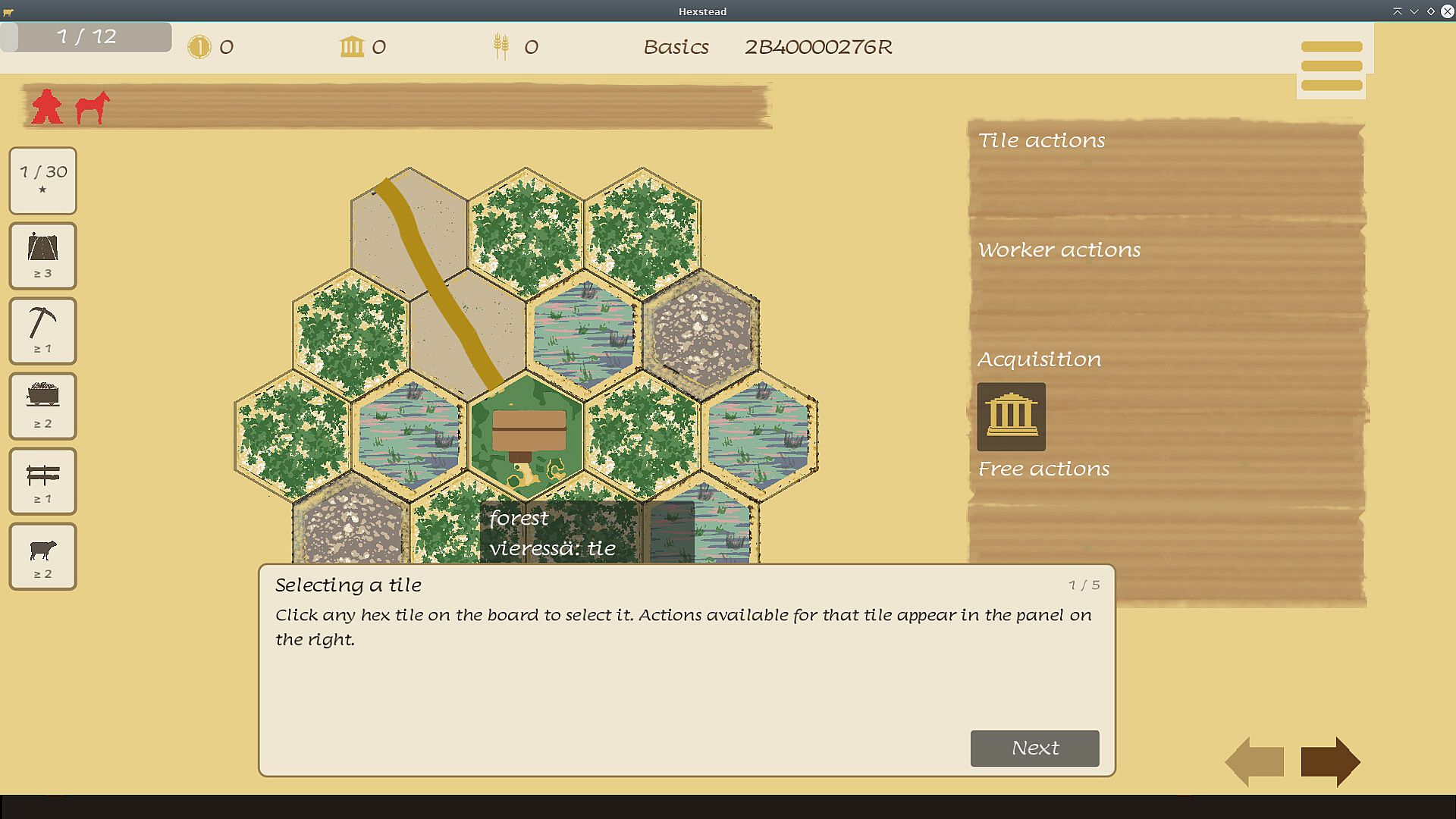
The game features a single-player campaign structured around a series of maps that unlock sequentially. Each map presents specific goals that must be met before advancing, creating a guided experience that builds skills over time. The campaign starts with a tutorial map focused on basic actions and expands to more complex setups involving multiple production lines and larger operations.
Progression encourages methodical play, as clearing objectives on one map grants access to the next. This format supports steady skill development without overwhelming new players, while later maps introduce challenges like managing expanded cattle operations alongside grain production and machinery use.
Progression and Map Design
Campaign maps differ in tile composition, size, and required goals, which keeps the experience varied as players advance. Early maps focus on foundational elements such as establishing fields and basic structures, while later ones demand coordination of multiple systems including livestock pens and automated harvesting tools. The hexagonal grid requires attention to adjacency and efficient worker placement to optimize output across the entire area.
Goals on each map serve as checkpoints that teach new mechanics gradually. Achieving them unlocks further content, rewarding consistent management of resources like wood, stone, and labor. This structure supports repeated playthroughs for optimization, as players refine layouts and task assignments on familiar maps.
Is It Worth Playing?
Hexstead suits players who enjoy deliberate, single-player strategy in a farming context. The campaign format provides clear direction through its tutorial and sequential maps, making it accessible for those new to the genre while offering depth in resource balancing and expansion planning. The hexagonal tile system adds a layer of spatial consideration that distinguishes it from standard grid-based farming titles.
Those seeking relaxed yet purposeful gameplay will find value in the steady progression from basic quarrying to full-scale operations with tractors and cattle. The absence of multiplayer elements keeps the focus on personal farm development and goal completion. Overall, it appeals to fans of casual strategy who appreciate incremental growth and map-based challenges without additional modes or competitive features.